Are Nike Air Maxes Good Running Shoes? A Guide for Athletes and Sneaker Fans

Updated: Feb 5
In today's market, many athletic shoes have become the thing to wear as fashion statements and to convey your lifestyle. While Nike Air Max sneakers have roots in a running revolution, Are Nike Air Maxes good running shoes? Today they are firmly planted in the world of fashion, not serious performance running. Think of them as a stylish cruiser car, perfect for daily cruising, but not for the racetrack.
This guide will break down why Nike Air Maxes are better suited for the street than the track and what you should look for in a dedicated running shoe instead.
Index of Sections
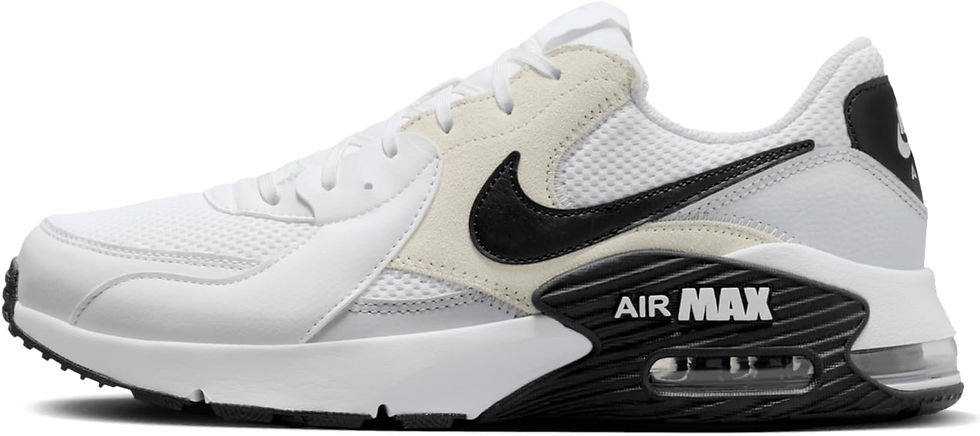
Why Air Maxes Aren't Made for Running
The primary reason Air Maxes fall short for running is their evolution. What began as groundbreaking technology for athletes has been refined for street style and all day walking comfort. This shift created a shoe that looks incredible but lacks the specific features needed to pound the pavement mile after mile.
To understand why, it helps to know what to look for in running shoes. A good running shoe balances lightweight materials, energy return, and biomechanical support, qualities that are no longer the top priority for the Air Max line.

From Track Star To Style Icon
The Nike Air Max line debuted in 1987 with the Nike Air Max 1, the first shoe with a visible Air unit. This innovation, engineered by Frank Rudy, promised exceptional impact protection by trapping pressurized gas to absorb shock, a perfect feature for the 1980s jogging boom.
Over the decades, the visible Air unit became more about aesthetics than performance. The focus shifted to plush comfort for walking, resulting in a heavier, bulkier shoe that prioritizes style over speed.
Nike Air Max for Running At a Glance
Activity | Suitability | Key Reason |
|---|---|---|
Serious Running (5k, 10k+) | Not Recommended | Too heavy, bulky, and lacks responsive cushioning. |
Short, Casual Jogs | Okay in a Pinch | Can work for a mile or two, but not ideal. |
Treadmill Walking | Excellent | Comfortable and stable for walking workouts. |
Cross-Training/Gym Use | Good | Stable base is great for weightlifting and general fitness. |
Everyday Casual Wear | Excellent | This is what they're designed for—style and comfort. |
As you can see, they're fantastic for almost everything except dedicated running. If you're serious about your fitness, our expert guide on how to choose running shoes is a great place to start.
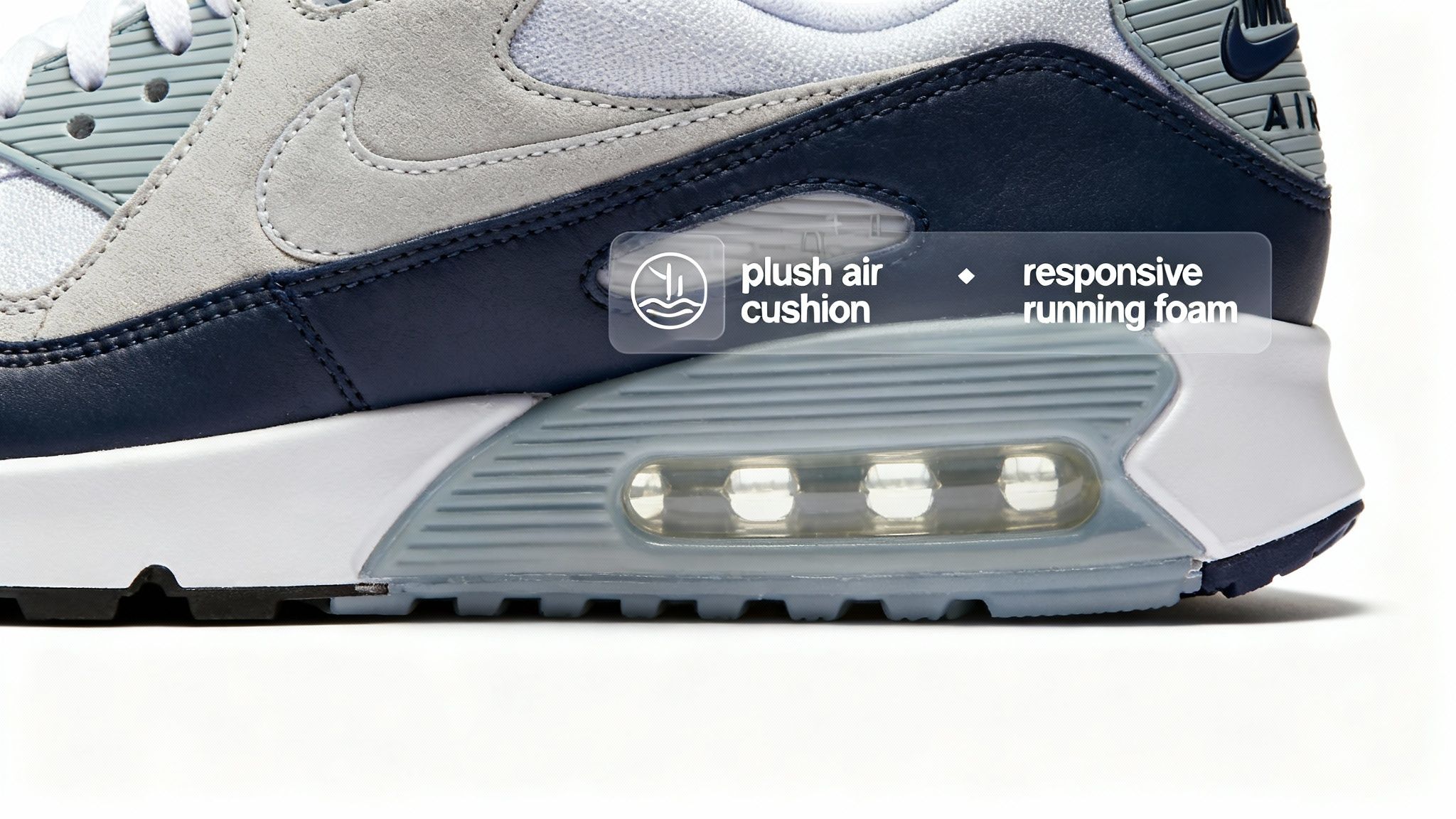
Breaking Down the Air Max Design for Athletes
To understand why modern Air Maxes don't work for running, we need to examine their design. The famous visible Air unit acts more like a soft pillow than the springy trampoline a runner needs. The design is built around maximum cushioning, not the energy return critical for performance running. This makes them comfortable for walking but creates a mushy, unresponsive feel when you pick up the pace.
Cushioning Without the Spring
A proper running shoe uses advanced foams that compress and rebound, propelling you forward. This spring back effect reduces muscle fatigue, allowing you to run farther and faster. The large Air unit in an Air Max, however, primarily absorbs force without providing that critical "snap back." The result is an energy draining experience, like running in sand.
For a runner, energy return is everything. The Air Max's focus on plush, all day comfort means it sacrifices the responsive, propulsive qualities that define a true performance running shoe.
Weight and Stiffness Issues
Another problem is the shoe's construction. Air Max sneakers are built with heavy materials like leather and thick rubber for durability. This robust build adds significant weight, making them feel clunky during a run.
They are also surprisingly stiff. Some models require significant force to bend, fighting against your foot’s natural movement. While durable, this rigidity is a major drawback for any runner who needs a flexible shoe.

The Impact of Heel-to-Toe Drop
The shoe's geometry also plays a role. Many Air Max models have a large heel-to-toe drop, meaning the heel sits much higher than the forefoot. While great for walking, a high drop can alter a runner's natural gait and strain the knees and hips.
Here’s a quick summary of these design flaws for a runner:
Weight: Air Maxes are heavier, leading to faster fatigue.
Flexibility: They are often stiff, restricting natural foot movement.
Cushioning: It’s designed for impact absorption, not the energy return needed for speed.
Understanding what heel-to-toe drop is and why it matters for your run is crucial when selecting any athletic shoe.
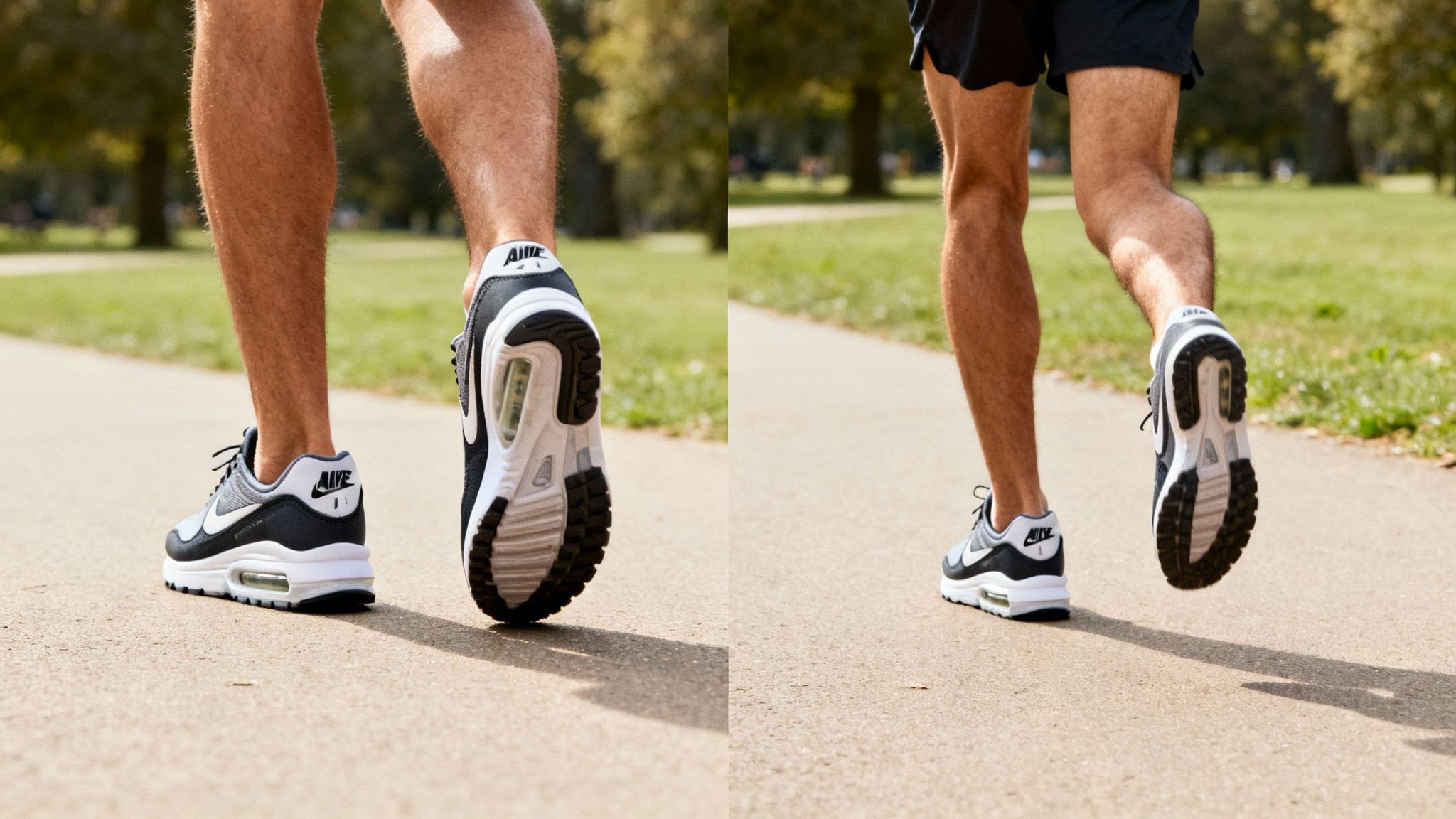
How Air Maxes Perform in Real World Scenarios
So, how does the Air Max hold up in practice? For a very short, casual jog, the ample cushioning can feel protective. A new runner might appreciate the impact absorption. But that's where the benefits end. The moment you attempt a faster pace or longer distance, the shoe's bulk and lack of energy return become undeniable, leaving your legs feeling heavy and tired.
Performance in Different Fitness Contexts
The shoe's design has clear pros and cons depending on the activity. The wide, flat base of an Air Max offers excellent stability for static movements, making it a solid choice for gym workouts that don’t involve extensive running.
Weightlifting: The stable platform is perfect for exercises like squats and deadlifts.
HIIT Sessions: The cushioning is great at absorbing impact during moves like box jumps.
General Cross-Training: For varied workouts with minimal running, their structure provides reliable support.
This is why you see them in gyms everywhere. The large air pocket is ideal for shock absorption during intense intervals on hard floors. You can explore the history of this iconic sneaker on goat.com.
The Pronation and Stability Problem for Runners
While stable for lifting, Air Maxes lack the specialized support runners need. True running shoes often include features to control pronation, the natural inward roll of your foot. Air Maxes offer no such targeted support. Their neutral design is built for cushioning, meaning they won't correct overpronation or provide the structured guidance many runners need to prevent injuries.
The stability you feel in the gym from an Air Max is very different from the dynamic support needed for running. A running shoe works with your foot's motion, while an Air Max simply provides a solid, cushioned base.
Where Your Nike Air Max Shoes Really Shine
Instead of forcing Air Maxes into a role they weren't built for, play to their strengths. They are incredibly versatile assets for an active, stylish life, excelling where all day comfort, stability, and a classic look matter most.
Think of them as the ultimate athleisure and lifestyle sneaker. Engineered for all day wear, they are perfect for long city walks, traveling, or spending hours on your feet. The plush Air unit that feels clunky on a run becomes your best friend when standing or walking, keeping fatigue at bay.

Excelling in the Gym and Beyond
In the gym, the Air Max proves its worth. While not for pavement pounding, its design offers a serious advantage for certain training types. The stability and heavy duty cushioning make it a fantastic choice for many gym based activities.
Weight Training: For lifts like squats and lunges, the flat outsole and firm cushioning lock your feet in place, ensuring proper form and safety.
Cross-Training: For workouts mixing strength and low impact cardio, they provide a great balance of support and shock absorption.
General Fitness Classes: In boot camps or circuit training, their all-around comfort and stability are a major plus.
The very features that make Air Maxes a poor choice for running, their weight, stability, and maximalist cushioning, are precisely what make them excellent for lifting weights and cross-training.
The Everyday Style Champion
Ultimately, the modern Air Max is a fashion icon. Its legendary design is a cornerstone of streetwear and casual style. Pairing them with jeans or joggers is a confident move that blends comfort with a timeless look. By using your Air Maxes for daily wear, long walks, and gym sessions, you’re using them as intended.
Finding the Right Running Shoe Alternative
Since Air Maxes belong in your casual wardrobe, it's time to find a shoe actually built for running. Performance running shoes are specialized tools where every detail is engineered for performance, comfort, and injury prevention. Choosing the right alternative depends on your needs: a daily trainer, a max cushioned shoe for long runs, or a lightweight option for race day.
Air Max vs. Dedicated Running Shoes
Let's compare a classic Air Max with a purpose built running shoe like the Nike Pegasus. The contrast is stark.
Feature | Nike Air Max (e.g., 90/95) | Performance Running Shoe (e.g., Nike Pegasus) |
|---|---|---|
Primary Purpose | Lifestyle, fashion, casual wear | Running performance, training, racing |
Cushioning Technology | Encapsulated Air unit (firm, stable) | Responsive foams (React, ZoomX) & Air units |
Upper Material | Leather, suede, heavy synthetics | Engineered mesh, knit (light & breathable) |
Weight | 14-16 oz (Heavy) | 8-10 oz (Lightweight) |
Flexibility | Stiff, rigid sole | Flexible forefoot for natural toe-off |
Heel-to-Toe Drop | 10-14 mm (High) | 8-10 mm (Moderate, balanced) |
Outsole Design | Flat, durable rubber for walking | Grippy patterns for traction on pavement |
This table clarifies that every element of a performance running shoe is optimized for running, something an Air Max is not designed to handle.
Top Alternatives for Every Runner
Here are some top tier recommendations that deliver the features Air Maxes lack.
For the Daily Trainer Seeker (Men & Women):
Brooks Ghost: A "workhorse" running shoe, the Ghost balances soft cushioning and durability. It’s a neutral shoe offering a smooth ride, ideal for daily miles.
Nike Pegasus: A legend in running, the Pegasus is known for its responsive feel and reliable fit, pairing React foam with Zoom Air units for a springy ride.
For the Cushioning Enthusiast (Men & Women):
Hoka Clifton: A max cushioned option that delivers an incredibly plush yet lightweight ride. It's perfect for long, slow runs or recovery days.
Nike ZoomX Invincible Run: Built for maximum cushioning and bounce, this shoe uses Nike's premier ZoomX foam for exceptional energy return and impact protection.
Choosing the right running shoe is about matching technology to your personal gait and goals. The difference in performance and comfort between an Air Max and a dedicated running shoe like the Brooks Ghost is felt on the very first step.
Even Nike's own performance Air technology has evolved far beyond the classic Air Max. Advanced prototypes with modern Air tech were on the feet of elite runners at the 2023 Chicago Marathon for record setting performances, proving how specialized the technology has become (World Athletics, 2023).
For more guidance, check our guide on finding your best running shoe for comfort and performance.
The Final Verdict on the Air Max Legacy
So, are Air Maxes good running shoes? The answer is a clear no. The Nike Air Max has gracefully transitioned from a running pioneer into a cultural icon. Its legacy is now in fashion and everyday comfort, not on the racetrack. The shoe is a champion of style and versatile fitness, perfect for long walks and gym sessions, just not for a serious runner’s rotation.
Using the Right Tool for the Job
The core message is simple: celebrate the Air Max for what it is, an outstanding lifestyle sneaker, and grab a dedicated performance shoe for your runs. Using the right footwear for an activity isn’t just about performance; it’s about avoiding discomfort and potential injury.
By picking a shoe engineered for running, you're honoring the legacy of the Air Max and your commitment to a healthy journey. It ensures every step, whether on the street or the track, is supported correctly.
Ultimately, the Air Max is a testament to a timeless design that has found a new, powerful role. Let it anchor your style, and let a true running shoe power your miles.

Your Top Air Max Questions Answered
Let's tackle some common questions to clear up any final doubts about running in Air Maxes.
So, Can I Run a 5K in Them?
You could physically complete a 5K in Air Maxes, but it's not recommended. For a one-off, casual jog, the cushioning might feel okay. However, their heavy, stiff design will likely make your legs feel fatigued much faster than a real running shoe would. A proper running shoe provides energy return and supports natural foot motion, enhancing comfort and reducing injury risk.
Are Some Air Max Models Better for Running Than Others?
No. None of the modern Air Max models, be it the 90, 95, 97, or 270, are built for performance running. They all share the same drawbacks for a runner: they're too heavy, not flexible enough, and lack the responsive technology found in Nike’s dedicated running lines like the Pegasus or Invincible Run.
The technology separating a lifestyle sneaker from a true running shoe comes down to purpose. Air Max is a large, soft cushion for low-impact shock absorption, while performance tech like Zoom Air is a responsive system designed to propel you forward.
What's the Real Difference Between Air Max and Zoom Air?
This is a great question. Think of the Air Max unit like a big, plush pillow designed to absorb shock for all day comfort. In contrast, Zoom Air is a performance system using pressurized air and tightly stretched fibers that snap back on impact. This creates a spring like feeling that provides energy return, pushing you into your next stride, perfect for running.
References
World Athletics. (2023, October 8). Kiptum smashes world marathon record with 2:00:35, Hassan runs second-fastest woman’s time in Chicago. Retrieved from https://worldathletics.org/competitions/world-athletics-label-road-races/news/kelvin-kiptum-sifan-hassan-chicago-marathon-2023
At Flourish-Everyday, we believe the right gear empowers your journey toward a healthier, happier you. Explore our expert guides to find the perfect shoes for every workout at https://www.flourish-everyday.com.

