Finding Your Best Running Shoe for Comfort and Performance

Updated: Jan 13
Finding the best running shoe is about finding the pair that feels made for you, for your feet, goals, and running style. The right shoe balances support, cushioning, and responsiveness. This guide is your personal consultation to help you choose confidently.
The global market for running shoes was valued at over $19 billion and is expected to hit nearly $30.5 billion by 2034, reflecting constant innovation. You can explore more about running shoe market trends here.

Index
Understanding Running Shoe Anatomy: A breakdown of the upper, midsole, and outsole.
Finding the Right Shoe for Your Run: How to match a shoe to your gait, arch, and running surface.
Top Picks for Men's Athletic Shoes: Individual reviews of the Brooks Ghost 17, HOKA Clifton 10, and Saucony Ride 18.
Top Picks for Women's Athletic Shoes: Individual reviews of the ASICS GEL-Nimbus 27, HOKA Clifton 10, and New Balance Fresh Foam 1080 v14.
Health Information & Getting the Perfect Fit: Tips for injury prevention and a checklist for a proper fit.
Comparison of Well-Being Trends: Shoe Lifespan & Usage: Guidance on when to replace shoes and why you shouldn't use them for cross-training.
Common Questions About Running Shoes: Answers to frequently asked questions.
I realize I have written several articles about this subject, but I feel compelled to help you find the right shoe for the right job. In doing so, you will prevent injury, improve performance, and enjoy your workouts more. Here at Flourish-Everyday, our mission is to provide health and fitness insights to help you thrive. Let's find your perfect shoe.

Understanding Running Shoe Anatomy
To choose the right running shoe, it helps to understand its basic components. Knowing the function of each part demystifies the technical jargon and helps you select the right tool for the job.
Every running shoe consists of three main sections working together for a smooth ride.
The Parts of a Running Shoe
The Upper: This is the soft, fabric part of the shoe that wraps your foot. Its primary role is to hold your foot securely. Most uppers use engineered mesh or knit materials for breathability, which is crucial for comfort and blister prevention.
The Midsole: This is the foam layer between your foot and the outsole. The midsole provides cushioning to absorb impact and responsiveness for a springy feel. It is arguably the most critical component for performance.
The Outsole: This is the rubber part that contacts the ground. Like tires, the outsole provides traction and durability. The material and tread pattern vary significantly between road and trail shoes.
Key Shoe Metrics Explained
Two key metrics, stack height and heel-to-toe drop, tell you a lot about a shoe's feel and performance.
Stack Height is the amount of material between your foot and the ground.
High Stack: Found in maximalist shoes (e.g., HOKA), offering maximum shock absorption for a plush ride.
Low Stack: Common in minimalist shoes, providing a better feel for the ground and more natural foot movement.
A biomechanics study noted that while high cushioning reduces foot pressure, it may increase forces on the knees and hips (Nigg, 2015). Finding a balance that suits your body is key.
Heel-to-toe drop is the height difference between the heel and the forefoot.
High drop (8-12mm): Typical in traditional running shoes, this can reduce strain on the Achilles tendon and calf muscles, often favored by heel strikers.
Low or zero drop (0-6mm): Creates a more level platform, encouraging a midfoot or forefoot strike, similar to barefoot running.
Understanding these concepts helps you interpret a shoe's specs and predict its performance before trying it on.

Finding the Right Shoe for Your Run
The best running shoe for you depends on your personal running profile, not flashy brand names. A marathoner's ideal shoe differs greatly from a trail runner's. To find your sole mate, you need to understand your body's natural movement.
Understanding Your Gait and Pronation
Gait is your unique pattern of movement. Pronation is the natural inward roll of your foot to absorb shock. The degree of pronation determines the support you need.
Neutral Pronation: Your foot rolls inward just enough to absorb impact and pushes off evenly. Neutral runners have the widest selection of shoes.
Overpronation: Your foot rolls inward excessively, causing the arch to flatten. This can stress the ankles, shins, and knees.
Supination (Underpronation): Your foot doesn't roll inward enough, placing pressure on the outer edge and impairing shock absorption.
Identifying your pronation pattern is the first step to narrowing your search to the right category: neutral, stability, or motion control.

Discover Your Arch Type with the Wet Test
Your arch height provides clues about your foot mechanics. The "wet test" is a simple way to check it at home.
Pour a thin layer of water into a shallow pan.
Step into the water to wet the sole of one foot.
Step onto a dry piece of cardboard or a dark towel.
Examine the footprint.
Normal Arch: About half of your arch is visible. This usually corresponds with a neutral gait.
Flat Arch (Low Arch): Almost the entire foot outline is visible, often associated with overpronation.
High Arch: Only the heel, ball of the foot, and a thin outer line are visible, commonly linked to supination.
Matching Your Shoe to Your Running Surface
Where you run is as important as how you run. The surface dictates your shoe's needs for grip, protection, and durability.
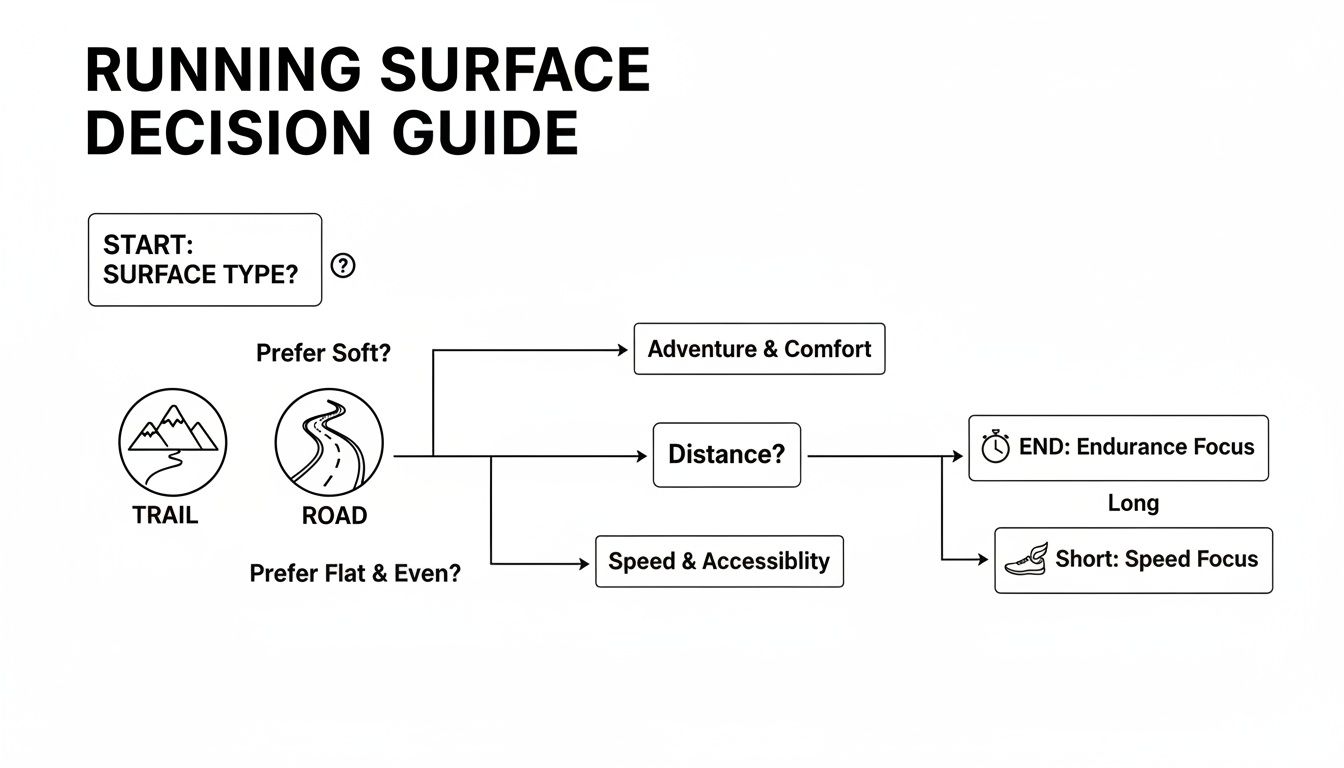
Road and trail running require different shoes. If you mix up your workouts, understanding the difference between running and cross-training shoes is also vital. Learn more in our complete guide on running and cross-training shoes.
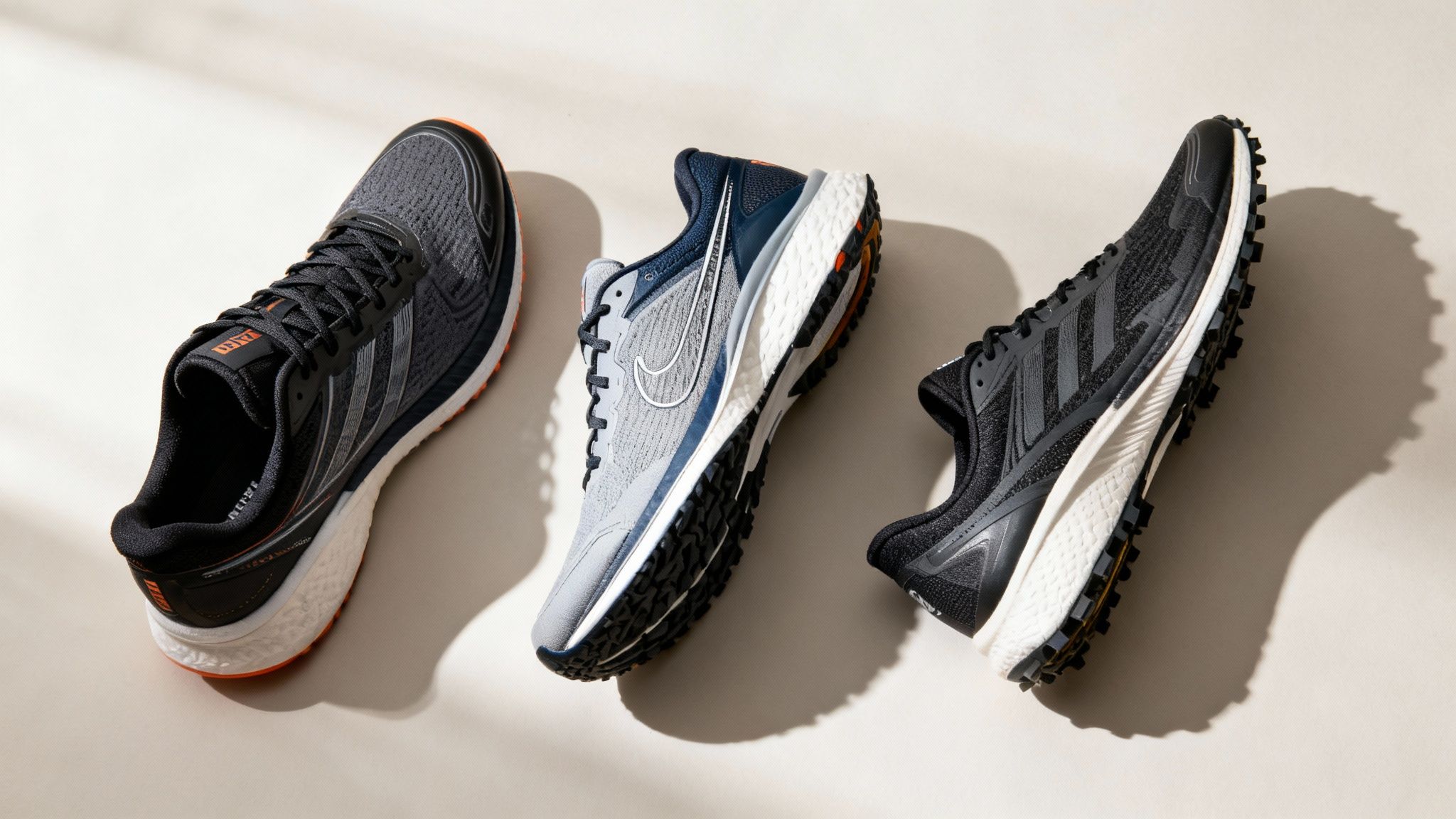
Top Picks for Men's Athletic Shoes
Now that you understand the basics, let's review some of the best models for men. These shoes are celebrated for their performance and design, suitable for daily miles, or setting personal bests.
The Everyday Workhorse: Brooks Ghost 17
The Brooks Ghost 17 is a legendary daily trainer, perfectly balancing soft cushioning with responsiveness. The latest version's nitrogen infused midsole ensures a smooth, consistent ride, making it an excellent choice for long runs, recovery jogs, and varied training.
The Max Cushion Champion: HOKA Clifton 10
For runners who prioritize plush protection, the HOKA Clifton 10 is unparalleled. Its signature high stack of soft foam provides a cloud like feel for joint comfort during high mileage weeks. Despite its appearance, the Clifton 10 is surprisingly lightweight, making it ideal for recovery runs or for heavier runners needing extra shock absorption. For more tailored advice, see our guide on the best running shoe for heavy runners.
The Responsive Speedster: Saucony Ride 18
The Saucony Ride 18 offers a lively, energetic ride for when you want to pick up the pace. Its midsole is firmer and more responsive than max-cushion models, providing a noticeable "pop" during tempo runs and intervals. It's a versatile choice for neutral runners who need a single pair for both easy days and speed workouts.
Men's Running Shoe Recommendations
Shoe Model | Best For | Key Feature |
|---|---|---|
Daily Training & Versatility | Balanced Cushion & Smooth Ride | |
Max Cushion & Recovery Runs | High-Stack Soft Foam | |
Tempo Runs & Versatility | Responsive & Energetic Feel |
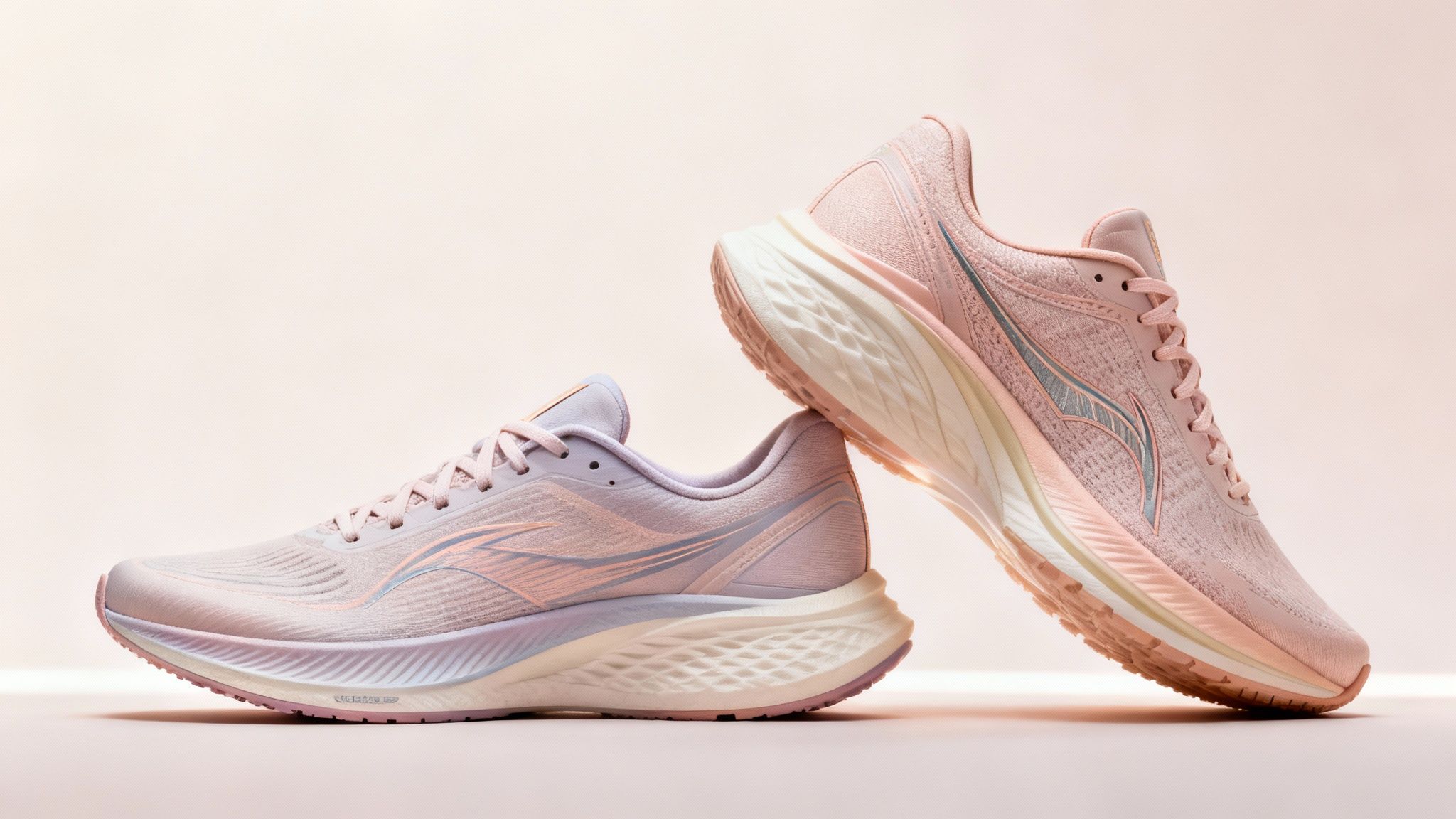
Top Picks for Women's Athletic Shoes
The best women's running shoes are more than just different colorways; they are designed to accommodate biomechanical differences. Brands often use a narrower heel and a female specific "last" (the shoe's mold) for a better fit.
The All-Around Performer: ASICS GEL-Nimbus 27
The ASICS GEL-Nimbus 27 is an incredible choice for daily miles, long runs, and recovery days. It is known for its plush, protective cushioning that delivers a consistently smooth ride without feeling sloppy. Its engineered mesh upper offers a breathable, accommodating fit, making it a reliable workhorse for any runner.
The Lightweight Cushion King: HOKA Clifton 10
The HOKA Clifton 10 combines maximum cushioning in a lightweight package. Its thick stack of soft foam makes high mileage weeks easier on the joints. The Clifton has a surprising amount of energy, making it the choice for long, slow runs and daily training where comfort is paramount.
The Versatile Daily Trainer: New Balance Fresh Foam 1080 v14
The New Balance Fresh Foam 1080 v14 strikes a beautiful balance between soft Fresh Foam X cushioning and a responsive feel. It's perfect for runners who want a shoe that performs equally well on slow jogs and faster tempo workouts. The soft, stretchy upper provides a comfortable, secure fit.
Women's Running Shoe Recommendations
Shoe Model | Best For | Key Feature |
|---|---|---|
High-Mileage & Comfort | Plush, Protective Cushioning | |
Recovery & Long Runs | Lightweight Maximal Cushion | |
All-Around Versatility | Soft & Responsive Ride |
Remember, the best running shoe is a personal decision. You can explore a wide range of expert-tested shoes on sites like Fleet Feet to compare more options.
Health Information & Getting the Perfect Fit
Even the most advanced shoe is useless if the fit is wrong. An improper fit can lead to blisters, pain, and injury. Finding the perfect fit is the crucial final step that makes all the technology work for you.
Your Practical Fitting Checklist
Your feet change size throughout the day, and your running shoe size is rarely the same as your dress shoe size.
Shop in the Afternoon: Feet naturally swell as the day goes on. Trying on shoes in the afternoon or evening provides a more accurate fit for running.
Bring Your Running Socks: The thickness of your sock affects the fit. Always try on shoes with the socks you run in.
Go Up a Half-Size: You often need to go up a half or full size from your casual shoes to give your feet room to splay.
Nailing the In-Store Test
The Thumb's Width Rule: Ensure there is about a thumb's width of space between your longest toe and the front of the shoe. This prevents your toes from hitting the end of the shoe, especially on downhills.
Check the Width and Heel
Midfoot Security: The shoe should feel snug but not tight around your midfoot.
Heel Lock: Walk or jog briefly. Your heel should stay in place with minimal slipping to prevent blisters.
Overall Comfort: The shoe should feel comfortable immediately. A quality running shoe does not need a "break-in" period.
Comparison of Well-Being Trends: Shoe Lifespan & Usage
How Often Should I Replace My Running Shoes?
This is a critical question for injury prevention. A running shoe's lifespan is measured in miles, not months. Most shoes are designed to last 300 to 500 miles. The midsole foam is the first component to degrade, losing its shock absorption capabilities. If you feel new aches or the shoes feel "dead," it's time for a replacement. For more detail, read our guide on how often to replace running shoes.
Can I Use My Running Shoes for Other Workouts?
It is generally not recommended. Running shoes are designed for forward motion and cushioning repetitive impact. Other workouts, like HIIT or weightlifting, involve lateral (side-to-side) movements. Using running shoes for these activities provides inadequate stability, increasing the risk of an ankle or knee injury, and causes premature, uneven wear. It's best to invest in a separate pair of cross-trainers.

Common Questions About Running Shoes
Is It Worth Getting a Professional Gait Analysis?
Yes, a gait analysis is mandatory, especially for new runners. A professional at a specialty running store can observe you run on a treadmill to analyze your foot strike and pronation. This helps them recommend the correct shoe category (neutral, stability, motion control) for your biomechanics, saving you guesswork and potential injury.
Why Are Quality Running Shoes Expensive?
The price reflects the extensive research, technology, and engineering in each pair. You are paying for high performance foams that balance cushioning and energy return, durable rubber outsoles for grip, and engineered uppers for a breathable, secure fit. Think of it as an investment in your health, performance, and injury prevention. And after you crush your goals, you can find the best medal display and race bib holders to celebrate your achievements.
At Flourish-Everyday.com, we are your trusted resource for shoe recommendations and expert health guidance. Visit us online to explore our guides, discounts, and find the gear that will empower your wellness journey.
References
Nigg, B. M., Baltich, J., Hoerzer, S., & Enders, H. (2015). Running shoes and running injuries: myth busting and a proposal for two new paradigms: 'preferred movement path' and 'comfort filter'. British Journal of Sports Medicine, 49(20), 1290–1294. https://doi.org/10.1136/bjsports-2015-095054

