Running Shoe Comparison Guide to Find Your Perfect Fit

Updated: Jan 16
Finding the right pair of running shoes can feel like a marathon, but this running shoe comparison guide is designed to make it a sprint to the finish. My goal is to cut through marketing jargon and provide straightforward, practical advice so you can select a shoe that suits your running style, foot shape, and goals. We'll focus on what truly matters in performance to help you find your perfect pair.

Your Guide to Choosing the Right Running Shoe
Welcome to the only resource you'll need to navigate the world of running shoes. This guide is packed with clear, side-by-side comparisons to help you find the perfect shoe, whether you’re a beginner or a seasoned marathoner. We’ll explore key differences in shoe technology, compare flagship models from top brands, and provide actionable recommendations.
There is a global shift toward healthier lifestyles, highlighting why the right shoe is a critical investment in your performance and long term health.
A great running shoe should support your natural movement, not fight it. Understanding features like cushioning, stability, and energy return is the first step toward running stronger and preventing injuries.
Article Section Index
Section Title | What You Will Learn |
|---|---|
A breakdown of midsole foams, stability features, and heel-to-toe drop to decode technical jargon. | |
Side-by-side reviews of flagship models from leading brands, focusing on their ideal user and purpose. | |
Targeted recommendations for men and women, curated for daily training, race day, and trail running. | |
An exploration of the connection between footwear and injury prevention, including how to identify your foot type. | |
A comparison of two popular footwear philosophies and their impact on running form and health. | |
Clear answers to common questions about shoe replacement, usage for other workouts, and whether price equals quality. |
Understanding Core Running Shoe Technologies
Before comparing brands, it's essential to understand the technology inside the shoe. The running shoe comparison guide would not be complete unless you know the terminology that helps you look past marketing hype and choose features that benefit your specific running mechanics.
The midsole is the engine of any running shoe, dictating cushioning, responsiveness, and stability. While EVA (Ethylene Vinyl Acetate) foam was once the standard, modern shoes often feature advanced compounds like TPU (Thermoplastic Polyurethane) for better durability and energy return. Research indicates that advanced shock absorption technology can reduce injury risk by up to 25% (The American Journal of Sports Medicine, 2018).

Cushioning: From Soft to Fast
Cushioning should balance comfort with ground contact, and align with your training requirements.
Maximum Cushion: Thick, plush midsoles ideal for long distances or recovery days, prioritizing comfort over responsiveness.
Moderate Cushion: The versatile sweet spot for most daily trainers, offering a blend of shock absorption and energy return.
Minimal Cushion: Lightweight, low profile shoes that provide a connection with the ground feel, encouraging natural foot movement but requiring strong form.
Stability and Heel-To-Toe Drop
Stability features and heel-to-toe drop are also critical. Stability systems are designed for runners who overpronate (when the ankle rolls too far inward upon landing), often using firmer foam or guide rails to promote a neutral foot position.
The heel-to-toe drop is the height difference between the heel and forefoot.
High Drop (8-12mm): Traditional design that can reduce strain on the Achilles tendon and calves, often encouraging a heel strike.
Low Drop (4-7mm): Common in performance shoes, promoting a midfoot or forefoot strike.
Zero Drop (0mm): Places the heel and forefoot on the same level to mimic a barefoot stance, requiring an adjustment period.
For more on biomechanics and injury prevention, explore our educational resources at https://www.flourish-everyday.com/education.
Comparing Top Running Shoe Brands and Models
Now, let's see how brands like Brooks, Hoka, and ASICS apply these technologies. Each brand has a distinct philosophy that translates into a unique running experience. We'll examine what each flagship shoe is built for, whether it's a comfortable recovery shoe or a responsive speed day model.
Brooks: The Reliable Daily Trainer
Brooks has built its reputation on consistency and dependability. Their BioMoGo DNA foam adapts to a runner's weight and pace, creating a smooth, comfortable ride. The Brooks Ghost is a prime example: a balanced neutral daily trainer known for its durability and predictable feel, making it a workhorse for logging miles.
Hoka: The Maximalist Cushioning Pioneer
Hoka revolutionized the industry with its maximalist cushioning. Their oversized midsoles provide exceptional shock absorption and a plush feel. The Hoka Bondi epitomizes this approach, offering a marshmallow-soft ride perfect for recovery runs and long distances where comfort is paramount. The trade-off can be less responsiveness on faster runs.
ASICS: The Fusion of Tradition and Innovation
ASICS combines decades of biomechanical research with modern tech. Their signature GEL cushioning absorbs impact, while newer foams like FF BLAST+ provide a lighter, more energetic feel. The ASICS GEL-Kayano is a legendary stability shoe that offers structured support for overpronators without feeling clunky.
Saucony: The Responsive Speed Specialist
Saucony excels in creating responsive, lightweight shoes. Their PWRRUN foam family is engineered for high energy return, giving their shoes a snappy, propulsive feel ideal for tempo runs and race day. The Saucony Endorphin Speed, with its responsive foam and nylon plate, makes running fast feel almost effortless.
Our collection of in-depth product reviews covers even more options from leading brands to help you compare.
Top Athletic Shoe Reviews for Men & Women
Choosing a running shoe requires understanding the biomechanical differences between men and women. Gender specific designs address these anatomical distinctions to improve comfort, support, and injury prevention. For instance, women often have a wider Q-angle (the angle where the femur meets the tibia), which can increase pronation. Many women's shoes account for this with tailored midsole densities or support features.
Top Athletic Shoe Reviews for Women
Women's running shoes are often designed with a narrower heel, more forefoot space, and softer cushioning to accommodate a generally lighter body mass.
Softer Midsole Foam: Ensures lighter runners receive adequate shock absorption.
Accommodating Upper: A flexible upper hugs the typical female foot shape (narrower heel, wider forefoot).
Targeted Support: Stability features are tuned for pronation patterns associated with a wider Q-angle.
Top Athletic Shoe Reviews for Men
Men's shoe design typically focuses on durability and robust support for a higher average body weight and a wider, longer foot shape.
Firmer Cushioning: Midsoles are engineered to withstand greater impact forces without compressing over time.
Wider Base of Support: A wider platform provides a stable foundation for a heavier frame.
Durable Outsole: Tougher rubber compounds handle increased abrasion.
Top Shoe Recommendations by Runner Profile
This table highlights top picks for specific running goals. For more detailed comparisons, check out our full top lists of athletic shoes.
Runner Profile | Top Recommended Shoe (Men) | Top Recommended Shoe (Women) | Key Feature Highlight |
|---|---|---|---|
Daily Training | Balanced cushioning perfect for consistent, comfortable miles. | ||
Race Day Speed | A responsive plate and energetic foam for maximum performance. | ||
Trail Running | Aggressive lugs for superior grip and a durable upper. | ||
Stability/Support | Medial support systems that guide the foot for a stable ride. |

How the Right Shoe Impacts Your Health and Wellbeing
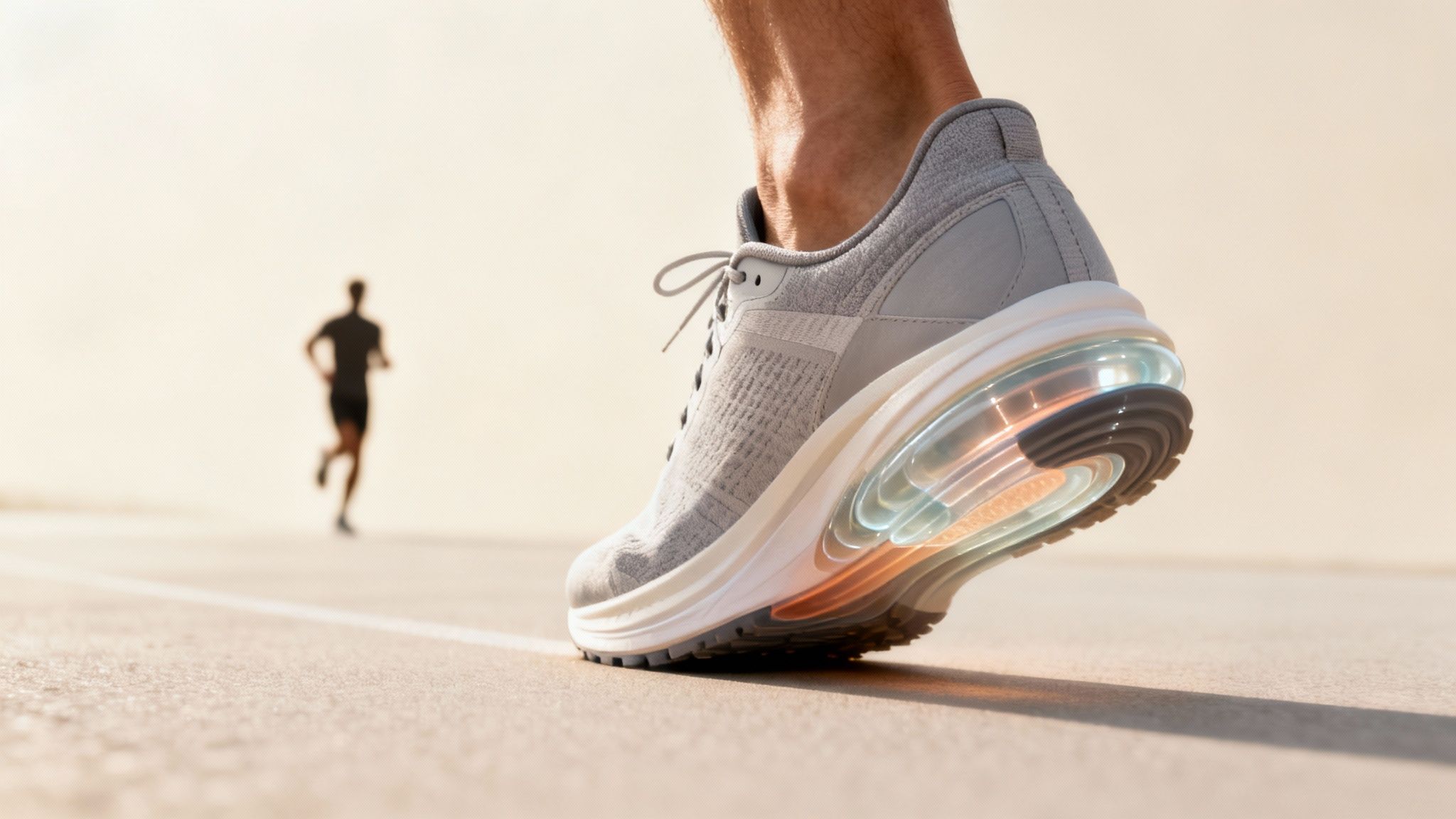
A running shoe is more than gear, it's a critical tool for your long term health. The right pair acts as your first line of defense against the repetitive impact of running. Improper footwear is a contributing factor in a significant number of running related injuries, making the right choice essential for staying healthy (British Journal of Sports Medicine, 2015).
Preventing Common Running Injuries
Many common injuries can be traced back to shoes that don't match a runner's mechanics.
Plantar Fasciitis: Heel pain often caused by inadequate arch support. A shoe with proper cushioning and support can distribute pressure evenly.
Shin Splints: Pain along the shin bone from impact shock, often exacerbated by overpronation. Stability shoes can help control this motion.
Achilles Tendinitis: An overly low heel-to-toe drop can strain the Achilles tendon. A shoe with sufficient heel cushioning can absorb impact and reduce pressure.
Understanding Your Foot Type and Gait
The "wet test" is a simple way to identify your arch type. Wet your foot, step on cardboard, and examine the footprint.
Neutral Pronation: A clear curve along the inside of your foot. Your foot rolls inward just enough to absorb shock. Neutral shoes are ideal.
Overpronation: A flat footprint with little to no curve. Your arch likely collapses inward. A stability shoe provides necessary support.
Supination (Underpronation): A high arch with only the outer edge visible. Your foot doesn't roll inward enough. A highly cushioned, flexible neutral shoe is best.
Proper shoe care, like maintaining foot hygiene and shoe freshness, is also crucial.
Wellbeing Trends: Minimalist vs. Maximalist Shoes
The debate between minimalist and maximalist running shoes is a key trend in runner wellbeing. Minimalist shoes, with their thin soles and zero drop, aim to mimic barefoot running, promoting a forefoot strike and strengthening foot muscles. Proponents believe this leads to a more natural, efficient gait. However, transitioning requires caution to avoid injuries like stress fractures.
Maximalist shoes, pioneered by brands like Hoka, take the opposite approach. Their thick, heavily cushioned midsoles are designed to absorb maximum impact, reducing stress on joints. They are favored for ultra marathons and by runners seeking extra protection. Critics argue that the thick cushioning can reduce ground feel and potentially alter natural biomechanics. The best choice depends on your body, running style, and injury history.

Your Running Shoe Questions, Answered
To wrap up, here are answers to some frequently asked questions.
How Often Should I Replace My Running Shoes?
The general guideline is every 300 to 500 miles. However, your body weight, gait, and running surfaces affect a shoe's lifespan. Look for signs of wear: a compressed midsole with visible creases, a worn down outsole tread, or a "flat" feeling during runs. Running in worn out shoes increases your risk of injury as the cushioning and support structures degrade.
Can I Use Running Shoes For Gym Workouts?
It's not recommended. Running shoes are built for forward motion. Their high, cushioned heels can create instability during lateral movements common in gym workouts or weightlifting. A cross-training shoe with a flatter, more stable base is a safer and more effective choice for the gym.
Is A More Expensive Shoe Always Better?
No. The "best" shoe is not determined by its price but by its suitability for you. A high end racing shoe might be perfect for an elite athlete but a poor choice for a beginner who needs stability. Focus on finding a shoe that matches your foot shape, gait, and running goals. Mid-range daily trainers often provide the best combination of durability, comfort, and value for most runners.
Here at Flourish-Everyday, our mission is to help you find the perfect gear for your fitness journey. Check out our expert reviews and guides to find the best shoes for running, training, savings, and everything in between. https://www.flourish-everyday.com
References
Persistence Market Research. (2024). Running Shoes Market Outlook (2024 to 2034).
The American Journal of Sports Medicine. (2018). Influence of Shoe Technology on Injury Rates in Runners.
British Journal of Sports Medicine. (2015). Running shoes and running injuries: mythbusting and a proposal for two new paradigms.

