Finding Your Footing with the Top Cross-Training Shoes in 2026

Updated: Jan 15
When you're hunting for the top cross training shoes, your choice is easily the most critical piece of gear in your gym bag. The best pairs offer stability for heavy lifts, flexibility for explosive movements, and enough cushion for high impact drills. Getting it right boosts your performance and helps sidestep injuries.

Table of Contents
Your Foundation for Every Workout
Think of your shoes as the foundation of a house. A weak base compromises everything built on top of it. Similarly, the wrong shoe can wreck your form, sap your power, and lead to unnecessary strain. The right cross-training shoe, however, acts as a solid, reliable platform for your entire fitness routine.
This guide will walk you through everything you need to know. We'll break down the anatomy of a great performance shoe, share our top picks for both men and women, and give you practical tips for matching footwear to your workout style.
My goal is to help you find a shoe that not only fits your feet but elevates your training. For a deeper dive into the basics, check out our guide on what cross- training shoes are.

Navigating the Competitive Market
The athletic shoe market is crowded, making it tough to distinguish between genuine performance features and clever marketing. Big brands invest heavily in technology and design to create versatile, durable shoes for any gym activity.
A great shoe is a versatile tool. It needs to be stable enough for a heavy squat but flexible enough for a box jump, all while keeping you comfortable and secure. This multi purpose design is what sets a true cross-trainer apart.
Knowing the key players provides helpful context. Nike still dominates the global cross-training shoe market, holding an impressive 30% market share, with Adidas as the second major player at around 22% (Market Report Analytics, 2023). Other brands like New Balance and Under Armour keep the market competitive. You can explore more insights about the cross-training shoe market on marketreportanalytics.com.
This guide will help you look past brand names and zero in on features that matter for your fitness goals.
The Anatomy of a High Performance Shoe
What separates a decent gym shoe from one of the top cross training shoes? The secret is in the engineering. Smart construction supports every squat, jump, and sprint. Understanding the components helps you see past the hype and find footwear that truly performs.
A cross-trainer's sole is built for the varied "terrain" of a gym floor, needing a specific blend of grip for quick pivots and toughness for abrasive surfaces.
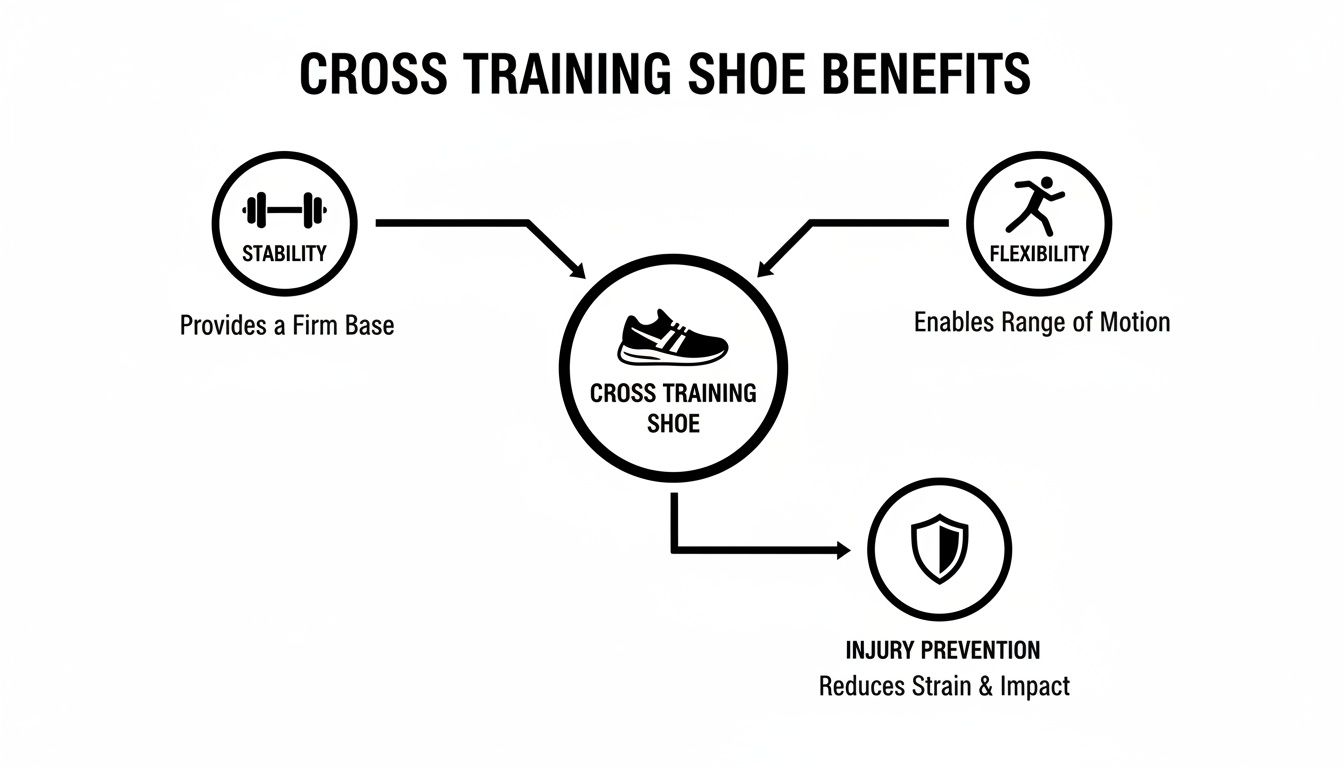
Stability for lifting, flexibility for dynamic movements, and injury prevention are the three pillars of an effective cross-training shoe.
The Foundation: The Outsole and Midsole
The outsole is the rubber part that hits the floor. Quality cross-trainers have a multi-directional tread pattern for solid grip during lateral shuffles or sled pushes, preventing slips during quick directional changes.
The midsole is the shoe's cushioning and stability engine. Unlike a plush running shoe, a cross-trainer's midsole is much firmer. This creates a stable platform, preventing the foam from compressing during heavy lifts like squats.
A shoe that's too soft is like trying to lift weights while standing on a mattress, it's unstable and inefficient. The firm midsole of a cross-trainer provides a solid, responsive base that translates your force directly into the ground.
While firmness is crucial for lifting, the midsole still needs to absorb impact from activities like box jumps. This dual purpose design makes these shoes incredibly versatile.

The Upper and Heel Counter
The upper wraps around your foot. In top cross-training shoes, it’s a protective shell made from engineered mesh for breathability, reinforced with tough overlays in high wear zones, like the inner side for rope climbs.
The heel counter, a rigid insert at the back, cups your heel to prevent lateral movements. This feature is vital for stability during exercises like lateral lunges or burpees.
These components work in harmony to handle the demands of modern fitness, making your workouts safer and more effective.
Top Cross-Training Shoes for Men
Landing the perfect pair of athletic shoes is paramount for performance and safety. The best cross training shoes for men are built with a specific cocktail of stability, toughness, and versatility. This is a breakdown of what makes select models rise above the rest.
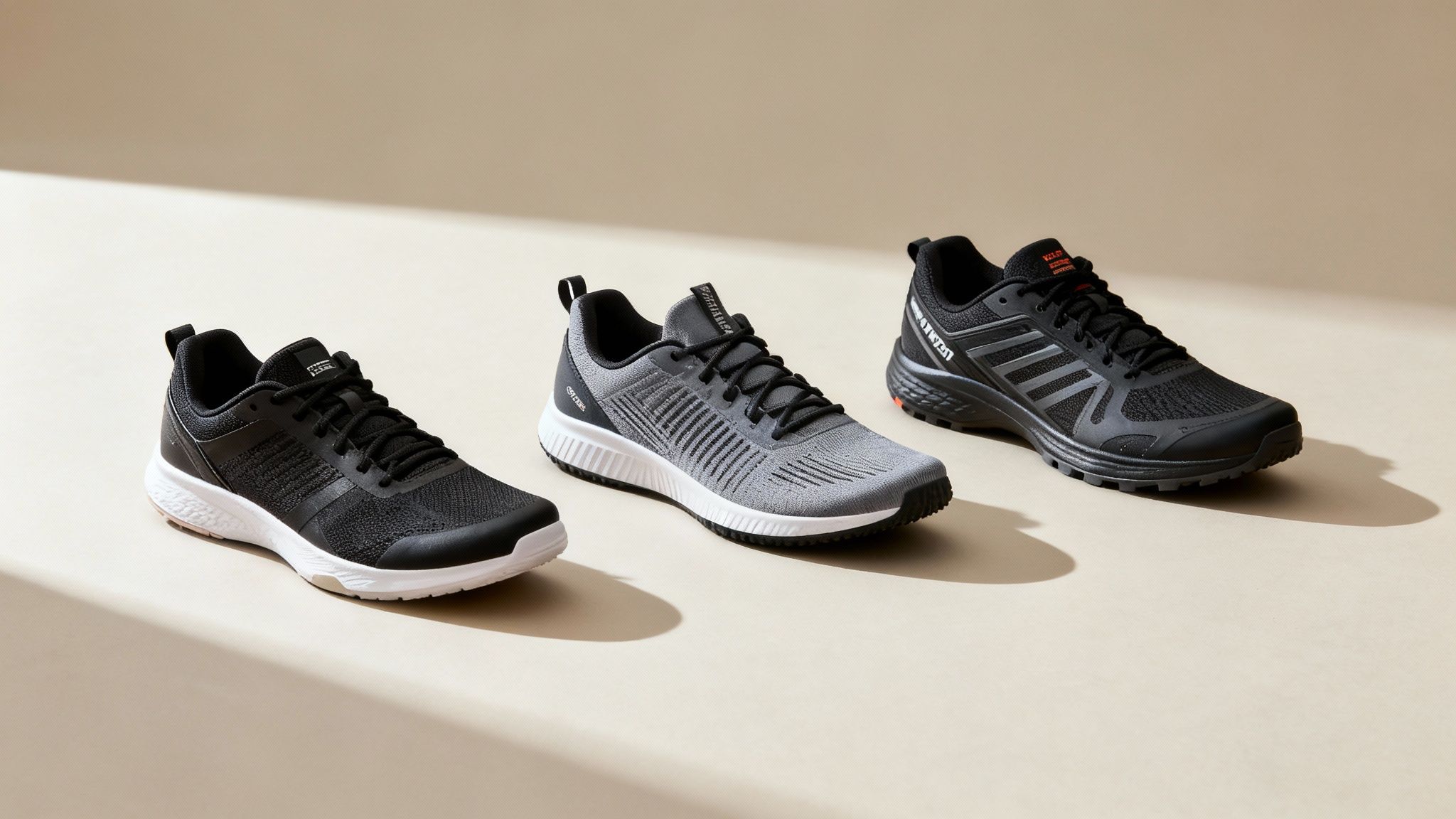
Men's Top Cross Training Shoe Comparison
This table provides a snapshot of our top picks, breaking down their strengths and best use cases.
Shoe Model | Best For | Stability Rating (1-5) | Flexibility Rating (1-5) | Key Feature |
|---|---|---|---|---|
Versatile WODs, functional fitness | 4 | 4 | Wide toe box for natural splay | |
Heavy lifting, powerlifting, stability focus | 5 | 2 | Firm, flat heel for maximum ground contact | |
Durability, rope climbs, all-around use | 4 | 3 | SuperFabric® upper for extreme abrasion resistance |
Each shoe offers unique benefits. The right choice depends on your primary gym activities.
The Versatile All-Rounder
For those who mix squats, box jumps, and treadmill sprints, a versatile cross-trainer is essential. The Reebok Nano series is a prime example, striking an incredible balance. Its roomy toe box allows natural toe spread for power and stability, while responsive cushioning up front supports plyometrics.
Key features of a versatile shoe include:
Moderate Heel-to-Toe Drop (4-7mm): A sweet spot between a flat lifting platform and the lift needed for dynamic moves.
Durable Upper: Reinforced mesh and TPU overlays withstand abrasion from activities like rope climbs.
Flexible Forefoot: The front of the shoe bends easily, preventing a stiff feel during agility drills.
These are the staples for CrossFit WODs or any functional fitness plan.
The Stability Specialist for Heavy Lifting
When moving serious weight, stability is nonnegotiable. Shoes built for heavy lifting create a rock solid connection to the floor. The Nike Metcon line exemplifies this, with a firm, flat, and wide heel that resists compression under heavy loads.
A stable lifting shoe acts like a concrete foundation for your body. It ensures every ounce of force you generate is transferred directly into the ground to move the weight, rather than being lost in the shoe's cushioning.
Key features of stability focused models include:
A removable Hyperlift insert (in some Metcons) to increase heel-to-toe drop, improving ankle mobility for deeper squats.
A low profile heel for a grounded feel, improving balance and control.
Rope guards up the sides for grip and protection during rope climbs.
While suitable for short cardio bursts, their stiffness makes them less ideal for running. For more guidance, pick the best gym shoes for your feet with guides focused on matching features to training needs.

Top Cross Training Shoes for Women
Finding the top cross training shoes for women involves more than choosing a smaller size. The best brands design shoes considering female biomechanics. The right shoe should feel like part of your foot, powering every move.

We'll explore models praised for their secure fit, supportive design, and technical ability.
Tailored for the Female Athlete
Leading brands now use data on female foot anatomy to create shoes that fit and function better. This often means a narrower heel, higher arch, and more room in the forefoot. The result is a shoe that locks your heel in place without feeling tight, improving stability and reducing blister risk.
A shoe designed specifically for the female foot isn't a luxury; it's a performance essential. Proper fit directly translates to better stability, more efficient power transfer, and a significant reduction in injury risk.
This tailored approach ensures the shoe works with your body, not against it.
The All-Around HIIT and Class Champion
For HIIT, circuit training, or dance fitness, a shoe that balances agility and support is key. The New Balance Minimus TR is loved for its lightweight feel and flexible sole, allowing natural foot movement while providing a stable, low profile base.
A winning shoe for this environment has:
Lightweight Construction: Lighter builds keep you quick and fight fatigue.
Responsive Cushioning: Enough cushion to absorb impact from jumps, but firm enough for floor feedback.
Lateral Support: Reinforced uppers and a wider base prevent foot rolling during lateral movements.
The Stable and Supportive Strength Trainer
For strength training, stability is paramount. Models like the ASICS MatBlazer or Altra Solstice XT are built for this purpose, with firm, flat soles that minimize energy loss and create a solid platform.
Key features for a strength focused shoe include:
Minimal Heel-to-Toe Drop (0-4mm): Promotes a more stable, natural stance during heavy lifts.
Firm Midsole: Prevents compression under heavy loads for a consistent base.
Durable Outsole: Provides excellent grip on gym floors.
For help matching a shoe to your foot's needs, resources can show you how to pick the best gym shoes for your feet.
How to Choose Your Perfect Training Partner
Picking the right shoe is like finding a great workout partner, it needs to match your style and support your goals. The global cross-training shoe market was valued at USD 9.5 billion in 2023 and is expected to hit USD 17 billion by 2032 (Market Report Analytics, 2023), driven by the rise of gym workouts and HIIT. This growth means more options, so you need to know what you’re looking for.
Match the Shoe to Your Workout Style
The most important factor is what you do at the gym. A powerlifting shoe is a brick in a cardio class, and a cardio shoe offers no support for heavy lifts.
For the Weightlifter: Prioritize stability. Look for a minimal heel-to-toe drop (0-4mm), a firm, flat sole, and a solid heel.
For the HIIT Enthusiast: You need a lightweight, flexible shoe with great lateral support and responsive cushioning for explosive movements.
For the All-Rounder: A standard cross-training shoe is ideal. Aim for a moderate drop (4-7mm) that balances stability and flexibility. Note that even the best all-rounders differ from dedicated running shoes. See our guide comparing running vs. cross-training shoes.
For more guidance, check this resource on understanding different types of gym trainers.
Understand Your Foot Mechanics
Your arch type (flat, neutral, or high) is crucial for support and comfort. The wrong shoe can cause pain or injury. A specialty athletic store can help determine your arch type.
Your foot's arch acts as your body's natural shock absorber. A shoe that complements your arch type works with your body's mechanics, not against them, leading to better form and reduced strain.
Practical Tips for the Perfect Fit
Shop in the Afternoon: Your feet swell during the day, so trying on shoes later ensures a fit that won't feel tight mid workout.
Wear Your Workout Socks: Bring your typical gym socks.
Check for Thumb Width Space: Ensure about a thumb's width of room between your longest toe and the shoe's end.
Making Your Investment Last
A little care extends the life of your top cross training shoes, preserving the support that protects you from injury.
Simple Care for Peak Performance
Keep shoes away from washing machines and dryers, as heat and tumbling can destroy the glues and foams. Instead:
Wipe Down After Use: Use a damp cloth to remove chalk, dust, or dirt.
Spot Clean Stains: Use a soft brush with mild soap and water.
Air Dry Naturally: Let shoes air out at room temperature. Stuffing them with newspaper helps absorb moisture.

Knowing When to Say Goodbye
Even the best shoes wear out. Using them past their prime increases injury risk as the midsole foam compresses and loses its shock absorption.
Think of your shoe's midsole like the suspension on a car. When it's shot, you feel every single bump in the road. Training on worn out cushioning puts all that stress directly on your ankles, knees, and even your back.
Look for these signs that it’s time for a new pair:
Worn Outsole Tread: If the rubber patterns are smooth, your grip is gone.
Visible Midsole Wrinkles: Deep creases in the foam signal it’s compressed.
Reduced Comfort and Support: If shoes feel "flat" or cause new aches, they're done.
Generally, replace cross-training shoes every 6-12 months or after 300-500 hours of use. See our evidence-based guide on how often to replace your athletic shoes.
A Few Final Questions
Let's tackle some common questions about athletic shoes.
Can I Just Use My Running Shoes for Cross Training?
It’s not a great idea. Running shoes are built for forward motion and have soft, elevated heels. This creates an unstable platform for lateral movements or heavy lifts, increasing your risk of rolling an ankle. A proper cross-training shoe offers a flatter, firmer base for stability.
How Often Should I Replace My Cross Training Shoes?
The general rule is every 6 to 12 months or after 300-500 hours of use. However, your eyes and feet are the best judges. Look for a "flat" midsole, worn tread, or tears in the upper. Training on worn-out shoes transfers impact straight to your joints.
What's This Heel-To-Toe Drop Thing, and Why Does It Matter?
Heel-to-toe drop is the height difference between your heel and forefoot inside the shoe.
Low Drop (0-4mm): Creates a flatter feel, ideal for weightlifting balance and power transfer.
High Drop (8mm+): Common in running shoes, it can reduce strain on the Achilles tendon.
Moderate Drop (4-7mm): The sweet spot for cross-trainers, balancing stability and cushion.
Are More Expensive Cross Training Shoes Always Better?
Not necessarily. The "best" shoe fits your foot, budget, and workout style. Many excellent, durable shoes are available at mid range prices. Focus on features that matter to you, like a stable base or flexible forefoot, rather than the price tag.
References
Flourish-Everyday. (n.d.). How Often to Replace Running Shoes: An Evidence-Based Guide. Retrieved from https://www.flourish-everyday.com/post/how-often-to-replace-running-shoes-an-evidence-based-guide
Gymsnack. (n.d.). Understanding Different Types of Gym Trainers. Retrieved from https://gymsnack.com/pages/gym-trainers
Market Report Analytics. (2023). Cross Training Shoes Market Report. Retrieved from https://www.marketreportanalytics.com/reports/cross-training-shoes-209018
Here at Flourish-Everyday, our goal is to help you find the perfect gear for your fitness journey. Take a look through our expert guides and recommendations to find the best shoes for your needs. https://www.flourish-everyday.com


