What Is Heel-To-Toe Drop and Why It Matters for Your Run
- Flourish Everyday Health And Fitness

- Jan 17
- 12 min read
Updated: Jan 19
Every time I read about athletic shoes, they talk about Heel-To-Toe Drop. I had no idea what they were talking about and didn't think it really mattered as long as I got a decent shoe. I suppose I reached a point a few years ago where I had better learn about the importance and relevance of this term. I am sure glad I did. The Heel-To-Toe Drop is extremely important in picking the right shoe for the right job and preventing injury.
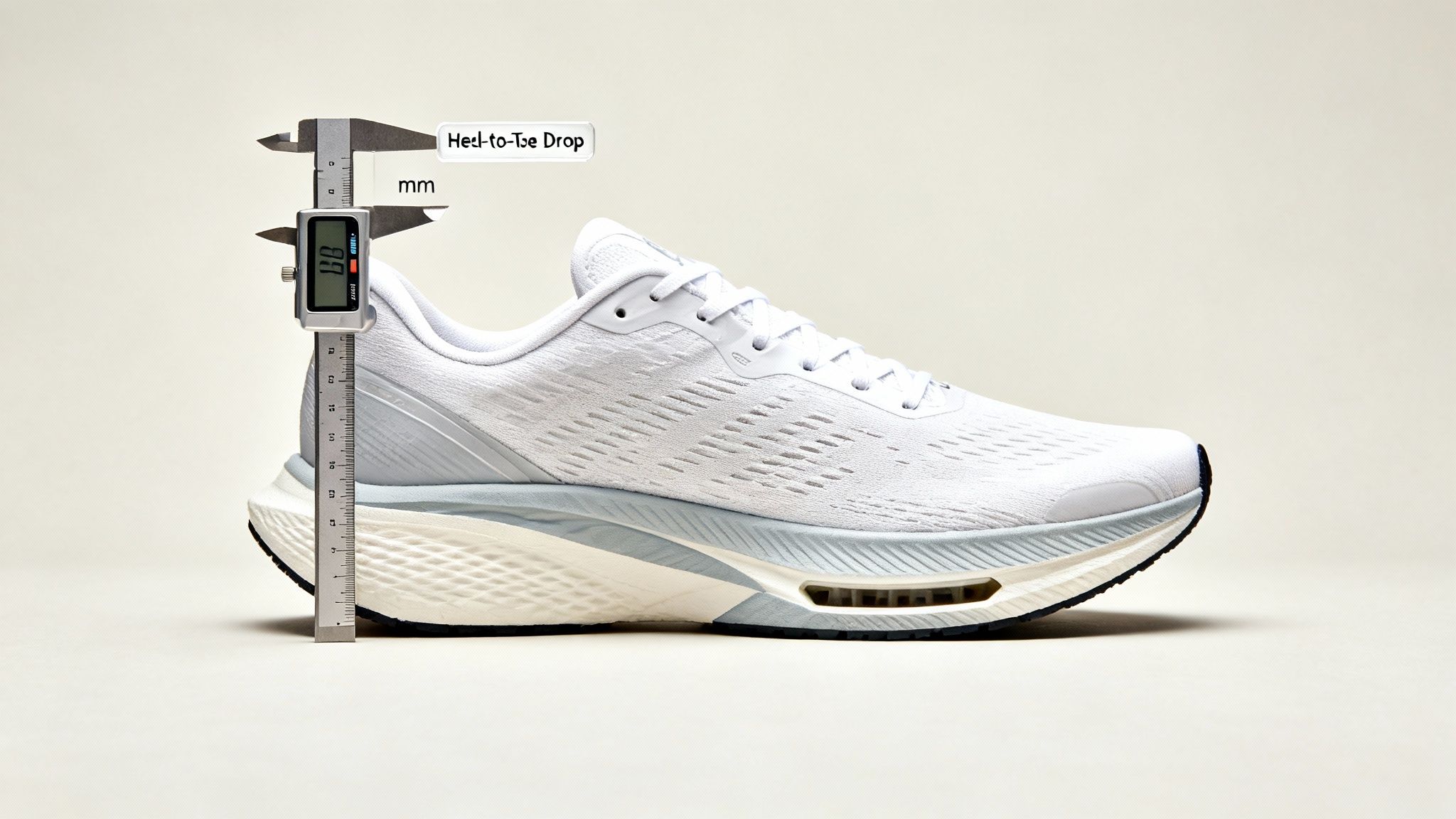
Heel-to-toe drop, sometimes called "shoe offset," is the height difference between your shoe's heel and its forefoot, measured in millimeters (mm). This single number, typically between 0mm and 14mm, significantly impacts your body's mechanics with every step. Understanding it is critical for everyone from marathon runners to CrossFitters.

Index
Unpacking The Basics Of Heel To Toe Drop
Think of heel drop as a small ramp built into your shoe. A higher drop means a steeper ramp, while a zero-drop shoe is completely flat. This design dictates how your foot strikes the ground and how impact travels up your body.
The focus on drop grew during the 1970s running boom, as companies added heel cushioning for runners who landed on their heels. However, what's printed on the box isn't always reality. Independent lab tests have found inconsistencies, with some shoes off by over 50% from the brand's claim. You can see details in this study on shoe measurement discrepancies at RunRepeat.com. For example, a shoe listed at 5mm might actually be 8mm, a 60% difference, while another might measure 2.7mm, which is 46% less.
Heel Drop Explained at a Glance
Concept | Brief Explanation |
|---|---|
Heel-to-Toe Drop | The height difference (in mm) between the heel and the forefoot of a shoe. |
Zero Drop (0mm) | A completely flat shoe, promoting a midfoot or forefoot strike. |
Low Drop (1-4mm) | A minimalist feel that encourages a more natural gait. |
Mid Drop (5-8mm) | A versatile option that balances cushioning and natural foot movement. |
High Drop (9mm+) | Traditional design that offers significant heel cushioning, ideal for heel strikers. |
Why This Measurement Is Important
So, what is heel-to-toe drop in real world terms? It’s a feature that shapes how a shoe performs and whether it's right for your body.
Understanding your shoe's drop helps you:
Manage Injury Risk: The right drop can help take pressure off sensitive spots like your knees, shins, or Achilles tendon.
Optimize Performance: It can make you more stable during a heavy lift or encourage a more efficient foot strike when running.
Make Smarter Purchases: Understanding drop lets you choose footwear based on functional design.
Heel drop isn't just a number, it's a tool that can either work with your body's natural movement patterns or against them. Getting it right is a foundational step toward better performance and long term joint health.
This guide will explain how drop affects your movement, break down the different categories, and help you match the right shoe to your workout.

How Heel Drop Changes the Way You Move
Think of your body as a suspension system. Your feet, ankles, knees, and hips work together to absorb shock. The heel-to-toe drop of your shoe is like an adjustment knob, changing how impact forces are managed.
This measurement directly affects your foot strike, how your foot hits the ground. A change in foot strike alters joint angles and shifts which muscles do the most work. Finding a shoe that works with your body is key.
The Biomechanics of High and Low Drops
Shoes with a higher drop (8-12mm) create a noticeable ramp. This design guides your foot into a heel strike. The built up heel takes some of the initial jolt, but that force travels up the kinetic chain, putting more load on the knees and hips. A high drop can ease the burden on your lower legs, specifically the Achilles tendon and calf muscles.
Conversely, a lower drop shoe (0-4mm) provides a flatter platform, encouraging a midfoot or forefoot landing. In this case, your calf muscles and Achilles tendon work more like natural springs to absorb impact.
The core principle is simple: lower drops load the ankle joint and lower leg structures more, while higher drops shift that load further up to the knee and hip. Neither is inherently "better", it's about matching the shoe's mechanics to your body's needs.
Biomechanics research supports this. Studies have shown that switching from a 12mm to a 4mm drop shoe can significantly alter foot strike patterns. You can read more about these biomechanical findings to see the data for yourself.
How Heel Drop Affects Different Activities
This concept extends beyond running and has implications for all types of training.
For Running: A heel striker prone to Achilles pain might prefer a high drop shoe. A midfoot striker might prefer a lower drop to engage lower leg muscles.
For Weightlifting: For squats or deadlifts, stability is non-negotiable. A zero or low drop shoe provides a flat, stable base for power generation. A high drop would tilt you forward, compromising form and safety.
For Cross-Training: For workouts mixing running, jumping, and lifting, a mid range drop (5-8mm) is often ideal. It offers enough stability for lifting without feeling awkward for short runs.
Ultimately, understanding these shifts in biomechanics allows you to pick a shoe that aligns with your activities and long term health.
Decoding the Different Heel Drop Categories
Not all shoe drops are created equal. Figuring out the different categories is the first step in matching shoes to your fitness goals.
Let's break down the four main categories. Each offers a unique feel and encourages different movement patterns.
Heel Drop Categories and Their Ideal Use Cases
Drop Range (mm) | Category | Best For | Potential Pros | Potential Cons |
|---|---|---|---|---|
0mm | Zero Drop | Powerlifting, heavy squats/deadlifts, minimalist running | Maximum stability, promotes natural foot mechanics | High strain on calves/Achilles; requires a long adaptation period |
1-4mm | Low Drop | CrossFit, functional fitness, runners transitioning to minimalist | Good stability with some versatility for dynamic movement | Still demanding on lower legs; not ideal for heavy heel strikers |
5-8mm | Mid Drop | Daily running, general gym training, recreational athletes | The "do-it-all" option; balances cushion and ground feel | Not specialized enough for elite lifting or marathon running |
9mm+ | High Drop | Heel-striking runners, individuals with Achilles/calf issues | Maximum heel cushioning and shock absorption | Can promote over-striding; less stable for lateral moves |
Picking the right drop isn't about finding the "best" one, but about finding the best one for you.

Zero Drop (0mm)
Zero drop shoes are completely flat, putting your foot in a natural, neutral position.
Who It's For: A favorite among powerlifters and minimalist runners aiming for a midfoot or forefoot strike.
Pros: Delivers incredible stability and can help build strength in your feet and lower legs.
Cons: Puts significant strain on the calves and Achilles tendon, requiring a long, careful transition period.
If you're curious about this style, our guide on Grand Attack Barefoot Shoes dives deeper into minimalist footwear.
Low Drop (1-4mm)
Low drop shoes offer a slight heel lift while keeping you close to the ground, providing more versatility than a true zero drop shoe.
Who It's For: Perfect for CrossFit athletes and runners transitioning toward minimalist shoes.
Pros: Stable enough for lifting, with cushion for dynamic movements. They encourage a midfoot strike without being as extreme as a 0mm shoe.
Cons: Can still feel unforgiving for dedicated heel strikers. A transition period is still needed.
Mid Drop (5-8mm)
This is the do-it-all category. Mid-drop shoes balance cushioning and responsiveness, making them popular for a wide range of activities.
Think of a mid drop shoe as the versatile hybrid. It’s stable enough for most gym work yet cushioned enough for daily runs, making it an excellent starting point for those unsure of their ideal drop.
Who It's For: Daily runners, recreational athletes, and those who mix running with general training.
Pros: Extremely versatile, working well for different foot-strike patterns.
Cons: A jack-of-all-trades, master of none. They may lack the specialized features for elite lifting or marathoning.
High Drop (9mm+)
High-drop shoes are the traditional running shoe, featuring a significant ramp for maximum heel cushioning.
Who It's For: Heel striking runners and anyone needing extra cushioning to reduce load on their Achilles and calves.
Pros: Excellent shock absorption for the heel, providing relief for those with tight calves.
Cons: The steep angle can encourage over striding and shift stress to the knees and hips. Less stable for lateral movements.

Matching the Right Drop to Your Workout
Applying your knowledge of heel-to-toe drop is where you'll see the benefits. The ideal drop is a personal choice based on your workouts, body mechanics, and injury history.
For the Dedicated Runner
For runners, the right heel drop is crucial. Your choice should be guided by your running style and any persistent aches.
If you deal with sensitive knees or hip pain, a higher-drop shoe (9mm+) might help by absorbing impact at the heel. Conversely, if you're battling Achilles tendonitis or calf tightness, a high drop can reduce strain on your lower legs.
For those transitioning to a mid-foot or forefoot strike, a lower-drop shoe (1-4mm) can be a useful tool, but it requires strength and a gradual transition. For most runners, a versatile mid range drop of 5-8mm offers a good balance.
For a deeper look, check our guide on how to choose running shoes for your specific needs.
For the CrossFit Athlete
CrossFit workouts are varied, and your shoes need to be adaptable.
For CrossFitters, stability is everything. A low or zero-drop shoe is your go-to on heavy lifting days, giving you a flat, solid platform to generate maximum power for squats, deadlifts, and Olympic lifts.
Lifting in a high-drop shoe can pitch you forward, ruining your form and increasing injury risk. When the workout includes box jumps or short sprints, a drop in the 4-6mm range can provide enough cushion without sacrificing stability.
Heavy Lifting Days: Stick to a 0-4mm drop for optimal stability.
Mixed-Modal WODs: A 4-6mm drop offers a great mix of support and flexibility.
Running-Heavy WODs: Consider swapping to a dedicated running shoe with a mid-range drop.
For the General Gym Goer
If your routine includes a mix of cardio, strength training, and fitness classes, you need a versatile shoe. A mid range drop of 5-8mm is often the perfect fit.
This provides enough cushioning for treadmill runs and enough stability for moderate lifting. It's a reliable foundation for a varied routine, saving you from changing shoes for every exercise.
The Truth About Lower Drops and Injury Risk
Many runners are curious about lower-drop shoes but worry about injury risk. The problem is rarely the shoe itself, but rather a too rapid transition.
Switching from a high-drop to a low-drop shoe shifts the workload from your knees and hips down to your calves, Achilles tendons, and feet. A quick change can overload these tissues before they adapt.
The idea that lower-drop shoes are inherently dangerous isn't supported by science. A 2016 randomized controlled trial of 553 runners found that shoes with reduced drops (6mm and 0mm) did not cause a higher overall injury rate compared to traditional 10mm drop shoes over six months. You can read the full research about these injury rate findings for a deeper dive.
Making a Safe and Successful Transition
The key to trying a lower heel-to-toe drop is a gradual, patient approach. Give your lower leg muscles time to build the required strength.
The rule of thumb for transitioning is simple: listen to your body, not the calendar. If you feel any sharp or persistent pain, especially in your calves or Achilles, back off immediately and give yourself more time.
Slowly work the new, lower-drop shoes into your routine. Start by wearing them for short periods, like your warm-up, and gradually increase the duration over several weeks.
Your Action Plan for Lower Drops
Here’s a practical plan for a safe transition. Adjust it based on how your body feels.
Weeks 1-2:
Wear new lower-drop shoes for your warm-up and cool down only (10-15 minutes per workout).
Use your old shoes for the main part of your training.
Weeks 3-4:
Use lower-drop shoes for one short, easy run or workout per week.
Keep volume low, about 20-25% of your normal distance for that run.
Weeks 5-8 (and beyond):
If your body feels good, slowly increase duration and frequency.
Add a second short workout or lengthen the first one. Continue this gradual increase.
To help your body adapt, you must focus on strengthening the right areas.
Essential Exercises: Calf Raises: Build calf strength.
Eccentric Heel Drops: Strengthen the Achilles tendon.
Foot Doming: Build intrinsic foot muscles.
A smart transition combined with targeted exercises is the best way to explore what heel-to-toe drop works for you without getting sidelined.
Our Top Shoe Picks for Men and Women
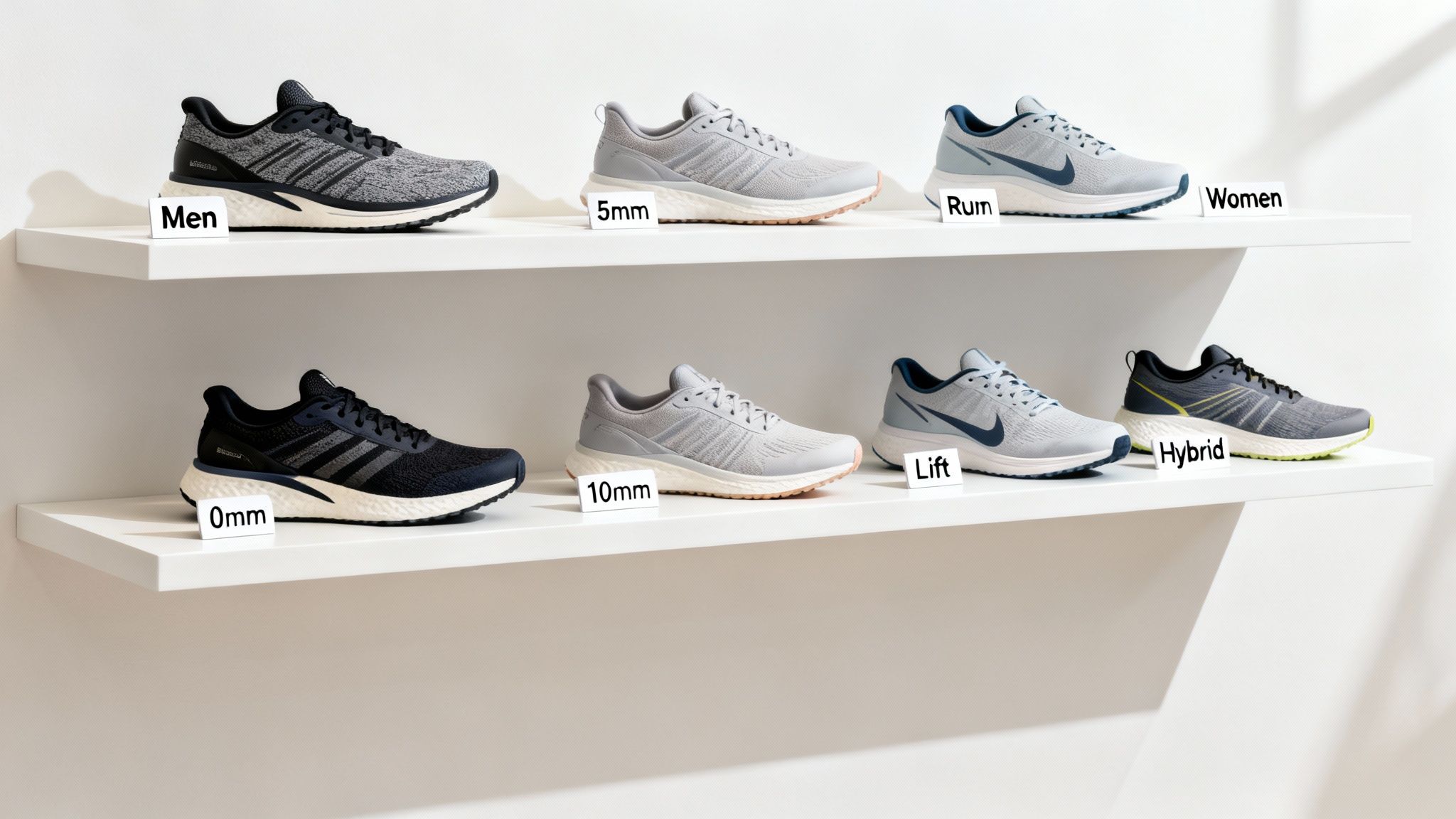
Now that you understand heel-to-toe drop, let's find your perfect pair. Here are my favorite recommendations, sorted by drop, with picks for both men and women.
Top Zero-Drop (0mm) Picks
Zero-drop shoes provide a natural, grounded feel, great for heavy lifting and minimalist running. Remember to allow for a gradual break-in period.
For Men: Altra Solstice XT 2
This shoe is a beast in the gym. The Solstice XT 2 combines Altra's FootShape toe box for natural toe splay with a tough cage for lateral support, perfect for workouts mixing heavy lifts with agile movements.
Best For: CrossFit, functional fitness, and gym sessions.
Pros: Excellent stability and a comfortable fit.
Cons: Minimal cushioning isn't ideal for longer runs.
For Women: Xero Shoes Prio
For a true connection to the ground, the Prio is a great choice. Its minimalist design and flexible 5.5mm sole let your foot move naturally while offering just enough protection.
Best For: Minimalist running, gym training, and casual wear.
Pros: Incredibly lightweight and flexible, helping to build foot strength.
Cons: Requires a slow transition to avoid calf strain.
Top Low to Mid Drop (4-8mm) Picks
The 4-8mm range offers a balance of stability for lifting and cushioning for dynamic work, making these shoes excellent all rounders.
For Men: Nike Metcon 9
A legend in the CrossFit community, the Metcon 9 delivers a solid heel for stability and a flexible forefoot. With a 4mm drop, it’s built for heavy squats, box jumps, and more.
Best For: CrossFit and high intensity interval training (HIIT).
Pros: Unbeatable durability and stability.
Cons: A bit stiff for running longer distances.
For Women: Brooks Ghost 15
A beloved daily trainer, the Ghost 15 has an 8mm drop and is known for its soft, balanced cushioning, providing a smooth ride for a wide range of runners.
Best For: Daily running, long walks, and general fitness.
Pros: Supremely comfortable with reliable, plush cushioning.
Cons: Not built for heavy lifting; lacks stability.
Top High Drop (9mm+) Picks
High-drop shoes maximize heel cushioning, making them a go-to for heel strikers or anyone with tight calves or Achilles pain.
A higher drop can significantly reduce the strain on the lower leg by absorbing more impact at the heel. This makes it a popular choice for runners seeking maximum shock absorption on long road runs.
For Men: ASICS GEL-Kayano 30
With a 10mm drop, the GEL-Kayano is an icon of stability. It offers incredible support and plush cushioning, making it ideal for runners who overpronate or need extra shock absorption.
Best For: Long distance running and recovery runs.
Pros: Top tier stability and a luxurious, cushioned feel.
Cons: Can feel a bit bulky for faster paced running.

Still Have Questions About Heel Drop?
Let's tackle a few common questions about heel-to-toe drop to help you choose your next pair of shoes with confidence.
How Can I Find My Current Shoe's Drop?
The quickest way is to check the manufacturer's website. Look for the technical specs on your shoe's product page, where it's usually listed as "drop" or "offset." While independent tests sometimes show discrepancies, the official spec is the best starting point.
Is It Okay to Use the Same Shoes for Running and Lifting?
You can, but it’s not ideal if you're serious about performance and injury prevention. Heavy lifting requires a stable, flat base, making a low-drop shoe (0-4mm) the gold standard. For running, your ideal drop depends on your stride and comfort. Most athletes benefit from owning separate pairs for each activity.
A big mistake I see in the gym is people trying to squat heavy in high-drop running shoes. That elevated heel can easily pitch your weight forward, messing up your form and putting you at a greater risk for injury. It's much safer to lift in a flatter shoe, or even just your socks!
I Have Calf Pain, Should I Stay Away from Zero Drop Shoes?
Yes, it's wise to be cautious. If you have tight calves or Achilles tendonitis, a zero-drop shoe can increase strain on those areas. A shoe with a higher drop (8mm or more) can often provide relief by reducing the load on the calf and Achilles.
If you are set on switching to a lower drop, a very slow transition is crucial, paired with specific strengthening exercises for your feet and calves to build resilience.
References
Malisoux, L., Gette, P., Urhausen, A., & Theisen, D. (2016). Influence of the Heel-to-Toe Drop of Standard Cushioned Running Shoes on Injury Risk in Leisure-Time Runners: A Randomized Controlled Trial With 6-Month Follow-up. The American Journal of Sports Medicine, 44(11), 2933-2940. https://doi.org/10.1177/0363546516654690
Matias, A. B., & Taddei, U. T. (2022). The influence of minimalist and maximalist shoes on running biomechanics: a systematic review. Journal of Foot and Ankle Research, 15(1), 11. https://doi.org/10.1186/s13047-022-00518-3
Richert, J., Heaslet, M. W., & Tucker, J. (2022). The Effect of Heel-Toe Drop on Running Biomechanics: A Review of the Literature. International Journal of Exercise Science, 15(6), 1431–1443. Retrieved from https://pmc.ncbi.nlm.nih.gov/articles/PMC9749964/
Here at Flourish-Everyday, our goal is to help you find the perfect gear for your fitness journey. Check out our expert reviews and health guides to support a healthier, happier you. You can find your next pair at https://www.flourish-everyday.com.
