The Top 8 Mobility Exercises for Athletes to Unlock Performance

Updated: Jan 3
Peak performance isn't just about strength and endurance; it's built on a foundation of superior movement. I wanted to write another article on mobility exercises for dedicated runners, CrossFit enthusiasts, and cross-training athletes. Mastering mobility is the key to unlocking new levels of power, preventing injuries, and accelerating recovery. Forget generic stretching routines; this guide dives deep into the most effective mobility exercises for athletes, providing actionable strategies to enhance how you move, feel, and perform.

This comprehensive roundup goes beyond simple stretches. We will detail specific techniques, from dynamic warm-ups and foam rolling to advanced methods like PNF stretching and banded joint distraction. Each entry is designed for practical application, featuring step-by-step instructions, common mistakes to avoid, and clear programming recommendations for sets, reps, and timing. You'll learn precisely how and when to integrate these drills into your warm-ups and recovery sessions for maximum benefit.
To truly unlock your athletic potential, it's vital to address specific areas of discomfort; for instance, understanding the best exercises for lower back pain relief can significantly enhance your overall mobility and performance. This guide provides a holistic framework, ensuring every joint and muscle group gets the attention it needs to function optimally. Whether you're chasing a new personal best or aiming for longevity in your sport, integrating these practices is nonnegotiable.
In This Guide, You'll Find:

1. Dynamic Stretching
Dynamic stretching is an active mobility practice where you move your joints and muscles through a full range of motion. Unlike static stretching, which involves holding a position, this method uses controlled, flowing movements to prepare the body for activity. It serves as a crucial bridge between rest and high-intensity work, making it one of the most effective mobility exercises for athletes. This approach increases body temperature, elevates heart rate, and enhances neuromuscular activation, essentially "waking up" the mind muscle connection. By actively moving through ranges of motion similar to those you'll use in your sport, you improve performance and reduce injury risk. To read more on these two methods, please see "Dynamic Stretching vs Static Stretching: Which Is Best"?
Why It Works & How to Implement
Dynamic stretches prime the body by mimicking the movements of the upcoming workout. This specificity improves coordination and power output. The goal is to move without bouncing or jerking, maintaining control throughout the entire range of motion. For more insights on how this fits into a complete routine, you can explore the fundamentals of mobility training and its benefits for athletes.
When to Use: Perform for 5-10 minutes during your pre-workout warm-up.
Recommended Sets/Reps: Aim for 10-12 repetitions per side or 30-45 seconds per movement.
Common Mistakes to Avoid: Avoid ballistic (bouncy) movements, which can trigger the stretch reflex and tighten muscles. Do not rush; focus on controlled, deliberate motions.
Regressions & Progressions: * Regression: Reduce the range of motion or speed. For example, perform a walking high knee instead of a skipping high knee. * Progression: Gradually increase the speed and range of motion as you warm up.
Sport-Specific Application
Runners: Inchworms and walking lunges with a twist prepare the hamstrings, glutes, and core for the demands of running.
CrossFit: Leg swings (forward and lateral) and arm circles are excellent for opening up the hips and shoulders before Olympic lifts or gymnastics.
Cross-Training: Incorporate movements like torso twists and cat-cow to mobilize the spine and core for varied activities.
2. Foam Rolling
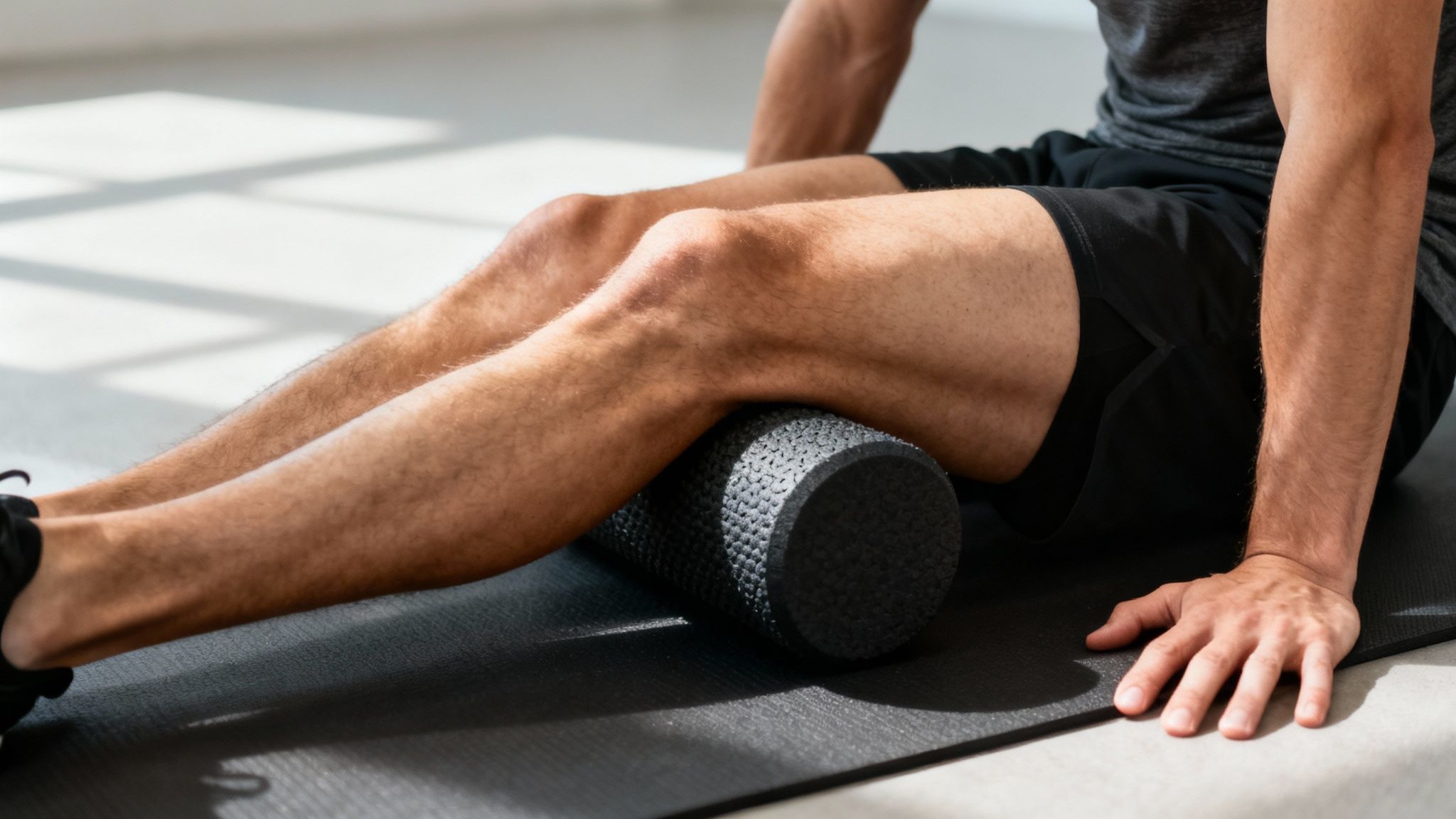
Foam rolling is a self myofascial release (SMR) technique that uses a dense foam cylinder to apply pressure to specific muscles and the surrounding fascia. This method helps break down adhesions or "knots," improve tissue quality, and increase blood flow, which is crucial for recovery and performance. By applying your own body weight to the roller, you can target tight areas, reduce muscle soreness, and restore healthy muscle function, making it one of the most accessible mobility exercises for athletes. It’s a foundational practice for managing muscle health and enhancing movement quality.
Why It Works & How to Implement
Foam rolling works by applying targeted pressure to muscle tissue, which stimulates Golgi tendon organs, the sensory receptors that signal muscles to relax. This process helps alleviate muscle tension and improve flexibility. For a deeper understanding of its application, especially for endurance athletes, you can review this complete guide on foam rolling for runners and its benefits. The key is to move slowly and pause on tender spots, allowing the muscle to release.
When to Use: Ideal for post-workout cool-downs or on recovery days. It can also be used briefly before a workout to address specific tight spots without over-relaxing the muscles.
Recommended Sets/Reps: Spend 30-60 seconds on each muscle group, moving slowly. When you find a tender spot, hold sustained pressure for 20-30 seconds until the tension subsides.
Common Mistakes to Avoid: Avoid rolling directly over joints, bones, or your lower back, as this can cause injury. Do not roll too quickly; the goal is to allow the fascia time to release.
Regressions & Progressions: * Regression: Start with a softer, low-density foam roller. You can also use a wall to roll out areas like the glutes or back to reduce the amount of body weight applied. * Progression: Use a firmer, higher-density roller or one with a textured surface (like those from TriggerPoint or Hyperice) for more intense, targeted pressure.
Sport-Specific Application
Runners: Focus on the quads, hamstrings, calves, and IT bands to address tightness caused by repetitive motion.
CrossFit: Target the lats, thoracic spine, and shoulders to improve overhead mobility for lifts like snatches and overhead squats. Rolling the glutes and hips is also vital for squat depth.
Cross-Training: Use the roller on major muscle groups worked during your sessions, such as the quads after a cycling workout or the back after a rowing session.
3. Joint Mobility Drills (CAR - Controlled Articular Rotations)
Joint Mobility Drills, specifically Controlled Articular Rotations (CARs), are active, rotational movements of a joint through its greatest possible range of motion. Developed by Dr. Andreo Spina as part of the Functional Range Conditioning (FRC) system, this method is designed to maintain and improve joint health, expand usable range of motion, and enhance neurological control. Unlike passive stretching, CARs require you to actively generate force through your entire movement arc, which communicates to the nervous system that this range is safe and accessible. This makes CARs one of the most fundamental mobility exercises for athletes focused on long term joint resilience and function.
Why It Works & How to Implement
CARs work by stimulating synovial fluid production (joint lubrication), nourishing the joint cartilage, and actively training the brain to control the outer limits of your movement capacity. The key is to move slowly and deliberately, creating tension throughout the body to isolate the target joint. This ensures the movement comes from the joint capsule itself rather than compensating with other muscles. Think of it as mapping your joint's workspace, identifying and smoothing out any restrictions or "glitches" in the movement pattern.
When to Use: Perform as a daily morning routine to assess and maintain joint health or as a low intensity part of your warm-up.
Recommended Sets/Reps: Aim for 2-3 slow, controlled rotations in each direction for each major joint (shoulders, hips, spine, ankles).
Common Mistakes to Avoid: Rushing the movement, losing tension, or allowing other parts of the body to compensate. For example, arching your back during a shoulder CAR instead of isolating the shoulder joint.
Regressions & Progressions:
* Regression: Reduce the range of motion to a pain free arc or decrease the amount of tension generated. Perform the movement lying down to reduce stability demands.
* Progression: Increase the irradiation (full body tension) to enhance control or perform the CARs from more challenging positions, such as a quadruped position for hip CARs.
Sport Specific Application
Runners: Ankle and hip CARs are essential for improving foot mechanics and ensuring a smooth, efficient stride, which helps prevent common overuse injuries.
CrossFit: Shoulder CARs improve overhead stability for movements like snatches and overhead squats, while hip CARs help athletes achieve better depth and positioning in their squats.
Cross-Training: Spinal CARs (cat-cow and segmental rotations) are crucial for maintaining a healthy, resilient spine capable of handling diverse movements from swimming to lifting.

4. Yoga and Yoga Flows for Athletes
Yoga integrates active stretching, strength building, and focused breath work to enhance flexibility, balance, and mental fortitude. Far from being just a calming practice, specific yoga flows can be powerful mobility exercises for athletes, targeting chronically tight areas while cultivating body awareness and resilience. This holistic approach addresses both physical and mental aspects of performance, using styles like dynamic vinyasa to build functional mobility and restorative yin yoga to release deep connective tissues. By blending movement with mindfulness, yoga helps athletes improve their range of motion, reduce stress, and prevent injuries.
Why It Works & How to Implement
Yoga works by moving the body through multiple planes of motion, holding poses (asanas) that challenge stability and lengthen muscles under tension. This process improves inter muscular coordination and proprioception (your sense of body position). The emphasis on breath control (pranayama) also calms the nervous system, which can aid in recovery and reduce performance anxiety. To start, find a style that aligns with your goals and seek qualified instructors who understand athletic demands.
When to Use: Use dynamic flows as a low intensity workout on active recovery days or perform restorative/yin yoga post workout or before bed to aid recovery.
Recommended Sets/Reps: Aim for 2-3 sessions per week, with each session lasting 20-60 minutes. Hold static poses for 3-5 breaths and move through flows with one breath per movement.
Common Mistakes to Avoid: Avoid pushing into pain; listen to your body and use props for support. Don't compare your flexibility to others, as progress is individual.
Regressions & Progressions: * Regression: Use yoga blocks, straps, or bolsters to support your body and make poses more accessible. For example, place hands on blocks in a forward fold. * Progression: Increase the duration of holds, deepen the range of motion in poses, or move to more complex variations and flows.
Sport-Specific Application
Runners: A "yoga for runners" flow focusing on pigeon pose, downward facing dog, and lizard lunge can effectively release tight hips, hamstrings, and calves.
CrossFit: Power yoga or vinyasa flows that include shoulder openers and hip mobilizing sequences like warrior series are excellent for improving overhead stability and squat depth.
Cross-Training: Yin yoga is exceptional for cross-training athletes, as it targets the deep fascia and connective tissues around joints, promoting long term joint health and recovery.
5. Lacrosse Ball and Trigger Point Release
Using a lacrosse ball or a specialized massage ball for trigger point release is a form of self myofascial release that allows athletes to apply targeted pressure to tight muscle knots. This technique helps break up adhesions, improve blood flow, and restore normal muscle function. As one of the most direct and affordable mobility exercises for athletes, it grants precise control over hard-to-reach areas, making it an essential tool for recovery and maintenance. This method works by applying sustained pressure to a trigger point, which encourages the muscle to relax and release its tension, improving both mobility and tissue health.
Why It Works & How to Implement
Trigger point therapy with a lacrosse ball allows you to isolate and release specific points of tension that broader tools like foam rollers might miss. By applying your body weight to the ball, you can control the intensity, holding pressure on a tender spot until the discomfort subsides. For athletes looking to specifically target trigger points and improve muscle release, exploring effective lacrosse ball massage techniques can provide detailed guidance on placement and pressure. The goal is to find a "good pain" that signals a release, not a sharp or radiating pain.
When to Use: Ideal for post workout cool downs or on recovery days to address soreness.
Recommended Sets/Reps: Apply pressure to a single trigger point for 30-60 seconds, or until you feel the muscle release.
Common Mistakes to Avoid: Avoid rolling directly over bones, joints, or your lower back. Do not apply excessive pressure that causes sharp pain or nerve sensations; this can cause more harm than good.
Regressions & Progressions: * Regression: Use a softer ball (like a tennis ball) or perform the exercise against a wall instead of the floor to reduce pressure. * Progression: Use a firmer ball or transition from the wall to the floor to increase the intensity of the pressure.
Sport-Specific Application
Runners: Excellent for targeting the plantar fascia on the bottom of the foot, as well as tight calves and glutes.
CrossFit: Invaluable for releasing trigger points in the pecs, lats, and upper back, which often become tight from lifting and gymnastics movements.
Cross-Training: Helps relieve tension in the shoulders from swimming, the glutes from cycling, and the feet from high-impact activities.
6. PNF Stretching (Proprioceptive Neuromuscular Facilitation)
PNF (Proprioceptive Neuromuscular Facilitation) stretching is an advanced technique that manipulates the nervous system to increase flexibility. This method typically involves a "contract-relax" sequence: a muscle is passively stretched, then isometrically contracted against resistance, and finally stretched again into a deeper range of motion. It essentially tricks the neuromuscular system into relaxing the muscle's protective stretch reflex, allowing for greater gains in flexibility than traditional static stretching. As one of the most effective mobility exercises for athletes, PNF is a powerful tool for overcoming stubborn mobility restrictions.
Why It Works & How to Implement
PNF works by activating a neuromuscular principle called autogenic inhibition. When you isometrically contract a muscle against resistance, its tension-sensing Golgi tendon organs are stimulated, which in turn signals the muscle to relax. This temporary relaxation allows you to move deeper into the stretch immediately afterward. This method is highly effective but requires precision and, ideally, the guidance of a partner or certified professional to ensure safety and proper execution.
When to Use: Perform during your cool down or on a dedicated mobility day, never before a workout. Allow at least 48 hours of recovery for the same muscle group.
Recommended Sets/Reps: Hold the initial stretch for 10-15 seconds, contract for 6-10 seconds, then hold the final stretch for 20-30 seconds. Perform 1-2 cycles per muscle group.
Common Mistakes to Avoid: Overstretching aggressively, which can lead to injury. Failing to communicate clearly with a partner about pressure and discomfort. Using PNF on cold muscles.
Regressions & Progressions: * Regression: Perform a solo version using a strap or band to provide resistance for the contraction phase. * Progression: Work with an experienced partner or coach who can apply optimal resistance and guide you into deeper, more controlled ranges of motion.
Sport Specific Application
Runners: A partner assisted hamstring PNF stretch can dramatically improve flexibility, promoting a longer, more efficient stride and reducing lower back strain.
CrossFit: Athletes can use PNF to improve thoracic spine extension or open up tight hip flexors and ankles, leading to a safer and deeper overhead squat.
Cross-Training: Improving ankle dorsiflexion with a PNF calf stretch can enhance form and efficiency in activities ranging from running to cycling and rowing.
7. Banded Mobility Work and Distraction
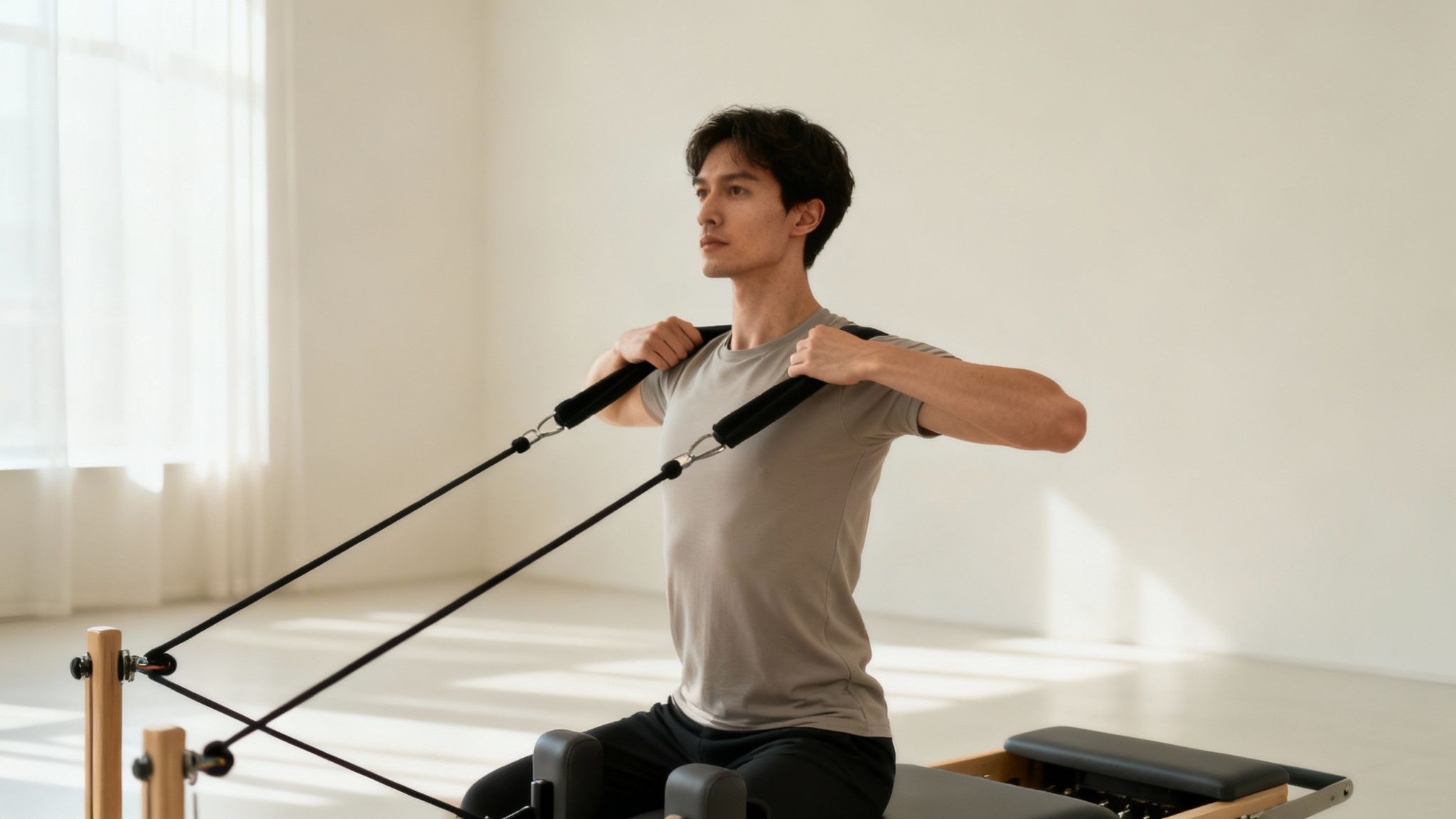
Using resistance bands for mobility creates a unique force known as joint distraction, which gently pulls the joint apart to create space and reduce friction. This technique allows joints to move through a larger, pain free range of motion with external assistance, making it a cornerstone of modern mobility exercises for athletes. By decompressing the joint capsule, banded mobility work is particularly effective for improving stubborn areas like the shoulders, hips, and ankles. This affordable, versatile tool has become a staple for athletes aiming to optimize complex movement patterns and break through mobility plateaus.
Why It Works & How to Implement
Banded distraction works by applying a gentle, consistent pulling force that helps reset the joint's position, allowing surrounding muscles to relax and lengthen more effectively. Strength coach Kelly Starrett popularized many of these techniques, demonstrating how they can rapidly restore function. To implement this, securely anchor a band to a sturdy object and loop the other end around the limb you are mobilizing, ensuring the pull is perpendicular to the joint's movement.
When to Use: Ideal for pre workout warm-ups to open up specific joints or as part of a dedicated mobility session on recovery days.
Recommended Sets/Reps: Hold each mobilization stretch for 30-60 seconds, or perform 10-15 controlled oscillations (small movements) in and out of the stretch.
Common Mistakes to Avoid: Using a band with too much resistance can cause guarding and muscle tension. Ensure the band is securely anchored to prevent it from snapping back.
Regressions & Progressions: * Regression: Use a lighter band or move closer to the anchor point to reduce tension. * Progression: Use a heavier band, move further from the anchor point, or add active, controlled movements while the joint is under tension.
Sport Specific Application
Runners: A band assisted hip capsule stretch can improve internal and external rotation, which is crucial for a smooth and efficient stride.
CrossFit: Banded shoulder dislocations and overhead stretches are essential for improving thoracic mobility and achieving a stable overhead position for snatches and jerks.
Cross-Training: Ankle distraction drills are excellent for enhancing dorsiflexion, which improves squat depth and reduces stress on the knees during various activities.
8. Mobility Breathing and Breathing Patterns
Intentional breathing is a powerful, often overlooked tool for unlocking physical potential. Mobility breathing involves using specific patterns to activate the parasympathetic "rest and digest" nervous system, which helps release muscle tension and calm the mind. By focusing on your breath, you improve body awareness and create an internal environment that allows for deeper, safer stretches. This practice is one of the most foundational mobility exercises for athletes because it directly influences your physiological state, turning a simple stretch into a potent recovery and flexibility tool. It reduces stress, enhances focus, and allows the body to move into new ranges of motion more effectively.
Why It Works & How to Implement
Conscious breathing techniques, like diaphragmatic (belly) breathing, signal safety to your nervous system. This reduces the protective muscle guarding that often limits flexibility. When you exhale slowly, you can ease deeper into a stretch, whereas holding your breath can cause muscles to tense up. To gain a deeper understanding of respiratory mechanics, explore this guide on how to breathe during exercise for better performance.
When to Use: Incorporate into your cool down, dedicated mobility sessions, or as a standalone practice for 5-10 minutes daily to manage stress.
Recommended Sets/Reps: For box breathing, start with 5-10 cycles (4 seconds in, 4 hold, 4 out, 4 hold). During stretches, focus on 5-8 deep, slow breaths per position.
Common Mistakes to Avoid: Avoid shallow chest breathing; focus on expanding your belly and diaphragm. Do not force the breath or hold it to the point of discomfort, as this creates tension.
Regressions & Progressions: * Regression: Start with a simple focus on long, slow exhales without worrying about specific counts. Lie on your back with a hand on your belly to feel the movement. * Progression: Increase the duration of the counts in box breathing (e.g., to 5 or 6 seconds) or practice more advanced techniques like 4-7-8 breathing (4 in, 7 hold, 8 out).
Sport Specific Application
Runners: Use box breathing before a race to calm nerves and enhance focus. During post-run stretching, use long exhales to release tension in the hamstrings and hips.
CrossFit: Employ diaphragmatic breathing during mobility warm-ups to prepare the body for intense lifts. Use calming breathwork after a tough WOD to accelerate nervous system recovery.
Cross-Training: Integrate breath with movement in practices like yoga or tai chi. Use focused breathing to relax into deep stretches targeting overused muscles from varied activities.
Integrating Mobility into Your Winning Routine
True athletic mastery is not just a measure of strength or endurance; it is the seamless integration of power, skill, and unrestricted movement. The eight distinct methods we've explored in this guide, from dynamic stretching to controlled articular rotations (CARs), are the essential building blocks for unlocking your body's full potential. These are not merely pre workout rituals or afterthoughts for recovery. They are fundamental practices for constructing a resilient, adaptable, and high performing athletic foundation.
By consistently weaving these mobility exercises for athletes into your regimen, you shift your entire training philosophy. You move beyond simply pushing limits and begin training smarter, listening to your body's feedback and proactively addressing its needs. This comprehensive approach ensures you are not just prepared for today's workout but are also investing in your long term athletic health and career.
From Knowledge to Action: Building Your Mobility Blueprint
The sheer volume of information can feel overwhelming, but implementation doesn't have to be complex. The goal is not to perform every exercise every day but to build a personalized routine that addresses your specific limitations and supports your athletic goals.
Here’s a practical, step-by-step plan to get started:
Assess, Don't Guess: Begin by identifying your personal "sticky spots." Do your hips feel tight after a long run? Are your shoulders restricting your overhead press? Use this self awareness to choose one or two methods that directly target those areas. For a runner with tight hips, starting with hip focused foam rolling and specific yoga poses like Pigeon Pose could be a perfect entry point.
Start Small, Win Big: Consistency will always trump intensity when it comes to mobility. Commit to just 10-15 minutes per day. This could mean 10 minutes of dynamic stretching before every workout and 5 minutes of focused mobility breathing before bed. Small, consistent efforts compound over time to create significant, lasting change.
Layer and Expand: Once you've established a consistent habit, begin layering in other techniques. After a month of consistent dynamic warm-ups, you might add 10 minutes of PNF stretching or banded mobility work to your recovery days. This gradual expansion allows you to build a robust practice without feeling overwhelmed.
Key Takeaway: Your mobility routine should be as dynamic as your sport. It must adapt to your training cycle, your body's daily feedback, and your evolving goals. The most effective mobility exercises for athletes are the ones you perform consistently and with intention.
The True ROI of Mobility: Performance, Longevity, and Resilience
Investing time in mobility pays dividends that extend far beyond feeling less stiff. It is a direct investment in your performance and athletic longevity. Improved mobility translates to a more efficient stride for runners, a deeper and more stable squat for CrossFitters, and a greater range of motion for any athlete seeking a competitive edge. It is the invisible work that underpins visible results.
More importantly, a dedicated mobility practice is your best defense against injury. By improving joint health, enhancing tissue quality, and promoting better movement patterns, you are systematically reducing the risk factors that lead to common athletic ailments. This proactive approach ensures you spend more time training and competing, and less time sidelined by preventable issues. The best athletes are not always the strongest or the fastest; they are often the ones who move the best and stay in the game the longest. Your journey to becoming that athlete starts with the very next rep of your mobility work.
Ready to take your recovery and performance to the next level? Flourish-Everyday offers a curated line of wellness products, including premium massage tools and recovery aids designed to perfectly complement your mobility routine. Elevate your practice and unlock your body's full potential by visiting Flourish-Everyday today.


