Your Guide to the Best Road Running Shoes

Updated: Dec 12, 2025
Hi runners. Your Guide to the best road running shoes aren't a specific model; they are the pair that fits your feet, matches your running style, and helps you meet your goals. What works for a marathoner won't be right for a casual jogger, which is why comfort and proper fit are the most important factors. The only way to find your perfect shoe is to first understand what you need.

Finding Your Perfect Running Partner
Hunting for the best road running shoes can feel overwhelming. This guide simplifies the process, helping you find a shoe that supports you and makes every mile feel better. We'll skip the marketing hype and focus on practical steps. The global road running shoe market was valued at around USD 52.18 billion in 2024, and it's expected to grow, showing just how many runners are on the same mission as you (Maximize Market Research, 2024).
Guide Index
Understanding Running Shoe Anatomy: Learn the key parts of a shoe, midsole, upper, outsole, and how they affect performance.
Top Shoe Reviews by Brand: A look at leading models from Brooks, Hoka, and New Balance.
Men's and Women's Top Picks: Highlighted athletic shoes for different needs.
Matching Shoes to Your Style: Discover your pronation type and how your foot arch influences the right support level.
Health and Wellness: The Runner's Perspective: Informative health information on injury prevention and the benefits of proper footwear.
Comparing Wellness Trends: A look at minimalist vs. maximalist running trends and their impact on well being.
A Smart Runner's Buying Guide: Get practical tips for trying on shoes, from timing your shopping to fit tests.
Extending Your Shoe's Life: Master simple care techniques and learn the signs of when it's time for a replacement.
By the end, you'll have the confidence to find your perfect pair. Let's get started.
Understanding Running Shoe Anatomy
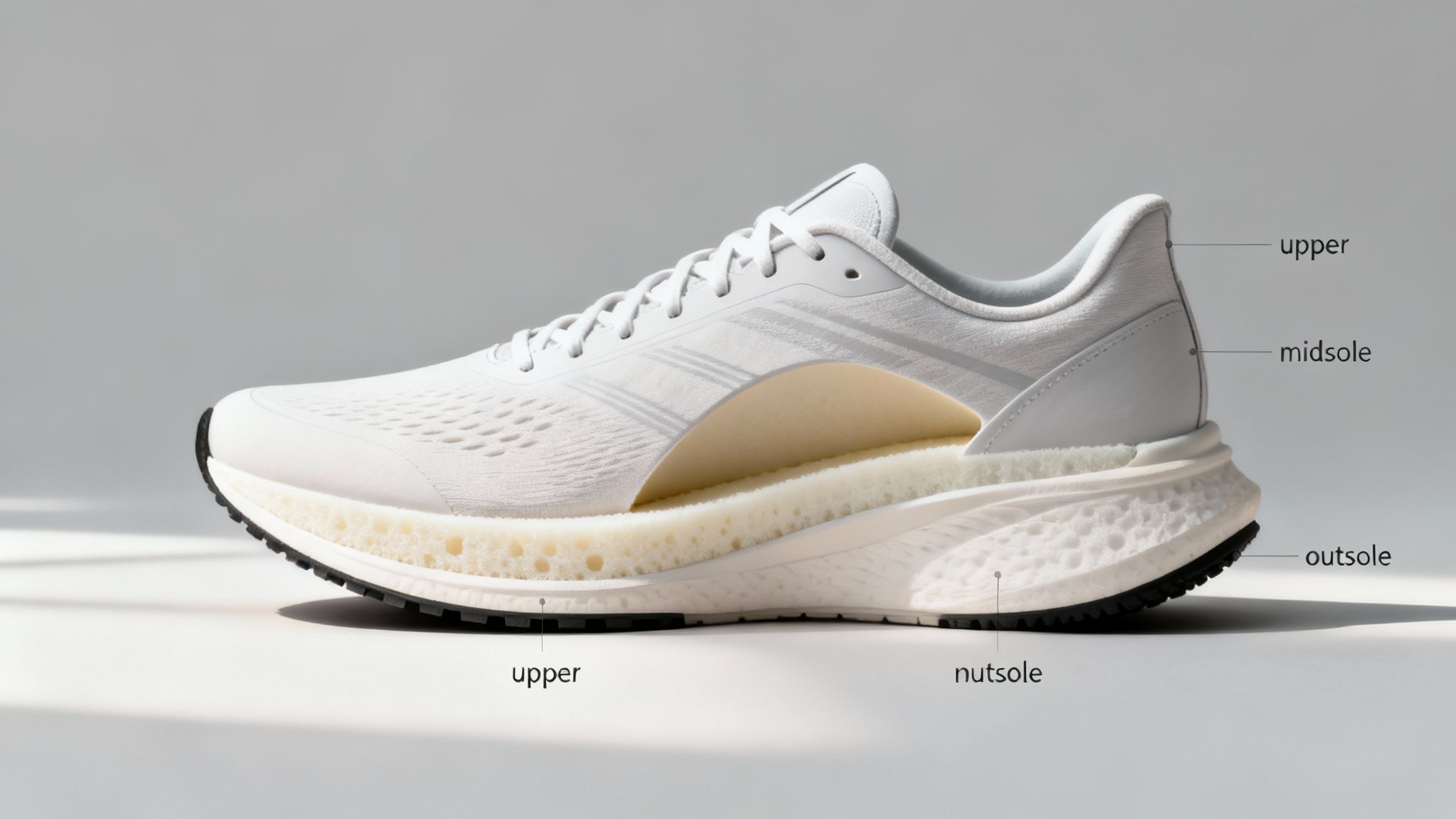
Think of a running shoe as a high performance vehicle for your feet. Every shoe has three main parts: the upper, the midsole, and the outsole. Understanding these components is the first step in finding the right pair.
The Upper: The Body of the Shoe
The upper holds your foot securely while ensuring comfort and breathability. Most uppers are made from engineered mesh or knit fabrics for flexibility and structure.
Engineered Mesh: Lightweight and offers great ventilation, keeping feet cool and dry.
Knit Uppers: Provide a soft, sock like fit that molds to your foot, reducing hot spots. A padded tongue prevents lace pressure, while a firm heel counter locks your heel in place for stability.
The Midsole: The Engine of Comfort
The midsole is the foam layer responsible for cushioning and energy return. This is where most of the shoe's "magic" happens. While EVA foam is traditional, brands now use proprietary foams that are lighter and more responsive. A thick, plush midsole is great for long, easy miles, while a thinner, firmer one offers a more connected feel for faster workouts.
The Outsole: The Tires on the Road
The outsole is the durable rubber layer that contacts the pavement, providing traction and durability. High abrasion rubber is often placed in high wear areas like the heel and forefoot to ensure the shoe can handle hundreds of miles while offering reliable grip.

Top Shoe Reviews by Brand
Brooks
Ghost 16: A reliable daily trainer known for its balanced cushioning and smooth ride. Ideal for neutral runners seeking consistent comfort.
Adrenaline GTS 23: A top stability shoe featuring GuideRails® technology to support runners who overpronate, ensuring a stable stride.
Hoka
New Balance
Fresh Foam X 880v14: A versatile workhorse for neutral runners. It provides a great balance of soft cushioning and responsiveness for daily training.
Fresh Foam X 860v14: A stability option that offers a supportive yet smooth experience for those who need mild pronation control.
Men's and Women's Top Picks
While many models are unisex, brands often tune the fit and feel for men's and women's feet.
Top Pick for Men (Neutral): The Saucony Kinvara 15 is a lightweight, flexible option perfect for daily training and faster paces. It offers a ground connected feel with just enough cushioning.
Top Pick for Women (Stability): The ASICS GEL-Kayano 31 provides excellent support and plush comfort. Its adaptive stability system guides the foot without feeling intrusive, making it a favorite for long distance runners.
Matching Shoes to Your Unique Running Style
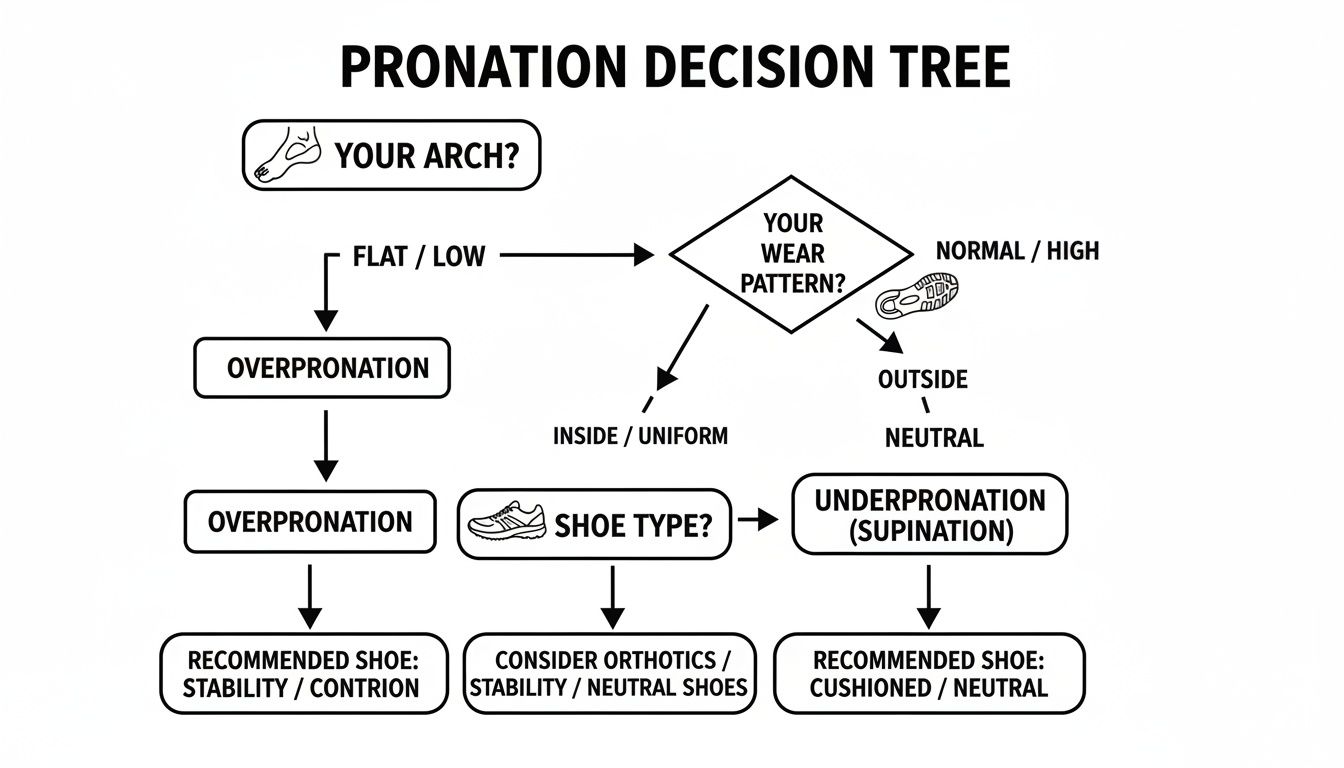
Finding the right shoe means matching it to your body's natural stride, or gait. A key part of your gait is pronation, the natural inward roll of your foot as it absorbs impact. The goal is not to "fix" pronation but to find a shoe that complements it.
Decoding Your Foot's Motion
There are three main types of pronation, often identifiable from the wear patterns on old running shoes:
Neutral Pronation: The foot rolls inward about 15%, efficiently absorbing shock. Wear is typically in an S-shaped pattern from the outer heel to the big toe.
Overpronation: The foot rolls inward more than 15%, often seen in runners with lower arches. Wear is concentrated along the inside edge of the shoe.
Supination (Underpronation): The foot doesn't roll inward enough, concentrating impact on the outer edge. This is common for runners with high arches, and wear is on the outer edge.
The running shoe market is projected to grow significantly, reaching USD 30.5 billion by 2034, largely due to technology that supports these specific biomechanical needs (Best Colorful Socks, 2024).
Aligning Shoe Type with Your Stride
Once you know your pronation style, you can select the right shoe category:
Neutral Shoes: Best for neutral runners or supinators. They focus on cushioning without extra motion control.
Stability Shoes: Designed for overpronators. They use features like guide rails or firmer foam (medial posts) to gently limit excessive inward roll.
For a deeper dive, check out our expert guide on how to choose running shoes.
Health and Wellness: The Runner's Perspective
Proper footwear is a cornerstone of running health, playing a crucial role in injury prevention. The right shoe provides the necessary support and cushioning to reduce stress on your joints, including your ankles, knees, and hips. An ill fitting or worn out shoe can lead to common ailments like plantar fasciitis, shin splints, and stress fractures. By understanding your foot type and running style, you invest in your long term wellness, allowing you to run comfortably and consistently.

Comparing Wellness Trends: Minimalist vs. Maximalist Running
Two prominent trends in running footwear represent different philosophies on well being:
Minimalist Running: This trend emphasizes a "less is more" approach. Minimalist shoes have very little cushioning and a low heel-to-toe drop, aiming to mimic barefoot running. Proponents believe this strengthens foot muscles and promotes a more natural, forefoot striking gait. However, it requires a gradual adaptation period to avoid injury.
Maximalist Running: In contrast, maximalist shoes offer thick, plush midsoles designed to provide maximum impact absorption and comfort. This approach prioritizes joint protection, making it popular for long distance runners and those prone to impact related injuries. Modern maximalist shoes are often surprisingly lightweight despite their size.
Neither approach is universally "better." The best choice depends on your biomechanics, running goals, and personal comfort preferences. This variety is a key driver of the U.S. footwear market, which generated around USD 91.26 billion in 2023 (Grand View Research, 2023).
Cushioning and Heel-to-Toe Drop
Cushioning Level: Ranges from minimal (barefoot feel) to balanced (versatile for daily training) and maximal (plush, protective).
Heel-to-Toe Drop: The height difference between the heel and forefoot. A higher drop (8-12mm) can reduce strain on the Achilles, while a lower drop (0-6mm) encourages a midfoot strike.
This decision tree can help visualize how your mechanics connect to the support you need.
A Smart Runner's Guide to Buying Shoes
With your knowledge of shoe anatomy and your running style, it's time to find your perfect pair. A smart buying process ensures the shoe feels great miles down the road.
Set Yourself Up for a Perfect Fit
When you shop and what you bring matters.
Shop in the afternoon or evening: Your feet naturally swell throughout the day. Shopping later ensures you find a size that won’t feel too tight during a run.
Bring your gear: Wear the same running socks and bring any orthotics or insoles you use to get an accurate feel for the fit.
Performing the In-Store Fit Test
Check the Length: Leave about a thumb's width of space between your longest toe and the end of the shoe to prevent bruised toenails.
Assess the Width: The shoe should be snug in the midfoot and heel, but your toes should have room to splay naturally.
Secure the Heel: Walk or jog lightly to ensure your heel stays locked in place with minimal slipping.
For runners tackling bigger goals, getting footwear right is critical. This marathon training guide offers great advice. Also, check out our guide on the top running shoes for daily training for more ideas.
How to Extend the Life of Your Running Shoes
Proper care can keep your shoes performing at their best for hundreds of miles, protecting your body from injury. The midsole foam is the key component, and it needs time to recover between runs.
Smart Care for Better Performance
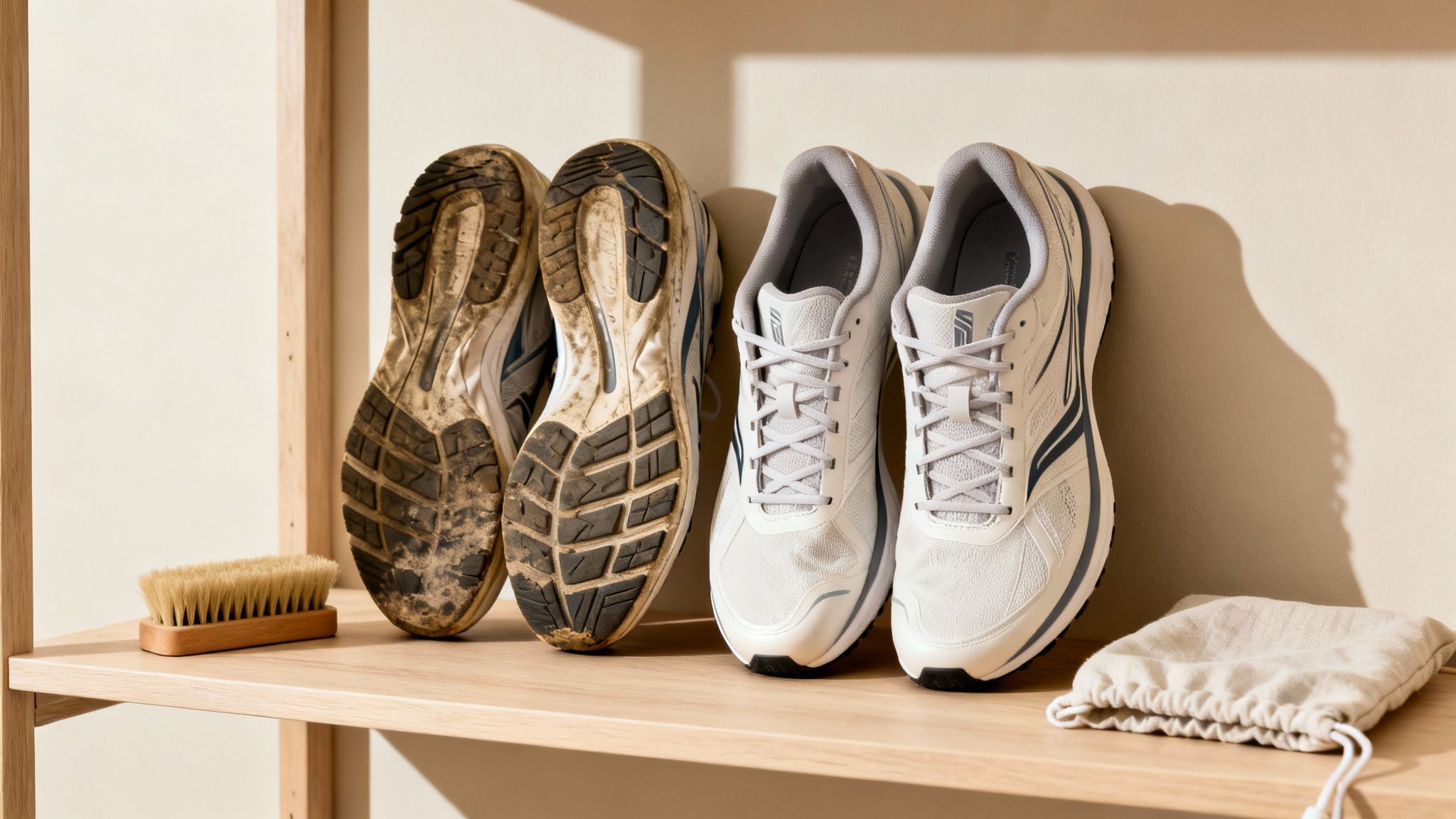
Rotate Shoes: Alternating between two pairs gives the midsole foam 24-48 hours to decompress, which can dramatically increase the shoe's lifespan.
Clean Properly: Avoid the washing machine. Instead, use a soft brush, mild soap, and cold water.
Air Dry: Stuff shoes with newspaper to absorb moisture and let them dry away from direct heat.
Recognizing the Signs of Retirement
Most shoes last 300-500 miles, but how a shoe feels is a better indicator than mileage. A shoe is retired when its midsole no longer provides adequate cushioning.
Look for these signs:
Loss of Responsiveness: The shoe feels flat or dead.
Visible Midsole Creasing: Deep wrinkles appear on the foam.
New Aches and Pains: You feel new soreness in your feet, shins, or knees.
Uneven Wear: The outsole is worn down in a lopsided pattern.
Learn more in our comprehensive guide to running shoe lifespan.
Frequently Asked Questions
How often should I replace my road running shoes?
The 300-500 mile range is a good guideline, but your body is the best indicator. If the shoe feels flat or you notice new aches, it's time for a new pair.
Can I use road running shoes for trail running?
It's not recommended. Road shoes lack the grip, protection, and stability needed for uneven trail surfaces.
Do I need a professional gait analysis?
It can be helpful, especially for new runners or those with injuries, but it's not essential. Looking at wear patterns and prioritizing comfort are also effective methods.
Why is a thumb's width of space important?
Your feet swell and spread out during a run. That extra space prevents your toes from hitting the front of the shoe, which can cause blisters and black toenails.
References
Maximize Market Research. (2024). Global Road Running Shoes Market. Retrieved from https://www.maximizemarketresearch.com/market-report/road-running-shoes-market/204212/
Best Colorful Socks. (2024). Running Shoes Growth Statistics. Retrieved from https://bestcolorfulsocks.com/blogs/news/running-shoes-growth-statistics
Grand View Research. (2023). Footwear Market Size, Share & Trends Analysis Report. Retrieved from https://www.grandviewresearch.com/horizon/outlook/footwear-market/united-states
At Flourish-Everyday, we believe finding the right gear is a key step in your wellness journey. Explore our expert reviews, product savings, and guides to discover the best shoes for your running, cross-training, and fitness needs. Start your journey to a healthier, happier you today!