Men's Shoes For Overpronation: A Guide to Comfort & Support

Updated: Dec 11, 2025
Finding the best men's shoes for overpronation is crucial for comfort, performance, and injury prevention. This guide will walk you through understanding overpronation, identifying the right shoe features, and exploring top models designed to provide optimal support.
Article Index
What Exactly Is Overpronation and Why Do Shoes Matter?
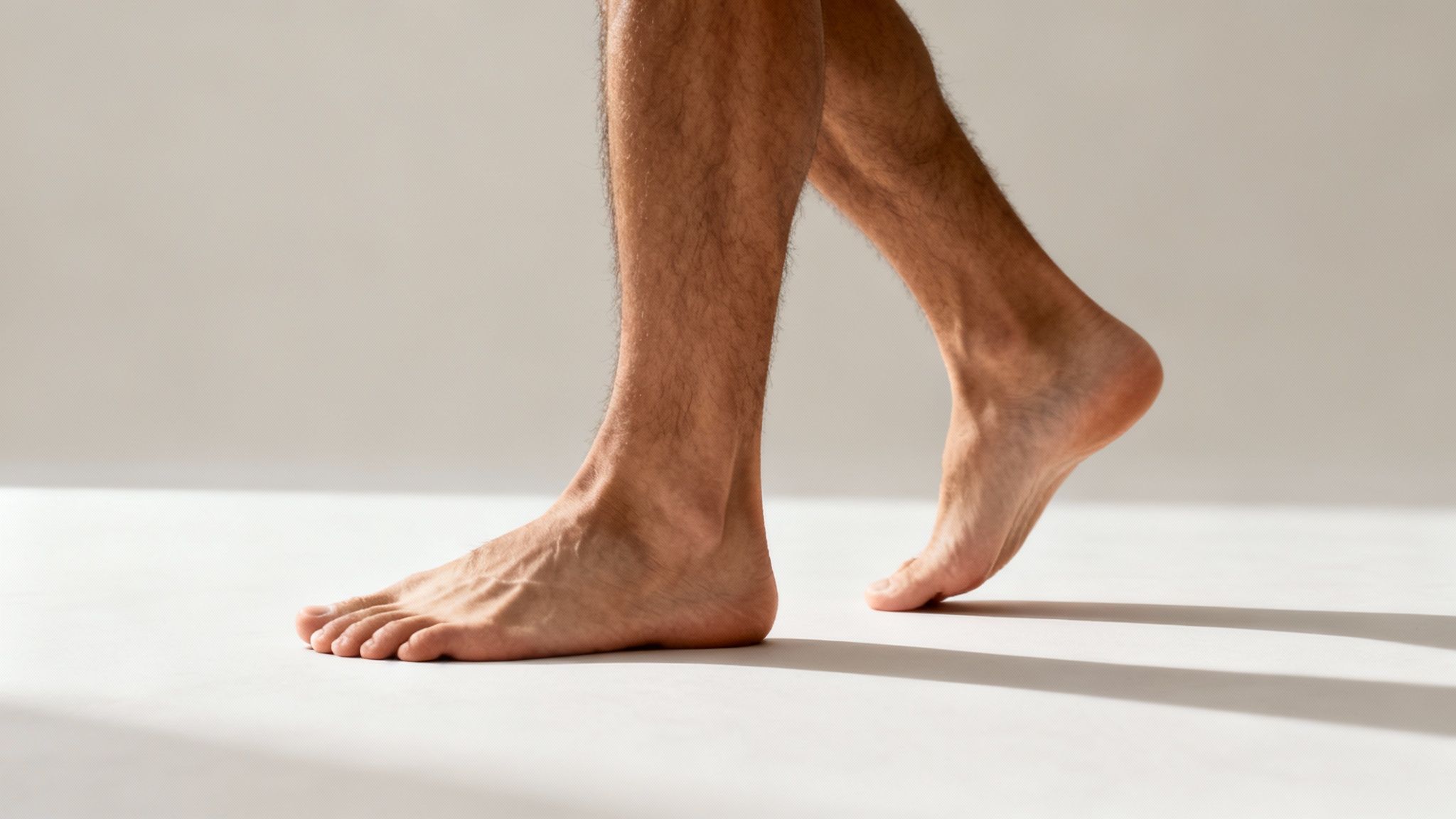
Pronation is the natural inward roll of the foot as it strikes the ground. This motion is a crucial part of your body's shock absorption system. However, when this roll is excessive, it's called overpronation. This biomechanical issue can disrupt your body's alignment and lead to a chain reaction of strain.
This misalignment is a common culprit behind various issues:
Shin Splints: Excessive inward rolling places stress on the muscles and connective tissues of the lower leg.
Knee Pain: Misalignment can cause the knee to twist inward, stressing the joint.
Hip and Back Pain: The body compensates for instability in the feet, often leading to discomfort in the hips and lower back.
Overpronation is a common biomechanics issue among active individuals. Proper footwear is a critical strategy for long-term injury prevention and comfort (Wyndow, N., et al., 2016).
Stability shoes are designed to counteract this. They incorporate features like firmer midsole materials and structured heel counters to guide the foot into a more neutral position. This helps your body absorb impact more efficiently and reduces strain on your joints. For more details on this technology, our guide to running shoes for stability is a great resource.

How to Know If You Overpronate at Home
You don't need a lab to check for overpronation. A few simple home tests can provide clear clues about your gait, helping you find the right men's shoes for overpronation.
The Wet Test
This classic test reveals your arch type.
Pour a thin layer of water into a shallow pan.
Step into the water with one bare foot.
Step onto a piece of cardboard or heavy paper.
Examine the footprint.
A full, wide footprint with little to no curve on the inside suggests low arches or flat feet, which are strongly associated with overpronation. A "neutral" footprint shows about half of your arch.
Your Shoes Tell a Story
Your most worn shoes offer a history of your gait. Place a pair on a table and look at them from behind.
Inward Tilt: The shoes may appear to lean inward toward each other.
Excessive Sole Wear: Heavy wear along the inside edge of the heel and under the ball of the foot near the big toe is a classic sign of overpronation.
Understanding your gait is the first step toward correcting it. These at home tests provide the data you need to select footwear that offers genuine support and alignment.
A Quick Video Gait Check
Use your smartphone for a dynamic analysis.
Ask a friend to film you walking or jogging from behind, holding the phone low to the ground.
Play the video in slow motion and watch your Achilles tendon.
If it bows inward as your foot lands, that's a visual sign of overpronation.
This inward motion is what stability shoes are designed to correct. You can discover more insights about stability shoe technology to understand how they work.
Decoding the Features of a Great Overpronation Shoe
Knowing your gait is half the battle; knowing what to look for in a shoe is the other. Let's break down the key features that provide functional support. An overpronation shoe acts as a guidance system, nudging your foot toward a more neutral alignment.
Stability vs. Motion Control
Shoes for overpronation fall into two main categories:
Stability Shoes: Ideal for mild to moderate overpronation. They balance cushioning and support, often using firmer foam under the arch (medial post) to slow the inward roll.
Motion Control Shoes: Designed for severe overpronation or flat feet. These are heavier and more rigid, providing maximum support to limit excess motion.

Key Anatomical Features
Focus on these specific components when shopping:
Firm Heel Counter: A rigid cup at the back of the shoe that locks your heel in place to prevent instability.
Medial Post: A section of firmer foam on the inner side of the midsole that acts as a support beam to slow pronation.
Arch Support: Crucial for distributing body weight evenly and preventing the arch from collapsing. This helps prevent conditions like plantar fasciitis.
The goal of a good stability shoe isn't to eliminate pronation, but to control the excessive part of the motion, keeping your kinetic chain properly aligned.
A proper fit is essential. Ensure there is a thumb's width of space between your longest toe and the shoe's end, and that your heel feels secure. For more fitting tips, see our how to choose running shoes in our expert guide.
Top Shoe Models Engineered for Overpronation Support
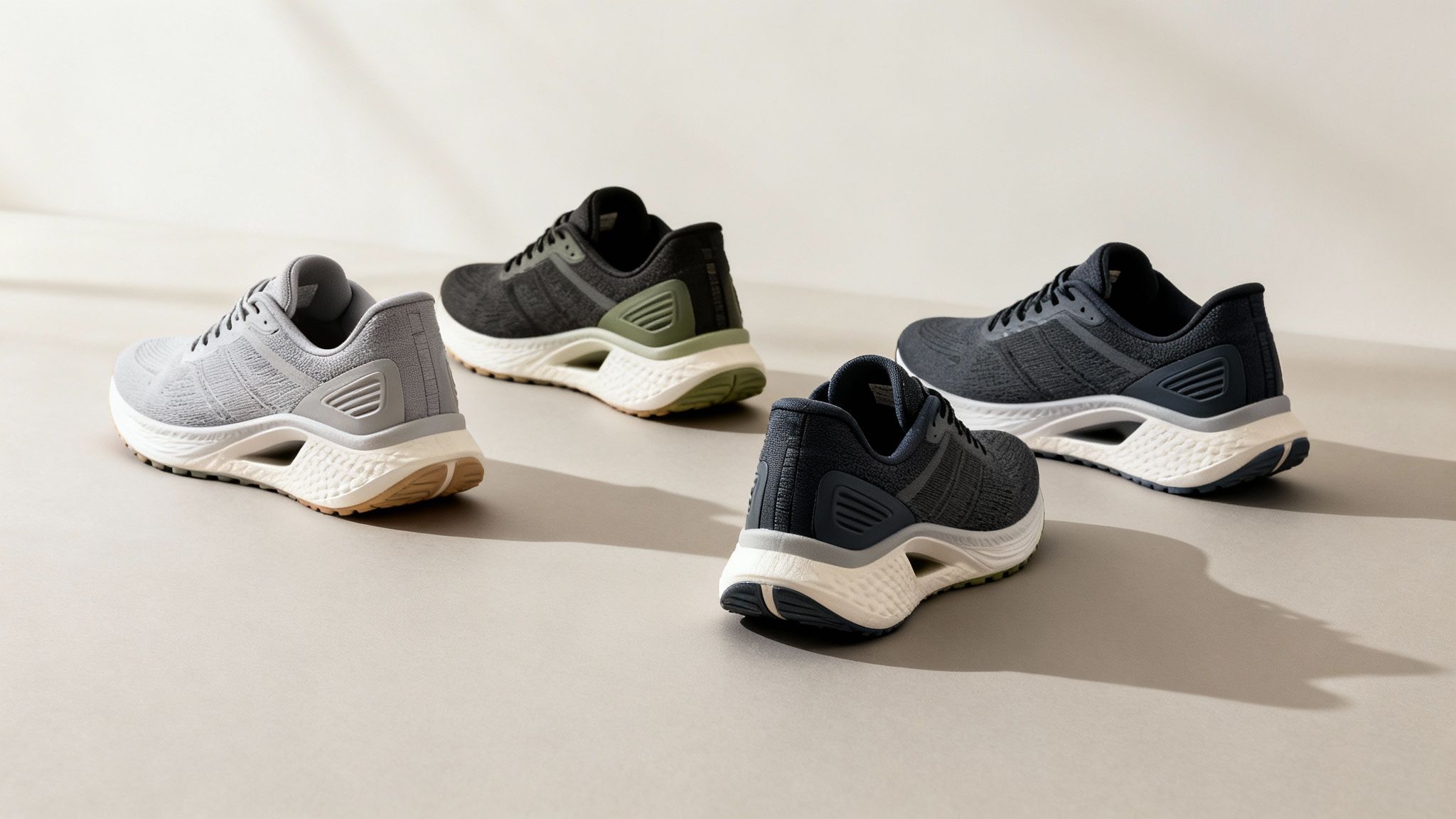
With a clear understanding of what to look for, let's review some of the top performing mens shoes for overpronation. These models are known for their reliable support and comfort.
Often considered the gold standard, the Adrenaline GTS is a versatile option for moderate support. It uses Brooks' GuideRails® technology, which acts like bumpers to keep your stride in its natural motion path, promoting alignment of the feet, knees, and hips.
Best For: Daily training, long distance running, walking.
Support Tech: GuideRails® holistic support system.
A legend in the running world, the GEL-Kayano offers premium, adaptive stability. Its 4D GUIDANCE SYSTEM™ provides support where needed, complementing the PureGEL™ technology for excellent shock absorption. This makes it ideal for runners seeking maximum cushioning for moderate to severe overpronation.
Best For: Long distance running, maximum cushioning.
Support Tech: 4D GUIDANCE SYSTEM™.
A reliable workhorse, the 860 offers a classic stability feel. It features a dual density Fresh Foam X midsole, with firmer foam on the medial side to counter overpronation, creating a stable and predictable platform.
Best For: High mileage training, everyday running.
Support Tech: Dual density medial post.
HOKA brings its signature maximalist cushioning to the stability category. The Arahi uses J-Frame™ technology, a firmer J-shaped foam that wraps the heel and medial side to guide the foot without stiffness. It's a great choice for those who want stability in a lightweight, highly cushioned shoe.
Best For: Runners wanting cushioned support without a traditional post.
Support Tech: J-Frame™ technology.
Supportive Footwear for Everyday Life and Work
Managing overpronation requires consistent support, not just during workouts. Your daily casual and work shoes should also provide stability. Look for a firm heel counter, torsional stability (resistance to twisting), and removable insoles that allow for custom orthotics. For those who stand all day, check our guide on the most comfortable shoes for standing all day.
The Power of Insoles and Orthotics
Insoles can transform a neutral shoe into a supportive one. Over the counter insoles are great for mild overpronation, offering general arch support. For moderate to severe cases or chronic pain, custom orthotics from a podiatrist provide tailored correction.
The growing awareness of foot health is reflected in market trends. The global orthopedic shoe market was valued at USD 4.36 billion in 2025 and is projected to reach USD 10.7 billion by 2035. You can read the full research about the orthopedic shoe market for more details.
Your Action Plan for Healthier Feet
Finding the right mens shoes for overpronation is a straightforward process when you know what to do. Your action plan is simple:
Assess Your Gait: Use at-home tests to understand your level of pronation.
Identify Key Features: Prioritize a firm heel counter, medial support (posts or guide rails), and appropriate arch support.
Ensure a Perfect Fit: Match the shoe to your activity and ensure your heel is locked in with room for your toes.
The right shoe is a tool for wellness. It actively works to correct your alignment, helping prevent common issues like shin splints, plantar fasciitis, and knee pain.
By following this plan, you take control of your foot health and set yourself up for miles of pain free activity. And as you achieve your fitness goals, consider finding creative ideas for displaying race medals to celebrate your journey.

Your Questions About Overpronation Shoes, Answered
Here are answers to some common questions about men's shoes for overpronation.
How Long Does It Take to Get Used to New Stability Shoes?
There is typically a break-in period of one to two weeks. Start by wearing them for short periods around the house and gradually increase the duration and activity level. This allows your body to adapt to the new support and alignment.
Can I Use One Pair for Running and Daily Wear?
It's best to have separate shoes for running and daily wear. Running shoes are designed for high impact, forward motion, while daily wear involves different stresses. Using running shoes exclusively for running preserves their specialized cushioning and support, extending their lifespan.
How Often Should I Replace My Overpronation Shoes?
The support in a shoe breaks down before the exterior shows significant wear. Replace running shoes every 300 to 500 miles. For walking or daily shoes, look for signs of wear like deep creases in the midsole foam, worn down tread on the inner edge, or the return of old aches and pains. These are indicators that the shoe's support structure has failed.
References
Future Market Insights. (2024). Orthopedic Shoes Market Outlook (2025 to 2035).
Future Market Insights. (2024). Running Shoes Market Outlook (2025 to 2035).
Wyndow, N., et al. (2016). The effect of footwear on tibial mechanics during running. Gait & Posture, 49, 137-142.
At Flourish-Everyday, we believe the right shoes are the foundation for a healthy life. We provide expert insights and product savings to help you find the perfect footwear for your journey. Discover top-rated shoes and health information to empower your wellness goals at https://www.flourish-everyday.com.


