7 Best Stretches for Tight Hamstrings to Unlock Flexibility in 2026

Updated: Dec 31
Tight hamstrings are a common roadblock to performance and a precursor to injury for many individuals, from athletes to desk workers. This muscle group is crucial for everything from sprinting to walking comfortably. When tight, they can cause issues like lower back pain and poor posture. I picked these stretches because they can be performed anywhere, at work, during travel, or in any available space. Try to incorporate these techniques into your daily routine to ensure.

This guide provides a detailed roundup of the 7 Best Stretches for Tight Hamstrings to Unlock Flexibility in 2026, backed by movement science. I will explore various techniques on how to perform the stretch, common mistakes, and when to use them to help you improve performance, prevent injury, and move with greater freedom. To enhance overall flexibility, you might also consider how to incorporate foundational yoga poses into your routine.
Article Index
1. Standing Hamstring Stretch
The Standing Hamstring Stretch is a foundational static stretch, making it a cornerstone for alleviating tightness in the back of the legs. This movement isolates the hamstring muscles, allowing for a deep, controlled pull that can be easily adjusted to your flexibility level.
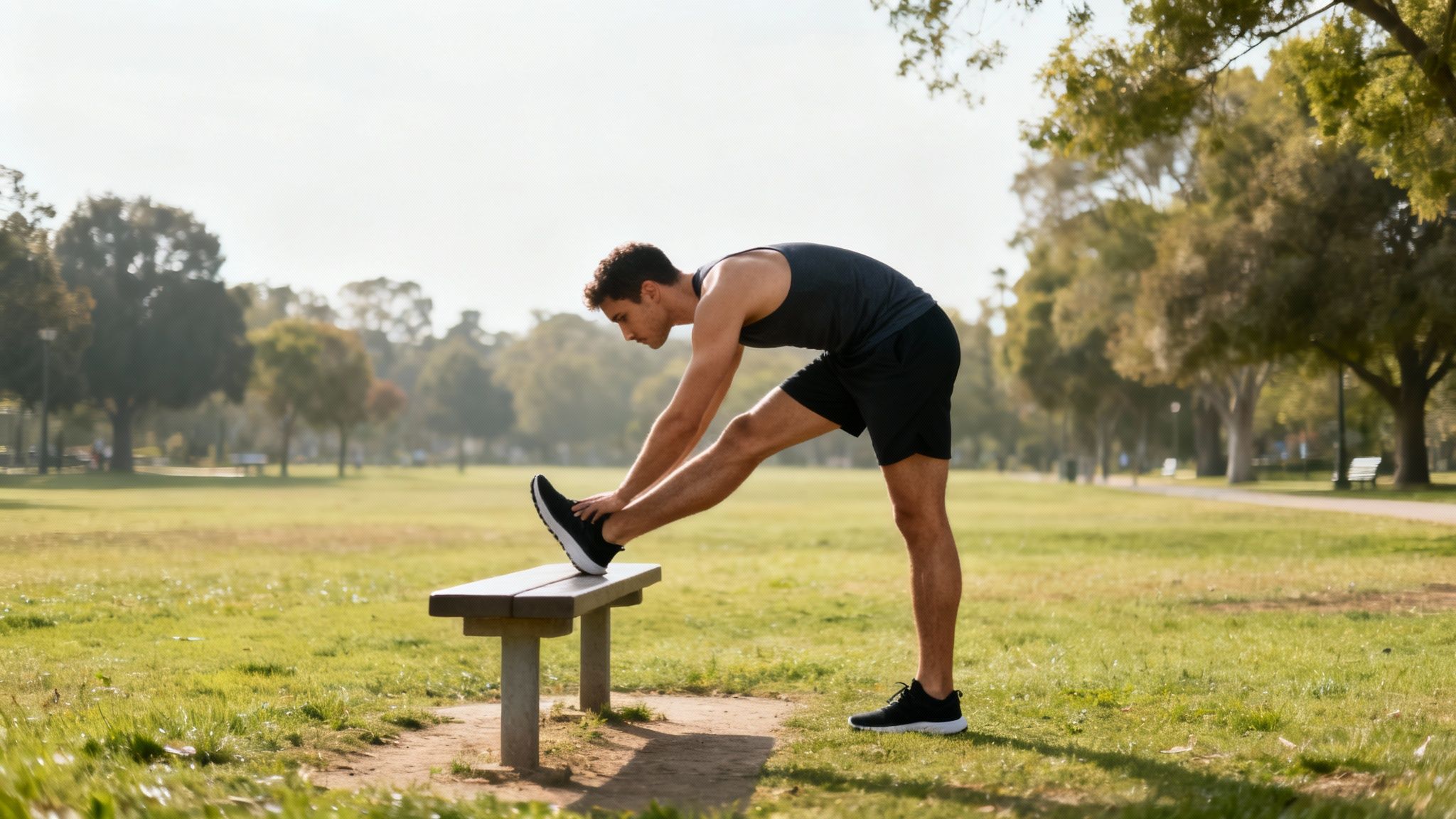
How to Perform the Standing Hamstring Stretch
Find a Stable Surface: Stand facing a sturdy object like a park bench or chair that is at or below your hip height.
Position Your Leg: Lift one leg and place your heel on the surface, keeping your leg straight but not locking the knee. Your toes should point toward the ceiling.
Hinge and Hold: Keeping your back straight, hinge forward from your hips until you feel a gentle to moderate pull.
Breathe and Relax: Hold the stretch for 20-30 seconds, breathing deeply.
Repeat: Slowly release and switch legs, performing 2-3 sets on each side.
Common Mistakes to Avoid
Rounding the Back: Hinge from the hips, keeping your chest up and back straight.
Bouncing: Bouncing can cause the muscle to tighten and may lead to injury.
Locking the Knees: Maintain a slight bend in both knees to protect the joints.
When to Use This Stretch
This stretch works perfectly as part of a post workout cool down routine when your muscles are warm. It can also be incorporated into a dynamic warm up if performed with gentle, controlled leg swings instead of a static hold.
2. Seated Forward Fold Hamstring Stretch
The Seated Forward Fold (Paschimottanasana) is a classic static stretch that deeply targets the entire posterior chain, from the lower back to the calves. It uses gravity to help you hinge forward, providing a profound stretch for the hamstrings.

How to Perform the Seated Forward Fold Hamstring Stretch
Get into Position: Sit on the floor with your legs extended straight out. Sit tall to ensure a straight spine.
Initiate the Hinge: Inhale to lengthen your spine. Exhale and hinge forward from your hips, keeping your back straight.
Reach and Hold: Reach toward your shins, ankles, or feet, depending on your flexibility.
Breathe and Deepen: Hold for 30-60 seconds. With each exhale, try to relax and sink a little deeper.
Repeat: Slowly release and perform 2-3 sets.
Common Mistakes to Avoid
Rounding the Lower Back: Lead with your chest to avoid shifting the stretch to your lower back.
Forcing the Stretch: Aggressively pulling yourself forward can cause injury. Aim for gentle, sustained tension.
Locking the Knees: Keep a micro-bend in your knees to protect them if your hamstrings are very tight.
When to Use This Stretch
The Seated Forward Fold is ideal for a cool-down. Its static nature is perfect for lengthening muscles that are already warm after a workout, helping to restore mobility and aid recovery.
3. Lying Hamstring Stretch with Strap or Towel
The Lying Hamstring Stretch with a strap is a highly effective, supported stretch. By lying on your back, you stabilize the pelvis and spine, allowing for a pure, targeted stretch of the hamstring muscles. The strap allows you to control the intensity without straining.
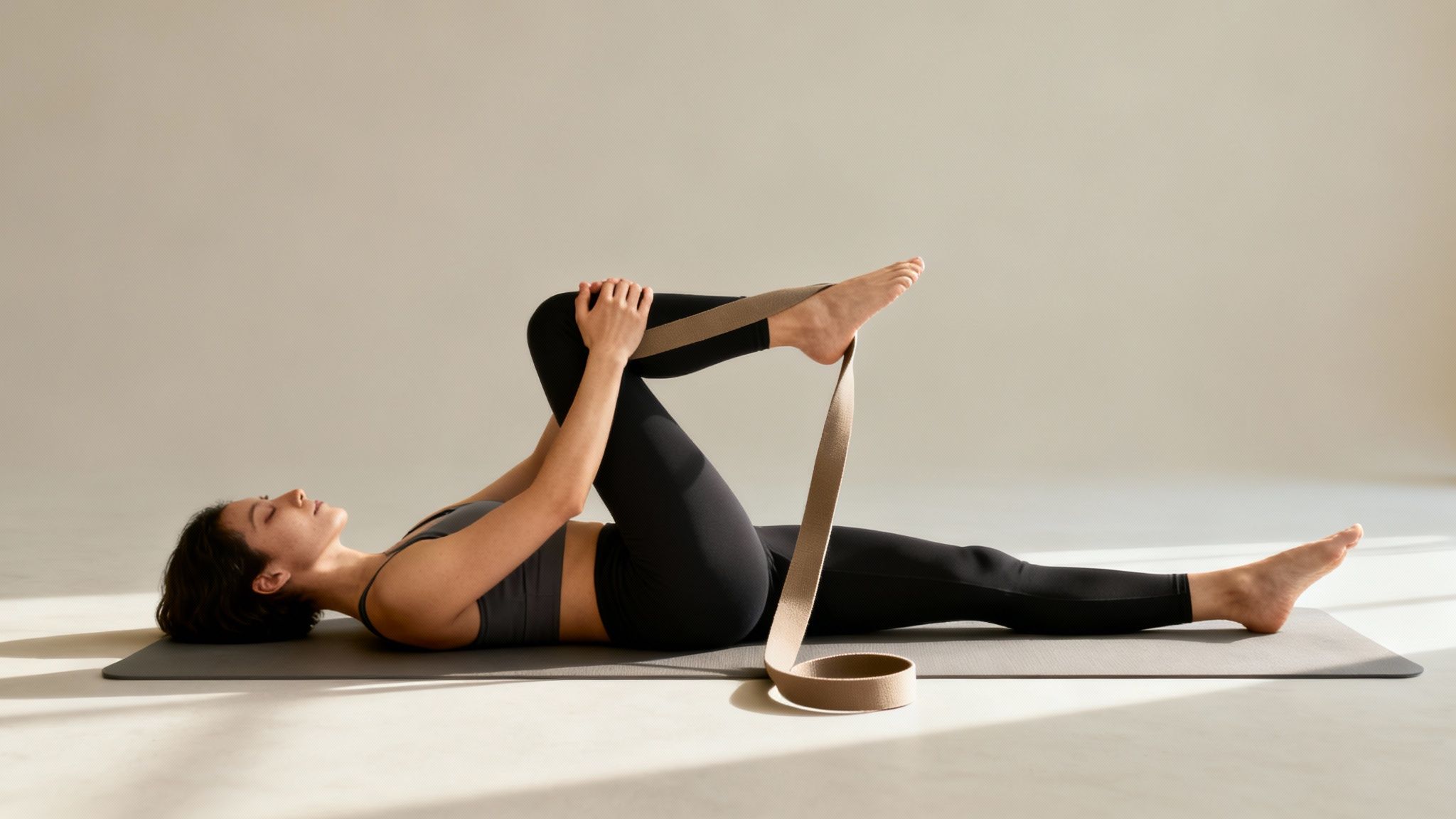
How to Perform the Lying Hamstring Stretch with Strap
Get into Position: Lie flat on your back on a yoga mat. Bend both knees with your feet flat on the floor.
Loop the Strap: Loop a yoga strap, towel, or resistance band around the ball of one foot.
Extend and Lift: Holding the strap, extend the looped leg toward the ceiling. Keep the leg as straight as is comfortable.
Gently Pull and Hold: Gently pull the strap to bring your leg closer to your chest until you feel a moderate stretch. Hold for 30-60 seconds.
Repeat: Lower your leg and switch sides, completing 2-3 sets for each leg.
Common Mistakes to Avoid
Lifting Your Hips: Your lower back and hips should remain pressed into the floor.
Bending the Knee Excessively: A soft knee is good, but bending it too much disengages the hamstring.
Forcing the Stretch: Never pull aggressively. Ease into the stretch and let the muscle release gradually.
When to Use This Stretch
This is one of the best stretches for tight hamstrings for post-workout cool-downs because it offers superior support and control. It's great for releasing tension without stressing the lower back.

4. Pigeon Pose (Eka Pada Rajakapotasana Preparation)
Pigeon Pose is a multifaceted stretch from yoga that targets the hamstrings, glutes, and deep hip rotators. It creates a significant lengthening effect on the hamstring of the extended back leg, making it excellent for comprehensive lower-body mobility.
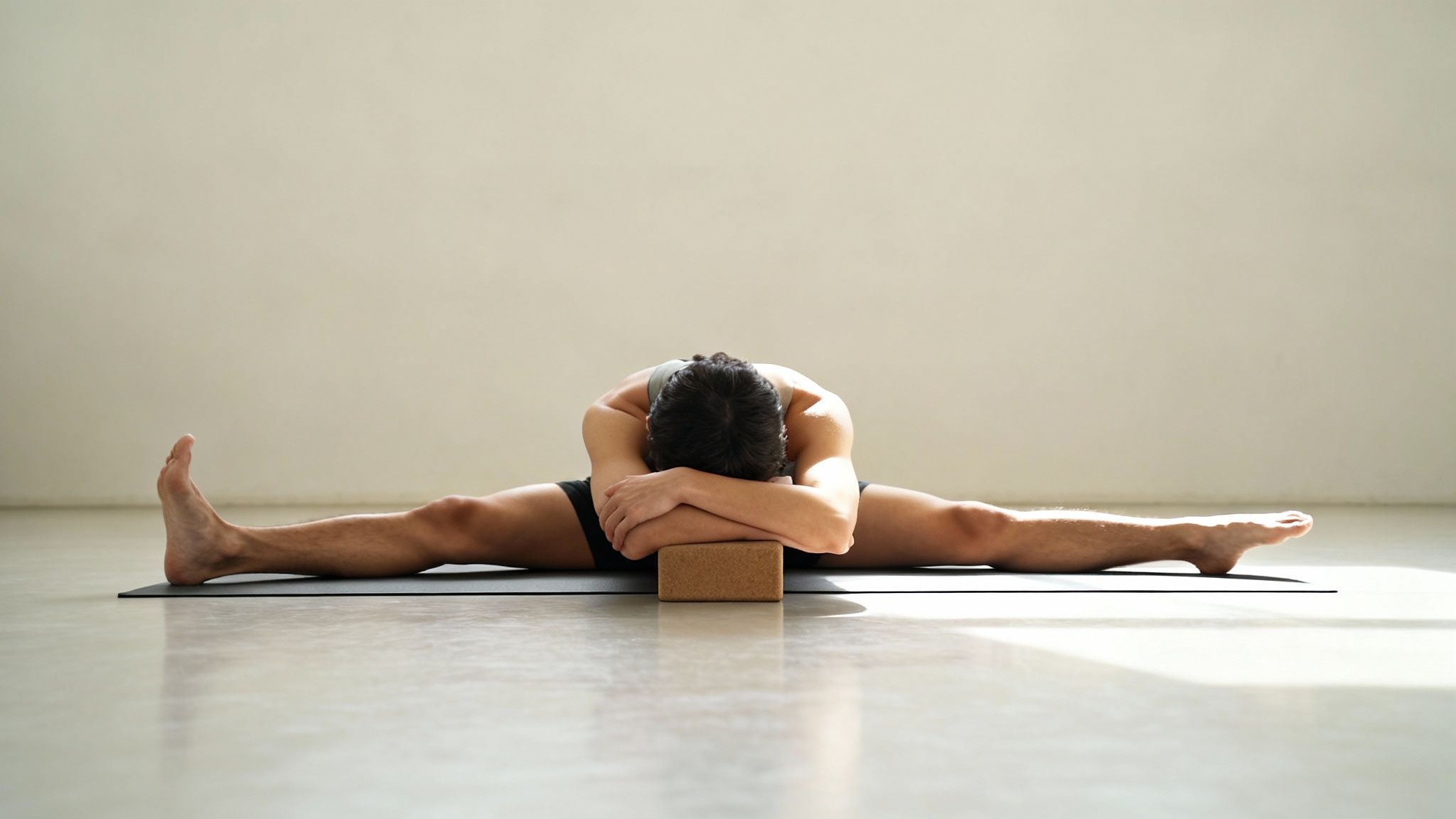
How to Perform Pigeon Pose
Start in a Tabletop Position: Begin on your hands and knees. Slide your right knee forward toward your right wrist.
Position Your Front Leg: Gently bring your right ankle toward your left wrist. Your shin can be angled back depending on flexibility.
Extend Your Back Leg: Straighten your left leg directly behind you, with your hips square and facing forward.
Hinge and Hold: Stay upright or walk your hands forward and lower your torso over your front shin.
Breathe and Relax: Hold the stretch for 45-90 seconds, then repeat on the other side.
Common Mistakes to Avoid
Leaning to One Side: Keep your hips level. Use a yoga block or blanket under the hip for support.
Forcing the Shin Parallel: This can strain your knee. Allow the foot to be closer to your body.
Sickling the Front Foot: Keep the front foot flexed to protect the knee joint.
When to Use This Stretch
Pigeon Pose is ideal for a cool down or a dedicated mobility session. Because it enhances overall hip mobility, it's a key preventative exercise. If you want to learn more about how to improve hip flexibility, it can have a positive impact on your whole body.
5. Walking Hamstring Stretch (Walking Quad-to-Hamstring)
The Walking Hamstring Stretch is a dynamic movement that prepares your hamstrings for activity, making it a superior choice for warm ups. This active stretch increases blood flow, raises muscle temperature, and enhances coordination.
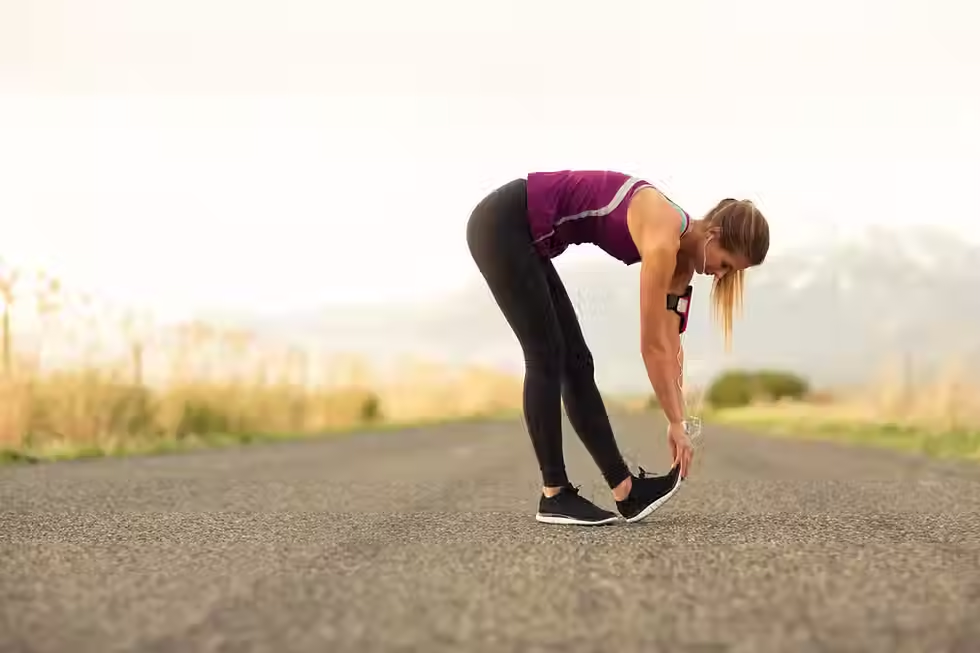
How to Perform the Walking Hamstring Stretch
Start Walking: Begin walking forward at a slow, controlled pace.
Step and Extend: Take a step with your left foot. As your left heel touches the ground, straighten your left leg and flex your foot.
Hinge and Reach: Keeping your back straight, hinge at your hips and reach your right hand toward your left toes.
Flow into the Next Step: Rise up, step through with your right foot, and repeat on the opposite side.
Continue Alternating: Perform 8-10 repetitions per leg.
Common Mistakes to Avoid
Rounding the Spine: The movement must come from the hips, not the back.
Moving Too Fast: The goal is controlled movement, not speed.
Locking the Supporting Knee: Maintain a slight bend in your supporting leg for stability.
When to Use This Stretch
This dynamic stretch is ideal for a pre workout warm up. It actively prepares the hamstrings, glutes, and core for activities like running and lifting. It's a key component in any smarter post run stretching routine that also incorporates dynamic warm-ups.

The Modified Yoga Plow Pose is an advanced inversion that offers a profound stretch for the entire posterior chain. By lifting the legs over the head, this pose uses gravity to deepen the stretch. The modified version makes it accessible for those still developing their range of motion.
How to Perform the Modified Yoga Plow Pose
Set Up: Lie on your back with your head a few feet from a wall or sturdy chair.
Lift Your Legs: Engage your core and press into your hands to lift your legs and hips up and over your head.
Support and Rest: Rest your feet on the chair or wall behind you. Support your lower back with your hands. Do not rest your weight on your neck or head.
Breathe and Hold: Hold for 15-30 seconds, focusing on your breathing.
Exit Slowly: Engage your core and slowly roll your spine back down to the mat.
Common Mistakes to Avoid
Putting Weight on the Neck: Your weight should be on your shoulders and upper back, never your neck.
Forcing the Movement: Use a prop like a chair or wall to support your feet.
Holding Your Breath: Maintain deep, steady breaths to help your muscles relax.
When to Use This Stretch
The Modified Plow Pose is best used in a dedicated flexibility or yoga session when the body is fully warm. It is not suitable for a pre-workout warm-up.
7. Resistance Band Hamstring Stretch (Contract-Relax or PNF Stretching)
The Resistance Band Hamstring Stretch uses Proprioceptive Neuromuscular Facilitation (PNF), an advanced technique to rapidly enhance flexibility. This "contract-relax" approach overrides the muscle's stretch reflex, allowing for a deeper release than a typical static stretch.
How to Perform the Resistance Band Hamstring Stretch
Get into Position: Lie on your back and loop a resistance band around the arch of one foot.
Initial Stretch: Gently pull your leg up until you feel a light to moderate stretch.
Contract (Isometrically): Actively push your heel into the band, resisting the movement for 5-6 seconds. Your leg should not move.
Relax and Deepen: Relax the hamstring and use the band to pull your leg into a deeper stretch. Hold for 20-30 seconds.
Repeat: Repeat the contract-relax cycle 2-4 times before switching legs.
Common Mistakes to Avoid
Forcing the Stretch: Ease into the new range of motion gently.
Contracting Too Hard: A moderate, controlled push is sufficient.
Bending the Knee: Keep the stretching leg as straight as comfortably possible.
When to Use This Stretch
This technique is best for post workout cool downs. It is highly effective but intense, so it should be performed 2-3 times per week, not daily. Understanding stretch types is key; you can learn more about dynamic vs. static stretching on flourish-everyday.com.
From Tightness to Freedom: Your Action Plan for Healthy Hamstrings
You have now explored seven of the best stretches for tight hamstrings. The power lies in consistently integrating a few of them into your routine. Remember, the goal is sustainable progress.
The journey from chronic tightness to flexible freedom is built on patience and body awareness. Pushing through sharp pain is counterproductive. Focus on finding a point of gentle tension and breathing deeply into the stretch.
Your Path Forward: Building a Sustainable Routine
To translate this knowledge into results, create a personalized plan.
Select Your "Core" Stretches: Choose 2-3 stretches from this list that feel most effective for you. A good mix includes one static and one dynamic stretch.
Embrace Consistency: Perform your chosen stretches at least 4-5 times per week, ideally post workout when muscles are warm.
Listen to Your Body: If a stretch causes sharp pain, back off immediately. Progress is measured over weeks and months.
Adopt a Holistic Approach: Lasting hamstring health extends beyond stretching. Consider incorporating professional massage therapy to further relax tight muscles. Proper hydration and a balanced diet also play a crucial role.
By mastering these concepts, you are investing in your long-term athletic performance, preventing injuries, and enhancing your quality of life.

References
Decoster, L. C., Scanlon, R. L., Horn, K. D., & Cleland, J. (2004). Standing and Supine Hamstring Stretching Are Equally Effective for Improving Hamstring Flexibility. Journal of athletic training, 39(4), 330–334.
Sharman, M. J., Cresswell, A. G., & Riek, S. (2006). Proprioceptive neuromuscular facilitation stretching : mechanisms and clinical implications. Sports medicine (Auckland, N.Z.), 36(11), 929–939. https://doi.org/10.2165/00007256-200636110-00002
Behm, D. G., & Chaouachi, A. (2011). A review of the acute effects of static and dynamic stretching on performance. European journal of applied physiology, 111(11), 2633–2651. https://doi.org/10.1007/s00421-011-1879-2