The Best Running Shoes for Shin Splints: A Pain Free Guide

Updated: Dec 28, 2025
Dealing with shin splints means your running shoes become your first line of defense. The best options combine superior cushioning, proper arch support, and smart stability to reduce stress on your lower legs. Plush, forgiving midsoles act as personal shock absorbers, soaking up the impact that triggers pain.

Your Path to Pain Free Running Starts Here
Shin splints can turn a beloved run into a dreaded chore. This sharp, nagging pain along your shinbone is a clear signal that your lower legs are overworked, and often, the problem starts with your shoes. "The Best Running Shoes for Shin Splints", is your roadmap to getting back on the road, starting with your most critical gear.
Think of your running shoes as a suspension system. A well designed shoe absorbs the repetitive pounding of pavement, shielding your bones and tissues from excessive stress. We'll break down this connection to help you confidently pick a shoe that actively prevents pain.
What This Guide Covers
Understanding Shin Splints: We’ll explain Medial Tibial Stress Syndrome (MTSS) and why it happens.
Top Shoes for Men & Women: You'll get curated lists accounting for biomechanical differences to help you find a better fit.
Informative Health Information: Learn how running form, muscle imbalances, and flexibility help prevent injuries.
The Power of Recovery and Flexibility: We’ll explore other helpful tools, like foam rollers and specific stretches that support recovery.
This is your definitive resource for returning to running stronger and pain-free. Shin splints are a widespread issue; according to Brooks Running, they can sideline nearly 35% of runners.[¹] By the end of this guide, you’ll have the knowledge to pick the perfect shoes and build a more resilient routine.
Sources:
¹ Brooks Running. "Discover the right running shoe to prevent shin splints." Accessed October 17, 2024.

What’s Really Causing Your Shin Splints?
To find the right fix, you must understand the cause of that nagging pain. Shin splints, or Medial Tibial Stress Syndrome (MTSS), are a distress signal that your lower legs are overloaded.
Imagine your shinbone (tibia) as a bridge absorbing your body weight with every step. When balanced, this process is painless. When out of balance, the structure becomes strained.
It’s All About Overload
At its core, shin splints are caused by repetitive stress on the shinbone and connective tissues, leading to micro tears and inflammation. This overload is usually caused by a combination of factors:
Doing Too Much, Too Soon: Rapidly increasing mileage or speed doesn't give your body time to adapt.
Pounding the Pavement: Running on hard surfaces like concrete sends more shock up your legs.
Poor Running Form: Overstriding (landing with your foot far in front of your body) acts as a brake, increasing impact on your shins.
While training habits are a big piece of the puzzle, your shoes often play a starring role.
Your Shoes are Your Suspension
Your running shoes are your body’s suspension system, built to absorb shock and distribute pressure. When shoes are old, ill fitting, or wrong for your foot type, they fail at this job. Instead of softening the blow, they let excessive force travel right up your shinbone, leading to the pain of shin splints.
Shin splints are behind up to 60% of all leg pain cases in athletes and make up 10-15% of all running injuries globally.[²] This highlights why shock absorption in your shoes is nonnegotiable.
Essentially, running in worn-out or unsupportive shoes forces your lower legs to absorb massive, repetitive shock, a job they weren't designed for. Over time, this cumulative stress triggers MTSS.
Sources:
² VKTRY Insoles. "Shin Splint Statistics." Accessed October 17, 2024.
Key Shoe Features That Combat Shin Splints
When dealing with shin splints, you need to cut through the marketing noise and focus on a few critical features that soften impact and control foot motion. Think of these features as your body's personal suspension system.
This chart shows how overuse and poor footwear can lead directly to shin pain.
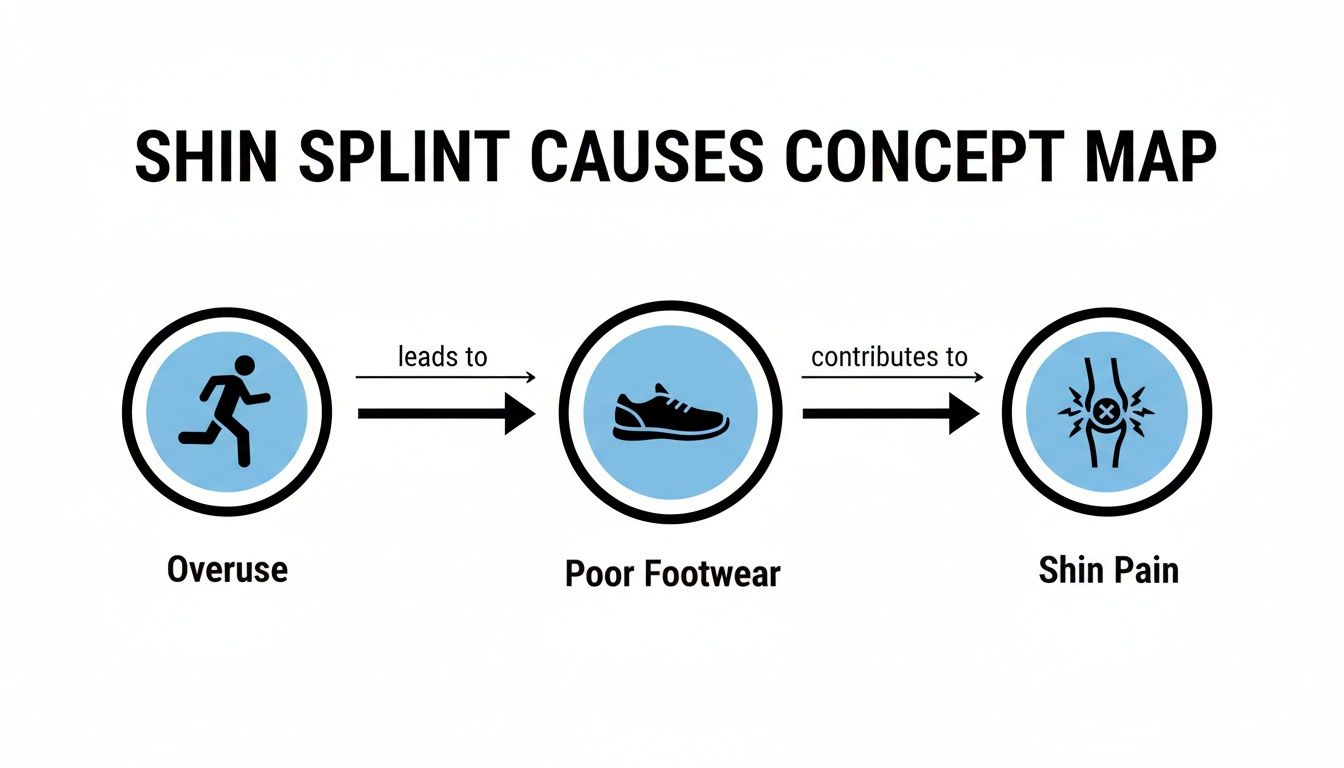
Choosing the right shoe isn't just about comfort; it's a crucial step in preventing shin splints.
Superior Cushioning: Your First Line of Defense
If there's one feature to prioritize, it's superior cushioning. A well cushioned midsole acts like a shock absorber, soaking up force before it can rattle your tibia. Look for shoes with modern foam compounds like EVA (ethylene vinyl acetate) or TPU (thermoplastic polyurethane), which are lightweight yet excellent at absorbing impact. A cushioned shoe puts a buffer between you and the hard ground.
Arch Support and Stability for Controlled Motion
Cushioning is only half the battle; proper support is just as important. Many runners with shin splints overpronate, meaning their arch collapses and their foot rolls inward upon landing. This twisting motion puts rotational stress on the lower leg.
A shoe with solid arch support helps keep your foot in a stronger, more natural position. It's vital to find the right type of arch support, as too much can cause other issues. Stability features are designed to curb overpronation and guide your foot into a more neutral stride.

Essential Shoe Features for Shin Splint Prevention
Feature | What It Is | How It Helps with Shin Splints | Best For |
|---|---|---|---|
Medial Post | A firm foam block on the inside edge of the midsole. | Acts as a brake to slow down excessive inward foot roll (overpronation). | Runners who overpronate moderately to severely. |
Guide Rails | Firm foam structures on both sides of the heel, like bumpers. | Gently guides the foot forward, preventing excess lateral motion. | Runners who need subtle guidance and a less intrusive feel. |
Heel Counter | A rigid plastic insert that cups the back of the heel. | Locks the heel in place to prevent slipping and improve overall stability. | All runners, but especially those whose heels tend to move around. |
Max Cushioning | A thick, plush midsole made of advanced foam compounds. | Absorbs the maximum amount of impact from each footstrike. | Runners on hard surfaces like concrete or asphalt. |
For a deeper look, our guide to running shoe stability can help you determine the level of support you need.
Understanding Heel-to-Toe Drop
The heel-to-toe drop is the height difference between the shoe's heel and forefoot. A higher drop (8-12mm) can reduce strain on your calves and Achilles tendon. Since these muscles connect to the shin, easing their load can also reduce shin stress. This is particularly helpful for heel strikers, as it promotes a smoother transition and reduces braking forces that worsen shin splints.
Top Running Shoe Models for Men and Women
Now, let's look at specific shoe models that deliver on cushioning and support. We'll highlight top choices from Hoka, Brooks, Asics, and New Balance, broken down for men and women.
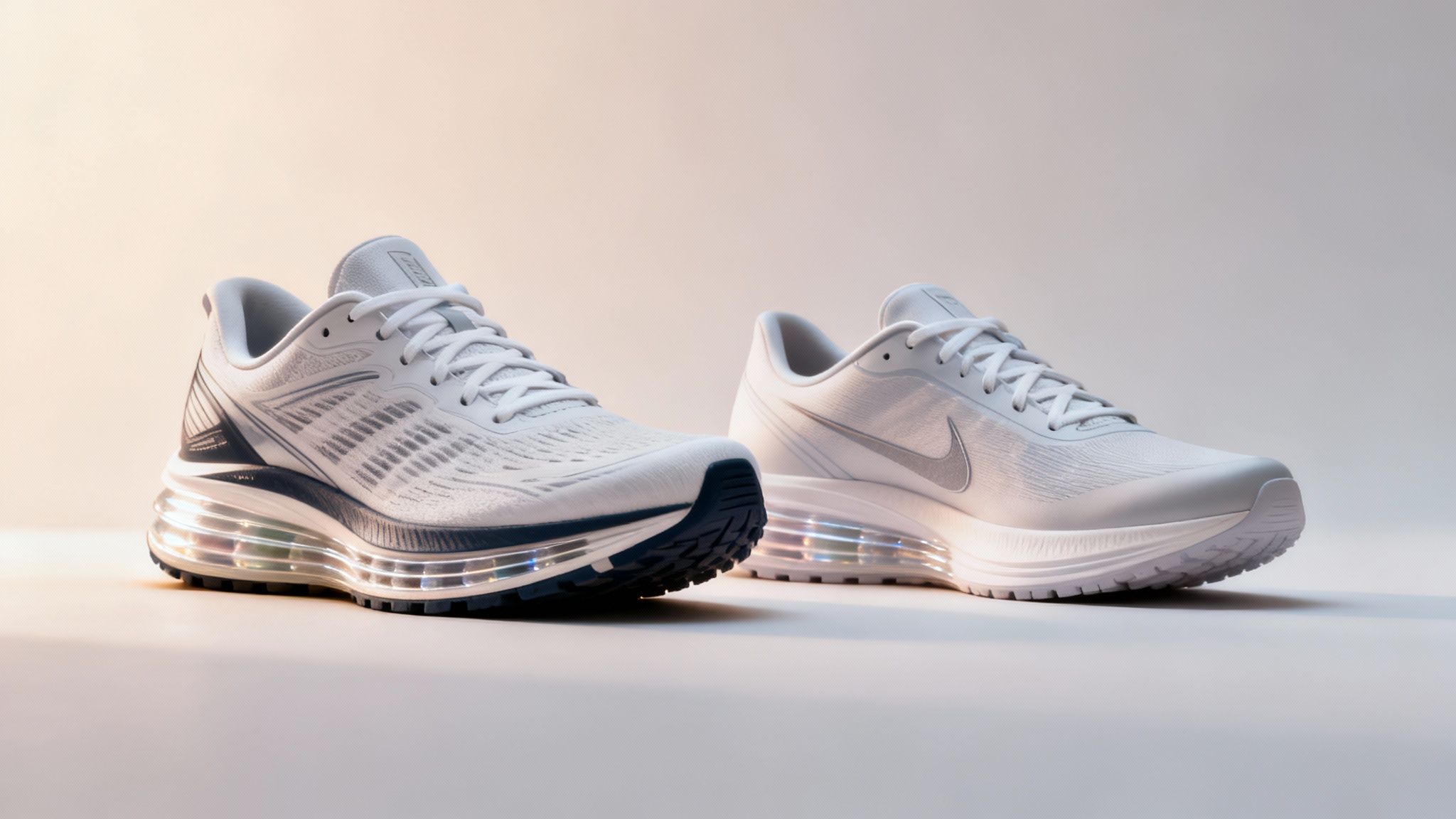
Medial tibial stress syndrome (MTSS) is a significant issue for runners. Studies show shin splints account for up to 20% of all running injuries,[³] highlighting the importance of proper footwear. For insights on modern shoe technology, you can learn how super shoes and their effects on runners are being studied.
Top Shoe Recommendations for Men
Men's shoes are typically wider and designed for a higher average body weight, focusing on durable cushioning and solid stability.
Best For: Neutral runners needing a reliable, cushioned workhorse.
Key Features: Known for its balanced feel, the Ghost 16 uses soft DNA LOFT v3 cushioning for excellent shock absorption. Its 12mm heel-to-toe drop reduces strain on the lower leg, making it a physical therapist favorite for shin splint recovery.
Best For: Runners seeking maximum cushioning without excess weight.
Key Features: The Clifton 9 features a thick slab of compression, molded foam for a cloud, like feel. Its Meta Rocker design promotes a smooth, rolling motion, softening the impact that can trigger shin splints.
Best For: Overpronators who need dependable stability.
Key Features: This stability workhorse blends plush Fresh Foam X cushioning with Stability Plane technology. It provides gentle guidance without being intrusive, ideal if your shin pain is linked to overpronation.
Top Shoe Recommendations for Women
Women’s shoes are often designed for a narrower foot shape and account for different biomechanics.
Best For: Runners who need all-around support to combat overpronation.
Key Features: The Adrenaline features GuideRails technology, which acts like bumpers to control excessive movement. The combination of soft DNA LOFT v2 cushioning and a protective 12mm drop makes it excellent for comfortable daily miles.
Best For: Runners wanting premium, structured cushioning with top-tier stability.
Key Features: The Kayano combines plush FF BLAST PLUS ECO cushioning with a 4D GUIDANCE SYSTEM for adaptive stability. It’s engineered to absorb shock and reduce lower leg stress.
Best For: Maximum shock absorption on long runs or recovery days.
Key Features: As Hoka's most cushioned shoe, the Bondi provides unmatched impact protection. For runners whose shins ache on hard pavement, its maximalist design can make the difference.
Sources:
³ Winkelmann, Z. K., et al. (2016). "Risk Factors for Medial Tibial Stress Syndrome in Active Individuals: An Evidence-Based Review." Journal of Athletic Training, 51(12), 1049–1052.
Beyond the Shoe: Holistic Strategies for Healthy Shins
The right shoes are a great start, but they are only one piece of the puzzle. To truly protect your lower legs, you need a holistic approach that includes strengthening key muscles, improving running form, and prioritizing recovery. This treats the cause of shin splints, not just the symptoms.
Fine-Tuning Your Running Form
Your movement patterns heavily influence the forces your shins absorb. Over striding, landing with your foot far in front of your body, is a common mistake that sends a shockwave up your tibia. A simple fix is to focus on your cadence (steps per minute).
Aim for a Quicker, Lighter Stride: Increase your step rate by 5-10%. This small change encourages your feet to land under your hips, reducing braking forces.
Focus on Foot Strike: Aim for a midfoot landing instead of a harsh heel strike to help your muscles absorb impact.
Run Softer: Try to run quietly. This mental cue encourages a landing with less force and more control.
Strengthening Your Kinetic Chain
Your shins are part of a kinetic chain including your feet, ankles, calves, hips, and core. Weakness in any link forces your lower legs to compensate, leading to overload. Targeted strength training is essential for long term prevention.
Weak hips and core can cause your running form to break down, leading to mechanical flaws that directly contribute to shin pain.
Essential exercises for your routine include:
Calf Raises: Perform with both straight and bent knees to target the entire calf complex.
Glute Bridges: Strengthen your glutes, the powerhouse of a stable stride.
Clamshells: Target hip abductors to prevent your knees from collapsing inward.
Planks: Build core stability, the foundation of good running posture.
The Power of Recovery and Flexibility
What you do between runs is as important as the runs themselves. Smart recovery helps muscles repair and strengthen. Methods like strategic foam roller routines for alleviating shin splints can accelerate the healing process.
Foam rolling can be fantastic for tight calves and shin muscles. For detailed instructions, see our practical guide to foam rolling for runners. Additionally, incorporate gentle stretching and low impact cross-training like swimming or cycling to give your shins a break while maintaining fitness.

How to Find Your Perfect Fit and Make a Confident Choice
Buying the right running shoes is an investment in your health. To make the best choice, go beyond grabbing a cool model off the shelf. The best way to start is with a professional gait analysis at a specialty running store, where an expert observes your running mechanics to recommend the right category of shoe for your specific needs.
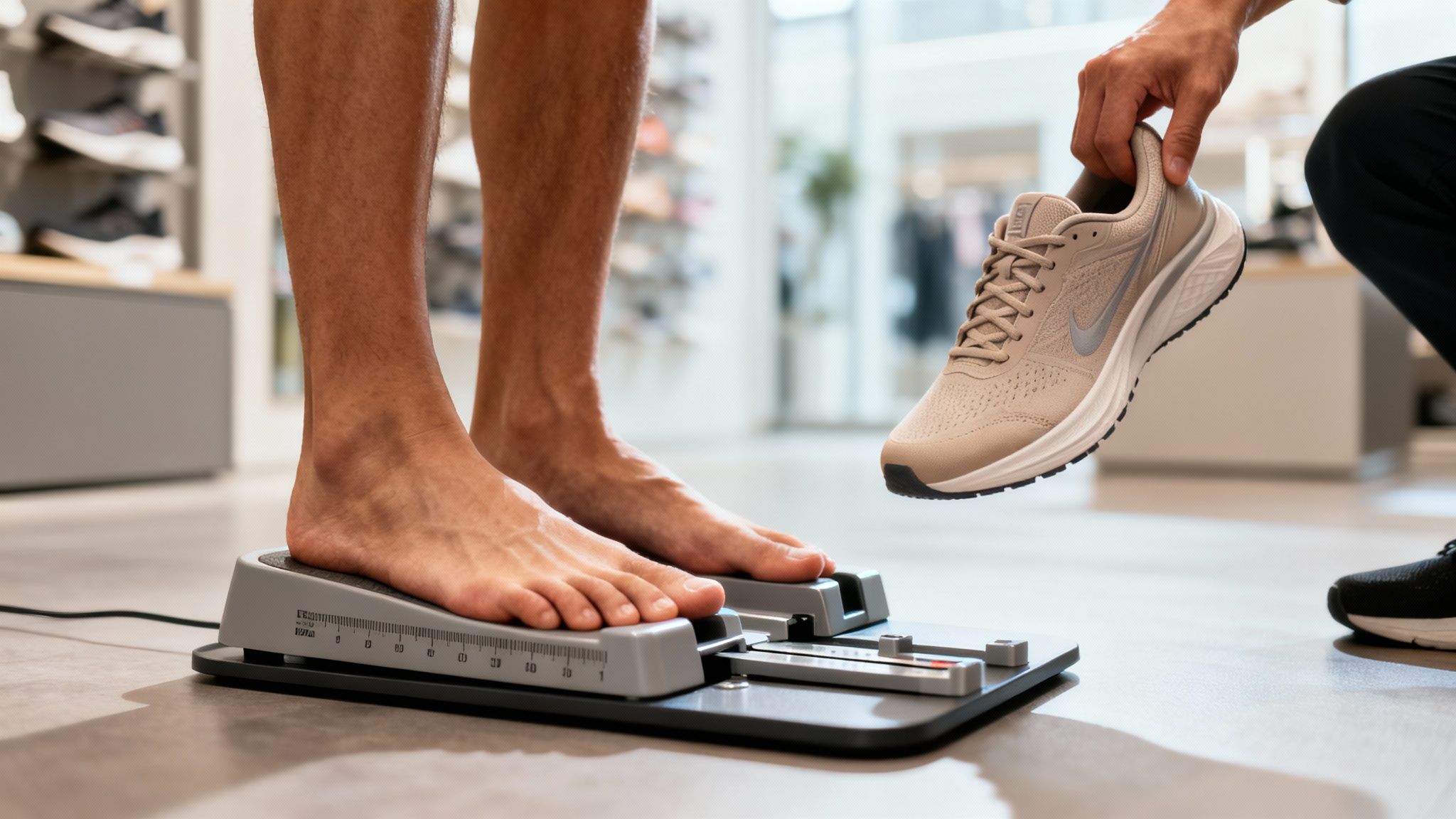
Your In-Store Fitting Checklist
Use this checklist to find the perfect fit:
Shop in the Afternoon: Your feet naturally swell during the day. Shopping later ensures a size that won’t feel too tight mid run.
Bring Your Own Socks: Always try on shoes with the running socks you normally wear for an accurate feel.
Check the Space: You need about a thumb's width (half an inch) between your longest toe and the end of the shoe.
Walk and Jog Around: Test the shoes in the store. Pay attention to heel slipping or any uncomfortable rubbing.
Shoe sizes are not consistent across brands. Don't assume you’re the same size in a Hoka as you are in a Brooks. Always get measured and try them on.
Finally, even the best shoes have a limited lifespan. To keep your shins protected, know when your footwear is past its prime. For details, check our guide on how often to replace running shoes.
Your Shin Splint Questions, Answered
Here are clear answers to common questions about running shoes and shin splints.
How Often Should I Replace My Running Shoes?
A shoe’s midsole cushioning breaks down long before the upper shows wear. As a rule, replace your running shoes every 300 to 500 miles. Running on compressed, "dead" foam is a major cause of shin splints, as the shoe loses its ability to absorb shock.
Are Zero Drop Shoes a Good Idea for Shin Splints?
Zero drop shoes can be a mixed bag. They can encourage a more natural midfoot strike, but they also place significantly more strain on your calves and Achilles tendon. For runners with tight or weak calves, this can worsen shin splint pain. If you try them, transition very slowly and only after addressing underlying strength and flexibility issues.
Do More Expensive Shoes Prevent Shin Splints Better?
A higher price doesn't guarantee a better shoe for you. While premium shoes may have advanced technology, the best shoe is the one that fits your foot and supports your running style. A moderately priced stability shoe that corrects your overpronation will be far more effective than a top-tier neutral racing flat with no support. Focus on features, cushioning, stability, and fit, not the price tag.
At Flourish-Everyday, our mission is to be your trusted partner in health and fitness. Check out our resources to help build a healthier, happier you.
Discover your next favorite pair at https://www.flourish-everyday.com.

