A Guide to Running Shoes Stability

Updated: Nov 25, 2025
Who could have ever thought that running was so complex? The running shoe industry has specialized in applying high tech to the art of running, so when we talk about stability in a running shoe, we’re referring to a design that helps control excessive foot motion, particularly the inward roll known as overpronation. Think of it as gentle guardrails for your stride, not a rigid brace. This design is crucial for runners who overpronate, as this common motion can place significant strain on the ankles, shins, and knees.
Index of Sections
A Practical Guide to Stability Shoes: An introduction to stability footwear and its purpose.
Understanding Your Foot's Natural Motion: A breakdown of pronation types and how to identify yours.
Decoding Stability Shoe Technology: An inside look at the features that provide stability.
Do You Really Need Stability Shoes?: Guidance on determining if this shoe category is right for you.
How to Choose Your Perfect Stability Shoe: Practical steps for finding the right fit.
Top Stability Running Shoes for Men & Women: A review of leading models for different needs.
Stability Shoes and Runner's Health: The connection between footwear and injury prevention.
Comparing Footwear Trends: How stability shoes stack up against minimalist and maximalist trends.
Answering Your Top Questions About Stability Shoes: FAQs about stability footwear.

A Practical Guide to Stability Shoes
This guide will equip you with the knowledge to understand your running style, interpret the technology in stability shoes, and select the perfect pair with confidence. The goal is to find a shoe that feels customized to your needs, helping you prevent injuries and enhance your running experience.
At its core, a stability shoe aims to promote a more neutral alignment from your foot up through your leg. This helps distribute the impact forces of each footstrike more evenly, which is a key factor in long term injury prevention.
Why Support Matters
Runners who overpronate, meaning their ankles roll too far inward after impact, benefit most from running shoes stability models. This excessive motion can stress joints and soft tissues. To counteract this, stability shoes incorporate technologies that reinforce the arch and gently guide the foot toward a more neutral path. They strike a balance between highly corrective motion control shoes and flexible neutral shoes, making them versatile for daily training on roads or treadmills.
Understanding Your Foot's Natural Motion
Every runner's stride is unique, but a fundamental movement we all share is pronation. This is the natural inward roll of the foot upon landing, acting as the body's built-in shock absorption system. A controlled amount of pronation is essential for healthy running.
The issue arises with overpronation, where the foot rolls inward excessively. This can disrupt your body's alignment and send stress up the kinetic chain to your shins, knees, and hips. Understanding your pronation type is the first step toward finding the right shoe.

The Three Types of Foot Strikes
Your running gait generally falls into one of three categories, which directly influences your need for running shoes stability.
Neutral Pronation: The foot rolls inward about 15%, effectively absorbing impact and setting up for a balanced push off.
Overpronation: The foot rolls inward more than 15%, causing the big toe and second toe to handle most of the push off, leading to instability.
Supination (Underpronation): The opposite of overpronation, where the foot doesn't roll inward enough. Impact is concentrated on the outer edge of the foot. For those who supinate, our guide on top running shoes for supination to find your perfect fit offers targeted recommendations.
Building Foundational Strength
While shoes are a critical component, they are most effective when paired with a strong body. Improving your balance and foot strength can enhance the performance of any shoe. Tools like yoga stability discs can complement your running by building core stability in your feet and ankles. A strong foundation makes your body more resilient and allows the shoe to assist, not compensate for, muscular weakness.
Decoding Stability Shoe Technology
What makes a stability shoe stable? It's a combination of specific design features working in unison to guide the foot. Familiarizing yourself with these components will empower you to make an informed choice.
The Foundation: Firm Midsoles
The midsole is the core of a running shoe. In running shoes stability models, this layer often features firmer foam, especially along the medial (inner) side. This density resists compression as the arch attempts to collapse, creating a stable platform that prevents the foot from rolling too far inward.
The GuideRail: The Medial Post
A classic stability feature is the medial post, a firmer wedge of foam embedded in the midsole under the arch. It acts as a brake, slowing the rate of pronation. Modern adaptations like GuideRails function like bumpers, gently keeping the foot centered without feeling restrictive. This subtle guidance is key to reducing strain on the lower leg. The demand for such technology is growing, with the global stability running shoe market projected to expand significantly. You can discover more insights on the stability shoe market growth.
Core Stability Shoe Technologies Explained
Feature | What It Is | How It Provides Stability |
|---|---|---|
Medial Post | A wedge of denser foam on the inner side of the midsole. | Acts as a supportive beam to slow the rate of inward foot roll (pronation). |
Firm Midsole | The entire midsole is made of a less compressible foam. | Creates a stable platform that resists collapsing under the arch. |
Heel Counter | A rigid plastic cup built into the back of the shoe. | Locks the heel in place to prevent side-to-side wobble on impact. |
GuideRails | Supportive "bumpers" along both sides of the midsole. | Gently steers the foot into a neutral path without being overly corrective. |
Wider Platform | The outsole has a broader base, especially in the midfoot/heel. | Increases ground contact for an inherently more stable foundation. |
The Anchor: A Structured Heel Counter
The heel counter is a firm insert that wraps around the back of your heel. In stability shoes, this component is more rigid to lock the heel securely, preventing slippage and providing a stable base for the entire stride.
The Base: A Wider Platform
Many stability shoes are built on a wider base. This increases the shoe's contact area with the ground, creating a more secure foundation for each foot strike, a simple yet effective method for enhancing passive stability.
Do You Really Need Stability Shoes?
Stability shoes are a specific tool, not a universal solution. Wearing them when unnecessary can interfere with your foot's natural motion. The decision to use them should be based on your body's specific needs. Runners who overpronate or have flexible, collapsing arches often benefit most from the guided support of running shoes stability models.
Who Benefits Most from Stability Shoes?
Your body often provides the first clues. Persistent aches and pains can be a sign that you need more support to manage impact and maintain alignment. Common complaints linked to overpronation include:
Shin Splints: Pain along the inner shinbone.
Runner's Knee: Discomfort around the kneecap.
Plantar Fasciitis: Sharp pain in the heel or arch.
General Arch Soreness: Aching in the arches post-run.
If these symptoms are familiar, the corrective features of a stability shoe may provide relief. This is especially true for heavier runners; our guide to the best running shoe for heavy runners offers more specific advice.
The Gold Standard: A Professional Gait Analysis
While at home tests like the "wet test" can offer clues about your arch type, a professional gait analysis at a specialty running store is the most reliable method. An expert will observe you run on a treadmill to analyze your foot strike and degree of pronation, providing a definitive recommendation. This expert feedback eliminates guesswork, ensuring you invest in footwear that supports your unique biomechanics. Research confirms that while stability is a key factor, runners ultimately prioritize comfort and fit when selecting shoes. Read the full research about footwear preferences to learn more.
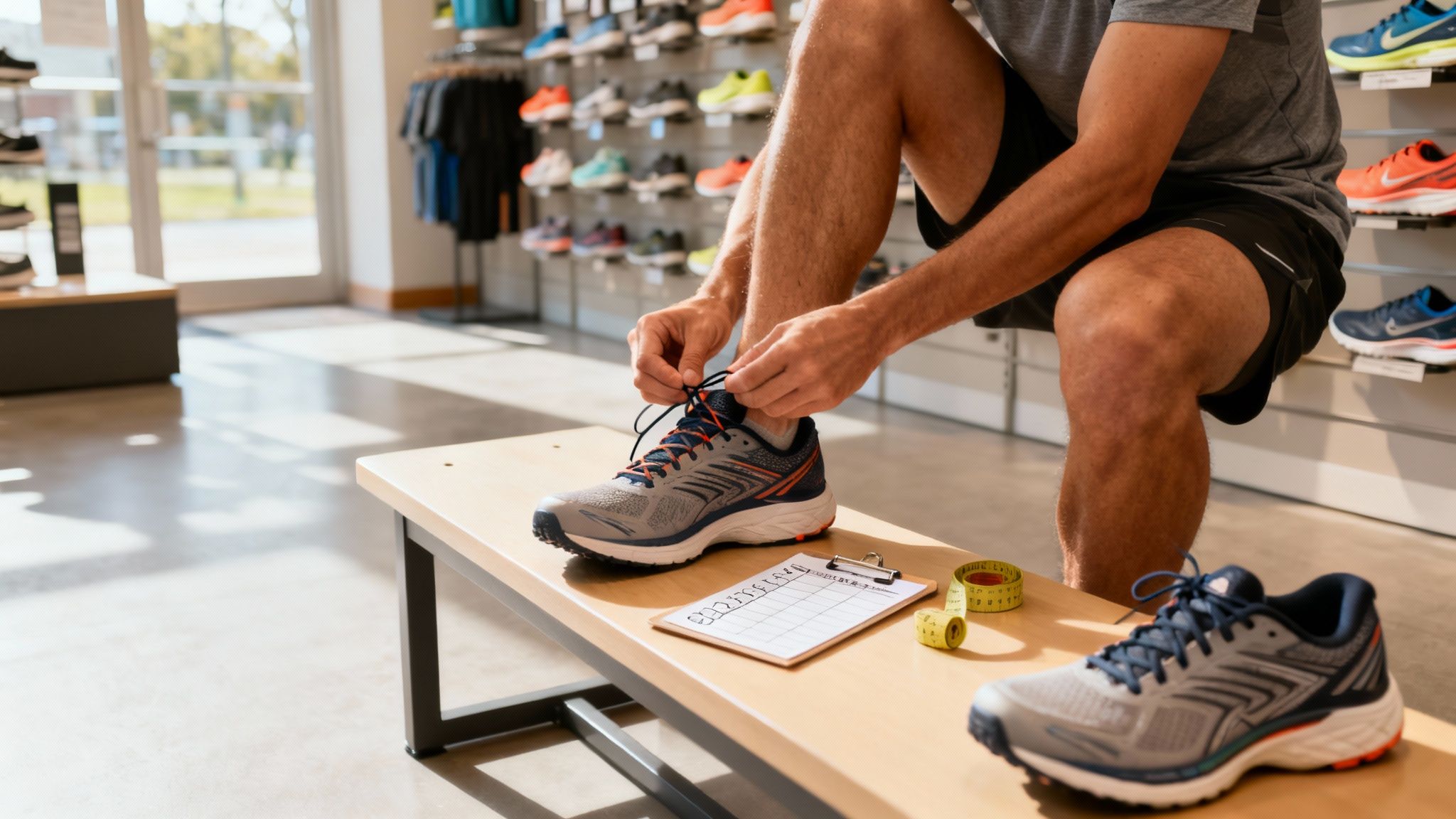
How to Choose Your Perfect Stability Shoe
Finding the right stability shoe doesn't have to be overwhelming. Shop for shoes in the afternoon when your feet have naturally swollen, and always wear the socks you run in to ensure an accurate fit.
The In-Store Test Run
The most crucial step is to test the shoes. Jog on a treadmill or down the aisle. Pay attention to key areas:
Heel Security: Ensure your heel is locked in without slipping.
Midfoot Comfort: The shoe should feel snug but not restrictive.
Toe Box Room: Allow a thumb's width of space between your longest toe and the shoe's end.
A good stability shoe should feel like a natural extension of your foot, gently guiding your stride without forcing it. Comfort remains the ultimate indicator of a good match. The global running shoe market is a testament to how much runners value proper footwear. You can discover insights about the running shoe market growth and its trends.
Making a Smooth Transition
Ease into your new shoes. Alternate them with your old pair for a few weeks, starting with shorter runs to allow your body to adapt to the new support system. This gradual transition helps prevent new aches as your muscles adjust. Remember that shoes have a limited lifespan; our guide on how often to replace running shoes can help you determine when it's time for a new pair.

Top Stability Running Shoes for Men & Women
Selecting a specific model depends on individual needs, but several brands consistently receive high praise for their stability offerings.
Top Picks for Men
Brooks Adrenaline GTS 23: A perennial favorite known for its balanced cushioning and reliable GuideRails support system. It provides a smooth ride suitable for daily training.
Hoka Arahi 7: Offers Hoka’s signature maximalist cushioning with the J-Frame™ technology to combat overpronation without adding stiffness. It's ideal for runners seeking a plush yet stable feel.
Saucony Guide 17: Features a new CenterPath Technology that provides a broader base and sidewalls to center the foot, offering a modern, less intrusive approach to stability.
Top Picks for Women
ASICS GEL-Kayano 30: A classic stability shoe that incorporates 4D GUIDANCE SYSTEM™ for adaptive stability. It’s known for its plush comfort and is a great choice for long distance runners.
New Balance Fresh Foam X 860v13: Delivers a superb balance of soft cushioning and a traditional medial post for dependable support. It's a workhorse shoe trusted by many runners.
Mizuno Wave Inspire 19: Utilizes a fan shaped Wave Plate to provide moderate stability and a responsive feel. It's a good option for runners who prefer a slightly firmer and more connected ride.
Stability Shoes and Runner's Health
The primary health benefit of wearing appropriate stability shoes is injury prevention. By correcting overpronation, these shoes help reduce the abnormal stresses placed on the body. A 2020 study published in the British Journal of Sports Medicine found that runners in stability shoes reported fewer running-related pain complaints compared to those in neutral shoes when a need for motion control was indicated.
Common injuries that stability shoes may help prevent include:
Patellofemoral Pain Syndrome (Runner's Knee): By improving alignment, stability shoes can reduce strain on the knee joint.
Medial Tibial Stress Syndrome (Shin Splints): Controlling pronation can decrease the rotational forces on the tibia.
Achilles Tendinopathy: Proper alignment can lessen the eccentric load on the Achilles tendon.
It's important to view stability shoes as one part of a holistic approach to runner's health, which also includes proper training, strength conditioning, and flexibility work.
Comparing Footwear Trends: Stability vs. Other Methods
The running shoe market has seen various trends, from minimalist "barefoot" running to maximalist cushioned shoes.
Wellbeing Trend: Minimalist Running: This method advocates for minimal footwear to strengthen the foot's natural muscles. While beneficial for some, it requires a long adaptation period and may not be suitable for runners with significant biomechanical issues like severe overpronation. Stability shoes offer a supportive alternative for those who need it.
Comparison: Stability vs. Maximalist Cushioning: Maximalist shoes (e.g., Hoka) focus on absorbing impact with thick midsoles. Many maximalist models now incorporate stability features (like Hoka's J-Frame), blending high cushion with guidance. The choice depends on whether a runner prioritizes a soft ride over a more traditional, firmer feel of stability.
Method: Custom Orthotics: An alternative to stability shoes is using custom or over the counter orthotics in a neutral shoe. This allows for personalized support but can be more expensive. Stability shoes provide an integrated, out of the box solution.

Answering Your Top Questions About Stability Shoes
Can I Wear Stability Running Shoes for Walking?
Yes. The support features that benefit runners are also excellent for walking, providing stability and reducing fatigue for those who overpronate, even at a slower pace. However, remember that all miles, whether walked or run, contribute to the shoe's 300-500 mile lifespan.
How Do I Know When It's Time to Replace My Stability Shoes?
Look for these signs:
Mileage: Track your usage and plan for replacement around 300-500 miles.
New Pains: Sudden aches in your joints or shins are a key indicator of worn-out support.
Visual Wear: Check for a compressed, wrinkled midsole or a worn down outsole tread.
Are Motion Control and Stability Shoes the Same Thing?
No. Think of support on a spectrum. Stability shoes offer moderate correction for mild to moderate overpronation. Motion control shoes are at the far end, providing maximum rigidity for severe overpronation or flat feet. Most runners who need support start with stability shoes.
Does More Cushioning Mean More Stability?
No, cushioning and stability are separate concepts. Cushioning absorbs impact, while stability controls motion. A shoe can be highly cushioned but offer no stability, or it can be firm and very stable. The best models effectively blend both comfort and control.
References
Malisoux, L., et al. (2020). "Injury risk in runners using standard or motion control shoes: a randomised controlled trial." British Journal of Sports Medicine, 50(8), pp. 481-487.
Cheung, R. T., & Ng, G. Y. (2007). "Efficacy of motion control footwear on running kinematics in individuals with and without pronated feet." Journal of the American Podiatric Medical Association, 97(3), pp. 183-191.
Future Market Insights. (2023). Stability Running Shoe Market Outlook (2023 to 2033). discover more insights on the stability shoe market growth.
Willy, R. W., & Davis, I. S. (2011). "The effect of a gradual transition to minimalist footwear on running biomechanics." Journal of Orthopaedic & Sports Physical Therapy, 41(4), pp. 242-250.
At Flourish-Everyday, we're here to give you the insights and guidance you need to find the perfect gear for your fitness journey. From running shoes to cross-training equipment and health advice, we want to support every step of your active lifestyle. Discover your next favorite pair of shoes at Flourish-Everyday.
