Best Shoes for Tendonitis for Lasting Pain Relief

Updated: Oct 30, 2025
Everybody has had some foot pain, but when dealing with tendonitis, the right shoes are a critical tool for recovery. The best shoes for tendonitis for lasting pain relief combine superior cushioning, firm heel support, and proper arch alignment to reduce pressure on inflamed tendons. For Achilles tendonitis, a moderate heel-to-toe drop is particularly effective, as it helps offload tension from the back of the heel. This guide will explore the best shoes for tendonitis and detail what makes them effective.
Index of Sections

Understanding Tendonitis and How Shoes Can Help
Tendonitis is the inflammation or irritation of a tendon, the fibrous cord connecting muscle to bone. When this occurs in the foot or ankle, simple movements can become painful. Common forms like Achilles or posterior tibial tendonitis often stem from repetitive strain, overuse, or poor biomechanics.
Footwear plays an essential role in the healing process. Unsupportive shoes force your tendons to overwork, absorbing shock and stabilizing the foot alone. This constant strain leads to micro tears and inflammation.
The Role of Supportive Footwear
A good shoe for tendonitis minimizes stress on affected tendons by correcting biomechanical flaws and providing a stable, cushioned environment. Think of it as an external support system that gives injured tendons a chance to heal.
Key therapeutic features include:
Strategic Cushioning: Absorbs impact from hard surfaces, protecting tendons from shock.
Firm Heel Counters: A rigid heel cup prevents excessive side-to-side motion, stabilizing the ankle and reducing Achilles strain.
Proper Arch Support: Prevents the arch from collapsing inward (overpronation), a common cause of posterior tibial tendonitis.
Market Recognition and Health Information
The importance of supportive footwear is reflected in the healthcare market. The global tendonitis treatment market was valued at approximately USD 232.02 billion and continues to grow. Achilles tendonitis is the dominant segment, accounting for 48.8% of the revenue. This highlights why so many therapeutic shoes focus on features like enhanced heel cushioning and support. (Precedence Research)
By choosing shoes with specific design features for your condition, you can transform your footwear from a source of pain into a powerful recovery tool.
Essential Features in Shoes for Tendonitis
The best shoes for Tendonitis for lasting pain relief means choosing the right shoes. Tendonitis relief requires focusing on specific shoe design elements that actively reduce strain. Understanding these features allows you to make a targeted choice that promotes pain relief. The right shoe changes how your foot interacts with the ground, redistributing pressure and correcting biomechanical quirks that worsen tendon strain.
Heel Construction and Support
For tendonitis, especially Achilles issues, the heel construction is paramount. Two non-negotiable features are the heel-to-toe drop and the heel counter.
The heel-to-toe drop is the height difference between the heel and forefoot. A higher drop of 8-12mm provides a slight lift, which can immediately reduce the load on the Achilles tendon with every step.
A rigid heel counter, the plastic insert cupping the heel, is equally critical. It locks the heel in place, preventing wobbling (pronation or supination) that can destabilize the ankle and stress the tendons.
Midsole Cushioning and Shock Absorption
The midsole is the shoe's engine, providing comfort and protection. For tendonitis, its primary function is shock absorption. A quality midsole, typically made of EVA foam or proprietary cushioning, acts as a sponge, soaking up impact forces before they can irritate your tendons.
A well cushioned midsole is a buffer between your body and hard pavement. Without it, your tendons absorb repetitive impact, hindering their ability to heal.
Arch Support and Stability
Proper arch support is crucial for preventing the foot from rolling inward (overpronation). This inward roll places significant stress on the posterior tibial tendon. By supporting the arch, the shoe maintains a neutral foot alignment, making the foot and ankle work more efficiently and reducing the workload on key tendons. For more details on how shoe components work together, see our expert guide on how to choose running shoes.
Critical Shoe Features for Tendonitis Management
Essential Feature | Its Role in Tendonitis Relief | What to Look For in a Shoe |
|---|---|---|
Optimal Heel Drop | Reduces tension on the Achilles tendon by slightly elevating the heel. | A drop between 8mm and 12mm is often ideal for Achilles relief. |
Rigid Heel Counter | Stabilizes the rearfoot and prevents excessive side-to-side motion. | Squeeze the back of the shoe; it should feel firm and resist collapsing. |
Superior Shock Absorption | Cushions the foot from ground impact, protecting inflamed tendons. | Look for thick, responsive midsole foam (e.g., EVA, PU, or brand-specific tech). |
Robust Arch Support | Prevents overpronation and reduces strain on the posterior tibial tendon. | Check for a contoured footbed that matches your natural arch shape. |
Focusing on these features will make your search for the right shoe more effective, turning it into a tool that supports your body's healing process.

Top Athletic Shoes for Men with Tendonitis
Finding the right athletic shoe for tendonitis is a personal process. Brands like Brooks, Hoka, and New Balance use unique technologies to reduce strain, but they achieve it in different ways. Your choice depends on your activity level, foot shape, and the specific location of your tendon pain.
Brooks running shoes are known for DNA LOFT cushioning, an adaptive foam providing a soft landing without feeling mushy. This makes them excellent for daily walkers or runners needing consistent shock absorption.
Hoka stands out with its thick cushioning and Meta-Rocker geometry. This curved sole promotes a smooth heel-to-toe transition, which can be a game changer for men with Achilles tendonitis by reducing the load on the calf and tendon.

Comparison Reviews: Cushioning and Stability Systems
New Balance features its Fresh Foam X midsole for an ultra plush, lightweight feel. The brand also excels in stability, with many models including a firm medial post to control overpronation, a common cause of posterior tibial tendonitis.
For the Daily Walker: The adaptive cushioning in a Brooks Ghost or Glycerin offers reliable, durable support for everyday comfort.
For the Active Runner: The Hoka Bondi or Clifton with its Meta-Rocker design actively works to reduce Achilles strain during runs.
For the Overpronator: A stability shoe like the New Balance Fresh Foam X 860 combines soft cushioning with medial support to address the biomechanics of overpronation.
The core difference lies in their approach: Brooks adapts, Hoka propels, and New Balance corrects. Understanding this distinction is key to choosing a helpful shoe.
The demand for such specialized footwear is growing. The orthopedic footwear market was valued at USD 4.37 billion and is projected to reach USD 15.45 billion by 2037, driven by an aging population seeking relief from chronic foot pain. (Research Nester) You can discover more insights about the orthopedic footwear market on researchnester.com.
Top Athletic Shoes for Women with Tendonitis
For women, shoe selection is even more specific due to biomechanical differences like a narrower heel and wider forefoot. Brands such as Asics, Saucony, and Altra have designed models that address these needs, combining performance with pain management features. The goal is a shoe that eases strain and provides support for all activities.
Comparison Reviews: Top Brands for Female Athletes
Asics, Saucony, and Altra approach shoe design with different philosophies, resulting in unique benefits for women with tendonitis.
Asics GEL vs. Saucony PWRRUN
Asics is renowned for its GEL technology, placing soft, silicone-based pods in the heel and forefoot for superior shock absorption. This is highly beneficial for Achilles tendonitis, softening impact at the point of stress. The Asics GEL-Kayano combines this cushioning with stability features to control overpronation.
Saucony utilizes PWRRUN cushioning, a responsive foam balancing softness and energy return. For women needing arch support for posterior tibial tendonitis, the Saucony Guide is an excellent choice. It features a gentle medial post to prevent excessive inward rolling, thus reducing strain on the inner ankle tendon.
Asics GEL offers classic, protective cushioning ideal for high impact activities. Saucony's PWRRUN provides a more well rounded, stable, and responsive feel for everyday support.
Situational Recommendations Based on Activity
The best shoe depends on your activity.
For the Runner with Achilles Pain: The Asics GEL-Nimbus offers significant heel cushioning and a higher heel-to-toe drop to offload the Achilles tendon.
For Cross-Training: The Saucony Guide provides the medial support needed for lateral movements, preventing ankle instability that can aggravate tendonitis.
For Natural Foot Shape: Altra's FootShape™ toebox and Balanced Cushioning (zero-drop) platform allow toes to spread naturally. Note: Transition to zero-drop shoes slowly if you have Achilles tendonitis. The Altra Provision offers subtle stability features to aid this transition.
Choosing the best athletic shoe involves matching its strengths to your body and activity level.
A Closer Look at Specific Therapeutic Shoe Models
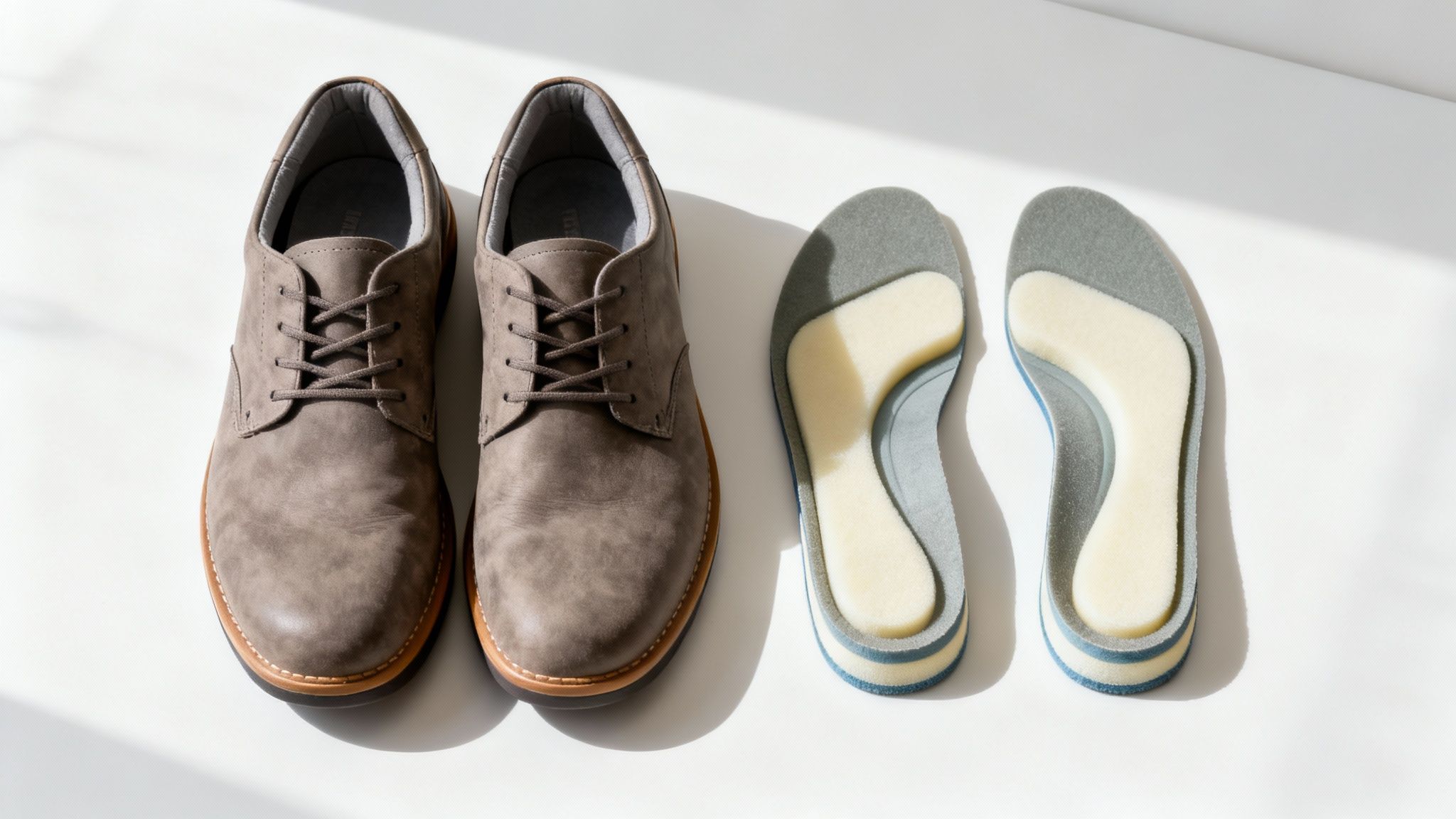
When standard athletic shoes aren't enough for persistent tendonitis, specialized therapeutic footwear from brands like OrthoFeet and Aetrex is the next step. These shoes are engineered from the ground up to address specific foot problems, incorporating medical-grade components for managing chronic pain and aiding recovery.
Brand Shoe Review: OrthoFeet
OrthoFeet focuses on a multi-layered cushioning and support system. Their Ortho-Cushion™ System combines a contoured orthotic insole, an ergonomic sole with a gentle rocker design, and an extra-cushioned heel pad. This is highly effective for posterior tibial tendonitis, as the robust arch support prevents the foot from rolling inward. For Achilles pain, the roomy toe box and non binding uppers prevent pressure on sensitive areas. If you need athletic options, see our guide on the best running shoes for Achilles tendonitis.
Brand Shoe Review: Aetrex
Aetrex is known for its signature Aetrex Arch Support, which is built directly into the shoe to promote biomechanical alignment and combat overpronation. Their shoes often include memory foam cushioning that molds to your foot's unique shape, distributing pressure evenly to reduce stress on inflamed tendons.
The strength of these therapeutic brands lies in their intense focus on biomechanics. OrthoFeet excels with its multi part cushioning system, while Aetrex integrates proven arch support technology.
The medical footwear market, valued at roughly USD 11.47 billion in 2023, continues to grow for a reason. Brands like these lead the industry by developing technology that offers tangible relief.
Complementary Wellness Strategies for Tendonitis
While finding the best shoes for tendonitis is a crucial first step, a holistic recovery plan is more effective. Integrating other wellness strategies can speed up healing and prevent recurrences by addressing the root causes of tendon strain.
Physical Therapy and Targeted Exercises
Physical therapy is a cornerstone of tendonitis recovery. A therapist can identify biomechanical issues and design a program of targeted exercises to stretch and strengthen the affected muscles and tendons. For example, eccentric heel drops are proven effective for Achilles tendonitis, while calf raises can strengthen the posterior tibial tendon. The goal is to build flexibility and resilience to prevent future injury.
Custom Orthotic Inserts
For those needing more specific support, orthotic inserts can be beneficial. While over-the-counter options exist, custom orthotics from a podiatrist offer tailored correction for issues like severe overpronation or fallen arches. An orthotic provides precise arch support and heel stabilization, taking a significant load off inflamed tendons and ensuring neutral foot alignment. Remember that even the best shoes wear out, so knowing how often to replace running shoes is critical for maintaining support.
The R.I.C.E. Method for Well-Being
For acute flare-ups, the R.I.C.E. method offers effective, immediate relief.
Rest: Avoid activities that cause pain to allow the tendon to heal.
Ice: Apply a cold pack for 15-20 minutes several times a day to reduce swelling.
Compression: Use an elastic bandage to minimize swelling.
Elevation: Prop your foot above heart level to help drain excess fluid.
Combining these strategies with the right footwear provides a comprehensive toolkit for managing tendonitis.

Common Questions About Footwear for Tendonitis
Switching to therapeutic shoes can bring up questions. Here are answers to some common concerns to help you use your new footwear as an effective recovery tool.
How Quickly Should New Shoes Help My Tendonitis Pain?
While some feel immediate relief, allow one to two weeks of consistent wear to notice a significant difference. These shoes work by reducing daily stress on the tendon, giving it a chance to heal. Combine them with gentle stretching and rest for faster, more lasting results.
Should I Wear My Supportive Shoes Around the House?
Yes, absolutely. Walking barefoot or in unsupportive slippers on hard floors can continuously aggravate the tendon, negating the benefits of your shoes. Wear your supportive shoes indoors, or get a dedicated pair of supportive house shoes or sandals to provide constant protection and speed up healing.
Can the Wrong Shoes Make My Tendonitis Worse?
Definitely. Shoes lacking arch support, cushioning, or a firm heel can worsen tendonitis. Flat, flexible shoes like flip flops or high heels alter your foot's natural mechanics and place excessive strain on tendons. Switching to proper supportive footwear is a direct and powerful step toward managing your pain.
Do I Need Custom Orthotics with My New Shoes?
Not always. Many high quality supportive shoes offer excellent built in arch support sufficient for mild to moderate tendonitis. However, if you have a significant biomechanical issue like severe flat feet or very high arches, a custom orthotic from a podiatrist can provide targeted correction. Try a quality supportive shoe first; if pain persists after a few weeks, consult a specialist. I hope this article helps, and gives you a better understanding of what options you have to relieve your pain or prevent it. Be well.
References
Precedence Research. "Tendonitis Treatment Market (By Treatment: Therapy, Surgery; By Condition: Tennis Elbow, Golfer's Elbow, Pitcher's Shoulder, Swimmer's Shoulder, Jumper's Knee, Achilles Tendonitis) - Global Industry Analysis, Size, Share, Growth, Trends, Regional Outlook, and Forecast 2023-2032." read the full research about tendonitis treatment trends
Research Nester. "Orthopedic Footwear Market - Global Demand Analysis & Opportunity Outlook 2035." discover more insights about the orthopedic footwear market on researchnester.com
At Flourish-Everyday, our goal is to give you the expert insights and straight-up recommendations you need for your wellness journey. We're here to help you find the perfect footwear and health information to support a more active, healthier life. Check out all of our comprehensive guides at https://www.flourish-everyday.com.
