Running Shoes for Flat Feet: Top Picks for Stability and Comfort

Updated: Jan 10
If you have flat feet, finding the right running shoe isn't just a good idea, it's nonnegotiable. Runners with fallen arches often experience overpronation, where the foot rolls inward with each step. The best shoes to counteract this are typically stability or motion control models.
Running shoes for flat feet are engineered with the specific support you need: firm arch support, a solid midsole, and a structured heel. This combination helps align your stride, takes the stress off your joints, and can be a essential in preventing common running injuries.

In This Guide
The Growing Market for Supportive Footwear
The shoe industry is paying attention to foot health, leading to serious innovation in supportive footwear. This means more and better options for runners with flat feet.
The global market for orthopedic footwear, which includes specialized shoes for flat feet, was valued at USD 5.11 billion in 2025 and is expected to blow past USD 13.5 billion by 2035. This growth is driven by consumer demand for shoes with better stability, shock absorption, and proper weight distribution, all critical for running with flat feet.
The right pair of running shoes does more than just cushion your steps; it corrects biomechanical imbalances, turning potential pain into powerful performance. For a flat footed runner, this isn't a luxury, it's the foundation of every successful run.
Choosing the right shoe is an investment in your long term running health. And remember, the features are only half the battle; the fit is just as crucial. For a deeper dive, check out our runner's guide to proper running shoe fit.

How Flat Feet Mess With Your Running Form
To understand why the right running shoes for flat feet are essential, you must know what's happening to your body with each stride. Your foot's arch is your body's natural suspension system, designed to absorb shock. With flat feet, or "fallen arches," this system collapses inward and cannot absorb impact effectively. That force travels up your body's kinetic chain.
This chain reaction sends stress through your ankles, shins, knees, and even your hips and lower back. Over thousands of steps, this unmanaged impact is a common cause of running injuries.
The Problem of Overpronation
A collapsed arch leads to a biomechanical issue called overpronation. While some pronation (the natural inward roll of the foot) is normal and helps absorb shock, overpronation is an excessive inward roll. This throws your entire running form out of alignment. A tell tale sign is the inner edge of your old running shoe soles being more worn down than the outer edge.
Overpronation isn't just a foot problem; it's a full body alignment issue that starts from the ground up. Using the right footwear to correct it is the first and most important step to protecting your joints and staying on the road pain free.
This constant inward collapse forces your lower leg to rotate internally, putting abnormal stress on your shinbone and knee joint, leading directly to nagging running injuries.
From Bad Form to Nagging Injuries
This mechanical imbalance creates a direct path to injury. Your body tries to compensate for the lack of stability, overloading muscles and tendons not designed for that workload. This leads to problems common for runners with flat feet:
Plantar Fasciitis: Strain on the plantar fascia ligament causes sharp heel pain.
Shin Splints: Excessive inward rotation of the shin bone overstresses lower leg muscles.
Achilles Tendinitis: Overpronation can twist and stretch the Achilles tendon, causing inflammation.
Runner's Knee: Misalignment travels to the knee, causing the kneecap to track improperly and resulting in pain.
Understanding this chain reaction makes it clear why features like "stability" and "motion control" are engineered solutions to provide missing support, straighten your stride, and protect your body.
Decoding Shoe Features For Maximum Support
Now that you understand the effects of flat feet, let's focus on the solution. Finding the right running shoe is about identifying the specific technology built to combat overpronation. The two main shoe types are stability (for mild to moderate overpronation) and motion control (for severe overpronation).
This concept map illustrates the link between flat feet, overpronation, and potential injuries, highlighting how the right shoe can break the cycle.
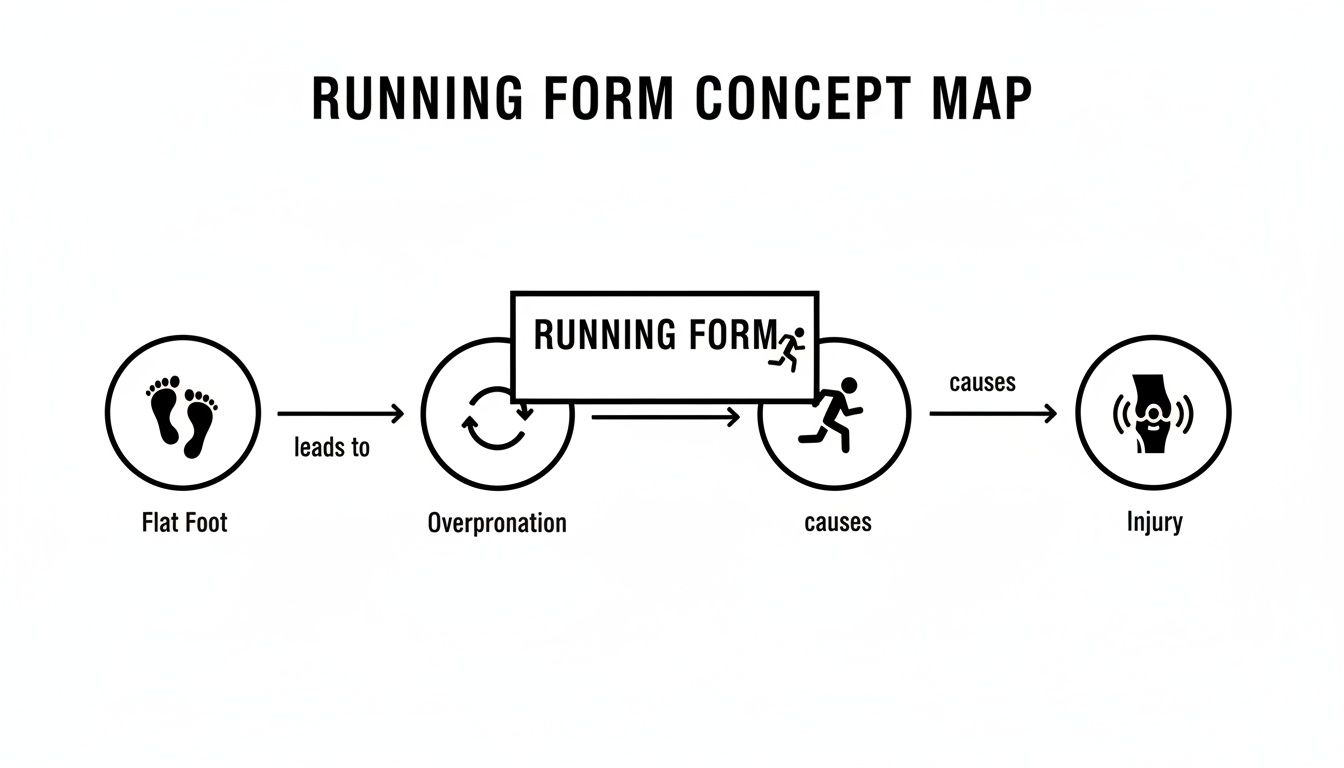
The key is to address the lack of arch support with the right shoe to prevent pain.

Core Components For Arch Support And Stability
When selecting a shoe, analyze its construction. Several key parts work together to create a supportive base that guides your foot and absorbs shock correctly.
Here are the nonnegotiable features:
Firm Midsoles: A soft midsole will collapse under a flat footed runner's weight. You need a firm, dense midsole that resists compression and supports the arch.
Medial Posts: This is a section of firmer foam on the inside edge of the midsole. It acts as a guardrail, slowing the inward roll of your foot and promoting a more neutral stride.
Robust Heel Counters: The stiff cup wrapping your heel is crucial. It locks the heel in place, preventing wobble and providing rear foot stability.
A shoe's ability to control motion is directly tied to the firmness and strategic placement of its support structures. It’s less about propping up the arch and more about guiding the entire foot through a healthier, more aligned gait cycle from landing to toe-off.
Essential Shoe Features for Flat Feet at a Glance
This quick reference table helps you remember what to look for.
Shoe Feature | What It Does | Who Needs It Most |
|---|---|---|
Stability Features | Provides moderate support using guide rails or medial posts to gently correct overpronation. | Runners with mild to moderate flexible flat feet. |
Motion Control | Offers maximum rigidity with firm posts and a straight last to severely limit excess foot motion. | Runners with severe overpronation or rigid flat feet. |
Firm Midsole | Resists compression under the arch, preventing it from collapsing during the stride. | Virtually all runners with flat feet. |
Structured Heel Counter | A rigid cup that locks the heel in place to prevent lateral wobble and improve stability. | Anyone whose heel feels unstable or slips in their shoe. |
Wide Toe Box | Allows the toes to spread out naturally, which improves balance and reduces pressure on the forefoot. | Runners who experience cramped toes or bunions. |
Understanding the overall shoe geometry is also important. A wide toe box allows your toes to splay, improving balance. For more on these technologies, consult our guide to running shoe stability.
Top Running Shoes for Men and Women with Flat Feet
Let's apply this knowledge to actual shoes. A few key brands, like Brooks, Hoka, and ASICS, consistently deliver the stability and support needed to manage overpronation.
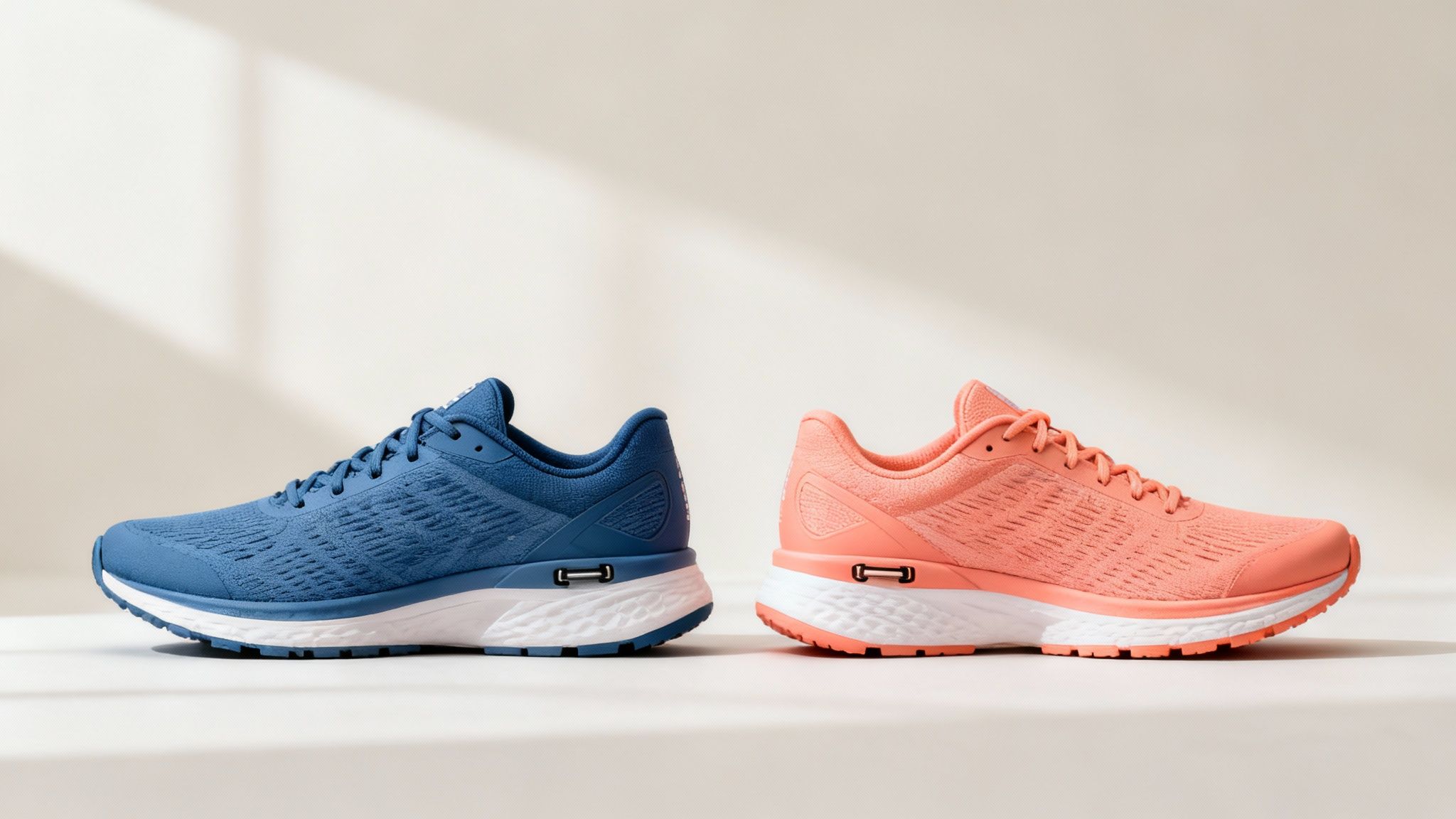
The market reflects this need. According to Running Insight, adult running shoe sales grew by 8% through August 2025, showing that runners are investing in quality gear that addresses their specific needs.
Top Stability Running Shoes for Men
Men with flat feet need shoes that blend solid support with durable cushioning. These models provide structure to guide the foot into a more natural alignment.
Best For: Daily training and runners wanting a mix of cushioning and reliable support.
Key Technology: The GuideRails® system acts like bumpers, gently keeping your feet, knees, and hips in their natural motion path.
Why It Works: It provides holistic support without feeling restrictive, making it ideal for mild to moderate overpronation.
Best For: Long distance running and maximum protection.
Key Technology: Its 4D GUIDANCE SYSTEM™ adapts to your stride, providing stability when your form falters. This is combined with soft FF BLAST™ PLUS ECO foam for superior shock absorption.
Why It Works: It offers unwavering support and plush comfort, making it a trusted choice for marathon training.
The best stability shoe for a man with flat feet should feel like a natural part of your body, supportive, but not in your face about it. The goal is to control excess motion without making you run in a way that feels unnatural.
Top Stability Running Shoes for Women
Women's shoes are often built on a different last to better match female anatomy. These picks deliver high level support tailored for a woman's foot.
Best For: Runners seeking maximum cushioning or significant stability.
Key Technology: Hoka's H-Frame™ is a softer foam frame that cradles and stabilizes the foot, combined with plush cushioning for a forgiving ride.
Why It Works: An excellent option for women with significant overpronation or those returning from injury, it offers a supremely cushioned and stable platform.
Best For: All around daily training with support that doesn't feel heavy.
Key Technology: The HOLLOW TECH guidance frame provides underfoot support in a lightweight package for a smoother ride.
Why It Works: It hits a sweet spot: supportive enough for flat feet but light and responsive enough for faster paced days. A great versatile option.
Comparison of Top Picks for Flat Feet
Here’s a quick side-by-side comparison to help you decide.
Shoe Model | Support Level | Best Use Case | Key Feature |
|---|---|---|---|
Moderate | Daily Training | GuideRails® System | |
High | Long Distance | 4D GUIDANCE SYSTEM™ | |
Maximum | Recovery/Max Cushion | H-Frame™ Technology | |
Moderate | Versatile Training | HOLLOW-TECH Frame |
This list is a starting point. The best choice depends on your personal overpronation level, cushion preference, and running habits.
When to Consider Orthotics and Shoe Insoles
Sometimes, even the best running shoes aren't enough. Orthotics and insoles can fine tune your shoe's support. If you still have pain after switching to a good stability shoe, it may be time to consider this partnership. Insoles can provide more precise arch support, add cushioning, and boost your shoe's corrective power.
Over-the-Counter vs. Custom Orthotics
Over-the-Counter (OTC) Insoles: These pre-made inserts are a great starting point for runners with mild to moderate flat feet needing extra arch support or cushioning. They are affordable and accessible.
Custom Orthotics: Prescribed by a podiatrist and molded to your feet, these are medical devices for correcting significant biomechanical issues, severe overpronation, or persistent injuries.
"An orthotic insert personalizes your shoe. It fills the specific gaps in support that your unique arch needs, turning a good stability shoe into a great one by creating a more customized fit and function."
If you have persistent aches despite good shoes, insoles might be the next step. The demand for them is growing; the global shoe insoles market is projected to reach USD 9.69 billion by 2033, as noted in market research. You can read the full research on shoe insole market trends to learn more. For many, an OTC insert is sufficient, but for stubborn pain, a custom orthotic could be key to pain free running.
Building Strength for Injury-Free Running
While the right running shoes for flat feet are crucial, they are only one part of the solution. Building your body's own internal support system through strength training is your best defense against injury. Strengthening the muscles in your feet, ankles, and legs naturally stabilizes your stride and can improve your biomechanics over time.
Foundational Foot and Ankle Exercises
Your feet contain a network of muscles that act as natural arch supports. Simple exercises can make a huge difference.
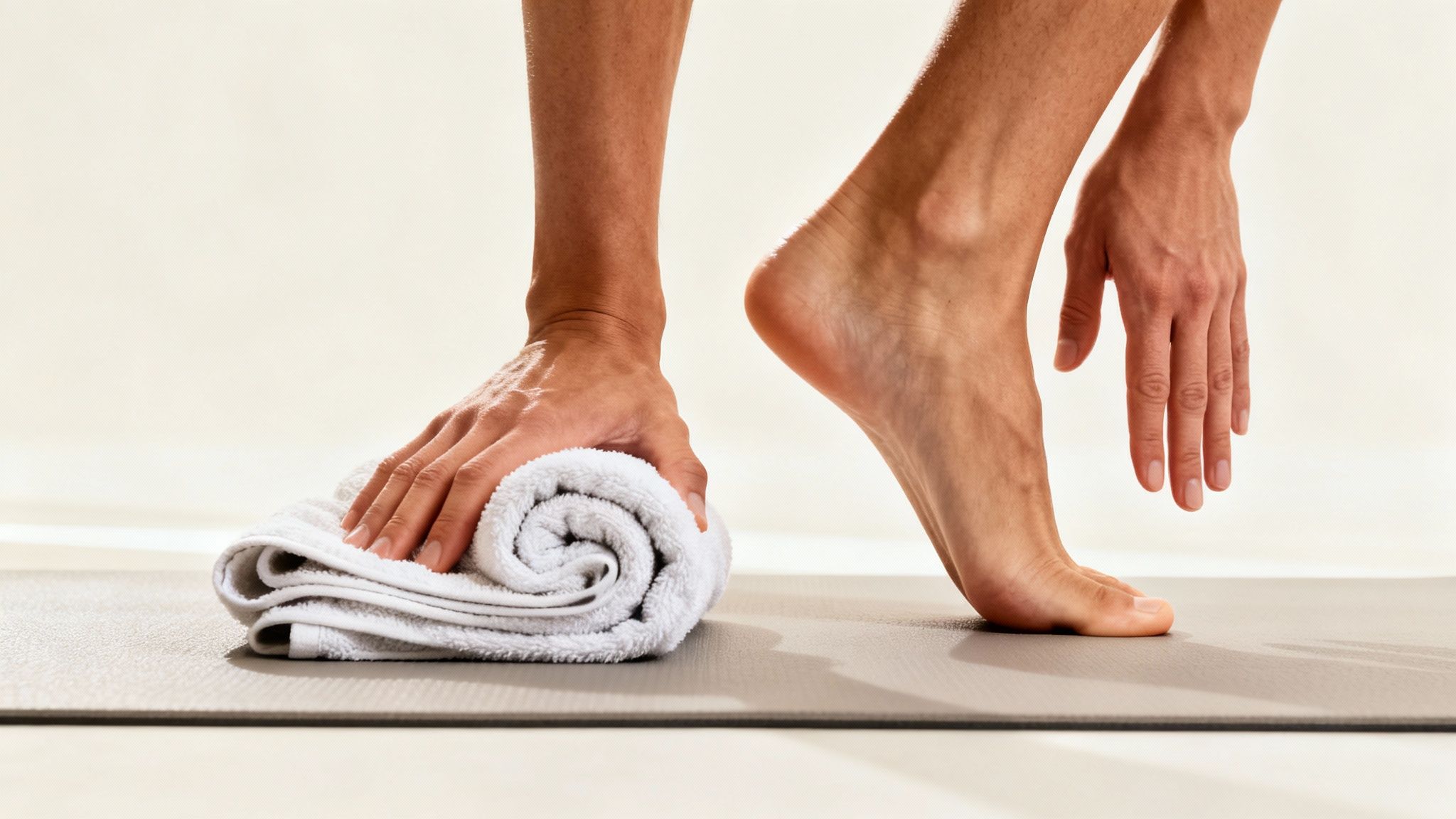
Towel Curls: Sit and use your toes to scrunch a towel toward you, strengthening the intrinsic muscles under your foot.
Calf Raises: Stand on a step, lower your heels, then press up onto the balls of your feet to build power in your calves and Achilles tendon.
Arch Lifts: While standing, lift your foot's arch without curling your toes to activate the muscles that support it.
These exercises target areas weakened by flat feet and can help prevent issues like plantar fasciitis.
The most supportive shoe in the world can't fully compensate for weak muscles. True injury prevention for runners with flat feet comes from combining smart footwear choices with consistent strength and conditioning work.
The Bigger Picture of Body Mechanics
For a full body approach to injury prevention, consider a structured program like a beginner gym routine for women. Pay attention to your running form, such as landing on your midfoot and increasing your cadence. A strong core is also essential for stability. You can find exercises in this guide to 5 essential core strengthening exercises for runners.
Finally, listen to your body and avoid overtraining. Pairing supportive shoes with a strong body is the most effective combination for a long and healthy running journey.

Your Questions About Running with Flat Feet Answered
Let's address some final common questions to ensure you feel confident in your choices.
Can I Run in Neutral Shoes If I Have Flat Feet?
For most runners with flat feet, this is not recommended. Neutral shoes lack the medial support needed to prevent the arch from collapsing inward. This can lead to overuse injuries like shin splints, knee pain, or plantar fasciitis. Sticking with stability or motion control shoes is the safest and most effective strategy.
How Often Should I Replace My Running Shoes?
The general guideline is every 300-500 miles. For runners with flat feet, this is more of a suggestion. You rely heavily on the shoe's midsole for support, and once that foam breaks down, the shoe loses its effectiveness. The best indicator is your body; if old aches and pains return, it's likely time for a new pair, even if they look fine externally.
Are Minimalist or Barefoot Shoes a Good Option?
Minimalist shoes are a risky choice for the vast majority of runners with flat feet. They offer little to no arch support or cushioning, which can amplify stress on your joints. While some argue they can strengthen foot muscles, the transition requires a very slow, careful approach, ideally with professional guidance. For most, a supportive stability shoe is a much safer option for daily training.
At Flourish-Everyday, our passion is helping you find the perfect gear for your fitness journey. We believe the right equipment can empower you to live a healthier, happier life, one step at a time. Be sure to explore our other recommendations and health guides at https://www.flourish-everyday.com.


