Finding the Best Shoes for Weightlifting: A Complete Guide

Updated: Jan 14
Trying to squat heavy in running shoes is like lifting on a bouncy mattress. The force you drive into the ground gets absorbed by the soft cushion, sabotaging your power and increasing risk. The best shoes for weightlifting provide a rock solid, non-compressible base, ensuring every ounce of effort transfers directly into the floor for a stronger, safer lift.
This guide will walk you through everything you need to know about finding the best shoes for weightlifting. Below is a quick index to help you navigate each section easily.

Article Index
Why Your Running Shoes Sabotage Your Lifts
When you lift heavy, your feet are your foundation. The goal is to create an unshakeable base to push against, generating maximum force. The features that make running shoes great for jogging, soft cushioning and flexibility, make them terrible for lifting.
The plush foam in a running shoe is built to absorb impact. During a heavy squat or deadlift, that same foam compresses unpredictably. This compression is an energy leak; the force you’re trying to use gets lost in the shoe's sole instead of moving the barbell. That instability can wreck your form and limit your strength potential.

The Shift Towards Specialized Footwear
More lifters are switching to specialized footwear. The global weightlifting shoes market, valued at around USD 889.2 million, is projected to hit USD 1,500 million by 2035 (Allied Market Research, 2024). This shows a growing understanding that the right shoes are critical equipment, not just an accessory. Your everyday sneakers might be holding you back. For more details, our guide on training shoes versus running shoes breaks it down.
Weightlifting Shoes vs. Running Shoes at a Glance
Feature | Weightlifting Shoes | Running Shoes |
|---|---|---|
Sole Hardness | Firm, non-compressible rubber or plastic | Soft, cushioned foam (e.g., EVA, Boost) |
Heel Height | Elevated heel (typically 0.5" to 1.0") | Varies, but designed for forward motion |
Midsole | Minimal to no cushioning | Thick, shock absorbing cushioning |
Flexibility | Stiff and rigid for stability | Flexible to allow natural foot movement |
Primary Goal | Maximize force transfer and stability | Absorb impact and provide comfort |
Key Benefits of Making the Switch
Switching to proper lifting shoes offers immediate advantages for strength, safety, and performance.
Rock-Solid Stability: A firm, flat sole creates a direct connection to the ground.
Improved Lifting Mechanics: An elevated heel helps you squat deeper with a more upright torso, protecting your lower back.
Greater Power Output: A non-compressible base ensures force is transferred efficiently into the lift.
Reduced Injury Risk: A stable foundation helps maintain proper alignment in your ankles, knees, and hips.
The Anatomy of a High Performance Lifting Shoe
To understand what makes a great weightlifting shoe, you must look at its construction. Every part of a lifting shoe is designed for one thing: creating a rock-solid foundation for moving heavy weight.
The Non-Compressible Flat Sole
The most critical feature is the non-compressible sole, usually made from dense rubber or hard thermoplastic polyurethane (TPU). When you drive your feet through the floor, this solid base ensures 100% of your force goes into moving the barbell, unlike the spongy foam in running shoes.
The Elevated Heel Advantage
A defining feature of a traditional weightlifting shoe is its elevated heel, typically between 0.5 to 1.0 inches. This serves a huge biomechanical purpose. A raised heel improves ankle range of motion, making it easier to hit deep squat positions with an upright torso. This posture is crucial for protecting the lower back and improving the bar path. For a deeper dive, check out the ultimate guide to strength training shoes.
The Mid foot Strap Lockdown
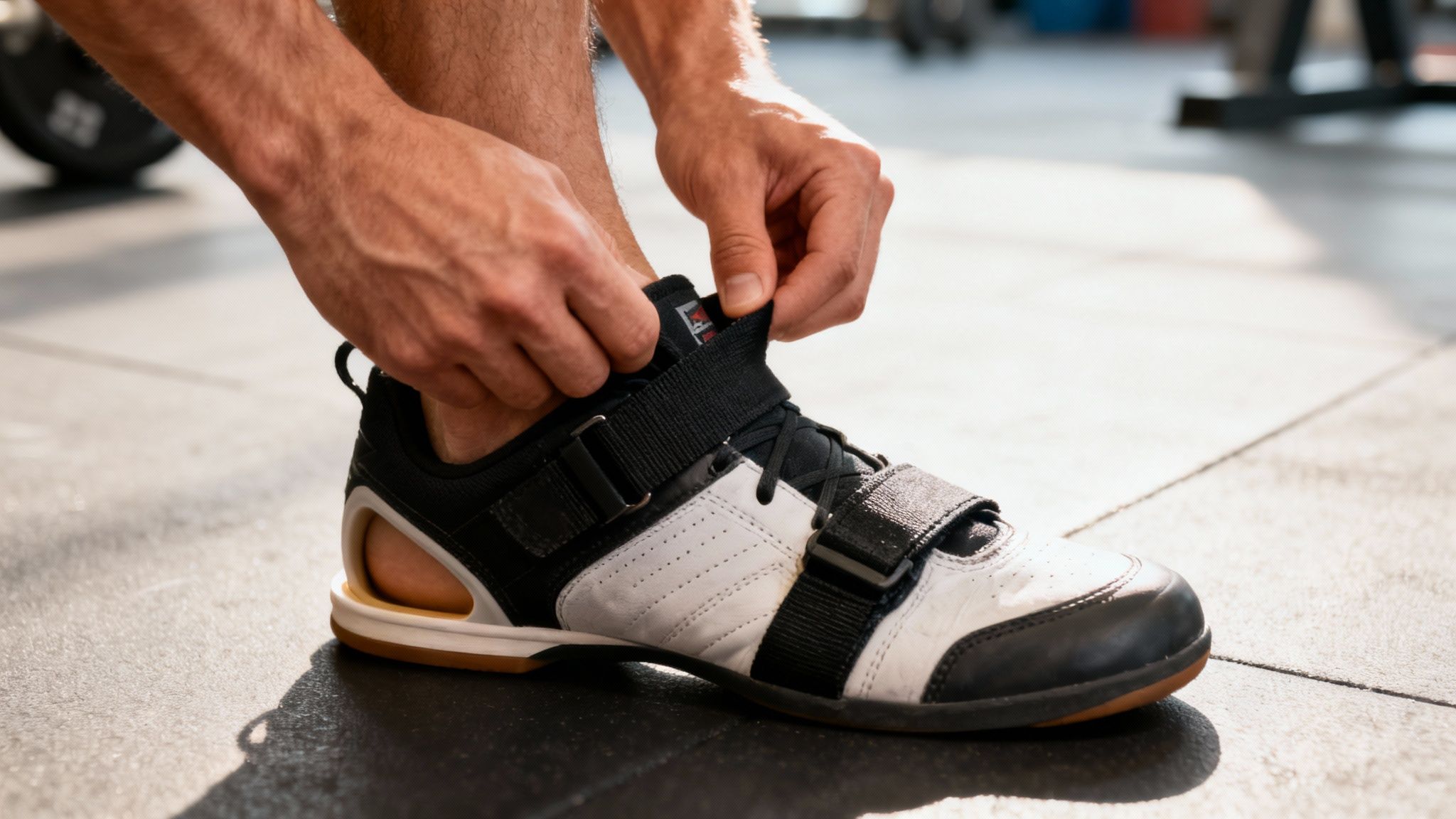
Most quality lifting shoes have a mid foot strap to lock your foot securely. During a lift, even tiny foot movements cause a loss of stability. The strap eliminates internal sliding, making the shoe feel like part of your foot and ensuring a solid base of support.
Matching the Right Shoe to Your Training Style
Picking the right weightlifting shoe isn't one size fits everyone. What an Olympic lifter needs is different from what a powerlifter requires. Matching your shoes to your training style is key to better performance. A shoe's features, heel height and sole stiffness, should directly support the lifts you do most often.
For the Olympic Lifter
If you focus on the snatch and clean and jerk, a heeled shoe is essential. These technical lifts demand incredible ankle mobility. A higher heel, usually 0.75 inches or more, helps you sink into a deeper, more upright squat, which is critical for getting under the bar securely. The ultra firm sole and mid foot strap provide the rock solid foundation needed to stick the landing.
For the Powerlifter
Powerlifting revolves around the squat, bench press, and deadlift. Many powerlifters use different shoes for each movement.
Squats: A heeled shoe is often preferred for squats. It helps achieve proper depth while maintaining an upright posture and provides a solid platform for driving force.
Deadlifts: For deadlifts, the goal is to be close to the ground. A flat, thin soled shoe is the top choice because it shortens the pull distance. This minimal design offers a better connection to the floor for maximum stability.
Proper footwear is just one piece of the puzzle. Other essential deadlift accessories can further enhance performance and safety.

For General Strength and CrossFit
If your training is a mix of heavy lifting and metabolic conditioning, a versatile hybrid shoe, or cross-trainer, is your best bet. These shoes blend the stability of a lifting shoe with the flexibility needed for dynamic movements. They typically feature a modest heel (around 0.5 inches) and a sole that’s firm enough for lifting but has enough give for box jumps or short sprints.
Recommended Shoe Features by Lift Type
Lifting Style | Recommended Heel Height | Sole Type | Primary Benefit |
|---|---|---|---|
Olympic Lifting | 0.75" or higher | Rigid, non-compressible | Enhances squat depth and torso angle |
Powerlifting (Squat) | 0.6" - 1.0" | Rigid, non-compressible | Increases stability and helps achieve depth |
Powerlifting (Deadlift) | Flat (0mm drop) | Thin and flat | Reduces pull distance and improves stability |
General/CrossFit | 0.5" or lower | Firm but flexible | Versatility for mixed-modality workouts |

Top Weightlifting Shoes for Men and Women
Figuring out the "best" shoe involves balancing performance, durability, and cost. This section highlights top tier options and explains what makes each a great choice. Individual shoes are featured at Best Shoes or Weightlifting
Top Picks for Dedicated Lifters
If your training is all about heavy squats, Olympic lifts, and powerlifting, stability is paramount. The best shoes in this category are for men: Reebok Legacy Lifter III, Nike Romaleos 4, and Adidas Adipower 3. For women: the Nike Romaleos 4, Adidas Adipower 3, and the Altra Solstice XT 2. These shoes offer a rock solid platform, a noticeable heel lift, and a secure lockdown system.
High-Stability Models: These are the tanks of lifting shoes. They usually feature a dense TPU heel, a tough synthetic upper, and a large midfoot strap. The raised heel is absolutely necessary for lifters with limited ankle mobility.
Ideal User: This shoe is for the serious athlete focused on the squat, snatch, and clean and jerk. The rigid build provides the confidence needed under maximal loads.
Potential Drawback: They are stiff, making them impractical for anything besides lifting.
For those focusing on squats and deadlifts, our guide on good shoes for squats and deadlifts offers more specific insights.
Versatile Options for Hybrid Athletes
For those who mix heavy lifting with metabolic conditioning or functional fitness, a hybrid cross-training shoe is the perfect middle ground, stable enough for lifting, flexible enough for everything else. Top shoe series picks for Men and Women: Nike Metcon, and the Reebok Nano.
Key Features of Cross-Training Shoes
Feature | Description | Benefit for Lifters |
|---|---|---|
Lower Heel Drop | A small heel-to-toe drop, typically 4-6mm, provides stability without compromising lifting form. | Offers a more natural foot position suitable for various gym movements. |
Flexible Forefoot | The front of the shoe is designed to bend, allowing natural movement during lunges or box jumps. | Enables dynamic movements impossible in rigid lifting shoes. |
Durable Outsole | A tough rubber outsole provides excellent grip on gym floors and other surfaces. | Ensures solid traction during both fast paced WODs and heavy lifts. |
Reinforced Upper | Durable materials are used to withstand the abuse of activities like rope climbs. | Enhances the shoe's longevity, making it a better investment for varied training. |
This blend of features makes them a practical choice for the everyday gym-goer or CrossFit athlete.
How to Find Your Perfect Fit for Maximum Support
A high performance lifting shoe is useless if it doesn't fit properly. The goal is a secure, stable platform that locks your foot in place. Any internal movement can lead to a failed lift or injury. Your weightlifting shoes should feel noticeably snugger than your everyday sneakers.
Step-By-Step Sizing Guide
Now the boring part. Sizing varies between brands, so a consistent process is key.
Measure Later in the Day: Feet naturally swell. Measuring them in the evening ensures the most accurate size.
Wear Your Lifting Socks: The thickness of your socks affects fit. Always try on shoes with the socks you lift in.
Check for Heel Lock: Once laced and strapped, your heel should be completely locked down. Any slipping means the shoe is too big.
Mind the Toe Box: While the shoe should be snug, your toes need room to spread slightly for balance. Allow about a thumb's width between your longest toe and the end of the shoe.
Avoiding Common Fit Mistakes
Going Too Big for "Comfort": Extra room is a stability killer in lifting shoes. Snug is good.
Ignoring Brand Differences: A size 10 in one brand might fit like a 10.5 in another. Always check the brand's sizing chart and reviews.
Forgetting Width: If you have wider feet, look for brands offering wide fit options to ensure a proper base.
Beyond footwear, total stability often involves core and back support. Gear like heavy duty weight lifting belts can complement your setup, but proper footwear is the foundation.

Common Mistakes to Avoid When Buying and Using Lifting Shoes
Getting quality lifting shoes is a huge step, but common mistakes can negate their benefits. Avoiding these pitfalls ensures your shoes work for you, not against you.
Misusing Your Lifting Shoes
The most common mistake is treating specialized weightlifting shoes like everyday sneakers. They are purpose built tools. Using them on a treadmill or for a HIIT class is a recipe for disaster. Their rigid soles are designed for stability under load, not for absorbing impact or flexing with a walking stride. This misuse damages the shoe and can be uncomfortable. Keep them strictly for your lifting sessions.
Ignoring Your Body's Unique Needs
Don't pick a shoe just because it looks cool or is popular. Your foot shape and mobility should guide your choice.
Choosing the Wrong Heel Height: If you have great ankle mobility, a high heel might pitch you too far forward. Conversely, if mobility is limited, a flatter shoe might prevent proper squat depth. Find a heel height that complements your natural mechanics.
Forgetting Foot Shape: Lifters with wide feet need shoes that allow their toes to spread out to create a solid base. Always consider options for width and arch support.
Letting Looks Win Over Function: Prioritize features like sole stiffness, heel height, and lockdown over color or brand hype.
The trend toward specialized footwear is global. To discover more insights about the training shoes market, you can explore market analyses showing this worldwide shift toward smarter, safer training.
Frequently Asked Questions About Weightlifting Shoes
Let's tackle the most common questions to clear up any lingering doubts.
How Much of a Difference Do Lifting Shoes Really Make?
The difference is night and day. Switching from soft running shoes to solid lifters provides a stable, non-compressible foundation. It’s like pushing a car on solid pavement versus soft sand; all your force goes directly into moving the weight.
Can I Wear Weightlifting Shoes for Deadlifts?
This is a classic debate. Some lifters prefer the locked-in feel of a heeled shoe for all lifts, including deadlifts. However, many powerlifters argue the heel increases the pull distance. They opt for a completely flat, thin-soled shoe to get as close to the ground as possible. Experiment to see what works best for you.
Are Expensive Weightlifting Shoes Worth the Money?
Often, you get what you pay for in materials and durability. Pricier models typically use premium materials and ultra-dense TPU heels that won't compress over time, meaning they last longer. However, there are many excellent, budget-friendly options that deliver the core benefits of a firm sole and secure fit, which are great for beginners.
References
Allied Market Research. (2024). Weightlifting Shoes Market by Material (Leather, Canvas, and Others), Closure Type (Strap, and Laces), and Distribution Channel (Online, and Offline): Global Opportunity Analysis and Industry Forecast, 2024-2035. Retrieved from https://www.alliedmarketresearch.com/training-shoes-market
At Flourish-Everyday, we simplify your search by bringing you recommendations for the best cross-training and athletic shoes all in one place. Explore our guides and find savings and the perfect footwear to support your fitness journey at https://www.flourish-everyday.com.
