Running Vs Cross-Training Shoes: In-Depth Comparison Guide

Updated: Dec 19, 2025
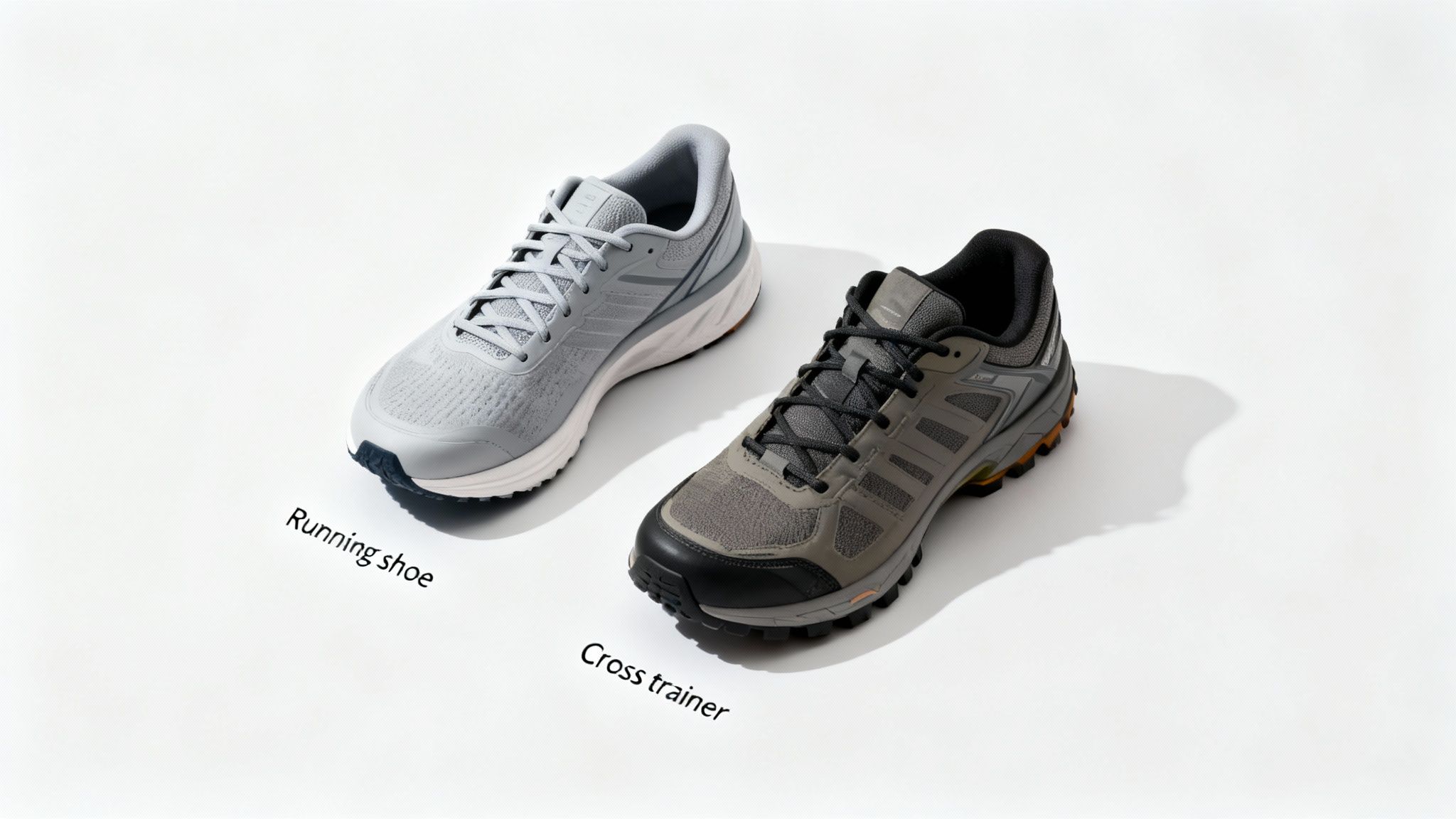
The "Running vs. Cross-Training Shoes: In-Depth Comparison Guide" article is technically focused on making sure you choose the right pair of shoes for the right sport. It will make all the difference in your workouts. Slip into a shoe that mismatches your movement, and you might invite extra knee or ankle strain down the road. At the same time, picking between running and cross-training footwear isn’t just about looks; it’s about how each design supports specific motion patterns.
Forward vs. lateral focus
Cushioning zones vs. firm mid foot support
Featherlight builds vs. reinforced frames
Check out our expert guide on choosing running shoes for in-depth fit guidance.
Index
Market Trends For Running Vs Cross Training Shoes
The global running shoe segment hit US$45.7 B in 2024 and will reach US$73.0 B by 2035 at a 4.3% CAGR^[1]. Cross-training shoes grow from US$350.5 M in 2025 to US$485.0 M by 2035 at a 3.3% CAGR^[1]. Marathon registrations and health app engagement drive running, while HIIT studios and functional fitness classes fuel cross-trainer demand.
Category | 2024 Market | 2035 Forecast | CAGR |
|---|---|---|---|
Running Shoes | US$45.7 B | US$73.0 B | 4.3% |
Cross-Training | US$350.5 M | US$485.0 M | 3.3% |
Regional notes: North America favors road races; Europe blends trail and gym; Asia Pacific surges in CrossFit; Latin America and Middle East want hybrid styles.
Comparing Construction And Design Features
Feature | Running Shoes | Cross Training Shoes |
|---|---|---|
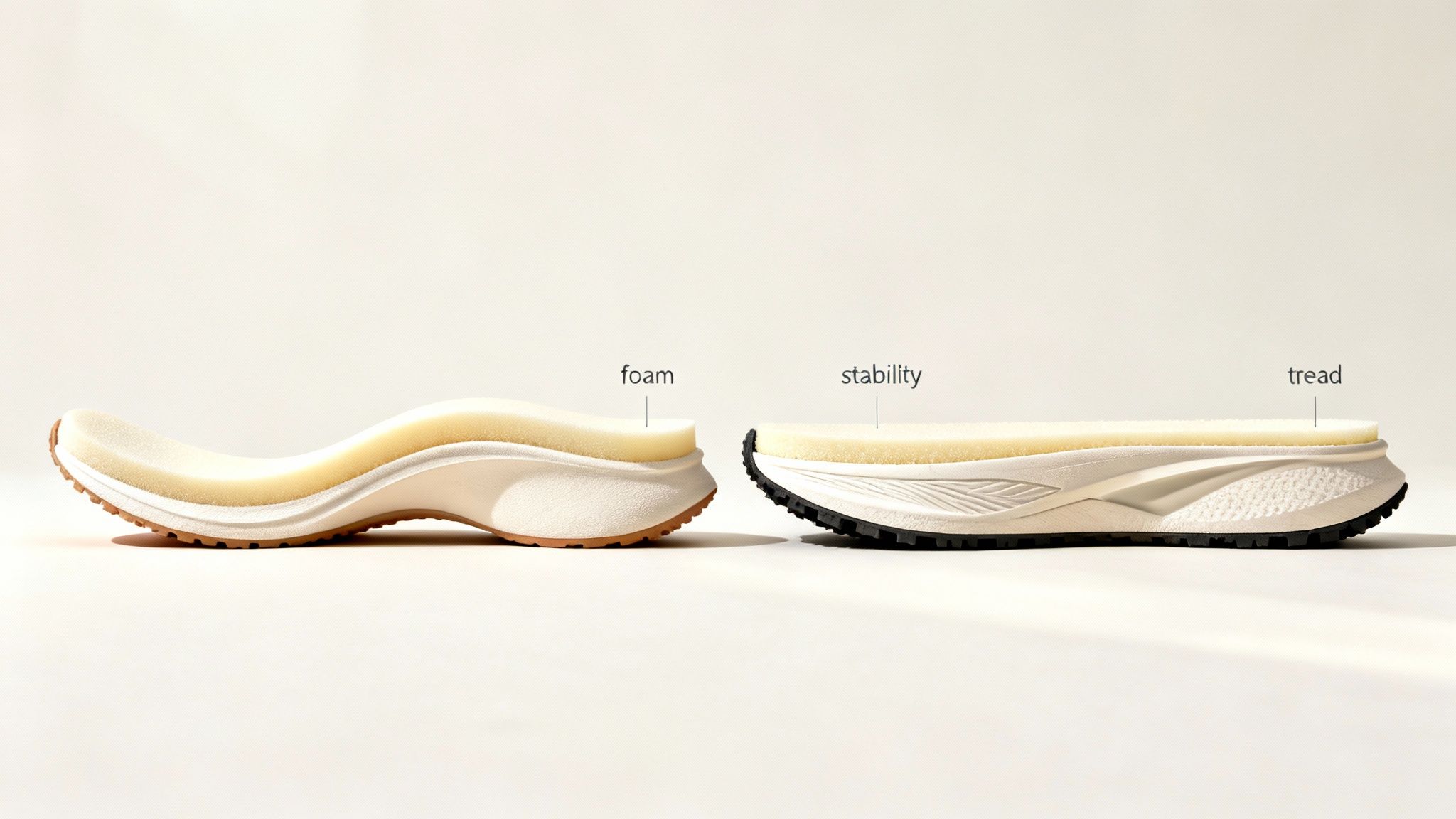
Cushioning | Responsive heel-toe foams | Firm midfoot EVA |
Stability | Directional flex, smooth landings | Reinforced sidewalls, torsional control |
Outsole | Directional tread for forward push-off | Multi-directional lugs for anchoring |
Heel Drop | 8–12 mm | 4–6 mm |
Weight | 200–300 g | 250–350 g |
Foam density, midsole geometry, and outsole patterns differentiate propulsive running from lateral gym drills.
When To Choose Running Shoes Or Cross Trainers
Match shoe blueprint to workout demands:
Steady road runs: running shoes with 8–12 mm drop and springy cushioning
Speed intervals: high energy return foams and snug lockdown
HIIT and agility: robust lateral support, wider base, multi-directional traction
Mixed sessions: consider hybrids for balance
Rotate pairs: if you run 3+ times weekly, stick to running shoes; 1–2 runs, let cross trainers handle light jogs.
Fit, Sizing, And Top Brands For Men And Women
Men’s and women’s lasts (foot shaped mold, that serves as the foundational form for making shoes, dictating the final shoe's size, shape, and fit, from the toe to the heel), differ in heel depth and forefoot volume. Key fit factors:
Arch support: low to high via gait analysis
Width: narrow (B/D) to extra wide (E/EE)
Size: half-size up for long runs^[4]
Top picks:
Brooks Ghost (neutral cushioning)
ASICS Gel-Kayano (stability)
New Balance Minimus (minimalist)
For ASICS sizing details, see How ASICS Fit Definitive Sizing Guide.
Individual Brand Shoe Reviews
Weight: 250 g
Drop: 10 mm
Best for: daily road runs^[3]
Weight: 300 g
Drop: 4 mm
Best for: HIIT and weightlifting
Weight: 310 g
Drop: 10 mm
Best for: long-distance comfort
Weight: 290 g
Drop: 4 mm
Best for: max cushion recovery runs
Men’s and Women’s Top Athletic Shoe Reviews
Men’s Top 3
Women’s Top 3

Informative Health Information
Foot health basics to boost performance:
Plantar fasciitis management: calf stretches, night splints, orthotics reduce pain by 40%^[5].
Pronation: overpronators need stability shoes; supinators benefit from cushioned neutral models^[2].
Injury prevention: rotate shoes, replace at recommended mileage, and vary workouts.
Comparison Reviews: Well Being Trends and Methods
Well being workout trends affect shoe choice:
Barefoot/minimalist running stresses intrinsic foot muscles but raises injury risk by 15%^[3].
HIIT benefits: cross trainers reduce turnover time between drills and runs, boosting EPOC^[4].
Hybrid training: alternating running and functional movement enhances overall fitness.
Transition Tips And Buyer Checklist
Break-In Schedule
Weeks 1–2: 15–20 min sessions, increase 10% weekly
Rotate old/new pairs daily
Buyer Checklist
Feature | Look For |
|---|---|
Cushioning | Foam density and rebound for your mileage |
Stability | Design for motion direction vs. multi-plane drills |
Heel Drop | 4–6 mm for cross; 8–12 mm for running |
Weight | <300 g for running; ≤350 g for training |
Fit & Sizing | Arch, width, trial-run fit |

Frequently Asked Questions
What Makes Cross Trainers Stable For Lateral Motion
Reinforced midsoles and broader bases with torsional control reduce ankle rollover by 25%^[2].
How Heel-To-Toe Drop Changes Running Stride
Higher drops (8–12 mm) promote mid foot strike; lower drops (4–6 mm) engage calves more.
Pros And Cons Of Using Running Shoes In The Gym
Pros: lightweight, cushioned. Cons: limited lateral support, foam compresses under heavy loads.
When Should You Replace Your Shoe
Running shoes: every 300–400 miles
Cross trainers: 1–2 years mixed-use; watch for worn tread
Can You Use Cross Trainers For Short Runs
Yes, up to 2 miles, moderate cushioning and stable platform.
References
Future Market Insights, “Cross-Training Shoes Market,” https://www.futuremarketinsights.com/reports/cross-training-shoes-market
Parkview Sports Medicine, lateral rollover study
RunnersWorld, minimalist running analysis
American Council on Exercise (ACE), EPOC benefits in HIIT
PubMed, plantar fasciitis treatment outcomes

