What Are Cross-Training Shoes? An Essential Guide

Updated: Oct 18, 2025
How can one athletic shoe handle your entire workout routine? Cross-training shoes are the versatile workhorses of the athletic world, built to give you a solid mix of support, flexibility, and stability for just about any activity you throw at them. Think of them as the Swiss Army knife for your gym bag, ready for everything from heavy lifts to quick agility drills.
This guide provides an in-depth look at what makes these shoes unique, how they benefit your health and performance, and how to choose the right pair for your fitness goals.

What's Inside This Guide
Your All-In-One Workout Footwear Explained
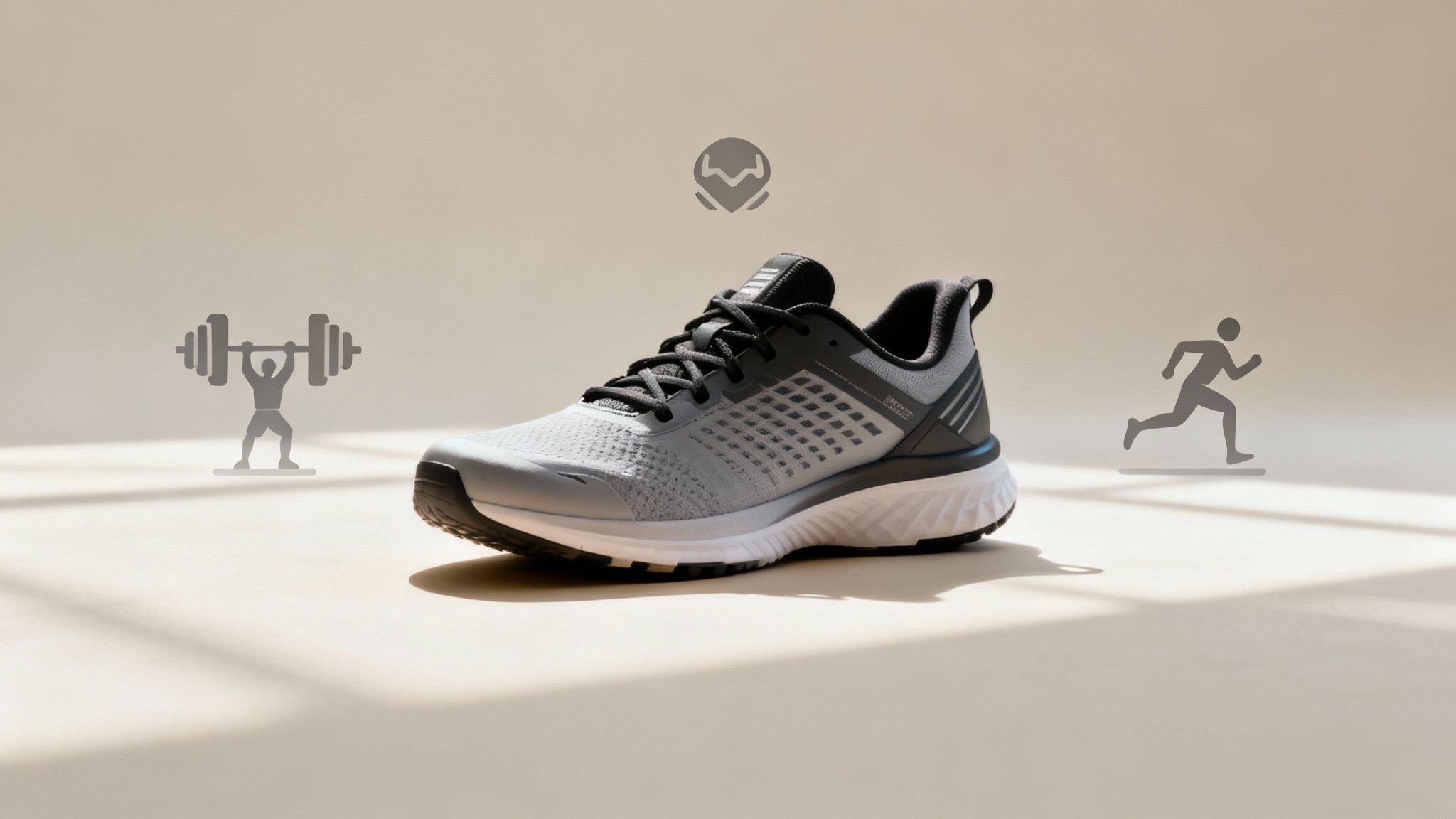
If your fitness routine is a blend of different disciplines, juggling a specialized shoe for each one isn't practical. You wouldn't want to squat in a running shoe with a mushy heel, and you definitely wouldn't want to do box jumps in a stiff weightlifting shoe. This is exactly the gap that cross training shoes were designed to fill. They are the ultimate versatile footwear.
Their main job is to provide a stable yet flexible foundation that allows you to switch between different types of movement. This hybrid design ensures you have the right support whether you're planting your feet for a heavy lift, absorbing shock from a jump, or making sharp lateral cuts during an agility workout.
Cross-Training Shoe at a Glance
To understand what cross-training shoes are, it helps to see their key features. They are engineered to strike a perfect balance between the rigid stability of a lifting shoe and the cushioned flexibility of a running shoe.
Key Feature | Primary Benefit | Ideal Activities |
|---|---|---|
Stable, Wider Base | Provides a solid foundation for lifting and prevents tipping during lateral movements. | Weightlifting, squats, deadlifts, strength training. |
Moderate Cushioning | Absorbs impact from plyometrics without sacrificing the firm feel needed for lifting. | Box jumps, burpees, short-distance running (under 3 miles). |
Durable Upper | Offers lateral support to keep your foot secure during side-to-side movements. | Agility drills, HIIT, circuit training, court sports. |
Flexible Forefoot | Allows for natural foot movement during dynamic exercises like lunges and sprints. | Plyometrics, rope climbs, general gym use. |
This blend of features is what makes them so adaptable for the modern fitness enthusiast who does a little bit of everything.
The Anatomy of a Versatile Training Shoe
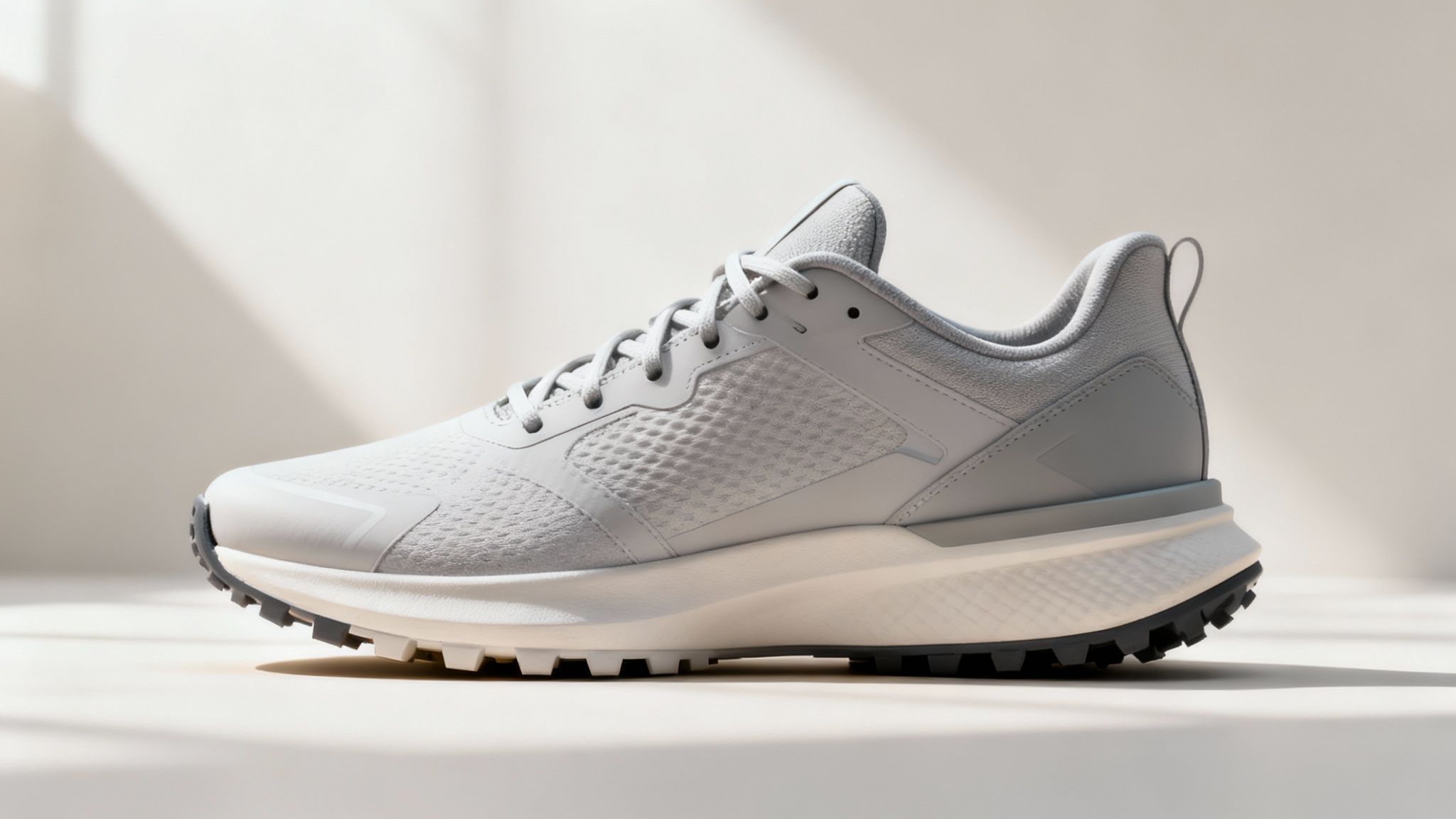
What separates a cross-training shoe from an average sneaker? It’s all about how they’re put together. Every part is engineered to handle a variety of movements, working in harmony to support your workout. Let's break down the key components.
The Foundation: A Stable Outsole
The outsole is the part of the shoe that hits the floor. For a cross-trainer, this is your primary foundation, and its main jobs are stability and grip. It’s typically wider and flatter than on a running shoe, which creates a more stable base. This design is crucial for exercises like squats and deadlifts, where feeling locked into the floor is essential. The tread pattern usually has multi-directional grooves for reliable traction.
The Shock Absorber: A Balanced Midsole
Above the outsole is the midsole, which acts as the shoe's cushioning and stability engine. Unlike the plush foam in a running shoe, a cross-trainer's midsole is much firmer. It offers enough cushion to absorb impact from high energy moves like box jumps but is firm enough that it won’t compress under heavy weights, which could throw you off balance. That balance is the signature of a true cross-training shoe.
The Framework: A Durable Upper
The upper covers the top of your foot. In a cross-training shoe, its main purpose is to lock you in and provide lateral support. It's usually made from tough, reinforced materials like durable mesh or synthetic overlays. These materials are critical for keeping your foot contained during quick, sideway movements in agility drills and HIIT classes, which reduces the risk of rolling an ankle.

Cross-Trainers vs Running Shoes: A Health & Performance Comparison
Choosing the right shoe is like selecting the right tool for a job. Wearing the wrong footwear can hinder performance and, more importantly, increase injury risk. Understanding the differences between cross-trainers, running shoes, and lifting shoes is vital for your well-being. The cross-training shoe market was valued at around $9.5 billion in 2023 and is expected to grow, highlighting that more people recognize the importance of specialized footwear.
Health Risks of Using the Wrong Shoe
Running shoes are masters of forward motion. They are packed with plush cushioning to absorb the impact of pounding the pavement. This soft midsole becomes a liability during a strength workout.
Instability Under Load: Lifting in running shoes is like trying to squat on a mattress. The soft foam compresses unevenly under weight, creating an unstable foundation.
Reduced Power Transfer: You lose significant energy in the spongy cushion instead of driving force into the ground.
This instability not only limits how much weight you can move but also puts your ankles, knees, and back at serious risk. For a deeper look, see our detailed guide comparing cross training vs running shoes.
Conversely, weightlifting shoes are built for maximum stability during heavy lifts, with a rock-solid, non-compressible sole and an elevated heel. This rigid design makes them unsuitable for running or jumping. For reference read The Best Shoes For Weightlifting.
Footwear Comparison: Cross-Trainer vs Running vs Lifting
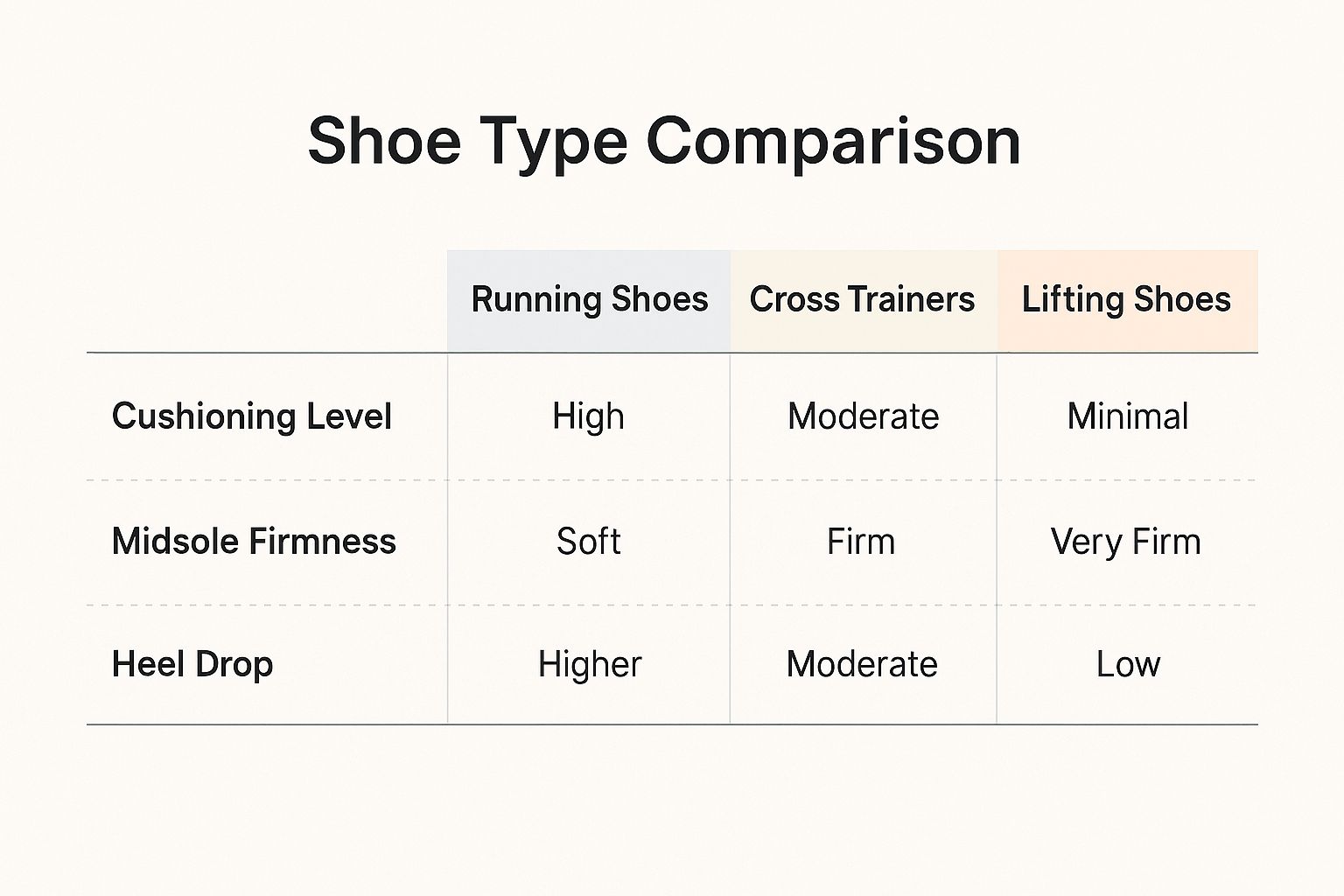
This table clarifies how each shoe is built for a different purpose.
Feature | Cross Training Shoe | Running Shoe | Weightlifting Shoe |
|---|---|---|---|
Primary Use | Versatile workouts (lifting, HIIT, short runs) | Forward motion (jogging, distance running) | Heavy, static lifts (squats, deadlifts, overhead) |
Cushioning | Moderate, responsive | High, plush | Minimal to none, non-compressible |
Sole Flexibility | Flexible in forefoot, stable in heel | Very flexible throughout the foot | Extremely rigid, no flexion |
Heel-to-Toe Drop | Low to moderate (4-8mm) | High (8-12mm+) | Very high, significant elevation (15-25mm) |
Lateral Support | High, designed for side-to-side movements | Low, focused on forward stability | High, provides a locked-in feel |
Outsole | Durable rubber with multi-directional grip | Designed for road or trail traction | Flat, wide, and stable for maximum ground contact |
The cross-trainer is the ultimate all round shoe, providing the ideal balance for diverse gym workouts.
The Performance Benefits of the Right Cross-Trainer
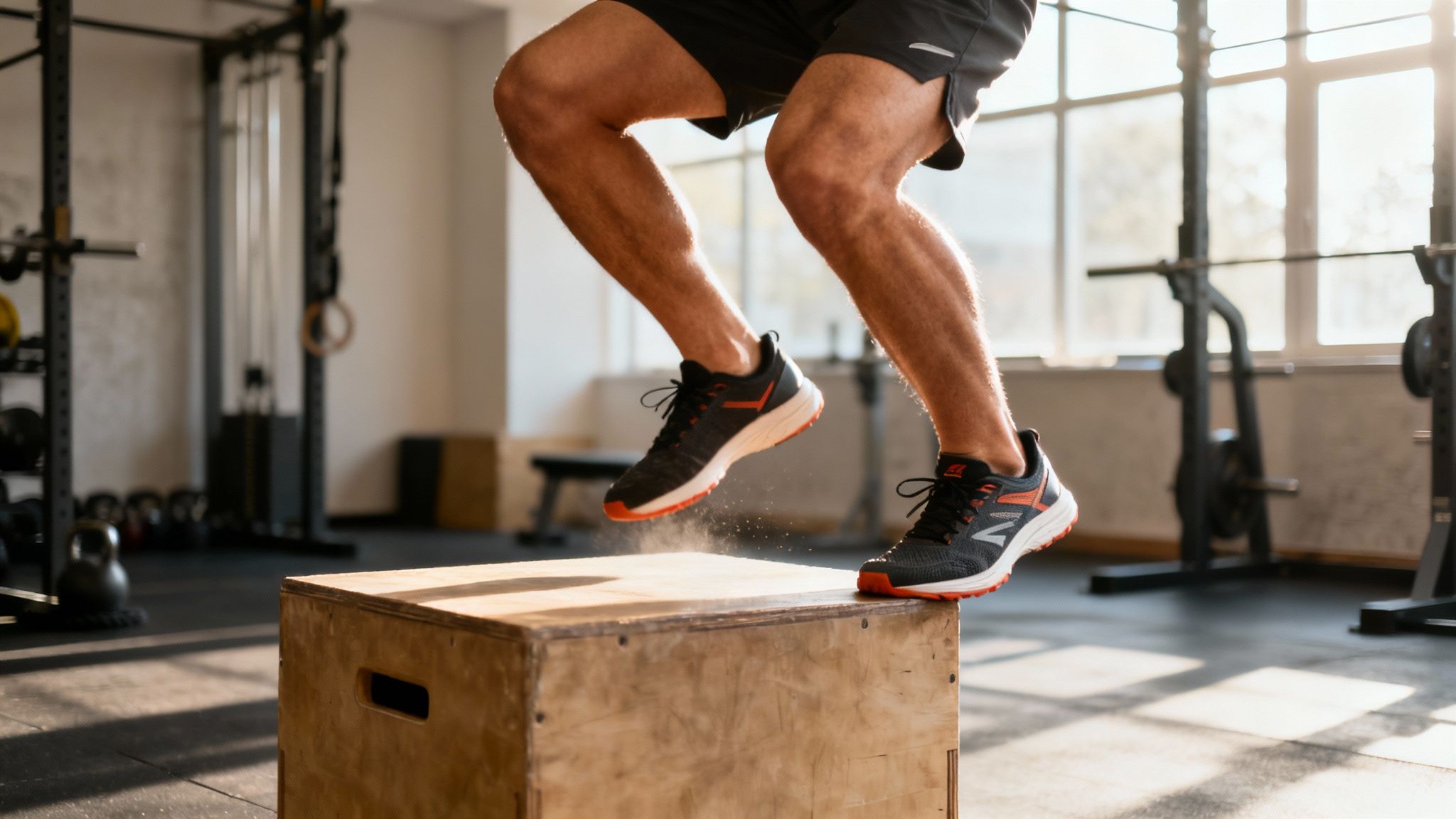
A quality pair of cross-trainers is a serious investment in your fitness. The real payoff happens during your workout, in your performance and safety. A well made cross-trainer lets you flow from heavy squats to box jumps without sacrificing stability or shock absorption. This seamless transition keeps your workout intensity high.
Enhanced Stability and Injury Prevention
A major benefit is injury prevention. Workouts like HIIT and CrossFit are packed with multi-directional movements that stress your joints. Cross-trainers are engineered to counteract these forces:
Reinforced Sidewalls: Crucial for lateral support, stopping your foot from rolling during side shuffles.
Wider, Flatter Outsole: This gives you a stable base, reducing the risk of ankle sprains.
Secure Heel Counter: A firm cup around your heel locks your foot in place, preventing slippage that compromises form.
This stability builds confidence, allowing you to push harder and focus on form instead of worrying about a misstep.
Improved Power and Efficiency
The right cross-trainer makes you stronger and more explosive. The firm, responsive midsole is the perfect platform for transferring power. Unlike the squishy foam in a running shoe, a cross-trainer’s sole ensures the force you generate goes directly into the ground. This means more power in your lifts and more explosive speed in your sprints. The global training shoe market is on track to hit nearly $50 billion by 2032, reflecting a growing awareness that proper footwear is key to effective training.
How to Choose Your Perfect Pair: Top Picks for Men & Women
Finding the right cross-training shoe doesn't have to be complicated. The secret is matching the shoe’s features to your specific fitness habits.
Assess Your Primary Workout Style
First, be honest about how you train. While cross-trainers are versatile, different models lean toward specific strengths.
Weightlifting-Focused: If you're often under a barbell, you’ll want a shoe with a flatter, more stable base and a minimal heel-to-toe drop. This maximizes your connection to the floor. For more, see our guide on the best shoes for weightlifting.
Cardio & Agility-Focused: If your routine is packed with plyometrics and short runs, look for a shoe with responsive cushioning and a flexible forefoot to absorb shock and allow for explosive movements.
Understanding Your Foot Type and Fit
Next, consider your body. No two pairs of feet are the same. Pay attention to:
Arch Type: Determine if you have flat feet or high arches to find the right support.
Foot Width: Many brands offer models in various widths. A proper fit prevents blisters and instability.
Proper Sizing: Try on shoes in the afternoon when your feet are slightly swollen. There should be a thumb's width of space between your longest toe and the shoe's tip.
Top Rated Cross-Training Shoes for Men and Women
Here are a few consistently top rated models:
For Men:
Nike Metcon 9: A powerhouse for lifters, known for incredible stability, a removable Hyper lift insert, and a tough rope guard. It’s the shoe for CrossFit and serious strength training.
Reebok Nano X4: The latest in the iconic Nano series, it strikes a great balance between stability for lifting and flexibility for dynamic movements, with a fan-favorite wide toe box.
For Women:
NOBULL Trainer: This brand has a cult following for its simple design and insane durability. The flat, stable platform is perfect for lifting, and the tough upper can handle anything.
Adidas Dropset 2 Trainer: Designed with a dual density midsole, firmer in the heel for stability and softer in the front for comfort during jumps and cardio. A fantastic balance for mixed modality workouts.
Extending the Life of Your Workout Shoes
With a little care, you can ensure your cross-trainers perform at their best for as long as possible. A few simple maintenance habits protect the materials that provide crucial support.
The biggest rule is to reserve your gym shoes for the gym only. Wearing them for errands wears down the supportive midsole and specialized grip. This is crucial as athletic shoes become fashion staples, a trend reflected in the projected 6.16% growth in the female training shoe market segment, as noted by this growing trend at fortunebusinessinsights.com.
Simple Cleaning for Lasting Performance
Keeping shoes clean prevents dirt and sweat from degrading materials. Avoid the washing machine, which can warp the shoe's shape and destroy glues. Instead, clean by hand:
Remove Laces and Insoles: Wash separately with gentle soap.
Use a Soft Brush: Scrub away loose dirt from the outsole and upper.
Spot Clean: Use a cloth with mild soap and warm water on stains.
Air Dry Naturally: Stuff shoes with newspaper to absorb moisture and let them air dry away from direct heat.
Recognizing When to Replace Your Shoes
Even with the best care, shoes have an expiration date. Pushing them past their prime increases your injury risk.
A general rule is to replace athletic shoes every 300-500 miles. For gym use, a better guide is how they look and feel. Once the supportive foam doesn't bounce back, it's time for a new pair.
Watch for these indicators:
Compressed Midsole: If the foam feels hard and doesn't compress easily, the cushioning is gone.
Worn-Down Outsole: If the tread patterns are smooth, your grip is compromised.
Lack of Support: New aches in your feet or knees are a red flag that the internal structure has broken down.
For more advice, see our guide on how often to replace running shoes; many principles apply.

Your Cross-Training Shoe Questions, Answered
Let's tackle some of the most common questions about cross-training shoes.
Can I Use Cross Trainers for Long-Distance Running?
Not really. They're fine for short jogs (under 3 miles) within a workout, but they lack the deep shock absorption of dedicated running shoes. Using them for long distances can lead to joint discomfort and stress-related injuries.
How Often Should I Replace My Gym Shoes?
A good rule of thumb is after about 100 hours of active use. However, the best guide is the shoe itself. Look for worn down tread, a compressed midsole, or a breakdown in the upper material. If you experience new aches in your feet or knees, it’s time for an upgrade.
Is a Zero Drop Shoe Right for My Workouts?
A zero drop shoe, where the heel and forefoot are at the same height, encourages a natural, mid-foot strike. This can strengthen muscles in your feet and lower legs. However, if you're used to traditional shoes, transition slowly to avoid straining your Achilles tendon and calf muscles.
References
Archive Market Research. (2024). Cross Training Shoes Market, Global Outlook and Forecast 2024-2030. https://www.archivemarketresearch.com/reports/cross-training-shoes-524928
Fortune Business Insights. (2024). Training Shoes Market Size, Share & COVID-19 Impact Analysis. https://www.fortunebusinessinsights.com/training-shoes-market-110682
Ready to find the perfect footwear to match your unique fitness journey? At Flourish-Everyday, we review and recommend the best cross-training, running, and athletic shoes to support your goals. Explore our guides and find your next favorite pair at https://www.flourish-everyday.com.
