Finding the Best Shoes for Supination

Updated: Jan 18
Hi Runners, for many years I didn't pay attention to the basics of wearing the right shoe for my workouts. Shoes were shoes. My first proper workout shoes were running shoes. What a difference they made. From that point on, buying the correct workout shoes is my first priority when it comes to athletic heath.
The best shoes for supination are almost always neutral running shoes that offer significant cushioning and flexibility. Models like the Brooks Ghost or HOKA Clifton are prime examples; they are engineered to absorb the shock that comes from the foot rolling outward. These features are essential for protecting joints and preventing common injuries.

Table of Contents
Understanding Supination and Why Your Shoes Matter
If the outer edges of your old sneakers are significantly worn down, you likely have supination. Also known as underpronation, it's a gait pattern where your weight rolls onto the outside of your foot with each step. An ideal gait wears down the shoe sole evenly, but supination concentrates all the force on the outer edge, sending shockwaves up the body.
The Impact of an Outward Roll
When the foot rolls outward, it becomes a poor shock absorber. This concentrates impact on a small area, leading to potential problems in the ankles, shins, knees, and hips. Common issues tied to supination include:
Plantar Fasciitis: Strain on the ligament connecting the heel to the toes.
Shin Splints: Aching pain along the shinbone.
Ankle Sprains: Increased instability from the outward roll.
Stress Fractures: Tiny bone cracks from repetitive, focused impact.
The right shoe provides the specific support your foot needs to function correctly and avoid injury.

Why the Right Shoe Is a Game Changer
Proper footwear acts as a mechanical correction for your gait. Affecting roughly 10% of the population, supination is a common issue for active people [1]. Shoes designed for this foot type, especially those with neutral platforms and ample cushioning, can significantly reduce injury risk by encouraging better alignment and absorbing shock. For more on how foot mechanics impact your whole body at Samurai Insoles, this resource offers valuable insights. This guide will detail what to look for in a shoe for supination.
The Core Features of an Ideal Supination Shoe
Finding the right shoe for supination means understanding key design features, not just brands. Each feature has a specific job: to counteract the foot's outward roll and absorb the resulting shock.
Supination's primary issue is poor shock absorption, which places uneven stress on your joints. This can lead to a higher risk of nagging injuries. This effect makes finding a shoe with the right features essential for staying pain free. Let’s break down those features.
Exceptional Cushioning for Shock Absorption
For a supinator, cushioning is the top priority. Since the foot doesn't roll inward to naturally distribute impact, the shoe must perform this function. A thick, forgiving midsole acts as a suspension system, absorbing the force of each footstrike before it travels up the body. Look for materials like EVA foam or a brand's proprietary high rebound foam.
A Flexible Design for Natural Motion
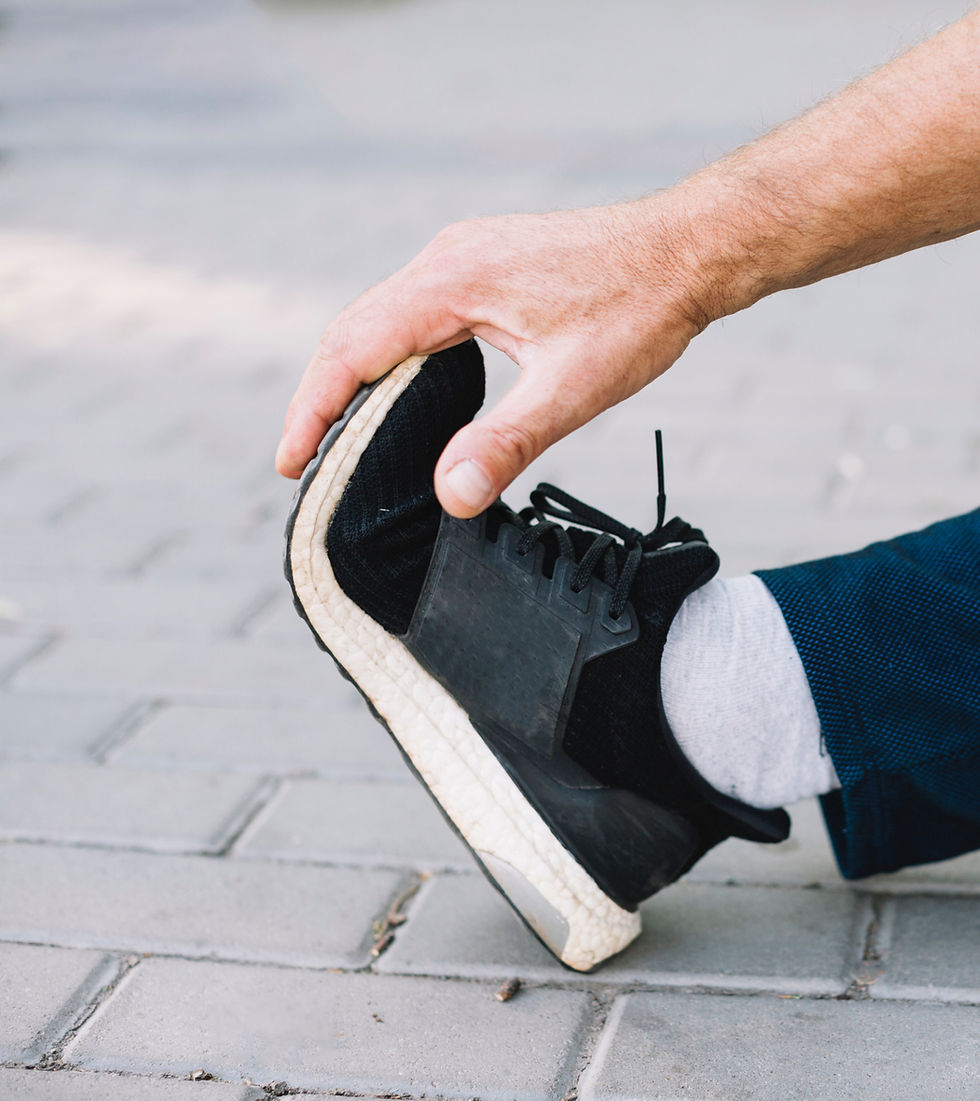
A stiff shoe is detrimental for supinators. Supination already makes the foot more rigid, so you need a shoe that allows natural movement. Good forefoot flexibility is key, enabling a smooth roll through your stride. To test this, hold the shoe by the heel and press the toe against a surface; it should bend easily where the ball of your foot would be.
The Importance of a Neutral Platform
While "support" sounds good, the type of support is critical. Supinators almost always need neutral shoes, not stability or motion control models. Those categories are built to correct overpronation (inward roll). Using a stability shoe can worsen supination by pushing the foot even further onto its outer edge. A neutral shoe provides a balanced platform without incorrect "fixes." For more details, see this guide to running shoe stability.
Supportive Heel Counters for Stability
While the forefoot needs flexibility, the back of the shoe requires stability. A supportive heel counter, the firm cup cradling your heel, is critical. It locks your heel in place, preventing lateral wobble upon landing and promoting better alignment.
Durable Outsoles for Longevity
Supinators exert most pressure on the outer edge of their shoes, requiring a tough outsole. Look for high abrasion rubber, especially on the lateral (outer) side. This reinforcement ensures the shoe wears evenly and maintains its support for longer.

Top Athletic Shoe Reviews for Supination
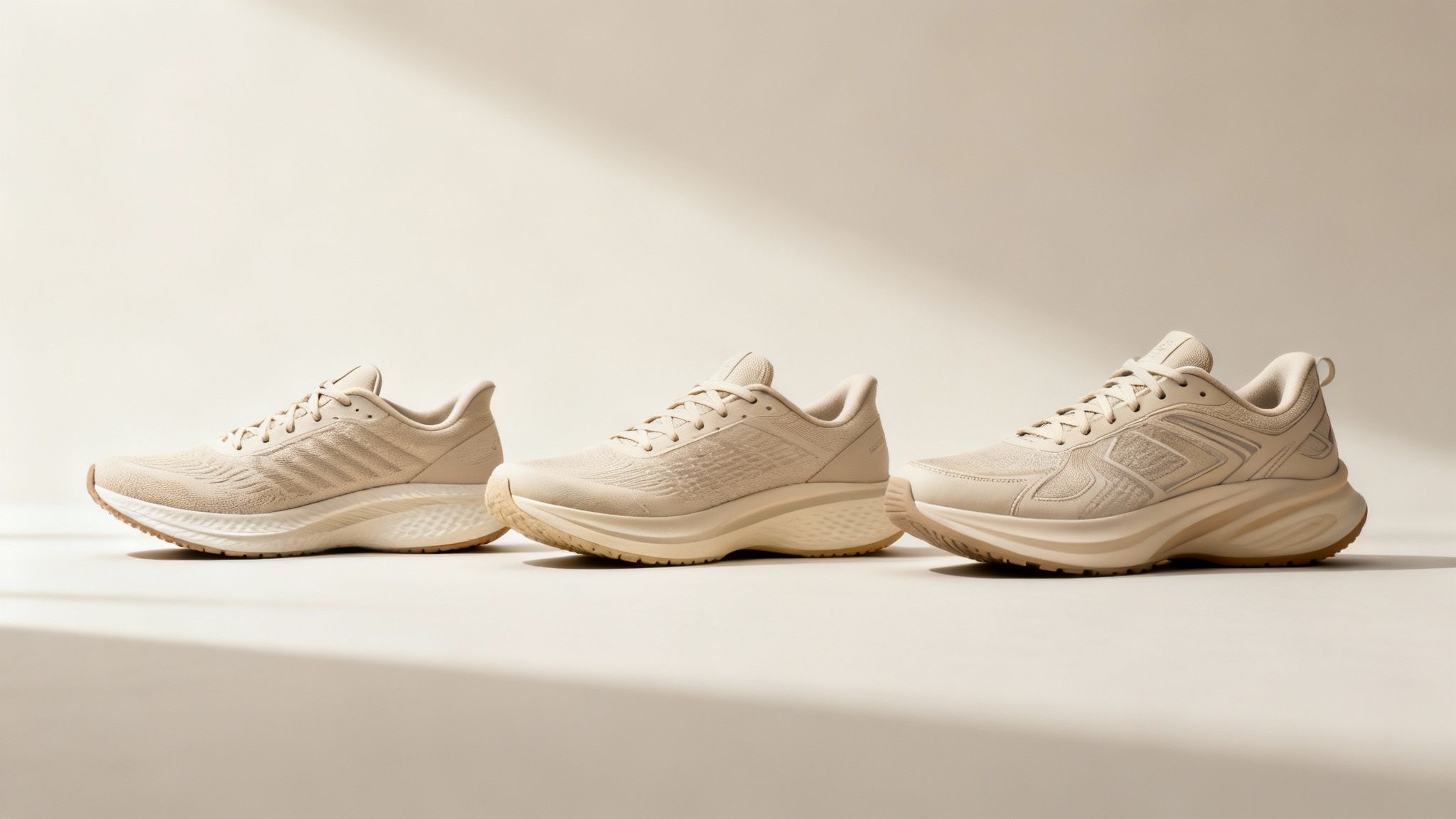
Now, let's connect these features to real world shoe types that excel for supinators. This is a guide to what these features look like in action, helping you find a model that absorbs shock and promotes natural movement.
For the Maximalist Cushioning Seeker
If shock absorption is your main concern, a shoe with maximalist cushioning is your best bet. A model like the HOKA Clifton exemplifies this, packing ample soft foam between your foot and the ground. This directly addresses supination's biggest problem, poor shock absorption, by letting the shoe do the work.
For the Balanced and Responsive Ride
For those who prefer a more connected feel, a classic daily trainer like the Brooks Ghost offers a perfect middle ground. This shoe uses adaptive foam technology, providing cushioning where needed without feeling sluggish. For a supinator, this means excellent shock absorption, smooth heel-to-toe transitions, and solid neutral support.
For Everyday Versatility and Comfort
You often need a shoe that can handle a jog, errands, and a light gym session. A versatile, well cushioned shoe like the New Balance Fresh Foam 880 is ideal. It combines a plush feel with a durable, neutral foundation, offering the shock absorption a supinator needs for a run, plus the comfort and stability for all day wear.
For Long Distance Durability
For high mileage runners, durability is paramount. The ASICS GEL-Nimbus is a legendary choice, delivering plush cushioning and rugged construction. It uses gel pods and foam to absorb impact and features a reinforced outsole with high abrasion rubber on the outer edges, directly countering the wear pattern of a supinator.
Health Information: Running vs. Cross-Training Shoes
Choosing the right athletic shoe is crucial, especially if you supinate. A shoe for running and one for a gym class are designed for different movements. Using the wrong shoe can increase injury risk.
Running shoes are specialists engineered for forward motion. They feature thick, cushioned midsoles and a design that promotes a smooth heel-to-toe stride. However, this design becomes a liability in a gym setting. The high, plush heels can cause instability during squats or lunges.
The Needs of the Cross-Trainer
Cross-training shoes are built for multi directional movement. They feature:
A flatter, wider sole: Creates a stable platform for lifting and lateral movements.
Less cushioning: A firmer feel keeps you grounded and stable.
Durable uppers: Tougher materials withstand abrasive gym activities.
For a supinator, the risk of an ankle sprain increases during lateral movements. A cross-trainer's stable base is designed to prevent this, whereas a running shoe's soft heel offers little protection.
Matching Your Shoe to Your Workout
Using the right shoe for the right activity is vital for injury prevention. Research shows supinators have a higher risk of ankle sprains during lateral movements in the wrong footwear [2]. One study noted a 13% prevalence of supinated feet in professional dancers, highlighting the need for proper support during agile movements [3].
The takeaway is simple: if you primarily run, get a neutral, cushioned running shoe. If you're mostly in the gym, a dedicated cross-training shoe provides necessary stability. For more, see our running vs. cross-training shoes comparison guide.

Comparison: The Role of Orthotics
While the right shoe is your first line of defense, sometimes orthotics (shoe inserts) are needed. A good shoe is the foundation, but an orthotic can fine tune alignment. If you still experience pain with proper shoes, or if your supination is severe, an orthotic can provide personalized support that a shoe alone cannot.
Understanding Your Orthotic Options
There are two main types of inserts:
Over-the-Counter (OTC) Inserts: Available at drugstores, they offer extra cushioning and basic arch support.
Custom Orthotics: Prescribed by a podiatrist and molded to your foot, these correct more serious biomechanical issues but are more expensive.
An orthotic for supination should gently guide the foot toward a neutral position. Look for inserts with a deep heel cup and supportive cushioning along the outer edge.
Making an Informed Decision
If new, neutral shoes resolve your discomfort, you likely don't need inserts. However, if pain persists, an orthotic may be the solution. Supination affects a significant portion of the population, and while studies show custom orthotics can be highly effective, a well chosen shoe is often sufficient [4]. Start with the right shoes. If problems continue, consult a specialist about inserts.
How to Fit and Test New Shoes for Supination
A great fit goes beyond knowing your size. It requires a hands-on approach to ensure the shoe supports your foot properly.
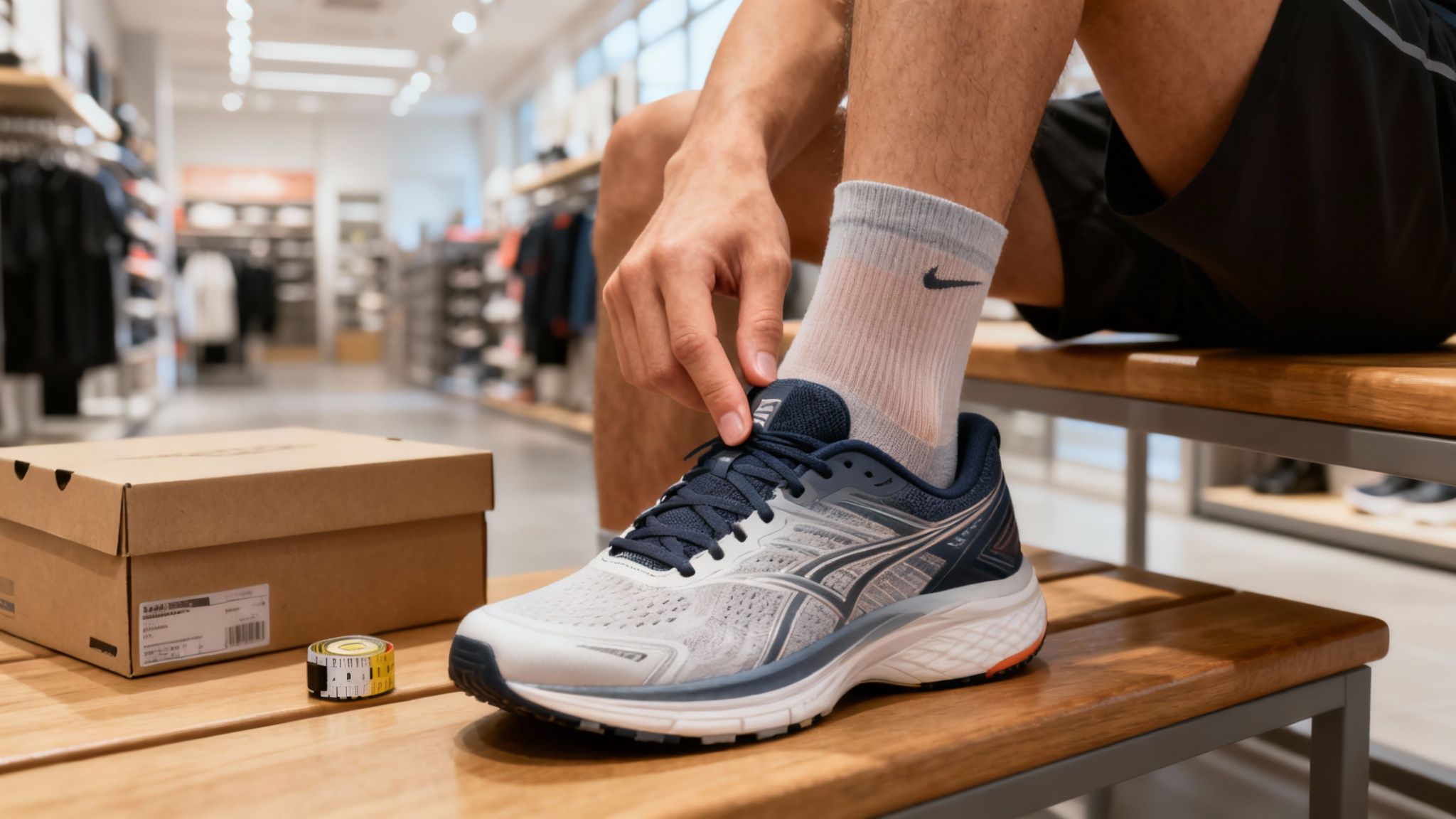
Shop for shoes in the afternoon or evening when your feet are naturally swollen. This ensures a comfortable fit during a workout.
Setting Yourself Up for Success
To get an accurate feel for a shoe, replicate workout conditions.
Bring Your Gear: Wear the socks you typically use for exercise.
Use Your Inserts: If you use orthotics, test the shoe with them inside.
Ensure there is about a half-inch of space (a thumb's width) between your longest toe and the shoe's end. This prevents your toes from hitting the front. A proper fit should feel secure, not tight; your heel should be locked in, but your toes should have room to wiggle. For more tips, check out this expert guide on choosing running shoes.
The In-Store Test Drive
Always test a shoe before buying if possible. Use a store's treadmill or an open aisle.
Walk and Jog: Start with a walk, then a light jog, to feel the cushioning and response.
Mimic Your Moves: Perform lunges or side shuffles to test stability during multi directional movements.
This hands-on process is the final check to confirm you’ve found the best shoes for supination. As technology in gyms is transforming fitness, i.e. smart watches, and workout apps, we may see better in-store analysis tools soon, but for now, a personal test is essential.
Frequently Asked Questions
Here are answers to common questions about supination and footwear.
Can The Wrong Shoes Make Supination Worse?
Yes. Shoes with stability or motion control features are designed for overpronation (inward roll). When a supinator wears them, they can push the foot further outward, worsening the issue and increasing injury risk. Stick with neutral, cushioned shoes.
How Often Should I Replace My Shoes?
The general rule is every 300-500 miles. For supinators, visual inspection is key. Look at the outer edge of the sole. If the tread is worn flat or the foam looks compressed, the shoe has lost its supportive qualities and needs replacing.
Are Zero-Drop Shoes A Good Choice?
It depends on your body mechanics. For some, zero-drop shoes encourage a midfoot strike that can help with supination. However, they place more load on the Achilles tendon and calf muscles. If you try them, transition slowly to allow your lower legs to adapt and prevent injury.
Here at Flourish-Everyday, we help you find the right gear to support your active lifestyle. Explore our expert guides to find the best shoes for you.
Find your perfect pair at https://www.flourish-everyday.com.
References
[1] Uden, H., Jones, S., & Grimmer, K. (2012). Foot Pain and Foot Type in a Community-Based Sample of Younger Adults. Journal of the American Podiatric Medical Association, 102(5), 384-390.
[2] Brizuela, G., Llana-Belloch, S., & Pérez-Soriano, P. (2013). The influence of the fit of a running shoe on the distribution of plantar pressure. Footwear Science, 5(2), 103-110.
[3] Shah, P. A., & Kage, V. (2024). Prevalence of Foot Posture and its Association with Biomechanical Variables among Professional Dancers. The Yogic Journal, 9(2), 27-31. Available: https://www.theyogicjournal.com/pdf/2024/vol9issue2/PartC/9-2-27-214.pdf
[4] Sahu, A., & Ahmad, I. (2022). Frequency of Foot Posture and its Management Options in Urban Young Adults. International Journal of Health Sciences and Research, 12(10), 209-215. Available: https://www.ijhsr.org/IJHSR_Vol.12_Issue.10_Oct2022/IJHSR21.pdf

