Finding the Best Running Shoes for Flat Feet
- Flourish Everyday Health And Fitness

- 3 days ago
- 8 min read
If you have flat feet, finding the best running shoes means looking for stability and motion control to help with overpronation. Top choices usually include models like the Brooks Adrenaline GTS, Hoka Gaviota, and ASICS Gel-Kayano. These are all built with firm midsoles and medial support to align your stride and prevent pain.
Finding Your Footing with the Right Support
Welcome to your guide for finding the best running shoes for flat feet. Having flat feet, or fallen arches, often leads to overpronation—where your foot rolls too far inward as you run. This can cause a chain reaction of pain in your ankles, shins, and knees. The right running shoe provides critical stability and motion control to counteract this, turning your run from a painful chore into an enjoyable activity.
Index
Understanding Flat Feet and Running: Learn the biomechanics of overpronation.
Decoding Stability Shoe Technology: Key features like medial posts and GuideRails.
Top Running Shoe Reviews for Flat Feet: In-depth reviews for men and women.
Individual Brand Shoe Reviews: Breakdown of Brooks, ASICS, and Hoka models.
Insoles and Orthotics: When to consider extra personalized support.
How to Ensure a Perfect Fit: Tips for a confident purchase.
Informative Health Information & FAQs: Answers to common questions about running with flat feet.
Comparison Reviews and Trends: Market insights on supportive footwear.
References: Sources for data and expert opinions.
Understanding How Flat Feet Affect Your Run
Your foot's arch is your body’s built-in suspension system, designed to absorb shock and distribute pressure. When that arch is low or flat, the mechanism is compromised. Instead of dispersing impact evenly, the force travels improperly through your foot, leading to a biomechanical chain reaction.
The Impact of Overpronation
The most common issue from a fallen arch is overpronation, where the foot and ankle roll too far inward on landing. This excessive motion strains the muscles and tendons supporting your arch. Over time, this misalignment can lead to injuries higher up the kinetic chain:
Shin splints: Pain along the shinbone from overworked muscles.
Knee pain: An inward-rotating lower leg can cause improper kneecap tracking.
Hip or lower back pain: Bodily compensation for an unstable foundation leads to strain.
For a deeper dive, check out our guide to men's shoes for overpronation.
Identifying Your Arch Type at Home
Not all flat feet are the same. Some are flexible (the arch disappears only when standing), while others are rigid (flat all the time). The "wet test" is a simple way to assess your arch type.
The Wet Test: After a shower, step firmly onto cardboard or dark paper. If your footprint is a full, solid shape with little to no curve on the inside, you likely have a low arch or flat feet.
This test reveals where your foot lacks structure, highlighting the need for a shoe built to counteract that collapse and restore proper alignment.
Decoding the Technology in Stability Running Shoes
Understanding that your feet need extra help is the first step. The next is knowing the specific design features in running shoes that support flat feet. These technologies act as a built-in support system, guiding your foot away from overpronation and toward a more neutral, efficient stride.
Stability vs. Motion Control: What's the Difference?
Supportive running shoes fall into two main categories, offering different levels of correction.
Stability Shoes: The go-to for most runners with flexible flat feet and mild to moderate overpronation. They use features like medial posts or guide rails for support without feeling overly rigid.
Motion Control Shoes: The heavy-duty option for runners with rigid flat feet or severe overpronation. They provide maximum support to limit excessive foot motion.
According to a study in the British Journal of Sports Medicine, overpronating runners have a significantly higher risk of injury, underscoring why this shoe technology is crucial for pain-free running (Willems et al., 2021).
Key Features to Look For
Stability shoes incorporate specific components to counteract the inward roll of the foot.
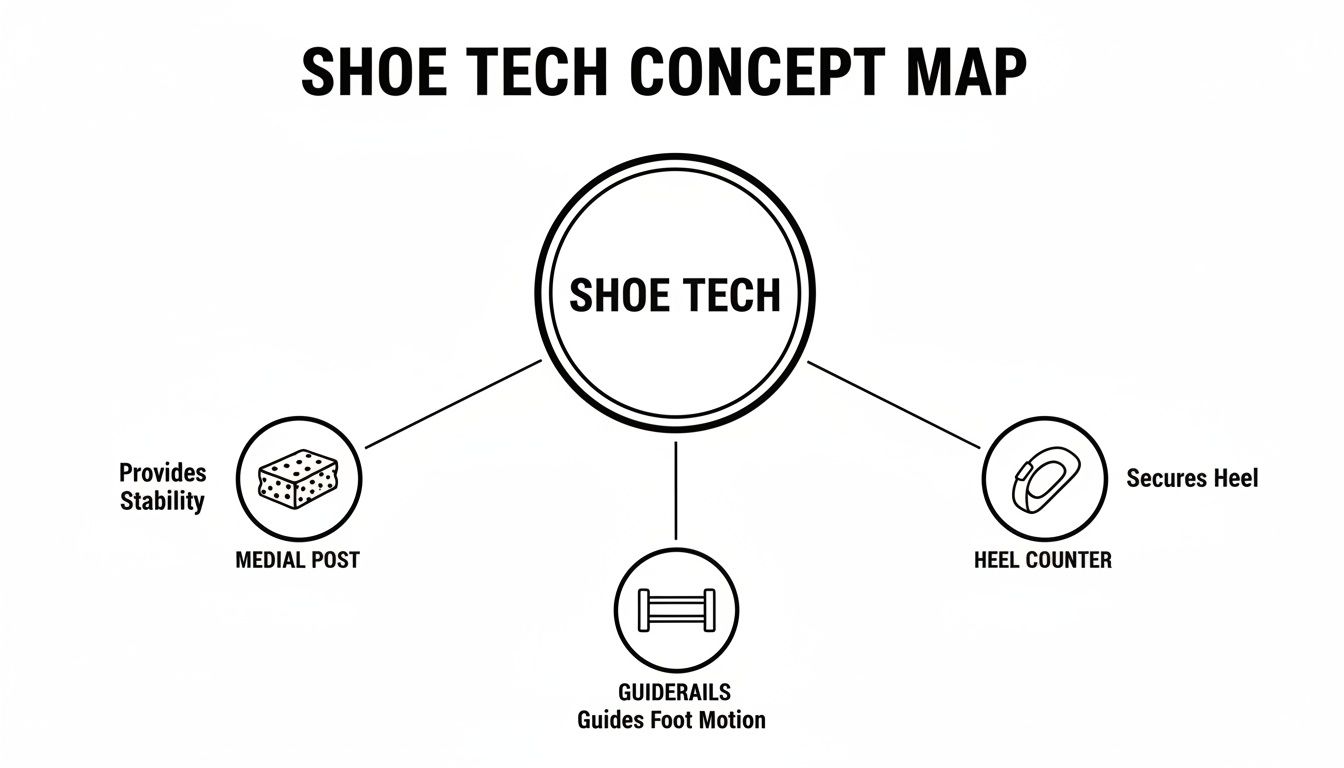
Medial Post: A classic feature, this is a firmer section of foam on the inside of the midsole. It compresses less upon landing, preventing the arch from collapsing too far inward.
GuideRails: A modern technology from Brooks. These are firm structures on both sides of the heel that act like bumpers, keeping your foot centered and reducing excess rotation in the ankle and shin.
Firm Heel Counter: A rigid plastic cup in the back of the shoe that secures the heel, preventing slippage and adding overall stability.
Wide Base: A wider platform through the midfoot and forefoot provides a more stable foundation for landing and pushing off.
For more details on these features, explore our guide to running shoe stability.
Top Running Shoe Picks for Flat Feet
Here are some of the best running shoes on the market for flat-footed runners, featuring trusted brands like Brooks, ASICS, and Hoka. Each review focuses on stability, cushioning, and the type of running the shoe is best suited for.
Individual Brand Shoe Reviews
Brooks Adrenaline GTS 23: The Reliable Workhorse (Men & Women)
The Brooks Adrenaline GTS is a legend in the stability world. Instead of a traditional medial post, it features Brooks' innovative GuideRails technology. These "bumpers" gently guide your foot, ankle, and knee into proper alignment without overcorrecting your stride. This makes it an excellent choice for daily training and long-distance runs where consistent, non-intrusive support is key.
ASICS Gel-Kayano 31: The Cushioned Stabilizer (Men & Women)
For runners seeking maximum cushioning with robust stability, the ASICS Gel-Kayano is a powerhouse. It combines a firm medial post with a structured heel counter for a secure, locked-in feel. Its renowned GEL technology excels at shock absorption—a major benefit for flat-footed runners who struggle to dissipate impact forces. The Gel-Kayano is ideal for those needing significant motion control and a plush, protective ride.
Hoka Gaviota 5: The Max-Cushion Motion Controller (Men & Women)
The Hoka Gaviota 5 is a phenomenal option for runners who crave a plush feel without sacrificing stability. It utilizes Hoka’s J-Frame technology—a firmer density foam that wraps around the heel and extends along the medial side of the foot. This creates a stable landing base without the stiffness of a traditional post, guiding the foot more naturally. Its maximalist cushioning and wide platform make it perfect for recovery days and long, slow miles where comfort is paramount.
Finding the right shoe is one of the most effective ways to manage discomfort from flat feet. Podiatrists at Foot & Ankle Specialists of The Woodlands emphasize that shoes with built-in arch support, stability features, and a firm heel counter can significantly reduce pain and fatigue.
Top Athletic Shoe Reviews at a Glance
This comparison chart helps you see our most recommended shoes side-by-side.
Shoe Model (Men's & Women's) | Support Type | Best For | Key Feature |
|---|---|---|---|
Brooks Adrenaline GTS 23 | Holistic GuideRails | Daily Training, Long Runs | Unobtrusive, adaptive support that guides the entire kinetic chain. |
ASICS Gel-Kayano 31 | Medial Post & GEL | Maximum Stability, Daily Runs | A robust combination of firm support and plush cushioning for severe overpronators. |
Hoka Gaviota 5 | J-Frame Technology | Max Cushion, Recovery Runs | A soft yet stable ride that offers premium comfort without compromising support. |
New Balance Fresh Foam X 860v13 | Medial Post | Reliable Daily Training | A balanced approach with a supportive post and responsive Fresh Foam X cushioning. |
Saucony Guide 17 | CenterPath Technology | Guided Stability, Versatility | A modern design that centers the foot for a smooth, stable, and natural-feeling stride. |
Choosing the best running shoe depends on your level of overpronation, cushioning preference, and primary running activities.
When to Consider Insoles or Custom Orthotics
Even the best stability shoe may not be enough for everyone. If you have the right shoes but still experience nagging pain, an insert might be the solution. Think of an insole or orthotic as a way to customize the fit, providing targeted support right where your arch collapses.
Over-the-Counter Insoles vs. Custom Orthotics
Over-the-Counter (OTC) Insoles: Pre-made inserts available at running stores and pharmacies. They are a great starting point for enhancing arch support and are effective for mild to moderate flat feet.
Custom Orthotics: Medical devices prescribed by a podiatrist and molded to your specific feet. They are designed to correct unique biomechanical issues and are typically recommended for severe flat feet or recurring injuries.
Making the Right Call
If you have quality stability shoes but still suffer from arch strain, heel pain, or shin splints, an insert could be the missing piece. Start with a reputable OTC insole. If pain persists, consult a podiatrist to be evaluated for custom orthotics. This approach is supported by market trends and health data showing the effectiveness of combined support systems. For more data, see our article on shoe insoles and orthotics statistics.
Making a Confident Purchase and Ensuring the Perfect Fit
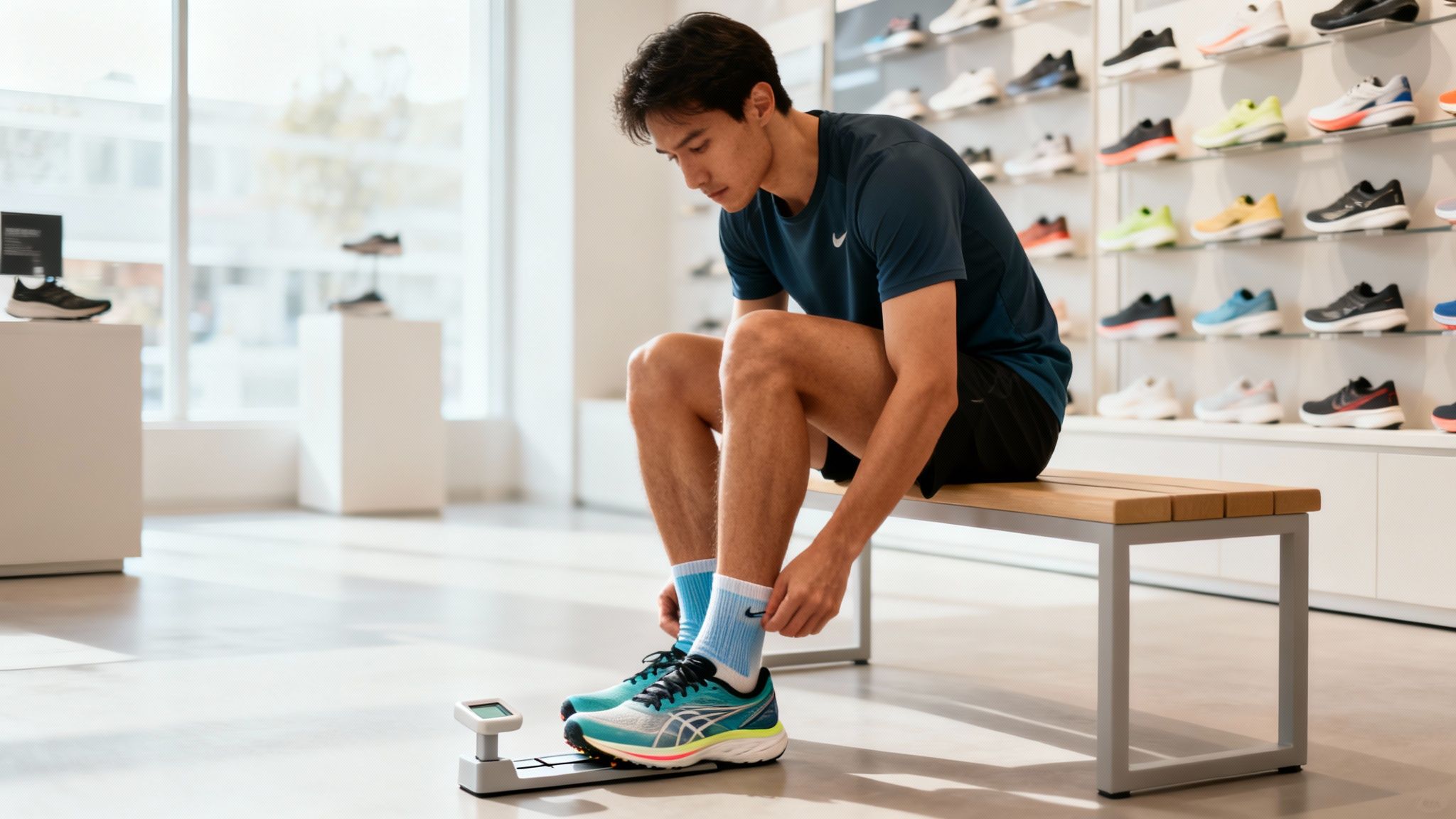
You've done the research and picked a few models. The final step is ensuring a perfect fit. A poorly fitting shoe can lead to blisters, bruised toenails, and discomfort, negating the benefits of its design.
Your Step-by-Step Fitting Guide
Shop in the Afternoon: Your feet swell throughout the day. Trying on shoes in the afternoon ensures you fit them at their largest size.
Bring Your Gear: Wear the same type of socks you run in to get an accurate feel for the shoe.
Check for Space: There should be about a thumb's width (half an inch) between your longest toe and the end of the shoe to prevent toe jamming on downhills.
Do a Test Run: Most specialty running stores have a treadmill. A short jog is the only way to identify any rubbing, pinching, or pressure points.
Knowing When to Replace Your Shoes
Running shoes have a limited lifespan. The midsole foam compresses over time, losing its ability to absorb shock and provide support.
As a general rule, replace your running shoes every 300-500 miles. The foam's internal structure breaks down even if the shoe looks fine externally.
For a deeper dive, check our complete expert guide on how to choose running shoes.
Informative Health Information & FAQs
Here are answers to common questions from runners with flat feet.
Can running with flat feet cause permanent damage?
Running on unsupported flat feet can lead to chronic issues like plantar fasciitis, Achilles tendinitis, and knee pain. However, running itself is not the problem. With the best running shoes for flat feet, proper form, and smart training, you can significantly reduce these risks. The right shoe acts as an external arch, guiding your foot into a more natural position.
Are zero-drop shoes a good idea for flat feet?
Generally, zero-drop shoes are not recommended for most runners with flat feet. Without a heel lift, the Achilles tendon and calf muscles are stretched further, which can lead to injury in a foot that already overpronates. Additionally, most zero-drop shoes lack the essential stability features needed by flat-footed runners.
How can I strengthen my arches?
While you can't build a new anatomical arch, you can strengthen the supporting muscles in your feet.
Podiatrists at Foot & Ankle Specialists of The Woodlands recommend consistent strengthening exercises to manage symptoms and improve biomechanics. Simple exercises like towel curls, marble pickups, and calf raises can make a significant difference.
Do I need motion control or stability shoes?
Stability shoes are ideal for mild to moderate overpronation.
Motion control shoes are for severe overpronation or rigid flat feet. A gait analysis at a specialty running store is the best way to determine the level of support you need.
Comparison Reviews on Well-Being Trends and Methods
The growing demand for specialized footwear reflects a broader trend toward proactive health management. The orthopedic footwear market is projected to reach USD 13.5 billion by 2035, with supportive shoes making up a significant portion (Research Nester, 2023). This trend highlights the increasing consumer awareness of how proper footwear impacts overall well-being and athletic performance. As runners become more informed, they are moving away from one-size-fits-all solutions and embracing personalized gear like stability shoes and custom orthotics as essential tools for injury prevention.
References
Research Nester. (2023). Orthopedic Footwear Market - Global Demand Analysis & Opportunity Outlook 2035.
Willems, T. M., Ley C., et al. (2021). A Systematic Review and Meta-Analysis of the Predictors of Running-Related Injuries. British Journal of Sports Medicine, 55(19), 1087-1097.
Custom Market Insights. (2023). Running Shoes Market Size, Trends and Insights.
At Flourish-Everyday, our goal is to give you the clear, practical information you need to live a healthy, active life. We believe that with the right knowledge and gear, every run is a step toward a happier, stronger you. For more expert reviews and fitness guidance, check out our site at https://www.flourish-everyday.com.
Comments