A Complete Guide to the CrossFit Workout: Grace Method

Updated: Jan 22
The CrossFit world is vast and specializes in getting you fit. Their various programs and philosophies have helped many people with their health. I want to cover one of the methods taught by CrossFit so you can get an idea of what you can expect from this training method.
If you've been in the CrossFit world for any length of time, you've heard the name: Grace. A Complete Guide to the CrossFit Workout: Grace, a renowned benchmark, offers a straightforward challenge focused solely on one task: 30 clean and jerks for time.
The prescribed (Rx) weight is 135 pounds (61 kg) for men and 95 pounds (43 kg) for women. It's an all out sprint from the very first rep, a workout that challenges your power, speed, and ability to cycle a barbell efficiently when your lungs are screaming.

Table of Contents
A True Test of Grit and Grace
The beauty of Grace lies in its simplicity. With only one movement and a fixed number of reps, there's absolutely nowhere to hide. Your final time is a direct reflection of how well you can move the barbell and how long you can sustain a high power output without breaking down. This isn't just about raw strength; it's a delicate dance between brute force and smooth technique.
As one of the original "Girl" (Workout Of the Day) WODs, Grace has been a cornerstone of the community for years, serving as a universal benchmark. It officially appeared on the CrossFit website way back on June 24, 2004, and has been a rite of passage ever since. Its structure is a gut punch to your metabolic conditioning and a serious test of mental fortitude, all packed into a few short, intense minutes.

CrossFit Grace WOD At a Glance
The table below breaks down the essential components of the Grace benchmark workout, from prescribed weights to typical time goals.
Metric | Men (Rx) | Women (Rx) | Objective |
|---|---|---|---|
Workout | 30 Clean and Jerks | 30 Clean and Jerks | For Time |
Weight | 135 lbs / 61 kg | 95 lbs / 43 kg | Complete all reps |
Good Time | 3:00 - 5:00 | 4:00 - 6:00 | Benchmark goal |
Elite Time | Under 2:00 | Under 3:00 | Competitive goal |
Time Cap | 5-7 minutes | 5-7 minutes | Common class cap |
This table provides a clear snapshot of the workout's demands and what you should be aiming for.
What This Guide Covers
This guide is your complete playbook for Grace. We’re going to break down every single element to help you smash your personal best. Here’s what you can expect:
Understanding the principles of circuit training can also offer insight. While Grace is one movement, its non stop nature mirrors the high intensity effort needed for circuit style conditioning. For a broader look, check out our guide on the 10 of the best CrossFit workouts to build elite fitness.
Grace is more than just a workout; it's a diagnostic tool. It quickly exposes inefficiencies in your barbell cycling, weaknesses in your posterior chain, and any hesitation in your mental game. A sub 3-minute time is often considered a significant milestone for competitive athletes.

Perfecting Your Clean and Jerk Technique for Grace
A fast time in Grace requires more than brute strength; it demands ruthless efficiency. Muscling through a single ugly clean and jerk is one thing, but doing it 30 times is a recipe for burnout. Mastering the technique is the only way to the top.
Think of each rep as a fluid cycle. The goal is to get your entire body working together, making the barbell feel almost weightless. Breaking the movement down and polishing each piece is key.
This simple flowchart nails the essence of the workout.
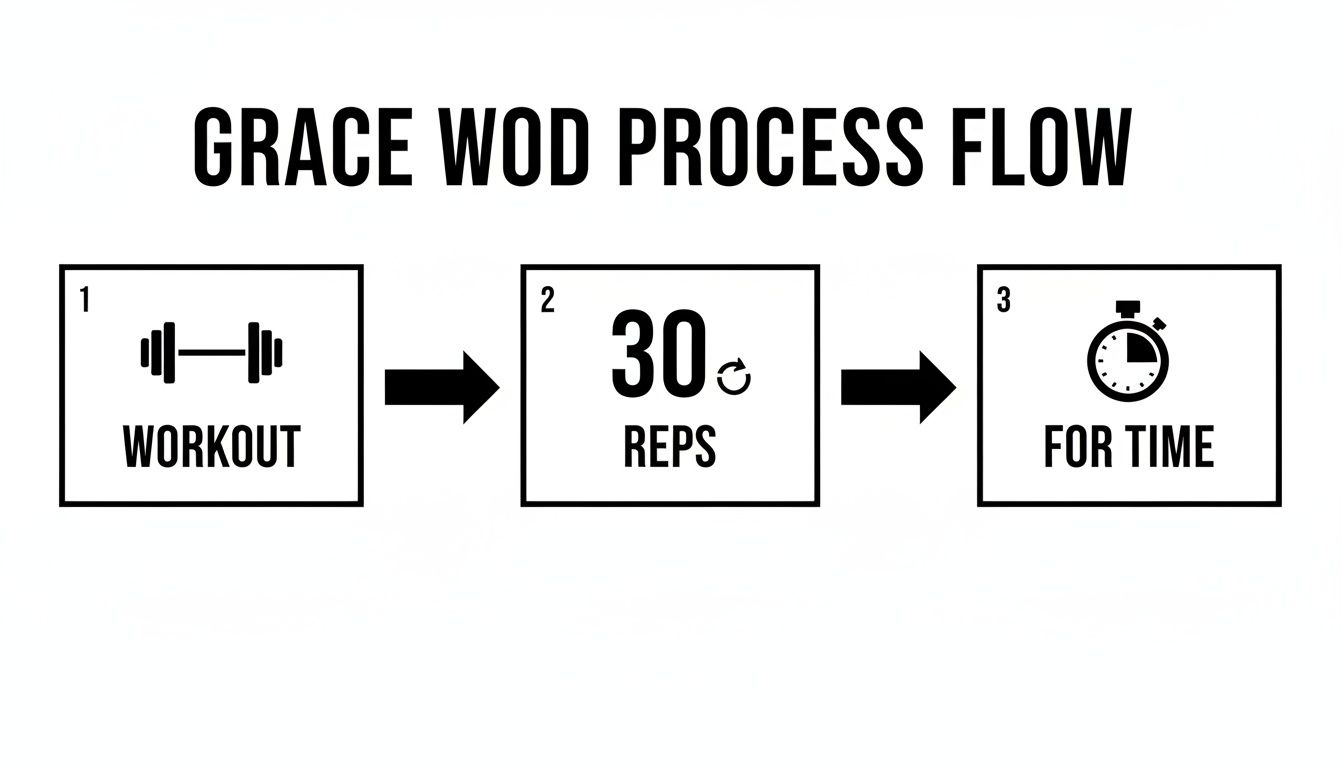
As you can see, Grace is a straight shot: 30 reps, for time. Every second saved through better technique is a second shaved off your final score.

Mastering the Clean
The clean starts with launching the weight from the floor to your shoulders. It consists of two "pulls." The first pull gets the bar off the ground; maintain a flat back, proud chest, and loaded hips.
The second pull is the explosion. As the bar passes your knees, violently extend your hips, knees, and ankles, a "jump and shrug" motion. This explosive pop sends the bar flying upward, creating a moment of weightlessness.
A classic rookie mistake is pulling with the arms too early. Your arms are just ropes; keep them straight until your hips have done the heavy lifting. The real power comes from your legs and hips.
Once the bar is floating, pull yourself under it quickly, catching it in a solid front rack position. For any serious barbell athlete, developing core strength and power is non negotiable for stability and force transfer.
Nailing the Jerk
With the bar on your shoulders, the jerk gets the weight overhead. This starts with the "dip and drive." The dip is a short, controlled drop, like coiling a spring with your legs. The drive is the explosive uncoiling, launching the barbell up. As the bar travels, punch yourself down underneath it, catching it with locked out arms.
You have a couple of options for the jerk:
Push Jerk: Catch the bar overhead with your feet landing in their starting spot. It’s quick and perfect for cycling reps fast.
Split Jerk: Drop under by splitting your feet, one forward and one back. This provides a more stable base, which is helpful for heavier weights or when fatigue sets in.
For most people, the power clean and push jerk are the most efficient choices for Grace. They are faster and more economical over 30 reps. A full squat clean or split jerk might be necessary if the weight is a true grinder, but they will slow you down. Find the most efficient technique you can maintain from rep one to thirty.
Smart Strategies and Pacing to Conquer Your Best Time
Great technique gets you in the game, but a smart race plan wins the day. Going all out from rep one is a recipe for disaster. Your strategy should be honest about your current fitness and capacity. Think of Grace as one single effort to manage. The goal is to minimize rest and move at a sustainable pace. The difference between a three minute, and a six minute Grace often comes down to set breaks and fatigue management.
Breaking Down the Reps Your Way
There’s no single “best” way to chip away at the 30 reps. The right strategy is tied to your barbell cycling ability and muscular endurance.
Big Sets to Start: A high risk, high reward approach is starting with a large, unbroken set of 10-15 reps. It can give you a head start, but only if you can recover quickly.
Consistent Small Sets: A more conservative strategy is breaking the reps into manageable chunks like 10 sets of 3 or 6 sets of 5. This helps control your heart rate and avoid redlining.
Fast Singles: For many, the fastest route is hitting all 30 reps as quick singles. Drop the bar after each rep, take a quick breath, and get back on it. This keeps your heart rate from spiking.
The secret to fast singles is simple: don't let the barbell spend much time on the floor. Elite athletes are often back on the bar in under three seconds. Practice a smooth, efficient setup for every lift.
Touch-and-Go vs. Dropping the Bar
Knowing when to do touch-and-go (TNG) reps versus dropping the bar is a massive part of your game plan. TNG reps are faster rep for rep but are very taxing on your grip and lungs.
Dropping the bar provides a micro-rest to reset your grip and breathing. A hybrid plan often works best: hit small TNG sets early on, then switch to fast singles as fatigue creeps in. This lets you bank time upfront while saving gas for the home stretch.

Scaling Grace for Your Current Fitness Level
Grace is a sprint. Your limiting factor should be your metabolic capacity, not your one rep max. Smart scaling is crucial to maintain high intensity. The goal is to choose a load you can cycle for at least 5-10 reps unbroken when fresh. If you're grinding out singles from the start, the weight is too heavy.
The Rx weight is just a suggestion. The "real" workout is the one that pushes you appropriately. Finishing a scaled Grace in four minutes is a much better workout than gutting out the Rx weight for ten.
Choosing the Right Weight
Picking your weight is the most important decision. You need a weight that allows for solid technique, high speed, and serious intensity. Here are some guidelines:
Beginner: Aim for a weight around 30-40% of your one rep max clean and jerk.
Intermediate: Target somewhere between 40-50% of your max.
Advanced: You should be comfortable cycling 50% or more of your best lift.
The goal is to finish in the target time frame (under six minutes for most) to get the intended speed and power endurance stimulus.
Movement Modifications and Alternatives
For athletes still getting comfortable with the barbell, dumbbells or kettlebells are great alternatives. A common substitution is 30 dual dumbbell or kettlebell clean and jerks, which builds unilateral strength and coordination.
The table below breaks down common scaling paths for Grace, all designed to maintain the stimulus of a fast, high power effort.
Grace WOD Scaling Options and Target Stimulus
Level | Suggested Weight (Men/Women) | Movement Focus | Target Time Range |
|---|---|---|---|
Rx | 135 lbs / 95 lbs | Barbell cycling, speed, and power endurance | Under 5:00 |
Intermediate | 95-115 lbs / 65-85 lbs | Maintaining form under fatigue with a challenging load | 4:00 - 6:00 |
Beginner | 65-75 lbs / 45-55 lbs | Developing technique and barbell confidence | 5:00 - 7:00 |
No Barbell | 2x35-50 lb DBs / 2x20-35 lb DBs | Coordination and full-body conditioning with dumbbells | 4:00 - 7:00 |
Ultimately, scaling is about making the workout fit you. The right adjustments allow you to hit Grace with proper intensity, push your fitness forward, and stay safe.
Choosing the Best Shoes for Grace and Barbell Lifts
Your shoes matter more than you might think. Hitting a fast time in cushioned running shoes is like lifting on a mattress, it bleeds power and increases injury risk.
Running shoes are designed with soft soles to absorb impact, which is a disaster for lifting. In a clean and jerk, you need to drive force from the ground into the barbell. A mushy sole eats up that force. A solid, stable shoe provides a firm foundation, ensuring every ounce of effort goes into the lift.
Cross-Training Shoes: The Versatile Contender
For a high rep burner like Grace, a solid pair of cross-training shoes is usually your best bet. They are built to handle lifting, jumping, and short bursts of running.
Key features include:
Minimal Heel-to-Toe Drop: Most cross-trainers have a drop of about 4-7mm, keeping your feet relatively flat for a stable lifting stance.
Dense, Stable Sole: The sole is firm enough for a solid platform but allows for quick foot movement.
Durable Construction: Built to take a beating, making them a smart long-term investment.
Top tier cross-training shoes, like the Nike Metcon series or Reebok Nanos, strike a perfect balance between stability and responsiveness for Grace.
Weightlifting Shoes: The Stability Specialist
Dedicated weightlifting shoes ("lifters") are engineered for maximum weightlifting from a rock solid base. Their most noticeable feature is a hard, elevated heel. This raised heel helps athletes with tight ankles achieve a deeper, more upright squat during the clean.
For a workout like the CrossFit workout Grace, the rigidity of lifters can be a drawback. They can feel clunky and slow down your footwork between reps, where every fraction of a second counts.
While lifters are king for a one rep max, a versatile cross-training shoe is generally the smarter choice for Grace. It provides the necessary stability while letting you stay nimble. For a more detailed look, check our guide on finding the best shoes for weightlifting. The right shoe will make your lifts feel more grounded and powerful.
Essential Warm-Ups and Mobility for Peak Performance
A killer time in Grace is set long before the clock starts. A smart, purposeful warm-up is your secret weapon for unlocking max power and efficiency. The mission is to raise your core temperature, mobilize key joints, and activate the exact muscle groups you’re about to use.
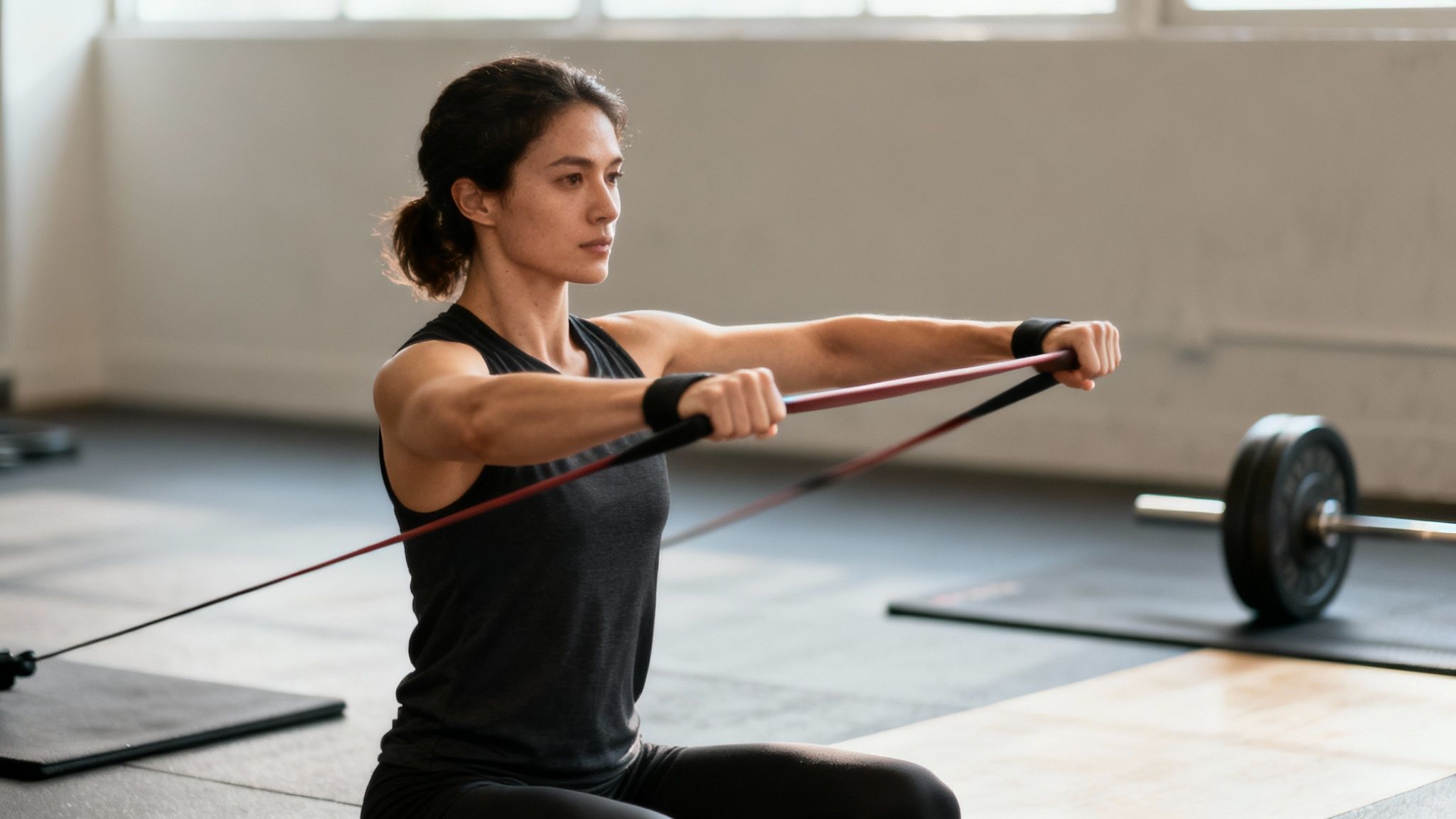
A well designed warm-up primes your body for the intensity to come, so you can move smoothly and powerfully from the first rep.
Phase 1: Raising Your Core Temperature
First, get the blood flowing. This phase should take about 5-7 minutes and consist of low impact, full body movements.
Rowing: Engages the entire body and mimics the pulling pattern of the clean.
Assault Bike: Quickly gets the heart rate up and warms the legs and shoulders.
Jumping Jacks and High Knees: Simple, effective dynamic movements.
This step is nonnegotiable for safety and performance, preparing muscles and connective tissues for the work ahead.
Phase 2: Dynamic Mobility and Activation
Next, zero in on mobility drills for the specific ranges of motion needed for a clean and jerk. Open up your hips, shoulders, and thoracic spine. Spend a good 10 minutes on these movements.
Banded Pass-Throughs: Improves shoulder mobility and warms up the rotator cuffs.
Cat-Cow Stretches: Mobilizes the thoracic spine, crucial for a stable overhead position.
Spiderman Lunges with Rotation: Opens up your hips and T-spine simultaneously.
Goblet Squats: Primes your squat pattern while firing up your glutes and core.
These aren't just stretches; they're active preparation. Exploring the top mobility exercises for athletes can unlock performance will pay huge dividends.
Phase 3: Movement-Specific Preparation
Finally, get your hands on an empty barbell and drill the clean and jerk. This grooves the movement patterns and preps your central nervous system. Start with the bar and run through 5-10 reps of each piece: deadlifts, hang power cleans, front squats, and strict presses.
Post-Activation Potentiation (PAP) is a concept where lifting something heavy "wakes up" your nervous system, making subsequent explosive movements feel easier. Slowly building up the weight in your warm-up primes your muscles.
After drilling the pattern with an empty bar, add weight over 2-4 sets. Your last warm-up should be a single, smooth rep at or just above your workout weight. This confirms your body is prepped for the all-out sprint.

Common Questions About Grace
As you prepare for the CrossFit workout Grace, you're bound to have questions. Getting the finer points right can change your time and how you feel afterward. Let's dive into some common questions to help you build a solid strategy.
What is a Good Grace Time to Aim For?
A "good" time depends on your fitness level, but here are some general targets:
Beginner athletes: Typically aim to finish under 7 minutes.
Intermediate athletes: Usually land between 4-6 minutes.
Advanced athletes: Push to get under 3 minutes, with elites finishing under 2 minutes.
The most important goal is to pick a weight that lets you move fast with good form and feel the burn of a true power sprint.
Should I Do Touch-and-Go Reps or Singles?
This is a key strategic decision. Touch-and-go (TNG) reps are faster per rep but will fry your grip and spike your heart rate. If you're excellent at cycling a barbell, you might manage a few quick sets this way.
For most people, fast singles are the smarter, and often faster, approach. Drop the bar from overhead, take one quick breath, and get back to it. Keep the rest short, no more than 3-5 seconds. This helps manage fatigue and maintain a steady pace.
Pro Tip: If you choose singles, practice your reset. The sequence of dropping the bar, resetting your feet and grip, and starting the pull should be a smooth, automatic motion. A sloppy reset wastes energy and time.
I hope this article has given you all the necessary information to get the best out of your workout. If you would like to read more on optimizing your health and wellness, and see the latest reviews on athletic shoes, please visit me at flourish-everyday.com