Top Picks: Best Running Shoes for Plantar Fasciitis for Men for 2026

Updated: Feb 10
If you've ever felt that sharp, stabbing pain in your heel or in the bottom of your foot, you know how plantar fasciitis can stop a runner dead in their tracks. I started feeling mine during heavy lifts. Upon examination, I noticed knots on the tendons on the bottom of my feet. They hurt, especially when I was running.
For men dealing with this, the best running shoes for plantar fasciitis aren't just a comfort item, they're essential equipment, blending deep cushioning, solid arch support, and a heel that locks you in place. Brands like Hoka, Brooks, and New Balance have really nailed the formula to take the strain off that aggravated tissue, paving the way for pain free miles.
Table of Contents
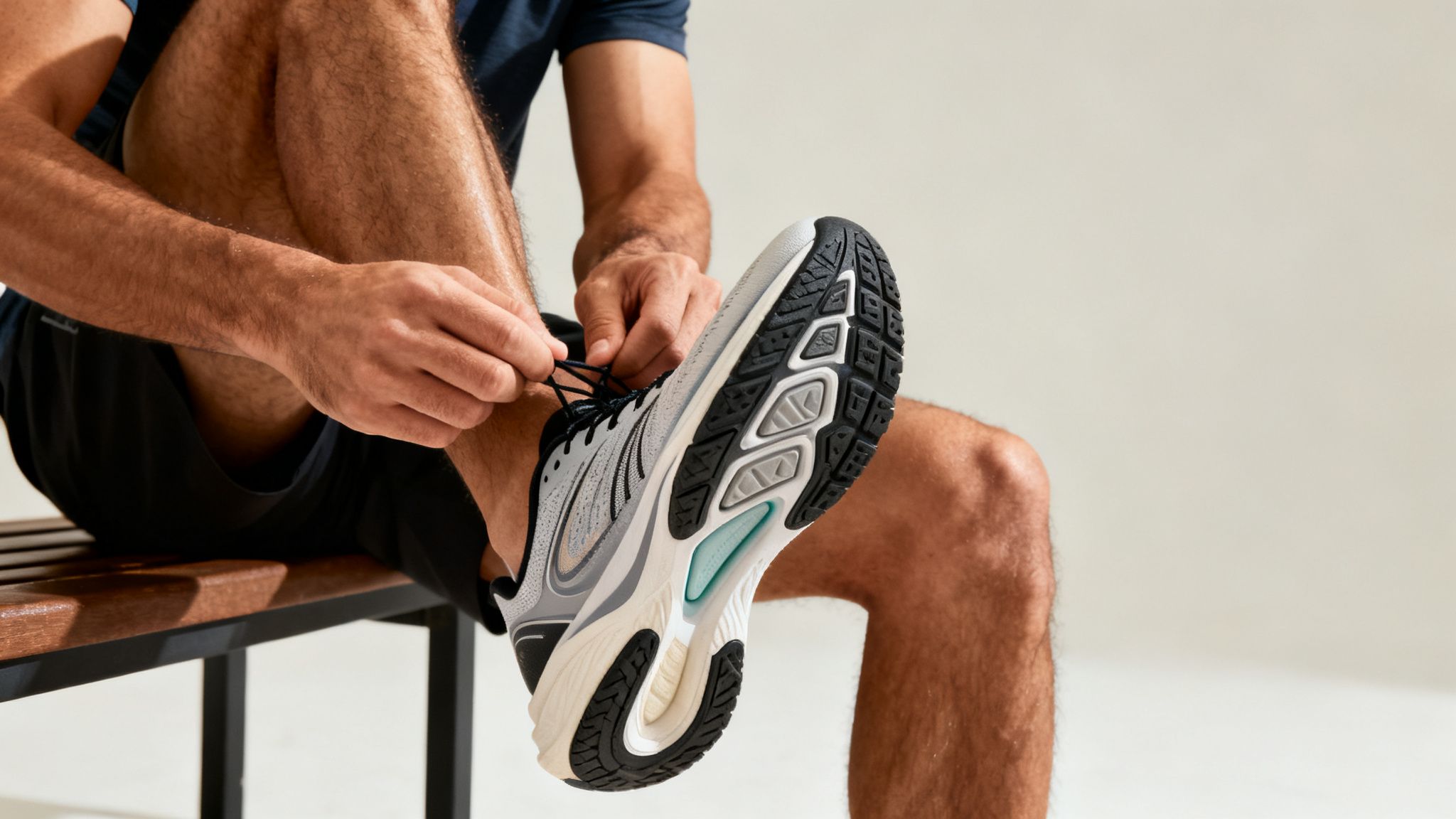
Your Guide to Running Comfortably With Plantar Fasciitis
Being sidelined by plantar fasciitis is frustrating, turning a beloved activity into a source of pain. The good news is that your footwear can make a significant difference. Think of your running shoes less as gear and more as a dedicated support system for your feet.
This guide gets straight to the point, explaining why specific shoes are non-negotiable for men managing this condition. We'll cover everything from the root cause of heel pain to how you can confidently select the perfect pair.
Plantar fasciitis is incredibly common, affecting about 1 in 10 people at some point in their lives, particularly between the ages of 40 and 60 (1). In the U.S., it accounts for approximately two million treatments annually, and runners face a significant injury risk from heel pain (2). This has pushed the global market for medical footwear to new heights.
Of course, overall comfort on a run goes beyond your feet. Staying hydrated is vital, and choosing the perfect running water bottle is a key part of that. For broader footwear knowledge, our guide on how to choose running shoes is a great resource.

Why Plantar Fasciitis Hits Male Runners Differently
Before picking the right shoe, it's helpful to understand what's happening in your foot. Your plantar fascia is a tough, shock absorbing ligament running from your heel to your toes. It supports your arch and is critical for pushing off the ground.
Plantar fasciitis occurs when this ligament is overworked, leading to micro tears and inflammation, the source of the pain. That sharp sensation with your first steps in the morning is the fascia tightening overnight and then being suddenly stretched. While it affects everyone, certain factors common among men can escalate the problem.
Key Factors for Men
Several factors increase stress on the plantar fascia, explaining why the best running shoes for plantar fasciitis for men have specific design features.
Higher Body Mass: On average, men carry more weight, which amplifies the force your feet absorb with each stride, straining the plantar fascia.
Foot Structure Differences: Men often have flatter, less flexible arches. A flatter arch can lead to overpronation, where the foot rolls inward, which irritates the fascia.
Training Habits: Pushing too hard, too fast by ramping up mileage or intensity without proper adaptation is a classic trigger for this overuse injury.
These risk factors are why plantar fasciitis is a leading cause of foot pain, impacting adults primarily between ages 25-65 (3). This has helped the global orthopedic footwear market and its growth to an estimated $10.7 billion by 2032 (4).
The Wrong Shoes Make Everything Worse
Running in worn out or unsupportive shoes worsens the problem. Without proper arch support, cushioning, and heel stability, every step sends shockwaves into the inflamed tissue. The wrong shoes don't just fail to help; they can actively hinder your recovery.
A shoe without proper support allows the foot to move in ways that continuously aggravate the plantar fascia. It's not just failing to help; it's actively hindering your recovery by repeating the same harmful movements with every run.
Getting this right is foundational. The features we'll discuss, like deep heel cups and solid cushioning, are direct solutions to these biomechanical issues, designed to offload the plantar fascia and allow it to heal.

Essential Shoe Features for Heel Pain Relief
Knowing why your foot hurts is the first step; now, let's talk solutions. Choosing the right running shoe isn't about the price tag but about finding specific features that support your inflamed plantar fascia. Think of the right shoe as a suspension system for your foot, with each feature designed to absorb shock and reduce strain.
A combination of body mass, foot structure, and training habits often sets the stage for plantar fasciitis. Let's look at how specific shoe features bring relief.
How Shoe Features Alleviate Plantar Fasciitis Symptoms
The table below explains what to look for and how each feature directly addresses the causes of heel pain.
Shoe Feature | How It Helps | Primary Benefit |
|---|---|---|
Generous Cushioning | Absorbs the shock of your foot hitting the ground. | Reduces the jarring impact on your heel and arch. |
Firm Heel Counter | Locks your heel securely in place, preventing side-to-side motion. | Minimizes pulling and twisting forces on the plantar fascia. |
Robust Arch Support | Prevents the arch from collapsing with each step (overpronation). | Distributes pressure evenly across the foot, reducing strain. |
Higher Heel-to-Toe Drop | Elevates the heel slightly, shifting weight forward. | Takes direct pressure off the painful insertion point of the fascia. |
Understanding these components will empower you to choose a shoe that doesn't just feel good, but actively helps you heal.
Cushioning That Protects
For plantar fasciitis, generous cushioning is nonnegotiable. It's the buffer between your foot and the hard pavement. You need foam that is both soft and supportive. A shoe that feels too soft might be comfortable initially but can strain your arch if it allows your foot to wobble. The goal is balanced, responsive foam.
A Stabilizing Heel Counter
A firm heel counter is the rigid cup in the back of the shoe that locks your heel down. This stability prevents excessive lateral movement, which can stretch and irritate the plantar fascia. A stable heel reduces torque and pulling forces, allowing the tissue to heal.

Robust Arch Support
Proper arch support distributes pressure evenly across your foot instead of concentrating it on your heel. It's crucial for preventing overpronation, a major cause of plantar fasciitis. The right shoe should feel like it's cradling your arch, taking tension off the plantar fascia. Many modern neutral shoes offer excellent support through smart midsole design.
The Power of a Higher Heel Drop
The heel-to-toe drop is the height difference between the heel and the forefoot. A higher drop, usually 8mm or more, can provide significant relief. This elevation shifts weight forward and off your heel, reducing pressure on the most inflamed area of the plantar fascia. Learn more in our guide on what heel-to-toe drop is and why it matters.
In-Depth Reviews of Top Running Shoes for Men
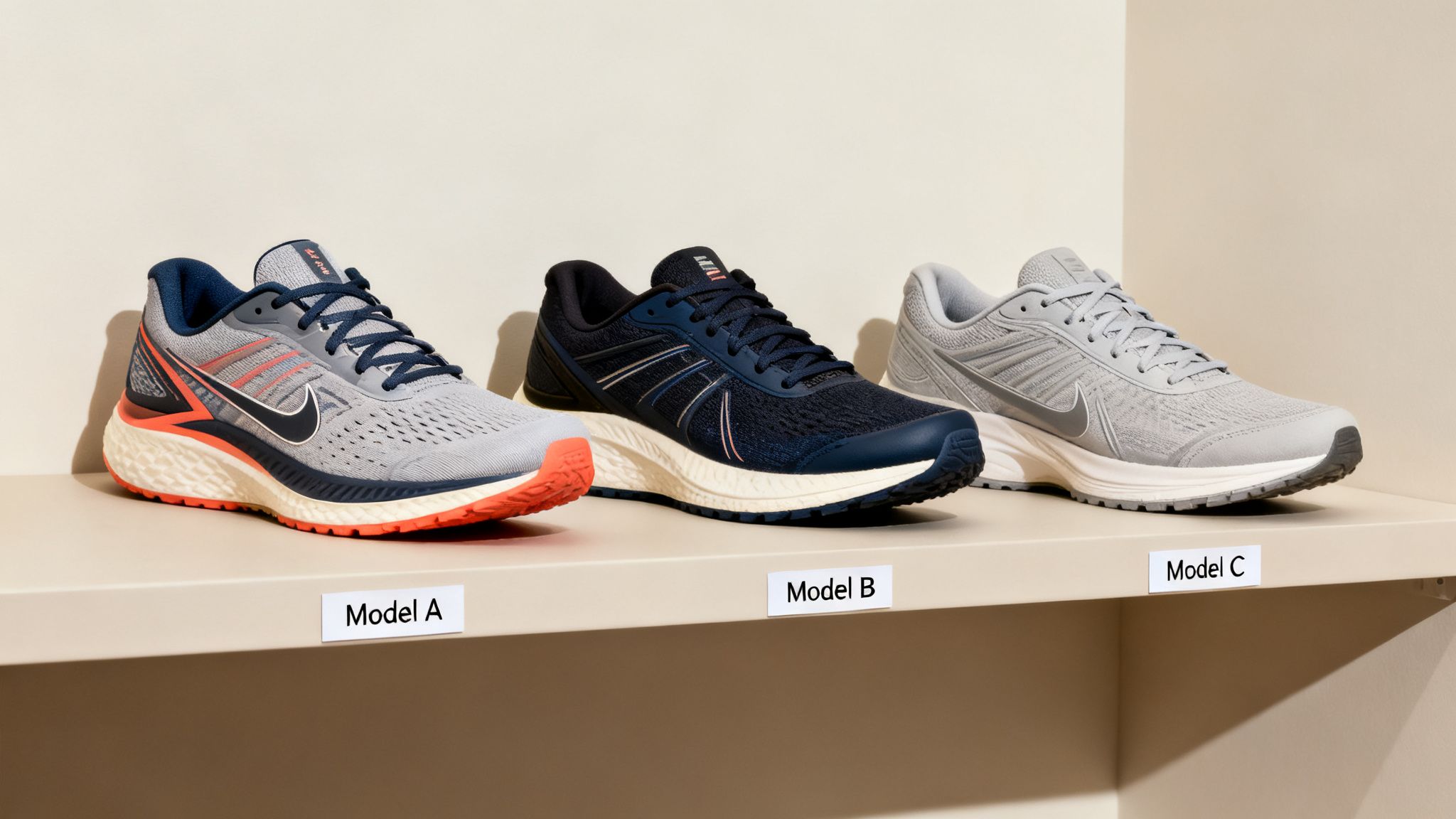
Let's look at the models known for bringing relief. The best running shoes for plantar fasciitis for men are engineered with the right blend of support, stability, and smart design to take the strain off your heel and arch. My reviews focus on trusted brands with a proven track record.

Hoka Bondi 9: The Cushioning King
The Hoka Bondi 9 is often the top recommendation for plantar fasciitis because it's a fortress of comfort. Its maximalist cushioning acts like a giant shock absorber. The sheer volume of EVA foam underfoot, with a heel stack height over 40mm, softens every step.
Though a neutral shoe, its wide base and flared heel create a stable ride. The meta-rocker geometry also helps your foot roll smoothly through your stride.
The Bondi 9's mission is crystal clear: absorb as much impact as humanly possible. If your pain is triggered by the constant jarring of running, this level of cushioning can feel like a miracle.
However, the massive midsole can feel bulky, and its low 5mm drop might stress the Achilles if you're not used to it. Still, for pure impact protection, it's unmatched.

Brooks Adrenaline GTS: The Supportive Workhorse
If your plantar fasciitis is linked to overpronation, the Brooks Adrenaline GTS is a legendary choice. It offers smart, holistic support without feeling clunky.
Its GuideRails technology works like bumpers, gently steering your foot, ankle, and knee into alignment. This reduces the twisting forces that overpronation places on the plantar fascia.
Heel-to-Toe Drop: A 12mm drop helps shift weight off your heel.
Balanced Cushioning: DNA LOFT foam is a great mix of soft comfort and responsiveness.
Firm Heel Counter: The structure holds your heel securely, preventing irritation.
The Adrenaline GTS is a fantastic all around, ideal for men who need both cushioning and stability. Men with high arches may also benefit, though our guide on best running shoes for high arches has more specific recommendations.

New Balance Fresh Foam X 1080 v14: The Soft and Versatile Option
For runners wanting a plush feel without sacrificing performance, the New Balance 1080 v14 is a top neutral choice. It's packed with Fresh Foam X, known for its cloud-like softness, making it perfect for recovery days or long miles.
While it lacks explicit stability features, its wide base and engineered sidewalls create a secure platform. The rocker shape encourages a smooth stride, easing strain. This shoe hits a sweet spot for neutral runners. However, men needing aggressive arch support should be cautious, as very soft foam can sometimes allow an unsupported arch to collapse.
Lifestyle Strategies for Lasting Foot Health
The right shoes are a huge step, but they are just one piece of the puzzle. To beat plantar fasciitis for good, you need a holistic approach that includes stretching, strengthening, and smart daily habits. Building a routine that supports your feet even when you're not running can dramatically reduce strain and promote healing.
Stretching Routines for Flexibility
Tight calf muscles are a major contributor to plantar fasciitis. They pull on your Achilles tendon, which in turn yanks on your heel and overstretches the plantar fascia. A consistent stretching routine is non-negotiable.
Calf Stretches: Perform both straight-knee and bent-knee wall stretches. Hold each for 30 seconds, multiple times a day.
Plantar Fascia Stretch: Sit and cross one leg over the other. Gently pull your toes back toward your shin until you feel a stretch in your arch. Hold for 15-30 seconds and repeat three times per foot.
Strengthening Your Foundation
Weak foot and lower leg muscles can lead to poor biomechanics, placing excess stress on your plantar fascia. Strengthening these muscles builds a more stable structure to absorb impact. Simple exercises like towel curls and marble pickups can make a huge difference in building intrinsic foot strength.
Just like a strong core supports your spine, strong foot muscles support your arch. These exercises are like physical therapy for your feet, building an internal support system that shoes can only complement.
Complementary Tools and Professional Help
Other tools can speed up recovery. Orthotics can provide personalized arch support. Night splints are also effective, as they keep the fascia stretched overnight, reducing morning pain. Additionally, a therapeutic foot massage for lasting pain relief can help break down scar tissue and improve blood flow. If pain persists after a few weeks of self care, see a physical therapist or podiatrist for a targeted treatment plan.

We Answer Your Most Common Questions
Navigating the world of running shoes for plantar fasciitis can be confusing. Here are answers to common questions to help you make a confident purchase.
How Often Should I Replace My Running Shoes?
A running shoe’s support wears out before it looks old. A good rule is to replace them every 300 to 500 miles. This varies based on your weight and running surface. After thousands of impacts, the midsole foam can no longer absorb shock effectively, which can trigger a flare-up. Keep a simple log of your mileage. If new aches appear, your shoes are likely done.
What's The Difference Between Neutral and Stability Shoes?
Understanding this is crucial for managing plantar fasciitis.
Neutral Shoes: Designed for runners with a neutral gait. They focus on cushioning and flexibility without trying to correct your stride. Many top choices for plantar fasciitis are neutral but have a wide, stable base.
Stability Shoes: Built for runners who overpronate (their arch collapses inward). They use features like firmer foam (medial posts) or guide rails to align the foot, reducing stress on the plantar fascia.
If overpronation is your issue, a stability shoe is essential. Otherwise, a well cushioned neutral shoe is likely a better fit.
Can I Use These Shoes for Walking or Daily Wear?
Yes, and you probably should. The features that make these shoes great for running, cushioning, arch support, and a secure heel, are also beneficial for daily activities. Wearing unsupportive shoes day-to-day can undermine your recovery. Consistent support is key. The only catch is that daily wear will wear them out faster. Some people buy two pairs: one for running and another for daily use.
References
Buchanan, B. K., & Kushner, D. (2023). Plantar Fasciitis. In StatPearls. StatPearls Publishing.
Neufeld, S. K., & Cerrato, R. (2008). Plantar fasciitis: evaluation and treatment. The Journal of the American Academy of Orthopaedic Surgeons, 16(6), 338–346.
Lopes, A. D., Hespanhol, L. C., Yeung, S. S., & Costa, L. O. (2012). What are the main running-related musculoskeletal injuries? A Systematic Review. Sports Medicine, 42(10), 891-905.
Allied Market Research. (2023). Orthopedic Footwear Market by Product Type, Application, and Distribution Channel: Global Opportunity Analysis and Industry Forecast, 2023-2032.
Here at Flourish-Everyday, our mission is to help you lead a healthier, more active life. We create expert reviews and share health insights to back you up on your fitness journey.
Find your next pair of running shoes at https://www.flourish-everyday.com.

