The Ultimate Guide to Shoes for Strength Training

Updated: Feb 3
Lifting in the wrong shoes is likely to cause injury, fatigue, and eventually, pain. All your power fizzles out into the instability under your feet with the wrong shoes. The best shoes for strength training provide a flat, solid, and stable base so you can generate maximum force and sidestep injuries. This is why your cushioned running shoes are sabotaging your squats and deadlifts. Let's take a good look at what to do and why, to ensure the optimal strength training routine.
Index of Sections
Your Foundation for Every Lift
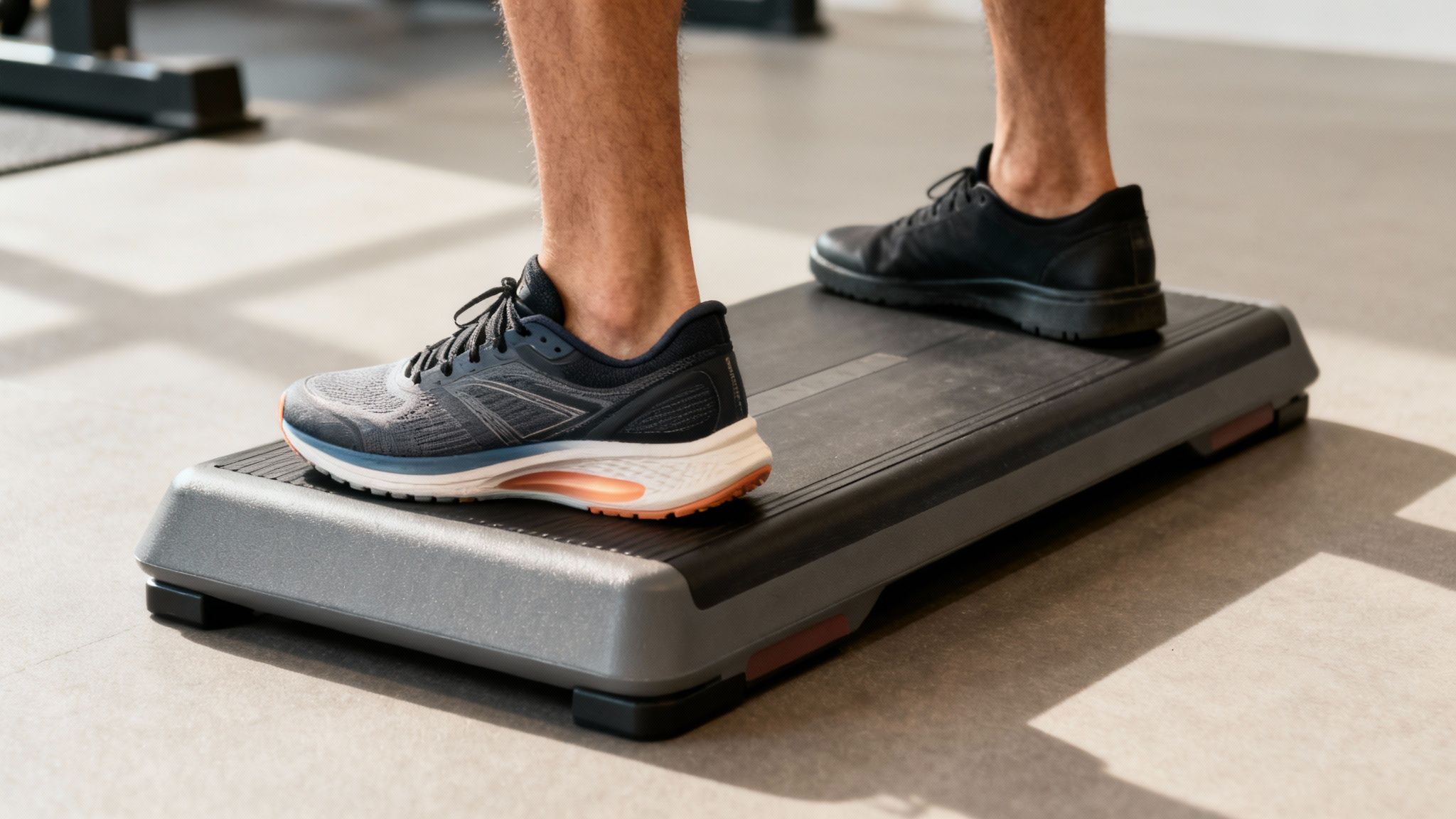
Think of your body during a lift as a skyscraper, your feet are the foundation. Building on sand, or in this case, soft running shoes, creates an unstable and inefficient structure.
The pillowy soles of running shoes are designed to absorb impact, which is great for jogging but detrimental for moving heavy weight. When you drive your feet into the ground, that foam compresses, creating a wobbly surface. This instability forces your body to work overtime to stay balanced, robbing you of power and increasing injury risk (1).

The Power of a Stable Base
A proper strength training shoe acts like a solid concrete foundation. Its firm, non-compressible sole allows for direct force transfer from your body, through your feet, and into the ground.
When your feet are planted on a stable surface, your brain receives clear feedback, allowing for better muscular control and strength. This downward force is the bedrock of your exercise, enabling you to enlist the correct muscles and generate maximum power.
This stability translates directly into better, safer lifts. You can focus on form without your body unconsciously compensating for an unsteady base.

The Growing Importance of Specialized Footwear
The fitness world has caught on to the importance of proper footwear. The global market for athletic footwear is projected to grow substantially, reflecting a worldwide shift toward healthier lifestyles (2).
This trend has sparked a wave of versatile cross-training shoes designed to reduce injury risk during strength training. Picking the right footwear isn't just about comfort; it's about optimizing performance and ensuring longevity in your fitness journey. Investing in a quality pair of shoes for strength training is a smart move for your progress and well-being. For specific recommendations, check our guide on good shoes for squats and deadlifts.
The Anatomy of a Perfect Lifting Shoe
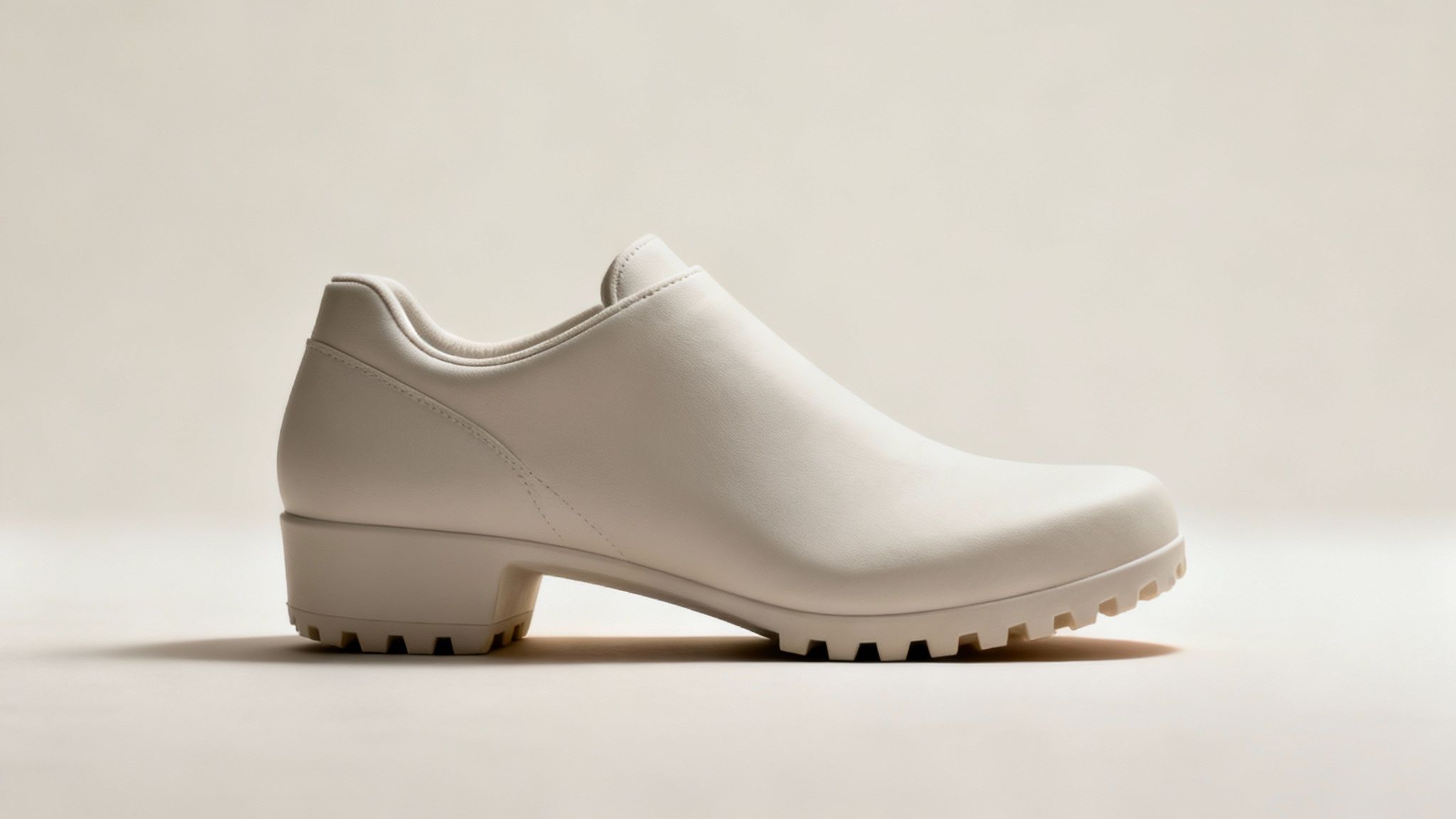
Before choosing the right shoes, you must understand their key components. A great lifting shoe is a piece of gear with specific features that directly impact safety and strength. Every part, from the sole to the upper, works to create a dependable platform.
The All Important Sole
The most critical feature of a lifting shoe is its firm, dense, and non-compressible sole. A cushioned sole absorbs the force you're trying to drive into the ground, much like pushing a car while standing on a trampoline. A solid sole ensures your energy transfers directly into the lift, providing a stable base for exercises like squats, deadlifts, and overhead presses.
Heel-to-Toe Drop Explained
Heel-to-toe drop is the height difference between the heel and the forefoot. This measurement significantly impacts lifting mechanics, especially in squats.
For many lifters, an elevated heel helps them achieve greater squat depth by allowing for more ankle flexion. This can lead to a more upright torso position, which may reduce stress on the lower back and improve overall form.
Shoes for strength training come with different drops:
Zero-Drop (0 mm): Flat soled shoes that mimic a barefoot stance, ideal for deadlifts as they place you closer to the ground.
Moderate Drop (4-8 mm): Common in cross-trainers, offering versatility for various gym activities.
High Drop (12+ mm): Typical for dedicated weightlifting shoes, designed to improve squat mechanics.
The Foundation of Stability and Grip
A shoe's construction must prioritize stability. The outsole should be made of a high-traction material to prevent slipping. A wide toe box allows your toes to spread naturally, creating a wider, more stable base of support. Finally, a secure lacing system or midfoot strap locks your foot in place, preventing shifting that could compromise stability. To explore functional differences between shoe types, learn more about training vs. running shoes.

Choosing Your Ideal Training Shoe
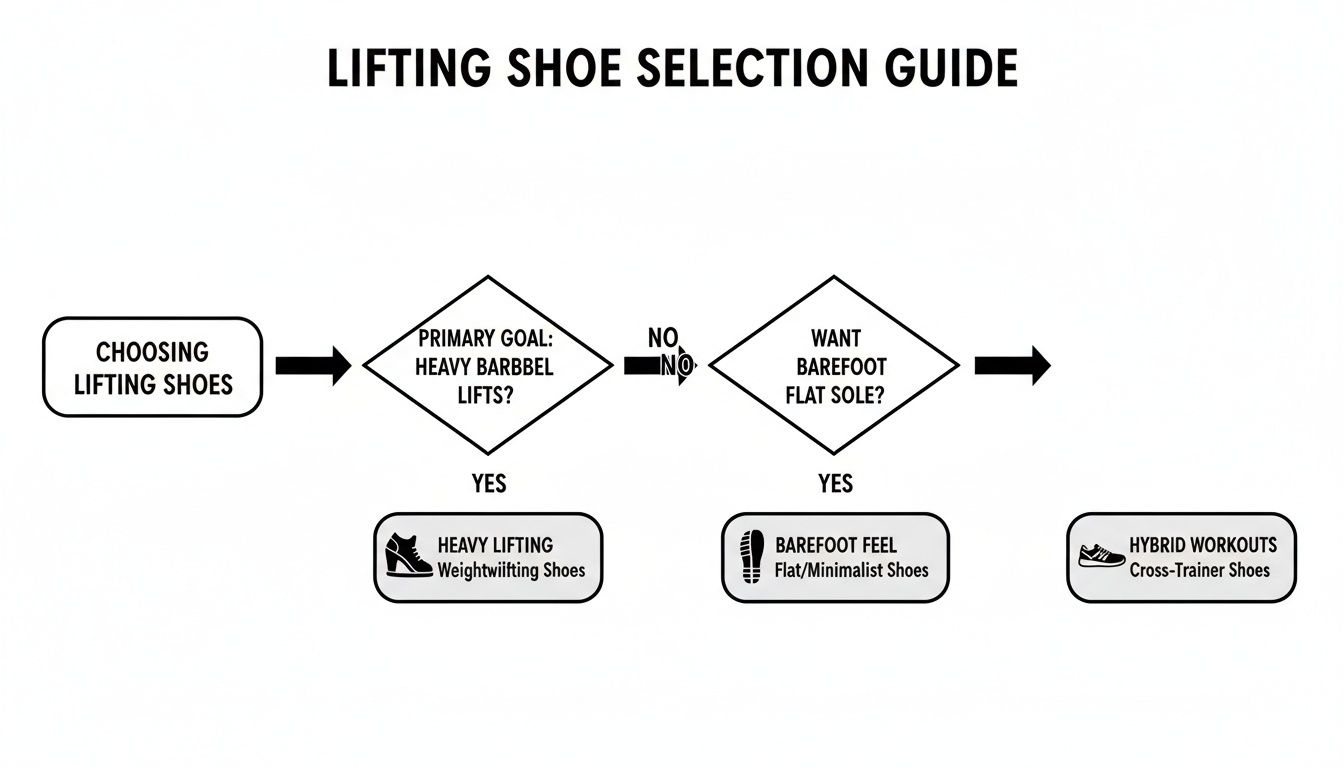
The right footwear is foundational to your training. Your workout style dictates the type of shoe you need. We'll explore three main categories: dedicated weightlifting shoes, versatile cross-trainers, and minimalist shoes.
Dedicated Weightlifting Shoes
Weightlifting shoes are specialists, identifiable by their elevated and rigid heel. This design enhances ankle mobility, which is a essential for squats and Olympic lifts (cleans, jerks, snatches). The raised heel helps maintain an upright torso, achieve greater squat depth, and reduce lower back stress. They are the gold standard for serious powerlifters and Olympic lifters.
Versatile Cross-Trainers
Cross-trainers are the all rounders of gym footwear, built for varied workouts that include lifting, HIIT, and agility drills. They typically feature a minimal to moderate heel-to-toe drop (around 4-8 mm), balancing stability for lifting with flexibility for dynamic movements. The sole is firm enough for squats but has enough cushion for box jumps. For athletes in dynamic sports like CrossFit, specialized insoles designed for CrossFit can add extra stability.
Cross-trainers are the jack-of-all-trades. They provide a stable lifting platform without sacrificing the agility needed for hybrid workouts, making them an excellent choice for general gym-goers.
Minimalist Flat-Soled Shoes
Minimalist, or "barefoot," shoes aim to replicate training without shoes. They have a zero-drop platform, meaning the heel and toes are level, promoting a natural foot position and connection to the floor. They are ideal for deadlifts, where being low to the ground is advantageous. Research suggests that walking in minimalist shoes can strengthen feet as effectively as a dedicated exercise program (3).
Comparison Review: Which Shoe is Right for You?
Choosing the right shoe depends on your primary training style. This table compares shoe types to help you find the best fit.
Shoe Type | Best For | Heel Drop | Key Feature | Who It's For |
|---|---|---|---|---|
Weightlifting Shoe | Squats, Cleans, Snatches, Overhead Press | High (12mm+) | Elevated, non-compressible heel for maximum stability and improved squat mechanics. | Dedicated powerlifters and Olympic weightlifters. |
Cross-Trainer | HIIT, CrossFit, General Gym Workouts | Low to Moderate (4-8mm) | A balanced design offering both stability and flexibility. | Fitness enthusiasts who enjoy a variety of exercises in a single session. |
Minimalist Shoe | Deadlifts, Kettlebell Work, Functional Fitness | Zero (0mm) | A thin, flat, and flexible sole that promotes natural foot movement. | Lifters who prioritize a barefoot feel and want to maximize foot strength. |
Matching your shoes to your workouts enhances performance and safety. For detailed model reviews, consider finding the best shoes for weightlifting in our complete guide.
Top Rated Shoes for Men and Women
Navigating the athletic shoe market is easier when you know what to look for. We've reviewed top performers from trusted brands like Nike, Reebok, and Adidas to guide your choice.
Best for Heavy Lifting (Men & Women)
For maximal weightlifting, stability is nonnegotiable. Dedicated weightlifting shoes provide an unshakeable base.
Nike Romaleos 4: A titan in the weightlifting world, the Romaleos 4 offers a wide, stable base and a significant heel lift to aid squat form. Dual straps lock your foot down, eliminating movement under a heavy barbell.
Adidas Adipower III: Known for its rigid TPU midsole, the Adipower III is built for pure power transfer. It provides the secure, locked-in feel elite lifters depend on.
Best for CrossFit and Hybrid Workouts (Men & Women)
Hybrid workouts demand a versatile shoe that can handle lifting, jumping, and climbing.
Reebok Nano X4: A legend in the CrossFit community, the Nano X4 features a redesigned upper for breathability and the new Lift and Run (L.A.R.) Chassis system, which provides heel stability for lifting and forefoot cushioning for dynamic movements.
Nike Metcon 9: A powerhouse in the training space, the Metcon 9 has a wide, flat heel with an internal plate for stability. Its dual-density foam midsole offers responsive cushioning, and a durable rubber wrap resists abrasion during rope climbs.
Best All-Around Gym Shoe (Men & Women)
For those who mix various training styles, a versatile, all around shoe is the most practical choice.
VivoBarefoot Primus Lite III: For lovers of the "barefoot" feel, this zero-drop shoe features a thin, flexible sole that helps strengthen feet by allowing natural movement. It's excellent for deadlifts and kettlebell work.
Altra Solstice XT 2: Altra is known for its FootShape™ toe box and zero-drop platform. The Solstice XT 2 is a great all around that gives toes room to spread, creating a naturally stable base for lifting and agility drills.
How Proper Footwear Impacts Your Biomechanics
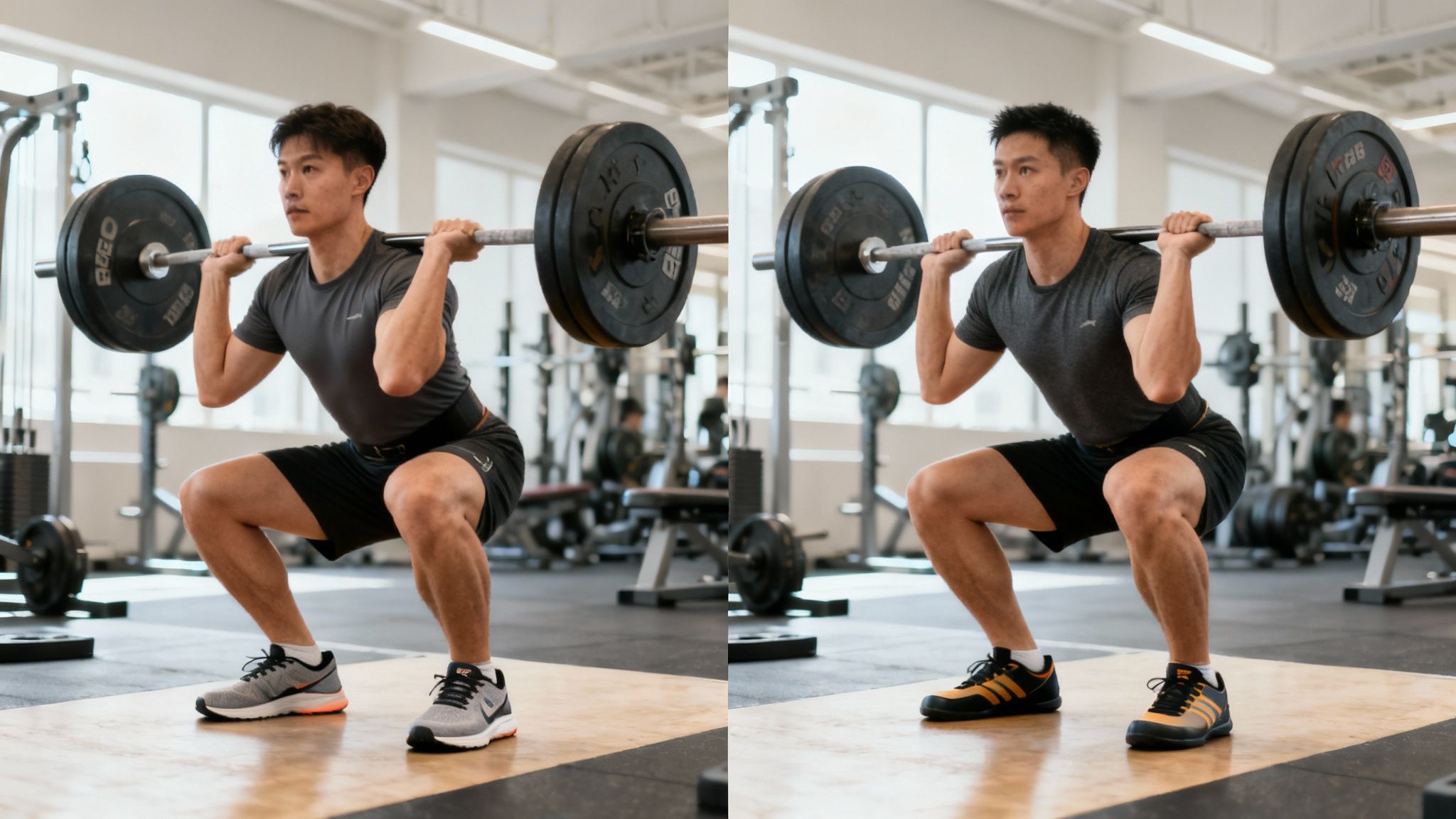
The connection between your shoes and joint health is direct. Proper footwear is critical equipment that influences how your body moves, potentially preventing chronic pain and injury. Your body is a kinetic chain; a wobbly shoe breaks that chain at its foundation, forcing joints into inefficient positions and increasing the risks of injury during lifting.

Health Information: Improving Form from the Ground Up
In a barbell squat, the elevated heel of a weightlifting shoe allows for greater ankle dorsiflexion, helping you maintain an upright chest and reducing stress on the lower back. A wide toe box lets your toes splay, creating a larger, more stable base for pushing force into the floor during heavy lifts like deadlifts.
The Hidden Dangers of Running Shoes
Lifting in running shoes is a common mistake. Their soft cushioning absorbs the force you need to transfer into the ground, creating instability.
Lifting on a cushioned sole is like standing on a soft mattress while trying to push a heavy piece of furniture. Much of your force is lost in the unstable surface, and your body has to work overtime just to stay balanced.
This instability can lead to ankle rolling and knee valgus (inward collapse), increasing your risk for ligament strains and long term joint damage.
Well-Being Trends: Investing in Longevity and Health
More people are recognizing these biomechanical truths. Strength training requires shoes that offer unyielding stability. This awareness is an important well being trend, reflecting a shift towards injury prevention and performance optimization. Choosing the right footwear is an investment in your health, ensuring you can pursue your lifting goals safely and effectively for years to come.
Your Smart Buying and Shoe Care Checklist
This checklist helps you choose the right shoes for strength training and maintain them properly. View your shoes as a critical piece of equipment, an investment in your strength and safety.
The In-Store Buying Guide
Check the Fit: Try shoes on later in the day with your gym socks. There should be about a half inch of space between your longest toe and the shoe's tip. Ensure your heel is locked in with no slipping, but your toes can spread out.
Test for Stability: Stand on one foot. A good strength training shoe should make you feel planted and balanced.
Mimic Your Moves: Perform a few bodyweight squats. Your feet should feel connected to the ground and stable.
Extending the Life of Your Shoes
Gym Use Only: Restrict your lifting shoes to indoor training to preserve their soles and structure.
Proper Cleaning: Avoid the washing machine. Use a soft brush, mild soap, and water to clean the exterior. Baking soda can freshen the interior.
Air Them Out: Always air dry your shoes after a workout, away from direct heat sources.

Your Questions Answered
Here are answers to common questions about shoes for strength training.
Can I Use Running Shoes for Lifting Weights?
No. Running shoes have soft cushioning that creates an unstable platform for lifting. This instability can compromise your form, reduce power transfer, and increase your risk of injury, especially during compound lifts like squats and deadlifts.
How Tight Should My Lifting Shoes Fit?
Your lifting shoes should be snug and secure but not painful. Your heel should be locked in place with no slippage, while your toes should have enough room to wiggle and spread naturally. A proper fit ensures maximum stability and control.
Do I Need Different Shoes for Deadlifts and Squats?
While not essential for everyone, dedicated lifters often use different shoes for these lifts. A flat, zero-drop shoe is preferred for deadlifts to reduce the pull distance and improve leverage. For squats, the elevated heel of a weightlifting shoe can help improve depth and posture. A quality cross-trainer is a versatile option suitable for both lifts in a general workout.
References
Sato, K., Fortenbaugh, D., & Hydock, D. (2012). Kinematic changes using weightlifting shoes on barbell back squat. Journal of Strength and Conditioning Research, 26(1), 28-33.
Fortune Business Insights. (2023). Athletic Footwear Market Size, Share & COVID-19 Impact Analysis. Retrieved from athletic footwear market trends.
Miller, E. E., et al. (2014). The effect of minimal shoes on arch structure and intrinsic foot muscle strength. Journal of Sport and Health Science, 3(2), 74-85.
At Flourish-Everyday, we make finding the right footwear simple. Check out our curated guides and expert advice on everything from strength training to running at https://www.flourish-everyday.com.
