The Ultimate Guide to Fitness for Beginners

Updated: Jan 30
Everybody has advice on how to workout, so starting a fitness journey can feel overwhelming. With endless suggestions and complex workout plans, knowing where to begin is often the hardest part. The key to long term success isn't about diving into extreme workouts; it's about building a solid, sustainable foundation one practical step at a time. I will guide you through a plan that is designed to cut through the noise and provide clear, actionable fitness tips for beginners, focusing on fundamental principles that create lasting change, not quick fixes that lead to burnout.

This detailed list will provide you with the necessary tools to begin intelligently, maintain motivation, and develop habits that effortlessly blend into your life. We will cover everything from establishing a realistic mindset and mastering basic movements to understanding the crucial roles of nutrition, recovery, and progressive overload. Whether your goal is to feel stronger in your daily activities or simply embrace a healthier lifestyle, these principles will guide your first steps with confidence. Forget the "all or nothing" mentality. True progress comes from consistency, patience, and a well rounded approach that respects your body's limits while gently pushing its boundaries.
Index of Topics

1. Invest in Proper Footwear for Your Activity
One of the most impactful yet frequently overlooked fitness tips for beginners is to start from the ground up: with your shoes. Proper footwear is engineered for your chosen activity, providing the correct balance of cushioning, stability, and support. This specialized design is foundational for preventing injuries and enhancing performance, as improper shoes can lead to issues like shin splints or plantar fasciitis (Nishida et al., 2018).
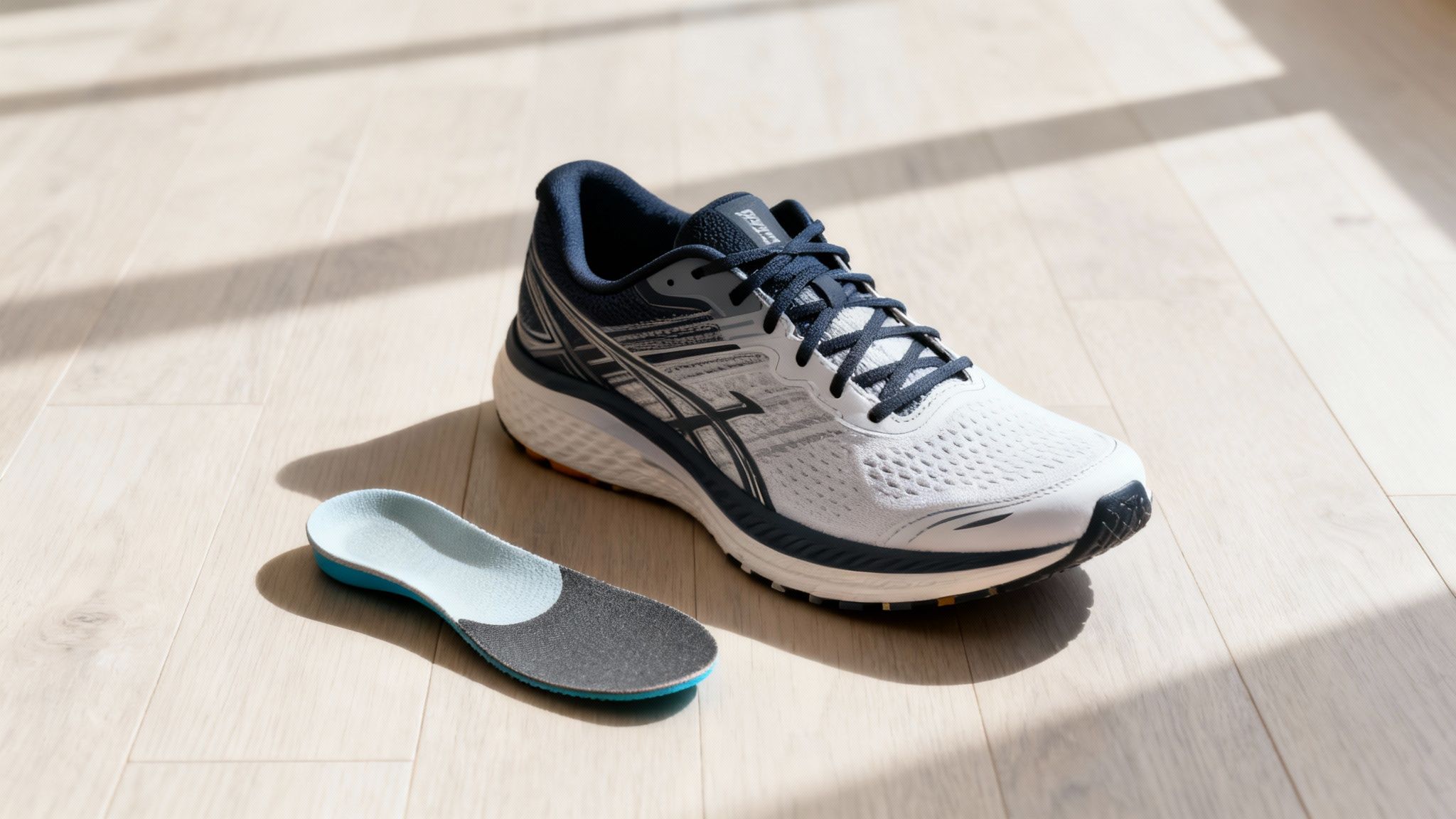
Using activity specific shoes directly impacts your body's alignment and absorbs shock effectively, reducing stress on your feet, ankles, knees, and hips. For example, a runner experiencing shin splints might find relief by switching to shoes that correct for overpronation. Similarly, a weightlifter will feel more stable during lifts with a firm, flat soled cross-trainer compared to a heavily cushioned running shoe.
Top Athletic Shoe Reviews: Men
Brooks Ghost 15 (Running): Praised for its balanced cushioning and smooth ride, making it an excellent daily trainer for neutral runners. It provides reliable comfort for both short and long distances.
Nike Metcon 9 (Cross-Training): A top choice for HIIT and weightlifting. Its wide, stable heel provides a solid base for lifts, while the forefoot is flexible enough for agility drills and short bursts of cardio.
Hoka Clifton 9 (Max Cushion Running): Ideal for beginners seeking maximum shock absorption. It's lightweight yet highly cushioned, reducing impact on joints during road running.
Top Athletic Shoe Reviews: Women
ASICS GEL-Kayano 30 (Stability Running): A leading stability shoe that offers excellent support for overpronators without feeling overly rigid. Its responsive cushioning makes it comfortable for daily miles.
New Balance Fresh Foam X 880v13 (Versatile Trainer): A reliable workhorse shoe perfect for those who mix walking and running. It offers a great blend of cushioning, responsiveness, and durability.
On Cloud 5 (Lifestyle & Light Activity): Known for its unique CloudTec® cushioning and stylish design, this shoe is perfect for walking, travel, and light gym sessions, offering all-day comfort.
2. Start with a Realistic, Sustainable Routine
A common pitfall for beginners is adopting an overly ambitious workout schedule. A better approach is to build a realistic and sustainable routine. Starting with three to four weekly sessions of 30-45 minutes allows your body to adapt, builds confidence, and establishes consistency. This method prioritizes long term adherence over short-term intensity.

This gradual approach significantly reduces the risk of burnout and injury. For example, a new runner who commits to three 45-minute sessions a week is far more likely to stick with it than someone who attempts to run five miles every day. The goal is to make fitness an integral part of your lifestyle. Consistency, even in smaller doses, yields better results than sporadic, high intensity efforts.

3. Master Basic Movement Patterns and Form
Prioritizing quality over quantity is essential. Before adding weight or intensity, master foundational movements: squats, lunges, push-ups, rows, and planks. Developing proper form builds correct neuromuscular pathways, ensuring your brain and muscles work together efficiently. This foundation is critical for preventing injury and targeting the intended muscles, making workouts safer and more effective (Rippetoe & Kilgore, 2011).
Ignoring proper form leads to chronic pain and plateaus. For instance, a beginner who masters the air squat with perfect depth and a neutral spine will progress safely to weighted squats. In contrast, rushing this process with poor form risks back or knee injuries. This principle is heavily emphasized by respected strength coaches and physical therapists worldwide.
4. Incorporate Rest Days and Active Recovery
Fitness gains occur during recovery, not the workout itself. Incorporating dedicated rest days and active recovery is nonnegotiable. This is when your body repairs muscle tissue, replenishes energy stores (glycogen), and adapts to become stronger. Skipping recovery is a fast route to burnout, injury, and stalled progress.
This crucial downtime prevents overuse injuries like tendonitis and stress fractures. A rest day can include low intensity activities like walking, gentle yoga, or swimming. This practice, known as active recovery, promotes blood flow to muscles, which can help reduce soreness and speed up repair (Dupuy et al., 2018). For more tips, learn Recovery Techniques for Athletes
5. Focus on Consistency Over Intensity
Prioritize showing up over showing off. The allure of high intensity workouts can lead to burnout. The true key to long term success is consistency, a principle popularized in habit formation research (Clear, 2018). Training at a manageable 70-80% effort most days is more effective than sporadic, maximal effort sessions.
This approach allows your body to adapt and grow stronger over time, creating a powerful compounding effect. A beginner who walks for 30 minutes four times a week for a year will see superior results compared to someone who quits after two weeks of grueling workouts. Consistency builds the aerobic base, solidifies proper technique, and transforms exercise into a durable, lifelong habit.

6. Combine Cardio, Strength, and Flexibility Training
An effective fitness plan is a balanced one. Focusing solely on one type of exercise can lead to muscle imbalances and overuse injuries. The key is a holistic approach integrating the three core pillars of fitness: cardiovascular exercise, strength training, and flexibility work. This strategy ensures well rounded development, promoting heart health, muscular power, mobility, and injury resilience.
This principle is validated by leading health organizations like the American College of Sports Medicine (ACSM), which recommends a combination of modalities for optimal health (Garber et al., 2011). Cardio strengthens your heart, strength training builds a robust musculoskeletal frame, and flexibility training maintains a healthy range of motion in your joints.
7. Establish a Structured Warm-Up and Cool-Down Routine
Jumping straight into a workout and stopping abruptly is a common mistake. A structured warm-up and cool-down are vital. A proper warm-up gradually increases heart rate, primes your nervous system, and delivers oxygen rich blood to your muscles, making them more pliable and ready for work. This is essential for preventing injuries and maximizing performance.
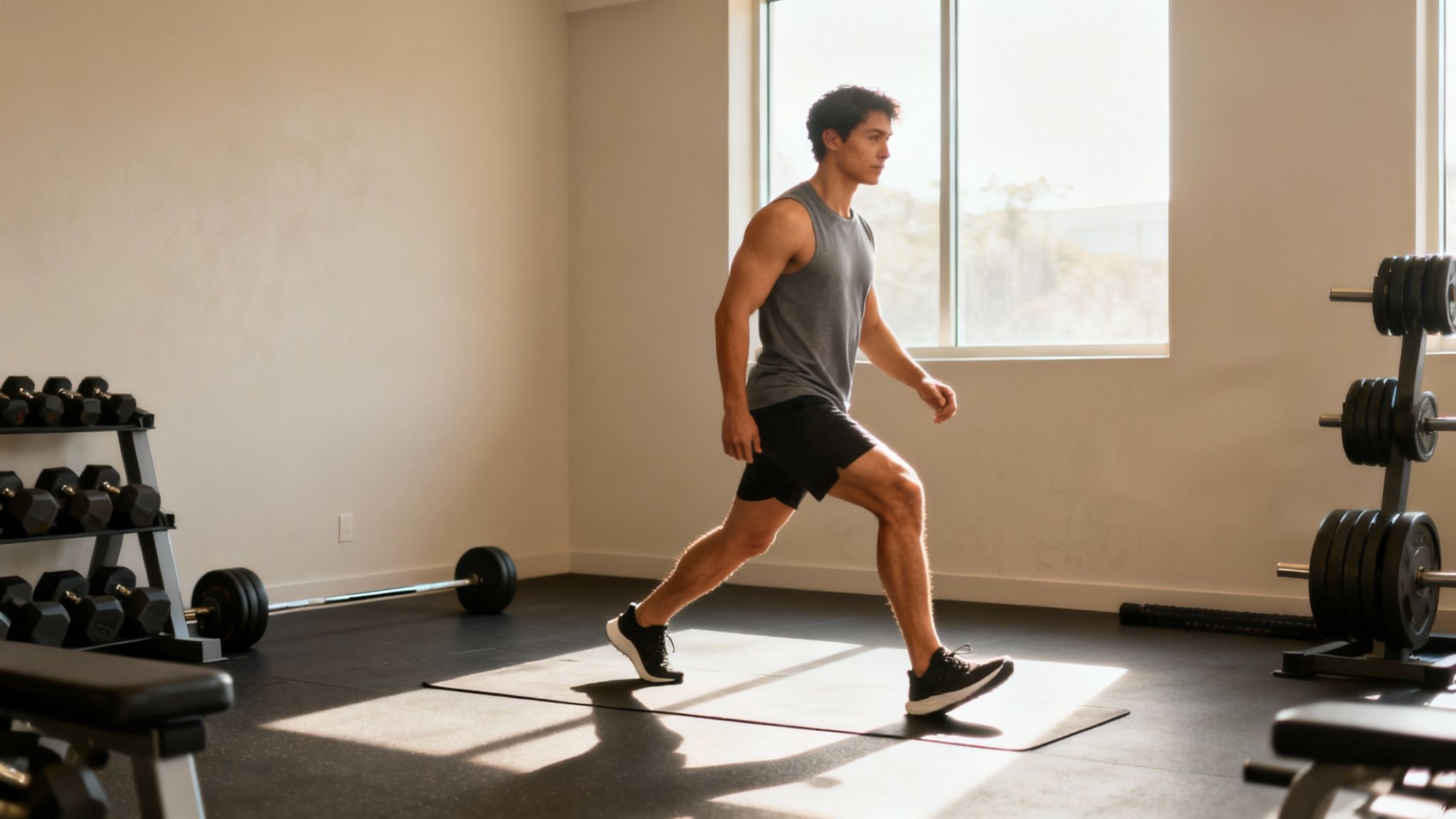
Similarly, a cool-down is the first step in recovery. It allows your heart rate and blood pressure to return to normal gradually, which helps prevent dizziness. For example, finishing a hard run with a few minutes of walking and light static stretching helps muscles transition out of an intense state, reducing soreness and improving flexibility.
8. Track Progress Beyond the Scale
Measure success with more than just a number on the scale. Fixating on weight can be misleading, as it doesn't account for muscle gain or fat loss. A holistic approach to tracking provides a more accurate picture of your progress, keeping you motivated even when weight plateaus.
Adopting this broader perspective helps you recognize non-scale victories. A runner might notice their mile time has dropped, or a strength trainee might lift a heavier weight for the same reps. These performance gains, along with improved energy levels and better fitting clothes, are tangible proof that your hard work is paying off.
9. Gradually Progress Load, Duration, and Intensity
The cornerstone of long term fitness is progressive overload. This involves systematically and gradually increasing the demands placed on your body. Without this, your body adapts and progress stalls. Progressive overload provides a safe, structured path to getting stronger and fitter while minimizing the risk of injury.
This principle applies to every fitness discipline. A runner progressively increases mileage, a cross-trainer adds resistance, and a strength trainee adds weight to the bar. By making small, manageable increments, you consistently challenge your muscles and cardiovascular system to adapt and grow stronger.

10. Adopt a Beginner Friendly Nutrition Approach
You cannot out train a poor diet. For beginners, nutrition doesn't need to be complex. Focusing on foundational principles like adequate protein intake, whole foods, and proper hydration provides the fuel your body needs to recover, build muscle, and perform.
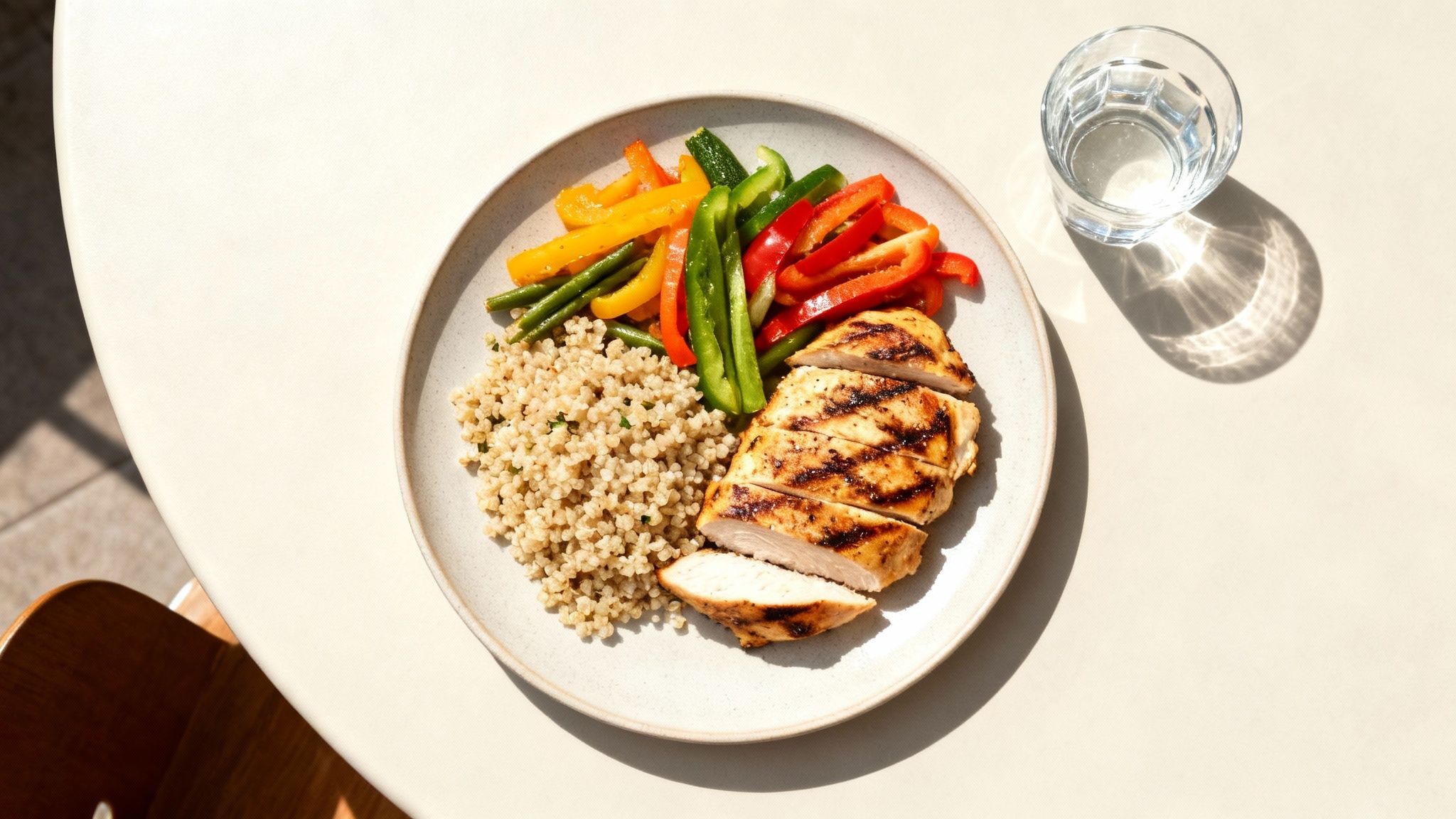
Adopting a beginner friendly approach means aligning food choices with fitness goals. Someone focused on strength training will prioritize protein to facilitate muscle growth, aiming for 1.6-2.2 grams per kilogram of body weight (Jäger et al., 2017). The core idea is to support your new activity level with nutrient dense foods. Consider exploring approaches like intuitive eating for a sustainable relationship with food.
Comparison Review: Well-Being Trends and Methods
Well-Being Method | Target Audience | Key Principles | Pros | Cons |
|---|---|---|---|---|
CrossFit | Individuals seeking high-intensity, community-driven workouts. | Constantly varied functional movements performed at high intensity (HIIT). Combines weightlifting, gymnastics, and metabolic conditioning. | Strong community, measurable progress, highly effective for building strength and endurance. | Higher risk of injury if form is compromised, can be intimidating for absolute beginners, expensive membership. |
Mindful Movement (Yoga/Tai Chi) | Those looking for low-impact exercise focusing on the mind-body connection. | Slow, controlled movements synchronized with breath. Emphasis on flexibility, balance, and mental focus. | Low injury risk, reduces stress, improves balance and flexibility, accessible to all fitness levels. | May not be sufficient for significant cardiovascular or strength gains alone, progress can be slow. |
Peloton (At-Home Fitness) | People who prefer the convenience of working out at home with guided instruction. | Instructor-led classes (cycling, running, strength) streamed live and on-demand. Fosters a virtual community. | Highly convenient, motivating instructors, wide variety of classes, tracks performance metrics. | High initial equipment cost, requires subscription, lacks in-person social interaction and form correction. |
Intuitive Eating | Individuals tired of restrictive diets, seeking a sustainable relationship with food. | Honors hunger and fullness cues, rejects diet mentality. Focuses on body respect and satisfaction from food. | Promotes a healthy long-term relationship with food, reduces stress around eating, sustainable. | May not lead to weight loss for everyone, requires unlearning years of diet culture, can be challenging without professional guidance. |
Embrace the Journey and Keep Moving Forward
Embarking on a fitness journey is a rewarding investment. Success isn't about drastic transformations but laying a strong foundation. This guide's fitness tips for beginners are designed to empower you, not overwhelm you. The path ahead is a personal marathon, not a sprint. Remember, the "perfect" routine is the one you can stick with consistently.
References
Clear, J. (2018). Atomic Habits: An Easy & Proven Way to Build Good Habits & Break Bad Ones. Avery.
Dupuy, O., Douzi, W., Theurot, D., Bosquet, L., & Dugué, B. (2018). An Evidence-Based Approach for Choosing Post-exercise Recovery Techniques to Reduce Markers of Muscle Damage, Soreness, Fatigue, and Inflammation: A Systematic Review With Meta-Analysis. Frontiers in Physiology, 9, 403.
Garber, C. E., Blissmer, B., Deschenes, M. R., Franklin, B. A., Lamonte, M. J., Lee, I. M., Nieman, D. C., & Swain, D. P. (2011). American College of Sports Medicine position stand. Quantity and quality of exercise for developing and maintaining cardiorespiratory, musculoskeletal, and neuromotor fitness in apparently healthy adults: guidance for prescribing exercise. Medicine and Science in Sports and Exercise, 43(7), 1334–1359.
Jäger, R., Kerksick, C. M., Campbell, B. I., Cribb, P. J., Wells, S. D., Skwiat, T. M., Purpura, M., Ziegenfuss, T. N., Ferrando, A. A., Arent, S. M., Smith-Ryan, A. E., Stout, J. R., Arciero, P. J., Ormsbee, M. J., Taylor, L. W., Wilborn, C. D., Kalman, D. S., Kreider, R. B., Willoughby, D. S., Hoffman, J. R., Krzykowski, J. L., & Antonio, J. (2017). International Society of Sports Nutrition Position Stand: protein and exercise. Journal of the International Society of Sports Nutrition, 14, 20.
Nishida, K., Suda, Y., Fukuhara, K., Iwanaga, H., Yamashita, M., Akiyama, Y., & Ohta, Y. (2018). The effect of shoe and insole on the medial longitudinal arch. Journal of Physical Therapy Science, 30(6), 843–846.
Rippetoe, M., & Kilgore, L. (2011). Starting Strength: Basic Barbell Training. The Aasgaard Company.
Ready to build your foundation with the right gear? The journey to a healthier you starts from the ground up. At Flourish-Everyday, we specialize in curating high-performance athletic footwear and wellness essentials specifically chosen to support beginners. Explore our expertly selected collections at Flourish-Everyday to find the perfect tools to make your first steps safe, comfortable, and effective.

