Hydration Tips for Athletes: Quick Tips for Peak Performance

Updated: Jan 20
If you're thirsty, drink. Common sense, right? How important is it, and does it really matter to optimal performance? Fluid balance is more than just quenching thirst; it's the bedrock of athletic performance, influencing everything from muscle function to cognitive focus. For dedicated athletes, a mere 2% loss of body weight through sweat can significantly impair endurance and reduce power output. This guide moves beyond generic advice like "drink eight glasses a day" and offers a collection of actionable, science-backed hydration tips for athletes designed for peak performance.

We will explore personalized strategies that empower you to calculate your specific sweat rate, master electrolyte balance, and create a dynamic hydration plan that fuels your goals. The difference between a personal best and a subpar performance often comes down to these crucial details. This comprehensive listicle provides the tools you need to build an elite hydration strategy, ensuring you are prepared to perform at your absolute best.
Article Index:
Pre-Exercise Hydration Protocol: Starting your workout optimally hydrated.
Real-Time Sweat Rate Assessment: Personalizing your fluid intake.
Sodium and Electrolyte Supplementation: Why water isn't always enough.
Carbohydrate-Electrolyte Drinks for Performance: Fueling and hydrating simultaneously.
Individualized Hydration Schedules: Creating a plan unique to you.
Hyperhydration and Fluid Loading Techniques: Advanced strategies for extreme conditions.
Post-Exercise Rehydration Recovery Protocol: Maximizing recovery for your next session.
Temperature-Adjusted Hydration Strategies: Adapting to your environment.
Gut Training and Tolerance Development: Training your stomach to handle more.
Hydration Monitoring Through Urine Color and Body Weight: Simple, daily checks for success.
1. Pre-Exercise Hydration Protocol
Optimal performance begins long before the first rep or stride. A structured pre-exercise hydration protocol is a foundational strategy to ensure you start training sessions in a state of euhydration (optimal body water content). This isn't about chugging water right before you start; it's a timed approach designed to maximize fluid absorption while giving your body time to excrete any excess.
This method, endorsed by leading organizations like the American College of Sports Medicine (ACSM), prevents the performance crushing effects of starting an activity already dehydrated. It also helps avoid the discomfort of drinking too much too close to your start time.

How to Implement a Pre-Hydration Strategy
The goal is to gradually increase your fluid levels. A proven approach involves a two stage process:
2 to 4 Hours Before Exercise: Consume approximately 5-10 milliliters of fluid per kilogram of body weight (or about 400-600 mL for most athletes). This gives your kidneys time to process the fluids.
10 to 20 Minutes Before Exercise: Drink another 200-300 mL (about 7-10 oz). This final top off ensures your fluid stores are full as you begin.
Practical Application and Key Tips
This protocol is highly adaptable. For intense workouts lasting over an hour, consider a beverage containing sodium and carbohydrates. The sodium helps your body retain fluid, while carbohydrates top off muscle glycogen stores. Your hydration strategy should work with your overall fueling plan. Understanding how fluids and nutrients interact is key to unlocking peak performance. For a deeper dive, explore this guide to pre- and post-workout nutrition for maximum results.
2. Real-Time Sweat Rate Assessment
Generic hydration advice fails to account for one crucial variable: you. A real time sweat rate assessment is a personalized method for determining how much fluid you lose during exercise. It moves beyond one-size-fits-all recommendations, allowing you to create a hydration strategy tailored to your unique physiology and training conditions.
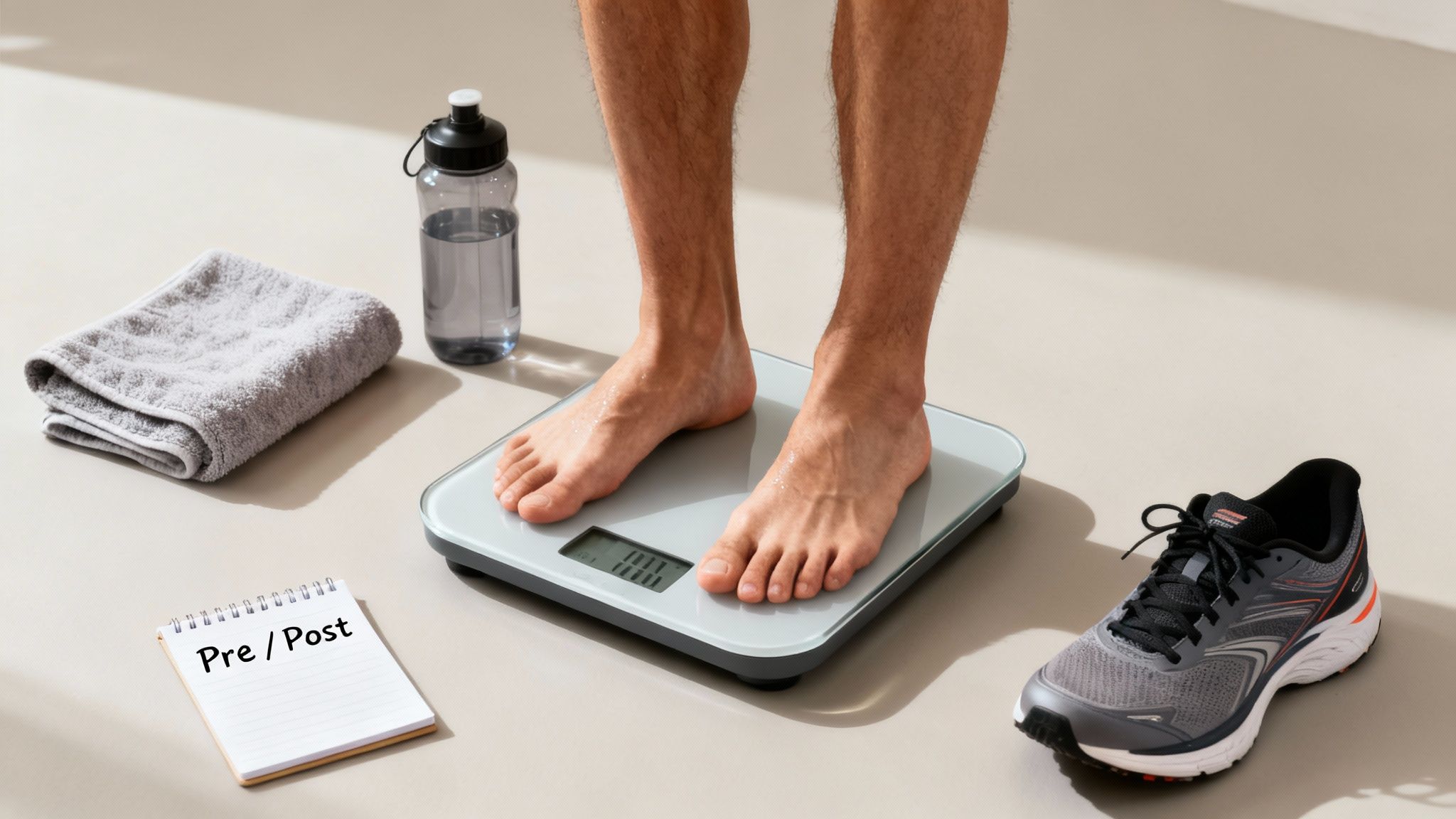
This evidence based approach involves a simple before and after weigh in to calculate your fluid loss per hour. It provides invaluable data, transforming your hydration plan from guesswork into a precise science. For athletes, understanding this personal metric is one of the most effective hydration tips for improving endurance.
How to Implement a Sweat Rate Assessment
The goal is to precisely measure your body weight change over a set period of exercise, typically one hour.
The Calculation: The formula is: (Pre-exercise weight - Post exercise weight) + Fluid consumed - Urine output = Total sweat loss. To find your hourly rate, divide this total by the exercise duration in hours. Each kilogram of weight lost equals about one liter of fluid.
The Process: Weigh yourself nude right before your workout. Perform a one hour session at your typical training intensity. Track every milliliter of fluid you drink. Afterward, towel off completely and weigh yourself nude again on the same scale.
Practical Application and Key Tips
This method is essential for any serious athlete. A marathon runner might discover they lose 800 mL/hour, while a CrossFit athlete might lose over 1.5 L/hour during an intense session. For the most accurate data, perform this test on three separate occasions under similar conditions and average the results. Re-test every 2-3 months or when your fitness or environment changes. Your sweat rate provides the foundation for your in activity hydration plan. To explore the relationship between sweat and training, read more about optimal workout duration for maximum gains.

3. Sodium and Electrolyte Supplementation
While water is the cornerstone of hydration, for sustained athletic efforts, it's often not enough. Strategic electrolyte supplementation, particularly with sodium, is a critical component of advanced hydration tips for athletes. This approach maintains the delicate balance of minerals essential for nerve signaling, muscle contraction, and fluid retention.
When athletes sweat, they lose not just water but also crucial electrolytes like sodium, potassium, and magnesium. Replenishing with plain water alone can dilute blood sodium, a dangerous condition known as hyponatremia. Adding electrolytes ensures your body can absorb and hold onto the fluid you consume.
How to Implement an Electrolyte Strategy
The key is to match your intake with your sweat losses, especially during workouts over 60-90 minutes or in hot conditions.
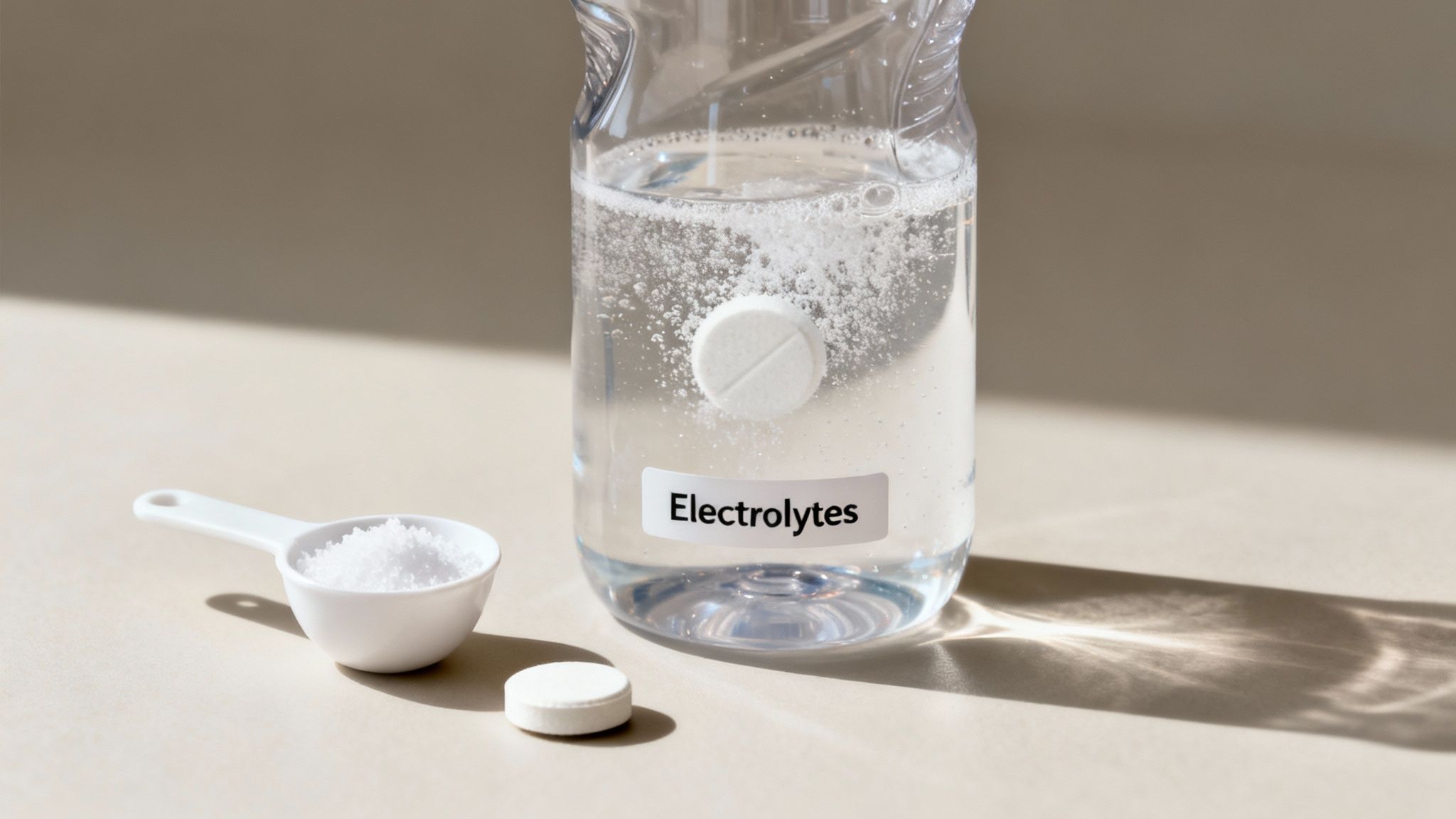
During Exercise: Aim to consume 300-600 mg of sodium per hour. This often means drinking a sports beverage containing 500-700 mg of sodium per liter.
Start Early: Begin sipping your electrolyte drink 30-45 minutes into your activity to stay ahead of losses.
Choose a Blended Solution: For endurance events, a beverage with a 4-8% carbohydrate solution alongside sodium is ideal.
Practical Application and Key Tips
An ultramarathoner might use a precise electrolyte powder mix, while a CrossFit athlete may rely on a ready to drink option. Trail runners often carry lightweight electrolyte tablets. To fully grasp their importance, it's beneficial to learn about understanding what electrolytes do for the body. Always test your electrolyte strategy during training to avoid gastrointestinal distress on race day. For workouts under an hour, plain water is typically sufficient.
4. Carbohydrate-Electrolyte Drinks for Performance
For endurance activities lasting over an hour, hydration and fueling are deeply intertwined. Carbohydrate electrolyte drinks are engineered to solve two problems at once: they replace fluids and electrolytes while supplying working muscles with energy. This dual action approach prevents both dehydration and glycogen depletion.
This strategy, backed by decades of research, is the cornerstone of modern endurance nutrition. By combining fluids, electrolytes, and carbohydrates, these beverages optimize absorption rates in the gut, delivering fuel and hydration more efficiently than water alone.
How to Implement a Carb-Electrolyte Strategy
The goal is to provide a consistent stream of fuel and fluids.
Timing Your Intake: For efforts over 60 minutes, begin sipping your drink around the 30-minute mark. Continue consuming 150-250 mL every 15-20 minutes.
Carbohydrate Concentration: Aim for a 4-8% carbohydrate concentration (4-8 grams of carbs per 100 mL of fluid). This range is ideal for rapid absorption without causing stomach issues.
Practical Application and Key Tips
This approach is highly effective for marathon runners, triathletes, and CrossFit competitors. For exercise lasting over 2.5 hours, aim for a total carbohydrate intake of 60-90 grams per hour. To achieve this, use products with multiple carbohydrate sources (e.g., glucose and fructose) to increase your body's maximum absorption rate. Integrating this strategy is crucial for endurance events. To build a comprehensive plan, explore this guide to developing your marathon training nutrition plan.
5. Individualized Hydration Schedules
Moving beyond generic advice is a hallmark of an advanced athletic strategy. An individualized hydration schedule is a personalized fluid intake plan based on your unique physiology, including sweat rate, body weight, exercise intensity, and environmental conditions. It ditches one-size-fits-all rules for a data driven approach.
This method, a cornerstone of coaching guidelines from organizations like USA Track & Field, acknowledges that every athlete's fluid needs are different. Customizing your plan prevents both under hydration and over hydration.
How to Implement an Individualized Schedule
The core of this strategy is understanding your personal sweat rate. Once you have a baseline, you can create a structured plan.
Calculate Your Sweat Rate: As described in section 2, weigh yourself before and after a one-hour training session to determine your fluid loss. For example, losing 1.5 lbs is equivalent to about 24 oz (or ~700 mL).
Create a Timed Plan: Based on your sweat rate, devise a drinking schedule. The goal is to replace 75-90% of fluid losses during exercise. If your sweat rate is 800 mL/hour, a plan to drink 200 mL every 15 minutes would be a good start.
Practical Application and Key Tips
This approach requires some initial effort but pays significant dividends. A CrossFit athlete might discover their sweat rate is 30% higher on high humidity days and can proactively increase intake. Keep a log of conditions, intensity, intake, and how you felt to refine your plan over time. For more on how elite athletes manage this, explore resources from Running USA.

6. Hyperhydration and Fluid Loading Techniques
For athletes facing extreme endurance challenges or intense heat, standard protocols may not be enough. Hyperhydration, or fluid loading, is an advanced strategy to deliberately increase total body water content before an event. This creates a fluid reservoir, delaying the onset of dehydration.
This technique is a proactive defense, particularly valuable when fluid intake opportunities are limited or sweat rates are high. It works by expanding plasma volume, which enhances cardiovascular function and improves the body's ability to regulate core temperature.
How to Implement a Hyperhydration Strategy
Proper execution is crucial to gain benefits without negative side effects.
2 to 3 Hours Before the Event: Drink 400-600 mL of a beverage containing a small amount of carbohydrates and sodium.
Optional Glycerol Protocol: For elite protocols, some athletes add glycerol (1.0-1.2 g/kg of body weight) to their fluid. Glycerol helps the body retain more water, but it must be tested extensively in training due to potential side effects.
Practical Application and Key Tips
This is not a daily strategy; it is reserved for the most demanding conditions, such as desert ultramarathons or multi day competitions in summer heat. Always test your hyper hydration strategy multiple times during training sessions that mimic race day intensity and conditions.
7. Post Exercise Rehydration Recovery Protocol
Recovery is a race against time to restore what was lost. A post exercise rehydration protocol is a systematic approach to replenish fluids and electrolytes, ensuring you’re prepared for the next session. This is an aggressive strategy to fully rehydrate the body, especially when recovery time is short.
This method, supported by research from the International Society of Sports Nutrition, is critical for athletes with multiple daily sessions. It aims to replace 150% of the fluid lost during exercise to account for ongoing urinary losses.
How to Implement a Rehydration Recovery Strategy
The goal is rapid and complete fluid restoration.
Calculate Your Needs: Weigh yourself before and after exercise to determine fluid loss. For every kilogram (2.2 lbs) of body weight lost, consume 1.5 liters (50 oz) of fluid.
Time Your Intake: Begin rehydrating within 30-60 minutes post-exercise. Spread your total intake over the next 4 to 6 hours to maximize absorption.
Practical Application and Key Tips
This protocol is essential for athletes in demanding scenarios. A CrossFit competitor might drink a 1.5-liter electrolyte beverage over several hours after losing 1kg during a workout. Your rehydration beverage should contain sodium (approx. 300-500mg per 500ml) to help the body retain fluid and stimulate thirst. Pairing fluids with a meal containing carbohydrates and protein can enhance recovery. For more on optimizing this, review this guide to mastering post-exercise nutrition and hydration.
8. Temperature Adjusted Hydration Strategies
Your body’s hydration needs fluctuate dramatically with the environment. A temperature adjusted hydration strategy involves proactively modifying your fluid and electrolyte intake based on external conditions like heat, cold, humidity, and altitude. This approach is critical for athletes who train or compete in diverse climates.
This strategy, supported by research from the National Athletic Trainers' Association (NATA), moves beyond a one-size-fits-all plan. It acknowledges that environmental stress directly impacts sweat rate and fluid loss.
How to Implement Environment-Specific Hydration
The core principle is to anticipate the environment's impact and adjust accordingly.
Heat & Humidity: Increase fluid intake by 15-20% and prioritize beverages with higher sodium content.
Altitude: Increase daily fluid intake by 1.0-1.5 liters to compensate for increased respiratory fluid loss.
Cold: Thirst response is often blunted. It is crucial to drink on a schedule, not by thirst. Using warm or room-temperature fluids can help.
Practical Application and Key Tips
This strategy is non-negotiable for athletes pushing their limits. For hot conditions, use the Wet Bulb Globe Temperature (WBGT) if available, as it provides a more accurate measure of heat stress. Testing these adjustments during training is essential to avoid GI distress on race day.
9. Gut Training and Tolerance Development
The most sophisticated hydration plan is useless if your gut can't handle it. Gut training is the systematic process of "teaching" your digestive system to absorb more fluids and nutrients during exercise, minimizing the risk of cramps, bloating, and other gastrointestinal (GI) distress. This concept treats the gut like a muscle: it adapts to the stress you place upon it.
By progressively increasing the volume and concentration of fluids and fuel during training, you enhance its ability to process them efficiently.
How to Implement a Gut Training Strategy
This requires a patient, structured approach over a 6-8 week training block.
Start Conservatively: Begin with a fluid and fuel intake you know you can tolerate (e.g., 400-500 mL of fluid and 30g of carbs per hour).
Increase Incrementally: Each week, increase your intake by a small amount, roughly 5-10%.
Practice Specificity: Use long workouts to simulate race day conditions exactly, consuming the same drinks and gels you plan to use.
Practical Application and Key Tips
This strategy is vital for endurance athletes. Always train with the combined nutrition strategy you plan to use on race day. The interaction between sugars and fluid volumes is what often triggers GI issues. Your gut's overall health is the foundation of this training. Supporting it by understanding what prebiotics and probiotics are for gut health can provide an advantage.
10. Hydration Monitoring Through Urine Color and Body Weight
Some of the most effective tools for assessing hydration are a scale and a toilet. Monitoring urine color and daily body weight are simple, evidence backed methods promoted by the National Athletic Trainers' Association (NATA) for assessing your hydration status in real time. This low-tech approach provides immediate, actionable feedback.
These daily checks empower you to make informed adjustments to your fluid intake, preventing dehydration before it compromises training.
How to Implement Daily Hydration Monitoring
The goal is to establish a consistent baseline and recognize deviations.
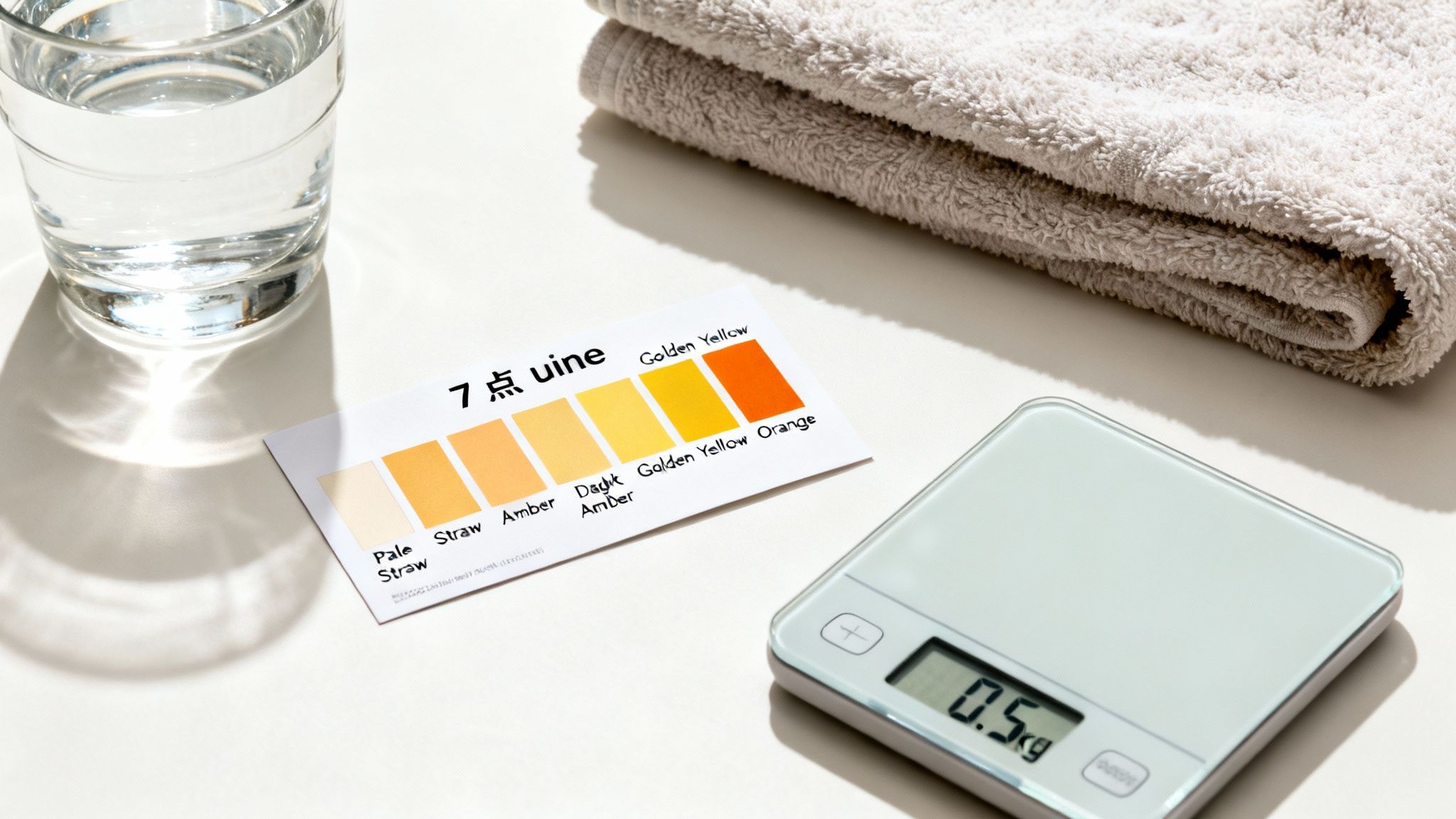
The Urine Color Test: Aim for a pale yellow or light lemonade color (levels 1-3 on a 7-point chart). Dark apple juice or brown colors signal significant dehydration.
The Body Weight Test: Weigh yourself at the same time each morning after urinating to establish a baseline. A drop of more than 2% after a workout indicates dehydration. For every kilogram of weight lost, replenish with 1.25-1.5 liters of fluid.
Practical Application and Key Tips
Integrating these checks into your daily routine makes hydration management intuitive. Keep a log of your morning weight and urine color alongside training notes to reveal patterns. Be aware that factors like B vitamins can skew urine color results. Consistency is the most crucial part of this monitoring strategy. For more on this, the CDC offers guidelines on heat illness prevention using these methods.

11. Men's and Women's Top Athletic Shoe Reviews
While hydration is critical, proper footwear is foundational to performance and injury prevention. A great shoe provides support, cushioning, and responsiveness tailored to your sport and foot mechanics.
Top Athletic Shoes for Men
Brooks Ghost 15 (Running): Known for its balanced cushioning and smooth ride, making it a reliable daily trainer for neutral runners.
Nike Metcon 9 (Cross-Training): Offers a stable base for lifting, flexibility for agility drills, and durability for rope climbs, making it ideal for CrossFit and HIIT.
Hoka Clifton 9 (Max Cushion Running): Provides exceptional shock absorption for long-distance runners seeking to reduce impact on their joints.
Top Athletic Shoes for Women
ASICS GEL-Kayano 30 (Running): A top choice for runners needing stability to counter overpronation, featuring excellent support and adaptive cushioning.
New Balance Fresh Foam X 880v13 (Running): A versatile workhorse for neutral runners, balancing softness with responsiveness for various distances.
On Cloud X 3 (Cross-Training): A lightweight and agile shoe that excels in mixed workouts, from short runs to gym-based circuit training.
Choosing the right shoe is highly individual. It depends on foot type (neutral, overpronation, supination), arch height, and the primary activity. Visiting a specialty running store for a gait analysis is recommended to find the best fit.
12. Comparison of Wellbeing Trends: Hydration vs. Other Methods
In the pursuit of peak performance, athletes often explore various wellbeing trends. While many offer benefits, proper hydration remains an important biological necessity. Here's how it compares to other popular methods.
Trend/Method | Core Principle | Primary Benefit for Athletes | Scientific Support | Complementarity with Hydration |
|---|---|---|---|---|
Proper Hydration | Maintaining optimal fluid and electrolyte balance in the body. | Sustains performance, regulates temperature, aids nutrient transport, prevents cramping. | Overwhelmingly strong | Foundational; all other methods are less effective in a dehydrated state. |
Cryotherapy | Exposing the body to extremely cold temperatures for short periods. | Reduces inflammation and muscle soreness, speeds up recovery. | Mixed but growing | High; proper rehydration post-workout should precede cryotherapy to support recovery. |
Mindfulness/Meditation | Training the mind to improve focus and reduce stress. | Enhances mental resilience, focus, and reduces performance anxiety. | Strong | High; hydration supports cognitive function, which is the goal of mindfulness training. |
Infrared Saunas | Using infrared light to heat the body directly. | Promotes relaxation, may improve circulation, and aid in detoxification through sweat. | Moderate | Caution needed. Causes significant fluid loss. Aggressive rehydration post-sauna is critical. |
Plant Based Diets | Consuming foods primarily from plants. | Can reduce inflammation, improve cardiovascular health, and support lean body mass. | Strong | High; many plant-based foods have high water content, aiding hydration efforts. |
Conclusion: While trends like cryotherapy and mindfulness offer significant advantages, they are performance optimizers. Hydration is a performance essential. An athlete can perform well without cryotherapy, but performance will inevitably crash without adequate hydration. The most effective approach integrates a solid, science backed hydration plan as the foundation upon which other wellbeing practices are built.
Your Blueprint for Hydration Excellence
We've covered ten key strategies for transforming your approach to fluid intake. The core principle is personalization. Your body is not a static machine. True mastery lies in becoming a student of your own physiology by using techniques like sweat rate assessment and consistent monitoring. The most significant takeaway is to shift from a reactive to a proactive mindset. Elite performance is the result of deliberate and informed preparation.
From Knowledge to Action: Your Next Steps
Conduct a Sweat Rate Test: Pick a typical training session and perform the simple pre and post workout weigh-in. This is a powerful personalization tool.
Log Your Fluids: For three days, track what and when you drink. Compare this log to how you feel during workouts.
Experiment with Electrolytes: If you're a heavy sweater, introduce an electrolyte supplement during a long session. Note the difference in your energy levels.
By adopting this methodical approach, you build a robust, adaptable strategy. These hydration tips for athletes are designed to empower you with control over a critical performance variable. You are the architect of your own athletic potential. Embrace this role and build a new standard of hydration excellence.

13. References
American College of Sports Medicine. (2007). ACSM Position Stand: Exercise and Fluid Replacement. Medicine & Science in Sports & Exercise, 39(2), 377-390.
Casa, D. J., Armstrong, L. E., Hillman, S. K., et al. (2000). National Athletic Trainers' Association Position Statement: Fluid Replacement for Athletes. Journal of Athletic Training, 35(2), 212–224.
Centers for Disease Control and Prevention (CDC). (2017). Criteria for a Recommended Standard: Occupational Exposure to Heat and Hot Environments. DHHS (NIOSH) Publication No. 2016-106.
Gatorade Sports Science Institute (GSSI). (2004). Hydration and Rehydration for the Athlete. SSE #95.
Jeukendrup, A. E. (2011). Nutrition for endurance sports: marathon, triathlon, and road cycling. Journal of Sports Sciences, 29(sup1), S91-S99.
Ready to simplify your electrolyte and recovery strategy? The principles of precise hydration are built into every product we display at Flourish-Everyday, offering clean, effective, and science-backed formulas designed for athletes who demand the best. Explore our website for hydration, gear, and wellness supplements to support your new personalized plan at Flourish-Everyday.
