Boost Your Performance with Recovery Techniques for Athletes

Updated: Dec 18, 2025
Exceptional performance isn't just about grueling workouts; the real secret is to boost your performance with recovery techniques. Think of it as an active, strategic process that rebuilds your body stronger after every single session. It's what separates sustainable progress from frustrating burnout, allowing you to consistently train at your best.
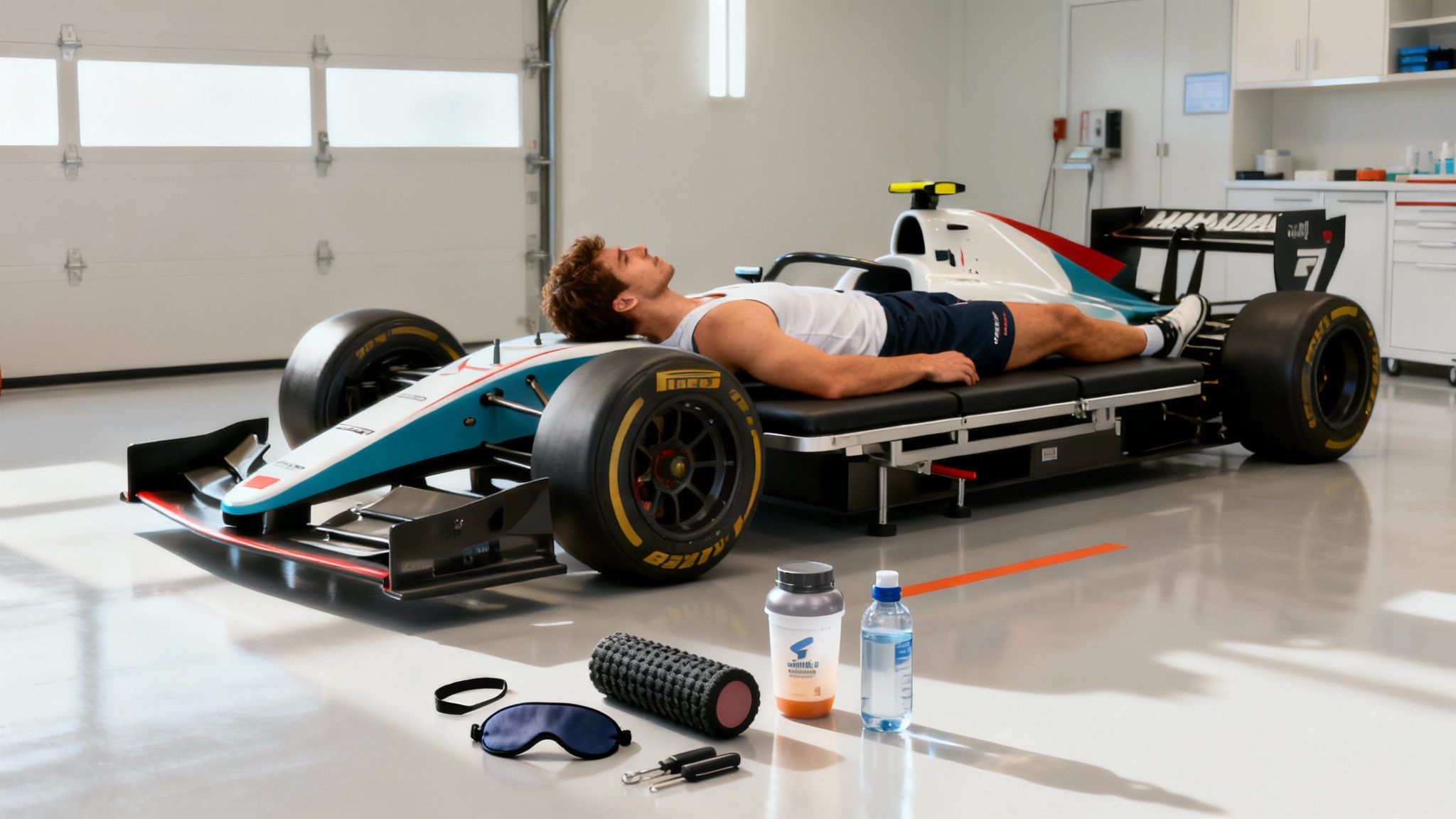
Unlocking The Hidden Engine of Performance
Picture your body as a high performance race car. Training is the race itself, pushing your engine to its limit. Recovery is the essential pit stop where your crew refuels, repairs wear and tear, and fine tunes the engine for the next lap. Without this crucial step, you're just driving until the engine seizes.
This guide will break down the essential pillars of recovery, helping you shift your mindset from passive resting to intelligent rebuilding.
Table of Contents
Core Recovery Pillars: A Quick Glance
Before we dive deep, it helps to understand the core components and their specific jobs. Each one plays a distinct role in getting your body ready for the next challenge.
Recovery Pillar | Primary Function | Best For |
|---|---|---|
Sleep | Facilitates cellular repair, hormone regulation, and memory consolidation. | All athletes, every single night. |
Nutrition | Replenishes energy stores and provides protein for muscle repair. | Immediately post workout and throughout the day. |
Active Recovery | Increases blood flow to flush metabolic waste and reduce muscle stiffness. | After intense sessions or on designated rest days. |
Hydrotherapy | Reduces inflammation and muscle soreness through targeted temperature changes. | Post competition or after demanding workouts. |
Fueling and Sleeping for Superior Repair
While fancy recovery gadgets grab headlines, the two most powerful tools are nutrition and sleep. These are the nonnegotiable pillars that fuel cellular repair and balance hormones. If you want to make immediate, impactful improvements to your recovery, start here.

The Science of Sleep for Recovery
During deep sleep, your body releases human growth hormone (HGH), which is a major player in repairing and building muscle tissue. Research shows that even a single night of poor sleep can impair muscle recovery and cognitive function (1). To truly get the most out of your training, focusing on understanding and enhancing sleep quality is essential.
You can upgrade your sleep hygiene with simple tweaks:
Consistent Schedule: Go to bed and wake up around the same time daily.
Optimal Environment: Keep your bedroom dark, quiet, and cool, ideally between 60-67°F (15-19°C).
Limit Blue Light: Avoid screens for at least an hour before sleep to support melatonin production.

Strategic Fueling for Muscle Repair
Nutrition provides the raw materials needed to restock energy stores and kickstart muscle protein synthesis. The "anabolic window" right after a workout is when your muscles are primed to absorb nutrients. Aim for a combination of carbs and protein within 30 to 60 minutes of finishing your session.
Your post workout meal should restore muscle glycogen (carbohydrates) and supply amino acids for repair (protein). For a deep dive, explore some of the best post-workout recovery foods for faster results. Also, don't forget hydration and electrolytes to replenish what you lost through sweat.
Accelerating Recovery with Smart Movement
We now know that smarter movement, or active recovery, is a far better path to bouncing back than complete rest. Gentle motion turns your body into its own recovery machine, actively clearing metabolic waste.
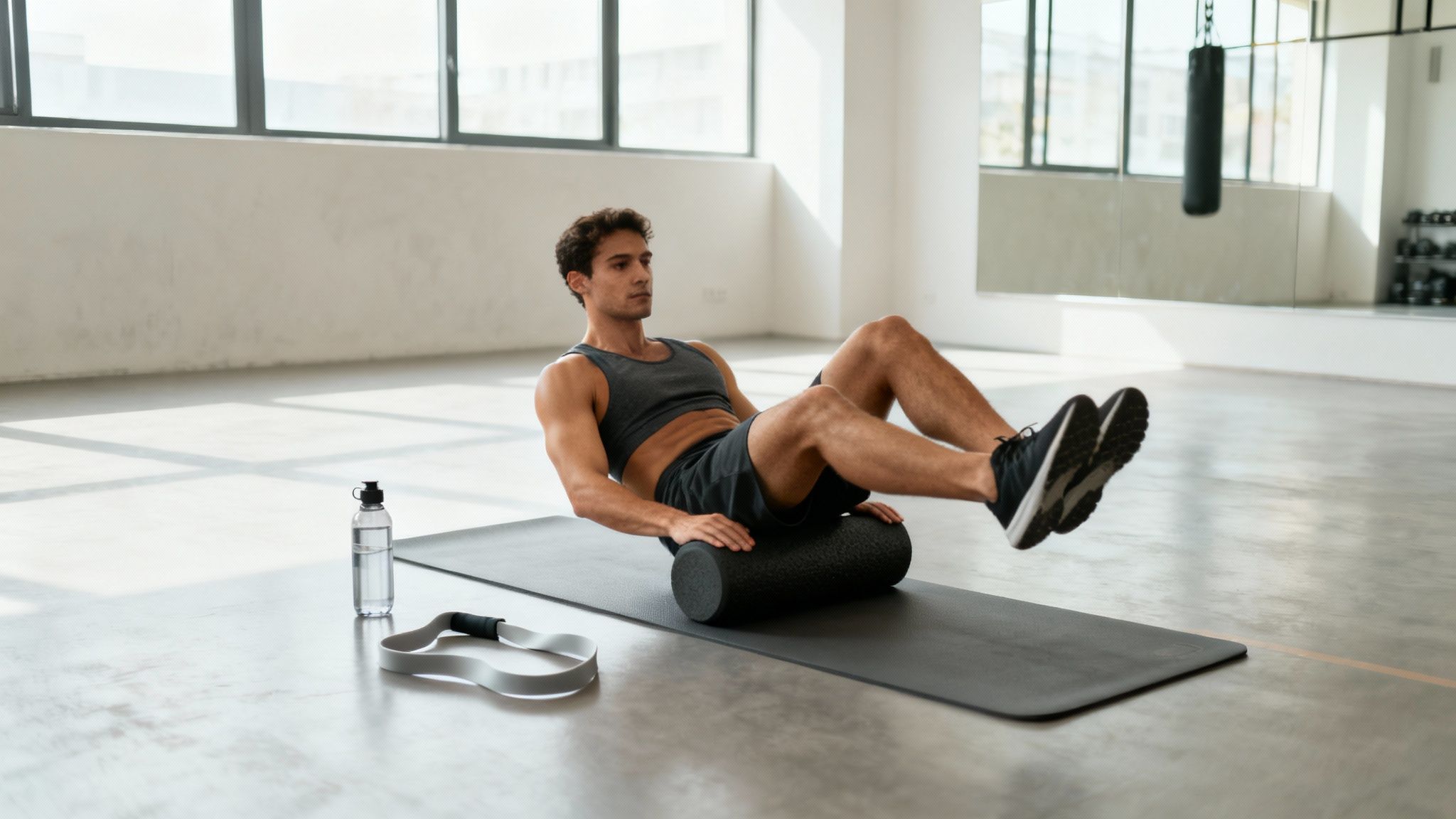
The Power of Gentle Motion
Activities like a gentle jog, swim, or bike ride act as a circulatory pump. This light motion keeps blood flowing, shuttling byproducts like lactate out of your muscles while delivering oxygen rich blood to tired tissues. This isn't just theory; studies show active recovery can lead to a 2.8% improvement in performance metrics compared to passive rest (2). You can dig deeper into these findings at Athlecare.com.
Unlocking Mobility with Self Myofascial Release
Mobility work like foam rolling and dynamic stretching addresses muscle tightness and adhesions. When you use a foam roller, you apply pressure to the fascia, the connective tissue around your muscles, which helps break up adhesions and improve movement. For specific techniques, our practical guide to foam rolling for runners is a great resource.

Using Water for Rapid Muscle Recovery
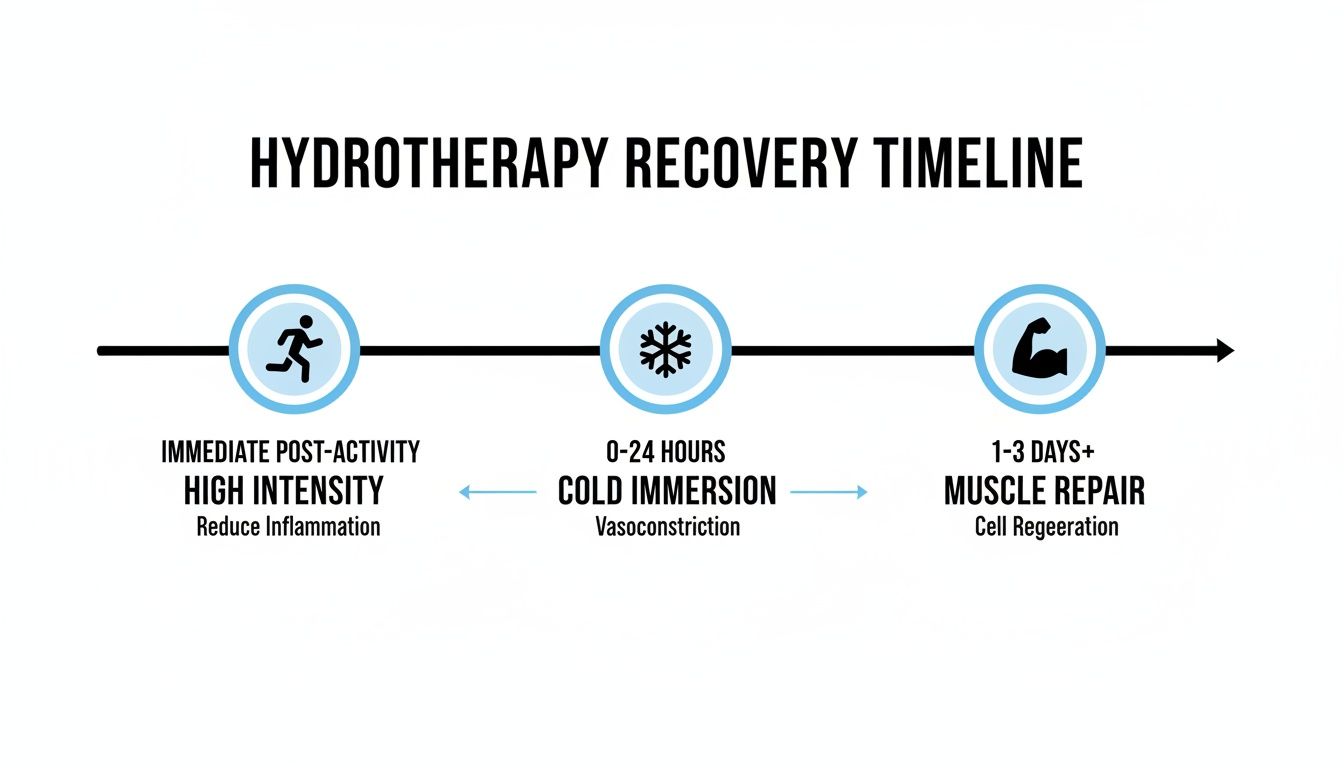
Hydrotherapy uses water temperature to kickstart physiological responses that speed up muscle repair. The two most effective, research backed methods are Cold Water Immersion (CWI), or ice baths, and Contrast Water Therapy (CWT), which alternates between hot and cold.
Cold Water Immersion (CWI) vs. Sauna (Heat Therapy)
This is a classic "it depends" scenario in wellness. CWI is ideal for acute inflammation, while heat therapy is better for chronic stiffness and relaxation.
Feature | Cold Water Immersion (Ice Bath) | Sauna (Heat Therapy) |
|---|---|---|
Mechanism | Causes vasoconstriction, reducing blood flow, inflammation, and nerve activity. | Causes vasodilation, increasing blood flow, delivering oxygen, and relaxing muscles. |
Primary Benefit | Reduces acute muscle soreness and swelling immediately post-exercise. | Relieves chronic muscle tension, improves flexibility, and promotes relaxation. |
Best Time to Use | Immediately (within 2 hours) after a high intensity, muscle damaging workout. | On recovery days or at least 24-48 hours after intense training to aid healing. |
Health Info | May blunt some long term muscle adaptation signals if used too frequently. | Promotes cardiovascular health by mimicking mild exercise and can improve sleep. |
CWI is commonly used for athletes because it directly attacks the inflammation responsible for muscle soreness. When you enter cold water, your blood vessels clamp down (vasoconstriction), limiting swelling and inflammatory responses. Studies show CWI can reduce delayed onset muscle soreness (DOMS) by up to 20-30% with a protocol of 10-15 minutes at 10-15°C (50-59°F) (3). You can review the findings on post-exercise recovery for more data.
Building Your Personal Recovery Blueprint
Knowing the science is one thing, but applying it consistently is what separates good athletes from great ones. The key is to layer different recovery methods to match the stress of each workout.
Sample Weekly Recovery Plan for a Runner
This sample plan integrates different techniques to support everything from speed work to endurance runs.
Day | Workout | Primary Recovery Technique | Secondary Technique |
|---|---|---|---|
Monday | Tempo Run (High Intensity) | Cold Water Immersion: 10-15 minutes to reduce leg inflammation. | Targeted Nutrition: Carb/protein meal within 60 minutes. |
Tuesday | Easy Run (Low Intensity) | Active Recovery: 20-minute walk or gentle cycling. | Foam Rolling: Focusing on quads, hamstrings, and calves. |
Wednesday | Interval Training (High Intensity) | Nutrition: Immediate post-workout shake followed by a balanced meal. | Sleep: Prioritize 8+ hours for hormonal regulation. |
Thursday | Cross-Training (Low Intensity) | Mobility Work: Dynamic stretching and yoga. | Hydration: Focus on electrolyte replacement. |
Friday | Rest Day | Passive Rest: Full day off from structured exercise. | Hydration & Nutrition: Consistent fueling for repair. |
Saturday | Long Run (High Volume) | Cold Water Immersion: 15 minutes post-run to manage soreness. | Nutrition: Replenish glycogen with a carb-rich meal. |
Sunday | Active Recovery | Light Walk & Foam Rolling: Gentle movement to promote blood flow. | Meal Prep: Get ready for the week ahead. |
Comparison of Top Athletic Shoes for Recovery & Performance
The right footwear is a crucial, often overlooked, recovery tool. Post workout shoes should offer cushioning and support to reduce stress on tired feet, while performance shoes must be tailored to your sport.
Top Athletic Shoes for Men
Crocs Unisex Adult Mellow Recovery Slides: designed for post-activity recovery with features like deep, cupped footbeds that provide sink-in comfort and a slow rebound to reduce foot fatigue. This slide provides exceptional cushioning to soothe sore feet after long runs or intense workouts.
Brooks Ghost 15 (Performance): A versatile daily trainer praised for its balanced cushioning and smooth ride, making it ideal for runners who need a reliable shoe that reduces impact stress.
Top Athletic Shoes for Women
OOFOS OOlala Sandal: Featuring proprietary OOfoam™ technology, this sandal absorbs 37% more impact than traditional footwear foams, reducing stress on your feet, knees, and back.
New Balance Fresh Foam X 880v13 (Performance): This shoe offers a great balance of soft cushioning and responsiveness. Its dual layer midsole provides a soft landing and an energetic toe-off, perfect for varied training demands.
Frequently Asked Questions about Athletic Recovery
How soon after a workout should I start my recovery?
Nutrition is the most time sensitive element. Aim to get a mix of carbs and protein within 30-60 minutes. For techniques like ice baths, use them within the first two hours to combat inflammation effectively.
What is the single most important recovery technique?
While a holistic approach is best, the undisputed champion is sleep. Your body performs its most critical repair work during deep sleep, releasing growth hormone and consolidating skills. Aim for a consistent 7-9 hours per night.
Can you overdo recovery?
Yes. More isn't always better. For example, excessive use of ice baths may blunt long term training adaptations by suppressing necessary inflammatory signals. The goal is to support adaptation, not add more stress.
Which is better: ice baths or heat therapy?
They serve different purposes. Use ice baths for acute inflammation immediately after a tough workout. Use heat therapy (like saunas) on rest days or 24-48 hours later to increase blood flow and relax stiff muscles.
Start Recovering Smarter Today
The journey to peak performance is built on smart recovery. We’ve covered the essential recovery techniques for athletes, from foundational sleep and nutrition to advanced hydrotherapy. Recovery isn't a passive afterthought, it's an active part of training.
Your Next Actionable Step
Don't overhaul everything at once. Choose one new technique from this guide and integrate it into your routine this week. Whether it's a 10-minute ice bath or a 20-minute active recovery walk, the key is to start. For more ideas, our guide on top running recovery tips for peak performance offers additional strategies. This commitment will not only reduce injury risk but also ensure you can enjoy your sport for years to come.

References
NZBeds. Sleep on It: Understanding Sleep and Enhancing Sleep Quality. Accessed from https://nzbeds.co.nz/blogs/sleep-tips/sleep-on-it-understanding-sleep-and-enhancing-sleep-quality-in-new-zealand.
Athlecare. The Power of Sports Recovery: Unveiling the Impact on Injury Prevention, Performance Enhancement, and Mental Stamina. Accessed from https://athlecare.com/the-power-of-sports-recovery-unveiling-the-impact-on-injury-prevention-performance-enhancement-and-mental-stamina/.
Aspetar Sports Medicine Journal. Recovery Techniques for Athletes. Accessed from https://journal.aspetar.com/en/archive/volume-4-targeted-topic-post-exercise-recovery/recovery-techniques-for-athletes.
Atlanta Hyperbaric Center. How Hyperbaric Chambers for Athletes Can Accelerate Recovery. Accessed from https://atlantahyperbariccenter.com/blog/hyperbaric-chambers-for-athletes/.
Flourish-Everyday. Best Post-Workout Recovery Foods for Faster Results. Accessed from https://www.flourish-everyday.com/post/best-post-workout-recovery-foods-for-faster-results.
Flourish-Everyday. Foam Rolling for Runners: A Practical Guide. Accessed from https://www.flourish-everyday.com/post/foam-rolling-for-runners-a-practical-guide.
Flourish-Everyday. Top Running Recovery Tips for Peak Performance in 2025. Accessed from https://www.flourish-everyday.com/post/top-running-recovery-tips-for-peak-performance-in-2025.
At Flourish-Everyday, we are dedicated to supporting every step of your fitness journey. From in-depth reviews of the best athletic footwear to evidence-based health information, we provide the tools you need to perform at your best. Find everything you need to inspire and empower your path to a healthier you at https://www.flourish-everyday.com.


