How to Do Reverse Lunges for a Stronger Lower Body

Updated: Jan 22
The reverse lunge is a cornerstone for building lower body strength and stability. To perform it, take a large step back with one foot, lower your hips until both knees are at a 90-degree angle, then push through your front heel to return to the start. This exercise effectively targets the glutes and hamstrings.

Table of Contents

Why Reverse Lunges Deserve a Spot in Your Workout
The reverse lunge is more than just another leg day exercise; it's a foundational movement that builds functional strength, improves balance, and is notably joint friendly. By stepping backward, the movement becomes more controlled and stable compared to a forward lunge. This makes it an excellent choice for individuals at all fitness levels, from beginners to seasoned athletes. This controlled backward step is precisely why the reverse lunge is a safer option for many people, especially those with sensitive knees.
A Knee-Friendly Powerhouse
One of the most significant benefits of the reverse lunge is its kindness to your joints. Forward lunges can place considerable stress on the knee, but stepping backward naturally helps keep your front shin more vertical. This alignment change can reduce pressure on the knee joint by approximately 30%.
This is particularly beneficial for runners who accumulate high mileage, such as 20+ miles a week. The movement also shifts the muscular focus to the posterior chain, the hamstrings, glutes, and calves. A 2022 study found these muscles showed 20-40% greater activation in reverse lunges compared to forward movements [1]. You can find more details on lunge benefits at Healthline.
The reverse lunge is a secret weapon for building a resilient lower body. It trains your body to decelerate and stabilize under control, which translates directly to better performance in sports and everyday life.
Correcting Imbalances and Building Stability
Most people have a dominant leg, which can lead to muscular imbalances and increase the risk of injury over time. As a unilateral exercise, working one leg at a time, the reverse lunge is the perfect solution. It compels your weaker side to work independently and build strength.
This single leg focus offers several advantages:
Enhanced Balance: Stepping backward challenges your proprioception, your body’s awareness of its position in space.
Improved Core Engagement: Your core must activate significantly to maintain an upright torso and prevent instability.
Better Hip Mobility: The lunge provides a gentle stretch for the hip flexor of the back leg, helping to counteract tightness from prolonged sitting.
Incorporating this move into your routine is a strategic way to build a balanced, powerful, and injury resistant lower body, setting the stage for more advanced strength training. It's useful to compare the reverse lunge with the more common forward lunge. While they appear similar, they target the body in subtly different ways.

Quick Guide Reverse Lunge vs Forward Lunge
Feature | Reverse Lunge | Forward Lunge |
|---|---|---|
Stability | More stable; stepping back is a controlled motion. | Less stable; requires more deceleration to control momentum. |
Muscle Focus | Emphasizes glutes and hamstrings more. | Places more emphasis on the quads. |
Joint Impact | Easier on the knees due to a more vertical shin angle. | Can place more stress on the front knee joint. |
Both exercises are effective. However, if you need a knee friendly option that specifically targets the glutes and hamstrings, the reverse lunge is an excellent choice.
Executing The Perfect Reverse Lunge
Proper execution of the reverse lunge is about control, not speed. Every part of the movement, from the initial setup to the final push, is crucial for maximizing benefits and ensuring safety. When form is correct, this exercise becomes a true powerhouse for the lower body.
Begin by standing tall with your feet hip width apart and a slight bend in your knees. Before moving, engage your core by drawing your belly button toward your spine. This action creates the solid foundation needed for the exercise.
Mastering The Descent And Ascent
From your braced stance, take a deliberate step straight back with one foot, landing on the ball of that foot. The step should be long enough to allow both knees to form approximately 90-degree angles as you lower your body. Allow your back knee to hover about an inch from the floor without touching it.
As you descend, focus on keeping your torso upright with your chest lifted. A common error is leaning too far forward, which shifts the work away from your glutes and strains your lower back. Ensure your front knee remains aligned directly over your ankle; do not let it collapse inward or drift past your toes. This alignment is vital for joint protection.
To return to the starting position, drive forcefully through the heel of your front foot. This is where your glutes and hamstrings engage most intensely. Squeeze your glutes and think about pushing the floor away as you bring your back foot forward to meet the front.
This infographic breaks down the main benefits you achieve with this controlled movement: enhanced knee safety, better balance, and significant muscle activation.
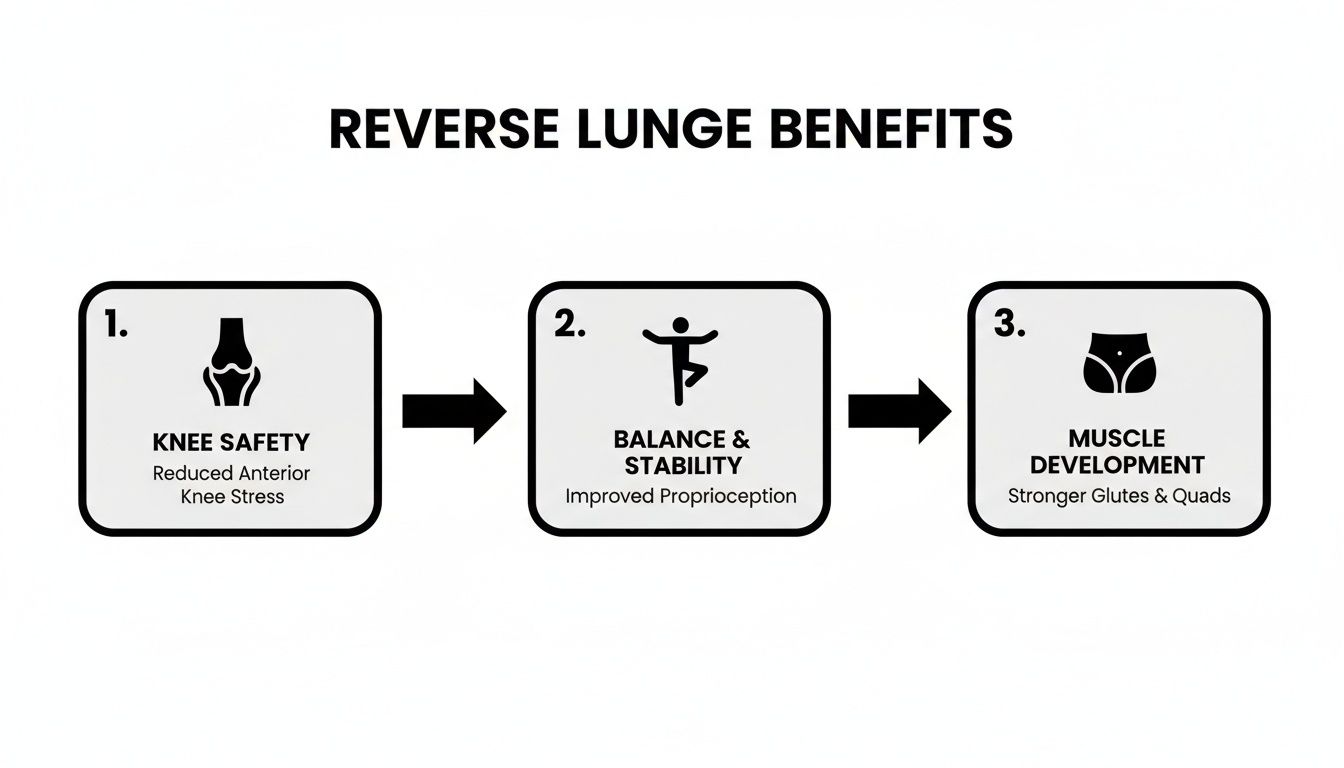
The mechanics of the lunge directly contribute to a stronger posterior chain and improved stability, making it a well rounded and effective exercise.
Essential Cues For Flawless Form
To master how to do reverse lunges correctly, using internal cues can be very effective. Think of these as reminders from a personal trainer during each set.
"Chest Up, Shoulders Back": This cue helps prevent your back from rounding and keeps the focus on your legs. Imagine a string pulling the top of your head toward the ceiling.
"Push the Floor Away": Instead of just thinking "stand up," concentrate on driving your front heel down into the floor to generate maximum power from your glutes.
"Keep Your Hips Square": Your hips should always point straight ahead. Avoid twisting or opening your torso as you step back.
A good reverse lunge should feel smooth and intentional. If you find yourself wobbling or rushing, you're missing the stability benefits. Slow down and control every inch of the movement.
Start with your body weight to master the form before adding resistance. If you're building a routine, you can find other great foundational bodyweight exercises to complement your workout. Focusing on these details will make every rep more effective.
Functional Benefits for Runners and Athletes
The reverse lunge offers more than just muscle growth. For runners and other athletes, it provides specific, functional advantages that improve performance. It is a precision tool for correcting weaknesses, generating explosive power, and increasing injury resilience. One of its key benefits is its ability to target and correct muscle imbalances. As a unilateral movement, it prevents the dominant leg from taking over, forcing the weaker side to build equal strength. This is crucial for runners who need a balanced gait to prevent overuse injuries.

Building Posterior Chain Power
The true value of the reverse lunge lies in its intense focus on the posterior chain, the group of muscles including your glutes and hamstrings. This group is the engine for explosive movements like sprinting, jumping, and accelerating. When you learn how to do reverse lunges with proper form, you target these critical muscles more effectively than with many other common exercises. The backward motion naturally places the load on your glutes and hamstrings, building the raw strength needed for a powerful finish in a race. My guide on strength training for distance runners provides more detail on how a strong posterior chain can boost speed and endurance.
Reverse lunges became a staple in physical therapy following the post-2005 ACL injury epidemic, which still affects over 200,000 athletes in the US annually [2]. Studies show they activate the glutes and hamstrings 28% more than forward lunges, which helps significantly reduce stress on the knee joint.
Enhancing Mobility and Core Stability
For athletes who spend significant time sitting, the reverse lunge also serves as a dynamic stretch for tight hip flexors. As you step back, the hip on your trailing leg opens, helping to counteract the effects of prolonged sitting and improve overall mobility. Simultaneously, the movement requires significant core engagement. Your abs and obliques must work to keep your spine stable and prevent you from wobbling.
A strong, stable core is the foundation for almost every athletic movement. The reverse lunge trains your core to stay braced and active during a dynamic, single-leg motion, which is exactly what it needs to do when you're navigating a technical trail run or powering through a CrossFit WOD.
This combination of benefits makes the reverse lunge essential for any serious athlete. It builds balanced strength, develops explosive power, and improves the mobility and stability needed to perform at your peak.
Fixing the Most Common Form Mistakes
Even with knowledge of the steps, small errors can compromise your reverse lunge results. Correct form is essential for protecting your joints and ensuring the right muscles are engaged. Let’s review common mistakes and how to fix them.
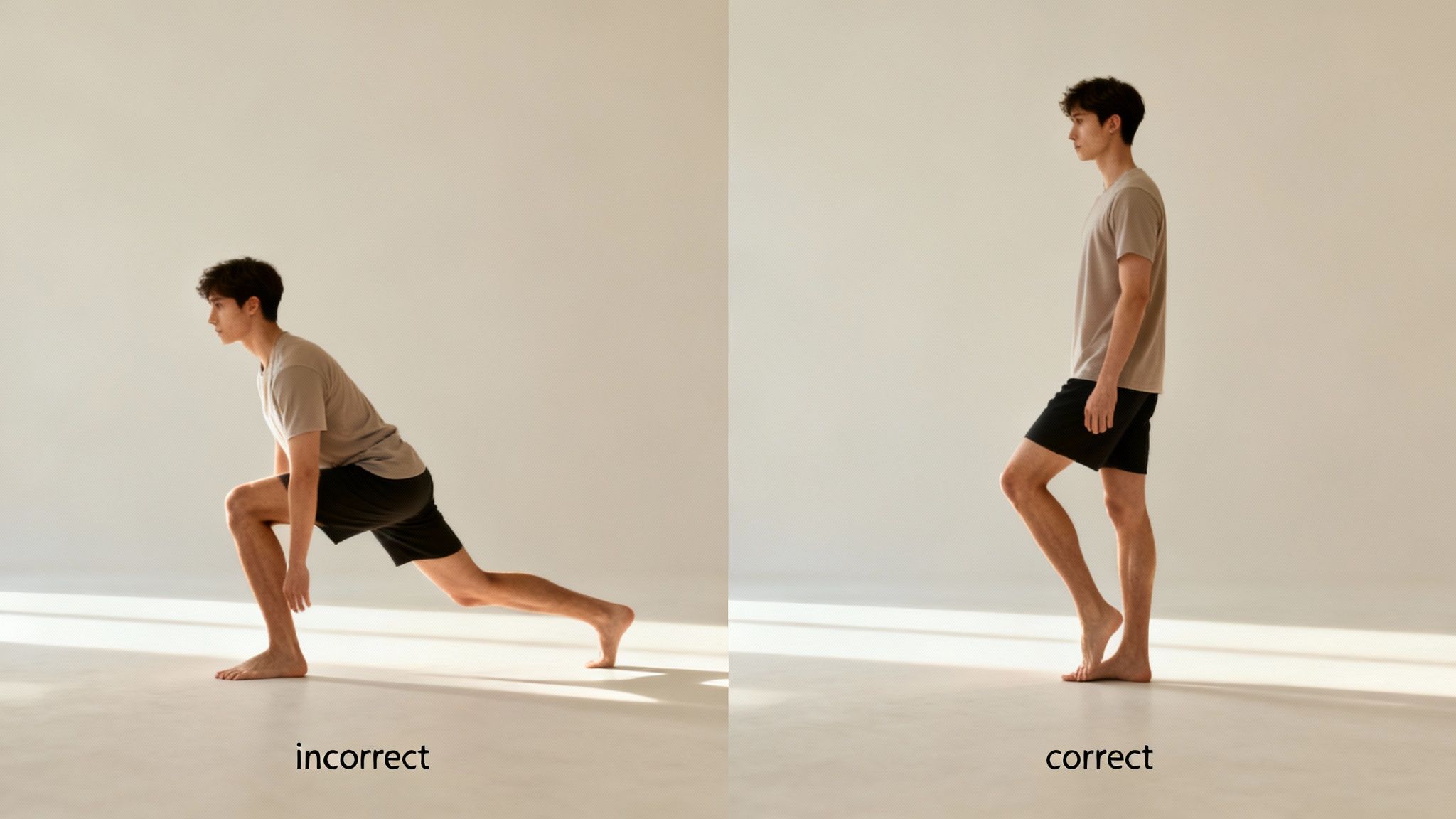
A major issue is allowing the front knee to collapse inward. This often indicates weak glute medius muscles, which are crucial for hip stabilization. When the knee caves in, it places excessive stress on the joint, potentially leading to pain. To fix this, consciously push your front knee slightly outward, keeping it aligned with your second and third toes. Imagine trying to spread the floor apart with your feet. Adding exercises like clamshells and lateral band walks to your warm-up can also help strengthen these key hip stabilizers.
Maintaining an Upright Torso
Another frequent problem is leaning the torso too far forward. While a slight forward hinge is natural, excessive leaning shifts the focus from your glutes to your lower back. This often occurs due to a disengaged core or tight hip flexors. To correct this, keep your chest lifted and shoulders back throughout the movement. Brace your core as if preparing for an impact; this tension will provide the stability needed to stay upright.
Pro Tip: If possible, perform your lunges in front of a mirror. Instant visual feedback is one of the best ways to identify and correct a forward lean or a caving knee in real-time.
Tight hip flexors are often the primary cause, pulling your torso forward and making good posture difficult. For additional help, see our post on how to improve hip flexibility. It offers targeted stretches that can significantly improve your lunge form.
Correcting Your Push-Off
The final major mistake is pushing off from the wrong part of your foot. Many people push from the ball of their back foot or the toes of their front foot, which wastes energy and fails to engage the target muscles. All power to return to the starting position should come from driving through the heel of your front foot. This ensures your glutes and hamstrings are activated to complete the movement. Imagine squishing a bug under your front heel as you press back up to a standing position. This simple cue can instantly improve the effectiveness of each rep.
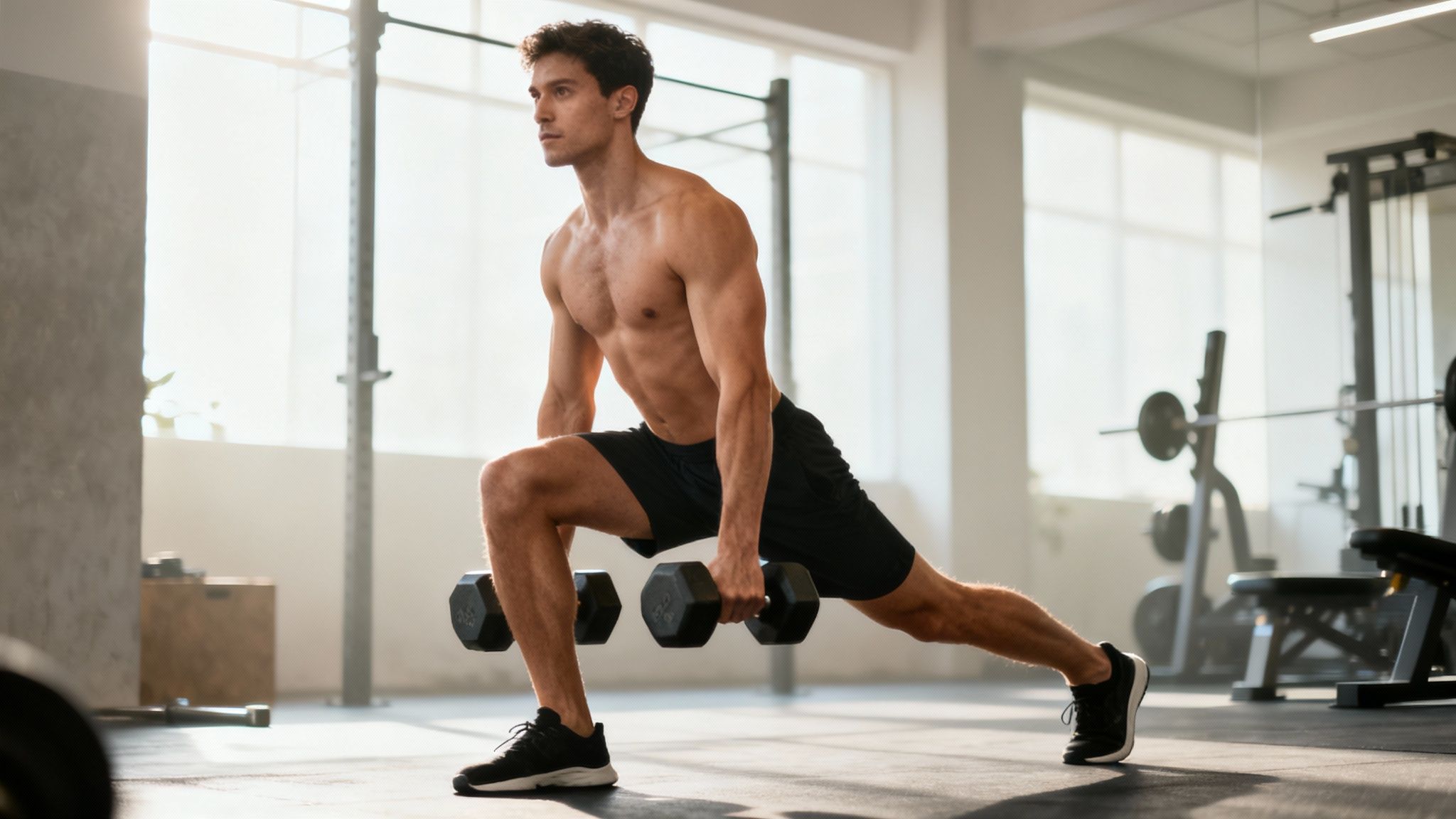
How to Progress and Program Your Lunges
Once you've mastered the bodyweight reverse lunge with solid form, it's time to progress. Advancing the exercise is essential for continued strength gains and avoiding performance plateaus. This progression should be strategic, not just about lifting heavier weights. The core principle for improvement is progressive resistance training, which involves gradually increasing the challenge to your muscles over time. This consistent challenge forces them to adapt and grow.
Adding Resistance for Strength Gains
The most straightforward way to make the lunge more challenging is by adding weight. This forces your muscles to work harder, which is key for building both strength and size.
Here are some effective ways to load your lunges:
Dumbbells or Kettlebells: Holding a weight in each hand is a classic method that also challenges your grip strength and core stability.
Goblet Hold: Holding a single heavier weight at your chest is excellent for core activation and naturally promotes an upright torso.
Barbell: For advanced strength development, a barbell across your upper back allows for the heaviest loads.
Always choose a weight that makes the last two reps of each set challenging but achievable with good form. Quality of movement should always take priority over quantity of weight.
Dynamic Variations for Athleticism
Beyond adding weight, you can make the reverse lunge more dynamic to improve coordination, balance, and explosive power, all of which enhance athletic performance. A popular progression is the reverse lunge with a knee drive. After lunging back, drive forcefully through your front heel to stand up, bringing your back knee forward and up toward your chest in a single, fluid motion. This variation adds a significant balance challenge and mimics running mechanics.
Another great option is the slider reverse lunge. Placing your back foot on a slider disc forces your front leg to control the movement during both the descent and ascent, creating constant tension in the glute and hamstring. For more ways to target these key muscles, explore our ultimate guide to powerful exercises for hamstrings.

Structuring Your Workouts
How you incorporate reverse lunges into your routine depends on your fitness goals. The sets, reps, and rest periods should be tailored to what you aim to achieve. Below is a simple table to guide your programming.
Reverse Lunge Programming for Different Goals
Fitness Goal | Sets | Reps per Leg | Recommended Variation | Rest Period |
|---|---|---|---|---|
Strength | 3-4 | 6-8 | Barbell or Heavy Dumbbells | 90-120 seconds |
Hypertrophy | 3-4 | 8-12 | Goblet or Dumbbell Lunge | 60-90 seconds |
Endurance | 2-3 | 15-20 | Bodyweight or Light Weight | 30-45 seconds |
By intelligently adding weight, incorporating dynamic variations, and programming sets and reps for your specific goals, the reverse lunge can remain a staple in your routine that consistently delivers results.
Your Reverse Lunge Questions Answered
Even after mastering a new exercise, questions can arise. To ensure you feel confident with your reverse lunges, here are answers to some of the most common inquiries.
Which Muscles Do Reverse Lunges Work The Most?
The reverse lunge is a comprehensive lower-body exercise that targets several major muscle groups simultaneously. The primary muscles engaged are the gluteus maximus (the largest muscle in your buttocks) and the quadriceps (the front of your thighs). However, the hamstrings are also heavily involved, controlling the descent and powering the ascent. Additionally, your calves, core, and hip stabilizer muscles work to maintain balance and stability throughout the movement.
Are Reverse Lunges Better Than Forward Lunges For Bad Knees?
For many people, the answer is a resounding, yes! Stepping backward instead of forward alters the exercise's mechanics, making it significantly more knee friendly. The backward motion helps maintain a more vertical front shin, which reduces pressure and shearing force on the kneecap. A forward lunge involves momentum that must be decelerated, which can be stressful on the knee joint. In contrast, the reverse lunge is a more controlled, deliberate movement, making it a preferred variation for individuals with sensitive knees or those undergoing rehabilitation.
Fitness experts often point out that the controlled backward step is inherently more stable. This reduces strain on the patellar tendon, making it a fantastic choice for building strength without flaring up old knee issues.
How Many Reverse Lunges Should I Do In My Workout?
The ideal number of reps and sets depends on your specific fitness goals. Here are some general guidelines:
For General Strength: Aim for 3 sets of 8-12 reps per leg. This range is effective for building a solid strength foundation.
For Muscular Endurance: To build stamina for activities like running, perform 2-3 sets of 15-20 reps per leg.
For Maximal Strength: When lifting heavy to build raw power, reduce the reps. Focus on 3-4 sets of 5-8 reps per leg.
Regardless of your goal, prioritize perfect form over hitting a specific number. Quality always surpasses quantity.
Can I Do Reverse Lunges Every Day?
It is not recommended. Like any strength exercise, your muscles require time for recovery and rebuilding. Training the same muscles daily can lead to overtraining, which hinders progress and increases injury risk. For optimal results, incorporate reverse lunges into your routine 2-3 times per week, allowing at least one day of rest in between sessions. This gives your lower body the necessary 48 hours to recover and grow stronger.
References
[1] Schutz, P., et al. (2022). "Joint-angle-specific muscle-tendon interaction in the human triceps surae during jumping." Journal of Biomechanics.[2] Prodromos, C. C., et al. (2007). "A meta-analysis of the incidence of anterior cruciate ligament tears as a function of gender, sport, and a knee injury-reduction regimen." Arthroscopy: The Journal of Arthroscopic & Related Surgery, 23(12), 1320-1325.
At Flourish-Everyday, we're committed to providing the information you need to build a stronger, healthier lifestyle. From exercise guides to reviews on the best athletic shoes, find everything you need to support your fitness journey at https://www.flourish-everyday.com.