The Ultimate Guide to Strength Training Shoes

Updated: Dec 14, 2025
If you're serious about lifting but still rocking your running shoes in the weight room, you're unintentionally sabotaging your own progress. The very sneakers that are perfect for absorbing impact on a run become a huge liability the moment you have a heavy barbell on your back.
Table of Contents

Why Your Sneakers Are Sabotaging Your Lifts
Think about building a skyscraper on a swamp. It doesn't matter how strong the building is; the unstable ground underneath will compromise the whole structure. This is what happens when you lift in running shoes. Their soft, squishy soles are designed to compress, which is great for jogging but terrible for generating power.
The Problem with a Cushioned Foundation
When you squat or deadlift, your goal is to drive force straight into the floor. Cushioned soles act like sponges, soaking up a huge chunk of that energy before it can be used to move the weight. This "energy leak" means you're not lifting to your full potential.
Even worse, that unstable foundation can wreck your form. As the foam compresses unevenly, it can cause your ankles to roll or your knees to cave inward, seriously increasing your risk of injury. A stable base is non-negotiable for lifting safely and effectively.
Strength training shoes are not an accessory; they are a piece of performance equipment. They create a direct connection to the ground, ensuring every ounce of effort you exert translates directly into moving the weight.
The Role of Stability and Power Transfer
Proper strength training shoes are built with firm, flat, and dense soles. This design provides the solid platform needed for maximum stability and power transfer. It's the difference between pushing a car on concrete versus pushing it on soft sand, the firm surface allows you to apply force directly and efficiently.
This distinction is critical for performance and safety. A solid connection to the floor allows you to:
Generate More Force: A non compressible sole ensures your power goes into the lift, not the cushioning.
Improve Your Form: Stability from the ground up helps you maintain proper alignment in your ankles, knees, and hips.
Reduce Injury Risk: By preventing unwanted movement, you create a safer environment for your joints under heavy loads.
The Anatomy of a High Performance Lifting Shoe
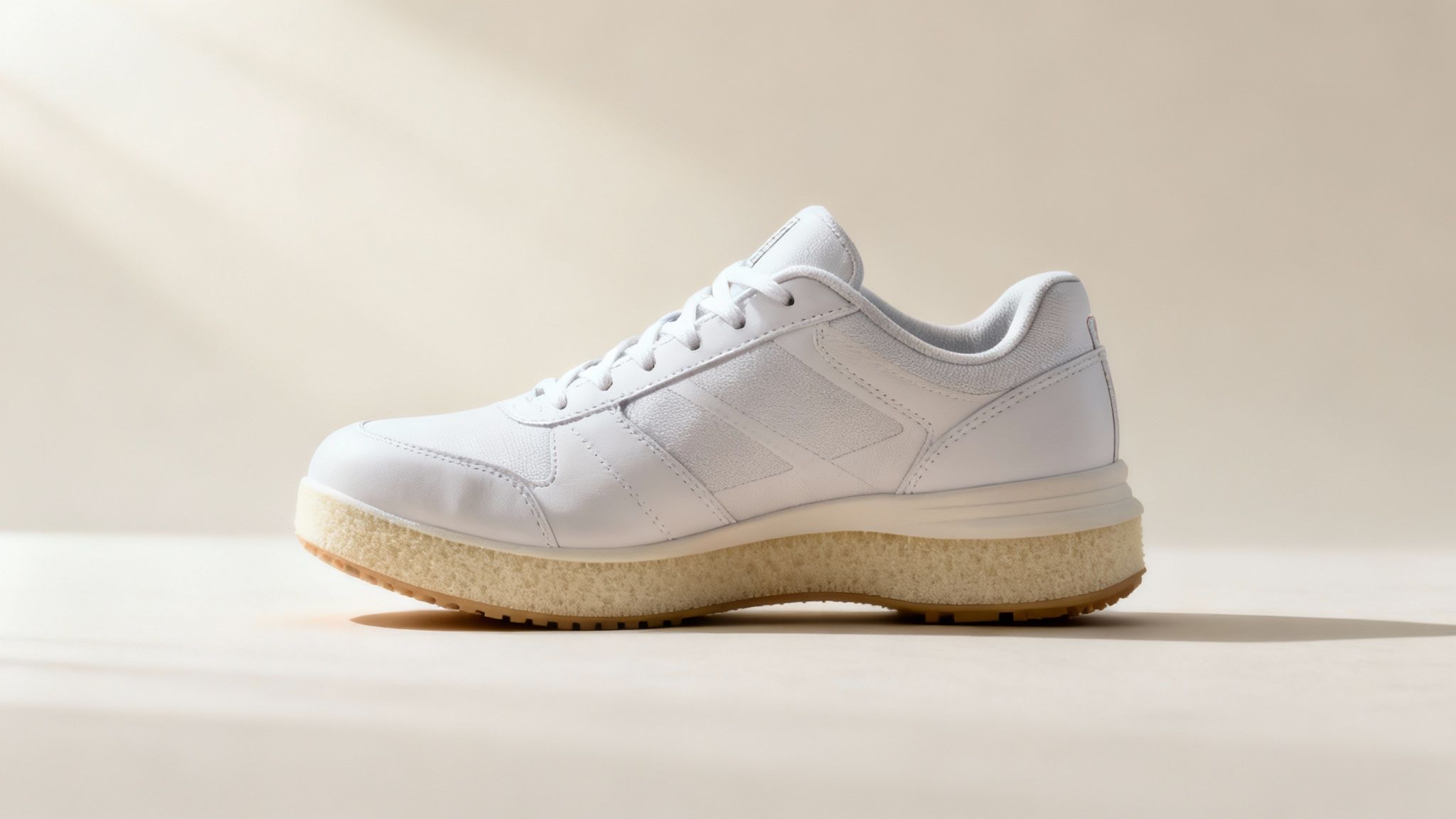
To understand what makes a strength training shoe work, you must look past marketing and see how they're built. Unlike everyday sneakers, every part of a lifting shoe is there for a reason, to make you more stable, help you generate more power, and keep your form locked in.
These shoes are built around flat, non compressible soles perfect for squats and deadlifts. They also pack features like reinforced heel counters and solid arch support for incredible stability. This engineering isn’t just for show; research suggests proper footwear can significantly improve lifting mechanics and reduce injury risk [1].
The Foundation: A Flat, Dense Sole
The most important feature of any lifting shoe is its sole. Trying to lift heavy on cushioned running shoes is a recipe for disaster, as most of your energy gets absorbed.
A real lifting shoe uses a dense, flat rubber outsole that won’t squish under load. This creates a rock solid connection to the ground, letting you transfer 100% of your force straight into the lift. No wasted energy, just raw power. This solid base lets you "feel the floor," giving your brain better feedback to make tiny adjustments and stay balanced.

Stability Through Minimal Heel-To-Toe Drop
Heel-to-toe drop is the height difference between your heel and forefoot. Running shoes often have a high drop (8mm or more) to pitch you forward, but for strength training, the opposite is needed.
Most good lifting shoes have a zero-drop or very low drop (0-4mm). This minimalist design keeps your foot flat, with major advantages:
Enhanced Balance: It helps you spread your weight evenly across your foot.
Improved Ground Connection: Being lower to the ground helps you grip the floor better.
Greater Muscle Activation: It encourages you to use your posterior chain, glutes, and hamstrings, the powerhouse muscles for lifting heavy.
A minimal drop doesn't just make you feel more stable; it fundamentally changes your mechanics for the better, forcing reliance on proper form and muscle engagement.
The Power of a Wide Toe Box
Your feet are your body's natural foundation. When you lift, your toes need room to spread, or "splay," to create the widest, most stable base possible, much like a camera tripod.
Most regular sneakers have a narrow toe box that crams your toes together, ruining this natural stability. Top tier strength training shoes are designed with an anatomical, foot shaped toe box for this reason. This wider design lets your toes splay out naturally, dramatically improving your balance and stability.
Choosing the Right Tool for the Job
Stepping into the gym with the wrong shoes is like bringing a screwdriver to a hammer fight. Every athletic shoe is built for a specific purpose. Matching your shoes to your workout is crucial for performance and safety. Let's break down how a dedicated strength training shoe compares to others.
Strength Training Shoes vs. Running Shoes
The most common mistake is wearing running shoes for lifting. Their design is the exact opposite of what you need. Running shoes have soft cushioning to absorb impact, which is great for a 5k but a liability for lifting.
Stability: The soft foam is unstable. Under a heavy load, it compresses unevenly, creating a wobbly base that can wreck your form.
Power Transfer: The plush cushioning acts as a power sucking sponge, absorbing force instead of transferring it to the weight.
Heel Drop: Most running shoes have a high heel drop, which angles your body forward and can throw off your mechanics in stationary lifts.
A proper strength training shoe provides a flat, dense, and unyielding platform, ensuring every ounce of your effort goes directly into the lift.

Weightlifting Shoes for Specialized Lifts
Weightlifting shoes ("lifters") are a different beast entirely. Their defining feature is a high, solid heel, usually made of hard TPU plastic or wood. They are not all purpose gym shoes.
The elevated heel is essential for Olympic lifts (snatch, clean and jerk) and high bar back squats. It artificially increases ankle range of motion, allowing you to squat deeper with a more upright torso.
A weightlifting shoe is a specialist's tool, perfect for deep squats and Olympic lifts. A strength training shoe is the versatile workhorse for a typical lifting program.
However, the raised heel works against you in other lifts, like deadlifts, by creating a mechanical disadvantage. Their rigidity also makes them impractical for other gym movements.
Cross-Training Shoes: The Jack-Of-All-Trades
Cross-training shoes try to split the difference, built for workouts blending lifting, cardio, and agility drills. They have a firmer sole than a running shoe but more flexibility than a dedicated strength shoe. While more stable than runners, they are still a compromise. The sole isn't as dense or flat as a true strength shoe, meaning you'll lose some power on heavy sets. For anyone whose main goal is getting stronger on big compound movements, a dedicated strength shoe is always the better choice.
Strength Training Shoes vs Other Athletic Footwear
Feature | Strength Training Shoes | Running Shoes | Weightlifting Shoes | Cross-Training Shoes |
|---|---|---|---|---|
Sole Stiffness | Very stiff & dense | Very flexible & soft | Rock solid, inflexible | Moderately stiff |
Cushioning | Minimal to none | Maximum cushioning | None (solid heel) | Light to moderate |
Heel-to-Toe Drop | Flat (0-4mm) | High (8-12mm+) | Very high & elevated | Low to moderate (4-8mm) |
Primary Use | General strength training | Running, walking | Olympic lifting, squats | Varied workouts (HIIT, CrossFit) |
Stability | Maximum | Low (unstable base) | Maximum (but angled) | Good |
Flexibility | Minimal | High | Very low | Moderate |
Finding Your Perfect Pair of Lifting Shoes
Picking the right strength training shoes is about matching the shoe's design to your body, your lifts, and your goals. This is your practical guide to finding a pair that feels built just for you.
Match the Shoe to Your Training Style
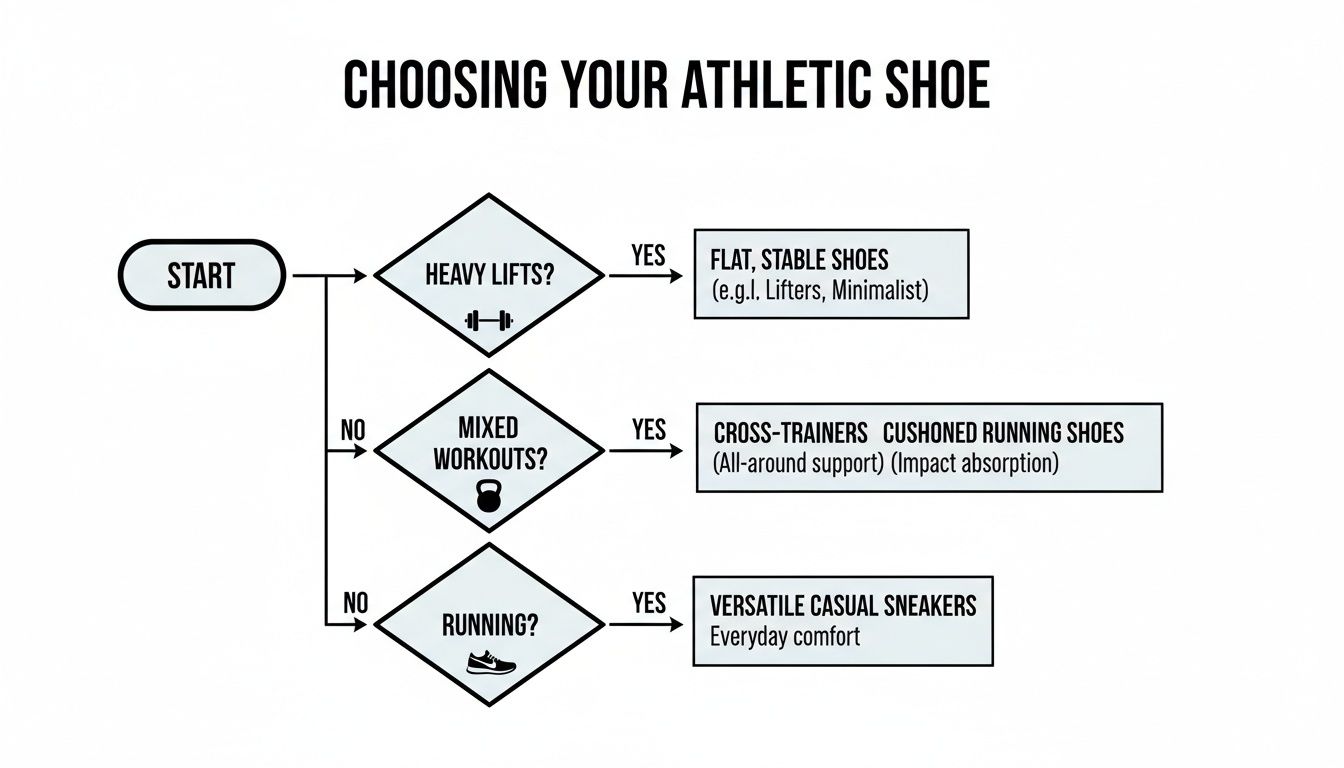
Are you focused on the "big three", squat, bench, and deadlift? A powerlifter needs maximum stability with almost zero sole compression. A flat, dense, and rigid sole is nonnegotiable.
If your gym time is filled with dynamic movements like kettlebell swings or box jumps, you’ll need a shoe with more give. A solid functional fitness shoe offers a stable base but allows more natural foot movement.
For Powerlifting & Heavy Lifting: Prioritize a zero-drop, non compressible sole.
For Bodybuilding: A versatile trainer with a solid, flat base is your best bet.
For Functional Fitness & HIIT: You require a hybrid that offers stability for lifts while providing enough flexibility for explosive movements.
Consider Your Unique Foot Anatomy
Next, consider your foot type. People with flat feet tend to overpronate, where their arches collapse inward. For them, a strength shoe with a firm midsole and decent arch support provides the stability to prevent that collapse. If you have high arches, you might need a shoe with a little more midfoot cushioning, but you still want that solid heel platform.
Your foot type is the blueprint for your stability. Choosing a shoe that complements your natural arch structure is fundamental to building a strong foundation.
Lace up designs remain popular for their superior ankle stability and customizable fit, which is crucial for preventing foot slippage during dynamic lifts. Major markets, driven by brands like Nike and Adidas, account for over 30% of global demand for these supportive designs [2].
The Best Lifting Shoes for Men and Women
Here are top rated models that deliver for both men and women.
Top Choices for Men:
Nike Metcon Series: A fan favorite for functional fitness, offering a stable heel for lifting and a flexible forefoot for sprints and jumps.
Reebok Nano Series: Known for a roomy toe box and durable build, providing a solid platform for varied workouts.
Inov-8 F-LITE Series: Praised for its minimalist design and incredible ground feel, excellent for a more "barefoot" sensation.
Top Choices for Women:
Adidas Powerlift: A weightlifting shoe with a super stable base and slight heel raise, great for improving squat depth.
TYR L-1 Lifter: A newer shoe with a solid reputation, featuring a wide toe box and flat, stable sole perfect for powerlifting.
Vivobarefoot Primus Lite: For the true minimalist, this shoe offers a zero-drop platform and maximum flexibility to encourage natural foot mechanics.
Mastering the Fit and Extending Shoe Lifespan
A perfectly engineered shoe fails if the fit is wrong. Nailing the fit is about performance and safety. A great fit should feel snug, locking down your midfoot and heel, but snug doesn't mean cramped. Your toes need room to spread out naturally for a wide, stable base.
The sweet spot for a lifting shoe is a secure lockdown from heel to mid foot, combined with total freedom for your toes to splay.
Nailing the Perfect Fit
Try on shoes in the afternoon or evening when your feet are slightly swollen.
Check the Length: You want about a half-inch of space between your longest toe and the end of the shoe.
Assess the Width: The shoe should be wide enough for your toes to spread without getting squeezed.
Wear Your Workout Socks: Always try on shoes with the same socks you wear to the gym.
Extending the Life of Your Investment
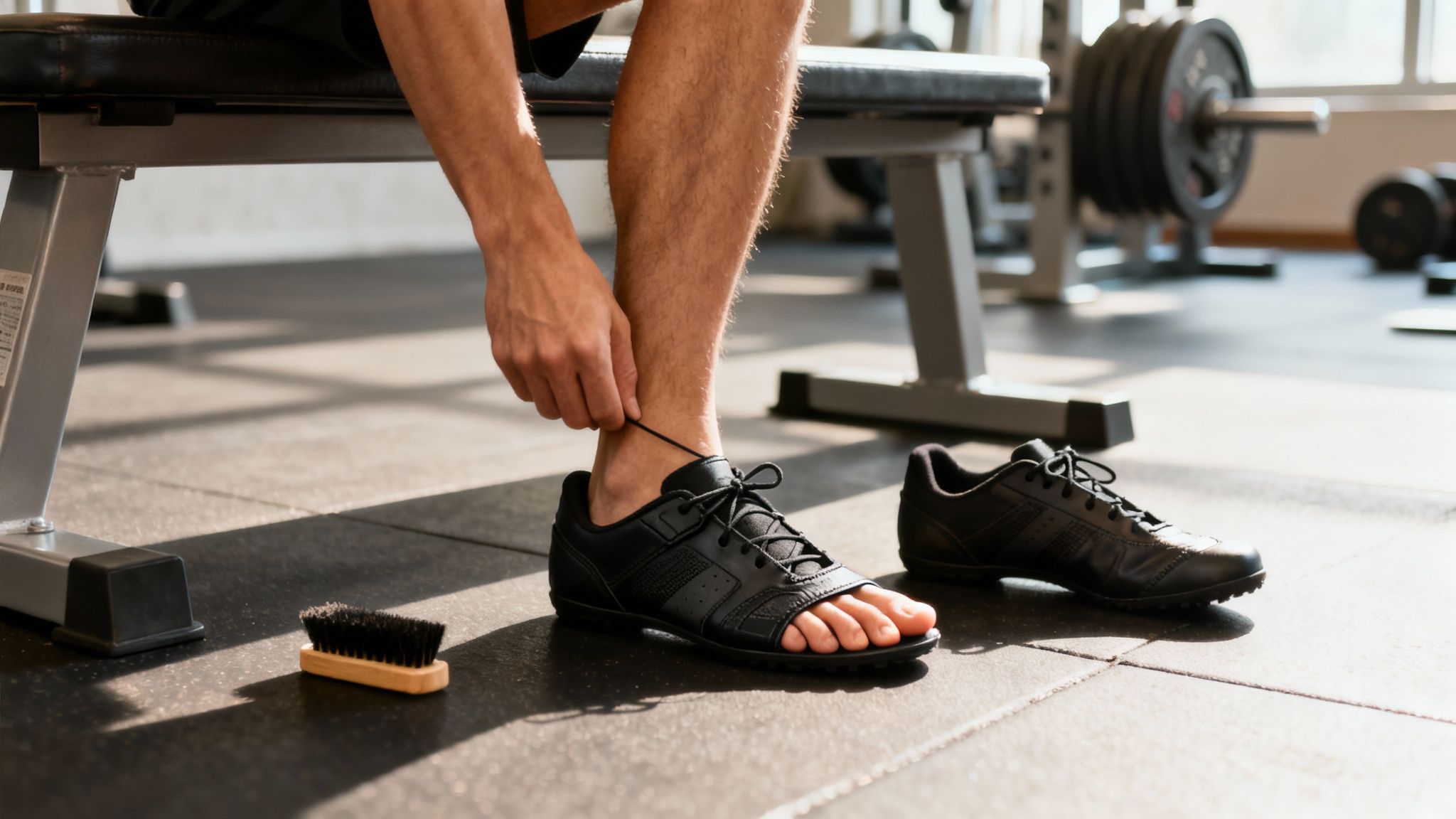
Proper care ensures your shoes keep providing support. Let them air out and dry completely after every session. Clean them by hand with a soft brush and mild soap; never use a washing machine or dryer, as the heat can warp the sole.
Eventually, even the best shoes wear out. Look for a compressed midsole, a stretched upper, or visible damage.
Your Strength Training Shoe Questions Answered
The Ultimate Guide to Strength Training Shoes answers to common questions about making the switch to proper lifting shoes.
Can I Run or Do Cardio in Lifting Shoes
A hard no. Strength training shoes have stiff, flat soles to lock you to the ground and maximize force transfer. Trying to run in them is a bad idea. There is virtually no cushioning, making every step a jarring shock to your joints. The shoe is also too rigid to allow a natural running stride, which can lead to discomfort or injury.
How Often Should I Replace My Shoes
The lifespan of a lifting shoe depends on frequency of use and the loads lifted. Instead of tracking time, look for physical signs of breakdown. It’s time for a new pair when you notice:
Compressed Soles: The midsole feels squishy or less supportive.
Stretched Uppers: Your foot slides around inside.
Visible Damage: Fraying straps, separating soles, or significant tread wear.
Are Expensive Lifting Shoes Worth The Investment
This depends on how serious your training is. A budget-friendly model with a flat, stable sole is a great starting point. However, premium models often justify the price with better materials, enhanced durability, and specialized features that serious lifters appreciate.
A higher price tag often means a longer-lasting shoe with better lockdown features, like metatarsal straps. If you train frequently and lift heavy, investing in a premium pair can be a worthwhile decision.
While the right shoes are a huge piece of the puzzle, proper nutrition is just as crucial for muscle recovery and growth. To fuel your efforts, you need a solid nutrition plan. Getting your footwear right is a major step, and pairing it with smart nutrition is how you'll truly maximize your results.
References
[1] Intel Market Research. (2024). Strength Training Shoes Market Research Report. full research on strength training shoe design.[2] Future Market Insights. (2023). Training Shoes Market Outlook. market insights on training shoe popularity.[3] Flourish-Everyday. (n.d.). Explained: The Difference Between Training and Running Shoes. difference between training and running shoes.[4] Flourish-Everyday. (n.d.). Good Shoes for Squats and Deadlifts. good shoes for squats and deadlifts.[5] Flourish-Everyday. (n.d.). How Often to Replace Running Shoes: An Evidence-Based Guide. how often to replace running shoes.[6] MealFlow. (n.d.). High-Protein Meal Prep Recipes to Build Muscle. high-protein meal prep recipes to build muscle.
At Flourish-Everyday, we're dedicated to helping you find the perfect footwear for your fitness journey. Explore our expert reviews, site product savings, and guides to discover the best shoes for your needs at https://www.flourish-everyday.com.

