Are Air Max 1 Good for Running? An Honest Look
- penny.par591+abc123
- 2 days ago
- 10 min read
Let's get right to it: while the Nike Air Max 1 was a revolutionary running shoe back in its day, it is not a good choice for modern running. Its design has shifted to prioritize streetwear style over the specific performance and safety features your feet need on a run. Save these classics for the street, not the track.
Table of Contents
From Performance Pioneer to Style Icon
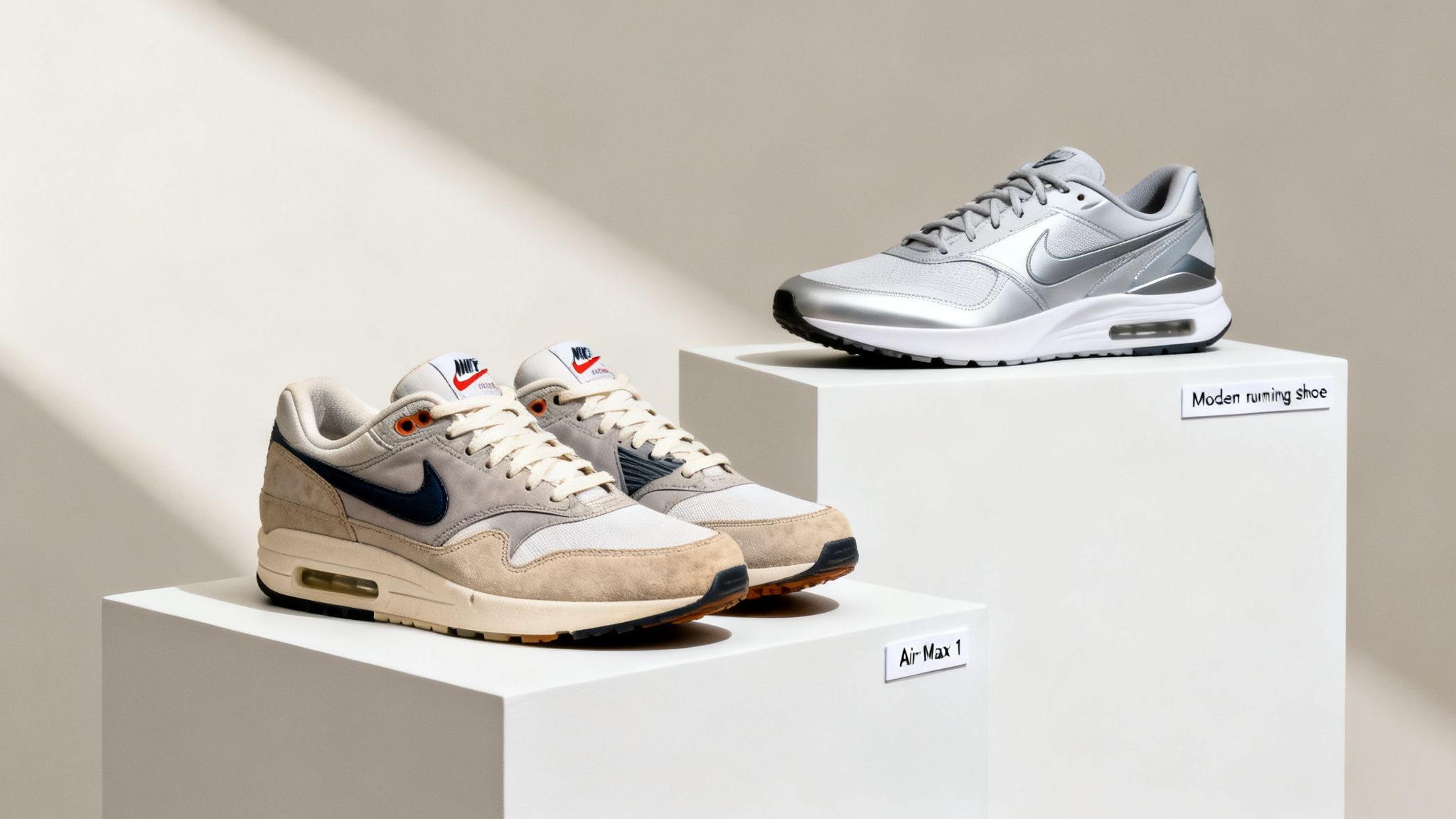
There's no denying the Nike Air Max 1 is a legend. When it dropped in 1987, it was the first shoe to showcase Nike's visible Air cushioning, a total game-changer for the era. But what made it a top running shoe then doesn't hold up to today's footwear science.
Modern testing highlights its limitations for serious runners. One key issue is the sole's stiffness. Lab tests show the Air Max 1 requires 17.9N of force to bend, making it about 30% stiffer than the average modern sneaker. That rigidity interferes with the natural foot flex needed for an efficient running stride. You can review more performance data over on RunRepeat.com.
The Key Differences at a Glance
So, are Air Max 1s good for running compared to current options? The difference lies in specialized technology. The Air Max 1 was built for the 1980s runner, while today's shoes are engineered with decades of biomechanical research, focusing on energy return, stability, and injury prevention.
The core issue isn't that the Air Max 1 is a bad shoe—it's that its job has changed. It evolved from a performance tool into a cultural symbol, while running shoe technology kept advancing.
To put it in perspective, here’s a comparison to show where the Air Max 1 stands today.
Air Max 1 vs. Modern Running Shoe: A Quick Comparison
Looking at the tech, it becomes clear why the Air Max 1 is now a lifestyle sneaker. The innovations that were groundbreaking in 1987 have been surpassed by decades of development in materials, design, and biomechanics.
Feature | Nike Air Max 1 (1987 Tech) | Modern Running Shoe Standard |
|---|---|---|
Cushioning | Visible Air unit for basic shock absorption. | Engineered foam for high energy return and impact protection. |
Stability | A simple, flat sole with minimal arch support. | Guided support systems to control foot motion and prevent overpronation. |
Flexibility | Rigid sole construction that restricts natural movement. | Flexible forefoot with grooves to allow for a smooth toe-off. |
Weight | Heavier due to leather and suede materials. | Lightweight, breathable mesh uppers for enhanced comfort and speed. |
Ultimately, while the Air Max 1 laid the groundwork, modern running shoes are specifically built to protect your body and boost your performance in ways that weren't possible when this iconic sneaker first appeared.
How a Running Revolution Became a Streetwear Icon
To understand why the Air Max 1 isn't your go-to running shoe, you have to go back to its debut in 1987. The 80s fitness boom was in full swing, and people wanted athletic gear that was both functional and stylish.
Tinker Hatfield, a former architect turned Nike designer, had a revolutionary idea after seeing the Centre Pompidou in Paris, which displays its inner workings on the outside. He imagined making the shoe's technology visible. This led to the first-ever visible Air unit—that small window in the sole showcasing Nike’s cushioning. It was a bold move that blended performance with an unforgettable look.
The Original Game Changer
When it launched, the Air Max 1 was a legitimate performance running shoe. Its Air sole unit was larger than any before it, offering runners of the time a cushy ride. It was the perfect shoe for that era, designed for athletes who wanted the latest in footwear tech.
But technology evolves rapidly, especially in the running world. The science behind running shoes advanced at high speed. Nike led the way, developing new foams, better support systems, and lighter, more breathable materials. Innovations like Zoom Air, and later React and ZoomX foams, began delivering energy return and impact protection that the original Air unit couldn't match.
The Shift from Track to Street
While running tech moved forward, the Air Max 1's unique look—the visible bubble and bold colorways—caught the attention of artists, musicians, and fashion enthusiasts. It transitioned from the running track to city streets, becoming a symbol for emerging subcultures.
This shift sealed its destiny. Nike recognized the trend and began re-releasing the Air Max 1 in new materials and colors, embracing its new life as a casual sneaker. The construction, once built for performance, started featuring heavier materials like leather and suede suited for style, not speed. Today, its legacy as a running pioneer is secure, but its true home is in the world of fashion, not at the finish line.
Why Your Feet Will Protest Running in Air Max 1s
Thinking about taking your Air Max 1s for a run? It's like entering a classic car in a modern Formula 1 race. It's an icon, but its performance technology is from another era. When you hit the pavement, your feet need modern engineering, not vintage style. The Air Max 1 falls short in four critical areas of biomechanics.
These sneakers were a game-changer in 1987, but the tech that made them famous is now history. This illustrates the shoe's evolution from a performance runner to a streetwear staple.
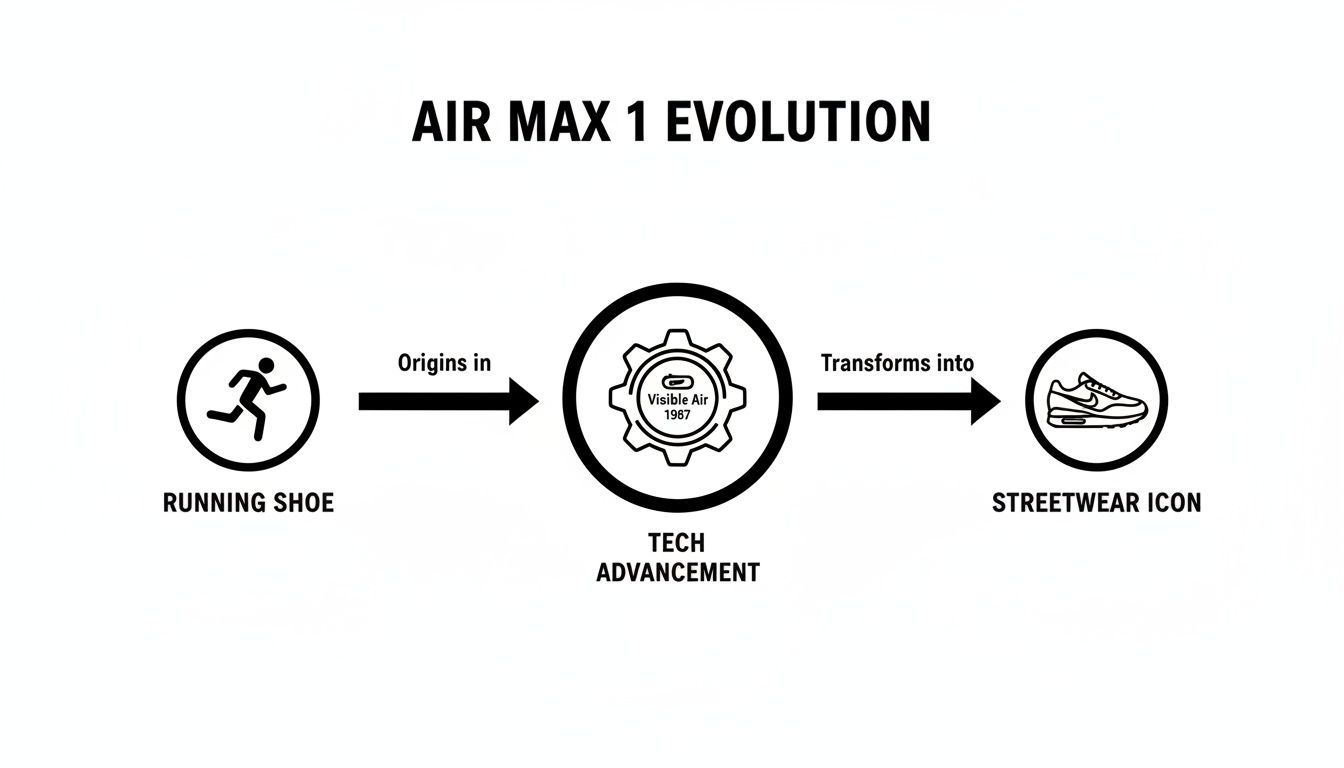
As you can see, footwear science sprinted forward, leaving the Air Max 1 to find its new home in fashion and culture.
A Cushioning System Built for a Museum
The most famous feature of the Air Max 1 is its visible Air unit. In the 80s, this was a huge leap in comfort, providing passive shock absorption by compressing a pocket of pressurized gas. But running shoe cushioning has evolved far beyond simply softening the blow.
Modern running foams, like Nike’s React or ZoomX, are about dynamic energy return. They don’t just absorb shock; they compress and spring back, actively helping to launch you into your next stride. Running in an Air Max 1 feels flat in comparison because it lacks that propulsive bounce, forcing your muscles to do all the work.
Stability That Leaves Your Ankles Guessing
Look at the sole of an Air Max 1. It’s wide and flat, which is fine for walking. But during a run, your foot performs a complex movement called pronation, where it naturally rolls inward to absorb impact.
A good running shoe has structural elements—like guide rails or firmer foams on the inside—to control that motion. The Air Max 1 has none of that. Its simple design offers minimal arch support or guidance, increasing the risk of instability and putting extra strain on your ankles, knees, and hips. To learn more, see our guide on the difference between training and running shoes.
A Stiff and Unforgiving Ride
An efficient running stride depends on natural foot flexion. Modern running shoes use flex grooves and specific materials that allow the shoe to bend with your foot for a smooth transition.
The Air Max 1, however, is notoriously rigid. Its stiff sole resists your foot's natural movement, which can make your stride feel clunky. Over time, this lack of flexibility can lead to discomfort and issues like plantar fasciitis or shin splints.
Heavy Materials That Weigh You Down
Finally, let’s talk about weight. The original Air Max 1 used synthetic suede and nylon mesh, but many modern lifestyle versions are made with heavier materials like leather for a premium look.
These materials trap heat and add significant weight compared to the lightweight, engineered mesh on modern running shoes. A heavier shoe means you use more energy with each step, leading to faster fatigue. Poor ventilation can cause blisters and discomfort. This confirms the Air Max 1 is a top-tier lifestyle shoe, not a performance runner.
The Real Risks of Running in Lifestyle Sneakers
Choosing running shoes based on looks is like picking a helmet for its color instead of its safety rating. Running in a lifestyle sneaker like the Air Max 1 isn't just a comfort issue; it’s an invitation to preventable injuries that can sideline you for weeks.
Every time your foot hits the pavement, a shockwave travels through your body. A proper running shoe is engineered to manage that force. The Air Max 1 lacks this engineering, passing stress directly to your bones, joints, and muscles.
From Annoying Aches to Sidelining Injuries
When your feet lack proper support, your body compensates, leading to strain. The design flaws that make a shoe great for walking make it a liability for running.
Shin Splints: This sharp pain along your shinbone is often a sign of overworked muscles and bone stress. The rigid sole and poor shock absorption in the Air Max 1 force your lower leg muscles to work overtime, leading to this repetitive stress injury.
Plantar Fasciitis: A stabbing pain in your heel caused by inflammation of the tissue connecting your heel to your toes. A shoe with flimsy arch support, like the Air Max 1, allows your foot to flatten too much, straining this tissue.
Achilles Tendonitis: A shoe that’s too stiff or has an improper heel height can put excessive tension on the Achilles tendon, causing painful inflammation that can become a chronic issue.
The connection is clear: the features that make the Air Max 1 a style icon—a flat base, minimal arch structure, and a stiff sole—are the same features that create a high-risk environment for running injuries.
A Total Biomechanical Mismatch
Ultimately, the shoe's design doesn't match the biomechanics of running. The lack of a proper heel-to-toe drop, for example, can disrupt your natural gait and stress your lower legs. You can learn more about why heel-to-toe drop matters for your run in our detailed guide. Investing in a true running shoe is an investment in your health, ensuring you can enjoy a long, pain-free running journey.
Finding Your Perfect Running Shoe Alternative
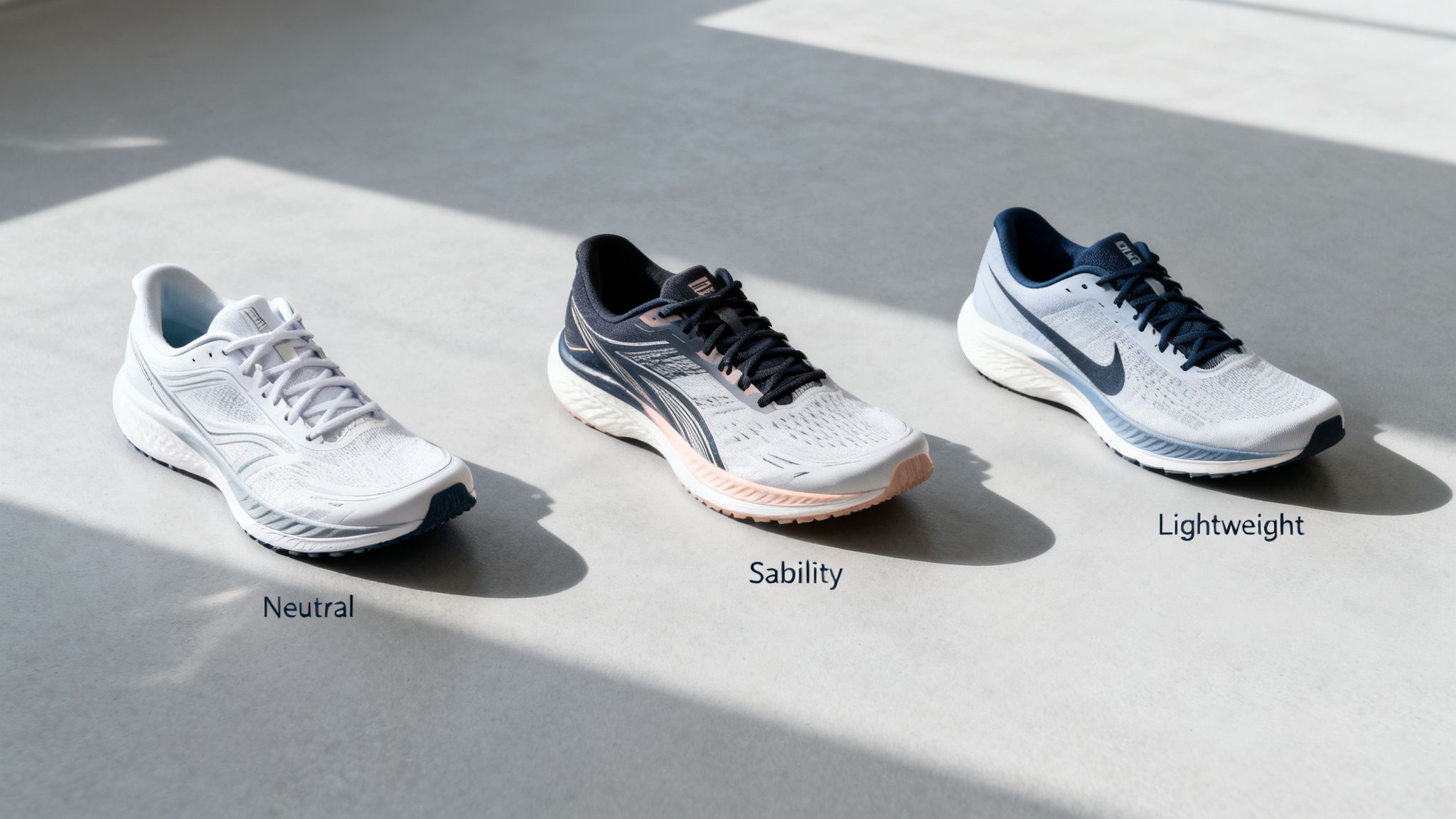
We've established that Air Max 1s belong on the street. Now, let's find shoes that are built to protect your body and help you achieve your running goals. Transitioning from a lifestyle sneaker to a dedicated running shoe is the most important gear decision a runner can make.
The key is finding a shoe with technology that matches your unique running style and body mechanics. What works for a friend might not work for you. It depends on your foot's natural movement (pronation), your typical running distance, and your cushioning preference.
Decoding Your Running Needs
Before you shop, understand how your feet move when you run. Most runners fall into one of three categories based on pronation, which is how the foot rolls inward to absorb impact. This is the starting point for choosing the right support.
Neutral Runners: Your foot rolls inward just the right amount. A "neutral" shoe focusing on cushioning without corrective features is ideal.
Overpronators: Your foot rolls inward too much, stressing your ankles and knees. A "stability" shoe with features like firmer foam can provide gentle guidance.
Supinators (Underpronators): Your foot doesn't roll inward enough, sending more shock up your leg. A highly cushioned neutral shoe is best to help absorb that impact.
Once you know your pronation style, you can explore specific models. To learn more about cushioning technologies, see our guide on the best cushioned running shoes for comfort and support.
Top Running Shoe Alternatives For Every Need
Here are a few top-tier alternatives that deliver the performance and protection the Air Max 1 was never meant for.
Shoe Model | Best For | Key Technology |
|---|---|---|
Nike Air Zoom Pegasus | Neutral daily training for all distances. | React Foam & Zoom Air Unit: A durable, responsive foam combined with a propulsive air pod. |
Brooks Adrenaline GTS | Overpronators needing reliable stability. | GuideRails® Support: A holistic support system that guides your foot's motion. |
Hoka Clifton | Maximum cushioning for neutral runners. | Early Stage Meta-Rocker: A specialized midsole geometry for a smooth transition. |
ASICS GEL-Kayano | Severe overpronators seeking premium stability. | Dynamic DuoMax™ & GEL™: A combination of firm midsole support and signature GEL cushioning. |
Choosing any of these means you're investing in decades of biomechanical research. Unlike the Air Max 1, these shoes are purpose-built to handle the demands of running, helping you stay healthy and chase your goals.
Common Questions About Running in Air Max 1s
Even with the technical details covered, some practical questions remain. Let's address the most common ones to clarify why a dedicated running shoe is always the smartest choice.
Answering these final queries reinforces the main point: are Air Max 1s good for running? For any repetitive impact activity, the answer is a firm "no."
Can I Use Air Max 1s for Short Runs or on a Treadmill?
It’s tempting to think a short jog on a treadmill is harmless, but the fundamental problems persist: stiffness, lack of support, and zero energy return. Your joints take the same pounding with every step. For any consistent running, a proper running shoe is the best decision to avoid nagging injuries.
What Is the Real Difference Between Air Cushioning and Modern Foam?
The original Air Max unit is a pressurized air pocket for passive impact absorption. It compresses to soften your landing but provides minimal energy back. Modern running foams like Nike's ZoomX are engineered for active energy return. They compress and then rebound with force, propelling you into your next stride for a more efficient and less tiring run.
Are Any Stylish Nike Shoes Actually Good for Running?
Absolutely. Nike excels at blending aesthetics with performance in their modern running lines.
For a reliable daily trainer: The Nike Air Zoom Pegasus offers a balanced, cushioned ride that works for most runners and looks great.
For maximum comfort: The Nike Invincible series is loaded with plush foam for incredible impact protection on long runs.
These models are built with a runner's biomechanics in mind, giving you both the style you want and the performance you need.
References
Nike Air Max 1 Review. (2024). RunRepeat. Retrieved from RunRepeat.com
Flourish-Everyday. (n.d.). Explained: The Difference Between Training and Running Shoes. Retrieved from the difference between training and running shoes
Flourish-Everyday. (n.d.). What is Heel-to-Toe Drop and Why It Matters for Your Run. Retrieved from why heel-to-toe drop matters for your run
Flourish-Everyday. (n.d.). Best Cushioned Running Shoes: Top Picks for Comfort & Support. Retrieved from best cushioned running shoes for comfort and support
At Flourish-Everyday, we're all about helping you find the perfect shoe for your fitness journey. Check out our expert reviews and guides to discover the best options for running, training, and living a healthier life. Find your next favorite pair at https://www.flourish-everyday.com.
Comments