Finding Your Stride in the Top Light Running Shoes

Updated: Feb 10
Welcome to the world of light running shoes, where every ounce shed is a step toward a faster, more agile stride. As we delve deeper into this topic, you will uncover the science behind these materials, the tangible benefits they offer in real world scenarios, and how to select the perfect pair of shoes for your next run or athletic endeavor.

Table of Contents

Why Runners Are Obsessed with Light Running Shoes
The appeal of a lighter shoe is simple, it feels faster. Less weight on your feet means less restriction, allowing for a more natural, efficient running motion. This philosophy of minimalism without gutting performance has captured the running community.
This guide will break down everything you need to know, from the science behind the design to choosing the right pair for your goals. For direct shoe comparisons, check out our comprehensive top lists for athletic shoes.
What Makes a Running Shoe Fast and Light
A modern lightweight running shoe is a marvel of engineering, shedding every non-essential gram to maximize speed and efficiency. The "engine" is the midsole, where advanced foams like PEBA (Polyether Block Amide) and super-critical EVA (Ethylene Vinyl Acetate) provide incredible energy return at a minimal weight. Designers constantly chase the perfect balance of energy return and lightness, turning a standard shoe into a tool for speed.
Components of a Lightweight Running Shoe
Component | What It Does | Impact on Performance and Feel |
|---|---|---|
Midsole Foam | Provides cushioning and energy return. | Specialized foams like PEBA create a bouncy, efficient ride. |
Upper | Secures the foot to the shoe platform. | Thin, engineered mesh offers a breathable, sock-like fit without bulk. |
Outsole | Delivers traction and durability. | Strategically placed rubber provides grip while saving weight. |
Tongue | Protects from lace pressure. | Often razor-thin and gusseted to lock down the foot without padding. |
Heel Counter | Provides rearfoot stability. | Minimalist designs offer just enough security while cutting weight. |
Carbon Plate | (In some models) Adds propulsion. | Works with foam to create a spring-like, efficient effect. |
Understanding Key Shoe Metrics
Two key terms to know are heel-to-toe drop and stack height. Drop is the height difference (in mm) between the heel and forefoot. Lighter shoes often have a lower drop (e.g., 4-6mm vs. 8-10mm in standard trainers), which can promote a midfoot strike but may stress the calves. Stack height is the total foam underfoot. Interestingly, many top lightweight racing shoes have high stack heights of super foam to maximize cushioning and energy return, proving that "light" doesn't always mean "low profile." For more, see our educational resources on running technology.

The Real Performance Benefits and Trade-Offs
Light running shoes can significantly improve your running economy, meaning you use less energy to maintain the same pace. This is due to simple physics: less weight to lift with each step allows for a faster leg turnover (cadence), which can shave seconds or minutes off race times. This efficiency boost reduces fatigue and encourages better running form.
A Balanced Look at the Trade-Offs
However, these gains come with compromises.
Cushioning: Less foam is often used to cut weight, which can mean more stress on your joints.
Stability: Features like guide rails are often removed, making these shoes less suitable for runners who overpronate.
Durability: Lighter materials are less robust. The lifespan of a performance shoe is typically 150-300 miles, compared to 300-500 for a traditional trainer.
Lightweight shoes are specialized tools best used for speed workouts and races, not necessarily for every easy recovery run.
How to Choose Your Perfect Lightweight Pair
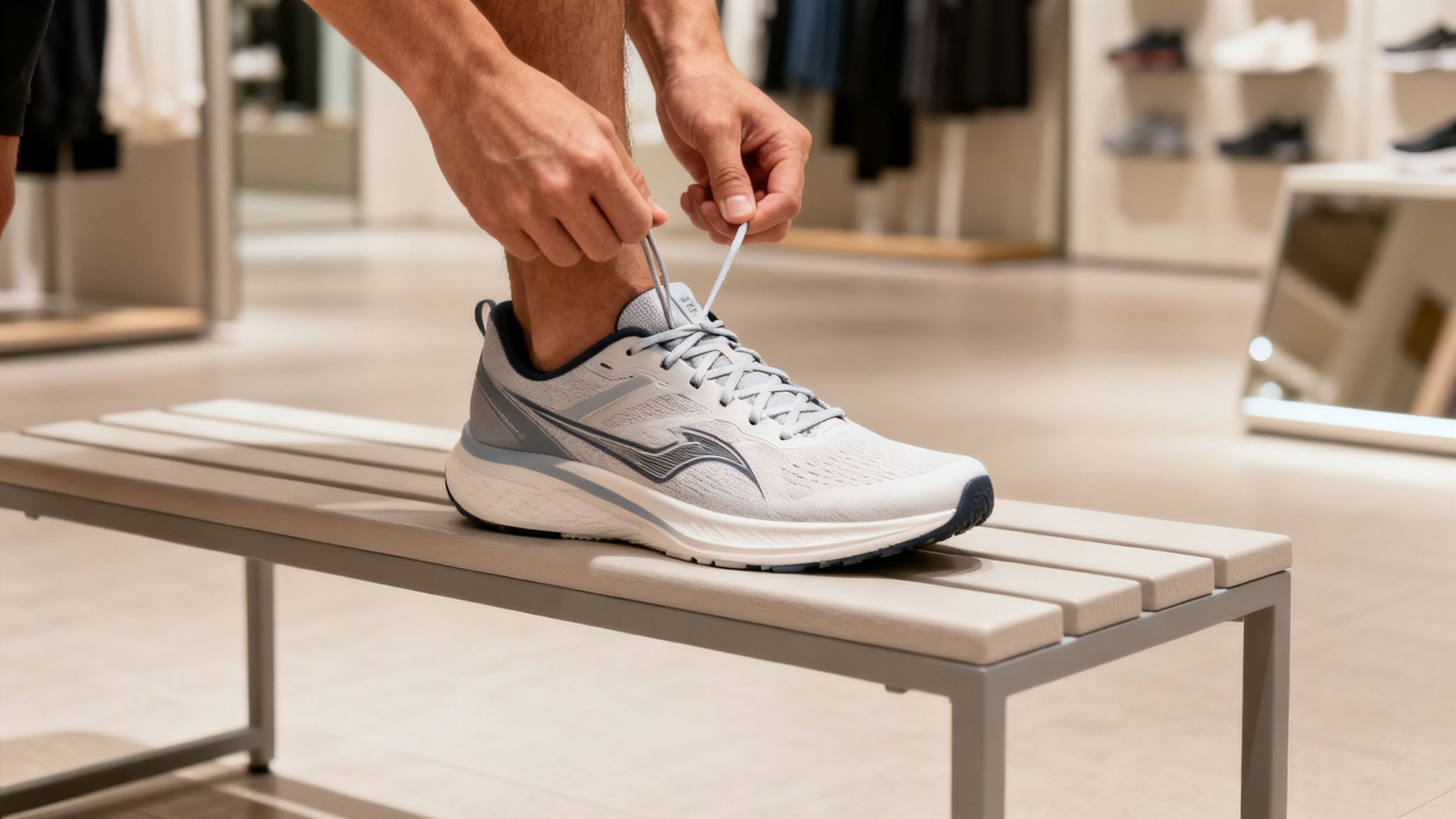
Choosing the right pair means matching the shoe's features to your body, goals, and running surface.
Define Your Running Goals
Racing: Look for models with super foams, aggressive rockers, and perhaps a carbon plate for maximum efficiency.
Speed Training: You need a responsive shoe that balances weight, cushioning, and durability for repeat sessions.
Faster Daily Training: A lightweight daily trainer offers more cushion and versatility than a pure racing flat.
Consider Your Running Surface
Road/Track: Shoes need good grip on smooth surfaces, often with targeted rubber on the outsole to save weight.
Trails: A light trail shoe requires an aggressive outsole with deep lugs for traction and a more durable upper for protection.
When trying on shoes, ensure a thumb's width of space at the end and a secure midfoot feel. To see how specific models perform, explore our comprehensive shoe reviews.

Integrating Lightweight Shoes Into Your Training
Transitioning to lightweight shoes requires a gradual approach to allow your body to adapt. Abruptly switching from a high cushion trainer can overload your lower legs and lead to injury.
Crafting Your Transition Plan
A smart transition involves alternating between your new lightweight shoes and your old trainers.
Week 1: One short, easy run (1-2 miles) in the new shoes.
Week 2: Two shorter runs, one easy and one with some faster pickups.
Week 3: Use them for one full speedwork session (e.g., intervals).
Week 4+: Continue using them for faster workouts, gradually increasing the distance.
The goal is to build a shoe rotation. Your daily trainer absorbs most of your mileage, while the lightweight pair is reserved for high intensity sessions. A fitness tracker printable can help manage your rotation.
Top Light Running Shoes for Men & Women
Finding the perfect lightweight shoe depends on your unique needs. Below are top rated models for both men and women, categorized by their best use case.
For Men
Best for Racing (Marathon): Nike Alphafly 3 - Known for its exceptional energy return from ZoomX foam and dual Air Zoom units, this shoe is a top choice for elite marathoners seeking maximum efficiency.
Best for Speed Workouts (5K/10K): Adidas Adizero Adios Pro 3 - Offers a snappy and propulsive ride with its Lightstrike Pro foam and carbon-infused ENERGYRODS 2.0, ideal for shorter, faster efforts.
Best Lightweight Daily Trainer: Hoka Mach 6 - This shoe provides a great balance of responsive cushioning and durability for daily miles, featuring a new super critical foam that feels lively underfoot.
For Women
Best for Racing (Marathon): Asics Metaspeed Sky+ - Designed specifically for "stride" runners, this shoe uses FF BLAST TURBO foam and a carbon plate to help you extend your stride and conserve energy over long distances.
Best for Speed Workouts (5K/10K): Saucony Endorphin Speed 4 - A versatile speed trainer with a winged nylon plate that provides pop without the harshness of carbon. It’s a favorite for tempo runs and interval training.
Best Lightweight Daily Trainer: New Balance FuelCell Rebel v5 - This model is celebrated for its soft yet bouncy FuelCell foam, offering a fun and energetic ride that works well for daily training and uptempo efforts.
Health & Wellness: Impact of Shoe Choice
Your choice of running shoes has a direct impact on your biomechanics and overall joint health. Light running shoes, often with a lower heel-to-toe drop, can encourage a midfoot or forefoot strike pattern. This change can reduce impact forces on the knees but may increase the load on the Achilles tendon and calf muscles (2). It is crucial to transition slowly to allow these tissues to adapt.
Conversely, traditional high cushion trainers are designed to absorb shock, which can be beneficial for protecting joints, especially on hard surfaces. However, some researchers argue that excessive cushioning can dampen sensory feedback from the ground, potentially altering natural gait mechanics. The key is to find a balance that works for your body. Listen for signals like new aches or pains, as they are often the first sign that your footwear may not be optimal for your biomechanics.

Answering Your Questions About Lightweight Running Shoes
How Many Miles Do Light Running Shoes Last?
A good ballpark figure is between 150-300 miles. In contrast, a heavier daily trainer often lasts 300-500 miles. Always monitor the midsole foam and outsole tread for signs of wear.
Can I Use Light Running Shoes for Daily Training?
It depends on the shoe and the runner. Many newer lightweight trainers are durable enough for daily use. However, aggressive racing flats are best saved for speed days and races to preserve their responsiveness and prevent injury. A shoe rotation is the ideal approach.
Are Light Running Shoes Bad for Beginners?
Not necessarily, but beginners should be cautious. Starting with a more supportive, cushioned daily trainer is often safer while building foundational strength. Once a solid base is established, a lightweight shoe can be gradually introduced for shorter, faster runs.
References
Transparency Market Research. (2023). Lightweight Running Shoes Market - Global Industry Analysis, Size, Share, Growth, Trends, and Forecast, 2024-2034.
Kulmala, J. P., Kosonen, J., Nurminen, J., & Avela, J. (2018). Running in highly cushioned shoes increases leg stiffness and amplifies impact loading. Scientific Reports, 8(1), 17496.
At Flourish-Everyday, we provide the insights and reviews you need to find the perfect footwear for your fitness journey. Explore our expert shoe recommendations and health guides today!

