Best Running Shoes for Cross Training: Top Hybrid Picks for Every Workout

Updated: Dec 9, 2025
Ever tried wearing your running shoes for a HIIT class and felt a bit... wobbly during side lunges? You’re not alone. I have written several posts on this topic. I really want to emphasize the importance of getting the right shoe for the right activity.
The features that make a running shoe ideal for pavement, such as a high, cushioned heel and a rocker like sole, can turn into drawbacks in the gym. Think of it like taking a road bike on a rugged mountain trail. It might get you there, but it’s an unstable and unsafe ride. It’s the same concept with footwear.
Running is all about forward motion. Shoes are built to cushion that repetitive, straight line impact. Cross-training, conversely, involves a variety of movements: jumping, lifting, pivoting, and shuffling. A shoe designed only for running lacks the structure for dynamic action, increasing injury risk. If you want to get into the nitty gritty, our guide explains cross training vs running shoes.
Table of Contents
The Search for the Perfect Shoe
As more of us mix our workouts with running, lifting, and classes, the demand for a single shoe that can keep up has exploded. This trend is reflected in the global cross-training shoe market, which continues to grow steadily due to rising fitness awareness. People are tired of compromising.
So, what separates a running shoe from a true cross-trainer? The key design choices directly impact performance and safety. This table breaks down where each shoe shines and what to look for in a hybrid model that gives you the best of both worlds.
Feature | Dedicated Running Shoe | Dedicated Cross Trainer | Ideal Hybrid Shoe |
|---|---|---|---|
Cushioning | High and soft for shock absorption during forward strides. | Firmer and lower to the ground for a stable lifting platform. | Balanced, responsive cushioning that protects on runs but remains stable for lifts. |
Flexibility | Flexes from heel to toe for a smooth running gait. | More flexible in the forefoot for natural movement during various exercises. | Combines longitudinal stiffness with forefoot flexibility. |
Support | Minimal lateral support. | Reinforced sidewalls and a wider base to prevent rolling during lateral movements. | Enhanced lateral stability without being overly rigid. |
Outsole | Patterns designed for grip on pavement and forward motion. | Flatter, wider outsole with multi-directional grip for gym floors. | A durable rubber outsole with a versatile tread pattern for road and gym surfaces. |
Understanding these differences is the first step. Once you know what you're looking for, you can find the best running shoes for cross training that support all your goals.
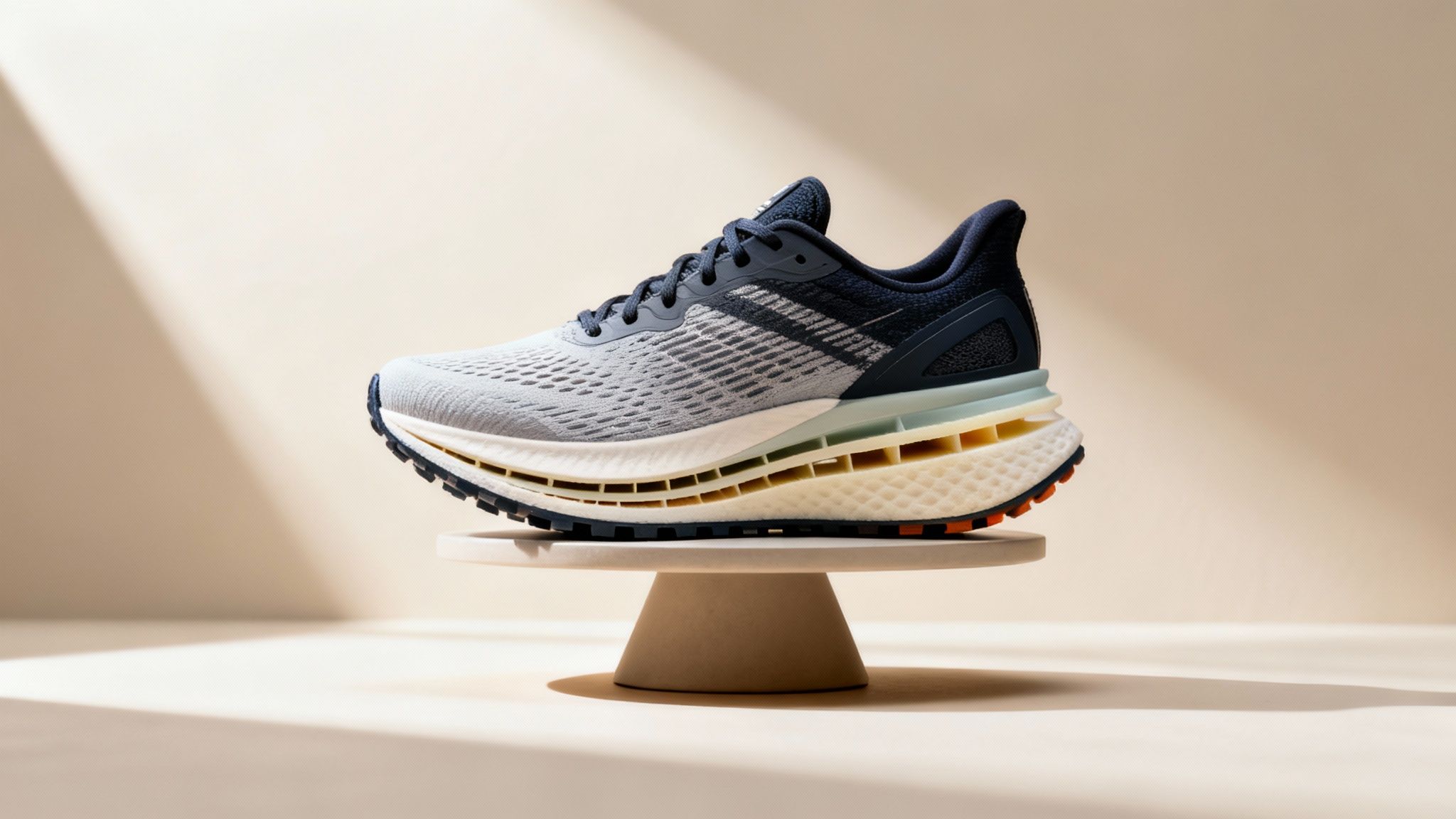
Anatomy of the Perfect Hybrid Workout Shoe
Hunting for the best running shoes for cross-training requires finding a multi tool for your feet. Each part must perform several jobs well. It’s a balancing act: you need responsive cushioning that’s soft enough for a 3-mile run but firm enough for a stable squat. This dual action support is essential for performance and safety.
The Foundation: Grip and Stability
The outsole is where the rubber meets the road and the gym floor. A pure running shoe is built for forward motion on pavement. A hybrid shoe needs a more versatile grip, offering traction on slick gym surfaces during side lunges or box jumps without feeling clunky on a treadmill.
A shoe's architecture must support force from all directions. A running shoe is a specialist. A cross-training hybrid is a generalist, expertly built to handle a varied workout with stability and grace.
Heel-To-Toe Drop: A Critical Metric
The heel-to-toe drop is the height difference between your heel and forefoot. Traditional running shoes often have a high drop (8mm or more) to aid a heel striking pattern. For cross-training, a lower drop is better. A flatter platform improves stability during lifts like deadlifts and squats, helping you maintain proper form. Most of the best running shoes for cross-training have a drop between 4mm and 8mm. For more details, see our guide on what defines cross training shoes.
The Upper: Breathability and Flexible Support
The upper, the part wrapping your foot, is crucial for comfort and lockdown. Many modern hybrid shoes use engineered mesh uppers. This material offers breathability to prevent overheating and flexible support that moves with you. This adaptability is why materials like mesh and durable rubber are so popular in athletic footwear. Understanding these key parts, cushioning, outsole, heel drop, and upper, helps you see past marketing hype and find a shoe that truly fits your training style.
Top Hybrid Running Shoes for Men Reviewed
Finding a running shoe that holds its own in the weight room is the goal. The best hybrids are stable for heavy lifts but have the responsive pop needed for short runs and explosive drills. I researched top contenders through HIIT circuits, treadmill sprints, and strength exercises, focusing on lateral stability, midsole performance, and durability.
Nike Pegasus 41: A Versatile Workhorse
The Nike Pegasus 41 continues its legacy as a daily trainer with features that make it a solid pick for cross-training. Its ReactX foam balances soft cushioning for runs with a springy feel for plyometrics. In testing, the Pegasus 41 felt nimble during directional changes and was stable enough for moderate lifting. The two Air Zoom units provide a noticeable boost during box jumps and sprints.
Excels In: Short runs (1-3 miles), HIIT classes, general gym use.
Falls Short: The 10mm heel-to-toe drop is great for running but can feel high for heavy squats or deadlifts.
On Cloudmonster 2: The Cushioning King
The On Cloudmonster 2 may look like a maximalist running shoe, but its clever design is surprisingly versatile. A double layer of Helion superfoam with CloudTec absorbs impact well. The integrated Speedboard, a thermoplastic plate, adds enough rigidity to provide a stable platform for lifts, which is unexpected from such a cushioned shoe. For a closer look, check our list of top men's cross-training shoes for running.
The best hybrid shoe doesn't force a choice between the weight rack and the treadmill. It provides stability for a solid lift and responsiveness for an energetic run.
Reebok Nano X4: The True Cross-Training Champion
While not a dedicated running shoe, the Reebok Nano X4 is one of the best running shoes for cross-training due to its built in versatility. It starts with a minimal 7mm drop, creating a stable base for lifting. The Floatride Energy Foam in the forefoot delivers surprising bounce for runs. An updated upper and a TPU heel clip provide excellent lockdown and lateral support.
Performance Verdict at a Glance
Shoe Model | Best For | Running Performance | Lifting Stability |
|---|---|---|---|
All-Around Gym Goers | Excellent (Short Runs) | Good | |
HIIT & Cardio Fans | Very Good | Good | |
Strength-Focused Athletes | Good | Excellent |
The right shoe depends on your routine. If you mostly run with some gym work, the Pegasus is a great choice. For HIIT classes, the Cloudmonster 2 delivers. For strength focused athletes who still need cardio capability, the Reebok Nano X4 is the winner.

Top Hybrid Running Shoes for Women Reviewed
A woman's Q-angle (the angle between the thigh and shin bone) is typically wider, which can affect foot strike and stability. The best hybrid shoes for women account for this with targeted support, a secure heel lock, and flexible yet sturdy cushioning. We tested top models on their performance across various activities, from cardio bursts to squats.
HOKA Clifton 10: A Versatile and Cushioned Choice
The HOKA Clifton 10 is known for its cushioning, making it great for mixed workouts. A large stack of EVA foam absorbs impact during treadmill sprints and box jumps. The early stage Meta Rocker design promotes a smooth roll through during cardio, and the base is surprisingly stable. It’s a fantastic pick for those who love cushioned comfort in all activities.
Best For: Runners who also do HIIT classes and bodyweight circuits.
Key Feature: The plush yet lightweight EVA foam midsole provides exceptional comfort and impact protection.
ASICS GEL-Nimbus 27:The Pinnacle of Comfort
The ASICS GEL-Nimbus 27 is loaded with soft FF BLAST PLUS ECO cushioning for luxurious comfort. The PureGEL in the heel absorbs shock brilliantly, a plus for both running and jumping. For cross-training, the roomy fit and stable platform are key. The engineered mesh upper secures the foot during lateral movements, and its wide base helps you feel planted. The 8mm drop is a great compromise for running and lifting.
The right shoe for a woman's foot isn't just a smaller men's shoe. It accounts for differences in foot shape and gait to provide targeted support, enhancing performance and preventing injury.
New Balance Fresh Foam X 1080 v14: Balanced and Bouncy
The New Balance Fresh Foam X 1080 v14 is a true versatile shoe. Its Fresh Foam X midsole is soft enough for impact absorption but has enough pop for sprints. Its lower 6mm heel-to-toe drop creates a more natural, stable feel for lifting. The supportive knit upper provides a secure, sock-like fit that moves with you, making it perfect for the athlete who does a bit of everything.
Matching Your Shoe to Your Workout and Foot Type
The best shoe is one that matches your body and routine. This starts with a self assessment of your foot's natural mechanics, specifically its pronation (the way your foot rolls when it lands). Getting this right helps you pick a shoe that works with your body.
Understanding Your Foot Type
Neutral Pronation: Your foot rolls slightly inward, absorbing impact correctly. Neutral shoes with good cushioning are usually best.
Overpronation: Your foot rolls too far inward. Stability shoes with firmer inner support can help guide your foot into a more neutral alignment.
Supination (Underpronation): Your foot rolls outward. Highly cushioned neutral shoes that encourage a more natural inward roll are ideal.
The "wet test" can help identify your foot type. Step out of the shower onto a dry surface. A full footprint suggests overpronation (flat arches), while a print showing mostly your heel and ball of the foot points to supination (high arches).
Aligning Shoes with Your Training Style
Your workout routine dictates the ideal shoe. For those incorporating effective strength training for weight loss, a shoe with a firm, flatter base is nonnegotiable for stability. If your workouts are mostly high impact cardio, prioritize responsive cushioning to protect your joints.
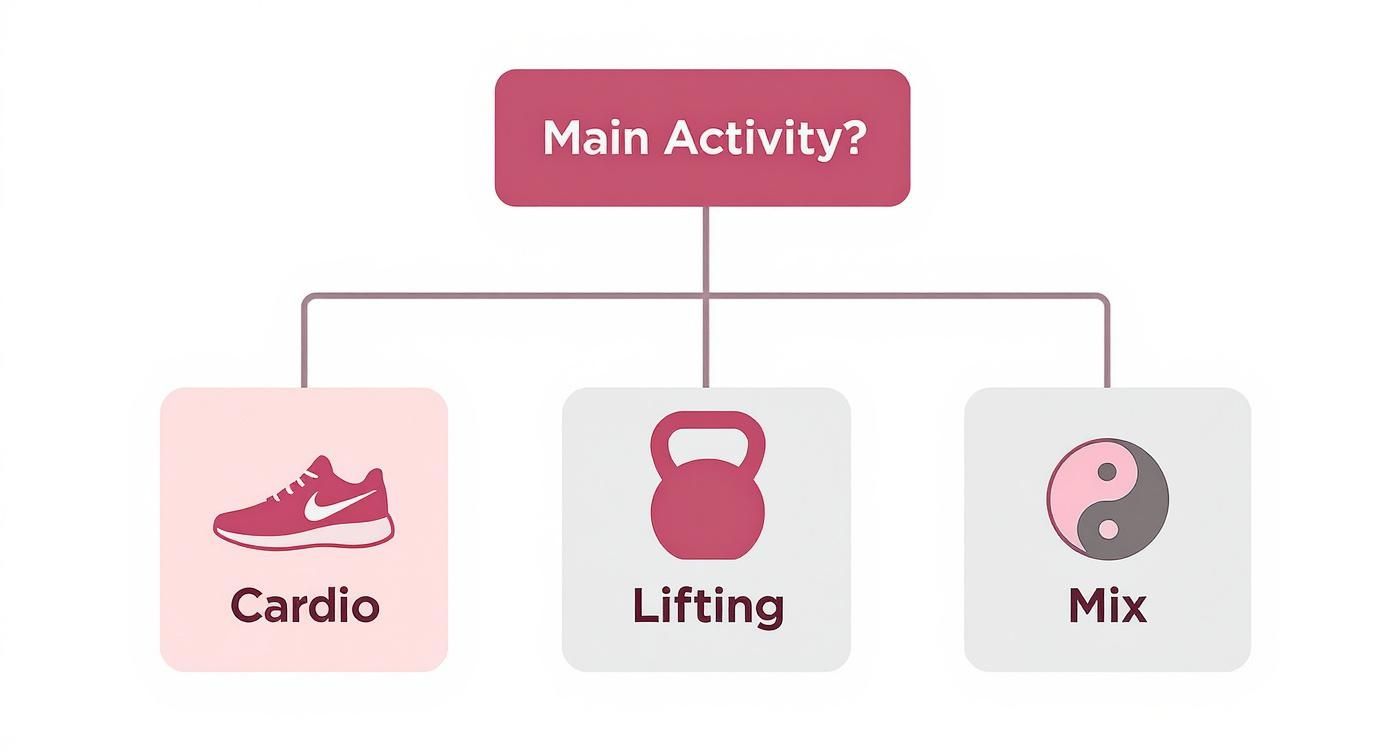
The flowchart is simple: specialized activities need specialized shoes. If you mix it up, you need a versatile hybrid.
Common Mistakes to Avoid When Buying Workout Shoes
It's easy to fall into common traps when buying workout shoes. A smart purchase involves more than grabbing the most popular model. A major mistake is prioritizing aesthetics over function. A stylish color scheme won't enhance your stability during agility exercises. Another mistake is purchasing a specialized shoe; a running shoe lacks stability for lifting, while a weightlifting shoe is unsuitable for cardio.
Getting the Fit Fundamentally Wrong
Many people wear the wrong size shoe, which can cause blisters or black toenails. Don't guess your size or rely on an old measurement.
Your foot size can change over time. Experts suggest getting your feet measured at least once a year.
Get measured before you shop, preferably later in the day when your feet have naturally swollen. This ensures a comfortable fit when your feet are at their largest.
Overlooking Your Primary Activities
Be honest about your workout routine. Pick a shoe that supports what you do most often.
Cardio-Heavy (70/30 split): Prioritize responsive cushioning and flexibility.
Strength-Focused (30/70 split): Look for a lower heel-to-toe drop and a stable base.
Balanced (50/50 split): A true hybrid model is a must.
Always try on shoes with the same type of socks you use for workouts. Avoiding these common mistakes will help you find a pair of shoes that becomes a true asset to your training.

Frequently Asked Questions
Here are answers to common questions about using running shoes for cross-training.
Can I Use Regular Running Shoes for Gym Workouts?
You can, but it's not ideal for performance or safety. Standard running shoes are built for forward motion and have soft, cushioned heels. This plushness can make you feel wobbly during lateral movements or when planting your feet for heavy lifts. A hybrid shoe provides the all around support needed for stability.
How Often Should I Replace My Cross-Training Shoes?
A good rule of thumb is every 300-500 miles of running or after 6-8 months of consistent gym use. Look for signs of wear: a compressed midsole that no longer feels springy, a worn out outsole with no grip, or a general lack of support that leads to new aches and pains.
Is a Zero-Drop Shoe Good for Cross-Training?
A zero-drop shoe can be great for weightlifting, as it promotes a natural, grounded stance. However, if you plan to mix in running, you must transition slowly. A sudden switch can strain your calves and Achilles tendons. For most people, a low-drop shoe (4-6mm) is a safer, more versatile starting point, offering a good balance of lifting stability and running comfort.
References
Nigg, B. M., & Enders, H. (2013). Barefoot running—some critical considerations. Footwear Science, 5(1), 1-7.
Ryan, M., & Elashi, E. (2016). A new paradigm for the classification of running shoes. British Journal of Sports Medicine, 50(19), 1177-1178.
Sinclair, J., et al. (2013). The influence of footwear on the biomechanics of running. Footwear Science, 5(3), 169-185.
At Flourish-Everyday, we simplify your search by reviewing and recommending the top shoes for every workout style. Find your perfect pair and get expert fitness advice and product savings to support your journey at https://www.flourish-everyday.com.


