How to Train for a 5K: A Practical Beginner's Guide

Updated: Dec 8, 2025
Training for a 5k is an entirely achievable goal, and it all starts with a smart plan. The secret isn't running yourself into the ground; it's about a gradual build up of your endurance over several weeks. A good rule of thumb is to aim for three running days per week, with rest and cross-training mixed in to build strength and prevent injuries. The ket is to be patient with yourself.

In This Guide:
Your Starting Line: What to Know Before You Run
Deciding to tackle a 5K is a fantastic goal. At 3.1 miles, it's the perfect distance, long enough to be a massive accomplishment but short enough that training doesn't take over your life. The key is to start smart, listen to your body, and build a solid foundation.
Before hitting the pavement, honestly assess your current fitness. Can you walk for 30 minutes comfortably? This isn't about judgment; it’s about choosing a training plan that pushes you just enough without leading to burnout or injury.
Core Principles of 5K Training
Success in training is built on a few core ideas:
Consistency Over Intensity: Running three times a week is more effective than one grueling run that leaves you sore for days.
The Right Gear: A good pair of running shoes fitted for your feet is nonnegotiable for injury prevention.
Simple Fueling: Focus on balanced meals and staying hydrated. Complex nutrition strategies aren't necessary for a 5K.
Embrace Rest: Rest days are when your muscles rebuild and get stronger. Skipping them is a fast route to an injury.
The 5K is a popular entry point for new runners. In the United States, approximately 2.6 million people race this distance annually, highlighting its accessibility (Running USA, 2019). You can dig into more 5K stats over at Runner's World.
Getting these fundamentals down is paramount. For more details on getting started, check out our guide on how to start a running routine for beginner tips for success.

Your 6-Week Path to the Finish Line
So, you've committed to a 5K. Now, you need a roadmap. We've put together two different 6-week training plans to meet you where you are.
The process is straightforward, starting with a few key phases before you log your first mile.
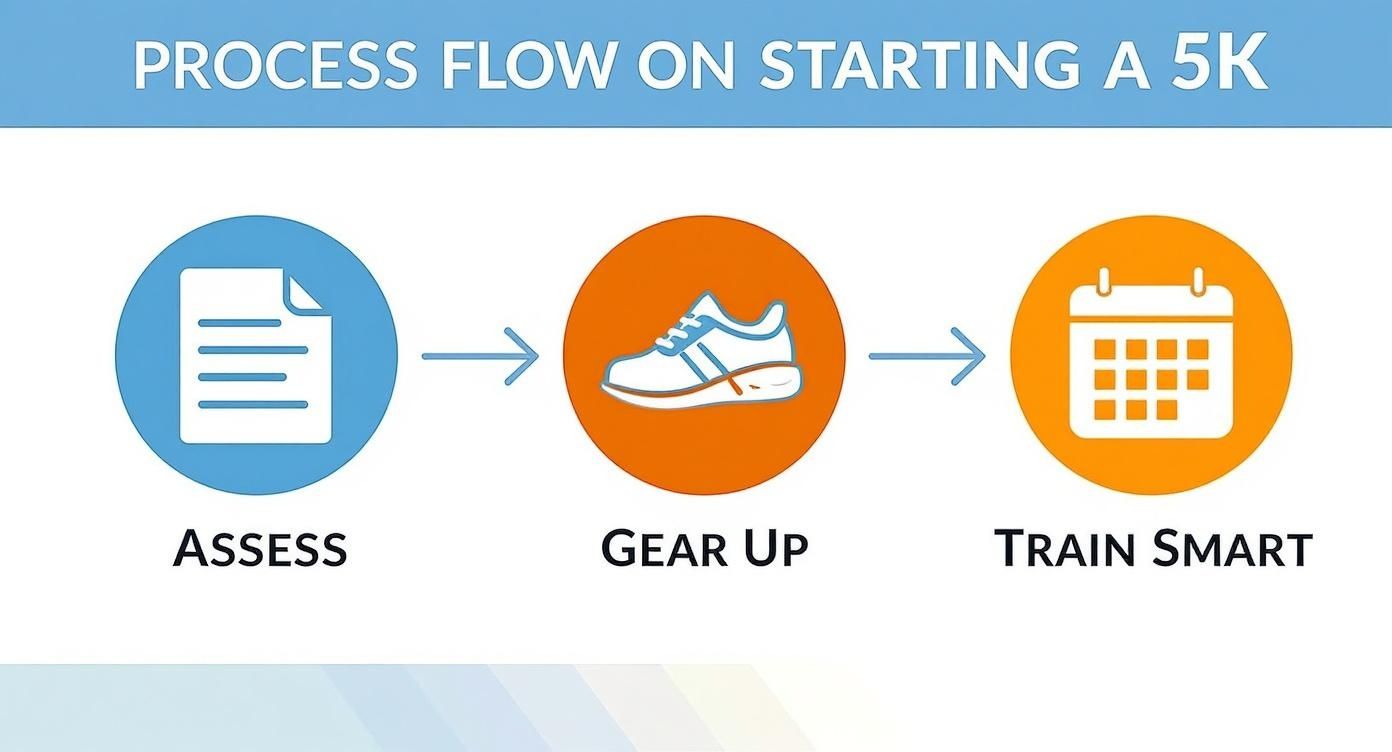
As you can see, success starts before your first run. A little self assessment and the right gear set the stage for smart, effective training.
The Beginner Plan: A Run/Walk Foundation
If you're new to running, this plan uses the tried-and-true run/walk method. You'll gradually increase your running time while shortening walk breaks, letting your body adapt without feeling overwhelmed. This approach is highly effective for getting new runners to the finish line confidently and with a lower risk of injury.
Sample 6-Week Beginner 5K Training Plan (Run/Walk Method)
Day | Monday | Tuesday | Wednesday | Thursday | Friday | Saturday | Sunday |
|---|---|---|---|---|---|---|---|
Week 1 | Rest | Run 1 min, Walk 2 min (x7) | Rest or Cross-Train | Run 1 min, Walk 2 min (x7) | Rest | Run 1 min, Walk 2 min (x8) | Active Recovery |
Week 2 | Rest | Run 2 min, Walk 2 min (x5) | Rest or Cross-Train | Run 2 min, Walk 2 min (x5) | Rest | Run 2 min, Walk 2 min (x6) | Active Recovery |
Week 3 | Rest | Run 3 min, Walk 2 min (x4) | Rest or Cross-Train | Run 3 min, Walk 2 min (x4) | Rest | Run 4 min, Walk 2 min (x4) | Active Recovery |
Week 4 | Rest | Run 5 min, Walk 2 min (x3) | Rest or Cross-Train | Run 5 min, Walk 2 min (x3) | Rest | Run 7 min, Walk 2 min (x3) | Active Recovery |
Week 5 | Rest | Run 8 min, Walk 1 min (x3) | Rest or Cross-Train | Run 8 min, Walk 1 min (x3) | Rest | Run 10 min, Walk 1 min (x2) | Active Recovery |
Week 6 | Rest | Run 15 min, Walk 1 min, Run 10 min | Rest | Run 20 min continuous | Rest | RACE DAY! | Celebrate! |
Notice how the running chunks get longer while walking breaks shrink. It's all about building endurance gradually.
The Intermediate Plan: Building Speed and Stamina
Already jogging comfortably for a mile or two? The Intermediate Plan will boost your speed and stamina for the full 3.1-mile distance. It incorporates different types of runs:
Easy Runs: Conversational pace to build your aerobic base.
Strides: Short, quick bursts of speed (20-30 seconds) to improve form.
Cross-Training: Cycling, swimming, or weightlifting to build all around fitness.
Adding strength training for runners is invaluable for building power and preventing injury.
Remember, rest days are not optional, they are a critical part of your training. This is when your muscles repair and grow stronger.
Understanding the "why" behind each workout empowers you to train smart and listen to your body.
The Runner's Toolkit: Essential Gear and Footwear
Your shoes are the single most important piece of gear. A good pair is your best defense against injury, providing the support your body needs.
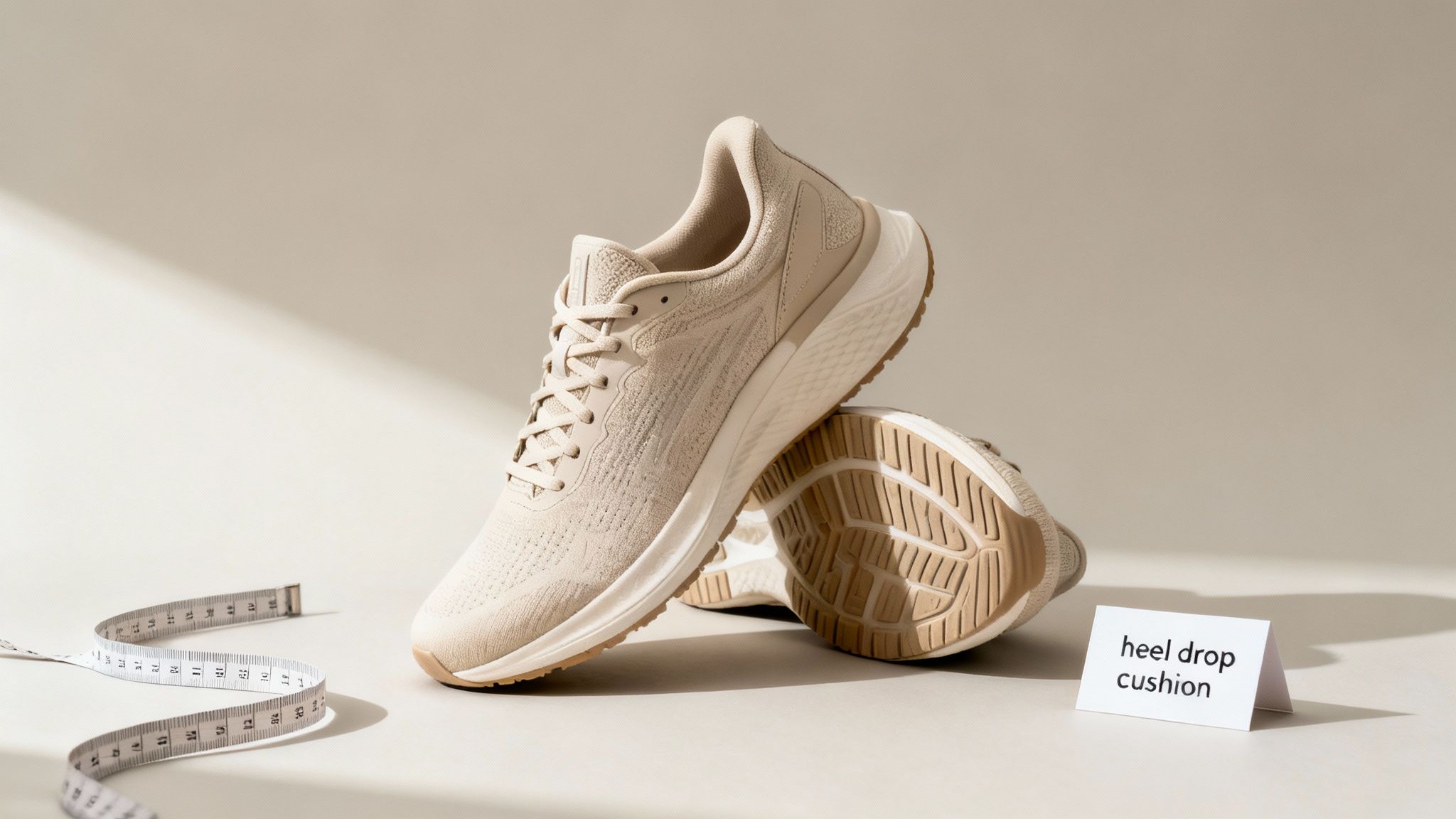
Runners spend an average of $1,748 annually on their sport (Campbell, 2023). As these latest statistics on runner spending show, preparing for a 5K requires a smart investment in the right tools.
Decoding Your Footwear Needs
Finding your ideal shoe means understanding a few key concepts. Visiting a specialty running store for a gait analysis is recommended, but knowing the lingo helps.
Cushioning: Shock absorption in the midsole. Most beginners prefer a moderate level.
Stability: Features to control overpronation (when your foot rolls too far inward). Neutral shoes are for those with an efficient gait.
Heel Drop: The height difference between the heel and forefoot. Most are 8-12mm.
For a full breakdown, see your ultimate guide to running shoes for beginners.
Running Shoe Reviews: Top Picks for Men & Women
Choosing the right shoe depends on your foot type, running style, and comfort preference. Here's a look at some of the top rated shoes for both men and women, categorized by their strengths.
Top Running Shoes for Women
Category | Brand & Model | Best For | Key Features |
|---|---|---|---|
Neutral Cushioning | Everyday training, comfort | Lightweight, plush cushioning, smooth ride | |
Stability | Overpronation, support | GuideRails® support system, soft cushioning | |
Max Cushioning | Long runs, high-impact | Soft Fresh Foam X, secure fit, versatile | |
Lightweight Trainer | Faster paces, race day | Light and responsive, flexible, minimal feel |
Top Running Shoes for Men
Category | Brand & Model | Best For | Key Features |
|---|---|---|---|
Neutral Cushioning | Daily runs, reliability | Balanced DNA LOFT v2 cushioning, smooth transitions | |
Stability | Maximum support, overpronation | 4D GUIDANCE SYSTEM™, PureGEL™ technology | |
Max Cushioning | Ultimate comfort, recovery | PWRRUN+ foam, plush and responsive feel | |
Lightweight Trainer | Versatility, responsive feel | React foam with Zoom Air units, durable |
Remember, the "best" shoe is highly personal. Try on several pairs at a specialty running store to find your perfect fit.
Running Smart: How to Pace Yourself and Set Goals
Finishing your 5K strong is about smart strategy, not speed. Pacing is the secret ingredient that helps you manage your energy from the first step to the last.
A common rookie mistake is starting too fast. Race day adrenaline can cause you to burn through energy reserves early, making the second half a struggle.
Finding Your Sustainable Pace
Your "race pace" is a feeling you discover during training. Use the "talk test": while running, you should be able to speak in short sentences without gasping for air. If you can only manage one word answers, you're pushing too hard. This conversational effort is your baseline for building endurance.
Setting a Realistic Time Goal
After a few weeks of training, you can think about a finish time. Base your goal on your actual training performance. For context, the average 5K time is around 35:20 for men and 41:30 for women, but beginner times vary (Innermost, 2023). You can find more details on 5K finish times to see how times stack up.
A smart goal is one that stretches you but doesn't set you up for disappointment. Aiming to finish without stopping is an excellent first-time goal.
Staying Healthy: Injury Prevention and Smart Recovery
Staying healthy is as important as your weekly mileage. Injury prevention and smart recovery should be a nonnegotiable part of your routine from day one. A dynamic warm up before you run and a proper cool down afterward make a massive difference.
Building a Stronger Foundation
Many common running issues, like runner's knee, often stem from muscular imbalances in the core, glutes, and hips. Targeted strength work is your best defense. Incorporate these exercises two days a week:
Glute Bridges: Strengthens the primary engine for your running stride.
Planks: A strong core stabilizes your body and improves running form.
Clamshells: Targets hip abductors, which are crucial for pelvic stability.
For a deeper dive, explore our guide on how to prevent running injuries with top tips for safe running.
The Art of Smart Recovery
Recovery is when your body adapts and gets stronger. Quality sleep is your most powerful recovery tool.
Aim for 7-9 hours of sleep per night. Sleep allows your body to produce the growth hormones critical for muscle repair and adaptation (Dattilo et al., 2011).
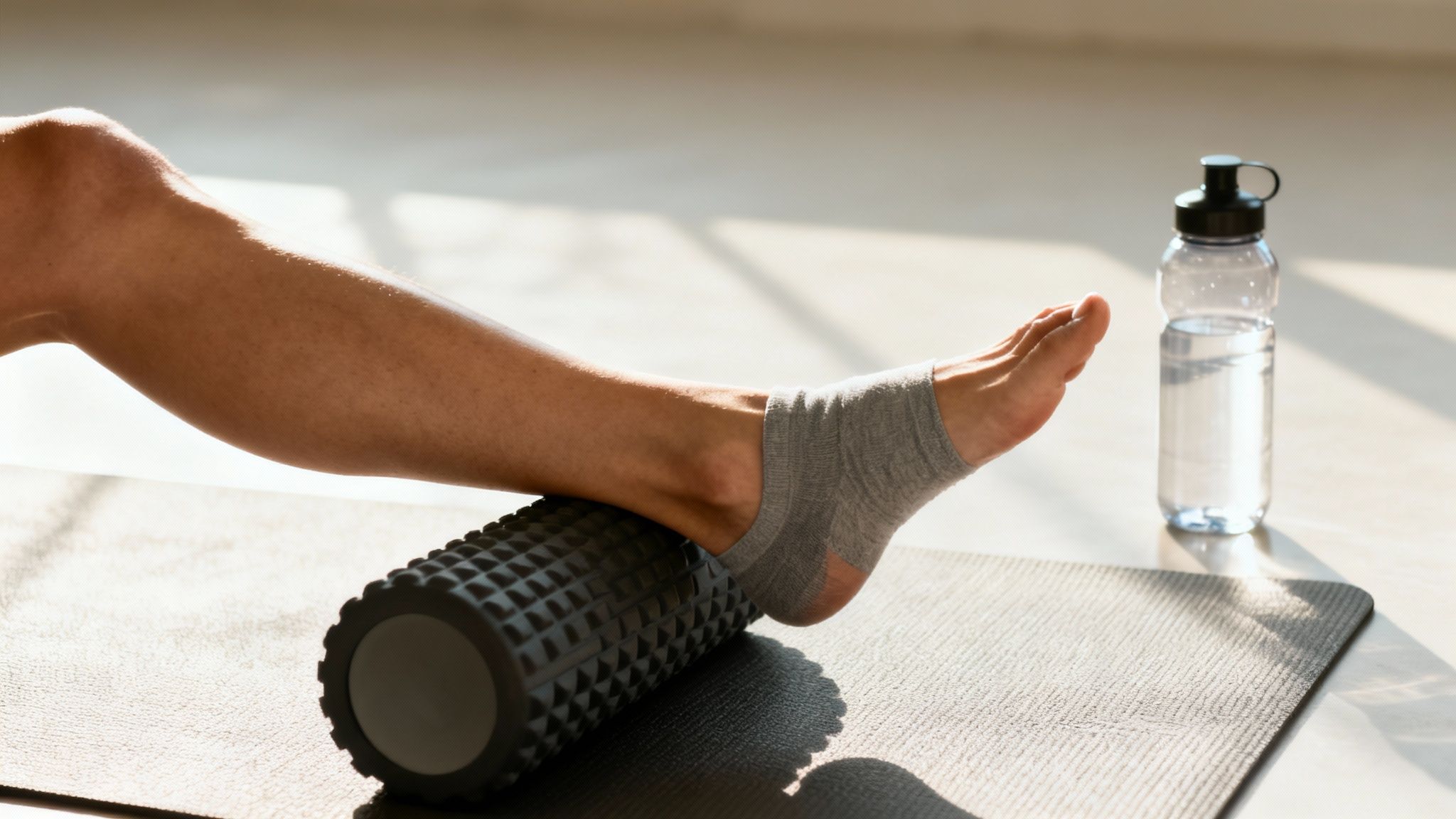
Beyond sleep, foam rolling can help release muscle tightness. Proper nutrition provides the building blocks for repair. For additional support, consider the best supplements for muscle recovery.
Well-Being Trends: Running vs. Other Methods
Running offers significant health benefits, but how does it stack up against other popular wellness activities? Each method has unique advantages, and the best choice often depends on individual goals and preferences.
Comparison of Popular Wellness Methods
Activity | Primary Benefit | Best For | Considerations |
|---|---|---|---|
Running | Cardiovascular health, endurance, weight management | Building stamina, goal oriented fitness, accessibility | High impact on joints, requires proper footwear and form |
Yoga | Flexibility, strength, stress reduction | Improving mind body connection, low impact exercise | Less focus on aerobic conditioning, requires guidance for beginners |
HIIT (High Intensity Interval Training) | Calorie burn, metabolic boost, time efficiency | Quick workouts, improving anaerobic threshold | High intensity can be demanding, higher risk of injury if form is poor |
Strength Training | Muscle building, bone density, metabolic health | Increasing strength and power, body composition | Requires equipment or gym access, learning proper technique is crucial |
Ultimately, a balanced fitness routine is ideal. Combining running with a low-impact activity like yoga or strength training can enhance performance and reduce injury risk by building a more resilient, well rounded body.
Your 5K Training Questions Answered
Even the best plan can leave you with questions. Here are straightforward answers to common queries from new runners.
How Many Days a Week Should I Run?
For beginners, running three days a week is the sweet spot. This provides enough stimulus for your body to adapt while allowing ample time for recovery. A typical week could involve running on Tuesday, Thursday, and Saturday, with rest or light cross-training on other days.
What Should I Eat Before a Training Run?
Fueling correctly is a must. Have a small, carb rich snack 60 to 90 minutes before you run. Good options include a banana, a small bowl of oatmeal, or a slice of toast with jam. Avoid foods high in fat or fiber right before a run, as they can cause digestive issues.
Is It Okay to Walk During My Race?
Absolutely! There is no rule that says you must run every step. A run/walk strategy is a smart way to manage energy and finish strong. Many runners, from beginners to veterans, use planned walk breaks.
Listening to your body is the most important race day strategy. Taking a walk break is a sign of smart racing, not weakness.
This race is your personal victory. Enjoy the atmosphere and be proud of your journey.

References
Campbell, C. (2023). Running Statistics. Garage Gym Reviews.
Dattilo, M., et al. (2011). Sleep and muscle recovery: endocrinological and molecular basis for a new and promising hypothesis. Medical Hypotheses, 77(2), 220-222.
Innermost. (2023). The Average 5k Time (And How to Get Faster).
Running USA. (2019). 2019 U.S. Running Trends.
At Flourish-Everyday, we believe that the right gear is the foundation of a great running experience. From your first training run to the finish line, we're here to help you find the perfect shoes to support your journey. Explore our curated selections, expert reviews, and savings at https://www.flourish-everyday.com to step up your training.


