How to Stretch Butt Muscles for Ultimate Relief and Power

To get the most out of your glute stretches, you’ll want to perform targeted movements like the seated piriformis stretch or pigeon pose, holding each for 30-60 seconds. This simple practice is one of the best ways to release tension in your gluteal muscles, a huge factor in preventing lower back pain, improving mobility, and boosting athletic performance.
The following information will take you through the why, how, mistakes, and answer your basic questions.
Index of Sections
Why Stretching Your Glutes Is Essential: Understand the anatomy and impact of tight glutes.
Your Guide to the Most Effective Glute Stretches: Step-by-step instructions for key stretches.
Building a Stretching Routine That Fits Your Life: Tailored plans for runners, lifters, and desk workers.
How Your Footwear Impacts Glute and Hip Health: The connection between your shoes and muscle function.
Common Glute Stretching Mistakes to Avoid: Essential tips for safe and effective stretching.
Your Questions on Glute Stretching Answered: Expert answers to frequently asked questions.

Why Stretching Your Glutes Is Essential
Before we jump into the specific stretches, let's break down why this is so important. Your glutes are a powerful trio of muscles, the gluteus maximus, medius, and minimus. Think of them as the engine for just about every lower body movement you make.
When these powerhouse muscles get tight, often from sitting all day or after a tough workout, they can set off a chain reaction of problems. The tension doesn't just stay put; it pulls on everything it’s connected to, leading to a cascade of issues.
The Real World Impact of Tight Glutes
Ignoring your glutes can directly sabotage your fitness goals and daily comfort. For runners, tight glutes can mess with your gait, raising your risk of injuries like IT band syndrome. If you're a lifter, a lack of glute flexibility can seriously limit your squat depth and put extra strain on your lower back.
Even if you’re not an athlete, the consequences are a big deal. Desk workers are especially at risk for developing tight, underactive glutes, which often contributes to:
Chronic lower back pain: When your glutes are tight, they can’t do their job of helping with hip extension, which forces your lower back to overwork.
Poor posture: Tight hip flexors and inactive glutes are a classic combo that often leads to an anterior pelvic tilt.
Hip and knee discomfort: Imbalances in your glutes can cause your femur (thigh bone) to rotate inward, placing unnecessary stress on your knee joint.
The gluteus maximus is one of the most powerful muscles in the human body. Its main role in humans evolved to support an upright posture and powerful hip extension, making it fundamental for activities like running and climbing. You can dig deeper into its anatomy in this detailed overview from the National Center for Biotechnology Information.
More Than Just a Stretch
A regular glute stretching routine isn't a luxury; it's fundamental maintenance for your body's foundation. It helps restore proper muscle function, boosts your power output, and lets you move with more ease and less pain. To support mobility from the inside out, consider pairing your routine with essential bone and joint vitamins that help promote flexibility.
Your Guide to the Most Effective Glute Stretches
We've talked about why tight glutes are a problem. Now, let's fix it. This is your toolkit for releasing every tight spot in your glutes. The key isn’t just to stretch, but to feel the muscle letting go. For each of these static stretches, ease into the position and hold it for 30 to 60 seconds on each side. Focus on deep, steady breathing and never bounce.

The Seated Piriformis Stretch
This is a lifesaver, especially if you spend a lot of time sitting. It gets deep into the piriformis, a small but mighty muscle that can cause a world of hurt when tight.
Sit tall in a chair, feet flat on the floor.
Cross your right ankle over your left thigh, just above your knee, making a "figure four."
Keeping your back straight, hinge forward at your hips. Stop when you feel a solid stretch in your right glute.
Classic Pigeon Pose
Yoga practitioners swear by Pigeon Pose (Eka Pada Rajakapotasana) for a reason. It’s an incredibly potent stretch for the entire gluteal area and deep hip rotators.
Start on all fours. Slide your right knee forward behind your right wrist. Your shin will be angled across the mat. Extend your left leg straight back, keeping your hips square to the front. You should feel an intense stretch in the right glute. If it feels like too much, slide a yoga block or a folded blanket under your right hip for support.
A little anatomy secret: the gluteus maximus fibers run at roughly a 45-degree angle. To get a truly effective stretch, you have to work with the muscle. Aligning your leg and torso along this angle is what creates that deep release.
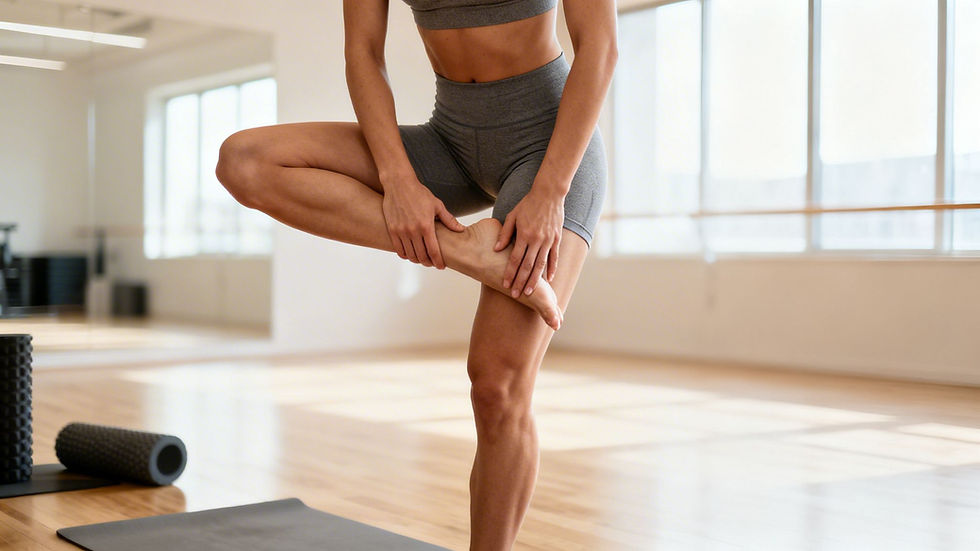
Standing Figure Four Stretch
Need a quick glute release when you're out and about? The Standing Figure Four is perfect and also challenges your balance.
Stand up straight and cross your right ankle over your left thigh. Slowly bend your standing knee and sink your hips back, like sitting in a chair. Use a wall for balance if needed. The lower you sit, the deeper the stretch.
This next image perfectly illustrates the chain reaction that begins with tight glutes, often triggering lower back pain and leading to poor posture.

It’s a powerful reminder of how one tight muscle group can throw your body out of whack.

Lying Glute Stretch
Also called a supine figure four, this is a gentler, more supported version of the other stretches. It's my top pick for a post workout cooldown.
Lie on your back with your knees bent and feet flat. Cross your right ankle over your left thigh. Thread your hands through the gap and grab the back of your left thigh. Gently pull that left leg toward your chest until you feel a solid stretch in your right glute. Keep your head and shoulders relaxed.
To level up your flexibility, combine these glute stretches with other movements. Check out these effective hip mobility stretches. And if you're a runner, you’ll find more specific movements in our guide to a smarter post-run stretching routine.

Building a Stretching Routine That Fits Your Life
A random stretch is a decent start, but for lasting results, consistency is everything. To effectively stretch your butt muscles, you need a routine that slots right into your life. The trick is to match your stretches to your specific needs. Let's look at a few practical plans.
The Runner's Post-Run Cooldown
After a run, your glutes and hips are tired. Your goal is to help those shortened muscles lengthen back out. This routine is best done right after your run while muscles are warm.
Lying Glute Stretch: Hold for 45-60 seconds on each side. A gentle way to release tension without stressing tired joints.
Pigeon Pose: Hold for 30-45 seconds per side. This gets into the deep hip rotators that stabilized you during your run.
The Lifter's Mobility Prep
For lifters, mobility is your best friend. Tight glutes can block you from hitting full depth in squats and deadlifts. This routine is perfect for your warm-up to open the hips before you lift.
Kneeling Hip Flexor Stretch: Hold this for 30 seconds on each side. Releasing tight hip flexors allows your glutes to activate properly.
Think of it this way: your glutes can't fully engage if your hip flexors are pulling your pelvis forward. By releasing the front of your hips, you give your glutes the green light to fire.

The Desk Worker's Daily Reset
Sitting for hours leaves your glutes and hip flexors short and tight. This quick reset can be done multiple times throughout the day.
Seated Piriformis Stretch: Hold for 30 seconds on each side. This is the perfect discreet stretch to do at your desk.
Floor Pretzel Stretch: If you can find floor space, this is a fantastic way to unwind. Hold for 45 seconds per side.
For a deeper look at making fitness a permanent part of your world, check out our guide on how to stay consistent with exercise and build a lifelong habit.

How Your Footwear Impacts Glute and Hip Health
Everything in your body is connected. The shoes on your feet have a massive impact on the health of your hips and glutes. If you ignore what you’re wearing, you're trying to fix a problem at the top without checking the foundation first. You might be working to stretch your butt muscles, but if your shoes are fighting against you, you’re just taking one step forward and two steps back.
The Connection Between Your Feet and Glutes
Think about how your foot strikes the ground. If your shoe is unstable, your foot can roll too far inward, a pattern called overpronation. This kicks off a chain reaction up your leg, forcing your knee to dip inward and knocking your hip out of alignment. Over time, this constant misalignment forces your glutes to either work inefficiently or just switch off.
The right shoe gives you a stable platform, allowing your body to stay in proper alignment from the ground up. This lets the muscles you're stretching, like the piriformis and gluteus medius, work correctly during movement.
Matching Your Shoes to Your Activity
Choosing the right athletic shoe is nonnegotiable.
For Lifters and Cross-Trainers: You need a flat, stable base. A solid cross-training shoe will have a minimal "heel-to-toe drop" and a firm sole. This gives you the solid platform to drive through your heels and fully fire up your glutes. For more comprehensive info, please check out,"Ultimate Guide to Strength Training Shoes".
For Runners: Running shoes are built with extra cushioning. If stretching has helped your form, a neutral running shoe could be a great fit. But if you’re still working through instability, a stability shoe can prevent overpronation and keep that kinetic chain lined up properly. Check out, "A Guide to Running Shoes Stability".
Your shoes should be the solid base supporting all the hard work you put into mobility. For ongoing discomfort, check our guide to finding the best shoes for hip pain relief.

Common Glute Stretching Mistakes to Avoid
To benefit from trying to stretch your butt muscles, quality is as important as frequency. Many people make small mistakes that make a stretch less effective or even risky. Let’s cover common errors and how to correct them.

Pushing Through Sharp Pain
This is the number one rule. A proper stretch should feel like a deep, satisfying pull, never sharp or stabbing. Pain is your body’s alarm bell. If you feel that sharp sensation, it's a clear sign you’re pushing too far. Back off immediately until you’re back in the zone of mild tension, not pain.
Pushing into pain triggers a protective stretch reflex, which makes your muscles clamp down and tighten to prevent damage.
Forgetting to Breathe
Holding your breath creates tension throughout your body and starves your muscles of the oxygen they need to relax. Instead, make your breath the focus. Think about slow, deep breaths from your diaphragm. Inhale as you get into position, then exhale as you ease deeper into the stretch.
Common Form and Alignment Errors
A tiny issue with your alignment can undo the benefit of a stretch.
Bouncing in the Stretch (Ballistic Stretching): This can cause tiny tears in your muscle fibers. The better approach is static stretching, holding a position steady for at least 30 seconds.
Hiking Your Hip: In a figure four or pigeon stretch, it’s easy to let the hip of your stretching leg creep up. Actively focus on keeping both hip bones level.
Rounding Your Back: If you’re doing a seated stretch and folding forward, the movement must come from your hips, not your spine. Keep your back straight and lead with your chest.
Your Questions on Glute Stretching Answered
When it comes to glute stretching, a few questions pop up time and time again. Let's clear up some confusion so you can get the most out of your mobility work.
How Often Should I Stretch My Glutes?
Consistency gets results. Aim to stretch your butt muscles at least 3 to 5 times per week. If you're particularly active or sit for long periods, you’ll feel better with gentle stretching every day. Even a few minutes can make a real difference.
Glute Pain or Sciatica: What's the Difference?
This is a common point of confusion. Sciatica is specific pain from irritation of the sciatic nerve, often caused by a tight piriformis muscle pinching the nerve and causing sharp, radiating pain down the leg. True glute pain is usually a more contained, deep ache or soreness right in the muscle tissue. Stretching can help both, but if you have sharp, traveling pain, see a professional.
A good rule of thumb is to pay attention to the sensation. A muscular ache usually feels dull and stays put, while nerve pain often feels sharp or electric.
Should I Stretch Before or After My Workout?
The type of stretching matters. Stick to dynamic stretches, like leg swings or walking lunges, before your workout. This gets the blood flowing and wakes muscles up. Save your static stretches, where you hold a position for 30-60 seconds, for after your workout when muscles are warm and more willing to lengthen.
Can Stretching My Glutes Help My Knee Pain?
Absolutely. What happens at your hips directly impacts your knees. When glutes are tight or weak, other muscles compensate. This can cause your thigh bone (femur) to rotate inward, putting extra stress on your knee joint, a classic cause of runner's knee. By regularly stretching and strengthening your glutes, you help keep your hips aligned, which in turn lets your knee track correctly.
At Flourish-Everyday, we know that having the right gear is just as important as having the right knowledge. To support your newly mobile hips and power through your workouts, find the perfect shoes by checking out our expert recommendations at https://www.flourish-everyday.com.
