The Best Running Shoes for Back Pain: A Comprehensive Guide

Updated: Dec 29, 2025
Back pain can quickly turn a run from a joy into a chore, but your shoes are your first line of defense. The best running shoes for back pain focus on three core principles: superior cushioning to absorb impact, structured support to stabilize your stride, and features that encourage a natural, healthy running form. These elements work together to shield your spine from the constant pounding of the pavement.
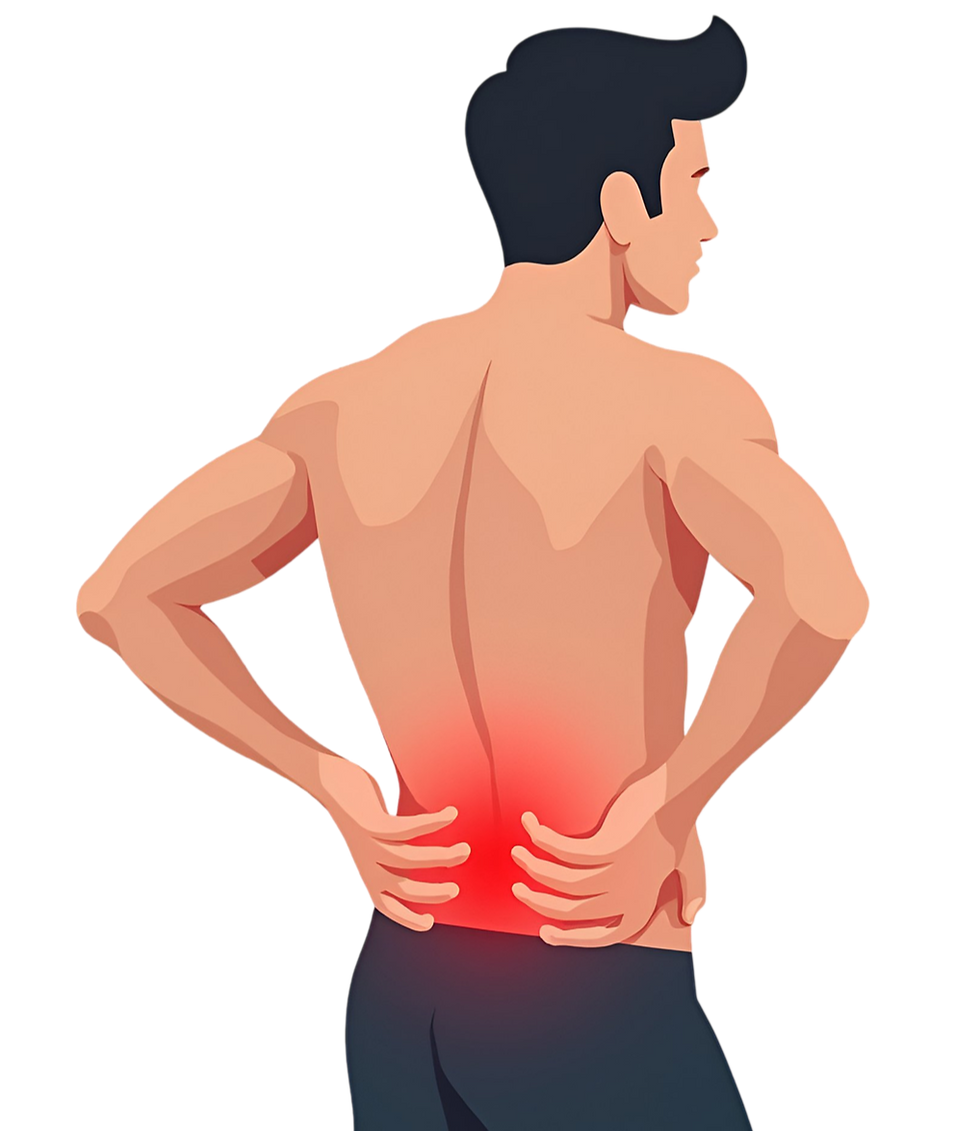
Table of Contents
Finding Relief One Step at a Time
Running with a sore back doesn't have to be your new normal. Your body is a kinetic chain, what happens at your feet travels up to your spine. With each foot strike, a runner lands with a force of roughly three times their body weight [1]. If your shoes can't handle that shock, it hammers your lower back, potentially leading to misalignment and pain.
This guide is your roadmap to breaking that painful cycle. We'll explore the critical link between your feet and spinal health, empowering you to choose a shoe that helps you run stronger and pain free.
Choosing the right running shoe is about more than just comfort; it's a strategic decision to invest in the long term health of your spine. By focusing on cushioning and support, you're actively taking stress off your back.
Let's get you on the path to rediscovering the joy of running, without the pain.
How Your Feet Affect Your Spine
Think of your body as a building and your feet as its foundation. Each time you run, a shockwave travels up that structure. If the foundation isn't stable or can't absorb the impact, vibrations rattle everything to the top. That’s the biomechanical reality between your feet and your spine.
Your body is a kinetic chain, meaning force and movement in one area directly impact everything else. When your foot hits the pavement, that force has to go somewhere. Good running shoes act as your first line of defense, soaking up that harmful stress before it can jolt your lower back.

The Gait Cycle and Its Impact on Your Back
An inefficient gait cycle, the motion from one foot strike to the next, is a major culprit behind back pain in runners. The two most common issues are overpronation and supination.
Overpronation: This happens when your foot rolls too far inward after landing. This motion can twist your lower leg, throwing your knees and hips out of alignment and eventually straining your lower spine.
Supination (or Underpronation): The opposite issue, where your foot doesn’t roll inward enough. This limits your body's natural shock absorption, sending more jarring impact straight up your legs into your back.
An imbalanced gait makes your muscles and joints overcompensate, leading to fatigue and that familiar ache in your back.
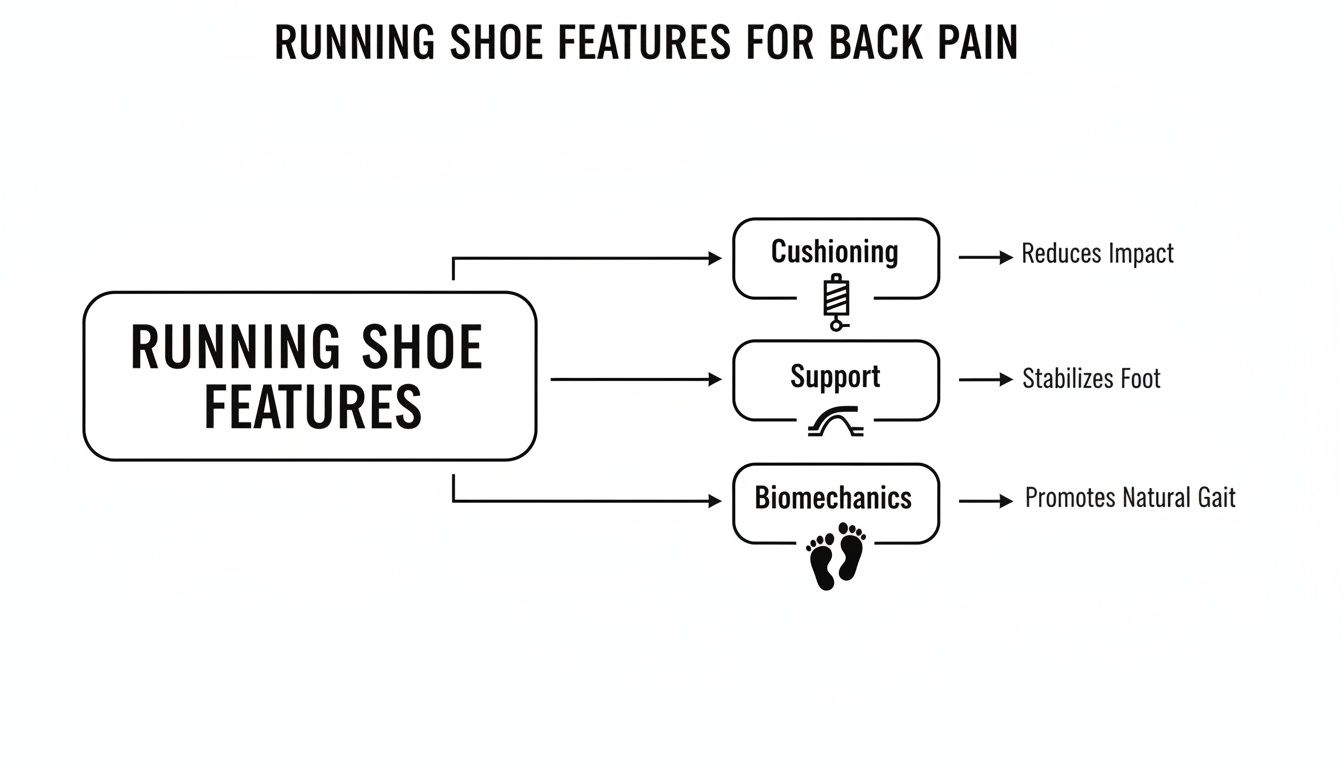
The right shoes manage impact, promote proper alignment, and support your foot's natural movement all at once.
Why Your Shoes Are Nonnegotiable for Spinal Health
Without proper support, the repetitive impact of running is massive. Studies show ground reaction forces can be 2.5 to 3 times your body weight with every step [1]. For a 150 pound runner, that's up to 450 pounds of force per stride.
Your running shoes aren't just accessories; they are essential equipment for shock absorption. A well cushioned and supportive shoe acts like a suspension system, protecting the delicate structures of your spine from this relentless pounding.
Ignoring this can contribute to issues like lumbar disc degeneration. The right shoe helps protect your body's natural shock absorption system. Beyond shoes, addressing foot health directly can bring relief. For instance, a Therapeutic Foot Massage for Lasting Pain Relief can ease tension that affects biomechanics. When you see your shoes as a fundamental tool for spinal health, you’re protecting your entire body from the ground up.
Key Shoe Features That Protect Your Back
When shopping for the best running shoes for back pain, you're investing in protective gear for your spine. Understanding the technology inside these shoes helps you make a smart choice.
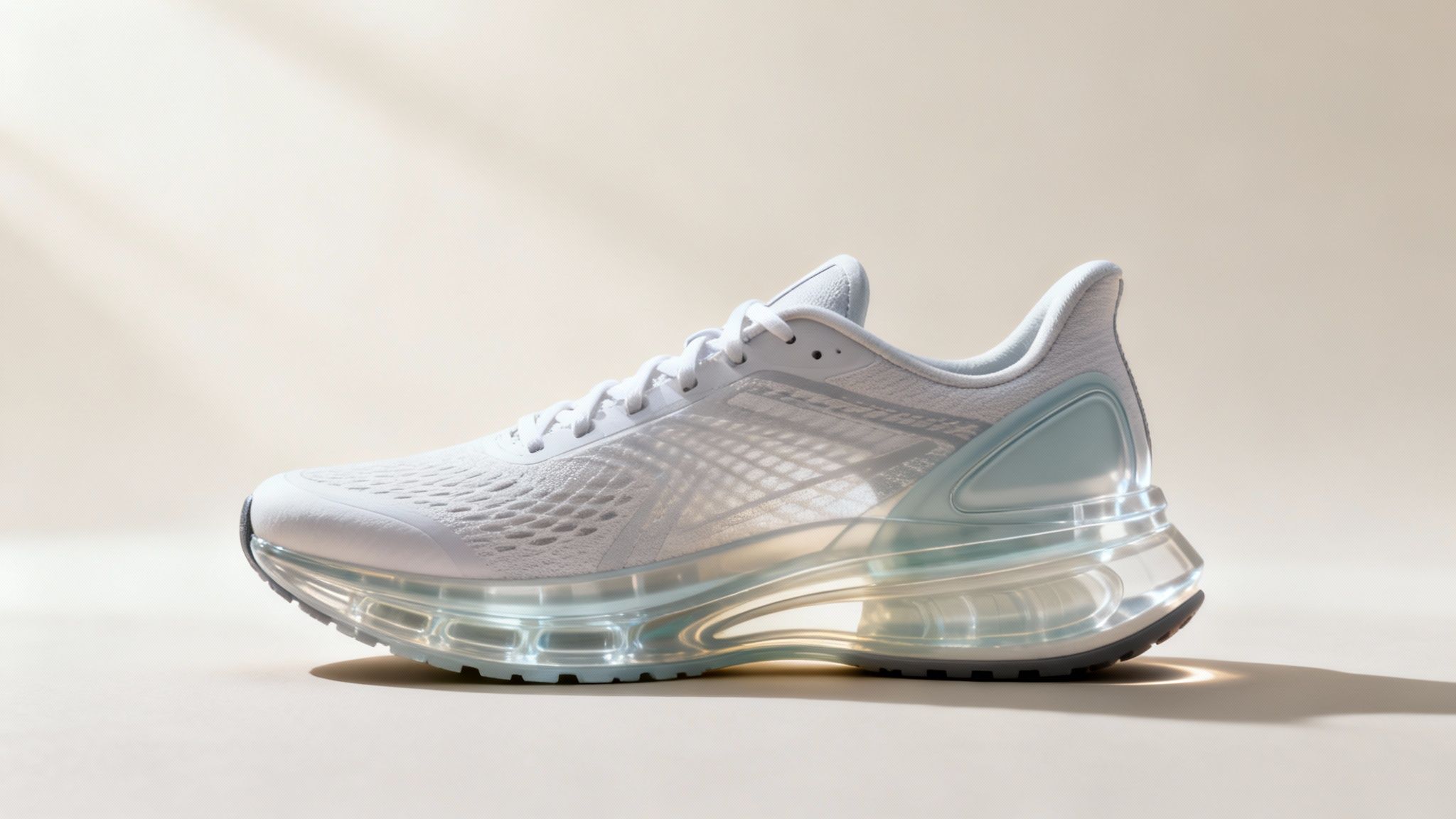
In 2022, running shoes comprised over 38% of the revenue share in the athletic footwear market [2]. This demand reflects a growing consumer focus on features that absorb shock and cushion joints, great news for anyone with back pain.
Cushioning: Your First Line of Defense
Cushioning is like a car's suspension system, smoothing out the harsh impact of your foot striking the ground. This is the most important feature for back pain. "Maximalist" shoes, like many from Hoka, use a thick layer of soft foam as a powerful shock absorber, stopping jarring forces before they reach your lower back. For those with issues like lumbar disc degeneration, this cushioning is essential.

Stability and Support: Your Foundation
Cushioning absorbs impact, while stability features control your foot's motion after it lands. Overpronation (when the foot rolls too far inward) creates a chain reaction of poor alignment. Stability shoes are built to prevent this using key technologies:
Medial Posts: A section of firmer foam on the inside of the midsole that prevents your arch from collapsing inward.
Guide Rails: These act like bumpers, gently guiding your foot into a neutral position without being overly restrictive.
These features ensure your feet provide a solid foundation, preventing tiny imbalances that can lead to chronic back pain over time.
Key Shoe Features for Back Pain Relief
Feature | What It Does | How It Helps Your Back |
|---|---|---|
Cushioning | Absorbs the initial impact of your foot hitting the ground. | Reduces shockwaves that travel up to your spine, minimizing stress. |
Stability | Controls excessive foot motion, like overpronation. | Prevents misalignment in your knees and hips, keeping your spine aligned. |
Heel-to-Toe Drop | Varies the angle of your foot, influencing muscle engagement. | A higher drop can ease calf strain; a lower drop may promote a midfoot strike. |
Rocker Geometry | Uses a curved sole to promote a smooth, rolling motion. | Creates a more efficient stride, reducing braking forces and overall impact. |
For a deeper dive into finding the right shoe, our how to choose running shoes an expert guide is a great resource.
Heel-to-Toe Drop and Rocker Geometry
The heel-to-toe drop is the height difference between a shoe's heel and forefoot. A higher drop (10-12mm) can reduce strain on the Achilles tendon, while a lower drop (4-8mm) may encourage a more natural midfoot strike. Transition to lower drop shoes carefully to avoid injury.
Rocker geometry refers to a curved sole that promotes a smooth, rolling transition from heel strike to toe-off. This fluid motion lessens the "braking" force of landing and encourages a more efficient stride, resulting in less jarring impact on your back.
Top Running Shoe Recommendations
Now, let's look at specific shoes that excel in providing comfort and protection for runners with back pain. We've selected top models from trusted brands, covering options for different foot types.
Hoka Bondi 8: The Maximalist Cushioning Champion
For ultimate shock absorption, the Hoka Bondi 8 is a top contender. As Hoka's most cushioned road shoe, it delivers an incredibly soft, forgiving ride. Its massive, full length EVA foam midsole is designed to absorb the jarring forces that can harm your lower back, making it ideal for running on hard surfaces. The shoe also features Hoka's Meta Rocker geometry, a curved sole that promotes a smooth, efficient gait.
Best For: Neutral runners or walkers wanting maximum cushioning.
Key Feature: An ultra plush, oversized midsole for incredible shock absorption.
Brooks Adrenaline GTS 23: The Smart Support System
For overpronators, stability is as crucial as cushioning. The Brooks Adrenaline GTS 23 uses GuideRails technology for smart support. Instead of a stiff medial post, GuideRails act like bumpers, gently nudging your foot back into alignment only when needed.
By addressing overpronation at its source, the GuideRails system helps prevent the internal leg rotation that can lead to pain in the knees, hips, and lower back.
The shoe also features soft DNA LOFT v2 cushioning, hitting a sweet spot between comfort and control. This makes it a great all around choice for back pain sufferers who need extra stability.
Asics Gel-Kayano 30: A New Era of Stability
A legend in stability, the Asics Gel-Kayano 30 features the adaptive 4D GUIDANCE SYSTEM. This technology provides stability only when your foot needs it as you fatigue, offering a more natural-feeling ride. The shoe combines this smart stability with soft FF BLAST PLUS ECO foam and PureGEL technology in the heel to absorb impact and provide a bouncy feel.
Here’s a quick rundown of our top picks:
Shoe Model | Primary Feature | Ideal Runner Profile |
|---|---|---|
Hoka Bondi 8 | Maximal Cushioning | Neutral runner seeking ultimate shock absorption. |
Brooks Adrenaline GTS 23 | GuideRails Support | Mild to moderate overpronator needing stability. |
Asics Gel-Kayano 30 | Adaptive Stability | Overpronator wanting modern support with cushion. |
If you have a neutral stride, the Hoka Bondi 8 is a fantastic choice. If your feet tend to roll in, the intelligent support of the Brooks Adrenaline GTS 23 or Asics Gel-Kayano 30 will provide the alignment needed to protect your back.
A Holistic Approach to a Healthy Running Back
The right shoes are a huge win, but they are just one piece of the puzzle. A strong core and glutes act as a natural corset, providing crucial stability to your spine. When these muscles are weak, your lower back picks up the slack, leading to strain. Targeted exercises build a support system that complements your shoes.
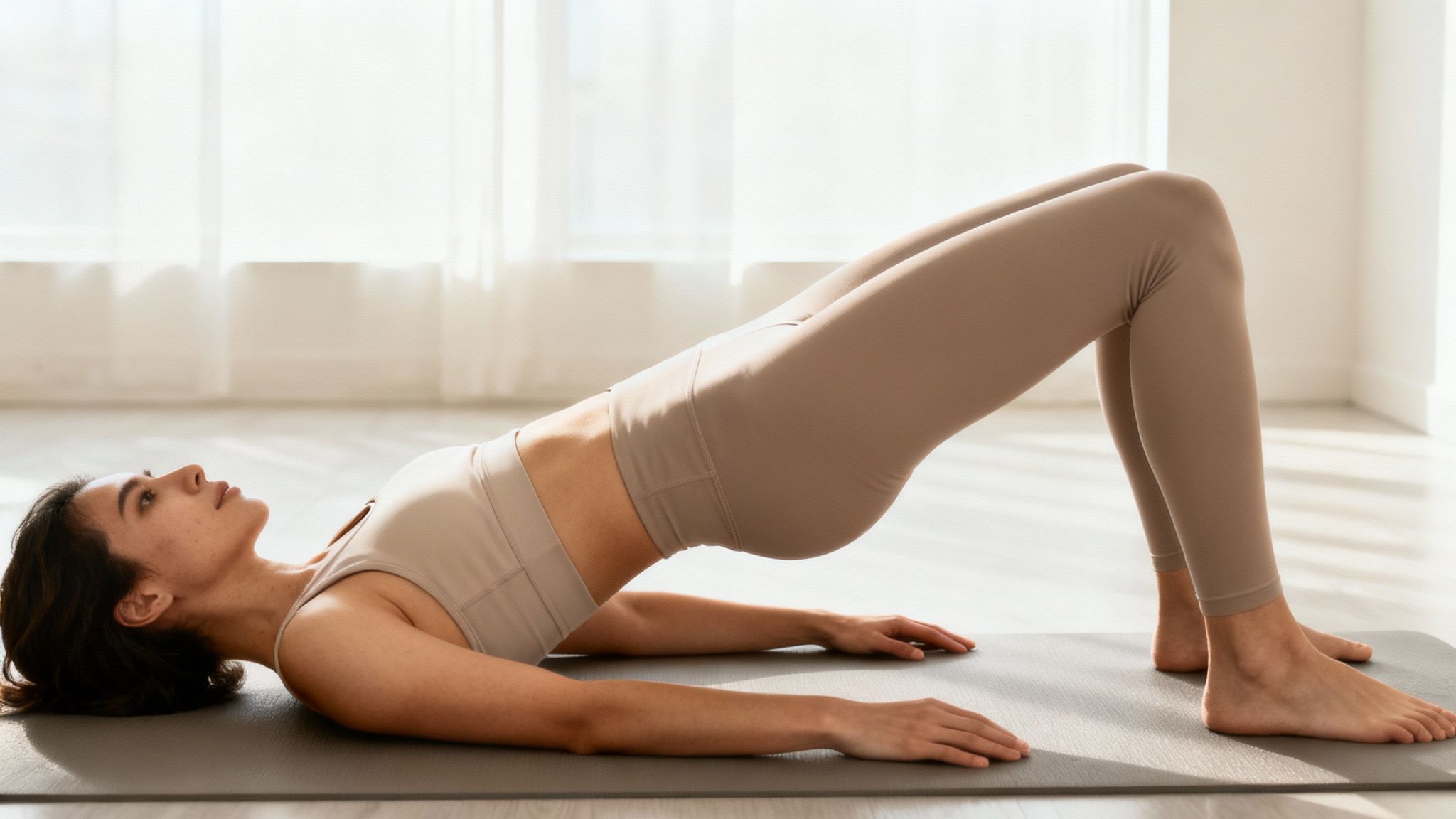
Building Your Body Armor
Strengthening the muscles that support your spine is nonnegotiable. Your core stabilizes your body, while strong glutes control hip and leg movement. Incorporating regular Pilates reformer exercises can significantly improve core strength and back health.
Essential practices to add to your routine include:
Dynamic Warm-Ups: Spend 5-10 minutes before each run on movements like leg swings and walking lunges to prepare your muscles.
Core Strengthening: Planks, bird dogs, and bridges build core endurance without straining your back. See our guide on 5 essential core strengthening exercises for runners for a detailed routine.
Post-Run Stretching: Gently stretch your hamstrings, hip flexors, and glutes after your run to release tension that can contribute to back pain.
When to Consider Extra Support
For significant biomechanical issues, custom orthotics or high quality insoles are a must. These inserts provide personalized arch support to correct problems like severe overpronation.
Think of insoles as a way to fine-tune your footwear. They customize the inside of your shoe to your foot's unique contours, offering an extra layer of alignment and support.
With up to 70% of runners affected by injuries annually, the recovery footwear market is projected to reach $28.94 billion by 2034 [3]. This trend highlights the growing understanding that pre and post run care is as important as the run itself.
Putting It All Together for Pain Free Running
You are now equipped with the knowledge of cushioning, stability, and proper fit to make a smart decision. Your shoes are the foundation, but a strong, well conditioned body builds the rest of the house. By investing in the right shoes and committing to a complete approach, you can leave back pain behind and enjoy your runs again. The secret is combining protective gear with smart, preventative habits.
Your best running experience comes from the shoes you wear, the strength you develop, and the recovery you prioritize. This combination is your ticket to sustainable, pain-free performance.
To build on what you've learned, our article on how to prevent running injuries with top tips for safe running offers valuable tips for creating a sustainable running routine.
Frequently Asked Questions
Getting straight answers to common questions can help you feel confident in your choices and stay healthy on the road.
How Often Should I Replace Running Shoes to Prevent Back Pain?
The general rule is to replace running shoes every 300 to 500 miles. The foam in a shoe's midsole compresses and breaks down over time. Once the cushioning is gone, the shoe can no longer absorb impact effectively. Continuing to run in worn-out shoes transfers shock up your kinetic chain to your ankles, knees, hips, and spine, which can trigger or worsen back pain.
Can the Wrong Running Shoes Actually Cause Back Pain?
Absolutely. If your shoes lack proper support or cushioning, your body is forced to compensate. This can alter your gait, break down your running posture, and multiply the impact on your joints and spine with every stride. Over time, these issues can directly cause or exacerbate lower back pain.
Are Zero-Drop Shoes a Good Choice for Back Pain?
It depends on the runner. Zero-drop shoes, with no height difference between the heel and toe, can encourage a more natural midfoot strike, which may soften impact for some. However, they require strong calves and flexible Achilles tendons. Transitioning too quickly without this conditioning can lead to new injuries. If you're interested in zero-drop shoes, transition very slowly and consider consulting a running specialist or physical therapist.
References
[1] Nigg, B. M., & Wakeling, J. M. (2001). "Impact forces and muscle tuning: a new paradigm." Exercise and Sport Sciences Reviews, 29(1), 37-41. [2] Grand View Research. (2023). "Athletic Footwear Market Size, Share & Trends Analysis Report." [3] Fact.MR. (2024). "Recovery Footwear Market Analysis."
Here at Flourish-Everyday, we're all about helping you find the perfect gear and the right information to feel your best. Check out our expert advice and hand-picked selections to run stronger and live healthier. You can find your next favorite pair at https://www.flourish-everyday.com.


