Finding the Best Protein Powder for Runners

Updated: Dec 26, 2025
When it comes to post-run recovery, you want something that works fast. For that immediate repair job, whey protein is king. Finding the best protein powder for runners is dependent upon its rapid absorption and high concentration of leucine, the most important amino acid for muscle repair, making it the best choice. Think of it as the emergency response team for your muscles. It shows up almost instantly to start rebuilding, making it perfect for that critical 30-minute window right after you finish a run.

Table of Contents
Why Runners Need the Right Protein Powder
Walking down the supplement aisle can feel overwhelming, but picking the right protein powder is essential for your training. Every stride you take creates tiny micro tears in your muscle fibers. Protein delivers the essential amino acids, the building blocks, that patch up this damage, making you stronger and more resilient for your next session.
This isn't just about building bigger muscles; it’s about injury prevention and consistent training. Without enough protein, recovery takes longer, soreness sticks around, and your risk of injury increases, which can completely derail your training plan.

The Growing Demand for Runner Specific Nutrition
The market for effective recovery aids is exploding. The U.S. protein supplements market hit USD 9.88 billion in 2024 and is projected to reach USD 22.58 billion by 2032 [1]. Protein powders are leading this growth because athletes, especially runners, need efficient muscle repair to maintain their training volume.
With over 50 million Americans running regularly, many are turning to supplements like whey protein, which multiple studies have shown can significantly reduce recovery time after strenuous exercise.
For a runner, protein isn't a luxury; it's maintenance. Just as you service your car to keep it running smoothly, you must supply your body with adequate protein to repair the wear and tear from logging miles on the road.
Getting a handle on the different types of protein is your first step. Whey, casein, and plant based options all have unique strengths, depending on your goals and dietary needs.
Protein Powder Quick Comparison for Runners
To make things easier, here is a quick comparison table to help you see which protein type might be the best fit for different running scenarios.
Protein Type | Best For | Absorption Speed | Key Benefit for Runners |
|---|---|---|---|
Immediate post-run recovery (within 30-60 mins) | Fast | Rapidly delivers amino acids to repair muscle micro-tears and reduce soreness. | |
Overnight recovery or between-meal fuel | Slow | Provides a steady, prolonged release of amino acids, ideal for preventing muscle breakdown during sleep. | |
Runners with dairy sensitivities or vegan diets | Varies (Moderate) | Offers a complete amino acid profile (in blends) and is often easier on the digestive system. |
Each of these has a place in a runner's toolkit. The key is knowing when to use each one to get the biggest bang for your buck in terms of recovery and performance.
Why Protein Is Your Secret Weapon for Endurance
Most runners focus on tracking carbs, but that’s only half of the nutritional picture. Protein is the essential tool your body uses to repair the muscle damage that happens during every run. Think of it as your secret weapon for building real, sustainable endurance.
Imagine your muscle fibers are like a road. Each run creates tiny cracks. Protein is the repair crew that swoops in, not just to fill those cracks but to reinforce the surface, making that road stronger for the next run. This constant repair cycle is what keeps soreness from turning into a full blown injury.
Beyond Muscle Repair The Endurance Connection
Getting enough protein consistently supports muscle protein synthesis, the process of building new muscle tissue. As this happens, your body becomes more efficient at handling the demands of long distance running. Stronger muscles can generate more force with less effort, which translates to running farther and faster without hitting a wall.
Runners are leaning on supplements for a performance edge, and studies support this by showing protein can boost key endurance metrics.
A runner's diet without sufficient protein is like training for a marathon in worn out shoes. You might get through the workout, but you're setting yourself up for breakdown and poor performance down the line.
Protein also plays a huge role in immune function. High mileage training can temporarily weaken your immune response, leaving you vulnerable to illnesses that can derail your schedule. A steady supply of protein helps build the antibodies and immune cells you need to stay healthy.

Can Whole Foods Keep Up
While a balanced diet is nonnegotiable, relying only on whole foods for post-run recovery can be tough for serious runners. This is where a high quality protein powder offers distinct advantages:
Speed of Absorption: A protein shake is digested much faster than solid food. This rushes amino acids to your muscles within the critical 30-60 minute post-run window when they're primed for repair.
Convenience: After a long run, cooking a meal is often the last thing you want to do. A shaker bottle is a simple way to kickstart recovery immediately.
Targeted Nutrition: Powders provide a concentrated dose of high-quality protein without a lot of extra fats or carbs you might not need.
Protein powder isn't meant to replace a healthy diet, but it's an incredibly effective tool. To see how it fits into the bigger picture, check out our guide on the best post-workout recovery foods for faster results.
Choosing Your Fuel: Whey, Casein, and Plant-Based Options
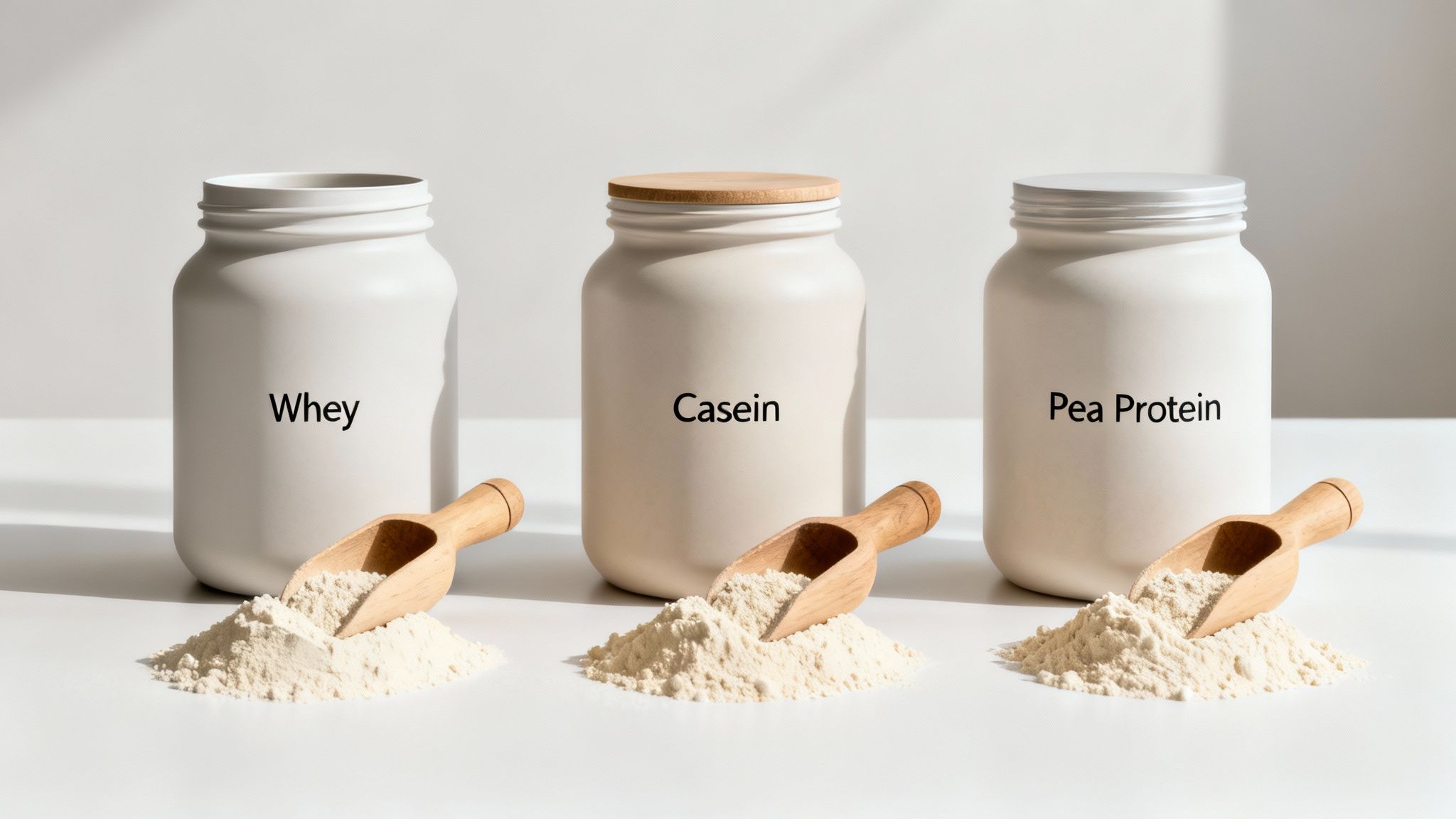
The supplement aisle can be overwhelming, but each type of protein powder has a specific job. The sports nutrition market was valued at USD 49.60 billion in 2024 and is projected to hit USD 94.30 billion by 2033 [3]. Protein powders are a huge part of that, and for good reason. Research shows that just 20g after a run can reduce muscle damage markers by 25%. Let's break down the main types.
Whey protein is popular because it's a complete protein loaded with leucine, the amino acid that triggers muscle repair. It digests almost immediately, making it the perfect choice for a post-run recovery shake.
Whey Concentrate: A less processed version with slightly more fat and carbs. It's a solid, budget friendly option.
Whey Isolate: Extra filtering removes most fat and lactose, resulting in a higher protein percentage per scoop. Great for those with mild lactose sensitivity.
Casein is the marathoner of proteins. It digests slowly, releasing amino acids steadily over hours. This makes it unsuitable for immediate post-run recovery but ideal before bed.
Taking a casein shake before bed is like hiring an overnight construction crew for your muscles. It works while you sleep to prevent muscle breakdown and promote continuous repair, ensuring you wake up stronger and less sore.
For vegan runners or those with lactose intolerance, plant based proteins are fantastic. Modern blends combine different sources to deliver a full amino acid profile that rivals dairy.
Pea Protein: Rich in branched chain amino acids (BCAAs) and easy to digest.
Soy Protein: A complete protein on its own that effectively supports muscle recovery.
Rice Protein: A hypoallergenic choice often mixed with pea protein for a balanced profile.
Collagen is not a complete protein, so it isn't your primary powder for building muscle. Its strength lies in supporting connective tissues like tendons, ligaments, and cartilage. Supplementing with collagen can help support joint health and reduce the risk of overuse injuries. Think of it as essential maintenance for your running chassis.
How to Master Your Protein Timing for Peak Performance
It’s not just what protein you choose; understanding when to take it is very important. Your muscles after a run are like a dry sponge, ready to soak up nutrients. Nailing your protein timing gives those muscles what they need when they're most ready to use it for repair.
The Post-Run Recovery Window
The most important time to get protein in is within 30 to 60 minutes after you finish your run. In this period, your muscles are primed to absorb amino acids and kick off muscle protein synthesis, the process of repairing and rebuilding muscle fibers. A fast acting protein like whey isolate is your best bet here, delivering a quick flood of amino acids to start the repair process immediately.
Think of the anabolic window as a limited time offer from your body. Downing a protein shake in that first hour is like cashing in a coupon for faster recovery, setting you up to feel stronger tomorrow.
Strategic Protein Intake Beyond the Finish Line
True recovery is an all day job. By spacing out your protein intake, you help your body stay in a constant state of repair rather than breaking down muscle tissue.
Pre-Run Fuel: A small, easy to digest protein snack about an hour before a run can prevent muscle breakdown for energy. Learn more about what to eat before running for peak performance.
Before Bed: A slow digesting protein like casein provides a steady supply of amino acids overnight, so you’re repairing while you rest.
With Every Meal: Including a quality protein source at breakfast, lunch, and dinner keeps a constant supply of building blocks available for your body, which is essential for any runner logging serious mileage.

How to Read Nutrition Labels and Avoid Marketing Traps
Don't let flashy tubs fool you. The real story of any protein powder is on its nutrition label. Learning to decode it ensures you're getting a quality product.
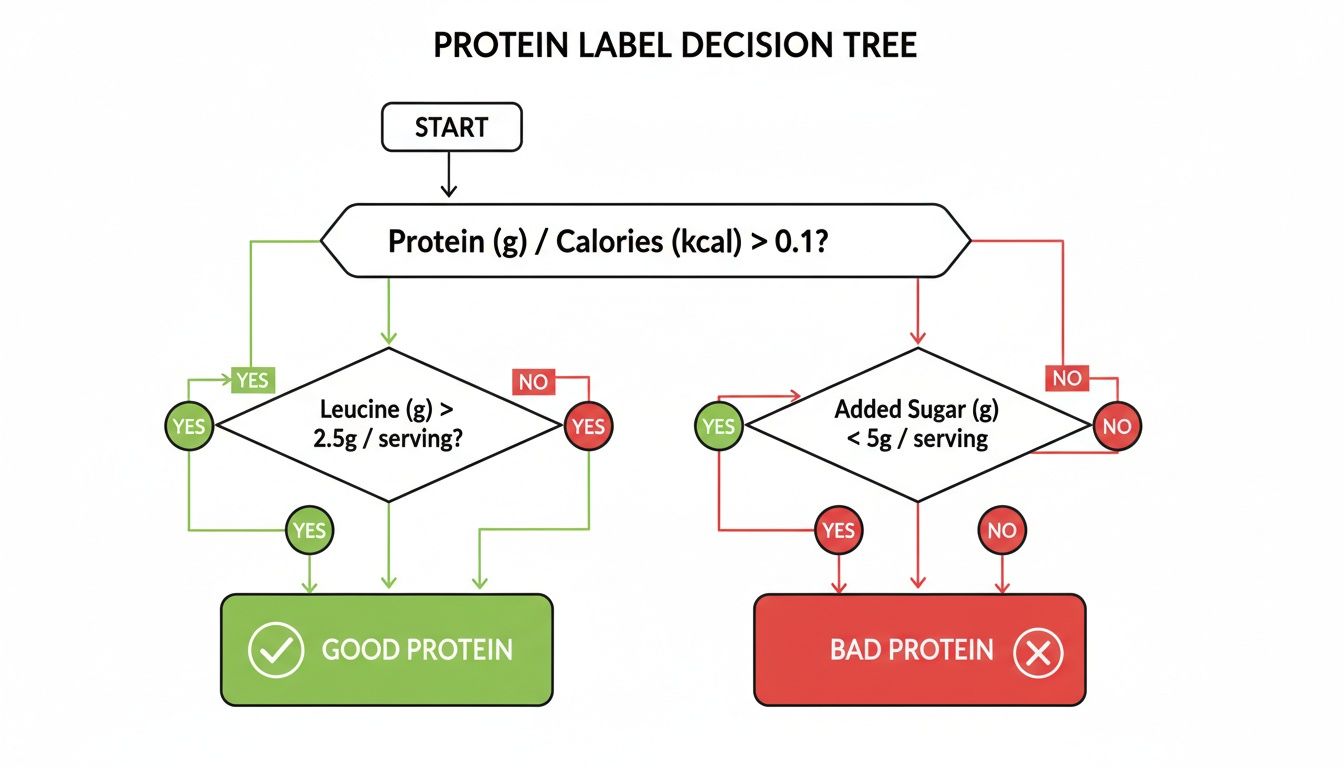
Your first check should be the protein-to-calorie ratio. A top tier powder will have at least 75-80% of its calories from protein. For example, a serving with 120 calories and 25 grams of protein (100 calories) is a great sign.
Look Beyond the Protein Grams
Next, scan the ingredients list. A shorter, more recognizable list is almost always better.
Leucine Content: Aim for at least 2.5 grams of leucine per serving. This amino acid is the primary trigger for muscle repair.
Added Sugars: Look for products with fewer than 5 grams of sugar per serving. Avoid ingredients like "cane sugar" or "high fructose corn syrup."
Artificial Sweeteners & Fillers: Ingredients like sucralose, aspartame, and gums can cause digestive issues for some runners. Powders sweetened with stevia or monk fruit are often better tolerated.
This decision tree infographic is a great visual guide for evaluating a protein powder label.
The Importance of Third-Party Certifications
The supplement industry isn't tightly regulated, which makes independent verification crucial. These certifications add a layer of trust, ensuring the product is pure and contains what it claims.
For competitive runners, third party certification is nonnegotiable. It guarantees that a product is free from banned substances that could lead to a failed drug test, protecting your eligibility.
Look for evidence of third-party supplement testing and these seals on the label:
NSF Certified for Sport: The gold standard, confirming label accuracy and testing for over 270 banned substances.
Informed-Sport: This certification tests every single batch of a product for banned substances before it hits the market.
Choosing a certified product gives you peace of mind that you’re fueling with a safe, high quality supplement.
Your Actionable Protein Plan for Better Running
Let's turn this information into a confident decision. Picking the right protein powder doesn't need to be a headache. By focusing on a few key checkpoints, you can find a product that will speed up recovery and boost your performance.
Your Protein Powder Checklist
Use these four questions to cut through the marketing noise and find what actually matters for your running.
What’s Your Primary Goal? For immediate post-run recovery, choose a fast absorbing whey isolate or pea protein blend. For overnight repair, a slow digesting casein is your best bet.
What Does the Label Say? Look for at least 2.5 grams of leucine and fewer than 5 grams of sugar per serving. A short, clean ingredient list is a good sign.
Does It Fit Your Diet? If you're vegan or have a sensitive stomach, a plant based blend is an excellent choice. Look for third party certifications like NSF Certified for Sport.
Does It Align with Your Training? A solid protein strategy is part of a larger fueling plan. For a complete look at long distance nutrition, our guide on creating your marathon training nutrition plan can help you put it all together.
A holistic approach is key. Proper nutrition is a huge piece of the puzzle. For more tips, explore strategies on how to recover faster after workout and boost your gains.
Questions Answered About Protein
Let's clear up some of the most common questions about adding protein powder to your running routine.
Will Protein Powder Make Me Bulky?
This is the biggest myth out there. The short answer is no. Packing on "bulk" requires heavy, progressive weightlifting and a massive calorie surplus. A runner's training signals the body to build lean, efficient muscle, not bulky mass. Protein powder simply provides the tools to repair and strengthen the muscles you use, making you a stronger runner without adding size.
Can't I Just Get Enough Protein from My Diet?
You can meet your protein goals with whole foods, but for runners logging serious miles, it can be a challenge. The biggest advantages of protein powder are speed and convenience. After a tough run, a protein shake is absorbed much faster than solid food, rushing crucial amino acids to your muscles. Plus, when you're exhausted, mixing a shake is far easier than cooking a meal.
Think of protein powder as a tactical recovery tool. It’s an efficient way to jumpstart muscle repair at the most critical time, working alongside your regular balanced diet.
Is It Safe to Take Protein Powder Every Day?
For most healthy runners, taking a high quality protein powder daily is perfectly safe. Stick with reputable brands that have short ingredient lists and look for third party certifications like NSF Certified for Sport. Most importantly, listen to your body. If you experience digestive issues, consider switching from a whey based powder to an easier to digest plant based option.
References
[1] Fortune Business Insights. (2024). U.S. Protein Supplements Market Size, Share & COVID-19 Impact Analysis. on fortunebusinessinsights.com.
[2] Data Bridge Market Research. (2024). Global Protein Powder Market – Industry Trends and Forecast to 2032. databridgemarketresearch.com.
[3] Future Market Insights. (2024). High Protein Powders Market Outlook (2023 to 2033). Future Market Insights.
Here at Flourish-Everyday, we believe smart nutrition is the backbone of great performance and a healthy, vibrant life. We're committed to giving you the info you need to fuel your journey, whether you're chasing a new PR or just enjoying the simple joy of the run. Check out more tips and guides to support your wellness at https://www.flourish-everyday.com.