Flourish-Everyday
Search Results
Search this site
346 results found with an empty search
- Top Running Shoes for Supination – Find Your Perfect Fit
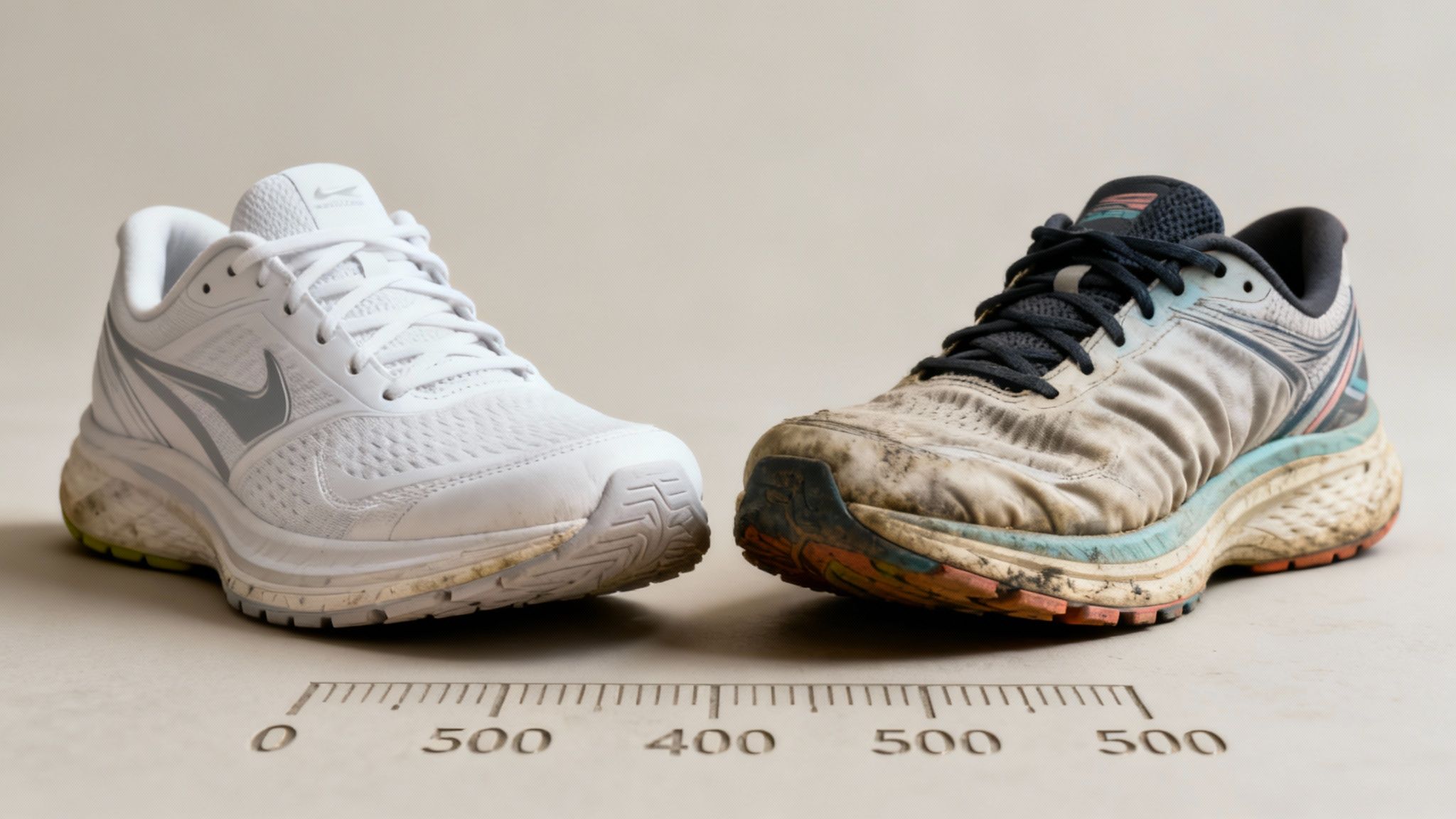
If you've noticed that the outer edges of your old running shoes are overly worn, you've identified the typical indication of supination. The best running shoes for supination focus on generous cushioning and flexibility. These features work together to absorb shock and encourage a more natural foot motion, helping to correct that outward roll. Table of Contents What Is Supination and How It Affects Your Run How to Choose the Right Running Shoes for Supination Top Running Shoe Brands That Excel for Supinators Top Men's Running Shoes for Supination The Best Running Shoes for Women with Supination Injury Prevention Beyond Your Running Shoes Frequently Asked Questions About Supination References What Is Supination and How It Affects Your Run Supination, also known as underpronation , is a gait pattern where your foot rolls to its outer edge as you push off the ground. This concentrates the force of each step on a small, unstable part of your foot. This repeated, unbalanced force can travel up your leg, potentially leading to aches and injuries. The Impact of Supination on Your Body When your foot doesn't roll inward enough to absorb shock (a natural movement called pronation), your body compensates. This can lead to stress-related conditions (Kosol, 2023): Plantar Fasciitis: Strain on the ligament connecting your heel to your toes. Shin Splints: Pain along the inner shinbone. Ankle Sprains: Increased risk due to instability on the outer ankle. IT Band Syndrome: Pain on the outside of the knee from a tightened iliotibial band. Supination diminishes your foot's natural shock absorption. A good running shoe restores this with cushioning and flexibility, protecting your joints. Identifying Supination in Your Stride Supination is often associated with high arches. Rigid, high arches struggle to roll inward and distribute impact forces. If you have high arches, consider our guide on the best running shoes for high arches . Understanding your gait is the first step toward pain free running. Once you identify supination, you can find shoes that work with your body, not against it. How to Choose the Right Running Shoes for Supination Now that you understand supination, the next step is finding the right gear. Choosing the best running shoes for supination is about identifying features that support your unique stride. The goal is a shoe that encourages natural foot movement. For a supinator, running in a shoe designed for overpronation, which has dense foam on the inner side, can worsen the problem by forcing the foot even further onto its outer edge. Cushioning Is Your First Line of Defense Cushioning acts as your body's suspension system. Since supination hinders natural shock absorption, the shoe must compensate. A well cushioned shoe disperses the force of each footstrike, protecting your shins, knees, and hips. Look for shoes with plush, responsive midsoles made from materials like EVA or brand-specific foams. Flexibility Allows Natural Foot Movement A supinator's foot is often rigid. A stiff shoe will fight against your foot, leading to discomfort. A flexible shoe allows more natural movement through the gait cycle. A good shoe for supination should bend easily at the forefoot, where your foot naturally pushes off. The principle for supinators is to choose a shoe that guides, not forces. Cushioning and flexibility should gently encourage a more neutral position. Why Neutral Support Is Non-Negotiable Neutral support is the most crucial factor. Neutral running shoes are designed for normal pronation patterns but are perfect for supinators because they lack the corrective features of stability shoes. No Medial Posts: Stability shoes have firm "posts" on the inner side to prevent overpronation—the opposite of what a supinator needs. Symmetrical Midsoles: Neutral shoes offer consistent cushioning across the midsole, providing a balanced platform. Stick to the neutral category to avoid exacerbating the outward roll. For more on shoe selection, see our guide on how to choose running shoes for your specific needs. Key Shoe Features for Supinators Checklist Feature Why It's Important for Supinators What to Look For Cushioning Absorbs shock that a rigid, supinating foot can't, protecting joints. Plush midsoles (EVA, TPU), high stack height. Flexibility Allows a stiff foot to move more naturally, promoting a smoother stride. Shoes that bend easily at the ball of the foot; flex grooves on the outsole. Neutral Support Provides a balanced platform without corrective features that worsen the outward roll. Labeled "neutral"; avoid "stability," "motion control," or "medial post." Top Running Shoe Brands That Excel for Supinators When shopping for shoes for supination, focus on brands known for exceptional cushioning, flexibility, and neutral support. Brooks, Hoka, Saucony, and New Balance have built their reputations on these features. The global running shoe market was valued at $14.68 billion in 2022, with significant innovation in gait specific footwear. You can learn more about the growth of the running shoe market . Brooks: A Focus on Plush Comfort Brooks is synonymous with a soft, forgiving ride. Their DNA LOFT technology, a blend of foam, air, and rubber, provides cloud like softness without feeling sluggish. This makes their neutral shoes ideal for supinators, as the plush cushioning absorbs impact and reduces stress on joints. Hoka: The Maximalist Cushioning Pioneer Hoka's "maximalist" design features oversized midsoles that offer incredible cushioning and a stable ride. For supinators, the wide base provides a secure landing platform, gently guiding the foot away from an excessive outward roll. Their signature Meta-Rocker shape promotes a smooth, efficient stride, which is beneficial for rigid feet. Saucony and New Balance: Balanced Performance Saucony and New Balance excel at creating versatile shoes that balance soft cushioning with a responsive feel. Saucony's PWRRUN foam offers great shock absorption with an energetic feel. New Balance's Fresh Foam delivers a plush, natural ride. Many of their models also feature a roomy toe box, allowing toes to spread and stabilize the foot upon landing. Top Men's Running Shoes for Supination Here are top models for men that provide the smooth, stable ride supinators need to protect their joints. Brooks Ghost : The True Neutral Workhorse The Brooks Ghost is a dependable daily trainer that balances soft cushioning with a responsive feel. Its full length DNA LOFT v2 cushioning absorbs impact effectively. This ensures a secure fit and a smooth ride, guiding the foot forward and reducing the jarring sensation of landing on the outer edge. Cushioning: High Weight: 9.8 oz (278g) Heel-to-Toe Drop: 12mm The Brooks Ghost consistently delivers a comfortable, protective ride that makes daily miles easier. Hoka Clifton : The Maximalist Cushioning King For maximum shock absorption, the Hoka Clifton is a top choice. Its thick stack of soft, lightweight foam provides an incredibly plush landing. The Clifton’s wide base creates a naturally stable platform, while the Early Stage Meta-Rocker design encourages a smooth, forward roll with each step. Cushioning: Maximum Weight: 8.8 oz (249g) Heel-to-Toe Drop: 5mm Saucony Ride : For Balanced Performance The Saucony Ride offers a more responsive feel. Its PWRRUN foam cushioning provides a soft landing with a bit of spring. This makes it a great all round shoe. The shoe is built for a consistent, neutral ride, offering protective cushioning in a light, flexible package that promotes a natural stride. The Best Running Shoes for Women with Supination Women's running shoes are designed to fit the female foot, typically with a narrower heel and a wider forefoot. This section highlights top neutral shoes that provide the plush cushioning and flexibility women with supination need. New Balance Fresh Foam X 880 The New Balance Fresh Foam X 880 is a reliable daily trainer with a balanced ride. Its dual-layer midsole features soft Fresh Foam X for comfort and a firmer layer for responsiveness. This provides great shock absorption without feeling mushy. Key Feature: A structured upper offers a secure fit, preventing unwanted side-to-side movement. Best For: Runners seeking a dependable, do-it-all shoe for daily miles and long runs. ASICS GEL-Nimbus For those who prioritize cushioning, the ASICS GEL-Nimbus is an excellent choice. It combines a generous amount of FF BLAST™ PLUS ECO cushioning with PureGEL™ technology in the heel for exceptional impact absorption. The wide base creates a stable platform, discouraging the foot from rolling outward. The ASICS GEL-Nimbus provides a forgiving, maximalist ride that protects the body from the repetitive stress of running. Hoka Clifton for Women The Hoka Clifton is a favorite among female runners for its women-specific fit and incredible cushioning in a lightweight package. The early-stage Meta-Rocker geometry promotes a smooth heel-to-toe transition, counteracting the rigid foot motion often associated with supination and encouraging a more fluid stride. Injury Prevention Beyond Your Running Shoes While the right running shoes for supination are essential, a holistic approach to injury prevention is key. Targeted stretches and strengthening exercises can correct muscle imbalances and improve body mechanics. Targeted Stretches for Supinators Supination is often linked to tightness in the lower legs and hips. Stretching can release this tension and restore a natural range of motion. Focus on: Calf Muscles: Tight calves can limit ankle mobility. IT Band: A tight IT band can cause knee pain and affect gait. Plantar Fascia: Stretching the ligament on the bottom of the foot can ease arch tension. Strengthening to Correct Imbalances Strengthening builds stability. Supination can stem from weakness in muscles that stabilize the ankle and foot. Simple, consistent exercises can counteract the outward roll. Target the tibialis anterior (front of the shin) and peroneal muscles (outside of the lower leg) to build strength for a more balanced stride. For more tips, see our guide on how to prevent running injuries Common Questions About Running with Supination How Often Should I Replace My Running Shoes? A good rule of thumb is to replace your shoes every 300 to 500 miles (Brewer, 2023). For supinators, this is crucial. As midsole cushioning breaks down, it loses its shock-absorbing capability, passing more stress to your joints. Can I Use My Running Shoes for the Gym or Walking? It's best to reserve your running shoes for running. They are designed for forward motion. Gym workouts often involve lateral movements, which can wear out running shoes improperly and fail to provide the right stability, increasing injury risk. Key Takeaway: Dedicate your running shoes to running to preserve their cushioning and support structures, ensuring they protect you effectively. Are Minimalist Shoes a Good Idea for Supinators? Minimalist shoes are generally not recommended for supinators. They offer very little cushioning, which is the most important feature for absorbing shock. Stick with well cushioned, neutral shoes that provide the protection your gait requires. References Brewer, S. (2023, November 29). How Long Do Running Shoes Last? 5 Signs You Need a New Pair . Runkeeper. Kosol, S. (2023, April 20). Supination of the Foot . Healthline. At Flourish-Everyday , we're all about helping you find the perfect running shoes and giving you the health information you need to thrive. Check out our expert recommendations and empower your journey toward a healthier, happier you at https://www.flourish-everyday.com .
- Best Running Shoes for High Arches
If you're a runner with high arches, finding the right shoe means looking for two things: maximum cushioning and a solid, neutral support system. Top contenders like the Brooks Ghost , ASICS Gel-Nimbus , and HOKA Clifton consistently deliver the shock absorption and flexible design needed to protect your feet and joints, mile after mile. Your Guide to Finding Relief and Performance Running with high arches, a condition known as pes cavus, makes your foot less effective at absorbing impact, which can lead to aches and injuries. This guide will show you how the right pair of shoes can turn a painful run into a powerful one. Think of your foot as a natural spring. A high arch makes that spring stiffer, so instead of absorbing force, more of it travels up your legs. That's why your average running shoe often doesn't cut it. The right footwear helps distribute pressure evenly, absorbs impact, and reduces strain on your feet, ankles, and joints. It's not just about comfort, it's about injury prevention and performance. In this guide, I will help you find that perfect pair, we'll cover the essentials without complicated jargon. For a broader look at shoe selection, you can also check out our instructions on how to choose running shoes in our expert guide . Here's what we'll be diving into: Understanding High Arches : Why they need special attention in running shoes. Essential Shoe Features: A look at cushioning, neutral support, and flexibility. Top Shoe Reviews: In depth reviews for men and women with high arches. Injury Prevention & Health Information: Stretches and exercises to support your feet. Well-Being Trends & Methods: A comparison of insoles and orthotics for foot health. References Why High Arches Change the Way You Run If you have high arches, known medically as pes cavus , it fundamentally alters how your body handles running. A typical foot acts like a spring, flexing to absorb impact. A high arch, however, makes that spring much stiffer. This rigidity means your foot is poor at shock absorption. Instead of spreading impact harmlessly, the force shoots up your body, into your ankles, shins, and knees. This is why finding the best running shoes for high arches is about protecting your entire body from repetitive stress. The Impact of Supination on Your Stride The stiffness of a high arch often leads to a running pattern called supination , where your foot rolls outward on impact. Instead of your weight rolling evenly, it stays on the outer edge of your foot. This uneven weight distribution can throw off your balance and increase the risk of specific injuries. Common issues tied to high arches and supination include: Plantar Fasciitis: Sharp heel pain from inflammation of the tissue along the bottom of your foot. Shin Splints: Nagging pain along the inside of your shinbone. Stress Fractures: Tiny cracks in the bones of your feet and lower legs from repetitive force. Ankle Sprains: A greater chance of rolling your ankle due to instability. Cushioning: Your First Line of Defense Since your foot’s shock absorption is compromised, shoe cushioning becomes your primary defense. For a runner with high arches, modern shoe cushioning acts as an external shock absorber. It dissipates impact where you land, preventing jarring force from traveling up your legs and causing overuse injuries. This simple infographic illustrates how a high arch affects shock absorption. The stiff nature of a high arch leads to poor shock absorption, putting more stress on the rest of your body. This need for specialized footwear is driving growth in the athletic shoe market. The global market for running shoes is expected to climb to $16.37 billion in 2025 from $15.22 billion in 2023 , showing a growing demand for shoe technology that addresses specific foot types. You can find more details in these running shoe market statistics . Understanding this connection helps you search for shoes with the generous, neutral cushioning needed for safer, more enjoyable runs. Decoding Shoe Features for High Arch Support For those with high arches, you can cut through the marketing noise by focusing on three non-negotiable features: cushioning, support, and flexibility. These pillars form the foundation of a shoe that will protect your feet and smooth out every run. Essential Shoe Features for High Arches Feature Why It Matters for High Arches What to Look For Generous Cushioning High arches are poor shock absorbers, so cushioning must do that job to prevent joint stress. Shoes with a thick, responsive midsole from foams like EVA or TPU. Look for "plush," "soft," or "max cushion" descriptions. Neutral Support Runners with high arches often supinate (roll outward). Neutral shoes guide the foot's natural motion without over-correction. A structured heel counter, a well-fitting upper, and a stable, slightly wider base. Avoid "stability" or "motion control" shoes. Forefoot Flexibility A rigid foot needs a flexible shoe to allow for a natural push-off and a smooth stride. A shoe that bends easily at the ball of the foot. Test it by holding the heel and pressing the toe upward. This table is your cheat sheet. Keep these three things in mind, and you'll be on your way to picking a shoe that works with your foot. Cushioning Explained For a high arched foot, cushioning is your primary defense. It acts as an external shock absorber, eating up the jarring force of each footstrike. The magic happens in the midsole, the foam layer between the insole and outsole. Modern shoes use advanced foam compounds: EVA (Ethylene Vinyl Acetate): Lightweight and soft, providing fantastic shock absorption and a plush feel. TPU (Thermoplastic Polyurethane): Heavier but more durable and resilient, offering excellent energy return. For high arches, a generous stack of soft, responsive foam is the goal, reducing impact stress on the heel and ball of the foot. The True Meaning of Support For high arches, support does not mean a hard insert pushing into your arch. That can create painful pressure points. Instead, you need a neutral shoe with a solid, structured design that guides your foot's natural path. A supportive shoe for high arches acts like a gentle guide rail, not a corrective brace. It encourages a smooth stride by providing a stable platform and securing the heel. Look for a snug heel counter that locks your foot in place and a slightly wider base for a stable landing. This combination helps prevent ankle rolling without interfering with your natural biomechanics. Flexibility for a Natural Stride Even with great cushioning and support, a shoe must be flexible. Rigid feet need a shoe with good forefoot flexibility for a smooth heel-to-toe transition. This allows your foot to push off the ground powerfully. Look for a shoe that bends easily at the ball of your foot, mirroring its natural flex point for a fluid stride. Top Running Shoe Reviews for High Arches Best running shoes for high arches are some of the best running shoe models in the fitness industry, focusing on cushioning and neutral support. Each review gets straight to the point: how good is the midsole? Is it stable? What does the ride feel like? Brooks Ghost (Men's & Women's) The Brooks Ghost is a legend in the neutral running world, known for its balanced, reliable cushioning. The DNA LOFT v2 midsole is fantastic at absorbing shock, critical when your arches can't do it alone. The Ghost provides a smooth, consistent ride that just works. The secure fit through the midfoot and heel prevents instability that can lead to ankle issues. Pros: Balanced cushioning for daily miles, smooth heel-to-toe transition, durable outsole. Cons: Less "springy" than some newer max-cushion trainers. Hoka Clifton (Men's & Women's) When you think "maximum cushioning," you think Hoka. The Hoka Clifton offers a plush, highly protective ride that's ideal for high arches. Its thick EVA foam feels like running on pillows, significantly reducing stress on your heels and forefeet. Despite the cushion, the Clifton is surprisingly light. Its early stage Meta Rocker design also helps roll you forward, promoting an efficient stride. The Hoka Clifton packs in maximum cushioning without the weight, directly addressing the biggest need for high-arched runners: top-tier shock absorption in a lightweight shoe. ASICS GEL- Nimbus and Novablast Series (Men's & Women's) ASICS offers two excellent options. The ASICS GEL-Nimbus is a classic, famous for luxurious comfort and GEL technology for targeted shock absorption in the heel and forefoot. It prioritizes a soft, protective ride. The ASICS Novablast series is all about an energetic, bouncy experience. The Novablast 5 is a phenomenal shoe for high arches, with a massive stack height and exceptionally soft foam for an unbelievably cushioned ride. You can read more in this detailed Novablast 5 analysis . GEL-Nimbus: Best for runners wanting a soft, protective feel. Novablast: Perfect for those who crave max cushioning with a lively, responsive bounce. New Balance Fresh Foam X 1080 (Men's & Women's) The New Balance Fresh Foam X 1080 is a versatile, elite neutral trainer. It hits the sweet spot between soft and responsive. The Fresh Foam X midsole is pillowy enough for long runs but has enough energy return to avoid a sinking feeling. This is a do-it-all shoe for daily miles, recovery jogs, and even some tempo work. Its engineered upper provides a secure, stretchy fit. Comparison of Top Running Shoes for High Arches The "best" shoe comes down to what feels right for your foot and running style. This table breaks down the key details to help you compare these excellent options. Shoe Model Cushioning Level (1-5) Best For Key Feature Brooks Ghost 4 Daily training, reliability Balanced DNA LOFT cushioning Hoka Clifton 5 Long distances, recovery runs Maximum cushioning, lightweight feel ASICS Novablast 5 Energetic, bouncy long runs High stack height, soft foam New Balance 1080 4.5 Versatile, all-around training Soft yet responsive Fresh Foam X The right running shoes are your first line of defense, but a complete approach is needed to stay healthy. Supporting your feet involves actively working on the strength and flexibility of the muscles that support your foot structure. Pairing the right shoes with a consistent routine of stretches and exercises creates a powerful support system. Targeted Stretches for High Arches High arches often lead to tightness in the lower legs and feet. A few simple, targeted stretches can make a world of difference. Plantar Fascia Stretch: Sit and cross one leg over the other knee. Gently pull your big toe back toward your shin until you feel a stretch in your arch. Hold for 15-20 seconds ; repeat three times on each foot. Calf Stretch: Stand facing a wall. Step one foot back, keeping the leg straight and heel flat on the floor. Lean forward until you feel a stretch in your calf. Hold for 30 seconds on each side. Building a Stronger Foundation Strengthening the small muscles in the feet and ankles is a game-changer for stability, especially for supinators. "A well-cushioned shoe protects the foot from external forces, but strengthening the foot's intrinsic muscles provides internal stability. Combining both is the key to creating a truly resilient runner." Try these simple exercises: Towel Curls: Sitting, use your toes to scrunch and pull a small towel on the floor toward you. Marble Pickups: Use your toes to pick up marbles from the floor and drop them into a bowl. Calf Raises: Stand and slowly raise your heels off the ground. Pause, then lower back down. For more strategies, check out these top tips for safe running and injury prevention . Well-Being Trends: The Great Insole Debate If your shoes don't feel quite right, insoles might be the answer. But should you choose over-the-counter inserts or custom orthotics? Over-the-Counter (OTC) Insoles: Pre-made inserts offering general cushioning and mild support. A good starting point if you need a bit more arch contour or shock absorption. Custom Orthotics: Medically prescribed devices custom-molded to your feet. They correct specific biomechanical issues and are recommended for runners with persistent pain. For many, a great neutral shoe is sufficient. If you still want more support, try an OTC insole. Custom orthotics are typically the final option for serious, targeted correction. Your Next Steps to Comfortable Running You now have the knowledge to pick your next running shoes with confidence. Finding the best running shoes for high arches is an investment in your health and enjoyment of every mile. Remember the core ideas: look for generous cushioning, stick with a neutral support system, and never compromise on a secure, comfortable fit. Focusing on these key elements takes the guesswork out of shoe shopping. You can now see past the marketing hype and zero in on the features that actually matter for your feet. Even the perfect shoe won't last forever. To ensure you're always protected, it's crucial to know when it’s time for a new pair. Learn more in our guide on **how often to replace running shoes** . You understand your feet and the shoe technology built to support them. Lace up and feel the difference. Happy running. Got Questions? We've Got Answers Do I Really Need Special Insoles or Orthotics? Not always. Many of the best running shoes for high arches today have incredible built-in cushioning. Advanced foam in modern neutral shoes often provides all the shock absorption you need. If you have a great pair of shoes but still experience persistent pain, then consider insoles. Try a well-cushioned, neutral shoe first. Should I Go for a Neutral or a Stability Shoe? Most runners with high arches supinate (foot rolls outward). Because of this, a neutral shoe is almost always the right choice. They are built with ample cushioning and flexibility, letting your foot move naturally. Stability shoes are designed to stop the foot from rolling inward ( overpronation ) and can feel too rigid for a high-arched foot. How Often Should I Replace My Running Shoes? A good rule of thumb is every 300-500 miles . This is especially important for high arches. The midsole foam is your primary defense against impact, and it breaks down over time. Running on worn-out cushioning increases stress on your joints and can lead to overuse injuries. References Buldt, A. K., & Menz, H. B. (2018). Foot posture and injury risk in runners: A systematic review. Journal of Foot and Ankle Research , 11(1). https://doi.org/10.1186/s13047-018-0299-7 Market.us. (2023). Running Shoes Market Research Report . Retrieved from https://market.us/report/running-shoes-market/ DiGiovanni, B. F., & Partal, G. (2003). The role of custom foot orthotics in the management of foot pain. The Journal of the American Academy of Orthopaedic Surgeons , 11(6), 411-417. Here at Flourish-Everyday , we're your go-to source for expert reviews and health information you can trust. We're here to give you everything you need to support and empower your journey to a healthier, happier you. Find your next perfect pair of running shoes today
- Finding the Best Shoes for Lower Back Pain
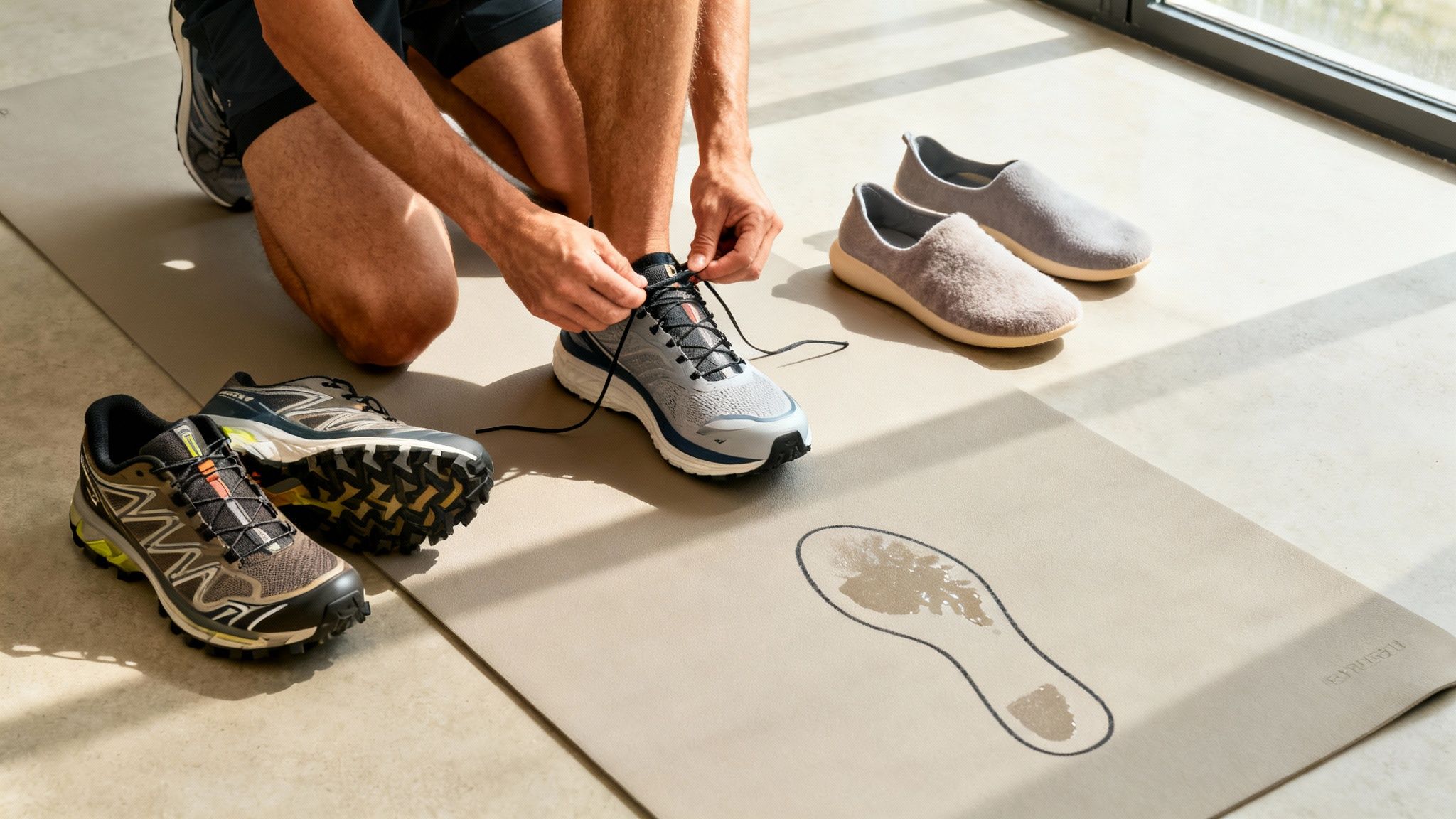
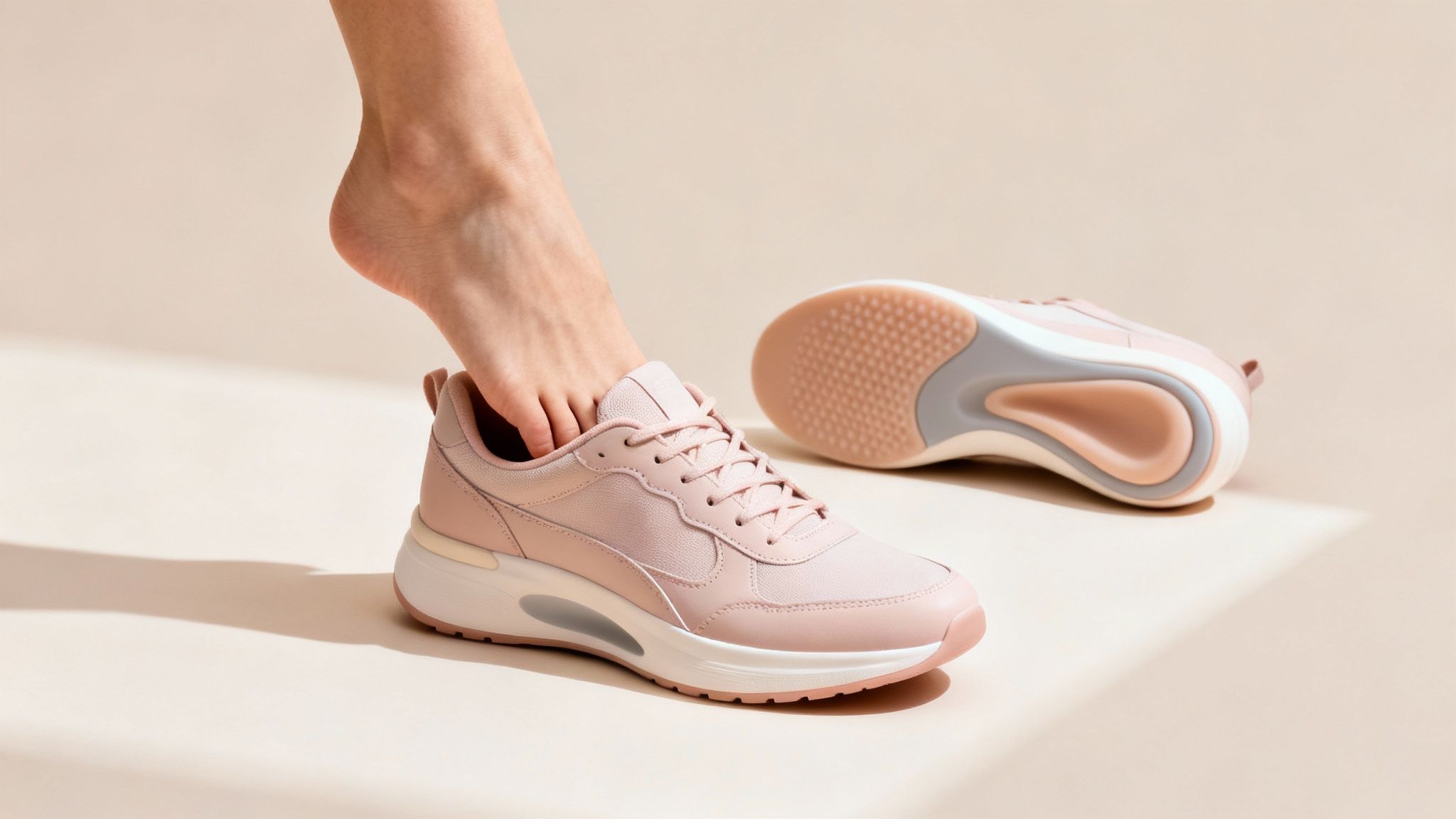
If you've ever felt that nagging ache in your lower back, you've probably blamed your mattress or your office chair, but what if the real culprit is your shoes? Picking the right footwear can be a game changer. Pairs with proper cushioning and arch support help improve posture and absorb impact, taking significant strain off your spine. Brands like Hoka, Brooks, and New Balance are often recommended for this reason, providing the stability needed to alleviate back stress. Table of Contents The Hidden Connection Between Your Feet and Back Pain Decoding the Features of a Pain-Relief Shoe Top Athletic Shoe Recommendations for Men and Women Choosing Supportive Shoes for Work and Daily Life Beyond the Shoe: A Holistic Approach to Back Health Your Top Questions About Shoes and Back Pain, Answered References The Hidden Connection Between Your Feet and Back Pain It might sound strange, but finding the best shoes for lower back pain could start with the way you walk. Think of your body as a tower. If the foundation is wobbly, the entire structure struggles to stay balanced. This is what happens when your shoes lack proper support. This infographic breaks down how poor foot alignment, like overpronation, can send a shockwave of stress up your body and into your lower back. When a foot isn't properly supported, it can throw your ankle, knee, and hip out of alignment. Your spine is then forced to compensate, absorbing unnatural stress. How Your Feet Influence Your Spine Your body is a connected system known as the kinetic chain. A problem in one area can easily cause trouble elsewhere. Your feet are ground zero for absorbing impact, or "ground reaction forces", from every step you take. Without the right shoes, these jarring forces travel up your legs and settle in your lower back. Good footwear acts as a suspension system, absorbing shock before it causes damage. For instance, conditions like flat feet or high arches can alter your gait. An unsupportive shoe allows your foot to roll too far inward ( overpronation ) or outward ( supination ). This imbalance tilts your pelvis, putting uneven pressure on your lumbar spine. Over time, this constant compensation leads to chronic aches. If this sounds familiar, you might find our guide to the best workout shoes for flat feet in 2025 helpful. "I often say that everything starts with our feet. The impact of walking, running, dancing, really any movement, carries through from the ground up, affecting not only our feet but also our knees, hips, and lower back." - Dr. Brandon Haghverdian, Orthopedic Surgeon Choosing shoes designed to correct these imbalances is a proactive step toward lasting relief. By giving your foundation stability, you allow your entire body to align properly, taking the burden off your overworked lower back. Decoding the Features of a Pain Relief Shoe Choosing shoes for lower back pain can feel complex, with terms like "heel counter" and "toe box." Understanding these key features is the most important step toward finding relief. This guide will break it down, helping you know exactly what to look for. A good pain relief shoe is a tool engineered to support your body's foundation. Each part has a job, and when they work together, they create a stable base that takes significant strain off your spine. The Anatomy of a Supportive Shoe Here are the nonnegotiable that make a shoe genuinely back friendly. When trying on a new pair, check for these four critical components that protect your posture and absorb daily impact. Strategic Cushioning: More than just a soft insole, proper cushioning in the midsole acts as a shock absorber. It dampens the jarring forces from each step that would otherwise travel to your lower back. Structured Arch Support: Your arch is your foot's natural suspension bridge. Good support prevents it from collapsing, which stops your foot from rolling inward ( overpronation ). This is crucial for keeping your knees, hips, and spine aligned. A Firm Heel Counter: This rigid, cup-shaped section encircles your heel. A firm heel counter locks your foot in place, preventing wobbling and creating a stable base for a more efficient stride. A Spacious Toe Box: The front of the shoe must be wide enough for your toes to spread naturally. This improves your balance and helps distribute your body weight evenly, preventing instability that can lead to back strain. Essential Shoe Features for Back Pain Relief This table summarizes the most important shoe characteristics and how they help reduce stress on your lower back. Feature What It Does How It Helps Your Back Strategic Cushioning Absorbs the impact force every time your foot hits the ground. Reduces the jarring shock that travels up the kinetic chain to your spine. Structured Arch Support Prevents the arch of the foot from collapsing inward ( overpronation ). Maintains proper body alignment from the feet up, preventing strain on the hips and back. Firm Heel Counter Stabilizes the heel and prevents excessive side-to-side foot movement. Creates a stable foundation for each step, promoting a more balanced and efficient gait. Spacious Toe Box Allows your toes to splay naturally, providing a wider base of support. Improves overall balance and distributes body weight more evenly, reducing instability. Looking at shoes this way helps you focus on function over brand names. A well constructed shoe provides a stable and supportive base, which is fundamental for proper body alignment. By controlling foot motion and absorbing shock, the right footwear can significantly reduce the mechanical stress placed on the lower back during daily activities. Why These Features Matter More Than Brand Names While some brands have a good reputation, the features themselves provide relief. The orthopedic footwear market was valued at over USD 4.37 billion in 2024 and is expected to grow to USD 15.45 billion by 2037 , showing a rising awareness of the link between foot health and overall well-being. Understanding how a shoe supports you is more important than its logo. For a deeper dive, check our guide on how to choose running shoes . Prioritizing cushioning, support, stability, and space will help you find a pair that truly supports your journey to a pain free back. Top Athletic Shoe Recommendations for Men and Women When choosing athletic shoes to help with lower back pain, focus on supportive technology. Whether for the gym or daily errands, the right sneaker can reduce spinal strain. Brands like Hoka, Brooks, and New Balance invest in biomechanical research to create features that promote proper alignment. Neutral vs. Stability Shoes: What’s the Difference? Understanding the two main types of athletic shoes, neutral and stability , is crucial. Neutral Shoes: Designed for a "neutral" gait where feet and ankles stay aligned. They focus on cushioning to absorb impact without offering corrective support. Stability Shoes: Built for overpronators , whose foot arches collapse and roll inward. Stability shoes use features like firmer midsole foam or "guide rails" to limit this motion, keeping the leg and spine better aligned. Choosing the wrong type can worsen alignment issues. A "wet test" at home or a professional gait analysis can help determine your foot type. When your feet are properly supported, the positive effects travel up your body. A good shoe helps your gait become more efficient, reducing the twisting forces that affect your knees, hips, and lower back. Top Picks for Back Pain Relief Here are standout models known for features that relieve back pressure. For Maximum Cushioning: Hoka is known for its "maximalist" designs with oversized midsoles offering superior shock absorption. Top Model: The Hoka Bondi (for men and women) provides a plush feel that minimizes stress on joints and the lower back, ideal for walking or long hours on your feet. For Guided Stability: Brooks excels at creating smooth, stable shoes. Their Guide Rails technology gently guides feet into proper alignment. Top Model: The Brooks Adrenaline GTS offers solid support for overpronators, correcting inward foot roll and stabilizing the body from the ground up. For Versatile Support: New Balance is known for durable, supportive shoes, often available in multiple widths for a customized fit. Top Model: The New Balance Fresh Foam X 860 is a top-tier stability shoe that balances supportive features with soft cushioning for comfortable, controlled everyday wear. While specialized shoes like rocker soles are marketed for back pain, it's important to look at the evidence. A clinical study found that patients using conventional sports shoes reported a greater reduction in disability from lower back pain than those using rocker soles. You can read the full research on rocker shoes and back pain to see the data. A well designed, traditional athletic shoe is often the most reliable choice. Choosing Supportive Shoes for Work and Daily Life Supportive footwear isn't just for workouts. Long hours standing or walking at work are a major source of lower back pain. It's essential to find shoes that blend all day comfort with a professional look, ensuring your back is supported throughout the day. The right shoes for lower back pain must have the same core features as a great athletic shoe: a firm heel counter, structured arch support, and ample cushioning. Work-specific shoes might also need features like slip resistant soles for safety, which adds another layer of stability. Modern orthopedic tech, like memory foam and shock absorbing soles, is designed to directly reduce stress on the spine. It does this by promoting better posture and cushioning every single step you take. The global orthopedic shoes market is projected to reach USD 10.7 billion by 2035 , growing at about 9.4% annually. This growth reflects a greater understanding of how proper footwear can prevent chronic pain. Top Brands for Professional Support Several brands merge orthopedic benefits with workplace style. Dansko : A favorite among healthcare professionals, their clogs offer excellent arch support and a rocker bottom sole that promotes a natural walking motion, reducing fatigue and back strain. Vionic : Known for podiatrist-designed orthotics built into their shoes. Vionic offers a wide range of styles, all engineered to support natural alignment. Clarks : This brand combines comfort technology with classic design. Many of their office ready shoes feature cushioned insoles and supportive construction, making them a reliable choice for all day wear. Choosing a work shoe from a brand that prioritizes biomechanics is an investment in your spinal health. These shoes absorb impact and maintain alignment, addressing the root cause of work related back pain. Know When to Replace Your Shoes Even the best shoes wear out. The supportive midsole foam compresses over time, losing its ability to absorb impact. Wearing worn out shoes removes the protective features that help your back. Watch for these signs of wear: Mileage: Replace athletic shoes every 300-500 miles . Visible Wear: Look for uneven tread wear or deep creases in the midsole foam. How They Feel: If the cushioning feels flat or old aches return, it’s time for a new pair. Supportive footwear is a tool. Like any tool, it must be maintained and replaced to function correctly. Ignoring wear and tear can undo their benefits, allowing harmful impact forces to travel back up to your spine. Complementary Habits for Lasting Relief Supportive shoes work best with other healthy practices. Simple lifestyle changes can dramatically improve your back health. Focus on flexibility and strength. Daily stretches, like hamstring stretches or cat-cow poses, release tension in the muscles supporting your spine. A strong core acts as a natural corset for your lower back. For guidance, see our article on the best core workouts for a stronger midsection . Be mindful of your posture. When sitting, keep your feet flat and your back straight. When standing, distribute your weight evenly. These small adjustments prevent chronic strain. Finally, maintaining a healthy weight reduces the load on your spine, which can make a significant difference in your comfort. Your Top Questions About Shoes and Back Pain, Answered Finding the right shoe can be confusing. Here are answers to some of the most common questions about the link between footwear and lower back pain. Can Totally Flat Shoes Like Flip-Flops Really Cause Back Pain? Yes, they are a common culprit. Most flip-flops and other flat shoes offer zero arch support and minimal cushioning. This forces the muscles in your feet to work overtime to maintain stability. This lack of support can lead to overpronation , where your foot's arch collapses inward. This creates a chain reaction up your legs, potentially tilting your pelvis and putting uneven strain on your lower back. How Do I Know If I Need a Neutral or a Stability Shoe? A professional gait analysis is the best way, but the "wet test" at home can give you a good idea of your arch type. Wet the bottom of your foot. Step firmly onto a piece of cardboard or a dark towel. Examine the footprint. If you see most of your footprint, you likely have flat feet and could benefit from a stability shoe. If you see very little of the middle of your foot, you have high arches, and a cushioned neutral shoe is probably best. A print somewhere in between suggests a neutral shoe is a good starting point. The goal is to find a shoe that works with your foot's natural mechanics. A stability shoe corrects an unstable foot, while a neutral shoe cushions a foot that is already functioning correctly. Are Super Expensive Orthopedic Shoes Always the Best Choice? No. The "best" shoe is one that fits your foot and provides the necessary cushioning, arch support, and stability. A well designed athletic shoe that meets these criteria can be just as effective as a pricey "orthopedic" shoe. Focus on the core features we’ve discussed rather than the price tag. A well-made shoe from a trusted brand like Hoka, Brooks, or New Balance that matches your gait is a smart investment in your back health. How Often Should I Replace My Shoes to Keep My Back Happy? The cushioning and support materials break down with use, often before the shoe looks worn out. For running or walking shoes, a good rule is to replace them every 300-500 miles . For everyday work shoes, plan on replacing them every 8 to 12 months , especially if you are on your feet a lot. If the cushioning feels dead, the treads are worn, or old aches return, it’s time for a new pair. At Flourish-Everyday , our goal is to help you find the perfect gear to support your active, healthy lifestyle. Check out our in-depth reviews and recommendations to take the next step on your wellness journey. Find your perfect pair at Flourish-Everyday . References Future Market Insights. (2024). Orthopedic Shoes Market Outlook (2024 to 2034) . Retrieved from https://www.futuremarketinsights.com/reports/orthopedic-shoes-market Research Nester. (2024). Orthopedic Footwear Market: Global & Regional Industry Outlook (2024-2037) . Retrieved from https://www.researchnester.com/reports/orthopedic-footwear-market/2508 Shakoor, N. (2022, November 28). Rocker Shoes and Back Pain . IASP Relief News. Retrieved from https://www.iasp-pain.org/publications/relief-news/article/rocker-shoes-and-back-pain/
- Best Running Shoes for Achilles Tendonitis
Most active people have felt heal discomfort. Dealing with Achilles tendonitis means that nagging pain can turn a good run into a miserable experience, and in some cases put you down for months. The right shoes aren't just about comfort, they're a critical tool for managing the immense stress your Achilles tendon endures with every step. Your Achilles is the largest tendon in your body and handles forces up to 10 times your body weight during a run. The shoes you wear are your first line of defense, dictating how that impact travels up your leg. When choosing the best running shoes for Achilles tendonitis, you're looking for a specific combination: a higher heel-to-toe drop (8mm or more), generous cushioning, and a solid, supportive heel counter. These three features work together to take the strain off your tendon, preventing painful overstretching. Index of Topics How Running Shoes Impact Achilles Tendonitis Essential Shoe Features to Reduce Achilles Strain Top Shoe Recommendations for Men Top Shoe Recommendations for Women Minimalist Shoes vs Modern Cushioned Trainers Beyond Shoes: Supporting Your Achilles Health Common Questions About Achilles Health References How Running Shoes Impact Achilles Tendonitis The pain you feel signals that your body's mechanics are out of balance, and your shoes can either help or hurt. An improper shoe can throw your entire kinetic chain off, exacerbating issues like overpronation (where your foot rolls too far inward) and putting a twisting force on the tendon. The Biomechanics of Tendon Strain Your biomechanics, the way your body moves, play a massive role. Weakness anywhere from your feet to your hips can force the Achilles to pick up the slack, leading to overuse and inflammation. This is where the right shoe design becomes so important. This visual shows how much tension the Achilles is under when your heel strikes the ground. Good cushioning and support are crucial for absorbing ground forces before they can overload the tendon. One study highlighted that runners with Achilles problems often had weaker calf muscles and strength deficits in their hips and knees. These imbalances disrupt running form, leaving the Achilles to take the brunt of the impact. You can read more about the factors linked to Achilles tendinopathy . Choosing the right running shoe isn't about finding the most popular model. It's about finding the one that corrects your specific biomechanical inefficiencies and reduces daily strain on your Achilles tendon. A good running shoe acts as a support system engineered to protect you by: Reducing Tendon Load: A higher heel drop gives your heel a slight lift, shortening the calf tendon complex and providing immediate relief from tension. Controlling Unwanted Motion: Stability features like a firm heel counter and a supportive midsole stop your foot from rolling excessively, which prevents the twisting that aggravates the tendon. Absorbing Shock: Quality cushioning soaks up the impact from each footstrike, protecting your tendon from repetitive micro traumas. Understanding this connection empowers you to turn footwear from a potential source of pain into a powerful tool for recovery. Essential Shoe Features to Reduce Achilles Strain When dealing with a sensitive Achilles, you need to zero in on specific, non-negotiable features that will take the load off that tendon. These key components work together to create a supportive ride that helps your foot move more efficiently and gives your overworked tendon a break. The Importance of Heel-to-Toe Drop One of the first numbers to look for is the heel-to-toe drop, or "offset." For Achilles relief, a higher drop is best. Look for shoes with a drop of at least 8mm, though many find their sweet spot in the 10mm to 12mm range. This elevation in the heel slightly shortens the calf muscle and reduces how far the Achilles tendon has to stretch with each stride. Firm Heel Counter for Stability Next, check the heel counter, the part that cups your heel. It should be firm and structured, not flimsy. This feature is crucial because it locks your heel in place, preventing excessive sideward motion (pronation or supination) that can twist and aggravate an already sensitive Achilles. A stable heel is the bedrock of a stable gait. A secure heel counter acts like a brace, preventing the micro movements at the back of your foot that accumulate into significant tendon strain over a run. The Right Cushioning and Midsole Support Cushioning is essential for absorbing impact, but the type matters. You want plenty of shock absorption without it feeling overly soft. An excessively plush foam can make your foot unstable, forcing your Achilles to work overtime to stabilize your landing. Look for a balanced, responsive foam that protects your joints while providing a solid platform. If your foot tends to roll inward (overpronation), a shoe with medial post support or a dual density midsole can be a game changer. These features help guide your foot into a more neutral alignment, preventing stress on the Achilles. For a deeper dive, learn more in our expert guide on how to choose running shoes . Quick Guide to Achilles Friendly Shoe Features Use this table as a quick reference to identify key shoe components. Shoe Feature What It Provides How It Protects Your Achilles High Heel-to-Toe Drop (8mm+) Elevates the heel relative to the forefoot. Reduces the stretch and tensile load on the tendon. Firm Heel Counter Structural support that cups and secures the heel. Prevents excessive side-to-side motion, reducing twisting strain. Balanced Cushioning Shock absorption without excessive softness. Protects the tendon from impact forces while providing a stable base. Medial Support (if needed) Controls overpronation (inward rolling). Prevents the twisting motion that directly stresses the Achilles. Top Shoe Recommendations for Men For men dealing with tendon pain, the ideal shoe has a higher heel drop, good stability, and the right cushioning. Here are a few field-tested recommendations. The best running shoes for Achilles tendonitis can vary depending on what caused the initial injury. The shoes below have been favored by fitness people to help relieve or eliminate the pain. Brooks Ghost : A Daily Workhorse The Brooks Ghost is a reliable neutral trainer known for consistent comfort. Its 12mm heel-to-toe drop immediately takes some of the strain off your Achilles, making it a top pick for daily miles. The DNA LOFT v2 foam is soft enough to absorb impact but doesn't feel mushy, ensuring your foot stays stable. Hoka Clifton : The Max Cushion Contender For a plush, cloud like feeling, the Hoka Clifton series is an excellent choice. Its heel drop is lower at 5mm, but the magic is in its rockered sole. This design rolls you through your stride, smoothing out foot motion and reducing the work your lower leg has to do. The massive stack of soft foam is incredible for shock absorption. To learn more, check out our review of the Hoka Men's and Women's Clifton 10 Sneaker . A rocker shaped sole, like the one on the Hoka Clifton, propels you forward. This means your ankle doesn't have to bend as much during push off, which can be a huge relief for a sensitive Achilles. Asics GEL-Kayano: A Stability Standout For runners whose overpronation contributes to Achilles pain, a solid stability shoe is a must. The Asics GEL-Kayano is a legend in this category, built to provide serious support and stop the inward roll that twists the Achilles. The Kayano has a 10mm heel drop and its 4D GUIDANCE SYSTEM™ delivers adaptive stability. It's the shoe for runners who need both cushioning and control. Top Shoe Recommendations for Women Women’s specific shoe designs account for biomechanical differences, like a wider Q-angle and unique foot shapes. The core principles for protecting your Achilles still apply: higher heel drop, a solid heel counter, and supportive cushioning. New Balance Fresh Foam X 880 : The Versatile Neutral The New Balance Fresh Foam X 880 is a reliable, versatile neutral shoe. It has a 10mm heel-to-toe drop, which is ideal for taking pressure off a sensitive Achilles tendon. The Fresh Foam X cushioning provides a soft landing that absorbs impact but remains responsive. It’s a true workhorse for daily miles. Saucony Guide : The Lightly Stable Option If you overpronate slightly, the Saucony Guide offers a modern, gentle approach to stability. It uses a feature called HOLLOW-TECH to subtly guide your foot into a more neutral position, preventing the twisting motion that can aggravate the Achilles tendon. With an 8mm drop, the Guide still gives you enough lift to provide relief. This gentle guidance works with your stride instead of fighting against it, making it a top contender for running shoes for Achilles tendonitis. Brooks Adrenaline GTS : The Trusted Stabilizer The Brooks Adrenaline GTS is a legendary stability shoe for runners who need dependable support. Its GuideRails® support system acts like bumpers to keep your foot, knee, and hip in proper alignment. The shoe comes with a generous 12mm heel drop, which, paired with its stability features, makes it a fortress of protection for runners whose tendon issues are tied to overpronation. Minimalist Shoes vs Modern Cushioned Trainers The debate between minimalist shoes and modern high cushioned trainers is critical for recovery. Minimalist shoes have thin soles and a zero drop profile, encouraging a midfoot or forefoot strike. This can build strength in your feet and lower legs, but it also puts a massive new load on your calf and Achilles tendon. What This Means for Your Achilles That extra demand can be a double edged sword. Research shows that minimalist shoes can increase the thickness and stiffness of the Achilles tendon (Willy, 2019). While this indicates adaptation, it also means mechanical strain is higher. If you transition too quickly, you're asking for an overload injury. You can explore the Achilles tendon loading research to see the biomechanics at play. For a runner already battling Achilles tendonitis, switching to minimalist shoes is often a recipe for disaster. Piling that much new tensile load onto an inflamed tendon can set your recovery back weeks or months. The Case for Modern Cushioned Trainers On the other end of the spectrum are modern maximalist shoes with high tech foam and, in some cases, carbon fiber plates. They are engineered to reduce the load on your body. The thick midsoles are incredible at shock absorption, and many have a rocker geometry, a curved sole that helps your foot roll effortlessly. Less Muscle Strain : The rocker design means your calf and Achilles don't have to pull as hard to propel you forward. Lower Joint Impact : The cushioning softens the forces on your ankle and other joints. For runners with Achilles issues, this protective, high cushion approach is usually the smarter bet. These shoes offload the stressed tendon, giving it a chance to heal. Beyond Shoes: Supporting Your Achilles Health The right shoes are a huge step, but true Achilles health comes from a holistic approach that strengthens the entire kinetic chain and improves flexibility. Strengthening Key Muscle Groups Your Achilles is part of a chain of muscles. When your calves, glutes, or core are weak, the tendon absorbs more load than it should. A simple strengthening program should include: Eccentric Heel Drops: The gold standard for Achilles rehab. Stand on a step with your heels off the edge. Rise on both feet, then slowly lower the affected heel below the step. Aim for 3 sets of 15 repetitions daily. Calf Raises: Both straight leg and bent knee versions are essential for targeting the two main calf muscles. Glute Bridges: Strong glutes provide stability and drive, taking workload off your lower legs. By building strength in the muscles that support the Achilles, you are effectively offloading the tendon. This helps treat current inflammation and builds resilience against future flare-ups. The Role of Warm-Ups and Cool-Downs A proper routine before and after you run is crucial for injury prevention. A dynamic warm-up (light jogging, leg swings) prepares muscles and tendons for stress. After your run, a dedicated cool down with gentle, static stretching helps restore muscles and improve flexibility. For ideas, explore our guide to a smarter post-run stretching routine . Tools like foam rollers or massage guns can release tightness in your calf muscles, directly decreasing the tension pulling on your Achilles tendon. Restorative Food Products A Few Common Questions About Achilles Health Let's tackle some common concerns runners have about long-term Achilles care. How Often Should I Replace My Shoes to Prevent Achilles Issues? The general rule is to replace your running shoes every 300-500 miles. Over that distance, the midsole foam compresses and loses its ability to cushion properly. When that cushioning goes, more impact travels up your leg, putting extra stress on your Achilles. If your shoes feel "flat" or the tread is worn, it's time for a new pair. Can the Wrong Running Shoe Actually Cause Achilles Tendonitis? Absolutely. A shoe with a very low or zero heel-to-toe drop can force your Achilles to overstretch with every stride. Similarly, if you overpronate and your shoes lack stability, the inward rolling can create a twisting force on your tendon. Over time, that unnatural strain can lead to inflammation. Technologically advanced shoes with carbon fiber plates can offer protection. They have been shown to reduce forces at the ankle joint and lessen peak force on key calf muscles (Hebert-Losier et al., 2024). You can explore how modern shoes can protect the Achilles tendon . Are Heel Lifts or Special Insoles a Good Idea? Heel lifts can provide immediate, short-term relief during a painful flare-up by taking tension off the tendon. Think of them as a temporary band-aid. For long-term management, supportive insoles or custom orthotics can make a world of difference, especially if your tendonitis is tied to issues like flat feet or severe overpronation. Consult with a podiatrist or physical therapist to see if they're right for you. References Hébert-Losier, K., Finlayson, S.J. & Driller, M.W. (2024). Influence of modern running footwear on Achilles tendon loading and injury risk: a narrative review. Scientific Reports, 14 (2042). https://doi.org/10.1038/s41598-024-52382-7 Willy, R.W. (2019). Innovations and pitfalls in the treatment of running injuries. Best Practice & Research Clinical Rheumatology, 33 (2), 101421. https://doi.org/10.1016/j.berh.2019.06.001 At Flourish-Everyday , we're committed to providing the expert advice and top-tier shoe recommendations you need to run pain-free. Find the perfect shoe to support your Achilles health and empower your wellness journey today.
- What Are Cross-Training Shoes? An Essential Guide
How can one athletic shoe handle your entire workout routine? Cross-training shoes are the versatile workhorses of the athletic world, built to give you a solid mix of support, flexibility, and stability for just about any activity you throw at them. Think of them as the Swiss Army knife for your gym bag, ready for everything from heavy lifts to quick agility drills. This guide provides an in-depth look at what makes these shoes unique, how they benefit your health and performance, and how to choose the right pair for your fitness goals. What's Inside This Guide Your All-In-One Workout Footwear Explained The Anatomy of a Versatile Training Shoe Cross-Trainers vs Running Shoes: A Health & Performance Comparison The Performance Benefits of the Right Cross Trainer How to Choose Your Perfect Pair: Top Picks for Men & Women Extending the Life of Your Workout Shoes Common Questions About Cross-Training Shoes References Your All-In-One Workout Footwear Explained If your fitness routine is a blend of different disciplines, juggling a specialized shoe for each one isn't practical. You wouldn't want to squat in a running shoe with a mushy heel, and you definitely wouldn't want to do box jumps in a stiff weightlifting shoe. This is exactly the gap that cross training shoes were designed to fill. They are the ultimate versatile footwear. Their main job is to provide a stable yet flexible foundation that allows you to switch between different types of movement. This hybrid design ensures you have the right support whether you're planting your feet for a heavy lift, absorbing shock from a jump, or making sharp lateral cuts during an agility workout. Cross-Training Shoe at a Glance To understand what cross-training shoes are, it helps to see their key features. They are engineered to strike a perfect balance between the rigid stability of a lifting shoe and the cushioned flexibility of a running shoe. Key Feature Primary Benefit Ideal Activities Stable, Wider Base Provides a solid foundation for lifting and prevents tipping during lateral movements. Weightlifting, squats, deadlifts, strength training. Moderate Cushioning Absorbs impact from plyometrics without sacrificing the firm feel needed for lifting. Box jumps, burpees, short-distance running (under 3 miles ). Durable Upper Offers lateral support to keep your foot secure during side-to-side movements. Agility drills, HIIT, circuit training, court sports. Flexible Forefoot Allows for natural foot movement during dynamic exercises like lunges and sprints. Plyometrics, rope climbs, general gym use. This blend of features is what makes them so adaptable for the modern fitness enthusiast who does a little bit of everything. The Anatomy of a Versatile Training Shoe What separates a cross-training shoe from an average sneaker? It’s all about how they’re put together. Every part is engineered to handle a variety of movements, working in harmony to support your workout. Let's break down the key components. The Foundation: A Stable Outsole The outsole is the part of the shoe that hits the floor. For a cross-trainer, this is your primary foundation, and its main jobs are stability and grip. It’s typically wider and flatter than on a running shoe, which creates a more stable base. This design is crucial for exercises like squats and deadlifts, where feeling locked into the floor is essential. The tread pattern usually has multi-directional grooves for reliable traction. The Shock Absorber: A Balanced Midsole Above the outsole is the midsole, which acts as the shoe's cushioning and stability engine. Unlike the plush foam in a running shoe, a cross-trainer's midsole is much firmer. It offers enough cushion to absorb impact from high energy moves like box jumps but is firm enough that it won’t compress under heavy weights, which could throw you off balance. That balance is the signature of a true cross-training shoe. The Framework: A Durable Upper The upper covers the top of your foot. In a cross-training shoe, its main purpose is to lock you in and provide lateral support. It's usually made from tough, reinforced materials like durable mesh or synthetic overlays. These materials are critical for keeping your foot contained during quick, sideway movements in agility drills and HIIT classes, which reduces the risk of rolling an ankle. Cross-Trainers vs Running Shoes: A Health & Performance Comparison Choosing the right shoe is like selecting the right tool for a job. Wearing the wrong footwear can hinder performance and, more importantly, increase injury risk. Understanding the differences between cross-trainers, running shoes, and lifting shoes is vital for your well-being. The cross-training shoe market was valued at around $9.5 billion in 2023 and is expected to grow, highlighting that more people recognize the importance of specialized footwear. Health Risks of Using the Wrong Shoe Running shoes are masters of forward motion. They are packed with plush cushioning to absorb the impact of pounding the pavement. This soft midsole becomes a liability during a strength workout. Instability Under Load: Lifting in running shoes is like trying to squat on a mattress. The soft foam compresses unevenly under weight, creating an unstable foundation. Reduced Power Transfer: You lose significant energy in the spongy cushion instead of driving force into the ground. This instability not only limits how much weight you can move but also puts your ankles, knees, and back at serious risk. For a deeper look, see our detailed guide comparing cross training vs running shoes . Conversely, weightlifting shoes are built for maximum stability during heavy lifts, with a rock-solid, non-compressible sole and an elevated heel. This rigid design makes them unsuitable for running or jumping. For reference read The Best Shoes For Weightlifting . Footwear Comparison: Cross-Trainer vs Running vs Lifting This table clarifies how each shoe is built for a different purpose. Feature Cross Training Shoe Running Shoe Weightlifting Shoe Primary Use Versatile workouts (lifting, HIIT, short runs) Forward motion (jogging, distance running) Heavy, static lifts (squats, deadlifts, overhead) Cushioning Moderate, responsive High, plush Minimal to none, non-compressible Sole Flexibility Flexible in forefoot, stable in heel Very flexible throughout the foot Extremely rigid, no flexion Heel-to-Toe Drop Low to moderate ( 4-8mm ) High ( 8-12mm+ ) Very high, significant elevation ( 15-25mm ) Lateral Support High, designed for side-to-side movements Low, focused on forward stability High, provides a locked-in feel Outsole Durable rubber with multi-directional grip Designed for road or trail traction Flat, wide, and stable for maximum ground contact The cross-trainer is the ultimate all round shoe, providing the ideal balance for diverse gym workouts. The Performance Benefits of the Right Cross-Trainer A quality pair of cross-trainers is a serious investment in your fitness. The real payoff happens during your workout, in your performance and safety. A well made cross-trainer lets you flow from heavy squats to box jumps without sacrificing stability or shock absorption. This seamless transition keeps your workout intensity high. Enhanced Stability and Injury Prevention A major benefit is injury prevention. Workouts like HIIT and CrossFit are packed with multi-directional movements that stress your joints. Cross-trainers are engineered to counteract these forces: Reinforced Sidewalls: Crucial for lateral support, stopping your foot from rolling during side shuffles. Wider, Flatter Outsole: This gives you a stable base, reducing the risk of ankle sprains. Secure Heel Counter: A firm cup around your heel locks your foot in place, preventing slippage that compromises form. This stability builds confidence, allowing you to push harder and focus on form instead of worrying about a misstep. Improved Power and Efficiency The right cross-trainer makes you stronger and more explosive. The firm, responsive midsole is the perfect platform for transferring power. Unlike the squishy foam in a running shoe, a cross-trainer’s sole ensures the force you generate goes directly into the ground. This means more power in your lifts and more explosive speed in your sprints. The global training shoe market is on track to hit nearly $50 billion by 2032 , reflecting a growing awareness that proper footwear is key to effective training. How to Choose Your Perfect Pair: Top Picks for Men & Women Finding the right cross-training shoe doesn't have to be complicated. The secret is matching the shoe’s features to your specific fitness habits. Assess Your Primary Workout Style First, be honest about how you train. While cross-trainers are versatile, different models lean toward specific strengths. Weightlifting-Focused: If you're often under a barbell, you’ll want a shoe with a flatter, more stable base and a minimal heel-to-toe drop. This maximizes your connection to the floor. For more, see our guide on the best shoes for weightlifting . Cardio & Agility-Focused: If your routine is packed with plyometrics and short runs, look for a shoe with responsive cushioning and a flexible forefoot to absorb shock and allow for explosive movements. Understanding Your Foot Type and Fit Next, consider your body. No two pairs of feet are the same. Pay attention to: Arch Type: Determine if you have flat feet or high arches to find the right support. Foot Width: Many brands offer models in various widths. A proper fit prevents blisters and instability. Proper Sizing: Try on shoes in the afternoon when your feet are slightly swollen. There should be a thumb's width of space between your longest toe and the shoe's tip. Top Rated Cross-Training Shoes for Men and Women Here are a few consistently top rated models: For Men: Nike Metcon 9 : A powerhouse for lifters, known for incredible stability, a removable Hyper lift insert, and a tough rope guard. It’s the shoe for CrossFit and serious strength training. Reebok Nano X4 : The latest in the iconic Nano series, it strikes a great balance between stability for lifting and flexibility for dynamic movements, with a fan-favorite wide toe box. For Women: NOBULL Trainer : This brand has a cult following for its simple design and insane durability. The flat, stable platform is perfect for lifting, and the tough upper can handle anything. Adidas Dropset 2 Trainer : Designed with a dual density midsole, firmer in the heel for stability and softer in the front for comfort during jumps and cardio. A fantastic balance for mixed modality workouts. Extending the Life of Your Workout Shoes With a little care, you can ensure your cross-trainers perform at their best for as long as possible. A few simple maintenance habits protect the materials that provide crucial support. The biggest rule is to reserve your gym shoes for the gym only . Wearing them for errands wears down the supportive midsole and specialized grip. This is crucial as athletic shoes become fashion staples, a trend reflected in the projected 6.16% growth in the female training shoe market segment, as noted by this growing trend at fortunebusinessinsights.com . Simple Cleaning for Lasting Performance Keeping shoes clean prevents dirt and sweat from degrading materials. Avoid the washing machine, which can warp the shoe's shape and destroy glues. Instead, clean by hand: Remove Laces and Insoles: Wash separately with gentle soap. Use a Soft Brush: Scrub away loose dirt from the outsole and upper. Spot Clean: Use a cloth with mild soap and warm water on stains. Air Dry Naturally: Stuff shoes with newspaper to absorb moisture and let them air dry away from direct heat. Recognizing When to Replace Your Shoes Even with the best care, shoes have an expiration date. Pushing them past their prime increases your injury risk. A general rule is to replace athletic shoes every 300-500 miles . For gym use, a better guide is how they look and feel. Once the supportive foam doesn't bounce back, it's time for a new pair. Watch for these indicators: Compressed Midsole: If the foam feels hard and doesn't compress easily, the cushioning is gone. Worn-Down Outsole: If the tread patterns are smooth, your grip is compromised. Lack of Support: New aches in your feet or knees are a red flag that the internal structure has broken down. For more advice, see our guide on how often to replace running shoes ; many principles apply. Restorative Foods Your Cross-Training Shoe Questions, Answered Let's tackle some of the most common questions about cross-training shoes. Can I Use Cross Trainers for Long-Distance Running? Not really. They're fine for short jogs (under 3 miles ) within a workout, but they lack the deep shock absorption of dedicated running shoes. Using them for long distances can lead to joint discomfort and stress-related injuries. How Often Should I Replace My Gym Shoes? A good rule of thumb is after about 100 hours of active use. However, the best guide is the shoe itself. Look for worn down tread, a compressed midsole, or a breakdown in the upper material. If you experience new aches in your feet or knees, it’s time for an upgrade. Is a Zero Drop Shoe Right for My Workouts? A zero drop shoe, where the heel and forefoot are at the same height, encourages a natural, mid-foot strike. This can strengthen muscles in your feet and lower legs. However, if you're used to traditional shoes, transition slowly to avoid straining your Achilles tendon and calf muscles. References Archive Market Research. (2024). Cross Training Shoes Market, Global Outlook and Forecast 2024-2030 . https://www.archivemarketresearch.com/reports/cross-training-shoes-524928 Fortune Business Insights. (2024). Training Shoes Market Size, Share & COVID-19 Impact Analysis . https://www.fortunebusinessinsights.com/training-shoes-market-110682 Ready to find the perfect footwear to match your unique fitness journey? At Flourish-Everyday , we review and recommend the best cross-training, running, and athletic shoes to support your goals. Explore our guides and find your next favorite pair at https://www.flourish-everyday.com .
- How to Breathe During Exercise for Better Performance
Every runner and serious workout enthusiast understands the importance of correct breathing. If you are having trouble pushing through that last rep or finishing that final mile, then the issue might not be your muscles at all, but something much more fundamental: your breath. Learning how to breathe during exercise can completely change your workout, turning it from a gasping struggle into a controlled, powerful session. It's the essential factor for enhancing endurance and strengthening your core. Table of Contents: Why Your Breath Is Your Secret Fitness Weapon Build Your Foundation with Diaphragmatic Breathing Breathing Strategies for Strength and Power Syncing Breath with Movement in Yoga and Stretching Common Breathing Mistakes That Sabotage Your Workout A Few Common Questions About Breathing and Exercise References Why Your Breath Is Your Secret Fitness Weapon Most of us go through our day without giving breathing a second thought, it just happens. How to breathe during exercise for better performance is a skill that can seriously boost your performance. It's not just about sucking in air; it's about using oxygen efficiently to fuel your muscles and support every single move you make. When I learned to control my breath, I gained control over my entire workout. Shifting from passive, automatic breathing to an active, conscious technique gives you a few major advantages: Better Oxygen Delivery: The right technique ensures your muscles get a steady stream of oxygen, which pushes back fatigue and boosts your stamina. A More Stable Core: Your breath and your core are directly connected. Breathing correctly creates intra-abdominal pressure that acts like a natural weightlifting belt, protecting your spine during heavy lifts. Lower Risk of Injury: Controlled breathing helps you avoid the dizziness and spikes in blood pressure that can happen when you hold your breath or breathe erratically. Proper breathing doesn’t just make exercise feel easier, it makes it safer and more effective. By syncing your breath with your movements, you build a stronger foundation for every physical activity, from a light jog to a heavy squat. Learning these techniques is a simple adjustment that delivers powerful results, helping you push past plateaus and achieve your fitness goals. Build Your Foundation with Diaphragmatic Breathing Before we get into specific exercises, we need to master the most fundamental technique of all: diaphragmatic breathing . It's the absolute cornerstone of efficient movement. This method trains you to use the large, dome-shaped diaphragm muscle to pull air deep into your lungs instead of just taking shallow sips into your chest. This is a complete game changer, especially for endurance activities like running or cycling. Instead of overworking the smaller muscles in your neck and shoulders, you engage your diaphragm for a much fuller, deeper inhalation. The result is more oxygen gets to your working muscles, you reduce tension in your upper body, and your overall performance gets a serious boost. This infographic gives you a great visual of the correct form, showing exactly how the abdomen should rise and fall. The main thing to remember is that your chest should expand outward when you breathe in. That's the clearest sign you're using your diaphragm correctly. Practicing the Technique The best way to feel this in action is to lie on your back with your knees bent. Place one hand on your upper stomach area and one on your chest. Now, inhale slowly through your nose, focusing all your attention on making the hand on your upper stomach area (diaphragm) rise as your lungs fill with air. Try to keep the hand on your chest as still as possible. Then, exhale slowly through your mouth, feeling your stomach fall back down. A very common mistake I see is "chest heaving," where the chest and shoulders rise up dramatically with every breath. This is super inefficient and can even lead to neck strain over time. Consciously keeping your chest still is the key to isolating and strengthening your diaphragm. This technique isn't just for exercise, either. It has some pretty significant cardiovascular benefits. Research has shown that controlled breathing exercises can help lower blood pressure, some studies even found that just one session of deep breathing can bring down systolic blood pressure. Plus, proper diaphragmatic breathing is essential for a stable core. When you engage your diaphragm, you're also firing up the deep abdominal muscles that protect your spine. To build on this, check out our guide on **the best core workouts for a stronger midsection** . Think of mastering diaphragmatic breathing as the very first step toward a more powerful and resilient core. Breathing Strategies for Strength and Power When you swap out the treadmill for the weight rack, your breathing strategy needs a complete overhaul. Lifting heavy objects safely and effectively demands a specific technique that goes far beyond simple inhales and exhales. It’s all about creating stability from the inside out. How to breathe during exercise for better performance is essential. During strength training, it creates intra-abdominal pressure , which basically acts like a natural weightlifting belt. This internal pressure braces your core and protects your spine, giving you a solid foundation to push, pull, and lift from. This is a fundamental piece of any successful strength and conditioning program. The most proven method is actually quite straightforward: inhale during the easier part of the lift (the eccentric phase) and exhale forcefully during the hardest part (the concentric phase) . This simple rhythm makes sure your muscles get the oxygen they need while preparing your core for that moment of maximum effort. Applying the Technique Let's break down how this works with a couple of common lifts you're probably already doing. For a Squat: Take a deep breath in through your nose as you lower yourself down. Really focus on filling your abdomen with air to brace your entire core. The Exertion: As you drive back up to the starting position, exhale powerfully through your mouth. For a Bench Press: Breathe in as you lower the barbell down to your chest. The Exertion: Forcefully push that air out as you press the weight back up. This kind of rhythmic breathing doesn't just protect your spine, it genuinely helps you generate more power. For a deeper dive into how these principles build a stronger athlete, you can learn more about what strength and conditioning truly is in our comprehensive guide . A quick note on the Valsalva Maneuver: You might have seen advanced powerlifters holding their breath during a massive lift. This technique dramatically increases intra-abdominal pressure, but it also spikes your blood pressure. For the vast majority of us in the gym, this is both unnecessary and risky. Just stick to the “exhale on exertion” method for a safer and highly effective workout. Syncing Breath with Movement in Yoga and Stretching When you step onto a yoga mat or settle into a deep stretch, your breath isn't just a background process, it's the main event. In yoga, this is called pranayama , or breath control, and it's what turns a simple pose into a moving meditation. This conscious breathing is the engine that unlocks deeper flexibility, hones your focus, and brings a sense of calm to your mind. The core idea is beautifully simple: inhale to lengthen and exhale to deepen. Think of your inhale as a way to create space in your body. As you breathe in, you might lift your chest a little higher or feel your spine extending. The exhale is your chance to release, letting go of tension and sinking further into the stretch. This powerful connection between breath and movement is central to practices like yoga and Pilates. In fact, you can see these same principles in action in **the hidden power of Pilates for ultimate health and strength** . When you intentionally link breath to movement, you send a clear signal to your nervous system that it's safe to relax and let go. Mastering the Ujjayi Breath One of the most common breathing techniques you'll hear about is the Ujjayi breath , often called the "ocean breath" for its gentle, rhythmic sound. To do it, you slightly constrict the back of your throat while breathing in and out through your nose. This creates a soft, audible whooshing sound, almost like distant ocean waves. The Ujjayi breath is fantastic for building internal heat, keeping a steady rhythm, and anchoring your mind squarely in the present moment. Let's try it with a simple forward fold: Stand tall: Take a big inhale through your nose, reaching your arms up and making your spine long. Fold forward: As you exhale with the Ujjayi breath, hinge from your hips and fold down, letting your head and arms hang heavy. Hold and breathe: On your next inhale, imagine your spine lengthening. On each exhale, let your body release a bit more into the fold. This isn't just about relaxation; it's an active way to manage your body's stress response. The goal is to let your breath guide your movement, rather than just holding a pose and breathing without thinking. This isn't just yoga theory. A 2018 study involving college athletes showed that structured breathing exercises, like guided diaphragmatic breathing, were incredibly effective for stress management. When the sessions were at least five minutes long, 59% of the athletes showed better stress responses (1). It really drives home the point that guided practice makes a huge difference. You can read the full research about these breathing protocols here . Common Breathing Mistakes That Sabotage Your Workout Even with the best intentions, it’s surprisingly easy to fall into bad breathing habits that hold you back. The funny thing is, these mistakes often feel completely natural in the moment, but they’re secretly sabotaging your workout. Spotting them is the first real step to unlocking better performance. One of the most common issues I see is breath holding . We’ve all done it, especially during a really tough lift or a tricky yoga pose. The problem is, when you hold your breath under that kind of strain, you can cause a huge spike in your blood pressure. That’s a fast track to feeling dizzy or lightheaded right when you need to be focused. Another big one is shallow chest breathing. If you're only pulling air into your chest, you’re not getting nearly enough oxygen. Your body has to work overtime just to keep up, which is why you feel gassed way too early, especially during cardio. Correcting Common Errors Fixing these mistakes is totally doable with a bit of practice. It all comes down to building a little more awareness of what your body is doing while you exercise. Here are two of the biggest bad habits to watch for and, more importantly, how to fix them for good: The Mistake: Holding Your Breath on the Hard Part. The Fix: Get in the habit of exhaling forcefully during the toughest part of the movement. Think about the "push" phase of a lift or the moment you rise up from a deep squat. A powerful exhale here not only stabilizes your core but also prevents those dangerous spikes in blood pressure. The Mistake: Fast, Shallow Chest Breaths While Running. The Fix: Before you even start your run, take a minute to practice deep diaphragmatic breaths. You should feel your belly, not just your chest, expand as you inhale. Try to carry that deeper breathing pattern into your run, using your nose for as long as possible to help warm the air before it hits your lungs. By focusing on exhaling during exertion and breathing from your belly, you teach your body a more efficient pattern. This simple shift can dramatically improve your stamina, power, and overall safety during any workout. Gut-Friendly, Delicious Food A Few Common Questions About Breathing and Exercise Let's address some of the most frequent questions about breathing during exercise. Consider this your quick reference guide for resolving challenges and perfecting your technique. Should I Breathe Through My Nose or Mouth When Running? For those easier, lower intensity runs, breathing through your nose is the way to go. It's fantastic for warming up and filtering the air, and it naturally encourages you to take those deeper, more efficient belly breaths. But as you start to pick up the pace, your body is going to scream for more oxygen than your nose can possibly deliver. That’s your cue to switch over to mouth breathing. It’s completely normal and, honestly, necessary to get enough air in. Just listen to your body, start with the nose and open your mouth when things get serious. What Causes a Side Stitch and How Do I Stop It? You know that sharp, stabbing pain you get in your side? That's the dreaded side stitch, and it's often caused by spasms in your diaphragm, usually triggered by shallow, rapid breathing. The best defense is a good offense: focus on deep diaphragmatic breaths right from the start of your workout. If a stitch does sneak up on you, slow down immediately. A great trick is to try exhaling forcefully just as the foot on the opposite side of the stitch hits the ground. You can also try gently pressing on the area while taking a deep breath in. And don't forget, staying well hydrated helps a ton, too. Can Pre-Workout Breathing Exercises Actually Help My Performance? Yes, absolutely. Taking just two to three minutes before your workout for some deep, controlled diaphragmatic breathing can really prime your body for what's to come. It’s like a warm-up for your respiratory muscles, helping to calm your nervous system and get your mind in the zone. By doing this, you establish a solid, efficient breathing pattern from the start, which can help you delay fatigue and improve your performance through the entire session. How Does My Breathing Affect My Mental Focus? Your breath and your nervous system are directly linked. When you settle into a deep, rhythmic breathing pattern, you're tapping into your parasympathetic nervous system, what some people call the 'rest and digest' mode. This simple act can lower your heart rate and bring you into a state of calm focus. By concentrating on the rhythm of your breath during a tough set or a long run, you can tune out distractions, manage how you perceive pain or effort, and stay mentally locked in. This makes your entire workout more effective. This isn't just a feeling; there's science to back it up. A 2022 meta-analysis showed that breathwork leads to a measurable drop in stress scores for physically active people, proving its value for managing mental strain during exercise (2). You can dig into the specifics of these psychological well-being findings from Nature.com . OK, I hope this article helped you. Have a great workout and be well. References Houston, M. N., & Hoch, M. C. (2023). The effect of a single session and a 4-week protocol of diaphragmatic breathing on the stress response of collegiate student athletes: a randomized controlled trial. Journal of athletic training , 58 (11-12), 920–928. Zaccaro, A., Piarulli, A., Laurino, M., Garbella, E., Menicucci, D., Neri, B., & Gemignani, A. (2018). How Breath-Control Can Change Your Life: A Systematic Review on Psycho-Physiological Correlates of Slow Breathing. Frontiers in human neuroscience , 12 , 353. Note: The article links to a different 2022 meta-analysis on Nature.com which supports the claim about breathwork and stress in physically active individuals, while the text in the original article cites a 2018 study. Both indicate a positive effect of breathwork on psychological well-being. Here at Flourish-Everyday , we believe that truly understanding your body is the key to unlocking your full potential. From breathing techniques to finding the perfect athletic shoe, we provide the information you need to support a healthy, active lifestyle. Explore our reviews and guides at https://www.flourish-everyday.com .
- How to Choose Running Shoes: An Expert Guide, 2nd Edition
Choosing the right running shoe comes down to three key factors: your foot's biomechanics, your primary running terrain, and what feels comfortable for you. The goal is to find a shoe that supports your natural stride, helps prevent injuries, and makes running more enjoyable. A proper fit is the essential first step toward a better, healthier run. Your First Step to the Perfect Running Shoe Walking into a running store can be overwhelming with its wall of shoes and technical jargon. However, finding the right pair is simpler than it seems when you know what to focus on. This guide provides straightforward, practical advice on how to choose running shoes and helps you identify your needs before you shop. We'll concentrate on the fundamentals of fit and function over flashy colors or brand hype to keep you running healthy and performing your best. A Roadmap to Your Ideal Shoe Running in the wrong shoe is a leading cause of overuse injuries, highlighting the importance of a personalized fit over simply choosing what's on sale (Cavanagh, 1980). This guide will walk you through the key steps in selecting the perfect running shoe, ensuring you feel confident in your final decision. Here's what we'll cover: Decoding Your Foot and Running Biomechanics: Understand your arch type and pronation. Matching Shoes to Your Running Terrain: Differentiate between road, trail, and track shoes. Navigating Cushioning and Key Shoe Features : Demystify terms like "heel drop" and cushioning levels. Top Running Shoe Reviews for Men and Women: Explore examples from trusted brands. Making a Confident Purchase: Get tips for trying on and buying your shoes. Common Questions About Choosing Running Shoes: Find quick answers to frequent queries. Decoding Your Foot and Running Biomechanics Before looking at brands, it's crucial to understand your body. Your foot structure and running movement—your biomechanics—are the foundation for selecting the right shoe. Getting this right helps ensure miles of injury-free running. A simple way to start is the "wet test" at home: wet the bottom of your foot, step on a piece of cardboard, and examine the imprint to determine your arch type. Identifying Your Arch Type Your footprint from the wet test will likely fall into one of three categories, each indicating how much natural support your foot provides. Flat Arch: A complete footprint suggests you have flat feet, which often corresponds with overpronation (your foot rolling inward). Neutral Arch: A footprint with a clear curve along the inside indicates a neutral arch, the most common type. High Arch: If your footprint shows mostly your heel and the ball of your foot, you have high arches, which can lead to the foot rolling outward (supination). Your arch shape is directly related to pronation , the natural side-to-side roll of your foot during your stride. From Arches to Pronation Pronation is your body's natural shock absorption system. However, excessive or insufficient pronation can lead to stress on your joints and muscles. An estimated 80% of runners may be in the wrong type of shoe, often due to a mismatch with their pronation style, contributing to common injuries like shin splints (Benca et al., 2020). Overpronation: Linked to flat arches, this is when your ankle rolls too far inward. Neutral Pronation: The ideal motion, where your foot rolls inward about 15% to absorb shock effectively. Supination (Underpronation): Common with high arches, this occurs when your foot doesn't roll inward enough, placing stress on the outer edge. Matching Biomechanics to Shoe Type Running shoe companies design shoes in three main categories to match these pronation patterns. Stability Shoes: Built for overpronators, these shoes use features like guide rails or firmer foam to gently correct inward rolling. Neutral Shoes: Designed for runners with neutral pronation or mild supination, focusing on cushioning and comfort. Motion Control Shoes: The maximum-support option, these are more rigid and intended for severe overpronators. The growth in recreational running, with over 50% of Americans participating in outdoor activities, has driven brands to innovate specialized footwear that caters to these biomechanical needs (Outdoor Industry Association, 2023). Matching Your Shoes to Your Running Terrain After understanding your feet, consider where you'll be running. The surface dramatically changes what you need from a shoe, from grip to protection. Using the correct shoe for your terrain is a critical safety measure to prevent slips, falls, and impact-related injuries. Shoes for Pavement and Hard Surfaces Most runners spend their time on roads, sidewalks, or treadmills. For these surfaces, road running shoes are the best choice. They are designed to be lightweight, flexible, and cushioned to absorb the shock of repetitive impact on hard surfaces. Their flatter tread provides a smooth, consistent ride. Tackling Trails and Uneven Ground If you run on dirt paths, rocky terrain, or muddy hills, you need the durability and protection of trail running shoes. Key features of trail shoes include: Aggressive Outsoles: Deep lugs provide superior traction on loose or slippery surfaces. Durable Uppers: Tougher materials resist tears from rocks and branches. Enhanced Stability: A stiffer build helps prevent ankle rolls on uneven ground. Protective Plates: Many include a "rock plate" in the midsole to shield feet from sharp objects. Using a road shoe on a technical trail is risky, as it lacks the necessary grip and protection. Matching your shoe to your terrain is a non-negotiable step for safe and enjoyable running. Navigating Cushioning and Key Shoe Features Now it's time to fine-tune the details based on your personal preferences. Features like cushioning level and heel drop determine how a shoe feels and can significantly impact comfort and injury prevention. Cushioning Level and Heel Drop Explained These two features are crucial in shaping your running experience. Feature Type Description Best For Minimal Cushion Very thin midsole; provides high ground-feel. Experienced runners focusing on form, short distances. Balanced Cushion A middle ground offering a mix of comfort and responsiveness. Daily training, versatile workouts, most runners. Maximal Cushion Thick, plush midsoles for ultimate impact absorption. Long distances, recovery runs, reducing joint stress. Low Drop (0-6mm) Keeps the foot relatively flat, promoting a midfoot strike. Runners with a natural midfoot strike. High Drop (8-12mm) Elevates the heel significantly higher than the forefoot. Heel strikers, runners needing to reduce calf/Achilles strain. Breaking Down Cushioning Levels Cushioning refers to the amount of foam between your foot and the ground. Innovations in foam technology have driven the growth of the running shoe market on Maximize Market Research , which is projected to reach nearly USD 77.68 billion by 2032. Minimalist: Very little padding for a "barefoot" feel. Requires a careful transition period. Balanced: The most common type, offering a blend of comfort and responsiveness. Maximalist: Thick, plush midsoles designed to absorb maximum impact, ideal for long runs. Other Vital Shoe Components Pay attention to the toe box , the area where your toes sit. It should be roomy enough for your toes to spread out naturally. A breathable mesh upper material is also important for ventilation, preventing your feet from getting too hot and sweaty. A good upper secures your foot without rubbing or causing hot spots. Top Running Shoe Reviews for Men and Women To help illustrate these concepts, here are reviews of benchmark models from top brands. This is not a "best of" list but a practical guide to show how different features serve different runners. Men's Top Picks: Brooks Ghost (Neutral): A fan-favorite daily trainer, the Ghost offers balanced cushioning that is soft yet responsive. It's known for its consistent fit and smooth ride, making it a reliable choice for neutral runners logging daily miles. HOKA Clifton (Maximal Cushion): The Clifton is a leader in the maximalist category, featuring a thick, plush foam stack that excels at shock absorption. It's ideal for long-distance runners, those prone to joint pain, and heel strikers. ASICS Gel-Kayano (Stability): The Gel-Kayano is a gold standard for overpronators. It uses modern technology to provide adaptive stability, gently guiding the foot without feeling rigid. It's a great option for those who need support and high cushioning. Women's Top Picks Brooks Adrenaline GTS (Stability): A top choice for women who overpronate, the Adrenaline features Brooks' GuideRails technology to provide holistic support that guides the knee and foot. It's a supportive yet smooth-riding daily trainer. On Cloudsurfer (Neutral): Known for its innovative CloudTec Phase™ cushioning, the Cloudsurfer offers an incredibly smooth and comfortable ride. It’s a great neutral shoe for women looking for a soft, cushioned feel for daily runs and recovery days. Saucony Kinvara (Minimal/Responsive): For women who prefer a more connected-to-the-ground feel, the Kinvara is a lightweight and flexible option. It has less cushioning and a lower heel drop, promoting a natural stride and faster turnover, making it suitable for tempo runs and shorter races. Making a Confident Purchase You've done your research and are ready to choose. This final step ensures the shoe you pick is a perfect match for your foot. Try on shoes in the afternoon or evening, as your feet naturally swell throughout the day. Also, bring the socks you typically run in, as their thickness can affect the fit. Finding the Perfect Fit in Store When trying on shoes, check for about a thumb's width (roughly half an inch) of space between your longest toe and the end of the shoe. This extra room is crucial to accommodate foot swelling during a run and prevent blisters or bruised toenails. The importance of proper fit is reflected in global footwear market trends on Statista , which show a shift toward personalized fitting services. Don't just stand in the shoes—jog on a treadmill or down a hallway in the store. A short run will reveal any rubbing, pinching, or discomfort that you wouldn't notice while standing still. Knowing When to Replace Your Shoes Even the best running shoes have a limited lifespan. Running on worn-out shoes increases your risk of injury because the cushioning foam degrades and loses its ability to absorb impact. Track your mileage and plan to replace your shoes every 300 to 500 miles . Look for signs of wear, such as worn-down treads, a stiff or compressed midsole, or a general loss of support and comfort. Learning to spot these signs is key to staying healthy. For a more detailed timeline, see our guide on how often to replace running shoes . Informative Health and Wellness Trends The Rise of Carbon-Plated Shoes A major trend in running is the "super shoe," featuring carbon-fiber plates embedded in highly responsive foam. These shoes are designed to improve running economy, helping runners go faster with less effort. While highly effective for racing, they are not typically recommended for daily training due to their cost, lower durability, and aggressive feel, which can alter biomechanics. Minimalist vs. Maximalist Running The debate between minimalist and maximalist footwear continues. Minimalist running promotes a natural, forefoot-striking gait that may strengthen foot muscles. However, it requires a gradual transition to avoid injuries like stress fractures. Maximalist shoes, in contrast, offer extensive cushioning to reduce impact on joints, which can be beneficial for high-mileage runners or those prone to joint pain. There is no single "best" method; the ideal choice depends on individual biomechanics, injury history, and personal preference. Restorative Diet Foods A Few Final Questions About Picking Running Shoes Here are answers to some common last-minute questions. Can I Use the Same Shoes for Running and Walking? While you can wear running shoes for walking, it's not ideal to use walking shoes for running. Running shoes are designed to absorb high impact, while walking shoes are built for flexibility. Using walking shoes for running fails to provide the necessary shock absorption and support, increasing injury risk. Do I Really Need to Break in New Running Shoes? Modern running shoes are designed to be comfortable right out of the box. A properly fitting shoe should feel good immediately. If you feel pinching or rubbing in the store, it's the wrong shoe for you. It is still wise, however, to wear a new pair for a few short, easy runs to ensure no unexpected hot spots arise. Should I Have Different Shoes for Training and Race Day? For many runners, yes. A daily trainer is your workhorse, built for durability and protection over high mileage. A racing shoe is a specialized tool—lighter, more responsive, and designed for speed. Using a separate, lighter shoe for races can provide a significant physical and mental boost. At Flourish-Everyday , we simplify your search by bringing together top-rated shoes and expert health insights. Find your perfect pair and empower your wellness journey with us today. References Benca, C., et al. (2020). The relationship between running shoes and running injuries: a systematic review. International Journal of Sports Medicine . Cavanagh, P. R. (1980). The Running Shoe Book . Anderson World. Outdoor Industry Association. (2023). 2023 Outdoor Participation Trends Report .
- Your Guide to Running Shoe Lifespan
You've probably heard the classic advice that a pair of running shoes is good for about 300 to 500 miles . But that's more of a starting point than a strict and unchangeable rule. The truth is, how long your shoes actually last is deeply personal. Factors like the shoe's design, your unique running style, your weight, and the surfaces you run on have a much bigger say in the matter. The guide to running shoe lifespan, will help you navigate your way to understanding which shoe is best for you. Table of Contents Decoding the Lifespan of Running Shoes What Determines Your Shoe's Durability Seven Signs It Is Time for New Shoes Daily Trainers Versus Racing Shoes Lifespan How to Extend Your Running Shoe Lifespan Knowing When to Let Go of Old Shoes Frequently Asked Questions References Decoding the Lifespan of Running Shoes So, where did that 300-500 mile number come from? It has its roots in early biomechanics research, specifically a landmark 1985 study on shoe shock absorption. Researchers found that after about 500 miles, shoes had lost around 30% of their cushioning ability. The steepest drop-off in performance happened in that 300 to 500-mile window, making it a solid benchmark for a replacement (Cook, Kester, & Brunet, 1985). You can find more on these findings over on RunRepeat.com . But a lot has changed since 1985. We've gone from basic EVA foam to incredibly advanced materials like nitrogen infused super foams, and carbon fiber plates. These contemporary innovations are designed with particular objectives in mind, such as providing soft comfort or delivering explosive speed on race days; each possesses a unique lifespan. The key takeaway is this: Mileage is a useful metric, but it doesn't tell the whole story. The most important signs of a shoe's decline come from how it looks, feels, and how your body responds while wearing it. Estimated Lifespan by Shoe Type To give you a clearer picture, it helps to break things down by the type of shoe you're running in. This table gives you a quick reference for the average mileage you can expect from different categories, highlighting how a shoe's purpose directly impacts its durability. Shoe Type Average Lifespan (Miles) Primary Use Daily Trainers 300 - 500+ Everyday runs, high mileage Lightweight Trainers 250 - 400 Tempo runs, speed work Racing "Super Shoes" 100 - 250 Race day, peak performance Trail Running Shoes 300 - 500 Off-road terrain, rugged conditions Understanding these distinctions is the first step toward knowing when it’s time to retire a pair. It helps you set realistic expectations and cues you to pay closer attention to the signs of wear and tear, ensuring you’re always running on footwear that can properly support and protect you. What Determines Your Shoe's Durability Ever wonder why your running buddy can get a solid 600 miles out of their shoes, but yours feel dead after only 300 ? It’s not just about the mileage. The real answer is a unique mix of your body, your running style, and where you run. Think of the cushion in your running shoe, the midsole, like a kitchen sponge. Every time your foot hits the ground, it compresses that sponge. Over time, just like a real sponge, it loses its bounce and stops springing back. How quickly that happens is completely unique to you. Your Body and Running Form Two runners can buy the exact same pair of shoes and wear them out at completely different speeds. This comes down to their personal biomechanics, because the force you create with every step is what breaks down that midsole cushioning. Your Body Weight: It's simple physics—a heavier runner puts more force into the ground with each stride. This extra force squishes the foam midsole more intensely, causing it to wear out faster. If you want to dive deeper into this, check out our guide on the best running shoe for heavy runners . Your Foot Strike: Where your foot makes contact with the ground is a huge deal. Heel strikers tend to pound the same small spot repeatedly, which can crush the foam in the heel. Runners who land on their midfoot or forefoot usually spread that impact out more evenly across the shoe. Your Cadence: A runner with a quicker, lighter stride (a higher cadence) generally lands with less impact than someone with a slow, heavy gait. Less stress on the shoe with each step means the cushioning will last longer. Just like two cars driving the same distance will have different wear and tear depending on the driver, two runners will break down their shoes differently based on how they run. The Impact of Running Surfaces The ground beneath your feet also plays a massive role in how long your shoes last. Some surfaces are tougher on your footwear than others. Running on hard, unforgiving surfaces like pavement and concrete generates a lot of friction and impact. This grinds down the rubber outsole and compresses the midsole foam much more quickly. On the other hand, softer surfaces like grass, dirt trails, or a synthetic track are much easier on your shoes. They help preserve both the tread and the cushioning. A shoe that only ever sees trails might easily outlive its road running twin simply because the ground is more forgiving. You can find more great insights on how shoes wear down over at RunningShoesGuru.com . Seven Signs It Is Time for New Shoes Your running shoes can’t talk, but they give you plenty of signals when they're ready to be retired. If you ignore these signs, you're not just hurting your performance, you're opening the door to potential injuries. Learning to spot the clues is a skill every runner needs. The easiest place to start is by flipping your shoes over and looking at the bottom. The outsole is that rubbery part that hits the pavement. When your shoes are new, they have distinct grooves and a tread pattern for grip. Over time, that tread wears down and gets smooth, especially in high impact areas like your heel or the ball of your foot. Once that happens, your shoe's ability to provide traction is seriously compromised. This infographic does a great job of showing the common wear-and-tear spots. You can clearly see how a flattened midsole and a worn-out tread are dead giveaways that a shoe is on its last legs. As the graphic shows, compressed foam and a bald outsole aren't just cosmetic flaws. They mean the shoe has lost the core features designed to protect you on your runs. Midsole and Upper Breakdown Next up, give the midsole a good look. This is the foam cushion between the outsole and your foot, and it's the engine of your shoe, responsible for absorbing shock. As that foam breaks down from hundreds of miles of pounding, it loses its springiness. Look for deep horizontal creases or wrinkles along the side of the midsole. That's a classic sign the foam is permanently compressed and "dead." A healthy midsole should feel responsive, not flat and lifeless when you press on it. Don't forget the upper , the fabric part that cradles your foot. Check it for any holes, tears, or places where the material has stretched out. A damaged upper can’t hold your foot securely, which leads to a sloppy fit and instability. Your Body Has the Final Say Visual checks are great, but the most important feedback you'll get is from your own body. A shoe might look fine on the outside, but if the cushioning inside is shot, you're going to feel it. New aches and pains in your feet, shins, knees, or hips are often the first sign that your shoes have lost their protective cushioning. Your body is absorbing more impact than it should, a clear warning that it's time for a new pair. To keep it simple, here are the seven key signs to watch for when you're doing a quick check-up on your shoes: Worn-Out Treads: The bottom of your shoe is smooth and has lost its grip. Compressed Midsole: You can see wrinkles in the foam, and it feels flat instead of springy. Damaged Upper: There are holes, tears, or stretched-out fabric that messes with the shoe's support. Heel Counter Instability: The firm cup around your heel feels soft and can be easily squished. Uneven Wear: The shoes wobble or don't sit flat on a level surface anymore. New Aches and Pains: You're feeling unexplained soreness in your joints after runs. Sudden Blisters: New hot spots are popping up in places that used to be comfortable. By keeping an eye out for these signs, you can get a real sense of your true running shoe lifespan and know exactly when to replace them, before they start causing you problems. This will keep you running safely, comfortably, and happily. Daily Trainers Versus Racing Shoes Lifespan Not all running shoes are built for the same job, and that simple fact has a massive impact on how long they'll last. Think of it like tires on a car, you have sturdy, all season tires for daily driving, and then you have soft, slick racing tires meant for the track. It’s the same idea with your running shoes. Your daily trainers are the reliable workhorses of your shoe rotation. They're built for the long haul, with tough rubber outsoles and resilient midsole foams designed to soak up the impact of high mileage training. Their purpose is to provide consistent cushioning and support, often lasting 400 or even 500 miles . You can find some great examples in our guide on the " Top Running Shoes for Daily Training ." The Price of Speed Racing shoes, especially modern “super shoes,” are a different animal. When you're chasing a new personal best, the goal is pure, unapologetic speed—not longevity. To hit those top speeds, designers sacrifice durability. These shoes are extremely lightweight, featuring delicate uppers and highly responsive yet fragile midsole foams. Although these advanced foams provide significant energy return for a strong push-off, they wear out much more quickly than those in a typical daily trainer. The outsole often has just a whisper of rubber to shave off weight, which also means it wears out much quicker. A carbon-plated racing shoe is a finely tuned performance machine, not a daily driver. Expecting it to endure the same mileage as a daily trainer is like expecting a Formula 1 car to handle a cross-country road trip. Its purpose is short-term, peak performance. Comparing Mileage Expectations The gap in lifespan between these two types of shoes is huge. Super lightweight racing flats and "super shoes" are famous for their short but brilliant careers. Because every component is optimized for speed, the shoe just degrades faster. While some runners might squeeze four or five key races out of a pair, their total effective life is often around 250-300 miles . You can read more about how super shoes wear out over on Triathlete.com . This brings us to a clear side-by-side comparison. Daily Trainer vs. Racing Shoe Comparison The table below breaks down the fundamental differences between your everyday workhorse and your race-day weapon. Understanding these distinctions is key to getting the most out of your gear and your training. Feature Daily Trainer Racing Shoe (Super Shoe) Primary Purpose Durability, comfort, and consistent daily training Maximum speed and performance on race day Midsole Foam Resilient and durable, built for shock absorption Highly responsive and bouncy, but breaks down quickly Outsole Thick, full-coverage rubber for high mileage Minimal, thin rubber to reduce weight Upper Material Padded and supportive for a secure, comfortable fit Lightweight and breathable, often very thin Expected Lifespan 400-500 miles or more 250-300 miles , sometimes less Best For The bulk of your weekly mileage, easy runs, long runs Race days, key speed workouts, and setting PRs Seeing it all laid out makes it clear why having a shoe rotation is such a smart move for any serious runner. By keeping your expensive, high performance racers just for speed workouts and race day, you preserve their magic for when it counts. For all the other miles you log during the week, a sturdy daily trainer not only saves you money but ensures you have the right tool for the job every time you lace up. How to Extend Your Running Shoe Lifespan While no pair of running shoes lasts forever, you can squeeze more functional miles out of them. A few smart habits can make all the difference, preserving your shoe's protective features and keeping you running safely for longer. One of the best things you can do is start a shoe rotation . It's a simple concept with a huge payoff. The midsole foam in your shoes gets compressed with every step and needs time to decompress fully. By alternating between two pairs of running shoes, you give that crucial foam a full 24-48 hours to bounce back and regain its cushioning power. Not only does this extend the life of both pairs, but it's also a secret weapon for injury prevention. One study found that runners who rotated shoes had a 39% lower risk of injury, likely because it varies the stress on your muscles and ligaments (Malisoux et al., 2013). Adopt Smart Care Habits What you do after your run is just as important as what you do during it. Proper care isn't about keeping your shoes pristine, it's about protecting the materials and construction that protect your body. Here are a few non-negotiable rules to get the most out of every pair: Avoid the Washing Machine: The intense heat and tumbling action can destroy the glues holding your shoe together and permanently warp the midsole foam. The right way? Spot-clean them with a soft brush, a little mild soap, and cold water. Air-Dry Only: Never put your running shoes in the dryer or next to a heater. Direct heat will shrink the materials and cook the foam, ruining its cushioning. Stuff them with newspaper to soak up moisture and let them air-dry at room temperature. Dedicate Them to Running: This one is huge. Your running shoes should be for one thing: running. Wearing them for errands, trips to the gym, or just walking around adds extra wear and tear that grinds down their specialized cushioning. Our guide on running shoes for everyday use dives deeper into why keeping them separate is critical. The goal of proper shoe care is to maintain the shoe’s structural integrity. By avoiding harsh cleaning methods and unnecessary wear, you preserve the cushioning and support systems designed to protect you from impact related injuries. Knowing When to Let Go of Old Shoes Figuring out when to retire your running shoes is more of an art than a science. That classic 300-500 mile guideline you hear about? It’s a great starting point, but it's not the whole story. To keep yourself running healthy and injury free, you need to look beyond that single number and get a feel for your gear. It helps to think about it in three parts. The first part is tracking your mileage. The second is giving them a physical inspection. Look for signs of wear, like a midsole that looks squashed and compressed, or an outsole that’s worn smooth. Trust Your Body's Feedback But the last, and most important, piece of the puzzle is simply listening to your body. Unexplained aches in your feet, new pains shooting up your shins, or a sudden soreness in your knees are often the clearest signs that your shoes have lost their protection. Your body will tell you its support system is failing long before a shoe actually falls apart. By combining the mileage numbers with what you see on the shoe and what you feel in your body, you create a powerful, personalized system. This way, you’ll know with confidence when it’s truly time for a new pair, instead of just guessing based on a generic number. At the end of the day, investing in a fresh pair of shoes when you need them is one of the smartest things you can do to prevent injuries. It ensures your gear is working for you, not against you. This proactive approach sets you up for a long, healthy, and fun running journey. Restorative Diets Frequently Asked Questions Even with all the details, a few questions always pop up about how long running shoes really last. Here are some quick answers to the most common ones. How Many Pairs of Shoes Should I Rotate? For most runners, rotating between two pairs is the sweet spot. This gives each pair a good 24-48 hours to fully decompress and get its bounce back. If you're tackling ultra marathons or hitting muddy trails a lot, a third pair isn't a bad idea—it guarantees you’ll always have a dry set ready to go. This isn't just about making your shoes last longer. It’s also about being kinder to your body. A study highlighted by Saucony found that runners who rotated their shoes were 39% less likely to get injured. Why? Because switching things up slightly changes how your feet land, preventing those nagging overuse issues. Should I Rotate Different Models or the Same One? Both ways work, but rotating between different models usually gives you more bang for your buck. Using shoes with slight variations, maybe one with max cushion for long, slow days and a lighter, faster shoe for tempo runs, forces your feet and lower legs to adapt. This helps build up smaller, supporting muscles and prevents imbalances. That said, if you've found your magic shoe and you've been running without injury, sticking with two identical pairs is perfectly fine. The main goal is still achieved: you’re giving that midsole foam time to recover, which keeps the cushioning effective for longer. The most important thing is recovery time. Whether you use different shoes or two of the same, giving that midsole foam 24-48 hours to bounce back is what really maximizes its lifespan and protective cushioning. Do Running Shoes Expire If I Don't Use Them? Absolutely. Running shoes have a shelf life, even if they never leave the box. The foam and glues in the midsole break down over time due to a process called hydrolysis. A pair that’s been sitting in your closet for a few years will feel brittle and won't have the same shock absorption, even with zero miles on them. As a rule of thumb, it's best to use your shoes within 12-18 months of when they were made. A five year old shoe might look brand new, but its ability to protect your joints is long gone, which can seriously increase your risk of injury. References Cook, S. D., Kester, M. A., & Brunet, M. E. (1985). Shock absorption characteristics of running shoes. The American Journal of Sports Medicine , 13(4), 248–253. Malisoux, L., Ramesh, J., Mann, R., Seil, R., Urhausen, A., & Theisen, D. (2013). Can parallel use of different running shoes decrease running-related injury risk? Scandinavian Journal of Medicine & Science in Sports , 25(1), 110-115. Here at Flourish-Everyday , we believe the right gear is fundamental to a healthy, active life. You can find expert reviews and our top recommendations for the best running shoes to build out your rotation and keep you moving. Visit us at https://www.flourish-everyday.com to see our favorite picks.
- Finding the Best Shoes for Ankle Support: Hiking, Court, and Running
Finding the right shoes for ankle support is a game changer for preventing injuries and feeling more stable, especially if you have weaker ankles or engage in high impact activities. Key features like a firm heel counter, a supportive midsole, and a snug fit can make a world of difference in your daily comfort and joint health. This guide will cover everything you need to know to make an informed choice. Table of Contents: Why Ankle Support in Your Shoes is Essential What to Look for in a Supportive Shoe Top Athletic Shoes for Ankle Stability Best Overall Shoe Brands for Ankle Support When Regular Shoes Aren't Enough: Orthopedic Options Ankle Braces vs. Supportive Shoes: A Comparison Common Questions on Ankle Support Shoes References Why Ankle Support in Your Shoes is Essential We often ignore our ankles until a sudden twist or a nagging ache reminds us of their importance. Proper footwear isn't just about comfort, it's a critical tool for preventing injuries, managing chronic issues, and moving with confidence. A 2021 study highlighted that appropriate footwear significantly reduces the risk of ankle sprains, which are among the most common musculoskeletal injuries (Haddad et al., 2021). Think of proper shoes for ankle support as the foundation for your body. They stabilize every step, which is vital whether you're recovering from an injury, hiking a rocky trail, or just need more security in your daily routine. The Real-World Impact of Supportive Footwear The benefits go beyond comfort. For runners, good footwear is a key part of safe training, as discussed in our guide on how to prevent running injuries . For those on their feet all day, it means less fatigue and a lower risk of chronic pain. This infographic breaks down how the right footwear can impact your safety. Investing in supportive shoes can significantly reduce your chance of a painful sprain and boost your confidence with every step, allowing you to maintain an active lifestyle proactively. Choosing shoes with dedicated ankle support is one of the most effective, non-invasive ways to protect your joints. It's a daily habit that pays long-term dividends for your mobility and overall health. Understanding the Ankle's Role The ankle is a complex structure of bones, ligaments, and tendons supporting your entire body weight. Its stability is the first link in the chain for proper alignment up through your knees, hips, and back. When shoes lack support, the ankle works overtime, leading to strain and injury. Good ankle support maintains crucial alignment, ensuring your body moves as it should. Benefit Impact on Your Well-being Injury Prevention Significantly lowers the risk of sprains and strains by stabilizing the ankle joint. Improved Stability Provides a solid base for better balance on uneven or slippery surfaces. Pain Reduction Alleviates discomfort from conditions like plantar fasciitis and chronic ankle instability. Enhanced Performance Allows for more confident and efficient movement during sports and daily activities. Better Body Alignment Promotes proper posture, reducing stress on your knees, hips, and back. Ultimately, the right footwear acts as a protective layer, giving you the freedom to move confidently and comfortably. What to Look for in a Supportive Shoe Navigating a shoe store can be overwhelming, with every brand claiming superior support. The key is to ignore marketing hype and assess a shoe's construction. Once you know what to look for, you can find excellent shoes for ankle support from nearly any brand. Look past style to the shoe's structural integrity. A flimsy fashion sneaker won't provide the support needed to prevent injury and ensure comfort. The Foundation of Support: The Heel Counter The heel counter , a rigid insert cupping your heel, is your primary defense against your foot rolling. To test it, pinch the heel of the shoe. If it collapses easily, it lacks support. A supportive shoe will have a firm heel counter that locks your heel in place for maximum stability. Midsole and Shank: The Core Structure The midsole and shank provide the shoe's core stability under your arch. A supportive midsole should feel firm, not mushy, preventing your foot from collapsing inward or outward. The shank , a stiff piece within the midsole, prevents the shoe from twisting. Test twisting rigidity by grabbing the shoe by the heel and toe and trying to wring it like a towel. A shoe with a good shank will resist twisting, ensuring stability on uneven ground. This principle is vital, whether on a trail or finding good shoes for squats and deadlifts . Another test: try to bend the shoe in half. A well-built shoe should only flex at the ball of the foot. If it folds in the arch, it lacks essential midfoot support. Upper Construction and Fit The upper materials and overall fit are also crucial. The key is lockdown, a lacing system that secures your entire foot. A wide toe box is also essential, allowing your toes to spread naturally for better balance. Ensure there's a thumb's width of space between your longest toe and the shoe's end. Top Athletic Shoes for Ankle Stability During intense physical activity, your ankles bear the brunt of the impact. The support needed for basketball differs from that required for trail hiking, making activity specific footwear non-negotiable for performance and injury prevention. The athletic footwear market is a massive industry because athletes understand that preventing injuries is paramount. Ankle injuries account for a significant portion of all sports-related injuries, placing robust support at the top of designers' priorities. You can review the full athletic footwear market research . Men's Top Picks Best for Hiking: Salomon XA Pro 3D V8 - This trail shoe features a 3D Advanced Chassis™ that acts as a stabilizing frame, minimizing side-to-side flex and protecting your ankle on uneven terrain. Best for Basketball: Nike LeBron 21 - Engineered for power and stability, this shoe has a beefy heel counter, external TPU wings, and a secure lacing system to handle aggressive cuts and landings. Best for Running: Brooks Adrenaline GTS 23 - Known for its GuideRails® support system, this shoe helps control excess movement, making it a stable choice for runners who overpronate. Women's Top Picks Best for Hiking: Merrell Moab 3 - Often called the "mother-of-all-boots," it delivers serious support with a solid heel counter and a nylon arch shank for rigidity on tough trails. Best for Court Sports: Asics Gel-Rocket 11 - This shoe offers excellent stability for sports like volleyball and pickleball with a TRUSSTIC™ system in the midsole that prevents twisting. Best for Running: Hoka Arahi 7 - Featuring Hoka's J-Frame™ technology, this shoe provides stability without adding stiffness, guiding the foot naturally for a smooth ride. While most running shoes are built for forward motion, some models offer stability suitable for cross-training. Our review of the Brooks Adrenaline GTS 23 for CrossFit training offers more insight. Best Overall Shoe Brands for Ankle Support While specific models excel for certain activities, some brands consistently prioritize stability and support across their entire product lines. Brooks: Renowned for their GuideRails® technology, Brooks running shoes are a top choice for those needing motion control and reliable support. New Balance: This brand offers many models in multiple widths, ensuring a proper fit, which is the foundation of good support. Their shoes often feature firm heel counters and well-structured midsoles. ASICS: With technologies like the TRUSSTIC SYSTEM™ and GEL™ cushioning, ASICS provides a blend of stability and comfort, especially for court sports and running. What to Do When Regular Shoes Aren't Enough Sometimes, even supportive sneakers don't provide the needed relief for chronic issues like plantar fasciitis or severe arthritis. In these cases, orthopedic and therapeutic footwear may be necessary. These are medical grade devices engineered to improve mobility and quality of life by providing targeted relief for biomechanical problems. What Makes Orthopedic Shoes So Different? Therapeutic footwear is designed with features to accommodate and correct foot problems, offering a personalized support system. Extra-Depth Construction: Provides room for custom orthotics or braces. Customizable Insoles: Removable, multi-layered insoles allow for tailored arch support. Rock-Solid Shank: A stiff shank prevents twisting, offering crucial midfoot stability. The demand for these shoes is rising, with the global orthopedic shoe market valued at around USD 3.48 billion . This growth is driven by increased awareness of foot health and a rise in conditions like diabetes and arthritis. You can explore these market trends on Market Research Future . Who Really Needs This Level of Support? Orthopedic footwear can significantly benefit individuals dealing with particular health issues. Diabetes: Shoes with a seamless interior and roomy toe box are crucial for preventing sores that can lead to infection. Arthritis: Rocker soles and heavy cushioning can absorb painful impact on joints. Post-Surgery Recovery: The stability and accommodating fit protect the healing area. Combining Braces with Supportive Shoes For severe injuries or chronic instability, pairing footwear with an ankle brace can provide maximum protection and confidence. The key is ensuring the shoe and brace work together as an integrated unit. A proper fit is crucial. A shoe must have enough interior volume to accommodate a brace without creating painful pressure points. Ankle Braces vs. Supportive Shoes: A Comparison While both aim to stabilize the ankle, they function differently. Supportive shoes provide a stable base and control motion, while braces offer direct mechanical restraint to prevent excessive movement. Feature Supportive Shoes Ankle Braces Primary Function Provide a stable foundation, guide the foot, and cushion impact. Mechanically restrict excessive ankle motion (e.g., inversion). Best For General instability, mild pronation, injury prevention in low-risk activities. Acute injury recovery, chronic instability, high-risk sports. Comfort Designed for all-day wear. Can be bulky and may restrict natural movement; not for continuous wear. Mechanism Firm heel counter, rigid shank, supportive midsole. Stays, straps, hinges, and compression fabrics. A 2015 meta-analysis found that ankle braces are highly effective in preventing recurring ankle sprains, especially in athletes with a history of injury (Verhagen & Bayrakci, 2015). However, for daily preventative care, a well-constructed supportive shoe is often the best first line of defense. The market for foot and ankle braces, valued at around USD 4.65 billion , reflects their importance in recovery and prevention. You can find more data on the growth of the ankle braces market . A Few Final Questions on Ankle Support Shoes Let's address some common questions to ensure you're confident in your choice. How Long Does It Really Take to Break in New Supportive Shoes? A break-in period should not be painful. Most athletic shoes feel comfortable after 5-10 hours of light activity. Heavy-duty hiking boots or orthopedic shoes may need a week of wearing them around the house for an hour or two daily. If a shoe causes sharp pain out of the box, it's the wrong fit. Can I Just Put an Ankle Support Insert in My Regular Shoes? An orthopedic insert can improve arch support but cannot fix a flimsy shoe. True ankle stability comes from the shoe's structure: a firm heel counter, a rigid shank, and a supportive midsole. An insert works best when it enhances an already supportive shoe. How Do I Know When It’s Time to Replace My Ankle Support Shoes? Visible wear is an obvious sign, but loss of support often happens first. Check for uneven tread wear on the outsole. Squeeze the midsole; if it feels mushy, the support is gone. Place the shoes on a flat table and view them from behind. If they lean to one side, their structural integrity is compromised. For athletic shoes, a general rule is to replace them every 300-500 miles . References Haddad, M., et al. (2021). Footwear and Ankle Sprain . Journal of Foot and Ankle Research. Verhagen, E., & Bayrakci, V. (2015). Effectiveness of ankle braces in preventing recurrent ankle sprains . British Journal of Sports Medicine. At Flourish-Everyday , we believe the right footwear is the foundation of a healthy, active lifestyle. Explore our expert reviews and guides to find the perfect shoes to support your every move. Visit us at https://www.flourish-everyday.com to continue your journey.
- What Is Strength and Conditioning? A Guide to Boosting Athletic Performance
Strength and conditioning (S&C) is a structured, scientific game plan for improving how you perform. It’s far more than just hitting the weights; it's a complete system built to forge a more resilient, powerful, and efficient athlete ready for the specific demands of their sport. My personal advice to anyone including gym goers or athletes is to focus on S&C first, then individual muscle groups. This guide breaks down exactly what strength and conditioning is, how it works, and how it can benefit anyone looking to build a more capable body. In This Guide: What Strength and Conditioning Really Means The Scientific Principles Driving Peak Performance The Real-World Benefits for Athletes and Everyone Else How S&C Compares to Other Training Methods The Building Blocks of a Great S&C Program How to Get Started the Right Way Your Top Strength and Conditioning Questions Answered References What Strength and Conditioning Really Means Think of an S&C coach as an architect for the human body. They aren’t just building muscle for looks; they’re designing a high-performance "engine" for a specific job, whether that’s for a soccer player, a firefighter, or a weekend warrior. This laser focused approach is what sets S&C apart from a typical gym routine. The global fitness market is booming, with health club memberships in the United States alone hitting around 77 million (1). This surge is fueled by people seeking purposeful training methods like S&C that deliver real results. You can read here, " Why H.I.I.T Workouts Are the Best for Overall Fitness " . The Core Components So, what are the building blocks of a solid S&C program? It boils down to two key elements that work together to supercharge athletic ability: Strength: This is all about using resistance—from barbells and dumbbells to your own bodyweight, to build raw muscular force. The goal is to develop the power needed for explosive actions like sprinting, jumping, and tackling. Conditioning: This piece of the puzzle focuses on tuning up your body's energy systems. It’s what ensures an athlete can perform at their peak for the entire game, race, or event without gassing out. An S&C program isn't just a random collection of exercises. Everything has a purpose and is designed to directly translate to better performance on the field, on the court, or in your everyday life. It’s the difference between simply exercising and truly training . S&C vs General Fitness To really get what strength and conditioning is all about, it helps to compare it to a standard fitness plan. While both are great for your health, their goals and methods are worlds apart. One is about broad wellness, while the other is about hitting peak performance. The table below breaks down the key differences. Strength & Conditioning vs General Fitness at a Glance Component Strength & Conditioning Focus General Fitness Focus Primary Goal Maximize athletic performance and reduce injury risk for a specific sport or activity. Improve overall health, body composition, and general physical wellness. Specificity Highly specific exercises that mimic movements and energy demands of the sport. A broad range of exercises for balanced muscular development and cardiovascular health. Programming Follows a structured, periodized plan that builds toward a competitive season or event. Often less structured, focusing on consistency and variety to maintain interest and fitness. Ultimately, S&C is about training with a mission. General fitness keeps you healthy, but strength and conditioning gets you ready to win. The Scientific Principles Driving Peak Performance An effective strength and conditioning program is a precise system, built on core scientific principles that guarantee consistent, measurable progress. Understanding these concepts shows why S&C is so effective at building better athletes. The main idea that drives all progress is Progressive Overload . To get stronger, you must consistently push your body just beyond its comfort zone. This principle demands that you systematically make your training harder over time, whether by adding weight, reps, or reducing rest. The body adapts to these new demands by getting stronger and more resilient. Specificity and Periodization: The Athlete's Blueprint Another crucial piece is Specificity . This simple but powerful concept means your training must reflect the demands of your sport. A soccer player, for instance, needs a program packed with explosive drills like box jumps and lateral shuffles because those are the movements needed on the field. This targeted training ensures that every ounce of effort in the gym pays off. Finally, a good Fitness Trainer or Coach organizes all of this using Periodization . This is the art of strategic planning, breaking down training into distinct cycles or phases. An "off-season" block might be all about building raw strength and shoring up weaknesses. As the competitive season approaches, the focus shifts to converting that strength into sport-specific power and speed, ensuring the athlete peaks at exactly the right time. What strength and conditioning is all about is a smart, planned approach—not just random hard work. Variation: The Key to Long-Term Progress To keep the body adapting and break through plateaus, we introduce Variation . This doesn't mean doing completely different workouts every week. It's more about making small, smart tweaks to exercises, rep schemes, or intensity. For example, a coach might swap a barbell back squat for a front squat to challenge core stability in a new way. To see more about how these principles come together, check out our guide on strategies for increasing lean muscle mass . By layering these scientific pillars, a coach crafts a dynamic program that keeps you improving year after year. The Real-World Benefits for Athletes and Everyone Else The true impact of strength and conditioning goes beyond just lifting heavier weights. For athletes, a smart program delivers a serious competitive edge. This means developing the explosive power to jump higher, the rotational strength for a faster swing, and the speed and agility to outmaneuver opponents. Perhaps the single most important benefit is injury prevention . By strengthening the muscles, tendons, and ligaments around joints, S&C builds a more resilient body, one that can handle the intense demands of competitive sports without breaking down. More Than Just a Game These advantages aren't just for elite athletes. The same principles that build a high performance competitor can profoundly impact everyday life. This means building the functional strength needed to carry groceries, lift children, or tackle yard work without injury. A well-designed program also boosts your metabolism, helps with weight management, and is a game changer for improving bone density, which becomes incredibly important as we age. This infographic breaks down just how much of a difference S&C can make in measurable athletic performance. The numbers don't lie. Targeted training leads to real, quantifiable improvements in power, speed, and durability. A Growing Movement for All This shift toward strength focused training has become a huge force in the fitness world. What was once a niche corner of the gym for serious athletes is now front and center in mainstream fitness culture. Industry data shows sales of strength equipment have surged by 181% in the last decade (2). Furthermore, the time people spend with free weights has increased by a staggering 366% (2). This isn't just a trend; it's a reflection of a wider understanding that building strength is the foundation for almost any fitness goal. You can discover more insights about strength training trends to see how this movement is reshaping modern gyms. Ultimately, strength and conditioning is for anyone who wants to build a stronger, more capable body for the long haul. How S&C Compares to Other Training Methods With so many ways to get in shape, it's easy to get confused. Strength and conditioning stands apart because its primary focus is laser-sharp: improving athletic performance. The goal isn’t just about looking good or hoisting heavy weights; it’s about becoming a better, more resilient athlete for a specific purpose. To understand what strength and conditioning is, it helps to first understand what it isn't . S&C vs Bodybuilding Bodybuilding is the art and science of sculpting the body for pure aesthetics. The main goal is building muscle size (hypertrophy) and shedding body fat. While bodybuilders are strong, their training isn't set up to directly improve sport-specific skills. S&C, on the other hand, puts function over form, every time. A bigger muscle is only useful if it helps an athlete dominate on the field. S&C vs Powerlifting Powerlifting is a pure strength sport with one objective: lift the most weight possible for one rep in the squat, bench press, and deadlift. The entire program revolves around getting brutally strong in those three movements. While S&C uses these same lifts to build a foundation of strength, they are just tools in a much bigger toolbox. The end game is the complete athletic package: maximal strength, explosive power, coordination, and endurance. S&C vs CrossFit CrossFit is a training philosophy built around developing a high level of general physical preparedness (GPP). It prepares athletes for the "unknown and unknowable" by mixing elements from gymnastics, weightlifting, and metabolic conditioning. In contrast, S&C programs are highly specific and predictable. A coach designs a long-term plan (periodization) to ensure an athlete peaks at the right time for their competitive season, leaving nothing to chance. While all these disciplines build impressive physical qualities, S&C is unique in its unwavering focus on a single question: "Will this make the athlete better at their sport?" If the answer is no, it doesn't belong in the program. Training Style Comparison S&C vs Bodybuilding vs CrossFit vs Powerlifting Discipline Primary Goal Key Focus Programming Style Strength & Conditioning Enhance athletic performance Sport-specific power, speed, agility Periodized, specific, goal-oriented Bodybuilding Maximize muscle size and symmetry Aesthetics, muscle isolation High volume, body part splits CrossFit General physical preparedness Constantly varied, high intensity Daily workouts (WODs), non-specific Powerlifting Maximize strength in 3 lifts Raw strength in squat, bench, deadlift Low reps, high intensity, lift-specific As you can see, the "best" training style depends on your goals. For an athlete, however, nothing beats a well-designed S&C program for getting game-ready. The Building Blocks of a Great S&C Program So, what does a real strength and conditioning session actually look like? It’s a carefully crafted puzzle, with each piece designed to build a complete athlete. Every session follows a structured path, starting with a dynamic warm-up . This involves active movements like leg swings, arm circles, and torso twists to get your blood flowing and wake up your nervous system. After the warm-up, the focus shifts to mobility and activation to ensure your joints can move through their full range of motion safely. For a deeper dive, our guide explains what mobility training is and how it boosts performance . Core Strength and Power Development With the body prepped, the program moves to the main workout, often starting with exercises that target explosive power and core stability. Plyometrics: These are explosive, high-impact exercises like box jumps or medicine ball slams that train your muscles to produce maximum force in minimum time, the definition of athletic power. Core Training: True core training builds a stable trunk to transfer force from your legs to your upper body, using anti-rotation exercises and stability drills. Next are the primary strength movements: big, compound lifts like squats, deadlifts, and presses that build foundational strength and hit multiple muscle groups at once. Building a Well-Rounded Athlete After the main lifts, assistance exercises come into play. These target specific weaknesses or smaller muscle groups that support the big lifts, such as lunges, rows, or pull-ups, to create a balanced, resilient body. A session usually wraps up with conditioning . This is where you build your engine, using tools like sleds, battle ropes, or sprints to push your body's energy systems and ensure you can perform at a high level even when fatigued. This systematic approach has fueled the professional growth of the field. The National Strength and Conditioning Association (NSCA) offers top-tier certifications and resources. The 2025 NSCA Salary Survey reported an average salary range of $68,089 to $98,564 for S&C coaches, reflecting the growing demand for qualified professionals (3). How to Get Started the Right Way Getting into strength and conditioning is an excellent move, but starting correctly is crucial for lasting progress. The single most important first step is to find a qualified coach. Trying to tackle complex movements without a trained eye is a fast track to injury. Look for professionals with respected certifications, like the Certified Strength and Conditioning Specialist (CSCS) from the NSCA. This credential means they have a deep understanding of program design, exercise technique, and the science behind athletic development. A great fitness trainer doesn't just count reps, they teach you how to move correctly for life. Finding the Right Fitness Trainer and Gym When searching for a Fitness Trainer or gym, prioritize environments that value education and good form over simply lifting heavy. A good Trainer will always: Start with a thorough assessment to understand your goals, movement patterns, and injury history. Insist on mastering foundational movements like squats, hinges, and presses, before adding significant weight. Build a structured program that progresses logically over time. This first phase is about building a solid foundation of movement skill that will support you for years of training. A lot of people think S&C is just for pro athletes, but that's a huge misconception. The principles of building a stronger, more resilient body are universal. They benefit everyone, no matter where you're starting from or what you're trying to achieve. Taking the First Step with Confidence Honestly, the biggest hurdle is just walking through the door. It’s easy to feel intimidated, but remember that every expert was a beginner once. In the early days, focus on consistency and the intensity will come later. Mastering the basics is non-negotiable before you start chasing big numbers. If you're totally new to this kind of training, our guide on a gym workout routine for beginners that actually works is a great place to start. By investing in good coaching and prioritizing the fundamentals, you’re setting yourself up for a journey that’s safe, effective, and incredibly rewarding. Your Top Strength and Conditioning Questions Answered When you're just getting into strength and conditioning, you're bound to have a few questions. Getting solid answers is the best way to move forward with confidence. How Often Should I Be Training? The honest answer depends on your goals, sport, and recovery ability. However, a great starting point for most people is two to four days per week . This is the sweet spot to spark real progress without burning out. An athlete in-season might stick to two days for maintenance, while someone in the off-season could ramp it up to four days to build a more powerful base. Can I Do S&C From Home? Absolutely. You don't need a fancy gym to get a great workout. A killer S&C program can start right in your living room with bodyweight exercises like squats, push-ups, and lunges. As you get stronger, you can add simple tools like resistance bands, a kettlebell, or adjustable dumbbells to keep challenging yourself. S&C isn't about where you train; it's about why you train. The goal is always purposeful, performance-focused work, whether you're lifting a heavy barbell or just your own body. Finally, let's clear up one major point of confusion: S&C is not the same as weightlifting. Weightlifting is a specific Olympic sport focused on two movements: the snatch and the clean and jerk. Strength and conditioning is a complete system designed to build better athletes from the ground up, blending strength, power, speed, and endurance to improve all-around performance. If you are dedicated and want to achieve that physique you have always wanted, S&C is the way. Be patient with yourself, and consistency is paramount. Go get it! References L.E.K. Consulting. (2023). State of the U.S. Fitness Industry in 2023 . L.E.K. Insights. Global Market Insights. (2024). Strength Training Equipment Market Report . National Strength and Conditioning Association. (2025). NSCA Coaches Salary Survey Report . Here at Flourish-Everyday , we believe that understanding the "why" behind your workout is the first step toward a healthier, more active life. We’re your go-to source for honest shoe reviews and practical fitness info to support you on your wellness journey. Check out our other guides at https://www.flourish-everyday.com to find everything you need.
- Best Plantar Fasciitis Shoes for Women
If you're dealing with plantar fasciitis, you know that every step can feel like a battle. I usually stretch mine out well in the morning and I am pretty sure it was due to worn out trainers. The right pair of shoes can be a game-changer, helping you reclaim your comfort. This guide is your roadmap to understanding how the right footwear can not just soothe heel pain but also prevent it from returning. We’re going to focus specifically on the best plantar fasciitis shoes for women, digging into everything you need to know, from the causes of this condition to the features that offer real relief. In This Guide Understanding Plantar Fasciitis in Women Key Features in a Supportive Shoe Top-Rated Shoe Brands for Women How to Choose the Perfect Pair for Your Needs Complementary Therapies for Heel Pain Relief Frequently Asked Questions References Understanding Plantar Fasciitis in Women To find the right solution, you must understand the problem. The plantar fascia is a thick ligament running along the bottom of your foot, from your heel to your toes. It supports your arch and acts as a shock absorber. When this ligament is overstretched, it becomes inflamed, causing the sharp, stabbing pain known as plantar fasciitis, especially with the first steps in the morning. What Causes This Painful Condition Plantar fasciitis is typically the result of accumulated stress and tiny tears in the ligament over time. Foot Mechanics: High arches or flat feet can cause uneven weight distribution, putting extra tension on the plantar fascia. Increased Activity: A sudden jump into a new running routine or a job that requires standing all day can overwhelm the ligament. Unsupportive Footwear: Wearing shoes with flimsy arch support, minimal cushioning, or stiff soles is a major contributor. Fashion flats or high heels force the plantar fascia to work overtime. This infographic highlights why women often bear the brunt of this condition. The combination of foot structure and common shoe choices creates a higher risk for women. Why Women Are Often More Susceptible Beyond the usual causes, several factors make women especially prone to plantar fasciitis. Fashion often prioritizes style over function. Years of wearing high heels can shorten the Achilles tendon, while flats offer zero support. Additionally, hormonal changes during pregnancy can loosen ligaments, making the plantar fascia more vulnerable to strain, while extra weight adds more pressure. The link between footwear and foot health is undeniable. The market for plantar fasciitis treatments is growing rapidly, reflecting how common this problem has become, particularly for women. The global market for treatments, including specialized plantar fasciitis shoes for women, was valued at around USD 1.59 billion in 2025 and is projected to reach USD 2.14 billion by 2030 (Verified Market Research, 2023). This growth is fueled by the number of women dealing with this condition. Clinical insights show that the right shoes can ease heel pain by 30-50% , especially when combined with physical therapy. You can discover more insights about the plantar fasciitis shoe market and its trends. What to Look for in a Supportive Shoe When dealing with stabbing heel pain, you learn that not just any shoe will do. The right footwear is less about the brand and more about a specific set of features that work together to protect your feet. Knowing what to look for transforms you from a hopeful shopper into an informed buyer. The right shoe acts like a helping hand for your overstretched plantar fascia, holding it in its natural position to reduce strain. This is where solid arch support comes into play, it stops your arch from collapsing, a main culprit behind the strain. Building the Foundation with Arch and Heel Support The core of any good plantar fasciitis shoe is its structure. Proper support is what allows your foot to begin the healing process. First, you need excellent arch support. This is non-negotiable. It helps distribute your body weight evenly across your foot instead of concentrating it on your heel, taking pressure off the plantar fascia. Secondly, and just as critical is a deep, supportive heel cup. This part of the shoe cradles your heel, locking it securely in place to prevent sliding and ensure proper alignment. This stability minimizes the side-to-side motion that can irritate an inflamed fascia. A shoe's architecture is its promise of support. Without a firm midsole and a snug heel counter, even the most cushioned shoe will fail to provide lasting relief. The combination of structure and softness truly makes a difference. Cushioning and Rigidity Where It Counts While support provides structure, cushioning delivers immediate relief. Think of walking on hard concrete versus a plush mat, the mat absorbs the shock, and that's what good cushioning does for your feet. Generous Cushioning: Look for shoes with ample padding, especially in the heel. This acts as a shock absorber, softening the impact of each step. Firm Midsole: A shoe that bends too easily in the middle is a red flag. A great shoe for plantar fasciitis should be rigid through the arch. Test it by holding the shoe by the heel and toe and trying to twist it; it should feel sturdy. Proper Flex Point: While the middle should be firm, the shoe must bend where your foot naturally does—at the ball of the foot. This allows for a smooth, natural gait without stressing your arch. These features are vital for both everyday and athletic shoes, overlapping with what makes for the best running trainers and their key support features . Essential Shoe Features for Plantar Fasciitis Relief Feature Why It Helps What to Look For Arch Support Distributes pressure evenly and prevents the arch from collapsing, reducing strain on the plantar fascia. A contoured footbed that matches your natural arch. Avoid completely flat insoles. Deep Heel Cup Cradles the heel to provide stability, control motion, and improve alignment. A firm, well-defined cup that hugs the back of your foot snugly. Ample Cushioning Absorbs shock from walking on hard surfaces, providing immediate pain relief. Thick padding, especially in the heel and forefoot. Look for materials like EVA foam or gel. Firm Midsole Prevents the shoe from flexing in the arch, which protects the plantar fascia from overstretching. A shoe that resists twisting and doesn't easily bend in the middle. Correct Flex Point Allows the foot to roll through a natural stride without straining the arch. The shoe should bend easily at the ball of the foot, not in the middle of the arch. Rocker Sole Guides the foot through a natural rolling motion, reducing pressure on the heel and arch. A noticeably curved, thicker-than-average sole from heel to toe. The Added Benefit of a Rocker Sole An effective but often overlooked feature is a rocker sole . A shoe with a rocker bottom has a thick, slightly curved sole, like the legs of a rocking chair. This design helps your foot "rock" forward from heel to toe as you walk. This rolling motion significantly reduces pressure on both your heel and arch, encouraging a more fluid stride and minimizing how much your foot has to flex. Top-Rated Shoe Brands for Lasting Comfort Finding the right supportive shoe can feel overwhelming, but a few brands consistently receive high praise from podiatrists and users. These companies have built their reputations on creating plantar fasciitis shoes for women that blend therapeutic design with wearable styles. The market for these specialized shoes is growing because so many people need them. Plantar fasciitis impacts about 10% of the population (Cleveland Clinic, 2023). Brands like Hoka, Vionic, and Brooks lead the industry by incorporating orthotic principles into fashionable, everyday footwear. Hoka: The Maximalist Cushioning Pioneer Hoka is known for its "maximalist" approach, packing an incredible amount of soft, bouncy cushioning into its shoes. This super-thick midsole excels at absorbing shock, giving your heel a break from the constant pounding of each step. Many Hoka models also feature a Meta-Rocker sole, a curved bottom that helps your foot roll smoothly, easing strain on the plantar fascia. Signature Technology: Maximal cushioning and Meta-Rocker sole. Best For: Women seeking maximum shock absorption for running, walking, or standing all day. Popular Models: The Hoka Bondi is a favorite for its plush feel. The Clifton offers a lighter design that is still packed with cushion. Vionic: Podiatrist-Designed Style Vionic was co-founded by a podiatrist, and that medical insight is evident in their shoes. Their Vio-Motion Support technology offers three-zone comfort targeting your heel, arch, and forefoot. What sets Vionic apart is its commitment to style. They offer everything from sneakers and slip-ons to sandals and work-appropriate flats, all with crucial built-in orthotic support. Vionic's philosophy is simple yet effective: design footwear that hugs your arches and supports your body's natural alignment from the ground up, making comfort a seamless part of your daily style. Brooks: The Runner's Choice for Support Brooks is a giant in the running community, known for its deep understanding of biomechanics. This focus makes their shoes a fantastic option for women with plantar fasciitis, even non-runners. Their shoes are built to provide stability and control excessive foot motion, a common cause of heel pain. Many Brooks shoes, like the popular Adrenaline GTS, use their GuideRails technology. These act like bumpers, keeping your foot moving in its ideal path and preventing it from rolling too far inward or outward, which can stress the plantar fascia. Other Brands Worth a Look While Hoka, Vionic, and Brooks are top contenders, other brands offer excellent options: ASICS: Known for its GEL technology, which provides fantastic shock absorption. The GEL-Nimbus is a highly cushioned, neutral shoe often recommended for plantar fasciitis. New Balance: A great option for those needing various widths. The Fresh Foam X 1080v series is loved for its soft cushioning and accommodating fit. Saucony: Blends responsive cushioning with a solid, supportive structure. The Triumph model feels plush while providing necessary arch support. How to Choose the Perfect Pair for Your Needs Finding the right plantar fasciitis shoes for women is a personal journey. Your foot shape, lifestyle, and daily activities all play a role. This guide aims to empower you to make a smart choice that supports your feet. A key tip is to try on shoes in the late afternoon or evening, as feet naturally swell during the day. The In-Store Fit Test Before buying, perform a quick physical check. These simple tests help you identify a shoe with the solid structure needed to protect your plantar fascia. First is the flex test . Hold the shoe by the heel and toe and try to bend it in half. A supportive shoe will only bend at the ball of the foot. If it folds in the middle of the arch, it's too flimsy. Next, perform the twist test . Grab the shoe at both ends and try to wring it like a towel. A well-made shoe will resist twisting, indicating a firm, stable midsole that will prevent your foot from rolling and reduce strain. Matching Your Shoes to Your Lifestyle The ideal shoe for a runner is different from what a teacher needs for standing all day. Match your shoes to your life. For Everyday Wear: A versatile walking shoe or casual sneaker with excellent arch support and cushioning is ideal. Brands like Vionic offer styles that look good without sacrificing orthopedic benefits. For the Workplace: If you're on your feet for hours, maximum cushioning and a stable foundation are essential. For more ideas, see our ultimate guide to comfortable shoes for women who stand all day . For Athletic Activities: High-impact exercise requires serious shock absorption and stability. Brands like Brooks and Hoka design athletic shoes to absorb impact and control foot motion, preventing flare-ups. For Summer and Warm Weather: Avoid flimsy flip-flops. Look for sandals with contoured footbeds, deep heel cups, and adjustable straps to give your arches the support they need. Choosing the right shoe isn’t about one miracle pair. It’s about building a smart collection of supportive options for different parts of your life, ensuring your feet are protected no matter what. Complementary Therapies for Heel Pain Relief The right pair of plantar fasciitis shoes for women is your strongest defense, but it's only one piece of the puzzle. To truly heal, you must also address the underlying tightness and inflammation. Combining supportive footwear with key therapies provides a complete toolkit for managing pain. This holistic approach is crucial as chronic foot problems rise. The orthopedic footwear market is growing, partly due to conditions like plantar fasciitis that disproportionately affect women (Allied Market Research, 2021). You can read more research on the orthopedic shoe market . Stretches and Orthotics for Added Support Simple, targeted stretches can make a significant difference. Gently stretching your calf muscles and the plantar fascia helps release tension. A consistent morning routine can dramatically reduce that sharp first-step pain. For post-workout ideas, see our guide to a smarter post-run stretching routine . Orthotic inserts can also be a game-changer, providing a more custom level of support. Over-the-Counter (OTC) Inserts: These are widely available and offer excellent arch support and heel cushioning for many people. Custom Orthotics: For more specific needs, a podiatrist can create inserts molded to your unique foot shape, offering the highest level of corrective support. When to Seek Professional Help Supportive shoes and at-home therapies are often sufficient. However, if your pain persists for several weeks, worsens, or significantly impacts your life, it's time to see a professional. A podiatrist or physical therapist can provide a clear diagnosis, rule out other issues, and create a personalized treatment plan. Common Questions Answered Finding the right shoes for plantar fasciitis can bring up many questions. Here are straightforward answers to common queries. How Quickly Will I Feel Relief? While some women feel immediate improvement, it usually takes a few weeks of consistent wear to notice a significant reduction in pain. Supportive shoes work by reducing daily strain on the plantar fascia, allowing it to heal. Pairing your new shoes with gentle stretches can help speed up the process. The goal is cumulative relief; each day you wear supportive shoes, you break the cycle of re-injury. Can I Use My Own Orthotics in These Shoes? Yes, in most cases. The best brands design shoes with removable insoles, allowing you to swap them for your custom or over-the-counter orthotics. This feature enables a personalized level of arch support and alignment, which is crucial for stubborn heel pain. Always check if the insoles are removable before purchasing. Are There Any Stylish Options? Absolutely. The days of choosing between comfort and style are over. The supportive footwear market has evolved, and brands now offer fashionable shoes with essential orthopedic features. Brands like Vionic, Aetrex, and Dansko provide chic sandals, stylish boots, and elegant dress shoes that deliver the support your feet need without compromising your personal style. References Allied Market Research. (2021). Orthopedic Shoes Market by Application, End User, and Distribution Channel: Global Opportunity Analysis and Industry Forecast, 2021–2030 . Cleveland Clinic. (2023). Plantar Fasciitis . Verified Market Research. (2023). Plantar Fasciitis Treatment Market Size And Forecast . At Flourish-Everyday , we're all about guiding you to the best footwear and wellness info to keep you active and feeling great. Take a look at our curated picks and expert advice to find your perfect fit today. https://www.flourish-everyday.com
- How Often to Replace Running Shoes: An Evidence-Based Guide
Ever stared at your favorite running shoes, a little voice in your head asking if their best days are finally behind them? It’s a question every runner faces. The quick and easy answer you’ll often hear is to replace them every 300 to 500 miles . But honestly, that’s more of a starting point than a hard-and-fast rule. Your personal running habits, your body, and where you run play a massive role in that timeline. This guide provides a concise, evidence-based approach to making the right decision for your health and performance. In This Guide When It's Time for a New Pair Visible and Physical Signs of Wear Factors Affecting Shoe Lifespan Extending the Life of Your Shoes Brand Durability Comparison Creating Your Replacement Plan Frequently Asked Questions References When Is It Really Time for a New Pair? Knowing when to retire your running shoes is crucial for preventing injuries. With every step, the materials that provide cushion and support, especially the midsole foam, start to break down. Continuing to run in worn-out shoes reduces shock absorption. This means more impact force travels into your muscles and joints, which can lead to common running injuries. Why That 300-500 Mile Rule Is Just a Guideline So, where did that 300 to 500-mile number even come from? It’s a helpful benchmark, but it doesn't paint the whole picture. For instance, a heavier runner on pavement will wear down shoes faster than a lighter runner on soft trails. The guideline emerged decades ago when shoe companies found that the EVA foam midsoles in popular models lost their protective qualities within that mileage window. For someone running 15 miles a week, that means a new pair every five to eight months. To dive deeper into the history, RunDNA.com has some great insights. Quick Guide to Running Shoe Replacement Factor Impact on Shoe Lifespan Replacement Guideline Your Body Weight Heavier runners compress the midsole foam more, causing it to break down faster. Consider replacing shoes closer to the 300-mile mark. Running Surface Hard surfaces like concrete and asphalt are tougher on shoes than soft trails or treadmills. Pavement runners may need new shoes sooner than trail runners. Gait & Footstrike How your foot hits the ground (e.g., heel-striking) concentrates wear in specific areas. Check for uneven tread wear; it's a key sign replacement is due. Shoe Type Lightweight, minimalist, or racing shoes use less durable materials than sturdier daily trainers. Racing flats may only last 100-200 miles ; daily trainers can push 500+ . Running Frequency Shoes need time for the foam to decompress between runs. Running in the same pair daily wears them out faster. Rotate between two pairs to give each pair a day off to recover. This table is a great starting point, but remember to always listen to your body and inspect your shoes. Learning to Spot a Worn Out Shoe While mileage tracking is a fantastic tool, it doesn't tell the whole story. Your shoes and your body provide feedback that numbers can't. Learning to read these signs is the secret to staying injury-free. The clues fall into two categories: what you can see on the shoe and what you feel in your body. Visible Signs of Wear and Tear The most obvious clues are on the shoe itself. Start with the outsole , the rubber part that hits the pavement. Look for smooth, bald patches where the tread is worn down. This pattern often reveals your footstrike pattern. Next, check the midsole, the foam layer responsible for shock absorption. Look for deep, horizontal compression wrinkles. When you press your thumb into it, a healthy midsole should feel springy. If it feels mushy or hard and doesn't bounce back, the foam is dead. Finally, check the overall structure. A worn-out shoe might not sit flat anymore, leaning to one side. The heel counter (the firm cup at the back) can also soften, failing to lock your heel in place. What Your Body Is Telling You Sometimes the most important signs are physical. Your body is highly attuned to changes in support and will often signal a problem before your eyes can see one. Pay attention to new or unfamiliar aches and pains. Shin Splints or Knee Pain: If you suddenly feel soreness without changing your training, your shoe's shock absorption has likely failed. The impact is now being transferred to your joints. Foot and Arch Soreness: Aches in your arch or general foot fatigue could mean the shoe's stability features have broken down, forcing small foot muscles to overcompensate. Blisters or Hot Spots: New blisters often mean the shoe's upper has stretched, allowing your foot to slide around more. Combining a visual check with listening to your body gives you the complete picture and is the best way to know when it's time to replace your running shoes. Why Some Running Shoes Wear Out Faster Ever notice how your running buddy can get over 500 miles from their shoes, while yours feel dead after 300? The lifespan of your shoes is a unique formula based on your body, running style, and environment. Understanding these factors is key to knowing how often to replace running shoes. Your Body and Running Style Your running mechanics are the biggest factor in shoe longevity. Body weight is significant; a heavier runner puts more force into the ground, causing the foam to compress more deeply and wear out faster. For this reason, heavier runners often need to replace shoes more frequently. Learn more in our guide on the best running shoe for heavy runners . Your footstrike also matters. A heavy heel-striker hammers the back of the shoe, while a forefoot runner wears down the front. This uneven stress can cause one part of the shoe to fail long before the rest. Your gait isn't just about where your foot lands; it's about the entire kinetic chain. Subtle imbalances can create pressure points, leading to premature breakdown of cushioning and support structures. External Factors Matter Too Where and how you run also impacts your shoe's lifespan. Running Surface: Pounding hard surfaces like concrete is more punishing on cushioning than running on softer trails, grass, or treadmills. Weather Conditions: Extreme heat can soften the foams and glues, while running in the rain without letting shoes dry completely can degrade the materials. Understanding these factors allows you to move beyond a generic mileage number and get a better feel for your shoe's true lifespan. How to Extend the Life of Your Running Shoes Getting more miles out of your running shoes isn't about running them into the ground. It’s about smart habits that preserve the cushioning and structure that protect your joints. The most effective strategy is a shoe rotation . By alternating between at least two pairs, you give the foam midsole 24 to 48 hours to decompress and recover its supportive state. This simple method can significantly extend the functional life of both pairs. Essential Shoe Care Habits How you treat your shoes post-run makes a huge difference. One of the worst things you can do is put your running shoes in a washing machine or dryer. The intense heat will warp the shoe, melt glues, and permanently kill the foam's cushioning. Instead, use a soft brush, mild soap, and cold water to clean them. Smart Storage and Use Protecting your shoes from temperature swings and unnecessary wear adds quality miles. A proper fit is also critical; if unsure about your size, our running shoe sizing guide for the perfect fit can help. DO store them indoors at room temperature, away from direct sunlight. DON'T leave them in a hot car or cold garage. DO reserve your running shoes strictly for running. DON'T wear them for errands, yard work, or gym workouts. If you need a versatile sneaker, see our guide on running shoes for everyday use . These tips ensure every mile you run is a good one. Comparing Durability Across Top Running Brands Not all running shoes are built to last the same distance. Differences in longevity come down to the signature midsole foams each brand uses. Softer, plush foams may feel amazing but often compress faster than firmer, more resilient materials designed for durability. Performance vs. Longevity A shoe's intended purpose is key. A extremely light racing shoe is engineered for speed, often at the expense of durability. Using a racing flat for daily jogs means you'll be buying a new pair much sooner than if you used a dedicated daily trainer. The Industry Standard and Brand Approaches The running world still adheres to a 300–500 mile replacement guideline. Big players like ASICS and Brooks generally design their daily trainers to hit this mark. Even innovative services like On Running’s Cyclon subscription suggest a shoe life of around 375 miles, as noted in this Runner's World UK article . Ultimately, knowing a brand's technology helps you choose a shoe based not just on immediate feel but on long-term value and durability. Running Shoe Brand Durability Overview Brand Common Midsole Technology General Durability Expectation Best For HOKA CMEVA, Profly+™ 250-400 miles . Softer foams provide max cushion but can compress faster. Runners who prioritize plush cushioning for comfort and recovery. Brooks DNA LOFT, BioMoGo DNA 300-500 miles . Known for creating reliable, durable workhorse trainers. Daily training, high-mileage runners looking for consistency. ASICS GEL™, FlyteFoam™ (FF BLAST™+) 300-500 miles . GEL technology adds significant durability and shock absorption. Runners seeking a blend of traditional cushioning and stability. Saucony PWRRUN, PWRRUN PB (PEBA-based) 300-500 miles . PWRRUN PB is lighter but may be less durable. Versatility, from daily trainers to lightweight tempo shoes. New Balance Fresh Foam X, FuelCell 300-500 miles . Fresh Foam is durable; FuelCell is softer and built for speed. A wide range of runners, from beginners to elite racers. Nike React, ZoomX 200-400 miles . ZoomX is light and responsive but has a shorter lifespan. Performance-focused runners who want a highly responsive ride. These are general guidelines. Your personal factors will always influence how long your shoes really last. Building Your Personal Shoe Replacement Plan It’s time to stop relying on generic advice. A smart replacement plan involves proactive habits that keep you connected to your gear and your body. This strategy comes down to three key actions: Track Your Mileage: Use a running app or a simple notebook to log how much work your shoes have done. Perform Regular Inspections: Once a month, check for visual signs of wear like a bald tread or deep midsole creases. Listen to Your Body: This is the most crucial part. > Any new or nagging aches in your feet, shins, or knees are the biggest red flags. Your body will almost always know your shoes are worn out before your eyes can see it. When you combine these three pieces, replacing your shoes becomes a calculated part of your training, not a guessing game. A fresh pair is a critical investment in your health, performance, and long-term love for running. Common Questions About Replacing Your Running Shoes Can I Use Old Running Shoes for Other Activities? Absolutely! Once the midsole is too worn for running, the shoes are often still great for lower-impact activities like walking, light gym work, or errands. The only exception is if the shoe has major structural damage that alters your gait. Do More Expensive Shoes Last Longer? Not necessarily. A high price often indicates premium features like carbon plates or high-energy return foams, not superior durability. In fact, many elite racing shoes are the most expensive and wear out the fastest. A brand's "workhorse" daily trainer often provides the best mileage for your money. How Does Body Weight Affect Shoe Lifespan? Body weight plays a huge role. A heavier runner puts more force through the shoe's midsole with each step, causing the foam to compress more intensely and lose its structure quicker. This is why a heavier runner might find their shoes feel "flat" closer to the 300-mile mark. Is It Okay to Run in Old Shoes if They Feel Fine? This is tricky. Shoes might feel comfortable even after the crucial cushioning is gone. The danger is that the shoe no longer absorbs shock, transferring that impact to your muscles and joints. This can lead to overuse injuries like shin splints or runner's knee. If you're pushing past 500 miles, view a new pair as a preventative investment in your joint health. References How Many Miles Should Running Shoes Last? The Answer Isn't as Clear as You Think. (n.d.). RunDNA. Retrieved from https://rundna.com/how-many-miles-should-running-shoes-last/ Cooper, B. (2024, January 22). This is when you should replace your running shoes . Runner's World UK. Retrieved from https://www.runnersworld.com/uk/gear/shoes/a63040792/when-to-replace-running-shoes/ At Flourish-Everyday , we simplify your search for the perfect running and training shoes. Explore our expert recommendations and in-depth health guides to support your wellness journey. Find everything you need to stay active and inspired at https://www.flourish-everyday.com .