Top Picks: Best Workout Shoes for Flat Feet in 2025

Updated: Sep 16, 2025
If you're dealing with nagging foot, knee, or even back pain after a workout, it’s easy to blame your form or just how hard you’re pushing. But before you do, take a hard look at what’s on your feet. For anyone with flat feet, the right shoes aren't just about comfort, they're the single most important piece of gear for safe, effective movement.
When you don't have a natural arch, or you're losing your arch to age, your feet can't absorb shock the way they're supposed to. That sends a ripple effect of stress right up your ankles, knees, and hips. The right pair of shoes steps in to do the job your arches can't, creating an external support system that corrects the imbalance.
In This Guide:
Your Foundation Starts with the Right Footwear
Think about building a house. You'd never skimp on the foundation, because a weak base puts the entire structure at risk. It's the exact same principle for your body during a workout. Here’s what makes a rock-solid foundation in a shoe:
Stability: This comes from a firm midsole and a solid heel counter. Together, they stop your foot from rolling too far inward (a common issue called overpronation) and keep your body in proper alignment.
Motion Control: These features are like guardrails for your feet. They guide your stride into a more neutral, efficient pattern and stop harmful, wobbly movements before they can cause an injury.
Targeted Cushioning: Good cushioning isn't just about feeling plush. It’s about absorbing the repetitive impact from running, jumping, and lifting, which gives your joints a much-needed break.
Finding shoes with these features is a big deal for a lot of people. The global orthopedic footwear market was valued at $4.37 billion in 2024 and is projected to reach $15.45 billion by 2037 (Research Nester, 2024). This growth highlights the increasing trend of consumers seeking footwear that supports wellbeing and addresses specific health concerns like flat feet.
To make things a bit simpler, here’s a quick rundown of what you should be looking for.
Quick Guide to Essential Shoe Features for Flat Feet
This table breaks down the most important features to look for in workout shoes if you have flat feet. It's your cheat sheet to quickly identify what really matters when you're shopping.
Feature | Why It Matters for Flat Feet | What to Look For in a Shoe |
|---|---|---|
Stability Control | Prevents the foot from rolling inward (overpronation), a common issue with flat feet that leads to strain on the ankles, knees, and hips. | Look for a firm midsole, a rigid heel counter, and terms like "stability" or "motion control." |
Arch Support | Provides the structural support that a natural arch is missing, helping to distribute weight evenly and absorb shock. | Shoes with a medial post (a denser foam on the inner side) or a noticeable, supportive arch. |
Firm Cushioning | Absorbs impact without being overly soft, which can cause instability. It protects joints while maintaining a solid base. | Check for responsive foam technologies that offer both cushioning and support. |
Wide, Stable Base | A wider outsole offers more ground contact, creating a more stable platform that reduces the risk of rolling or twisting the ankle. | A shoe that visibly has a broader sole, especially in the heel and midfoot area. |
Getting a handle on these key features is the first step toward finding some real relief and taking your fitness to the next level.
A great workout shoe for flat feet doesn't just cushion your step—it actively corrects your form from the ground up, preventing injury and unlocking better performance. It's the difference between working against your body and working with it.
Whether you’re a runner or love mixing things up with cross-training, the right support changes everything. For those who do a bit of everything, you might want to check out our guide on the best shoes for CrossFit and cross-training. Once you find the right pair, your workout can go from a painful chore to a powerful, pain-free part of your day.
Understanding Flat Feet and Overpronation
To really nail down the best workout shoes for you, we first have to get a handle on what’s happening right at ground level. Picture your foot’s arch as your body's built-in suspension system, kind of like the shocks on a car. It’s supposed to flex, soak up impact, and spread out the pressure every time you take a step.
But if you have flat feet, or "fallen arches," that suspension system is either working overtime or not at all. Without that springy, supportive arch, the force from each footstep doesn’t get absorbed properly. Instead, that shock zips right up your body, creating a ripple effect of stress on your ankles, shins, knees, hips, and even your lower back. This is an informative health consideration crucial for anyone building a workout routine.
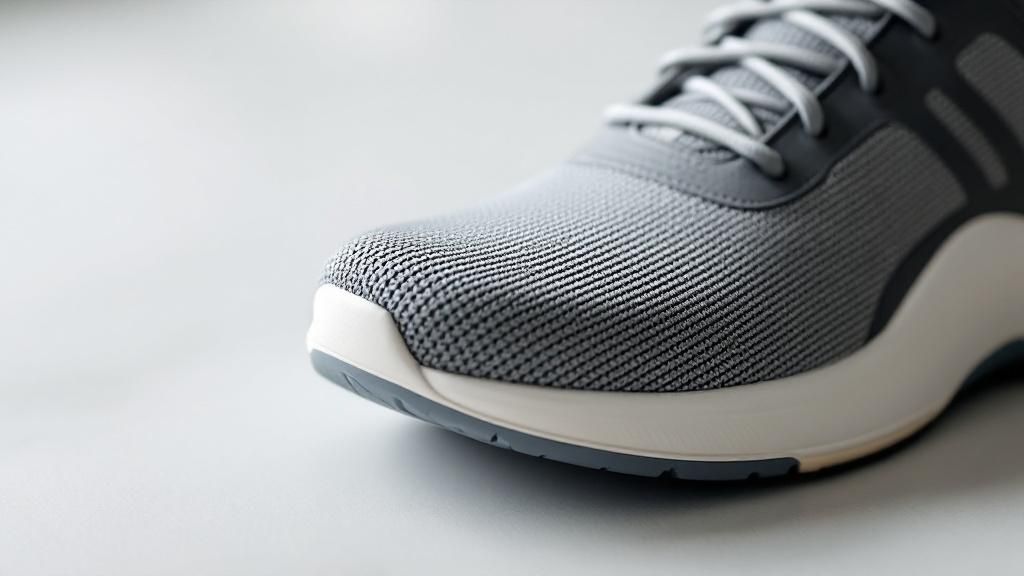
What Is Overpronation
The absence of a solid arch often leads to a mechanical quirk called overpronation. Now, pronation itself is totally normal; it’s just the natural inward roll of your foot right after it hits the ground. This motion is how your body softens the blow.
With flat feet, though, this inward roll goes way too far. Think of a bowling ball veering off course and heading straight for the gutter instead of rolling true. That’s overpronation in a nutshell. Your ankle and foot just keep rolling inward long after they should’ve stabilized, which puts a ton of strain on your joints and soft tissues.
This misalignment is the usual suspect behind a lot of common workout injuries for people with flat feet, such as:
Plantar Fasciitis: That sharp, stabbing heel pain from an inflamed tissue band running along the bottom of your foot.
Shin Splints: A nagging pain along the inside of your shinbone, a classic sign of overworked muscles and tendons.
Knee Pain: Often caused by the kneecap tracking incorrectly because your lower leg is rotating inward.
Bunions: A bony lump that forms at the base of the big toe, which can be made worse by your foot’s mechanics being off.
Getting your head around overpronation is the key. It's not just that your feet are flat; it's about the chain reaction that flatness triggers, throwing your whole body's alignment out of whack. The right shoes are designed to act like a guide, gently nudging your foot back into a more neutral position.
Connecting Your Pain to the Problem
Once you see how flat feet and overpronation work together, you can start connecting the dots between your discomfort and its source. That nagging knee pain you get during a run? Or the ache in your lower back after a tough HIIT class? It might not be random. It could be a direct result of your feet crying out for support.
This realization is powerful because it lets you move beyond just picking a shoe from a "best of" list. You're now ready to figure out your own needs and understand why certain features are so important. Your shoe shopping transforms from a guessing game into a smart, strategic move. The right shoe isn't just about feeling cushy; it's about providing the structural backbone your arches are missing.
And you’re not alone in this. More and more people are focusing on their foot health. The orthopedic footwear market, which includes many of the supportive shoes great for flat feet, was valued at around USD 4.37 billion in 2024. It’s projected to hit USD 15.45 billion by 2037, which shows just how many people are looking for ways to move better and feel less pain. You can read more about this market's growth on researchnester.com. Choosing the right workout shoe is a massive step in the right direction.
Anatomy of the Perfect Shoe for Flat Feet
Shopping for the best workout shoes for flat feet can feel like you're trying to crack some kind of secret code. You hear all these terms like "stability," "motion control," and "medial post," but what does any of it really mean for you and your workouts? Let’s cut through the marketing fluff and get down to the specific parts of a shoe that will actually support your feet.
Think of the right shoe as a custom support system. Each piece has a specific job, and they all work together to counteract the effects of a low or fallen arch and the overpronation that often comes with it. When you understand these components, you can walk into any store and know exactly what you’re looking for, no expert needed.
This visual breaks down the essential parts of a supportive shoe, pointing out the arch support, cushioning, and stability features that matter most.
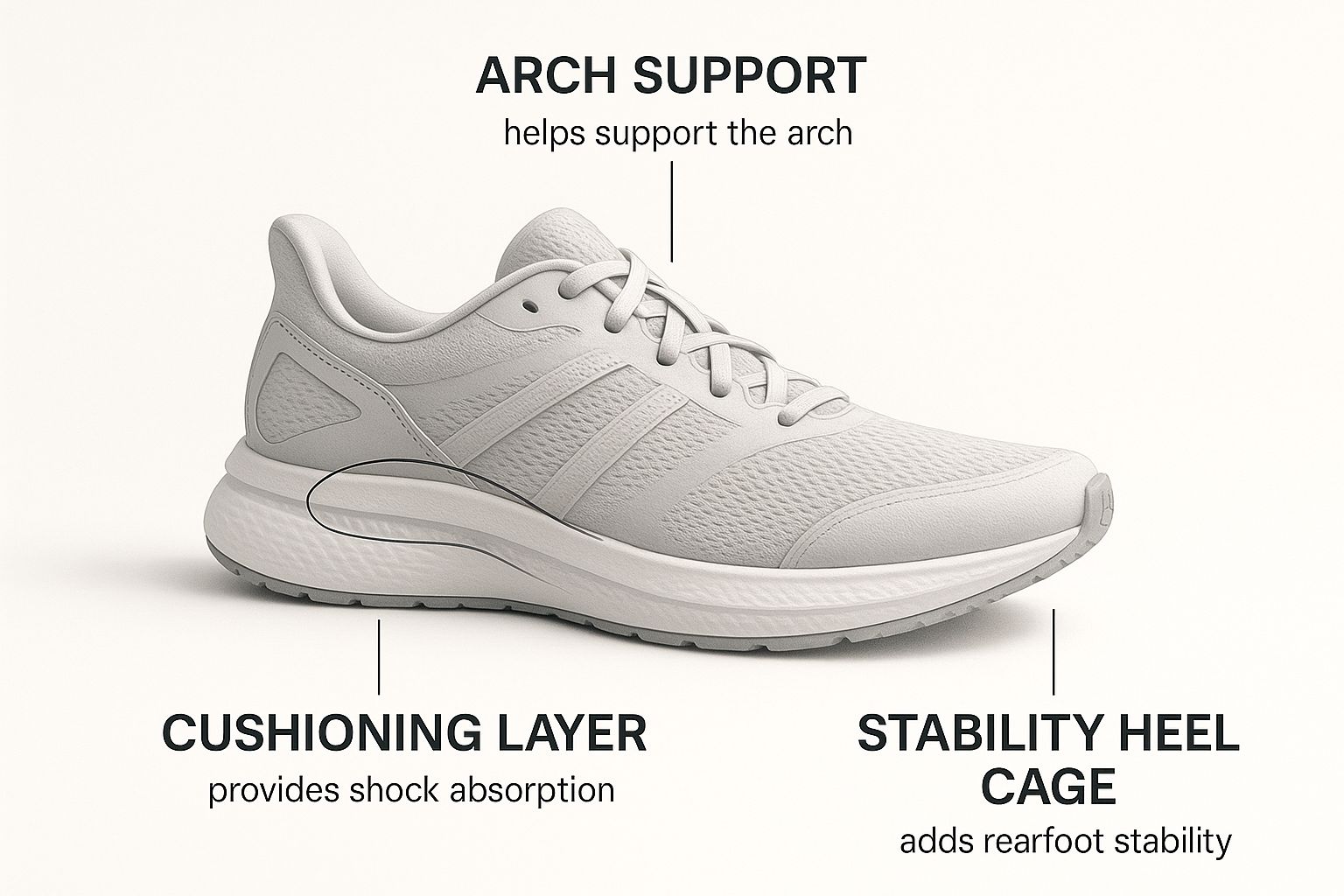
As you can see, it’s not just one magic feature. It's how all these elements come together that makes a shoe truly work for flat feet.
The Midsole: The Unsung Hero
The midsole is the heart and soul of any athletic shoe, tucked between the liner your foot rests on and the rubber that hits the ground. For anyone with flat feet, getting this part right is non-negotiable. You need a firm midsole, not one that feels like a soft, squishy pillow.
That plush, sink-in cushioning might feel great for a second, but it can actually make instability worse by letting your foot collapse even more. A firm midsole, usually made from EVA foam or something similar, gives you a solid platform that won't compress under pressure, preventing your arch from caving in.
The Medial Post: Your Arch's Support Beam
Now, let’s talk about the medial post. This is probably the single most important feature for controlling overpronation. The medial post is simply a section of denser, firmer foam built into the inner side of the midsole, right under your arch.
Picture it as a support beam for a bridge. It’s strategically placed to stop that inward ankle roll right as it starts, gently guiding your foot back into a more neutral position. If a shoe is labeled as a "stability" or "motion control" model, you can bet it has a medial post doing the heavy lifting.
The Heel Counter: Locking in Stability
Next up is the heel counter. This is a rigid plastic insert that wraps around the back of your heel. You can’t see it, but you can feel it if you pinch the heel of the shoe. For flat feet, a strong, unyielding heel counter is a must.
It acts like a brace, locking your heel securely in place so it doesn’t wobble from side-to-side when you move. That stability in the back of the foot is crucial because it sets the foundation for proper alignment all the way through your stride.
The Outsole and the Last: Foundation and Shape
Finally, don't forget the outsole and the shoe's "last." A wide, durable outsole creates more contact with the ground, giving you a broader and more stable base to stand on. This helps reduce the risk of ankle rolls, which can be a common problem for overpronators.
The last is the foot-shaped mold a shoe is built on. Shoes made on a straight last have a less dramatic curve from heel to toe. This design provides maximum surface area and support under your entire foot, which is exactly what flat feet need.
By focusing on these four key features—a firm midsole, a supportive medial post, a rigid heel counter, and a straight last—you can stop guessing and start making an educated choice. These pieces work in harmony to create an external support system that does the job your arches can't.
This knowledge is powerful whether you're running, lifting, or tackling a HIIT class. Speaking of which, if you mix up your workouts, checking out the best running shoes for cross-training can offer even more specific advice. Knowing the anatomy of a great shoe is the first step toward finding a pair that transforms your workout from painful to powerful.
Top Workout Shoes for Flat Feet: Individual Brand Reviews
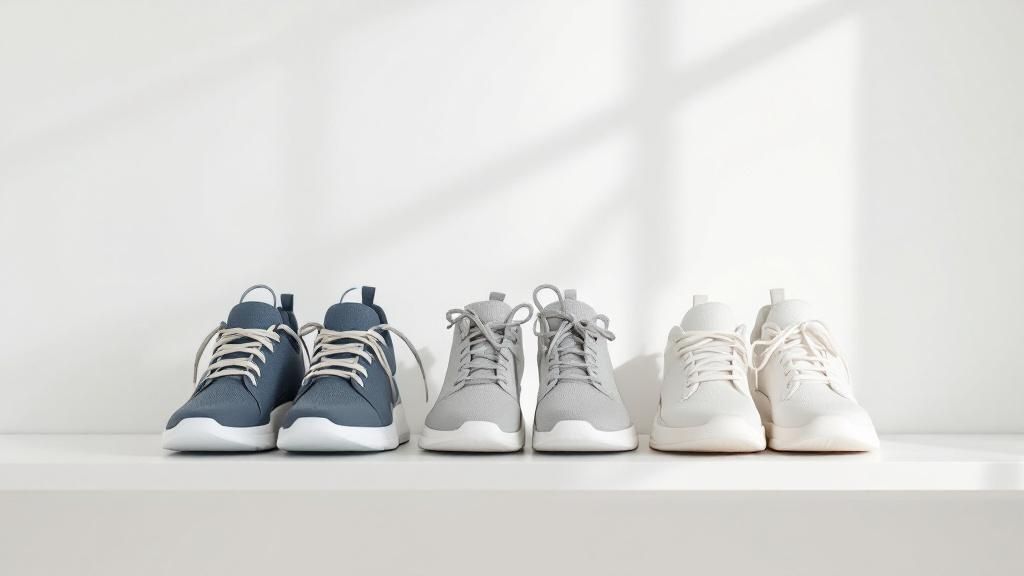
Alright, you've got the theory down, and now you know what to look for in a great workout shoe. It's time to see how all that translates into real-world options. Let's move from the "what" to the "which" and break down some specific models from brands that consistently deliver the stability and support your flat feet need.
This isn't just a list. We're going to dive into the specific tech that makes each of these shoes a standout choice. You'll see how their unique features come into play during a workout and which activities they're best suited for.
Brooks Adrenaline GTS 24: The Stability Icon
For years, the Brooks Adrenaline has been the gold standard for runners and walkers looking for rock-solid support, and the newest version keeps that tradition alive. Its secret weapon is the GuideRails holistic support system.
Think of it like bumpers in a bowling lane, but for your feet. The GuideRails are firm foam structures placed on both sides of the heel. They gently steer your foot into a more neutral alignment, preventing it from rolling too far inward or outward. This is a total game-changer for overpronators because it takes the stress off your ankles, knees, and even your hips.
The shoe also packs plenty of cushioning that soaks up impact without feeling overly soft or mushy, making it a perfect partner for road running and long walks. Stability and cushioning are non-negotiable for flat-footed athletes, and expert reviews back this up. The Adrenaline GTS 24 is often praised as a top stability shoe, partly due to its midsole heel stack height of 39.0 mm, which provides a ton of protective cushioning. This feature, combined with the GuideRails, creates a firm base that helps prevent your arch from collapsing. You can get more details on how the best running shoes for flat feet are rated over at RunRepeat.
ASICS Gel-Kayano 31: The Cushioned Workhorse
ASICS is famous for its GEL technology, and the Gel-Kayano is the crown jewel of their stability lineup. It pulls off a masterful balancing act, blending a plush, cushioned feel with serious motion control. This makes it one of the best workout shoes for flat feet, especially if you prioritize comfort during high-impact workouts.
The shoe relies on a combination of FF BLAST™ PLUS ECO cushioning and PureGEL™ technology in the heel to soften every landing. To keep overpronation in check, it uses the 4D GUIDANCE SYSTEM™, an innovative feature designed to adapt to your stride and gently nudge your foot toward a more efficient movement pattern.
The real magic of the Gel-Kayano is how it feels incredibly soft underfoot while still providing the rigid structure needed to keep your arch from collapsing. It's the perfect blend for someone who wants cloud-like comfort without giving up control.
This makes it a fantastic choice for:
Long-distance running, where your form can start to break down from fatigue.
High-impact gym classes, like HIIT sessions or cardio dance.
Anyone who spends all day on their feet and needs maximum shock absorption.
Hoka Gaviota 5: The Maximalist Supporter
Hoka basically invented the maximalist cushioning trend, but the Gaviota 5 is proof that you can have a mountain of soft foam underfoot and still get best-in-class stability. This shoe is built from the ground up for those who need the absolute highest level of support.
The key to its stability is Hoka's H-Frame™ technology. Unlike a traditional, dense medial post, the H-Frame is a section of firmer foam that wraps around your heel and runs along both sides of the shoe. This creates a stable cradle for your foot to sit down into the midsole, rather than just perched on top of it.
The Gaviota 5 is an excellent option if you:
Struggle with severe overpronation and find that other stability shoes just don't cut it.
Are coming back from an injury and need maximum protection and impact absorption.
Simply prefer a super cushioned, plush ride during your runs and walks.
By understanding the unique technologies behind these models—from the GuideRails in the Brooks to the GEL in the ASICS and the H-Frame in the Hoka—you can make a much more informed decision. The next step is to see how gender-specific designs can help you dial in your choice for an even better fit.
Top Athletic Shoe Reviews for Men and Women
It's a common mistake to think that picking the right workout shoe is just about getting the length and width right. But when it comes to performance and comfort, the differences between men's and women's feet are a game-changer. Top brands know this, and they design their shoes to account for these distinct anatomical variations.
So, what are we talking about here? It’s more than just size. Women’s feet, for instance, often have a narrower heel in proportion to their forefoot. This is why a man’s shoe, even in the "correct" size, might feel loose and sloppy around a woman’s heel, leading to blisters and instability.
Then there's the "Q-angle," which is the angle between your hips and knees. Women typically have a wider Q-angle, which can change your body's mechanics and make your foot more likely to roll inward. The truly best workout shoes for flat feet are built with these subtle but critical details in mind.
Top 3 Recommendations for Men
Men's stability shoes are generally built on a wider platform, giving you a solid base of support that can handle a greater average body mass. This is crucial for heavy lifts or high-impact training where stability is everything.
Brooks Adrenaline GTS 24: This shoe is a fantastic all-rounder. Its GuideRails technology gives you solid support without feeling like you're wearing concrete blocks. It's a workhorse for men who need dependable stability for running, hitting the gym, and even just daily wear.
ASICS Gel-Kayano 31: If you need maximum cushioning paired with serious motion control, this is your shoe. It's perfectly suited for heavier guys or anyone doing high-impact exercises, as it does a phenomenal job of absorbing shock while keeping your arch from collapsing.
New Balance 1540v3: Think of this one as the heavyweight champion of motion control. It’s built for severe overpronators and offers an uncompromising level of support with its firm midsole and Rollbar technology. If you need maximum correction, this is a top contender.
A shoe designed for a man's foot typically offers a wider base and firmer support structures calibrated for a higher average body weight, ensuring durability and stability under greater force.
Top 3 Recommendations for Women
For women, the focus is often on a more contoured fit. These models usually have enhanced forefoot flexibility and cushioning that's dialed in for a lighter average body weight. The heel counter is also shaped differently to securely lock in that narrower heel.
Hoka Gaviota 5: While Hoka makes shoes for everyone, the Gaviota's blend of pillowy cushioning and a secure, cradling fit is a huge win for women. Its H-Frame provides stability that feels supportive, not rigid, which works well with the biomechanics influenced by a wider Q-angle.
Saucony Guide 17: This shoe hits that sweet spot between moderate stability and a light, responsive feel. It’s perfect for women who find traditional stability shoes too clunky but still need reliable arch support for everything from a 5K to circuit training.
Brooks Adrenaline GTS 24 (Women's): Yes, it’s the same name, but it’s a different shoe. The women’s version is built on a specific last, giving it a superior fit with a narrower heel that matches female foot anatomy. You get the same trusted GuideRails support but in a package designed just for you. For more training options, check out our breakdown of the Nike Women's Legend Essential 2 to see how other female-specific designs stack up.
Comparison Review: Top Workout Shoes for Flat Feet
To make things even clearer, let's put these top-tier shoes side-by-side. This table breaks down the best options for both men and women, highlighting the specific features that make them stand out for flat feet.
Rank | Top 3 for Men | Key Feature for Men | Top 3 for Women | Key Feature for Women |
|---|---|---|---|---|
1 | Brooks Adrenaline GTS 24 | GuideRails Support: Versatile stability for all activities. | Hoka Gaviota 5 | Maximal Cushioning: A soft, stable ride for joint protection. |
2 | ASICS Gel-Kayano 31 | Max Cushioning: Ideal for heavier runners and high impact. | Saucony Guide 17 | Balanced Support: Lightweight feel with reliable stability. |
3 | New Balance 1540v3 | Motion Control: Maximum support for severe overpronation. | Brooks Adrenaline GTS 24 | Female-Specific Fit: GuideRails support tailored to women's anatomy. |
Ultimately, choosing the right shoe comes down to understanding your own unique needs. Whether you require the broader base of a men’s shoe or the contoured fit of a women’s model, the perfect pair is out there to help you crush your workouts safely and comfortably.
Beyond the Shoe: Informative Health Information and Wellbeing Trends
Finding the right pair of the best workout shoes for flat feet is a huge step in the right direction, but true foot health doesn't end there. Think of your supportive shoes as the foundation of a house—absolutely essential, but you still need the walls and roof to be fully protected. In the same way, a lasting fix for foot pain requires a multi-pronged approach that supports your body from the ground up.
This means pairing your new footwear with some targeted wellness practices and methods. When you actively strengthen the tiny muscles in your feet and improve flexibility in your lower legs, you're building a natural, internal support system. This strategy works hand-in-hand with your shoes to ease strain, head off injuries, and just help you move better overall.
Targeted Stretching for Pain Relief
One of the most common complaints that come with flat feet is tightness in the muscles and connective tissues of the lower leg. This happens because those tissues are constantly working overtime to make up for the lack of arch support. Two key areas really need consistent attention.
Calf Stretches: When your calf muscles are tight, they pull on your heel bone, which in turn puts a ton of strain on the plantar fascia. Simple wall stretches or spending a few minutes with a foam roller can make a massive difference in reducing this tension and easing that nagging heel pain.
Plantar Fascia Stretches: The plantar fascia is that thick band of tissue running along the bottom of your foot. You can gently stretch it by rolling your foot over a tennis ball or even a frozen water bottle. This is a game-changer for reducing inflammation and that awful morning heel pain.
Creating a simple, daily stretching routine is one of the most effective ways to manage the chronic stress flat feet place on your lower body. It's not about the intensity; it's about consistency.
Building Your Natural Arch Support
While shoes give you that crucial external stability, you can also build it from within. Simple strengthening exercises help wake up and develop the small muscles in your feet that are often weak in people with flat arches. These exercises help your feet become more resilient and better at supporting themselves.
Try working these into your routine:
Towel Curls: Lay a small towel on the floor and use only your toes to bunch it up and pull it toward you.
Arch Lifts: While standing, try to raise your arch without letting your toes or heel lift off the ground. It's harder than it sounds!
Toe Spreading: Spread your toes as wide apart as you can and hold for a few seconds.
Comparison of Wellbeing Methods: Insoles vs. Custom Orthotics
For some people, even the best shoes need an extra layer of personalized support. This is where inserts come into play, but it's really important to know the difference between the two main types.
Feature | Over-the-Counter (OTC) Insoles | Custom Orthotics |
|---|---|---|
Purpose | Provides general cushioning and moderate arch support. | Corrects specific biomechanical issues based on a mold of your feet. |
Best For | Mild discomfort and adding a bit of extra support to good shoes. | Moderate to severe overpronation, chronic pain, and specific conditions like plantar fasciitis. |
Cost | Generally affordable and widely available. | More expensive and requires a prescription from a podiatrist. |
Deciding between them really comes down to your specific needs. OTC insoles are a fantastic starting point for making your shoes more comfortable. But if you're dealing with more serious issues, custom orthotics offer a medical-grade solution tailored exactly to your foot's mechanics. Chatting with a podiatrist can help you figure out if this is the right move for you. You can learn more about picking supportive footwear from the experts at FitMyFeet.
Your Questions About Workout Shoes for Flat Feet Answered
Picking out the Best Workout Shoes for Flat Feet in 2025 can feel like a maze, especially when you're dealing with flat feet. To cut through the noise, I've rounded up some of the most common questions people ask when they're on the hunt for the best workout shoes for flat feet. Here are some quick, straight-to-the-point answers.
Can I Use Minimalist Shoes for Workouts?
For most people with flat feet, I'd say "no" to minimalist or "barefoot" style shoes for high-impact workouts. These shoes are stripped down and don't have the critical arch support or stability features you need to keep overpronation in check. Without that structure, you’re just inviting extra strain on your feet, ankles, and even your knees.
Now, some people do use them for very specific foot-strengthening exercises, but that's something you should ease into carefully, maybe even with some guidance from a pro. For your everyday training sessions, stick with a shoe that gives you real support.
How Often Should I Replace My Workout Shoes?
The cushioning and support in your shoes, especially the foam in the midsole, doesn't last forever. A good rule of thumb is to swap out your workout shoes every 300-500 miles of running or walking. If you're more of a gym person, think about replacing them after 45-60 hours of high-impact activity.
The most important thing is to listen to your body. If you start feeling new aches and pains in your feet or knees, that's often your first clue that your shoes have packed it in and it's time for a new pair.
Do I Need Custom Orthotics with My Shoes?
Not necessarily. A lot of the top workout shoes for flat feet come with fantastic built-in support that's more than enough for many people. My advice is to start with a great stability shoe and see how you feel.
If you're still dealing with nagging pain even after switching to supportive shoes, then it might be time to think about custom orthotics from a podiatrist. They create a personalized solution that can correct more serious alignment issues, and they work together with your shoes to give you the ultimate support.
References
Research Nester. (2024). Orthopedic Footwear Market - Global Demand Analysis & Opportunity Outlook 2037. Retrieved from https://www.researchnester.com/reports/orthopedic-footwear-market/340
RunRepeat. (n.d.). 100+ Best Running Shoes for Flat Feet (June 2024). Retrieved from https://runrepeat.com/guides/best-running-shoes-for-flat-feet
FitMyFeet. (n.d.). How to Pick the Right Shoes for Flat Feet. Retrieved from https://fitmyfeet.com/blogs/news/how-to-pick-the-right-shoes-for-flat-feet
At Flourish-Everyday, our goal is to steer you toward the best footwear and health advice for your fitness journey. We want to arm you with the knowledge to make smart choices for a healthier you. Check out our top picks and expert guides at https://www.flourish-everyday.com.