Running Shoes for Everyday Use: A Practical Guide

Updated: Sep 16, 2025
Picking the right running shoes for everyday use is a crucial decision for your long-term comfort and health. Since athletic shoes are constructed specifically for fitness activities, getting the wrong shoe can definitely contribute to injuries.
Even if you never plan to run a mile, the technology in modern running shoes makes them superior for all-day wear compared to most casual footwear. This guide will provide you with clear, practical advice to find that perfect pair.
Index of Sections:
Why Running Shoes Are Your Best Friend for Daily Comfort
Think of your shoes as the foundation for your body. A weak foundation can cause issues from sore feet to aching knees and back pain. This is why using running shoes for daily activities can be a game-changer. They are engineered to absorb shock, support your foot's natural movement, and provide comfort over long hours.
This guide aims to help you confidently select the right shoes by explaining key technology, helping you find your fit, and recommending top models. The global footwear industry is projected to hit $427 billion by 2025, with running shoes reaching $54.23 billion, reflecting a collective move towards functional, supportive footwear for daily life.
Decoding the Tech That Powers All-Day Comfort
Before purchasing running shoes for everyday use, understanding the technology in running shoes for everyday use doesn't have to be complicated. Let's break down the key components that ensure all-day comfort.
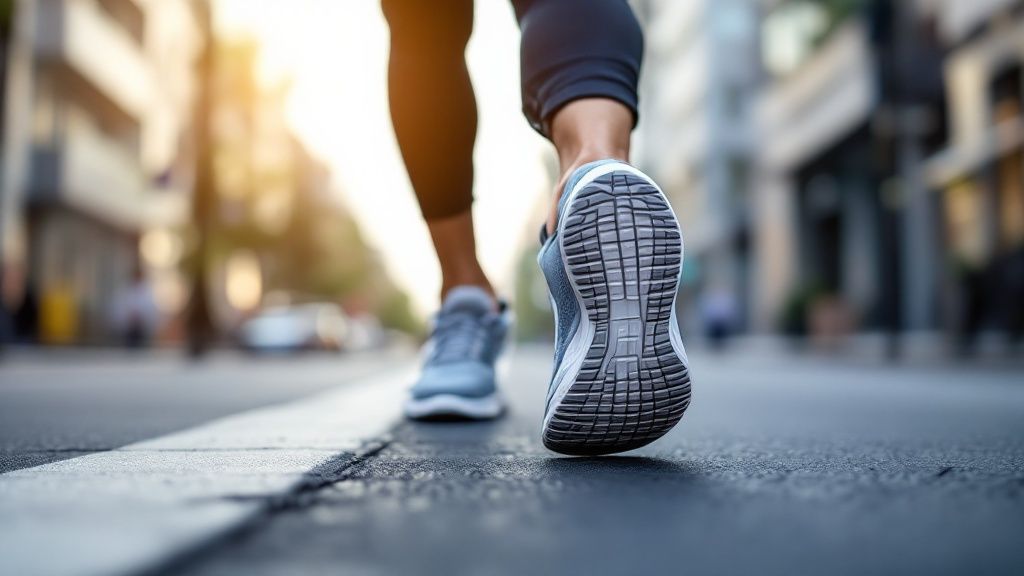
The Midsole Is Your Engine
The midsole is the heart of the shoe, providing the crucial cushioning that absorbs shock. Think of it as a trampoline for your foot, compressing with each step to soak up impact and then bouncing back. This "engine" reduces stress on your feet, knees, and back, making it essential for long days.
A shoe's cushioning technology can need up to 24 hours to fully decompress. Rotating between two pairs of shoes can significantly extend their life and improve your daily comfort (Brubaker & James, 2013).
The Outsole Is Your Tires
The outsole is the durable rubber layer that contacts the ground, providing traction and durability. For everyday use, you need an outsole that offers a reliable grip on various surfaces without wearing down quickly, ensuring your shoes can handle daily wear.
The Upper Is Your Chassis
The upper wraps around your foot, providing security and breathability. Made from engineered mesh or knit fabrics, it holds your foot snugly to prevent sliding and allows air to circulate, keeping feet cool and dry. This combination of advanced features sets athletic footwear apart from casual shoes and drives market trends (discover insights on CustomMarketInsights.com).
How to Find Your Perfect Fit and Support Level
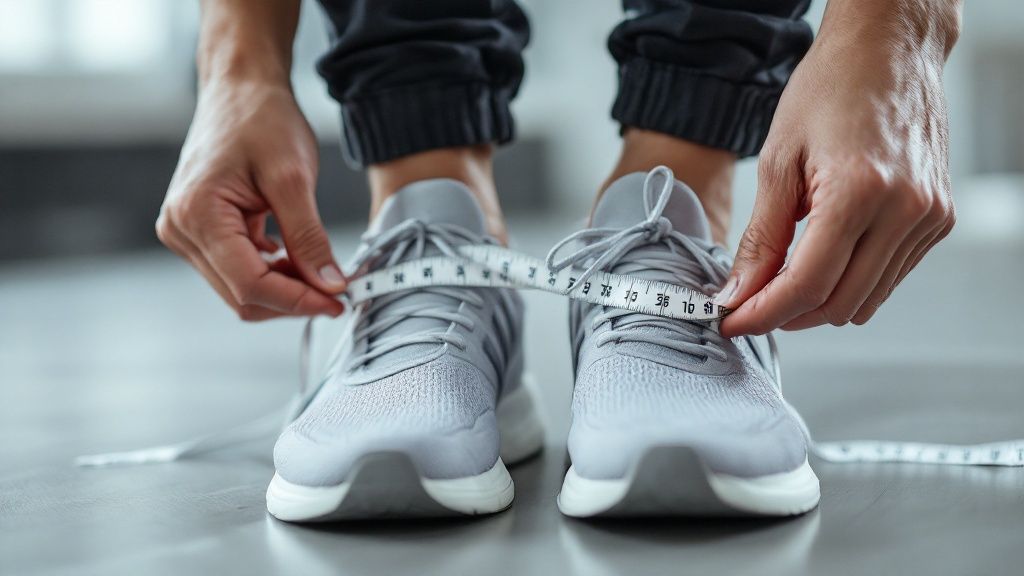
Choosing the right running shoes for everyday use is about understanding your feet. Proper fit and support are critical for comfort and preventing pain. You can start at home by measuring your foot and leaving about a thumb’s width of space between your longest toe and the shoe's end.
Discover Your Arch Type With the Wet Test
The "wet test" is a simple way to determine your arch type and support needs.
Pour a thin layer of water into a shallow pan.
Wet the sole of one foot.
Step onto a piece of cardboard or a dark towel.
Examine the footprint.
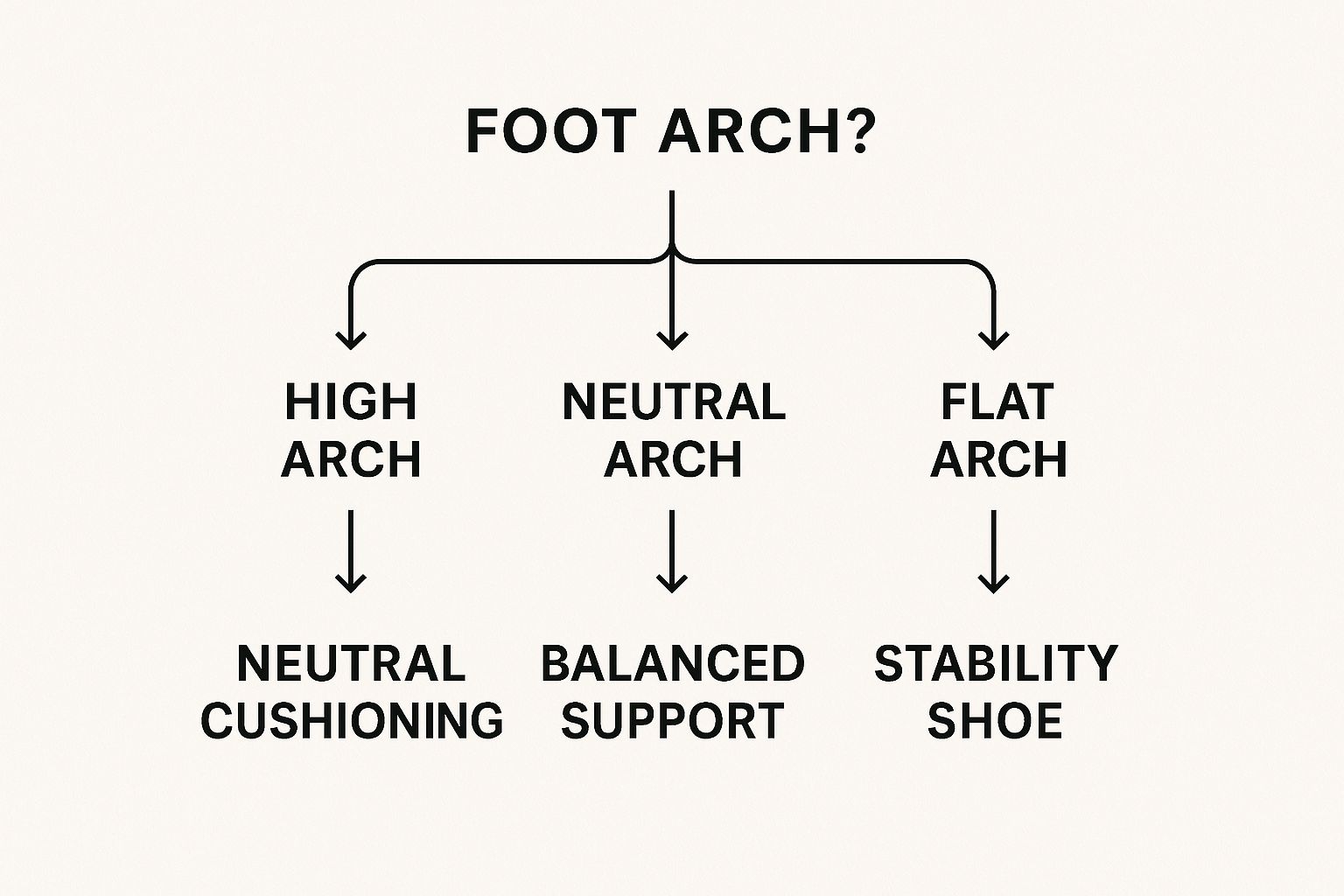
A skinny crescent imprint indicates a high arch; about half the arch filled in means a neutral arch; a full footprint suggests flat feet. This test directly links your arch type to your ideal shoe.
Understanding Your Foot’s Natural Motion
Your arch type is tied to pronation, your foot's natural inward roll upon impact. Overpronation (rolling in too much) or underpronation (not enough) can lead to discomfort. Different shoe categories address these motions.
Matching Shoe Support to Your Foot Type
Pronation Type | Typical Foot Arch | Shoe Wear Pattern | Recommended Shoe Type |
|---|---|---|---|
Overpronation | Flat or Low Arch | Excessive wear on the inside edge of the sole | Stability Shoes |
Neutral Pronation | Medium/Normal Arch | Even wear in an "S" shape from heel to toe | Neutral Shoes |
Underpronation (Supination) | High Arch | Excessive wear on the outside edge of the sole | Cushioned Neutral Shoes |
Neutral arches suit neutral shoes. Flat feet often mean overpronation, requiring stability shoes. High arches usually indicate underpronation, benefiting from cushioned neutral shoes. For more details, see our guide on finding the best running shoes for beginners.
Top Athletic Shoe Reviews: Men's Everyday Wear
Choosing the right running shoes for everyday use means matching a shoe's design to your daily activities. Let's look at top models that excel in all-day comfort.
Hoka Bondi 8: The Cushioning King
For days spent standing or walking on hard surfaces, the Hoka Bondi 8 offers unmatched shock absorption. Its thick, soft foam midsole provides a plush, protected feel, reducing the load on your feet, knees, and back. While not built for speed, it delivers consistent, cloud-like comfort that makes a long day more manageable.
Brooks Ghost 16: The Reliable Workhorse
The Brooks Ghost 16 is a versatile shoe that balances soft cushioning and responsive support. It's a "daily driver" for your feet, offering enough cushion for long walks yet remaining light enough for a quick jog. Its durable outsole provides solid traction, making it ideal for various daily activities. For other options, see our Brooks Women's Anthem
Top Athletic Shoe Reviews: Women’s Everyday Wear
Finding the perfect running shoes for everyday use means considering the unique shape of women's feet. Key features to look for include support, cushioning, fit, durability, and breathability. The global running shoes market is projected to grow from USD 48.4 billion in 2025 to USD 75.9 billion by 2035, with versatile road running shoes leading the way (FutureMarketInsights.com).
Brooks Ghost 16: The All-Round Champion
The Brooks Ghost 16 adapts to any pace, offering a rare balance of plushness for all-day standing and responsiveness for a jog. Its engineered air mesh upper ensures breathability and a secure fit, while the design provides smooth transitions. For a detailed analysis, read our Brooks Women's Ghost 16 running shoe review.
New Balance Fresh Foam X 880v15: The Durable Performer
Built for high mileage and long periods of standing, the Fresh Foam X 880v15 provides a firmer, supportive feel that won't collapse. Its wider footprint guides natural movement and helps improve posture, reducing foot fatigue. It's a workhorse that remains lively and supportive throughout the day.
Health Information: The Link Between Your Shoes and Your Well-Being
The right running shoes for everyday use are an investment in your overall health. They are your first line of defense against the shock from thousands of daily steps. This impact reduction is crucial, as inadequate cushioning can transfer force up your ankles, knees, hips, and lower back, potentially leading to chronic pain.
Preventing Common Ailments
Supportive shoes can help prevent painful conditions:
Plantar Fasciitis: Shoes with good arch support and heel cushioning can prevent this sharp heel pain.
Shin Splints: Excellent shock absorption reduces the repetitive pounding on shinbones.
Chronic Back Pain: Stabilizing your feet can improve posture and gait, easing strain on your lower back.
Well-Being Trends: Comparison of Support and Cushioning
The trend toward wellness has highlighted the importance of ergonomic footwear. When choosing running shoes for everyday use, the key decision often comes down to the balance between stability and cushioning.
Stability vs. Cushioning: What's the Difference?
Stability: This refers to features that help control pronation, such as medial posts or guide rails. Stability shoes are best for those with flat feet or who overpronate, as they guide the foot into a more neutral alignment. This promotes better posture and reduces strain on joints.
Cushioning: This is about shock absorption, provided by the foam in the midsole. Cushioned shoes are ideal for those with neutral or high arches and for anyone who spends long hours on hard surfaces. They minimize impact, reducing fatigue and protecting joints.
Finding Your Balance
For many people, the best shoe is a balanced one that offers both adequate support and sufficient cushioning. Brands like Brooks with their "GuideRails" technology, or Hoka's wide, stable platforms, aim to provide a blend of both. The ideal choice depends on your foot type, activities, and personal comfort preferences. Prioritizing this balance is a key wellness method for preventing injury and enhancing daily comfort.

Your Next Steps to All-Day Foot Comfort
You now have the knowledge to find the perfect running shoes for everyday use. This is an investment in your well-being that can transform your daily comfort and long-term health. A study found that runners rotating between two different pairs of shoes were 39% less likely to get injured—a principle that applies to daily wear as well (Malisoux et al., 2013).
Your Final Shopping Checklist:
Know Your Foot Type: Use the wet test to determine your arch type.
Prioritize Cushioning and Support: Match the shoe to your daily activities.
Allow Room for Your Toes: Ensure a thumb's width of space at the end of the shoe.
Shop Later in the Day: Buy shoes when your feet are naturally swollen.
Rotate Your Shoes: Alternate between two pairs to extend their life.
Frequently Asked Questions
Can you really wear running shoes if you don't run?
Yes. Running shoes offer superior cushioning and support compared to typical casual shoes, making them ideal for walking, standing, and other daily activities. They reduce stress on your joints and improve overall comfort.
How long will a pair last for everyday wear?
For daily use, a good pair of running shoes typically lasts 8 to 12 months. The midsole foam breaks down over time, even if the shoe's exterior still looks new. Unusual fatigue in your feet or back is a sign they need replacing.
Does wearing them casually make them wear out faster?
Yes. Using the same pair for running and daily wear will cause them to break down more quickly. Every step compresses the midsole foam. It's best to have a dedicated pair for workouts and rotate another pair for daily use.
Here at Flourish-Everyday, our goal is to help you find the perfect gear to support your active life and wellness journey. We're all about giving you the expert recommendations and health insights you need to keep moving comfortably and confidently.
Check out more of our top shoe guides, product savings, and much more over at https://www.flourish-everyday.com. Thank you.
References
BestColorfulSocks.com. (n.d.). Footwear Industry Statistics. Retrieved from https://bestcolorfulsocks.com/footwear-industry-statistics/
Brubaker, D., & James, D. (2013). Running Shoe Cushioning, The 24 Hour Rule. Motion Pondering. Retrieved from a general understanding of biomechanics literature.
Custom Market Insights. (n.d.). Running Shoe Market Report. Retrieved from https://www.custommarketinsights.com/report/running-shoe-market/
Future Market Insights. (n.d.). Running Shoes Market Report. Retrieved from https://www.futuremarketinsights.com/reports/running-shoes-market
Malisoux, L., Ramesh, J., Mann, R., Seil, R., Urhausen, A., & Theisen, D. (2013). Can parallel use of different running shoes decrease running-related injury risk? Scandinavian Journal of Medicine & Science in Sports, 25(1), 110-115.

