Flourish-Everyday
Search Results
Search this site
347 results found with an empty search
- Essential Workout Accessories You Can't Train Without
Starting a workout routine or stepping up your fitness game means more than just showing up and pushing yourself. The right accessories can make a big difference in your performance, comfort, and safety. Whether you train at home, in the gym, or outdoors, having a few key items can help you get the most out of every session. Essential Workout Accessories Why Workout Accessories Matter Many people overlook the impact of essential workout accessories, focusing only on clothes or shoes. But the right gear supports your body, improves your technique, and keeps you motivated. For example, a simple pair of gloves can protect your hands during weightlifting, while a quality water bottle encourages hydration. Accessories also help prevent injuries. Wrist wraps stabilize joints during heavy lifts, and foam rollers aid recovery by loosening tight muscles. These small additions can extend your training longevity and make workouts more enjoyable. Must-Have Accessories for Every Workout Here are some essentials that fit most training styles and goals: 1. Water Bottle Hydration is crucial. A reusable water bottle with a secure lid keeps water handy and reduces plastic waste. Look for bottles that are easy to clean and fit in your gym bag or bike holder. 2. Workout Gloves Gloves protect your hands from blisters and calluses, especially during weightlifting or using gym machines. They also improve grip, reducing the chance of slipping. 3. Resistance Bands These versatile bands add resistance to bodyweight exercises and stretching routines. They are lightweight, portable, and come in various strengths to match your fitness level. 4. Foam Roller A foam roller helps with muscle recovery by massaging tight areas and improving blood flow. Using it regularly can reduce soreness and increase flexibility. 5. Headphones or Earbuds Music or podcasts can boost motivation and focus. Choose sweat-resistant headphones with a secure fit to stay comfortable during intense sessions. 6. Fitness Tracker or Smartwatch Tracking your heart rate, steps, and calories burned provides valuable feedback. Many devices also offer workout programs and reminders to keep you on track. Accessories for Specific Training Types Different workouts benefit from specialized gear. Here are examples for popular training styles: Weightlifting Wrist Wraps : Support wrists during heavy lifts. Lifting Belt : Provides lower back support for squats and deadlifts. Chalk : Improves grip by reducing sweat. Running Running Belt : Holds keys, phone, and energy gels without bouncing. Reflective Gear : Increases visibility during early morning or night runs. Compression Socks : Enhance circulation and reduce fatigue. Yoga and Pilates Yoga Mat : Provides cushioning and grip. Yoga Blocks : Help with balance and flexibility. Straps : Assist in stretching and achieving proper form. Yoga accessories How to Choose the Right Accessories When selecting workout accessories, consider these factors: Quality: Durable materials last longer and perform better. Comfort: Accessories should fit well and not cause irritation. Portability: Lightweight and compact items are easier to carry. Purpose: Match accessories to your workout goals and style. Budget: Invest in essentials first, then add extras as needed. Trying out different brands and reading reviews can help you find what works best. Remember, the best accessory is one you will actually use consistently. Maintaining Your Workout Accessories Taking care of your gear extends its life and keeps it safe to use: Clean gloves and mats regularly to prevent bacteria buildup. Check resistance bands for tears or wear before each use. Charge electronic devices and update software for accurate tracking. Store items in a dry, cool place away from direct sunlight. Proper maintenance also saves money by avoiding frequent replacements. Foam roller and resistance bands Final Thoughts on Workout Accessories Adding a few well chosen accessories to your workout routine can improve your experience and results. Focus on items that support your specific needs and make training safer and more enjoyable. Start with basics like a water bottle and gloves, then explore tools like foam rollers or fitness trackers as you progress. Ready to gear up for your best winter running season yet? At Flourish-Everyday , we provide in depth reviews on the latest athletic shoes, including men's and women's top picks with enhanced traction for cold weather conditions. Visit Flourish-Everyday to find the perfect gear and expert insights to empower every step of your fitness journey.
- Top Under Armour Men's Charged Assert 10 Trainers: Top Mens Cross-Training Shoes for Running
Buy Here: https://amzn.to/3Y6JMJr Under Armour has sure come a long way from its humble beginnings. From becoming the official shoe of the NFL, to designing high performance active wear. UA's Top Mens Cross-Training Shoes for Running is being very well received by workout enthusiasts and has a 4.5 approval rating online with over 10k ratings. These running shoes, available in both men's and women's sizes, are designed to help you achieve your workout goals. They feature Charged Cushioning for impact protection, a breathable upper mesh, and offer long-lasting durability. The Under Armour Men's Charged Assert 10 Trainers have been described as supremely comfortable, and appear to stand the test of time. Made of sturdy materials, they have a premium feel to them, and are lightweight and will support your balance wonderfully during training. A versatile gym trainer for all your sports requirements. Great shoes for the price and stylish, and come in some really nice color combinations. These are a high quality shoe by Under Armour. These have a comfortable soft insole and durable thick rubber grips that enhance the longevity of the soles. They are somewhat stiff and will require a breaking in period. Here are some special features that will help in your decision: Lightweight, breathable mesh upper with synthetic overlays for added durability & support EVA sockliner provides soft, step-in comfort Charged Cushioning midsole uses compression molded foam for ultimate responsiveness & durability Solid rubber outsole covers high impact zones for greater durability with less weight Offset: 10mm In conclusion, the UA Charged Assert 10 is very well designed. The sole offers the perfect balance for a great run, delivering cushioning and bounce without giving way under each step's weight. Fitness lovers find these running shoes comfortable, and appreciate their sturdy construction without being too heavy. They are a great looking shoe and are a great value for money. The shoe is adaptable, suitable for both exercise and everyday use, and is lightweight with excellent arch support. The fit receives some concerns, with some customers finding them true to size while others report they run tight. As you can see, they are definitely worth your consideration. If you are interested in purchasing these trainers, please click the links provided. Thank you, and remember, it's the last mile, rep, and effort that matters. Have an awesome workout. Buy Here: https://amzn.to/3Y6JMJr My Favorite
- Running in Cold Weather Tips: Stay Warm & Safe This Winter
Don't let dropping temperatures freeze your running routine. Embracing the chill can be an invigorating and rewarding part of your training cycle, but it requires a smart, strategic approach. From the gear you wear to how you manage your effort, small adjustments make a massive difference. This article offers practical, expert supported tips for running in cold weather to ensure you stay safe, warm, and perform at your best throughout the season. We move beyond generic advice to deliver detailed, practical insights you can implement on your next run. This comprehensive roundup covers everything from advanced layering techniques to shoe reviews for icy conditions. We will dive into dynamic warm-ups, essential skincare, and strategic hydration tailored for the cold. Furthermore, we will compare wellness trends like heart rate training versus perceived exertion and provide crucial safety protocols to ensure every run is a success. This article is your definitive resource for conquering the cold and making this your best winter running season yet. Article Index: Mastering the Art of Layering Essential Gear for Your Extremities Dynamic Warm-Ups and Smart Cool-Downs Health Focus: Skincare, Hydration, and Nutrition Shoe Reviews: Top Picks for Men and Women Comparing Wellness Trends: Heart Rate vs. Perceived Exertion Route Planning and Safety Protocols The Ultimate Post-Run Recovery Checklist References 1. Mastering the Art of Layering Running in cold weather has to start with layering. Layering is the most effective strategy for comfortable and safe cold weather running. This three part system works to manage moisture, trap heat, and protect you from the elements. As your body warms up, you can easily remove a layer to prevent overheating and the subsequent chill from trapped sweat. This tip is a cornerstone of any guide to running in cold weather tips. Its effectiveness is proven by everyone from marathoners to trail runners who rely on layering to manage fluctuating temperatures and exertion levels (Haskell, 2021). The Three Essential Layers Base Layer: This layer against your skin must be moisture wicking . It pulls sweat away from your body to keep you dry. Avoid cotton, as it absorbs moisture and will make you cold. Materials: Choose synthetic fabrics like polyester or natural fibers like merino wool, which is also odor resistant. Middle Layer: This is your insulation layer. Its purpose is to trap your body heat. The thickness should vary depending on the temperature. Materials: Fleece, down, or synthetic fill vests and pullovers are excellent options. Outer Layer (Shell): This is your protection from wind, rain, and snow. It should be windproof and water resistant while allowing sweat vapor to escape. Materials: Look for jackets with technical fabrics like GORE-TEX or similar proprietary membranes. 2. Protect Extremities with Appropriate Gear Your body prioritizes your core temperature by reducing blood flow to extremities like fingers, toes, ears, and nose. This makes them highly susceptible to discomfort and frostbite. Focusing on specialized protective gear for these areas is nonnegotiable for safe and effective winter running. Key Gear for Your Extremities Hands: Start with thin, moisture wicking liner gloves under a thicker, windproof mitten. You can easily shed the outer mitten if you get too warm. Convertible mittens are also excellent for dexterity. Feet: Cold, numb feet can ruin a run and affect your form. Choose thermal running socks made from merino wool or synthetic blends. Ensure your shoes have enough room for slightly thicker socks without constricting circulation. Head and Face: A significant amount of body heat is lost through your head. A moisture wicking beanie or a thermal headband is essential. In very cold or windy conditions, a buff, neck gaiter, or balaclava can protect your nose, cheeks, and chin. 3. Dynamic Warm-Ups and Smart Cool-Downs Jumping from a warm house into frigid air is a shock to the system. Cold temperatures make muscles and tendons less pliable, increasing the risk of strains or tears. A proper warm-up is nonnegotiable in winter; it increases your core body temperature, boosts blood flow, and prepares your joints and muscles for impact. Studies have shown that implementing structured warm-ups can reduce cold weather injuries (McGowan et al., 2015). The Dynamic Warm-Up Strategy A dynamic warm-up, which involves active movements that mimic running, is far more effective than static stretching before a cold run. Start Indoors: Begin your routine inside where it's warm. Perform a few minutes of light cardio like jogging in place, followed by dynamic movements like arm circles, torso twists, leg swings, and walking lunges. Transition Outside: Once warm, head outside. Your first 5 to 10 minutes of running should be at a significantly reduced effort. This gradual transition allows your body to acclimate. Try breathing in through your nose and out through your mouth to help warm the air. Post-Run Mobility: Light static stretching is best immediately after your run while your muscles are still warm. This can help improve flexibility and aid in recovery. 4. Health Focus: Skincare, Hydration, and Nutrition Skincare and Chafing Prevention Cold, dry air can lead to chapped skin and windburn. A physical barrier is your best defense. Use a thick moisturizer or petroleum jelly on exposed skin and an SPF lip balm, as sun reflection off snow can be intense. Apply anti-chafing products like Body Glide to friction points such as inner thighs, underarms, and bra lines to prevent painful abrasions. Strategic Hydration and Nutrition Cold air suppresses the body's thirst response, meaning you may not feel thirsty even when dehydrated (Kenefick et al., 2010). This can sabotage your performance. Your body also burns more calories to stay warm. Combat Freezing: Use an insulated bottle or start with lukewarm water. For longer runs, consider a hydration pack worn under your jacket. Proactive Drinking: Set a schedule to drink small amounts every 15-20 minutes, regardless of thirst. Increased Caloric Needs: Plan to increase your caloric intake. For guidance, explore this ultimate guide to high protein snacks for athletes or a guide to pre and post-workout nutrition . 5. Shoe Reviews: Top Picks for Men and Women The right footwear is critical for winter running. Look for shoes with aggressive lugs for grip in snow and water-resistant uppers to keep feet dry. Some models offer built-in traction devices or waterproof membranes like GORE-TEX. Top Athletic Shoe Reviews for Winter Running Men's Top Pick: Saucony Peregrine ICE+ 3 : This shoe is renowned for its Vibram ARCTIC GRIP outsole, which provides exceptional traction on wet ice. The water-resistant upper and cushioned midsole make it a comfortable and secure choice for slick conditions. Women's Top Pick: Hoka Speedgoat 6 GTX : Known for its maximalist cushioning, the Speedgoat's GORE-TEX version adds a waterproof layer, making it ideal for slush and snow. The Vibram Megagrip outsole with deep lugs offers reliable traction on technical and slippery terrain. Individual Brand Shoe Review: Brooks Cascadia 17 GTX The Brooks Cascadia line ( Men's Cascadia / Women's Cascadia ) has long been a favorite for trail runners, and the GORE-TEX version is an excellent all around winter option. Its TrailTack Green Rubber outsole provides solid grip on wet surfaces, while the Ballistic Rock Shield protects from sharp objects hidden under snow. The waterproof membrane keeps feet dry without sacrificing too much breathability, making it a versatile workhorse for varied winter conditions. 6. Comparing Wellness Trends: Heart Rate vs. Perceived Exertion Heart Rate Training In cold weather, your heart works harder to pump warm blood to your extremities. This means your heart rate will be higher at a given pace compared to running in mild temperatures (Castellani, 2003). Monitoring your heart rate with a chest strap or watch allows you to train by effort rather than pace, preventing overexertion and ensuring a safe, effective workout. Rate of Perceived Exertion (RPE) RPE is a subjective scale (typically 1-10) of how hard a workout feels. It is a simple, effective way to manage intensity without technology. In winter, your pace may be slower, but if the effort feels the same as a faster run in warmer weather, you are likely getting a similar physiological benefit. Comparison Review Method Pros Cons Heart Rate Objective, data driven, prevents overexertion. Requires a monitor, can be affected by caffeine/stress. RPE Free, intuitive, teaches you to listen to your body. Subjective, can be influenced by mood or external factors. For most runners, a combination of both is ideal. Use heart rate for objective data on key workouts and RPE to develop a better internal sense of effort. 7. Route Planning and Safety Protocols Choosing your route wisely is a fundamental aspect of safe cold weather running. Cold weather introduces ice, slush, and snow, increasing the risk of falls. Prioritize Maintained Surfaces: Stick to roads and paths that are priorities for snow and ice removal. Seek Shelter from Wind: Plan routes through wooded areas or neighborhoods where buildings act as windbreaks. Know Emergency Signs: Be aware of the signs of frostbite (numbness, waxy skin) and hypothermia (uncontrollable shivering, confusion). If you notice symptoms, stop, seek shelter, and get warm. Communicate Your Plan: Always tell someone your route and expected return time. Carry a fully charged phone in an inside pocket to preserve its battery. For more on safety, review a guide on essential communication and survival gear for your emergency kit . 8. The Ultimate Post-Run Recovery Checklist Change Clothes Immediately: Get out of damp running clothes as quickly as possible to prevent a rapid drop in body temperature. Rehydrate with Warm Fluids: A warm drink like tea or hot chocolate can help raise your core temperature and replenish fluids. Refuel Within 30-60 Minutes: Consume a mix of carbohydrates and protein to replenish energy stores and repair muscles. Take a Warm Shower or Bath: This helps restore circulation and relax cold, tight muscles. Avoid excessively hot water if you suspect frostnip. Gentle Stretching or Foam Rolling: Once warm, perform light static stretches to improve flexibility and reduce muscle soreness. Allergy Free Mixes 9. References Castellani, J. W. (2003). Exertional heat illness in cold, wet conditions. Current Sports Medicine Reports, 2 (4), 187-192. Haskell, J. (2021). The Complete Guide to Winter Running . VeloPress. Kenefick, R. W., Hazzard, M. P., Mahood, N. V., & Castellani, J. W. (2010). Thirst sensations and AVP responses at rest and during exercise-cold exposure. Medicine & Science in Sports & Exercise, 42 (1), 89-95. McGowan, C. J., Pyne, D. B., Thompson, K. G., & Rattray, B. (2015). Warm-up strategies for sport and exercise: a systematic review. Temperature, 2 (4), 489-514. Ready to gear up for your best winter running season yet? At Flourish-Everyday , we provide in depth reviews on the latest athletic shoes, including men's and women's top picks with enhanced traction for cold weather conditions. Visit Flourish-Everyday to find the perfect gear and expert insights to empower every step of your fitness journey.
- A Guide to Lightweight Running Shoes
When you hear "lightweight running shoe," think speed. These are shoes stripped down for efficiency, trading heavy cushioning for a snappier, more responsive ride. Typically, they weigh under 9 ounces (around 255 grams) for a men's size 9, and under 7 ounces ( around 200 grams) for a woman's size 7. The moment you pick one up, you'll feel the difference. On your feet, they feel noticeably quicker and give you a better sense of the ground. The guide to lightweight running shoes will help navigate you through the what, why, and recommendations on how to reach your fitness goals. Index The Purpose of Lightweight Running Shoes Who Benefits from Lighter Shoes? Lightweight vs. Traditional Running Shoes The Anatomy of a Lightweight Shoe Finding The Right Lightweight Shoe For You Top Lightweight Running Shoe Models for Men and Women Smart Training and Injury Prevention Building Your Transition Plan Strengthening for Prevention How to Care For Your Lightweight Shoes Common Questions About Lightweight Shoes References The Purpose of Lightweight Running Shoes Think of lightweight running shoes as the sports cars of the footwear world. Their main job is to make it easier to lift your feet, stride after stride. Less weight means less effort, which can boost your running economy and, ultimately, lead to faster times. This isn't magic; it's smart engineering, stripping away nonessentials and using cutting edge foams that provide more energy return. While they used to be reserved for elite athletes, today's market is full of fantastic lightweight options for all types of training. Who Benefits from Lighter Shoes? You don't have to be a pro to appreciate a lighter shoe. A whole range of runners can find a perfect spot for them in their shoe rotation: Competitive Racers: For any race distance, shaving off ounces per foot adds up to significant energy savings over thousands of steps. Runners Doing Speed Work: Lightweight shoes are the perfect tool for tempo runs, interval sessions, or track workouts where you need quick leg turnover. Efficient, Experienced Runners: Runners with a solid, efficient form might prefer the direct, connected feel of a lighter shoe for everyday miles. Of course, there’s a trade off. To reduce weight, these shoes often have less cushioning and fewer stability features. This means your feet and lower leg muscles must work harder, so it's something to be mindful of. The core idea behind a lightweight running shoe is to provide just enough protection and responsiveness to run fast, without any excess material to slow you down. It’s a tool built for performance. The surge in demand for high performance shoes is part of a larger trend. The global running shoe market was valued at $45.7 billion and is expected to hit $73.0 billion by 2035 , growing at 4.3% annually (1). This growth is fueled by more people running marathons and embracing active lifestyles. You can explore more data on running shoe market trends. Lightweight vs. Traditional Running Shoes Here’s a quick comparison to help you see where each type of shoe shines. Feature Lightweight Running Shoes Traditional Running Shoes Primary Purpose Racing, tempo runs, speed workouts Daily training, recovery runs, long distance comfort Cushioning Moderate to minimal, focused on responsiveness High to maximal, focused on shock absorption Weight Typically under 9 oz (Men's 9) Usually over 9.5 oz (Men's 9) Feel Snappy, fast, connected to the ground Plush, protective, cushioned Durability Generally lower due to lighter materials Higher, built to withstand high mileage Best For Race day, fast training sessions, experienced runners New runners, high mileage training, injury prone runners Neither shoe is inherently "better", they are different tools for different jobs. Most serious runners find that having both a lightweight option and a traditional trainer provides the versatility needed for any workout. The Anatomy of a Lightweight Shoe To understand what makes a lightweight running shoe tick, you have to look at how it's built. Every component is carefully selected to slash weight and maximize performance. These shoes get their feather light feel from smart material choices in three key areas: the upper, the midsole, and the outsole. The Upper: Minimalist Materials The upper wraps around your foot. In lightweight shoes, the mission is to lock your foot in securely without bulk. Modern uppers use advanced materials like engineered mesh. This material can be woven with different densities in one piece, providing breathability where you need it and structure where you don’t. This design eliminates the need for stitched on panels, which cuts weight and reduces irritation hotspots. The Midsole: The Engine of the Shoe The midsole is where the real innovation happens. This foam layer is responsible for cushioning and energy return. For lightweight shoes, the challenge is providing enough protection without making the shoe feel heavy. The solution lies in advanced foam compounds. Materials like Pebax and other nitrogen infused foams are incredibly light, resilient, and return a huge amount of energy with each stride. This creates the “bouncy” feeling that helps you run faster with less effort. This infographic breaks down how a shoe's components translate into on-the-run benefits. As you can see, speed, ground feel, and purpose combine to define the lightweight running shoe experience. The Outsole: Strategic Traction Finally, the outsole is the rubber part that hits the ground. A traditional trainer might have rubber covering the entire bottom for durability, but that adds weight. Lightweight models are smarter, placing thin, tough rubber only in high wear zones, like under the heel and the ball of your foot. The rest of the midsole foam is often left exposed to save every possible gram. In essence, the anatomy of a lightweight running shoe is an exercise in purposeful minimalism. Every material and design choice is made to strip away the non-essential, leaving only what is needed for speed. Finding The Right Lightweight Shoe For You Choosing the perfect pair of lightweight running shoes can be a structured process. The goal is to find a shoe that feels like a natural extension of your foot. To do that, focus on your foot shape, running style, and intended use. Understanding Your Foot and Gait Before trying on shoes, get to know your feet. Everyone’s are different, which is why a shoe that works for one person might not work for another. Foot Shape: Are your feet wide or narrow? A cramped toe box can lead to blisters and discomfort. Arch Type: Use the "wet test." Wet your foot and step on cardboard. A flat footprint suggests a low arch, while a print showing just your heel and the ball of your foot indicates a high arch. Gait (Pronation): This refers to how your foot rolls inward upon landing. A gait analysis at a specialty running store can determine if you have a neutral stride, overpronation (rolling in too much), or supination (rolling outward). For a more detailed look, check out our guide on how to choose running shoes . The Fitting Process Now it’s time to try on shoes. How a shoe "feels" is personal, but a few best practices can help. Always try on running shoes at the end of the day or after a run. Your feet naturally swell, so fitting them at their largest helps avoid buying shoes that are too tight. Ensure there’s about a thumb's width of space between your longest toe and the end of the shoe. This extra room is crucial to accommodate foot swell and prevent toe jamming. Top Lightweight Running Shoe Models for Men and Women Here is a list of popular lightweight models, broken down by what they do best. This is a great starting point for finding your next pair. Brand & Model Primary Use Key Feature Best For Nike Vaporfly 3 Race Day High-rebound ZoomX foam and a carbon fiber plate for maximum energy return. Men/Women Saucony Endorphin Speed 4 Tempo / Speed Work A versatile shoe with a winged nylon plate that is great for fast training days. Men/Women Hoka Mach 6 Efficient Daily Trainer A responsive and lightweight option that balances speed with sufficient cushioning for daily miles. Men/Women ASICS Metaspeed Sky+ Race Day Designed for runners who increase their stride length to go faster. Men/Women Brooks Hyperion Tempo / Speed Work A no-frills, lightweight trainer focused on quick turnover and ground feel. Men/Women These models represent top engineering from leading brands, each designed to give you an edge on race day or during a tough tempo session. Smart Training and Injury Prevention Switching to lightweight running shoes can feel amazing, but it requires an adaptation period for your body. Moving suddenly from a plush trainer can put new stress on your feet, calves, and Achilles tendons. The secret to unlocking their speed without getting injured is a slow, steady transition. Building Your Transition Plan Think of this as breaking in your body, not just the shoes. Introduce the new demands gradually to allow your muscles and tendons to strengthen. Start Short and Slow: Wear your new lightweight shoes for just the last 10-15 minutes of an easy run. Alternate Your Shoes: Keep your old trainers for long runs and recovery days. Use the lightweight pair for shorter, faster workouts, slowly increasing the time you spend in them. Listen to Your Body: Pay attention to any new soreness. A little muscle fatigue is normal, but sharp or lingering pain is a signal to slow down. A smart transition isn’t about speed; it's about adaptation. Gradual exposure allows your lower leg muscles to build the specific strength needed. Strengthening for Prevention Lightweight shoes have less built-in support, so your body must do more work to stay stable. Proactive strength training is key to staying injury free. For more detail, see our article on how to prevent running injuries with top tips for safe running . Focus on these areas: Foot Intrinsic Muscles: Exercises like towel scrunches build natural arch support. Calf Muscles: Calf raises (with both straight and bent knees) target the gastrocnemius and soleus muscles, essential for shock absorption. Glutes and Hips: Strong hips stabilize your stride. Exercises like glute bridges and clamshells prevent your knees from caving in, reducing stress on your lower legs. Using data from wearable devices can help you track performance and recovery, giving you another tool to reduce injury risk (2). How to Care For Your Lightweight Shoes https://www.youtube.com/embed/zuBtsfbsjo0 To get the most out of your high performance shoes, proper care is essential. Their delicate materials and advanced foams require a different touch than sturdy daily trainers. The high heat and tumbling of a washing machine can warp the shoe's shape and ruin the midsole's ability to bounce back. The Right Way to Clean Your Shoes A gentle hand cleaning is the only way to keep your shoes performing at their best. Knock Off Debris: After a run, clap the outsoles together to shake loose mud. Use a soft brush to scrub away any remaining dirt. Hand Wash the Uppers: Mix mild soap with cool water. Use a cloth or soft brush to gently clean the uppers. Avoid harsh detergents. Air Dry Naturally: Stuff your shoes with newspaper to absorb moisture and help them hold their shape. Let them air dry at room temperature, away from direct heat. Extending Shoe Lifespan Proper cleaning is just one piece of the puzzle. Rotating shoes is one of the best things you can do to extend their life. Giving your shoes at least 24-48 hours to rest between runs allows the midsole foam to fully decompress. Think of midsole foam like a memory foam pillow. It needs time to expand back to its original state. Rotating shoes ensures you always have a fresh, responsive ride. Knowing when to retire a pair is also critical. As a shoe ages, its ability to absorb shock plummets. For a complete breakdown, check out your guide to running shoe lifespan . The global sports footwear market reflects this demand, projected to grow significantly in the coming years (3). To learn more, discover more insights about the sports footwear market on Fortune Business Insights . Common Questions About Lightweight Shoes Here are answers to some of the most common questions runners have about lightweight shoes. How Long Do Lightweight Running Shoes Last? Because they're built with less material, expect a shorter lifespan. A good range for lightweight running shoes is typically between 250 to 400 miles. This is less than the 300-500 miles you might get from traditional trainers. Factors like your running style, running surfaces, and the shoe's specific purpose can affect this number. Can I Use These Shoes For Walking? You can , but it's not recommended. A lightweight running shoe is a specialized tool engineered for the forward motion of running. Using them for walking wears them down in ways they weren't designed for, drastically shortening their lifespan. It's best to save them for running fast. Are Lightweight Shoes Good For Marathon Training? Absolutely, but they should be used strategically. Think of them as a specific tool in your training toolbox. They are best reserved for your quality workouts like tempo runs, intervals, and race pace long runs. For easy recovery days, a more cushioned shoe is often a better choice to aid recovery. Do All Lightweight Shoes Have A Low Heel-To-Toe Drop? This is a common myth. While many minimalist shoes have a low drop, a shoe's weight and its heel drop are separate features. You can easily find modern lightweight performance trainers with a traditional drop of 8mm, 10mm, or even 12mm . These offer the best of both worlds: responsive foams and a geometry most runners are used to. References Polaris Market Research. (2024). Running Shoes Market Share, Size, Trends, Industry Analysis Report . Outlive. (n.d.). Wearable Devices Market Statistics . https://outlive.bio/blog/wearable-devices-market-statistics Fortune Business Insights. (2023). Sports Footwear Market Size, Share & COVID-19 Impact Analysis . https://www.fortunebusinessinsights.com/sports-footwear-market-102216 At Flourish-Everyday.com , we believe the right shoe is a key part of your wellness journey. We're here to provide the information and recommendations you need to feel empowered, whether you're chasing a new personal best or simply enjoying a run. Explore our guides and find everything you need to support a healthier, happier you at https://www.flourish-everyday.com .
- Why H.I.I.T Workouts Are the Best for Overall Fitness
HIIT Class using Kettlebells In the world of fitness, trends come and go, but one style of training has proven its staying power: High Intensity Interval Training (H.I.I.T). Loved by athletes, fitness enthusiasts, and busy professionals alike, H.I.I.T has redefined how we think about exercise. With its combination of efficiency, versatility, and proven results, it’s no wonder this workout method has become a staple in gyms and homes worldwide. Here’s why H.I.I.T deserves the title of the ultimate fitness routine. Yes4All 5-65lbs Kettlebells Vinyl Coated Cast Iron 1. Time Efficiency: Maximum Results in Minimal Time One of the most significant advantages of H.I.I.T is its efficiency. In today’s fast paced world, finding time to work out can be a challenge. Traditional workout routines often require an hour or more to yield significant benefits. H.I.I.T, on the other hand, packs a powerful punch in as little as 20 to 30 minutes. Why H.I.I.T workouts Are the Best for Overall Fitness ? The secret lies in alternating between short bursts of intense activity and brief recovery periods. For instance, a typical H.I.I.T session might involve 30 seconds of all out effort, such as sprinting or jumping, followed by 15–30 seconds of rest or low intensity movement. This format keeps your heart rate elevated and maximizes calorie burn in a fraction of the time compared to steady state cardio. 2. Boosts Metabolism and Burns More Calories H.I.I.T isn’t just efficient during the workout, it continues to benefit your body long after you’ve finished exercising. Known as the "after-burn effect," or excess post exercise oxygen consumption (EPOC), this phenomenon means your body keeps burning calories at an accelerated rate for hours post workout. The intense nature of H.I.I.T pushes your body to work harder to recover, which requires more energy and therefore burns more calories. Studies have shown that H.I.I.T can burn 25–30% more calories than other forms of exercise like cycling, jogging, or weightlifting in the same amount of time. If your goal is fat loss or weight management, H.I.I.T offers unmatched efficiency. 3. Improves Cardiovascular and Overall Health H.I.I.T doesn’t just help you shed pounds, it also significantly improves your cardiovascular health. The high intensity intervals challenge your heart and lungs, increasing their efficiency and strength over time. Regular H.I.I.T workouts have been shown to lower blood pressure, improve cholesterol levels, and enhance insulin sensitivity, reducing the risk of chronic diseases like diabetes and heart disease. Moreover, H.I.I.T has been found to improve VO2 max, a measure of your body’s ability to utilize oxygen during exercise. A higher VO2 max means better endurance and overall fitness, whether you’re running a marathon or climbing a flight of stairs. 4. Adaptable for All Fitness Levels Another reason H.I.I.T stands out is its versatility. Whether you’re a beginner, intermediate, or advanced athlete, H.I.I.T can be tailored to suit your needs. Exercises can range from low impact options like walking and bodyweight squats to high intensity moves like burpees and box jumps. You don’t need fancy equipment or a gym membership to reap the benefits of H.I.I.T. Bodyweight only circuits, can be done at home, while tools like resistance bands, kettlebells, or bikes can add variety and intensity. The scalability of H.I.I.T makes it accessible and enjoyable for anyone looking to improve their fitness. 5. Builds Strength and Endurance Simultaneously Unlike traditional cardio, which primarily targets endurance, H.I.I.T can also help build strength. Many H.I.I.T routines incorporate strength based moves such as push-ups, lunges, and kettlebell swings. These exercises not only elevate your heart rate but also engage your muscles, improving overall strength and functional fitness. Furthermore, the alternating intensity levels in H.I.I.T train your body to recover quickly and sustain effort over time. This combination of strength and endurance is ideal for athletes and everyday fitness enthusiasts alike, enhancing both performance and resilience. ADB12.5PR Adjustable Dumbbells (Pair) ATERCEL Gloves for Men and Women 6. Breaks the Monotony of Exercise Let’s face it, traditional workouts can become monotonous over time. H.I.I.T keeps things fresh and exciting by incorporating a variety of exercises and intervals. The rapid pace and dynamic nature of H.I.I.T keep you engaged, reducing the chances of boredom and making you more likely to stick with your routine. 7. Mental Health Benefits In addition to physical health benefits, H.I.I.T has a positive impact on mental health. The intense bursts of activity release endorphins, the body’s natural "feel good" hormones, which can reduce stress and boost mood. The focus required during H.I.I.T also offers a break from daily stressors, helping you feel refreshed and mentally sharp after your workout. Conclusion H.I.I.T isn’t just a workout trend; it’s a science backed fitness powerhouse that delivers results. Whether your goal is weight loss, improved endurance, or better overall health, H.I.I.T offers a time efficient, versatile, and engaging way to achieve it. With benefits ranging from boosted metabolism to enhanced mental well being, it’s no wonder H.I.I.T is celebrated as the best workout for fitness. If you’re looking to revamp your exercise routine, there’s no better time to jump on the H.I.I.T bandwagon. Your body, and your schedule will thank you. Protect yourself
- The Best Cross-Training Shoes for Men: A 2026 Guide
Are you still using running shoes for heavy squats or HIIT(High Intensity Interval Training)? That's like taking a sports car off roading, it’s not built for that punishment. The best cross-training shoes for men are the Swiss Army knife of athletic footwear, engineered for stability in heavy lifts, flexibility for quick movements, and toughness for high impact exercises. This article will unravel why your shoes matter, and all important aspects of finding the right shoe for you. Please use the guide to navigate to the relevent sections, to get you on you way to achieving your vision. Index of Sections Why Your Workout Demands the Right Shoes Decoding the Anatomy of a Great Cross-Training Shoe Matching Your Shoes to Your Workout Style Top Men's Cross Training Shoe Brand Reviews Essential Buyer's Checklist and Fit Guide Maximizing Your Investment and Performance Answering Your Top Questions Men's vs. Women's Top Athletic Shoe Reviews Informative Health Information: Biomechanics and Injury Prevention Wellbeing Trends: Barefoot vs. Cushioned Training References 1. Why Your Workout Demands the Right Shoes If you've ever felt wobbly during a heavy squat or had your feet ache after box jumps, your shoes are likely the culprit. Running shoes are designed for forward motion. Their plush cushioning and high heel to toe drop are great on pavement but become a liability in the gym, creating an unstable base for lifting and lacking lateral support for agile movements. This is where a good pair of cross-training shoes makes a difference. They’re built for versatility, providing a solid foundation for a wide range of activities. It’s no surprise the demand is growing; the men's segment accounted for about 55% of the total cross training shoe market in 2023, and the market is projected to climb significantly [1]. The Foundation of Performance and Safety Investing in the right men’s cross-training shoes is a direct investment in your performance and safety. The right footwear reduces injury risk by delivering: Enhanced Stability: A firm, wider base keeps your foot from rolling during a deadlift or squat. Durable Support: Reinforced uppers and outsoles handle the wear and tear from rope climbs and burpees. Responsive Cushioning: You get just enough padding to absorb shock from jumps without an unstable feeling. This guide will walk you through finding your perfect pair, breaking down the anatomy of a great cross-trainer and helping you match shoes to your workout style. Getting this right is fundamental to unlocking the benefits of cross training , and elevating your fitness. 2. Decoding the Anatomy of a Great Cross-Training Shoe To find the right cross-training shoe, you don't need to memorize technical specs. You just need to know what the important parts do. Understanding how each piece works together is key to picking a shoe that helps, not hinders, your workout. A great training shoe is engineered equipment. From the upper that wraps your foot to the rubber that hits the gym floor, every element has a job: to keep you stable, absorb impact, and provide a solid base for any move. This is about finding the sweet spot where performance, safety, and versatility meet. The best cross-training shoes for men nail this balance perfectly, making your footwear an asset every time you train. Your Shoe's Suspension and Traction The midsole and outsole are the workhorses, handling force and keeping you connected to the ground. The midsole is your shoe’s suspension. Unlike the plush feel of a running shoe, a cross trainer's midsole is firmer, preventing your foot from sinking and creating an unstable platform during lifts. The outsole is the rubber that touches the ground. It needs to grip in every direction for pivots, shuffles, and jumps. A good outsole uses tough rubber with varied tread patterns to keep you locked down during a heavy squat yet allow freedom in agility drills. Our guide on what are cross training shoes breaks this down further. A defining feature of a cross trainer is its flatter, wider outsole. This maximizes ground contact, boosting stability and helping you generate more force during lifts. The Chassis and Posture Control The upper and heel drop are just as crucial. The Upper: This covers the top and sides of your foot. A cross trainer's upper uses durable, breathable mesh with extra reinforcement in high wear spots, holding your foot securely. Heel To Toe Drop: This is the height difference between your heel and forefoot. Cross trainers have a low drop, typically 0mm to 4mm , promoting a natural, flat footed stance essential for proper weightlifting form. 3. Matching Your Shoes to Your Workout Style Choosing the best cross-training shoes for men isn’t one size fits all. The perfect shoe for a powerlifter will feel like a brick to someone in a HIIT class. Your workout style is the most important factor. For the CrossFit Competitor CrossFit demands versatility. Your shoes need to handle heavy Olympic lifts one minute and rope climbs the next. Look for: A Low Heel To Toe Drop: Essential for stable form during squats, deadlifts, and cleans. Durable Upper Materials: Reinforced mesh or overlays, especially around the midfoot, survive abrasion from rope climbs. A Firm, Wide Outsole: Maximizes your connection to the ground for an unshakeable foundation. The market for specialized strength training shoes has grown to about USD 1.11 billion globally, with the United States accounting for roughly 35% of that [2]. This growth is fueled by programs like CrossFit that demand high performance footwear. For the HIIT and Agility Enthusiast HIIT is about explosive power and dynamic moves. A HIIT athlete needs a shoe that’s responsive and cushioned, especially for lateral movements. Look for: Responsive Cushioning: A midsole that absorbs shock without feeling mushy. Strong Lateral Support: Reinforced sidewalls prevent your foot from rolling during side shuffles and agility drills. A Flexible Forefoot: The shoe must bend with your foot for smooth transitions. A frequent error is wearing a shoe designed for lifting during HIIT. It's stable but often lacks the cushioning and flexibility needed, leading to discomfort during high impact cardio. To read more about HIIT, and its benefits, see Why H.I.I.T Workouts Are the Best for Overall Fitness. For the General Gym Goer If your routine is a mix of moderate lifting, machine work, and cardio, you need a solid all rounder. Your goal is balanced performance. The perfect shoe for the generalist has enough stability for squats but enough comfort for a short treadmill run. Our ultimate guide to shoes for weight training and cardio dives deeper into finding this balance. A shoe with a moderate heel drop ( around 4mm ) and a durable outsole is a great start. 4. Top Men's Cross Training Shoe Brand Reviews Finding the right cross-training shoe means cutting through the noise of brands claiming ultimate performance. The big names like Nike, Reebok, and Under Armour are constantly innovating. The men's category is projected to take up a massive 64.47% share of all training shoe sales in a market where North America is an $18.35 billion battleground [3]. This rivalry drives innovation, resulting in more specialized and effective shoes. Nike: The Powerlifter's Ally Nike's Metcon series is legendary in the gym, synonymous with cross-training shoes for men. Its reputation is built on uncompromising stability. Rock-Solid Platform: The Metcon has a wide, flat heel and a firm midsole, creating a stable base that won’t compress under a heavy barbell. Hyperlift Insert: Many models include a removable heel insert to help achieve better squat depth. Rope Guard: Textured rubber wraps the arch for grip and protection during rope climbs. The trade off is that the Metcon can feel clunky for workouts with lots of running or jumping. It is a specialist's tool for heavy strength days. Reebok: The Versatile Contender Reebok's Nano series is a celebrated jack of all trades. The Nano balances stability and flexibility. You get a solid platform for lifting, but with a more flexible forefoot and responsive cushioning, making it suitable for box jumps, burpees, and short runs. The simplest way to think about it is this: the Nike Metcon is a weightlifting shoe you can do other stuff in, while the Reebok Nano is a versatile trainer you can lift heavy in. Other Key Players to Watch Under Armour: The TriBase Reign series focuses on ground feel with a low-to-the-ground design for excellent stability. NOBULL: Known for minimalist design and insane durability with its signature SuperFabric® upper. Inov-8: A favorite in functional fitness, Inov-8 shoes are lightweight, flexible, and offer some of the best grip available. 5. Essential Buyer's Checklist and Fit Guide Now it’s time to find the perfect pair for your feet. Finding the right cross-training shoes for men is more about fit than the logo. A shoe that doesn't fit right can ruin your workout and cause injury. Tools like virtual dressing room technology can also help judge fit from home. The In Store, Try On Ritual Shop in the Afternoon: Your feet swell during the day. Trying on shoes in the late afternoon ensures a fit that won't feel too tight mid workout. Bring Your Workout Socks: The thickness of your gym socks impacts fit. Test shoes with what you’ll actually be wearing. Check for Proper Spacing: Ensure there’s about a half inch of space (your thumb's width) between your longest toe and the tip of the shoe. A common mistake is buying shoes that are too tight, thinking they’ll "break in." The length and width won't change. A good fit should feel secure, not restrictive. Perform These Simple Fit Tests Heel Lock Test: Do a few calf raises. Your heel should stay put with minimal slippage. Lunge and Squat Check: Drop into a lunge or squat. Check for pinching in the toe box or pressure across the top of your foot. Lateral Shuffle Test: Do a few quick side to side shuffles to test lateral stability and see if your foot slides inside the shoe. 6. Maximizing Your Investment and Performance Picking the right cross-training shoes for men is the first step. Proper care extends their life. Air them out after workouts and avoid the washing machine; clean them with a soft brush and mild soap. Knowing When to Say Goodbye Even the toughest shoe has a shelf life. Training in worn-out footwear increases injury risk. Watch for these signs: Visible Midsole Creasing: Deep, compressed lines in the foam mean the cushioning is shot. Worn Out Treads: If the outsole grip is smooth and bald, you've lost critical traction. Reduced Support: If the shoe feels loose and your foot slides around, its structural integrity is gone. Choosing the right shoe is a personal decision. While great footwear is key, you can also explore other strategies like learning how to improve your VO2 max for peak endurance . 7. Answering Your Top Questions Can I Just Use My Running Shoes for Lifting Weights? Please don't. Running shoes are like pillows, full of soft cushioning. When you squat or deadlift on that plush base, it’s like standing on a mattress, wobbly and unstable. For lifting, you need a firm, flat sole for a solid connection to the floor. How Often Do I Really Need to Replace My Cross-Trainers? A solid guideline is every 6 to 12 months or after 100-150 hours of active use . However, watch for signs of wear like flattened midsoles or worn-out treads. If the shoe feels less supportive, it's time to retire it. Are These Shoes Actually Good for Running? For short distances, like a 400-meter dash in a WOD or a warmup jog, they are fine. But they are not built for long distance running. Their stiff soles and minimal cushioning will become uncomfortable on runs longer than a 5K. 8. Men's vs. Women's Top Athletic Shoe Reviews While this guide focuses on men's cross-training shoes, it's important to understand the key differences in athletic footwear design for men and women. These distinctions go beyond color schemes. Foot Shape: Men's shoes are typically built on a wider last, especially in the heel and midfoot. Women's shoes are narrower overall, with a wider forefoot relative to the heel to accommodate anatomical differences. Q-Angle: Women generally have a wider pelvis, which creates a larger "Q-angle", the angle of the thigh bone relative to the lower leg. This can affect biomechanics and gait. Footwear for women often incorporates features to enhance stability and control pronation to account for this. Weight and Cushioning: Men, on average, are heavier than women. Therefore, the midsole foam in men's shoes is often denser to provide adequate support and durability under a greater load. A lighter individual wearing a shoe designed for a heavier person may find it too stiff. Top Athletic Shoe Categories for Men : Cross-Training (e.g., Nike Metcon , Reebok Nano ): Best for versatility, stability in lifting, and durability for varied gym workouts. Running (e.g., Brooks Ghost , Hoka Clifton ): Best for forward motion, offering superior cushioning and shock absorption for road or trail running. Basketball (e.g., Nike LeBron , Adidas Harden ): Best for court sports, providing high-top ankle support and exceptional traction for quick directional changes. Top Athletic Shoe Categories for Women: Cross-Training (e.g., Reebok Nano X4 , Nike Free Metcon ): Often features a slightly more flexible design and a fit tailored to a woman's foot shape. Running (e.g., Asics Gel-Kayano , On Cloud ): Designed with Q-angle biomechanics in mind, often offering enhanced stability features. Studio/HIIT (e.g., Puma Fierce , Nike SuperRep ): Lightweight and flexible, with pivot points on the outsole for dance based fitness and agility drills. 9. Informative Health Information: Biomechanics and Injury Prevention The right cross-training shoe is a critical tool for injury prevention. Poor footwear choices can lead to a range of issues, from acute sprains to chronic conditions. Plantar Fasciitis: Wearing shoes with inadequate arch support, especially during high impact activities like box jumps, can strain the plantar fascia. A good cross-trainer provides a supportive, stable base to mitigate this stress. Ankle Sprains: Running shoes with high, soft heels create an unstable platform for lateral movements common in HIIT and agility training. The low profile, wider base of a cross-trainer significantly reduces the risk of rolling an ankle. Knee Pain: A shoe with an inappropriate heel to toe drop can alter your squat and lunge mechanics, placing undue stress on the knee joints. The low drop design of cross-trainers promotes a more natural posture, aligning the ankles, knees, and hips correctly during lifts. Proper footwear supports natural biomechanics, ensuring that force is distributed correctly through the feet and up the kinetic chain. This not only enhances performance by allowing for more efficient power transfer but also acts as a primary defense against common workout-related injuries. 10. Wellbeing Trends: Barefoot vs. Cushioned Training A significant debate in the fitness world is the trend of "barefoot" or minimalist training versus traditional cushioned footwear. Both have vocal proponents, and the best choice often depends on individual biomechanics, experience, and workout type. Barefoot/Minimalist Training: Philosophy: This approach advocates for training with minimal material between the foot and the ground. The idea is to strengthen the intrinsic muscles of the feet and improve proprioception (your sense of body position). Pros: Can improve balance, strengthen foot arches, and promote a more natural gait and lifting posture. Shoes in this category (e.g., Vibram FiveFingers, Vivobarefoot) feature a zero-drop platform and a highly flexible, thin sole. Cons: Requires a long adaptation period. Transitioning too quickly can lead to injuries like stress fractures and Achilles tendonitis, as the feet and lower legs are not accustomed to the increased load. It offers little protection from impact. Cushioned Training: Philosophy: Traditional training shoes are designed to provide cushioning, support, and stability to protect the body from impact forces and control motion. Pros: Excellent for shock absorption during high impact activities like running and jumping, reducing stress on joints. They provide a stable and supportive platform that is suitable for beginners and those lifting very heavy weights. Cons: Thick cushioning can reduce ground feel and proprioception, potentially creating an unstable surface for heavy lifting if too soft. Over reliance on supportive features may prevent the foot's natural muscles from becoming stronger. The Middle Ground: Modern cross-training shoes for men often represent a compromise. They offer a stable, low profile base with minimal cushioning (closer to the barefoot philosophy for lifting) but include enough protection and lateral support for dynamic movements, blending the benefits of both approaches. Allergy Free Mixes 11. References [1] MarketReportAnalytics.com. (2024). Cross Training Shoes Market Size, Share & Trends Analysis Report . market trends on MarketReportAnalytics.com [2] IntelMarketResearch.com. (2024). Global Strength Training Shoes Market Insights . IntelMarketResearch.com [3] Fortune Business Insights. (2024). Training Shoes Market Size, Share & COVID-19 Impact Analysis . Fortune Business Insights report Ready to find the perfect footwear to match your workout style? At Flourish-Everyday , we review and recommend the top cross-training shoes on the market to help you perform your best. Explore our expert guides and top picks to find your next pair today at https://www.flourish-everyday.com .
- Top Three Lululemon Shoes for Cross-Training and Running
I buy Lululemon workout clothes on occasion and always pass the athletic shoe display. I was never sure if the shoes were really worth a try, or if they are just for show. I have decided to take a deep dive and see if they are worth your money and why. Choosing the top three Lululemon shoes for cross-training and running was challenging. The right athletic shoes can make a huge difference in your workout performance and comfort. Lululemon, known for its quality activewear, has expanded into footwear with a focus on both style and function. If you’re looking for top athletic shoes from Lululemon, especially for cross-training and running, I’ve reviewed the best three options in each category. I’ll share the benefits and drawbacks of each shoe to help you decide which fits your needs. Lululemon Cross-Training Shoes Best Lululemon Shoes for Cross-Training Cross-training shoes need to handle a variety of movements, from lifting weights to jumping and short sprints. Lululemon’s cross-training shoes focus on stability, grip, and durability. 1. Lululemon Chargefeel Trainer Benefits: Stable base: The Chargefeel Trainer offers excellent lateral support, which is essential for quick lateral movements. Durable outsole: The rubber sole grips well on different surfaces, from gym floors to outdoor tracks. Comfortable fit: The shoe uses breathable mesh with a snug fit that adapts to your foot shape. Cons: Heavier than some competitors: The added stability comes with extra weight, which might feel bulky during fast paced workouts. Limited cushioning: If you prefer a softer ride, this shoe might feel a bit firm underfoot. 2. Lululemon Flowstride Cross-Trainer Benefits: Versatile design: This shoe balances cushioning and support, making it good for both cardio and strength training. Responsive midsole: The foam midsole absorbs impact well, reducing fatigue during longer sessions. Stylish look: It comes in several colorways that fit both gym and casual wear. Cons: Narrow toe box: Some users find the toe area tight, which can be uncomfortable during wider foot movements. Less durable outsole: The grip wears down faster with heavy outdoor use. 3. Lululemon Pivot Flex Benefits: Flexible sole: The Pivot Flex allows natural foot movement, ideal for dynamic exercises like burpees and jump squats. Lightweight: This shoe feels light on the feet, helping with agility. Good ventilation: The upper mesh keeps feet cool during intense workouts. Cons: Lower ankle support: Not the best choice if you need extra ankle stability. Minimal arch support: May not suit those with high arches or foot pronation issues. Best Lululemon Shoes for Running Running shoes from Lululemon focus on cushioning, energy return, and breathability to keep you comfortable mile after mile. Lululemon Running Shoes 1. Lululemon Stride Runner Benefits: Excellent cushioning: The Stride Runner uses a responsive foam that softens impact and propels you forward. Breathable upper: The engineered mesh keeps your feet dry and cool. Durable outsole: Designed for road running, it offers solid grip and long-lasting wear. Cons: Pricey: This shoe is on the higher end of the price spectrum. Limited color options: If you want more variety, choices are somewhat limited. 2. Lululemon Glide Motion Benefits: Lightweight design: The Glide Motion feels barely there, perfect for speed workouts. Smooth ride: The midsole foam provides a smooth transition from heel to toe. Reflective details: Great for early morning or evening runs. Cons: Less support: Not ideal for runners who need extra stability or have overpronation. Thin sole: Might not provide enough cushioning for long-distance runs. 3. Lululemon Enduro Pace Benefits: Balanced cushioning and support: This shoe suits both short and long runs. Wide toe box: Offers more room for toe splay, reducing discomfort on longer runs. Good traction: Works well on both pavement and light trails. Cons: Heavier than Glide Motion: The extra support adds weight. Break-in period: Some runners report stiffness during the first few runs. Lululemon running and cross-training shoes Allergy Free Mixes Final Thoughts on Lululemon Athletic Shoes Lululemon has made a strong entry into the footwear market with shoes that combine style, comfort, and performance. For cross-training, the Chargefeel Trainer stands out if you want stability, while the Pivot Flex suits those who prioritize flexibility and lightness. For running, the Stride Runner offers plush cushioning for road runners, and the Glide Motion is great for speed and shorter distances. Overall, the top three Lululemon shoes for cross-training and running garner mixed feedback, excelling in particular areas such as cross-training and casual use, but falling short in aspects like long distance running and breathability for certain models. Remember, when choosing from the top athletic shoes by Lululemon, consider your workout style and foot needs. Trying shoes on and testing them in your typical workout environment will help you find the best fit. Whether you’re hitting the gym or the pavement, Lululemon’s shoes provide solid options that blend function with their signature sleek design. If you want to explore more, check out Flourish-Everyday.com to read the latest articles and reviews, and see which shoe matches your training goals. Your feet will thank you for the right support and comfort. Thank you.
- 10 Effective Diets for Weight Loss Backed by Science and Results
Finding the right diet for weight loss can feel overwhelming. With so many options available, it’s essential to identify scientifically backed diets that yield real results. This guide showcases 10 effective diets for weight loss backed by science and results, which will help you make informed decisions on your weight loss journey. 1. Mediterranean Diet The Mediterranean diet emphasizes whole foods, healthy fats, and moderate portions. This dietary pattern not only aids weight loss but also promotes heart health and reduces the risk of chronic diseases. Research published in the New England Journal of Medicine examined participants on the Mediterranean diet, who lost an average of 5.5 kg over a year, more than those following a low fat diet. This diet encourages the intake of fruits, vegetables, lean proteins, whole grains, and healthy fats like olive oil, prioritizing nutrition over processed foods. A vibrant Mediterranean diet showcasing healthy ingredients. 2. Ketogenic Diet The ketogenic diet is rich in fats, moderate in protein, and very low in carbohydrates. This diet aims to achieve ketosis, a state where the body burns fats for energy instead of carbs. A study in the British Journal of Nutrition found participants on a ketogenic diet lost an average of 12 kg within six months. Additionally, a survey showed that 70% of people on keto reported fewer cravings, which helps them stick to lower calorie intake. 3. Intermittent Fasting Intermittent fasting cycles between periods of eating and fasting, helping many to reduce weight and improve metabolic health. In an analysis from the Journal of the Academy of Nutrition and Dietetics , participants practicing intermittent fasting lost about 3-8% of their body weight within 3 to 12 weeks. This pattern encourages eating fewer meals, naturally reducing calorie consumption without complex meal planning. intermittent fasting meal that is simple and protein rich. 4. Paleo Diet The Paleo diet promotes the consumption of whole foods while avoiding processed items, grains, and dairy. It mimics the eating patterns believed to be followed by our ancestors. A study published in the American Journal of Clinical Nutrition showed participants on the Paleo diet lost 5 kg in just 10 weeks. By focusing on natural foods such as lean meats, fruits, and vegetables, individuals experience increased fullness, which can help in controlling calorie intake. 5. Weight Watchers (WW) Weight Watchers, or WW, utilizes a point-based system that encourages healthy eating while allowing a variety of foods. Its community support and flexibility contribute to its success in driving weight loss. According to research from the Journal of Obesity , participants in the WW program lost an average of 7.7% of their body weight after six months, compared to those following a standard diet. The program fosters long-term behavioral changes, making sustainable weight loss more achievable. Vegan Salad 6. Vegan Diet A vegan diet entirely excludes animal products, focusing on plant-based foods. Numerous studies indicate that a vegan lifestyle often results in lower body weights. Research in Nutrition Reviews revealed that individuals following a vegan diet lost between 4-5 kg over a span of six months. This weight loss can be attributed to a higher fiber intake from fruits, vegetables, and whole grains, which helps keep you feeling full. 7. Low-Carb Diet Low-carb diets prioritize protein and healthy fats while limiting carbohydrates. They have proven effective for weight loss in numerous studies. Participants on a low-carb diet lost significantly more weight compared to those on a low-fat diet, with results published in the Annals of Internal Medicine showing an average loss of 6 kg after one year. Lower carbs can help regulate insulin levels, which promotes fat burning. 8. DASH Diet The DASH (Dietary Approaches to Stop Hypertension) diet focuses on lowering sodium intake while encouraging fruits, vegetables, lean proteins, and whole grains. Originally designed to lower blood pressure, it also offers weight loss benefits. A study in the American Journal of Clinical Nutrition noted that after eight weeks on the DASH diet, participants lost an average of 6 kg, alongside improvements in blood pressure and cholesterol levels. 9. Flexitarian Diet The flexitarian diet is primarily vegetarian but allows for occasional meat consumption. This balanced approach can lead to gradual weight loss while still offering flexibility. A study in the Journal of the American Dietetic Association reported a 4-5% weight loss among participants following a flexitarian diet for six months. The focus on plant-based foods aids in overall health and well-being. 10. Zone Diet The Zone diet promotes a balanced intake of carbohydrates, proteins, and fats in a 40-30-30 ratio. This balance aims to lower inflammation and support overall health while aiding weight loss. Research in the Nutrition Journal indicated that participants on the Zone diet consistently lost about 1-2 kg per month over a year, showing its effectiveness in managing weight in a sustainable manner. Get Protected Takeaways for Your Weight Loss Journey The10 effective diets for weight loss are scientifically backed and proven successful. Whether you choose the Mediterranean diet, keto, intermittent fasting, or another method, it is essential to find a plan that fits your lifestyle and preferences. It is important to recognize that no single diet will work for everyone. Take into account your eating habits, preferences, and any health conditions that may influence your choice. Remember, weight loss is a journey, and embracing healthier eating patterns can lead to lasting improvements not just in your weight, but in your overall wellness. By selecting a diet that resonates with you and incorporating these scientifically supported approaches, you can make significant strides toward your weight loss goals! To read other informative articles on health, fitness, and athletic shoe reviews, please go to Flourish-Everyday.com . Thank you.
- Food vs Fitness: Which is More Crucial for Effective Weight Loss
Weight loss is a common goal for many, but how do you achieve it. Is it food vs fitness? The debate about whether food or fitness plays a bigger role continues to spark questions. Understanding the science behind weight loss can help clarify which factor has a stronger impact and how to combine both for the best results. This post explores the roles of diet and exercise in weight loss, backed by research, and offers practical advice for those seeking the best way to lose weight. Balanced meal with vegetables and lean protein The Science of Weight Loss: Calories In vs Calories Out Weight loss fundamentally depends on creating a calorie deficit, meaning you burn more calories than you consume. This principle is known as energy balance. Both food intake and physical activity influence this balance, but they do so in different ways. Calories from food provide the energy your body uses for daily functions and activities. Calories burned through exercise increase your total energy expenditure. Research shows that reducing calorie intake through diet has a more immediate and significant effect on weight loss than exercise alone. A study published in the American Journal of Clinical Nutrition found that diet changes led to greater weight loss compared to exercise interventions when done independently (Johns et al., 2014). For more information please read 10 Effective Diets for Weight Loss . Why Food Plays a Larger Role in Weight Loss Controlling calorie intake is the most efficient way to loose weight. Eating fewer calories is often easier and more effective than trying to burn a large number of calories through exercise. For example, cutting 500 calories from your daily diet can lead to about one pound of weight loss per week. To burn the same 500 calories, a person might need to run for 45-60 minutes, depending on their weight and pace. Quality of Food Affects Hunger and Metabolism The types of food you eat influence hunger levels, energy, and metabolism. Foods high in protein and fiber increase satiety, helping you feel full longer and reducing overall calorie intake. On the other hand, processed foods high in sugar and unhealthy fats can lead to overeating and weight gain. Diet Impacts Fat Loss and Muscle Preservation A well balanced diet supports fat loss while preserving lean muscle mass. Protein intake is particularly important during weight loss to maintain muscle, which helps keep metabolism higher. Without adequate nutrition, weight loss may come from muscle loss, which can slow metabolism and make maintaining weight harder. Allergy Free Mixes The Role of Fitness in Weight Loss Exercise increases calorie burn and supports fat loss. Physical activity raises the number of calories your body uses, contributing to a calorie deficit. Exercise also improves cardiovascular health, muscle strength, and endurance. Combining aerobic exercises like walking, running, or cycling with strength training can maximize fat loss and muscle preservation. Exercise Helps Prevent Weight Regain Studies show that people who maintain regular physical activity after losing weight are more likely to keep the weight off long term. Exercise helps regulate appetite hormones and improves insulin sensitivity, which supports stable blood sugar levels and reduces cravings. Fitness Improves Overall Health Beyond Weight Loss Exercise benefits mental health, reduces stress, and improves sleep quality. These factors indirectly support weight loss by reducing emotional eating and improving energy levels for daily activities. to read more read Best Exercises for Weight Loss with Calorie Count . Person jogging on forest trail at sunrise Combining Food and Fitness for the Best Way to Lose Weight Diet and exercise work best when done together. While diet has a stronger impact on initial weight loss, combining it with exercise produces the best results for health and body composition. Exercise allows you to eat more while still losing weight and helps maintain muscle mass. Practical Tips for Combining Both Focus on whole, nutrient dense foods like vegetables, fruits, lean proteins, and whole grains. Create a moderate calorie deficit by reducing portion sizes and limiting sugary or processed foods. Incorporate both cardio and strength training exercises into your routine. Stay consistent with both diet and exercise for sustainable results. Track progress through measurements, photos, or journaling rather than just the scale. Realistic Expectations Matter Weight loss is not linear and can vary based on genetics, age, and lifestyle. Setting realistic goals and focusing on healthy habits rather than quick fixes leads to lasting change. Common Myths About Food and Fitness in Weight Loss Myth: You can out-exercise a bad diet. Exercise alone rarely compensates for poor eating habits. Diet quality matters more for weight loss. Myth: Eating less is always better. Extremely low-calorie diets can slow metabolism and cause muscle loss. Balanced nutrition is key. Myth: Cardio is the only way to lose weight. Strength training builds muscle, which helps burn more calories even at rest. Summary of Key Points Weight loss depends on a calorie deficit created by eating fewer calories and burning more through activity. Diet has a stronger and more immediate effect on weight loss than exercise alone. Exercise supports fat loss, muscle preservation, and long-term weight maintenance. Combining healthy eating with regular physical activity is the best way to lose weight effectively and sustainably. Focus on nutrient dense foods, consistent exercise, and realistic goals for lasting results. Person preparing healthy meal with fresh vegetables and lean protein Weight loss is a journey that requires patience and balance. Prioritizing food quality and portion control while staying active creates a strong foundation. For those wondering about the best way to lose weight, the answer lies in combining smart eating habits with regular fitness. Start small, stay consistent, and build habits that support your health beyond the scale. Disclaimer: This post is for informational purposes only and does not replace professional medical advice. Consult a healthcare provider before starting any weight loss program. To read other informative articles on Health and fitness, and to see the latest athletic footwear reviews, please visit Flourish-Everyday.com . Thank you.
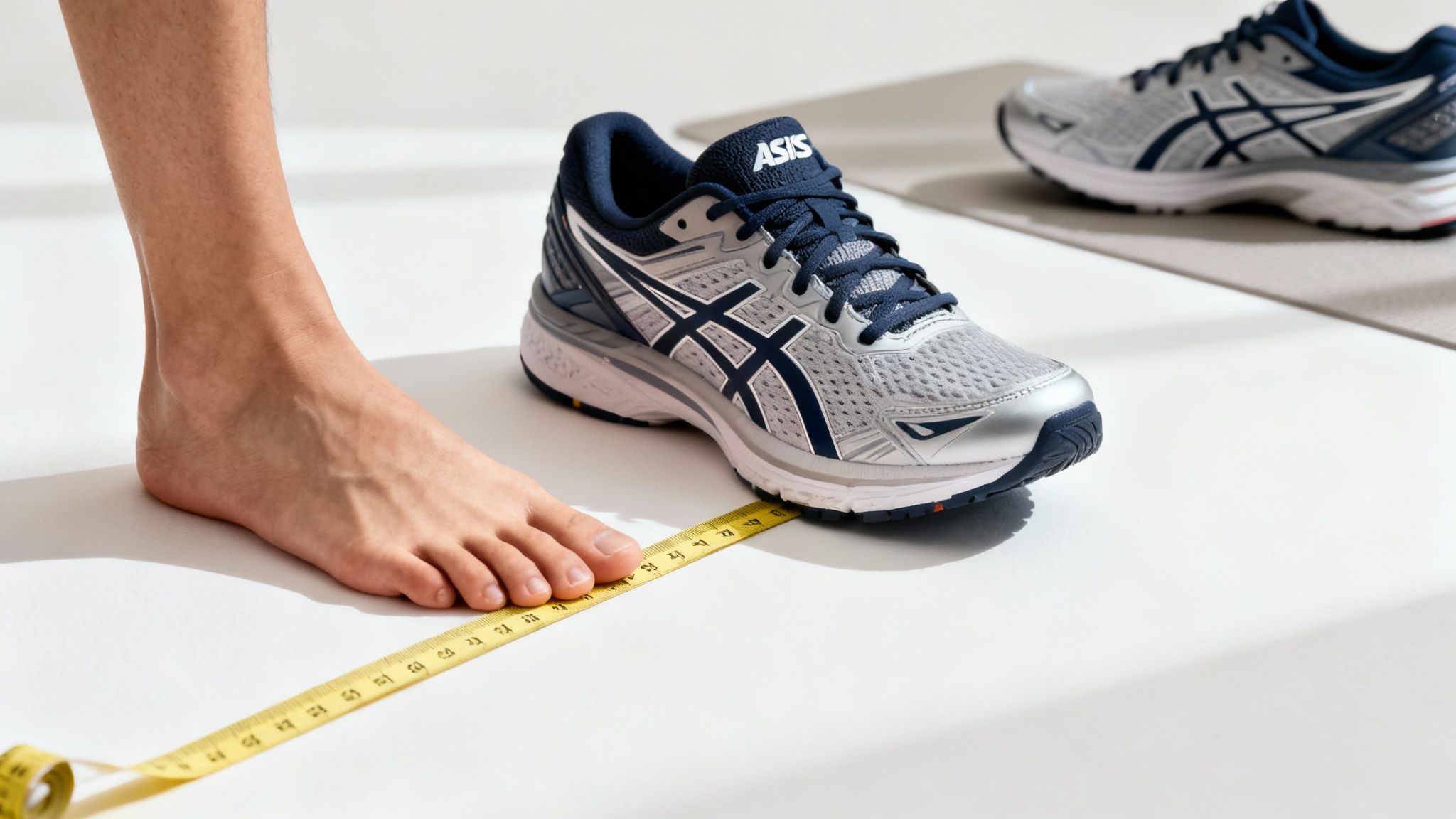
- How Do ASICS Fit? The Definitive Sizing Guide
How many times have you had to switch sizes, trying on different brands of athletic shoes? It seems as though every brand has its own sizing chart. Because shoes are made all over the world, you would not be far off. Since ASICS is one of the top athletic shoes among fitness enthusiasts, lets focus on their fit. So, how do ASICS fit?" That’s the big question. The short and sweet answer is that they generally run true to size for most people, especially if you have standard width feet. However, many runners find that going up a half size gives them that perfect sweet spot. This little adjustment provides just enough room to accommodate for your feet naturally swelling during a run, which can be the difference between a comfortable workout and a painful one. Navigating This Guide To make sure you find your perfect match, this guide is going to walk you through everything you need to know about getting the right ASICS fit. We'll cover all the key details so you can buy your next pair with total confidence. For even more expert tips, our comprehensive guide on how to choose running shoes is a great resource to check out alongside this one. Here’s a peek at what we'll cover: The Philosophy Behind the Perfect Fit : We'll explore the brand's fundamental design concepts and how they translate into the experience when worn. How to Measure Your Feet for a Flawless Fit : A simple, step by step process to get an accurate measurement right at home. Decoding ASICS Widths and Model Differences: We'll break down how stability shoes differ from neutral trainers and what all those width letters actually mean. Comparing the Fit of Top ASICS Models : A closer look at how popular shoes like the GEL-Kayano and GEL-Nimbus really fit, from a runner's perspective. Frequently Asked Questions About ASICS Fit: Quick, straightforward answers to the most common sizing questions we hear. Your Quick Guide to ASICS Sizing Finding the right running shoe feels a lot like finding the perfect training partner, it needs to support you every step of the way without holding you back. While ASICS has built a solid reputation for consistent sizing, that "true to size" label isn't a one size fits all rule. It comes with a few footnotes. Things like the specific model you choose, the width of your foot, and even the thickness of your running socks can all play a role in finding your ideal size. For instance, customer feedback often points out that ASICS' standard width (a ' D ' for men and a ' B ' for women) can feel a bit snug if your feet are on the broader side. Because of this, many people either go up that half size we talked about or look for a dedicated wide width option (like ' 2E ' or ' 4E ') to get that just right feel. ASICS Fit At a Glance Here’s a quick table to give you a starting point based on your foot type and some of the most popular ASICS models out there. Foot Type General Fit Recommendation Common ASICS Models Standard/Narrow Stick with your true size. GEL-Nimbus, GEL-Kayano, GT-2000 Slightly Wide Consider going up a half size. GEL-Cumulus, GEL-Venture Wide Look for '2E' or '4E' width options. GEL-Kayano, GT-2000 (available in wide) High Arches Focus on neutral, cushioned models. GEL-Nimbus, GEL-Cumulus Flat Feet Stability models are often a better fit. GEL-Kayano, GT-2000 Keep in mind, this is just a general guide. The best way to know for sure is to try them on, but this should help you narrow down your choices. To really get how ASICS fit, you have to look past the sizing charts and numbers. The brand’s entire way of thinking is built on a specific philosophy that guides every single shoe they make. It’s an approach that puts function, health, and performance way ahead of passing trends. This all started way back in the beginning. Since its start in 1949 as Onitsuka Co., Ltd. in Kobe, Japan, the company was on a mission to promote wellness. The founder, Kihachiro Onitsuka, wanted to create athletic shoes that supported both the body and the mind. This idea is right there in the name: ASICS is an acronym for the Latin phrase 'Anima sana in corpore sano', a sound mind in a sound body. This core belief has always driven the ergonomic design of their shoes, keeping comfort and performance front and center. You can dive deeper into ASICS' foundational story on their website. This mission isn't just a catchy slogan; it’s baked into the technology and structure of their shoes today. Human-Centric Design and Technology ASICS uses what they call a "human centric science" approach. What does that mean? It means they log countless hours at the ASICS Institute of Sport Science, studying how the human foot naturally moves during exercise. This research is the engine behind their most famous technologies. Take their iconic GEL® cushioning . It’s not just a slab of soft material stuffed into a midsole. It’s strategically placed in high impact areas like the heel and forefoot to absorb shock exactly where your foot needs it most. This targeted support system changes the whole interior shape of the shoe, creating a cradling effect that gives ASICS its reputation for a secure, supportive fit. This focus on how the body actually works is why so many runners feel that an ASICS shoe just clicks with their natural biomechanics. The fit is engineered to work with your foot's motion, not just cover it up. While a great ASICS fit is key to preventing injuries and hitting your peak performance, total athlete wellness also means using the best recovery tools for athletes to keep your body in top shape. How Stability and Support Shape the Fit Another huge part of the ASICS fit philosophy is the focus on stability. Technologies like the 4D GUIDANCE SYSTEM™ in models like the GEL-Kayano are built to adapt to how your running form changes, giving you stability right when you start to get tired. This has a direct impact on how the shoe feels on your foot: Structured Heel: The heel counter is usually firm and well padded. This locks your foot securely in place, stopping that annoying slippage that leads to blisters. Supportive Midfoot: Stability features often create a snugger, more structured feeling through the arch and middle of your foot. Engineered Uppers: The mesh and synthetic materials aren't just for letting your feet breathe. They’re designed to wrap your foot securely without feeling tight or restrictive. So, when you ask "how do ASICS fit?", the answer is much deeper than simple measurements. It’s about a decades long dedication to building footwear that supports the body's natural movement. This commitment is what leads to the precise, performance focused fit that has become the brand's signature. How to Measure Your Feet for a Flawless Fit Before you even think about which ASICS model to buy, nailing down your exact shoe size is the most critical first step. It's wild how much of a difference a half size can make, we're talking the difference between a great run and a painful one filled with blisters, chafing, or even more serious injuries. The good news? You don't need any fancy gadgets to get an accurate measurement right at home. All it takes is a piece of paper, a pen, and a ruler or tape measure to get a precise reading of your foot's length and width. This simple process arms you with the hard data you need to shop online with confidence. To get a solid baseline before you start comparing to brand specific charts, it’s always a good idea to learn the basics of how to measure your shoe size at home for a perfect fit . Your Step-by-Step Measurement Guide Just follow these simple steps. Make sure to measure both feet, it's incredibly common for one to be slightly bigger than the other. You'll want to base your size on the larger foot to ensure a comfortable fit. Get Your Station Ready: Find a hard, flat surface (like a wood floor) and place a piece of paper on it, taping one edge against a wall. Position Your Foot: Stand on the paper with your heel pressed firmly against the wall. Crucially, make sure you're wearing the same type of socks you'd normally wear for a run. Trace Your Foot: Grab a pen or pencil, hold it straight up and down, and carefully trace the complete outline of your foot. Get as close as you can, especially around your longest toe and the widest part of your foot. Measure the Length: Now, take your ruler and measure the distance from the very back of the heel to the tip of your longest toe on your tracing. That number, in centimeters or inches, is your foot length. Measure the Width: Finally, measure the distance between the two widest points on your tracing. This gives you your foot width, which is key for figuring out if you need a standard or wide fit ASICS shoe. Here's a pro tip, I always share: measure your feet in the afternoon or evening. Our feet naturally swell throughout the day, especially after being active. Measuring them when they're at their largest ensures your new shoes won't feel suffocatingly tight mid run. Translating Measurements to ASICS Sizing Once you have your measurements, you can use a size conversion chart to find your perfect ASICS size. This is a lifesaver, especially when you're trying to figure out the differences between US , UK , and EU sizing, which can vary quite a bit. To take the guesswork out of the equation, I’ve put together a handy chart to help you convert your foot length into the right size. ASICS International Shoe Size Conversion Chart US Men US Women UK EU 7 8.5 6 40 7.5 9 6.5 40.5 8 9.5 7 41.5 8.5 10 7.5 42 9 10.5 8 42.5 9.5 11 8.5 43.5 10 11.5 9 44 10.5 12 9.5 44.5 11 12.5 10 45 11.5 13 10.5 46 12 13.5 11 46.5 Using this chart will help you move from a raw measurement to a specific shoe size, making your online shopping experience much more accurate and stress-free. Decoding ASICS Widths and Model Differences When you get into the world of ASICS, it helps to think of their shoe lineup like a city with different neighborhoods. Each model has its own unique feel and purpose, even though they all fall under the ASICS brand. A common mistake is thinking a size 10 in one ASICS shoe will fit exactly like a size 10 in another. It won't. The technology and purpose built into each shoe can create a totally different on foot experience. This is a critical detail to grasp when you're trying to figure out how ASICS fit for your own feet. Stability vs. Neutral: The Tale of Two Fits One of the biggest differences in fit comes down to whether a shoe is built for stability or a neutral stride. It's a bit like the suspension in a car. A high performance sports car has a stiff, responsive suspension for tight control, while a luxury car has a softer ride for pure comfort. Stability Shoes (The Sports Car): Models like the legendary GEL-Kayano are engineered to guide your foot and prevent it from rolling too far inward (overpronation). They use firmer materials, a very structured heel, and support posts along the inside of the foot. This all adds up to a snug, locked in feel, giving you a secure and controlled fit. Neutral Shoes (The Luxury Sedan): On the other hand, plush models like the GEL-Nimbus are all about maximum cushioning for runners with a neutral gait. They don't have the rigid support pieces you find in stability shoes, which makes them feel more forgiving, spacious, and accommodating. The inside often feels softer and lets your foot move more freely. Because of these design choices, a stability shoe will likely feel a bit tighter in your usual size compared to a neutral shoe from ASICS. That's not a sizing mistake, it's completely by design. Cracking the ASICS Width Code Beyond a shoe's category, understanding the ASICS width system is the final piece of the puzzle for getting that perfect fit. If a standard shoe feels like it's squeezing the sides of your foot, just going up a half size in length is the wrong move. The real solution is choosing the correct width. ASICS uses a simple letter system to mark the width, but it's important to know that the letters mean different things for men's and women's shoes. Width Category Men's Sizing Women's Sizing Narrow B 2A Standard D B Wide 2E D Extra Wide 4E 2E Getting the width right can make all the difference. For instance, if you love a shoe's features but the standard 'D' width feels too tight, moving to a '2E' will give you that needed space across the ball of your foot without adding extra length you don't need at the toes. For more details on specific models like the GEL-Venture 9, known for its versatile fit, check out our in-depth review of the ASICS Women's GEL-Venture 9 . Comparing the Fit of Top ASICS Models It’s one thing to know the general idea behind how ASICS designs their shoes, but the real magic happens when you understand how that plays out in specific models. That's how you find your perfect match. Not all shoes are built the same; the materials in the upper, the tech in the midsole, and the shoe's overall shape create a totally unique feel on your foot. Let’s dive into the distinct fit characteristics of three of the brand’s most popular running shoes: the GEL-Kayano , the GEL-Nimbus , and the Novablast . This will give you a clear idea of how they differ and which one might be the best fit for your foot and running style. The GEL-Kayano : A Structured and Secure Fit The GEL-Kayano is ASICS' flagship stability shoe, and its fit is engineered to give you maximum support. Think of it like a bucket seat in a race car, it’s designed to hold you firmly in place and stop any unwanted movement. True-to-Size Accuracy: The GEL-Kayano almost always runs true to size in length. However, its stability features, like a firm heel counter and the 4D GUIDANCE SYSTEM™, create a very snug, locked-in feel, especially around your midfoot and heel. Toe Box and Midfoot: The toe box is pretty standard, but the shoe's structured design can make it feel a little less roomy than a neutral trainer. The midfoot is where you'll feel the biggest difference; it’s made to hug your arch and keep your foot from rolling inward. Because of this super-secure design, runners with wider feet often find the standard 'D' width too tight. They're usually much happier sizing up to a '2E' or '4E' width. The GEL-Nimbus : A Plush and Accommodating Feel If the Kayano is a race car seat, the GEL-Nimbus is a big, comfy armchair. As a top-tier neutral cushioned shoe, its main goal is comfort over long miles. This focus on softness translates directly to a more forgiving and spacious fit. True-to-Size Accuracy: Just like the Kayano, the GEL-Nimbus is known for being true to size for length. The real difference is in its overall volume and feel. The engineered knit upper is usually much stretchier and more adaptable than the mesh you'll find on stability models. Toe Box and Midfoot: The GEL-Nimbus typically offers a more generous toe box, giving your toes room to spread out naturally. The midfoot doesn't have the aggressive support posts of the Kayano, which results in a less constricted, more accommodating feel that many runners describe as "plush." This model is a fantastic choice for anyone with standard to slightly wider feet who doesn't need stability control and just wants a soft, cushioned ride. The core takeaway is this: while two ASICS shoes might have the same size number, their intended purpose—stability versus neutral cushioning—fundamentally changes how they feel on your foot. A stability shoe will always feel more structured and secure by design. The Novablast : An Energetic and Modern Fit The Novablast has quickly become a fan favorite, bringing a more modern, energetic feel to daily training. Its fit reflects that, blending a performance oriented feel with a high stack of cushioning for a pretty unique experience. True-to-Size Accuracy: Most runners find the Novablast fits true to size , though some people mention it can feel a bit narrow compared to other daily trainers. This isn't uncommon for shoes built with performance in mind. Toe Box and Midfoot: The upper is usually a breathable mesh that provides a secure lockdown without feeling overly tight. The toe box has enough room for your toes to splay, but the overall fit is more streamlined than the ultra plush Nimbus. A gusseted tongue and padded heel collar really help lock your foot in and prevent any slipping, especially during faster runs. To get a closer look, you can check out our full review of the exciting ASICS Women's Novablast 5 running shoes . This commitment to a reliable fit has helped ASICS stay strong in major markets. For example, while their global footwear market share is around 0.75% , they hold a much bigger 4% share in the competitive U.S. athletic footwear space, which shows that consumers really trust their sizing. Allergy Free Mixes Questions About ASICS Fit? Even after digging into the details, a few common questions always pop up. Let's tackle them head-on to make sure you find that perfect ASICS fit with total confidence. Should I Go Up Half a Size in ASICS Running Shoes? For most runners, going up half a size is a smart move. Think about it: your feet naturally swell a bit when you're exercising. That little bit of extra room accounts for this, giving you that crucial thumb's width of space at the front to prevent bruised toenails and general discomfort. This is especially true if you have wider feet or love running in thicker, cushioned socks. If your feet are on the narrow side, your true size might be just right, but it never hurts to try a half size up just to feel the difference. How Does the GEL-Kayano Fit Compared to the GEL-Nimbus? While both are premier ASICS shoes, they're built for completely different experiences. The GEL-Kayano is a stability shoe, designed to feel like a structured, supportive seat. It gives you a snug, secure fit around the heel and midfoot to help control overpronation. The GEL-Nimbus , on the other hand, is a neutral cushioned shoe that's more like a plush, roomy armchair. It’s built to be more accommodating and forgiving, especially in the forefoot. Both models usually fit true-to-size for length, but the Kayano will feel much more locked-in, while the Nimbus offers a softer, roomier ride. What Do the ASICS Width Letters Like D and 2E Mean? ASICS uses a standard lettering system for shoe width, but it's crucial to know that the letters mean different things for men's and women's shoes. For Men: 'D' is the standard, default width. If you need more space, '2E' is considered Wide, and '4E' is Extra Wide. For Women: 'B' is the standard width. A 'D' is considered Wide, and a '2E' is Extra Wide. If you ever feel a pinch or pressure on the sides of your foot in a standard-width ASICS shoe, moving up a width (like from a D to a 2E for men) is the right way to get the room you need without adding extra, unnecessary length at the toe. At Flourish-Everyday , we believe the right shoe is the foundation of a great workout and a healthy lifestyle. Explore our expert reviews and recommendations to find the perfect pair that supports your every move. Discover your next favorite running shoes with us today!
- A Guide to Running Shoes Stability
Who could have ever thought that running was so complex? The running shoe industry has specialized in applying high tech to the art of running, so when we talk about stability in a running shoe, we’re referring to a design that helps control excessive foot motion, particularly the inward roll known as overpronation. Think of it as gentle guardrails for your stride , not a rigid brace. This design is crucial for runners who overpronate, as this common motion can place significant strain on the ankles, shins, and knees. Index of Sections A Practical Guide to Stability Shoes : An introduction to stability footwear and its purpose. Understanding Your Foot's Natural Motion : A breakdown of pronation types and how to identify yours. Decoding Stability Shoe Technology : An inside look at the features that provide stability. Do You Really Need Stability Shoes? : Guidance on determining if this shoe category is right for you. How to Choose Your Perfect Stability Shoe : Practical steps for finding the right fit. Top Stability Running Shoes for Men & Women : A review of leading models for different needs. Stability Shoes and Runner's Health : The connection between footwear and injury prevention. Comparing Footwear Trends : How stability shoes stack up against minimalist and maximalist trends. Answering Your Top Questions About Stability Shoes : FAQs about stability footwear. References A Practical Guide to Stability Shoes This guide will equip you with the knowledge to understand your running style, interpret the technology in stability shoes, and select the perfect pair with confidence. The goal is to find a shoe that feels customized to your needs, helping you prevent injuries and enhance your running experience. At its core, a stability shoe aims to promote a more neutral alignment from your foot up through your leg. This helps distribute the impact forces of each footstrike more evenly, which is a key factor in long term injury prevention. Why Support Matters Runners who overpronate, meaning their ankles roll too far inward after impact, benefit most from running shoes stability models. This excessive motion can stress joints and soft tissues. To counteract this, stability shoes incorporate technologies that reinforce the arch and gently guide the foot toward a more neutral path. They strike a balance between highly corrective motion control shoes and flexible neutral shoes, making them versatile for daily training on roads or treadmills. Understanding Your Foot's Natural Motion Every runner's stride is unique, but a fundamental movement we all share is pronation. This is the natural inward roll of the foot upon landing, acting as the body's built-in shock absorption system. A controlled amount of pronation is essential for healthy running. The issue arises with overpronation, where the foot rolls inward excessively. This can disrupt your body's alignment and send stress up the kinetic chain to your shins, knees, and hips. Understanding your pronation type is the first step toward finding the right shoe. The Three Types of Foot Strikes Your running gait generally falls into one of three categories, which directly influences your need for running shoes stability. Neutral Pronation: The foot rolls inward about 15% , effectively absorbing impact and setting up for a balanced push off. Overpronation: The foot rolls inward more than 15% , causing the big toe and second toe to handle most of the push off, leading to instability. Supination (Underpronation): The opposite of overpronation, where the foot doesn't roll inward enough. Impact is concentrated on the outer edge of the foot. For those who supinate, our guide on top running shoes for supination to find your perfect fit offers targeted recommendations. Building Foundational Strength While shoes are a critical component, they are most effective when paired with a strong body. Improving your balance and foot strength can enhance the performance of any shoe. Tools like yoga stability discs can complement your running by building core stability in your feet and ankles. A strong foundation makes your body more resilient and allows the shoe to assist, not compensate for, muscular weakness. Decoding Stability Shoe Technology What makes a stability shoe stable? It's a combination of specific design features working in unison to guide the foot. Familiarizing yourself with these components will empower you to make an informed choice. The Foundation: Firm Midsoles The midsole is the core of a running shoe. In running shoes stability models, this layer often features firmer foam, especially along the medial (inner) side. This density resists compression as the arch attempts to collapse, creating a stable platform that prevents the foot from rolling too far inward. The GuideRail: The Medial Post A classic stability feature is the medial post , a firmer wedge of foam embedded in the midsole under the arch. It acts as a brake, slowing the rate of pronation. Modern adaptations like GuideRails function like bumpers, gently keeping the foot centered without feeling restrictive. This subtle guidance is key to reducing strain on the lower leg. The demand for such technology is growing, with the global stability running shoe market projected to expand significantly. You can discover more insights on the stability shoe market growth. Core Stability Shoe Technologies Explained Feature What It Is How It Provides Stability Medial Post A wedge of denser foam on the inner side of the midsole. Acts as a supportive beam to slow the rate of inward foot roll (pronation). Firm Midsole The entire midsole is made of a less compressible foam. Creates a stable platform that resists collapsing under the arch. Heel Counter A rigid plastic cup built into the back of the shoe. Locks the heel in place to prevent side-to-side wobble on impact. GuideRails Supportive "bumpers" along both sides of the midsole. Gently steers the foot into a neutral path without being overly corrective. Wider Platform The outsole has a broader base, especially in the midfoot/heel. Increases ground contact for an inherently more stable foundation. The Anchor: A Structured Heel Counter The heel counter is a firm insert that wraps around the back of your heel. In stability shoes, this component is more rigid to lock the heel securely, preventing slippage and providing a stable base for the entire stride. The Base: A Wider Platform Many stability shoes are built on a wider base. This increases the shoe's contact area with the ground, creating a more secure foundation for each foot strike, a simple yet effective method for enhancing passive stability. Do You Really Need Stability Shoes? Stability shoes are a specific tool, not a universal solution. Wearing them when unnecessary can interfere with your foot's natural motion. The decision to use them should be based on your body's specific needs. Runners who overpronate or have flexible, collapsing arches often benefit most from the guided support of running shoes stability models. Who Benefits Most from Stability Shoes? Your body often provides the first clues. Persistent aches and pains can be a sign that you need more support to manage impact and maintain alignment. Common complaints linked to overpronation include: Shin Splints: Pain along the inner shinbone. Runner's Knee: Discomfort around the kneecap. Plantar Fasciitis: Sharp pain in the heel or arch. General Arch Soreness: Aching in the arches post-run. If these symptoms are familiar, the corrective features of a stability shoe may provide relief. This is especially true for heavier runners; our guide to the best running shoe for heavy runners offers more specific advice. The Gold Standard: A Professional Gait Analysis While at home tests like the "wet test" can offer clues about your arch type, a professional gait analysis at a specialty running store is the most reliable method. An expert will observe you run on a treadmill to analyze your foot strike and degree of pronation, providing a definitive recommendation. This expert feedback eliminates guesswork, ensuring you invest in footwear that supports your unique biomechanics. Research confirms that while stability is a key factor, runners ultimately prioritize comfort and fit when selecting shoes. Read the full research about footwear preferences to learn more. How to Choose Your Perfect Stability Shoe Finding the right stability shoe doesn't have to be overwhelming. Shop for shoes in the afternoon when your feet have naturally swollen, and always wear the socks you run in to ensure an accurate fit. The In-Store Test Run The most crucial step is to test the shoes. Jog on a treadmill or down the aisle. Pay attention to key areas: Heel Security: Ensure your heel is locked in without slipping. Midfoot Comfort: The shoe should feel snug but not restrictive. Toe Box Room: Allow a thumb's width of space between your longest toe and the shoe's end. A good stability shoe should feel like a natural extension of your foot, gently guiding your stride without forcing it. Comfort remains the ultimate indicator of a good match. The global running shoe market is a testament to how much runners value proper footwear. You can discover insights about the running shoe market growth and its trends. Making a Smooth Transition Ease into your new shoes. Alternate them with your old pair for a few weeks, starting with shorter runs to allow your body to adapt to the new support system. This gradual transition helps prevent new aches as your muscles adjust. Remember that shoes have a limited lifespan; our guide on how often to replace running shoes can help you determine when it's time for a new pair. Allergy Free Mixes Top Stability Running Shoes for Men & Women Selecting a specific model depends on individual needs, but several brands consistently receive high praise for their stability offerings. Top Picks for Men Brooks Adrenaline GTS 23 : A perennial favorite known for its balanced cushioning and reliable GuideRails support system. It provides a smooth ride suitable for daily training. Hoka Arahi 7 : Offers Hoka’s signature maximalist cushioning with the J-Frame™ technology to combat overpronation without adding stiffness. It's ideal for runners seeking a plush yet stable feel. Saucony Guide 17 : Features a new CenterPath Technology that provides a broader base and sidewalls to center the foot, offering a modern, less intrusive approach to stability. Top Picks for Women ASICS GEL-Kayano 30 : A classic stability shoe that incorporates 4D GUIDANCE SYSTEM™ for adaptive stability. It’s known for its plush comfort and is a great choice for long distance runners. New Balance Fresh Foam X 860v13 : Delivers a superb balance of soft cushioning and a traditional medial post for dependable support. It's a workhorse shoe trusted by many runners. Mizuno Wave Inspire 19 : Utilizes a fan shaped Wave Plate to provide moderate stability and a responsive feel. It's a good option for runners who prefer a slightly firmer and more connected ride. Stability Shoes and Runner's Health The primary health benefit of wearing appropriate stability shoes is injury prevention. By correcting overpronation, these shoes help reduce the abnormal stresses placed on the body. A 2020 study published in the British Journal of Sports Medicine found that runners in stability shoes reported fewer running-related pain complaints compared to those in neutral shoes when a need for motion control was indicated. Common injuries that stability shoes may help prevent include: Patellofemoral Pain Syndrome (Runner's Knee): By improving alignment, stability shoes can reduce strain on the knee joint. Medial Tibial Stress Syndrome (Shin Splints): Controlling pronation can decrease the rotational forces on the tibia. Achilles Tendinopathy: Proper alignment can lessen the eccentric load on the Achilles tendon. It's important to view stability shoes as one part of a holistic approach to runner's health, which also includes proper training, strength conditioning, and flexibility work. Comparing Footwear Trends: Stability vs. Other Methods The running shoe market has seen various trends, from minimalist "barefoot" running to maximalist cushioned shoes. Wellbeing Trend: Minimalist Running: This method advocates for minimal footwear to strengthen the foot's natural muscles. While beneficial for some, it requires a long adaptation period and may not be suitable for runners with significant biomechanical issues like severe overpronation. Stability shoes offer a supportive alternative for those who need it. Comparison: Stability vs. Maximalist Cushioning: Maximalist shoes (e.g., Hoka) focus on absorbing impact with thick midsoles. Many maximalist models now incorporate stability features (like Hoka's J-Frame), blending high cushion with guidance. The choice depends on whether a runner prioritizes a soft ride over a more traditional, firmer feel of stability. Method: Custom Orthotics: An alternative to stability shoes is using custom or over the counter orthotics in a neutral shoe. This allows for personalized support but can be more expensive. Stability shoes provide an integrated, out of the box solution. Answering Your Top Questions About Stability Shoes Can I Wear Stability Running Shoes for Walking? Yes. The support features that benefit runners are also excellent for walking, providing stability and reducing fatigue for those who overpronate, even at a slower pace. However, remember that all miles, whether walked or run, contribute to the shoe's 300-500 mile lifespan . How Do I Know When It's Time to Replace My Stability Shoes? Look for these signs: Mileage: Track your usage and plan for replacement around 300-500 miles. New Pains: Sudden aches in your joints or shins are a key indicator of worn-out support. Visual Wear: Check for a compressed, wrinkled midsole or a worn down outsole tread. Are Motion Control and Stability Shoes the Same Thing? No. Think of support on a spectrum. Stability shoes offer moderate correction for mild to moderate overpronation. Motion control shoes are at the far end, providing maximum rigidity for severe overpronation or flat feet. Most runners who need support start with stability shoes. Does More Cushioning Mean More Stability? No, cushioning and stability are separate concepts. Cushioning absorbs impact, while stability controls motion. A shoe can be highly cushioned but offer no stability, or it can be firm and very stable. The best models effectively blend both comfort and control. References Malisoux, L., et al. (2020). "Injury risk in runners using standard or motion control shoes: a randomised controlled trial." British Journal of Sports Medicine , 50(8), pp. 481-487. Cheung, R. T., & Ng, G. Y. (2007). "Efficacy of motion control footwear on running kinematics in individuals with and without pronated feet." Journal of the American Podiatric Medical Association , 97(3), pp. 183-191. Future Market Insights. (2023). Stability Running Shoe Market Outlook (2023 to 2033) . discover more insights on the stability shoe market growth . Willy, R. W., & Davis, I. S. (2011). "The effect of a gradual transition to minimalist footwear on running biomechanics." Journal of Orthopaedic & Sports Physical Therapy , 41(4), pp. 242-250. At Flourish-Everyday , we're here to give you the insights and guidance you need to find the perfect gear for your fitness journey. From running shoes to cross-training equipment and health advice, we want to support every step of your active lifestyle. Discover your next favorite pair of shoes at Flourish-Everyday .
- Best Exercises for Runner's Knee: Quick Relief Tips
We have all heard of the nagging runner’s knee, characterized by a dull, aching pain around the front of the kneecap (patella), can sideline even dedicated athletes. Medically known as patellofemoral pain syndrome (PFPS), this discomfort often stems from muscular imbalances, particularly weakness in the hips and quadriceps, which disrupts proper knee tracking. This guide provides an actionable plan to overcome this injury and return to your activities pain free. Index of Sections Top 8 Exercises for Runner's Knee * 1. Quadriceps Strengthening - Straight Leg Raises * 2. Clamshells - Hip Abductor Strengthening * 3. Single-Leg Squats / Pistol Squats (Modified) * 4. Monster Walks - Lateral Band Walks * 5. Glute Bridges - Gluteus Maximus Activation * 6. VMO-Specific Exercises - Step-Ups and Short-Arc Quads * 7. Hip Internal/External Rotation Exercises - Clamshells and 90/90 Stretches * 8. Core Stabilization - Planks and Dead Bugs 8-Exercise Comparison Table Building a Resilient Runner: Your Path Forward References By focusing on targeted strengthening, you can correct the underlying biomechanical issues causing your pain. A holistic approach can accelerate recovery; for example, targeted sports massage therapy can release tension in the IT Band and surrounding muscles, reducing strain on the knee. Let’s begin the journey to stronger, more resilient knees. 1. Quadriceps Strengthening - Straight Leg Raises Strengthening the quadriceps is a cornerstone of runner's knee rehabilitation. The straight leg raise specifically targets the vastus medialis obliquus (VMO), the teardrop shaped muscle on the inner thigh that is a primary stabilizer for the patella. A weak VMO can cause the patella to track improperly, leading to the pain of patellofemoral pain syndrome. This non weight bearing exercise builds support without stressing the irritated knee joint. How to Perform a Straight Leg Raise Starting Position: Lie on your back. Bend the knee of your unaffected leg, planting the foot flat. Keep the leg you intend to work completely straight. Engage the Quad: Consciously tighten the quadriceps muscle of your straight leg. Your kneecap should pull slightly upward. Lift: Keeping your leg straight and quad engaged, slowly lift your leg until it is about 12-18 inches off the floor. Hold and Lower: Hold this position for 2-3 seconds, maintaining the quad contraction. Then, slowly lower the leg back to the start. Key Insight: Quality of movement is more important than quantity. A slow, controlled motion with a fully engaged quadriceps yields better results than rushing through repetitions. Sets, Reps, and Progression Reps/Sets: Aim for 3 sets of 15-20 repetitions on each leg. Frequency: Perform daily, especially during initial rehabilitation. Progression: Once pain free for a week, add a light ankle weight (1-3 lbs). Regression: If you feel pain, reduce the lift height or reps. If needed, just tighten the quad without lifting (a quad set). 2. Clamshells - Hip Abductor Strengthening A stable knee begins at the hip. The clamshell exercise strengthens the hip abductors, particularly the gluteus medius. This muscle stabilizes your pelvis during the single leg stance of each running stride. Weakness here often leads to the knee collapsing inward (knee valgus), a primary driver of runner's knee. By isolating this hip stabilizer, clamshells directly combat this issue and teach proper alignment, reducing abnormal forces on the knee. How to Perform a Clamshell Starting Position: Lie on your side with legs stacked and knees bent to about a 45-degree angle, feet together. Your hips should be stacked vertically. Engage the Core: Brace your core to prevent your torso from rocking. Lift: Keeping feet touching, slowly raise your top knee as high as you can without your hips rolling backward. The movement should originate from your glutes. Hold and Lower: Pause for 2-3 seconds at the top, squeezing your glute. Slowly lower your knee back to the start. Key Insight: To ensure you're using your gluteus medius, place a hand on your top hip. You should not feel it rocking back as you lift your knee. The movement is small but concentrated. Sets, Reps, and Progression Reps/Sets: Aim for 3 sets of 20-25 repetitions on each leg. Frequency: Perform 3-4 times per week on nonconsecutive days. Progression: When you can complete reps with perfect form, add a resistance band around your thighs (just above the knees). Regression: If painful, reduce the range of motion. If still challenging, perform isometric holds by contracting the glute without movement. 3. Single Leg Squats / Pistol Squats (Modified) The modified single leg squat is an advanced functional exercise that builds robust knee stability. It mimics the single leg loading of running, strengthening the entire kinetic chain from the foot to the core. This movement challenges the quadriceps, glutes, and smaller stabilizer muscles around the knee and hip, which are crucial for maintaining alignment under load. It directly translates to better running form and reduced stress on the patellofemoral joint. How to Perform a Modified Single-Leg Squat (Bench Assisted) Starting Position: Stand a few feet in front of a sturdy bench or chair. Balance on one leg, extending the other leg straight out. Extend your arms for balance. Engage Core and Hips: Brace your core and keep your chest up. Descend with Control: Hinge at your hips and bend your standing knee to slowly lower yourself toward the bench, focusing on a 3-second descent. Sit and Ascend: Lightly tap the bench without putting your full weight on it. Powerfully drive through your heel to return to the start, ensuring your knee tracks over your second toe. Key Insight: The descent is the most critical part. A slow, controlled eccentric phase builds the strength needed to absorb impact during running. Sets, Reps, and Progression Reps/Sets: Aim for 3 sets of 8-12 repetitions on each leg. Frequency: Perform 2-3 times per week on non-consecutive days. Progression: Lower the bench height or remove it entirely. You can also hold a light dumbbell. Regression: Use TRX handles for support or reduce the range of motion, squatting only a few inches initially. 4. Monster Walks - Lateral Band Walks Monster walks, or lateral band walks, are a dynamic exercise essential for addressing the root causes of runner's knee. Using a resistance band, this movement strengthens the hip abductors and external rotators, especially the gluteus medius. Weakness in these muscles is a primary cause of poor running mechanics, leading to inward rotation of the femur and knee collapse, which stresses the patellofemoral joint. These walks build functional strength that directly improves running form. How to Perform a Monster Walk Starting Position: Place a looped resistance band around your legs (above knees is easiest, ankles is harder). Get into Stance: Stand with feet hip width apart, creating tension in the band. Adopt an athletic stance with slightly bent knees and a hip hinge. Step Sideways: Take a controlled, deliberate step sideways with one foot (about 8-12 inches). Keep toes pointed forward. Follow Through: Slowly bring your trailing foot inward to a hip width stance. Do not let your feet touch, as this releases tension. Continue stepping. Key Insight: Maintain constant tension on the band. Avoid rocking your upper body; the movement should be driven entirely by your hips. Sets, Reps, and Progression Reps/Sets: Aim for 2-3 sets of 12-15 steps in each direction. Frequency: Perform 2-3 times per week. This complements other activities detailed in guides on cross-training for runners to boost performance and prevent injuries . Progression: Use a stronger band, place the band lower on your legs, or add forward and backward monster walks. Regression: Use a lighter band or place it above your knees. Reduce the size of your steps for better control. 5. Glute Bridges - Gluteus Maximus Activation Strengthening the posterior chain is vital, and the glute bridge is fundamental for this. It targets the gluteus maximus, the body's largest muscle, responsible for hip extension. Many runners, particularly those with sedentary jobs, have underactive or "sleepy" glutes. This forces other muscles like the quadriceps to overcompensate, disrupting the kinetic chain and stressing the patellofemoral joint. The glute bridge isolates and activates the glutes in a safe position, improving running mechanics and stability. How to Perform a Glute Bridge Starting Position: Lie on your back with knees bent and feet flat on the floor, hip width apart. Rest your arms at your sides. Engage the Core and Glutes: Brace your core and squeeze your gluteal muscles before lifting. Lift: Driving through your heels, lift your hips until your body forms a straight line from shoulders to knees. Avoid arching your lower back. Hold and Lower: At the top, pause and squeeze your glutes for 2-3 seconds. Slowly lower your hips back to the start. Key Insight: To ensure you're using your glutes, focus on pushing your heels into the ground. If your hamstrings cramp, bring your feet slightly closer to your body. Sets, Reps, and Progression Reps/Sets: Aim for 3 sets of 15-20 repetitions . Frequency: Perform daily or at least 5 days per week. It is an excellent pre-run activation exercise. Progression: Progress to a single leg glute bridge or add resistance by placing a dumbbell across your hips. Regression: Reduce the height of your lift or decrease reps. Focus on the initial glute squeeze without fully lifting. 6. VMO-Specific Exercises - Step Ups and Short Arc Quads To address the muscular imbalances of runner's knee, we must focus on the vastus medialis obliquus (VMO). This muscle on the inner thigh is the primary dynamic stabilizer of the patella. When the VMO is weak, stronger outer quad muscles can pull the kneecap laterally, causing pain. VMO specific exercises like short arc quads and step ups isolate and strengthen this crucial muscle, restoring the coordination needed for a healthy knee. How to Perform Short Arc Quads and Step Ups Short Arc Quads: Starting Position: Lie on your back. Place a rolled up towel or foam roller (about 6 inches in diameter) under the knee of the leg you want to exercise. Engage and Lift: Tighten your quadriceps, focusing on the inner VMO. Slowly lift your heel until your knee is completely straight. Hold and Lower: Hold the straightened position for 3-5 seconds, squeezing the VMO. Slowly lower your heel. Step Ups: Starting Position: Stand before a low step (4-6 inches). Place the foot of your affected leg squarely on the step. Engage and Step Up: Push through your heel to straighten your leg and bring your other foot up onto the step. Keep your knee aligned over your second toe. Controlled Lowering: Slowly lower your nonworking leg back to the floor. This eccentric phase is critical for building strength. Key Insight: For step ups, try a slight toe inward stance (10-15 degrees) on the step. This can increase VMO activation and improve patellar tracking. Sets, Reps, and Progression Reps/Sets: For Short Arc Quads , aim for 3 sets of 20 repetitions . For Step Ups , start with 3 sets of 10-15 repetitions on each leg. Frequency: Perform daily, especially in early stages. Progression: For short arc quads, add a light ankle weight. For step ups, gradually increase the platform height as you get stronger. Regression: If step ups cause pain, stick with short arc quads. If those are painful, perform isometric quad sets (tightening the muscle without moving). 7. Hip Internal/External Rotation Exercises - Clamshells and 90/90 Stretches Improving hip mobility is as critical as strengthening muscles. The hip is a ball and socket joint designed for rotation; limitations here can force the knee to compensate, leading to improper patellar tracking. Exercises enhancing hip rotation, like clamshells and 90/90 stretches, address this issue. Improving your hip's range of motion allows your femur to rotate properly, preventing stress from traveling down to the knee. For more, learn how to improve hip flexibility on flourish-everyday.com . How to Perform a Clamshell Starting Position: Lie on your side with hips and knees bent at a 45-degree angle. Stack your legs with heels together. Engage the Core: Tighten your abdominal muscles to keep your pelvis stable and prevent your back from arching. Lift: Keeping feet touching, raise your top knee as high as you can without rotating your pelvis. Hold and Lower: Pause for 1-2 seconds at the top, squeezing your glutes. Slowly lower your knee. Key Insight: Avoid rocking your body back to lift the knee higher. A smaller, controlled motion is far more effective than a larger, sloppy one. Sets, Reps, and Progression Reps/Sets: Aim for 3 sets of 15-20 repetitions on each side. Frequency: Perform daily or as part of your pre-run warm-up. Progression: Add a light resistance band around your thighs (just above the knees). Regression: Reduce the range of motion. Focus on just the initial muscle activation. Help Support Your Wellness Journey 8. Core Stabilization - Planks and Dead Bugs A strong, stable core is nonnegotiable for runner's knee recovery. Your core muscles act as the central anchor for your body. When weak, this allows for excessive trunk motion and hip drop with each stride, creating instability that travels down the leg and stresses the knee joint. Exercises like planks and dead bugs train your core to stabilize the spine and pelvis, reducing abnormal forces that contribute to patellofemoral pain. How to Perform a Plank and Dead Bug Plank: Starting Position: Position yourself on your forearms and toes. Elbows should be directly under your shoulders. Engage the Core: Brace your abdominal muscles and glutes, creating a straight, rigid line from your head to your heels. Hold: Maintain this position, breathing steadily, for the prescribed time. Dead Bug: Starting Position: Lie on your back with knees bent at 90 degrees, shins parallel to the floor (tabletop). Extend your arms straight up. Engage the Core: Press your lower back gently into the floor. Movement: Slowly lower your opposite arm and opposite leg toward the floor, moving with control. Go only as far as you can without letting your back arch. Return and Repeat: Return to the starting position and repeat on the other side. Key Insight: The goal of these exercises is to resist motion. This anti-extension training is crucial for building a stable core for running. For a deeper dive, explore these 5 essential core strengthening exercises for runners . Sets, Reps, and Progression Reps/Sets: For planks, aim for 3 sets of 30-60 second holds . For dead bugs, perform 3 sets of 10-12 repetitions per side . Frequency: Integrate these into your routine 3-4 times per week . Progression: For planks, increase hold time or try variations like side planks. For dead bugs, add light weights. Regression: For a plank, start from your knees. For dead bugs, reduce range of motion or move only your arms or legs. Runners Knee: 8-Exercise Comparison Exercise Implementation Complexity 🔄 Resource Requirements ⚡ Expected Outcomes ⭐📊 Ideal Use Cases 💡 Key Advantages ⭐ Quadriceps Strengthening - Straight Leg Raises Low — easy to learn; requires attention to form Minimal — bodyweight; optional ankle weights Moderate VMO activation; early-phase knee stability improvements (2–3 weeks) — ⭐⭐⭐ Acute pain / early rehab; beginners; home programs 💡 keep other knee bent to protect low back Accessible; low joint stress; safe in initial recovery Clamshells - Hip Abductor Strengthening Low–Moderate — simple but form-dependent Minimal — bodyweight; band/ankle weights for progression Strong gluteus medius activation; reduces valgus collapse over 4–6 weeks — ⭐⭐⭐⭐ Hip abductor weakness, injury prevention, rehab protocols 💡 keep hips stacked and limit lift to 45–60° Directly addresses primary biomechanical dysfunction; easily progressed Single-Leg Squats / Pistol Squats (Modified) High — requires balance, mobility, control Low — may use bench, TRX, or wall for assistance High functional carryover; improves single-leg strength and stability; risk if too early — ⭐⭐⭐⭐ Late-stage rehab, advanced runners, functional performance training 💡 begin with assisted versions Trains kinetic chain in running-specific pattern; identifies compensations Monster Walks - Lateral Band Walks Low–Moderate — dynamic but technique-sensitive Minimal — resistance band (various tensions) Improves dynamic hip stability and proprioception; good warm-up carryover — ⭐⭐⭐⭐ Pre-run warm-up, injury prevention, female runners at risk of valgus collapse 💡 use light–moderate band and controlled steps Functional, combines activation and warm-up; easy to program Glute Bridges - Gluteus Maximus Activation Low — very easy to teach and perform Minimal — bodyweight; add weight for progression Rapid improvement in glute activation (1–2 weeks); supports hip extension — ⭐⭐⭐⭐ Activation before running, early rehab, sedentary runners with inhibited glutes 💡 squeeze at top for 2s; progress to single-leg Simple, safe, immediate neuromuscular feedback VMO-Specific Exercises - Step-Ups & Short-Arc Quads Low–Moderate — requires precise hip/foot positioning Minimal — low step, towel roll, optional weights Targets patellar tracking; measurable biomechanical gains in weeks (6–8 for strength) — ⭐⭐⭐⭐ Patellar tracking issues, targeted physio rehab, post-op protocols 💡 emphasize hip adduction and slight toe-in Directly addresses VMO weakness; research-supported intervention Hip Internal/External Rotation Exercises Low — varied exercises; demands consistency Minimal — bodyweight; optional props for stretching Improves hip ROM and rotational control; reduces compensatory knee stress — ⭐⭐⭐ Mobility deficits, warm-up routines, runners with limited hip rotation 💡 90/90 stretch 2 min/side daily Addresses commonly overlooked mobility restriction; combines strength and mobility Core Stabilization - Planks & Dead Bugs Low–Moderate — many progressions; needs consistency Minimal — bodyweight; optional stability tools Improves trunk stability in 2–3 weeks; reduces downstream compensations — ⭐⭐⭐⭐ Foundation work for injury prevention, reducing hip drop that affects knees 💡 start with short holds and progress duration Addresses root cause of many biomechanical faults; long-term injury prevention benefit Building a Resilient Runner: Your Path Forward Navigating runner's knee can feel like a setback, but it’s a powerful signal from your body highlighting areas that need attention. You now have a toolkit of the best exercises for runner's knee, from Straight Leg Raises to Single Leg Squats, each designed to address the root muscular imbalances that cause patellofemoral pain. This is about building a more resilient, balanced body for the long haul. The journey away from knee pain is holistic, beginning with the understanding that the issue rarely originates at the knee. Weak hips, inactive glutes, and an unstable core are the primary culprits. Key Takeaways for a Pain Free Future Consistency Over Intensity: Daily activation and strengthening yield better results than one intense weekly session. Form is NonNegotiable: Prioritize perfect form over higher reps. If your form breaks down, regress the movement. Listen to Your Body's Feedback: Differentiate between muscle fatigue and joint pain. Sharp or increasing pain is a signal to stop. Strength is a System: The most effective plans address the entire kinetic chain from your core to your feet. Workout Mats Your Action Plan for Lasting Relief Start by integrating 2-3 of these exercises into your routine, focusing on ones that are challenging yet pain free. Progressively add more variety and difficulty as you build strength. Balance this targeted work with smart cross-training and adequate recovery. Incorporating self-care like foam rolling techniques specifically for knee pain relief can also reduce muscle tension around the knee. Ultimately, overcoming runner's knee is about becoming a smarter athlete. You are building a foundation of strength that will support countless miles of healthy running. References Powers, C. M. (2010). The Influence of Abnormal Hip Mechanics on Knee Injury: A Biomechanical Perspective. Journal of Orthopaedic & Sports Physical Therapy, 40 (2), 42–51. Bolgla, L. A., & Boling, M. C. (2011). An update for the conservative management of patellofemoral pain syndrome: a systematic review of the literature from 2000 to 2010. International Journal of Sports Physical Therapy, 6 (2), 112–125. Stillwaters Healing & Massage. (n.d.). Sports Massage Therapy . Retrieved from https://www.stillwatershealing.ca/sports-massage-therapy Ready to support your body's recovery and enhance your overall well-being? Flourish-Everyday offers a curated line of wellness products, including premium supplements designed to support joint health and reduce inflammation. Give your body the nutritional foundation it needs to complement your hard work by visiting Flourish-Everyday to explore our holistic health solutions.