The Best Cross-Training Shoes for Men: A 2026 Guide

Updated: Nov 28, 2025
Are you still using running shoes for heavy squats or HIIT(High Intensity Interval Training)? That's like taking a sports car off roading, it’s not built for that punishment. The best cross-training shoes for men are the Swiss Army knife of athletic footwear, engineered for stability in heavy lifts, flexibility for quick movements, and toughness for high impact exercises. This article will unravel why your shoes matter, and all important aspects of finding the right shoe for you. Please use the guide to navigate to the relevent sections, to get you on you way to achieving your vision.

Index of Sections
1. Why Your Workout Demands the Right Shoes
If you've ever felt wobbly during a heavy squat or had your feet ache after box jumps, your shoes are likely the culprit. Running shoes are designed for forward motion. Their plush cushioning and high heel to toe drop are great on pavement but become a liability in the gym, creating an unstable base for lifting and lacking lateral support for agile movements.
This is where a good pair of cross-training shoes makes a difference. They’re built for versatility, providing a solid foundation for a wide range of activities. It’s no surprise the demand is growing; the men's segment accounted for about 55% of the total cross training shoe market in 2023, and the market is projected to climb significantly [1].

The Foundation of Performance and Safety
Investing in the right men’s cross-training shoes is a direct investment in your performance and safety. The right footwear reduces injury risk by delivering:
Enhanced Stability: A firm, wider base keeps your foot from rolling during a deadlift or squat.
Durable Support: Reinforced uppers and outsoles handle the wear and tear from rope climbs and burpees.
Responsive Cushioning: You get just enough padding to absorb shock from jumps without an unstable feeling.
This guide will walk you through finding your perfect pair, breaking down the anatomy of a great cross-trainer and helping you match shoes to your workout style. Getting this right is fundamental to unlocking the benefits of cross training, and elevating your fitness.
2. Decoding the Anatomy of a Great Cross-Training Shoe
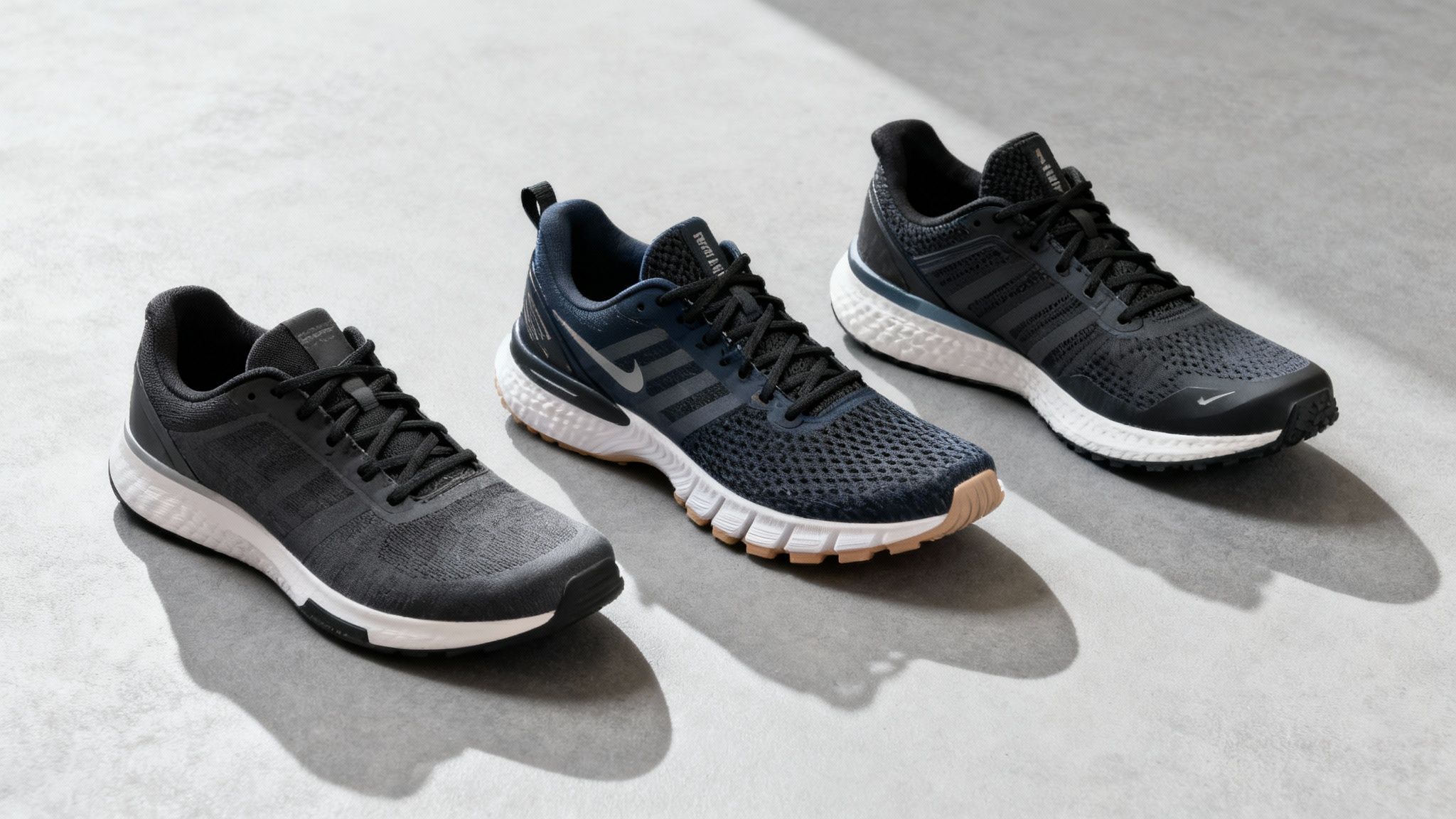
To find the right cross-training shoe, you don't need to memorize technical specs. You just need to know what the important parts do. Understanding how each piece works together is key to picking a shoe that helps, not hinders, your workout.
A great training shoe is engineered equipment. From the upper that wraps your foot to the rubber that hits the gym floor, every element has a job: to keep you stable, absorb impact, and provide a solid base for any move. This is about finding the sweet spot where performance, safety, and versatility meet. The best cross-training shoes for men nail this balance perfectly, making your footwear an asset every time you train.
Your Shoe's Suspension and Traction
The midsole and outsole are the workhorses, handling force and keeping you connected to the ground. The midsole is your shoe’s suspension. Unlike the plush feel of a running shoe, a cross trainer's midsole is firmer, preventing your foot from sinking and creating an unstable platform during lifts.
The outsole is the rubber that touches the ground. It needs to grip in every direction for pivots, shuffles, and jumps. A good outsole uses tough rubber with varied tread patterns to keep you locked down during a heavy squat yet allow freedom in agility drills. Our guide on what are cross training shoes breaks this down further.
A defining feature of a cross trainer is its flatter, wider outsole. This maximizes ground contact, boosting stability and helping you generate more force during lifts.
The Chassis and Posture Control
The upper and heel drop are just as crucial.
The Upper: This covers the top and sides of your foot. A cross trainer's upper uses durable, breathable mesh with extra reinforcement in high wear spots, holding your foot securely.
Heel To Toe Drop: This is the height difference between your heel and forefoot. Cross trainers have a low drop, typically 0mm to 4mm, promoting a natural, flat footed stance essential for proper weightlifting form.
3. Matching Your Shoes to Your Workout Style
Choosing the best cross-training shoes for men isn’t one size fits all. The perfect shoe for a powerlifter will feel like a brick to someone in a HIIT class. Your workout style is the most important factor.
For the CrossFit Competitor
CrossFit demands versatility. Your shoes need to handle heavy Olympic lifts one minute and rope climbs the next. Look for:
A Low Heel To Toe Drop: Essential for stable form during squats, deadlifts, and cleans.
Durable Upper Materials: Reinforced mesh or overlays, especially around the midfoot, survive abrasion from rope climbs.
A Firm, Wide Outsole: Maximizes your connection to the ground for an unshakeable foundation.
The market for specialized strength training shoes has grown to about USD 1.11 billion globally, with the United States accounting for roughly 35% of that [2]. This growth is fueled by programs like CrossFit that demand high performance footwear.
For the HIIT and Agility Enthusiast
HIIT is about explosive power and dynamic moves. A HIIT athlete needs a shoe that’s responsive and cushioned, especially for lateral movements. Look for:
Responsive Cushioning: A midsole that absorbs shock without feeling mushy.
Strong Lateral Support: Reinforced sidewalls prevent your foot from rolling during side shuffles and agility drills.
A Flexible Forefoot: The shoe must bend with your foot for smooth transitions.
A frequent error is wearing a shoe designed for lifting during HIIT. It's stable but often lacks the cushioning and flexibility needed, leading to discomfort during high impact cardio. To read more about HIIT, and its benefits, see Why H.I.I.T Workouts Are the Best for Overall Fitness.
For the General Gym Goer
If your routine is a mix of moderate lifting, machine work, and cardio, you need a solid all rounder. Your goal is balanced performance. The perfect shoe for the generalist has enough stability for squats but enough comfort for a short treadmill run. Our ultimate guide to shoes for weight training and cardio dives deeper into finding this balance. A shoe with a moderate heel drop (around 4mm) and a durable outsole is a great start.
4. Top Men's Cross Training Shoe Brand Reviews
Finding the right cross-training shoe means cutting through the noise of brands claiming ultimate performance. The big names like Nike, Reebok, and Under Armour are constantly innovating. The men's category is projected to take up a massive 64.47% share of all training shoe sales in a market where North America is an $18.35 billion battleground [3]. This rivalry drives innovation, resulting in more specialized and effective shoes.
Nike: The Powerlifter's Ally
Nike's Metcon series is legendary in the gym, synonymous with cross-training shoes for men. Its reputation is built on uncompromising stability.
Rock-Solid Platform: The Metcon has a wide, flat heel and a firm midsole, creating a stable base that won’t compress under a heavy barbell.
Hyperlift Insert: Many models include a removable heel insert to help achieve better squat depth.
Rope Guard: Textured rubber wraps the arch for grip and protection during rope climbs. The trade off is that the Metcon can feel clunky for workouts with lots of running or jumping. It is a specialist's tool for heavy strength days.
Reebok: The Versatile Contender
Reebok's Nano series is a celebrated jack of all trades. The Nano balances stability and flexibility. You get a solid platform for lifting, but with a more flexible forefoot and responsive cushioning, making it suitable for box jumps, burpees, and short runs.
The simplest way to think about it is this: the Nike Metcon is a weightlifting shoe you can do other stuff in, while the Reebok Nano is a versatile trainer you can lift heavy in.
Other Key Players to Watch
Under Armour: The TriBase Reign series focuses on ground feel with a low-to-the-ground design for excellent stability.
NOBULL: Known for minimalist design and insane durability with its signature SuperFabric® upper.
Inov-8: A favorite in functional fitness, Inov-8 shoes are lightweight, flexible, and offer some of the best grip available.
5. Essential Buyer's Checklist and Fit Guide
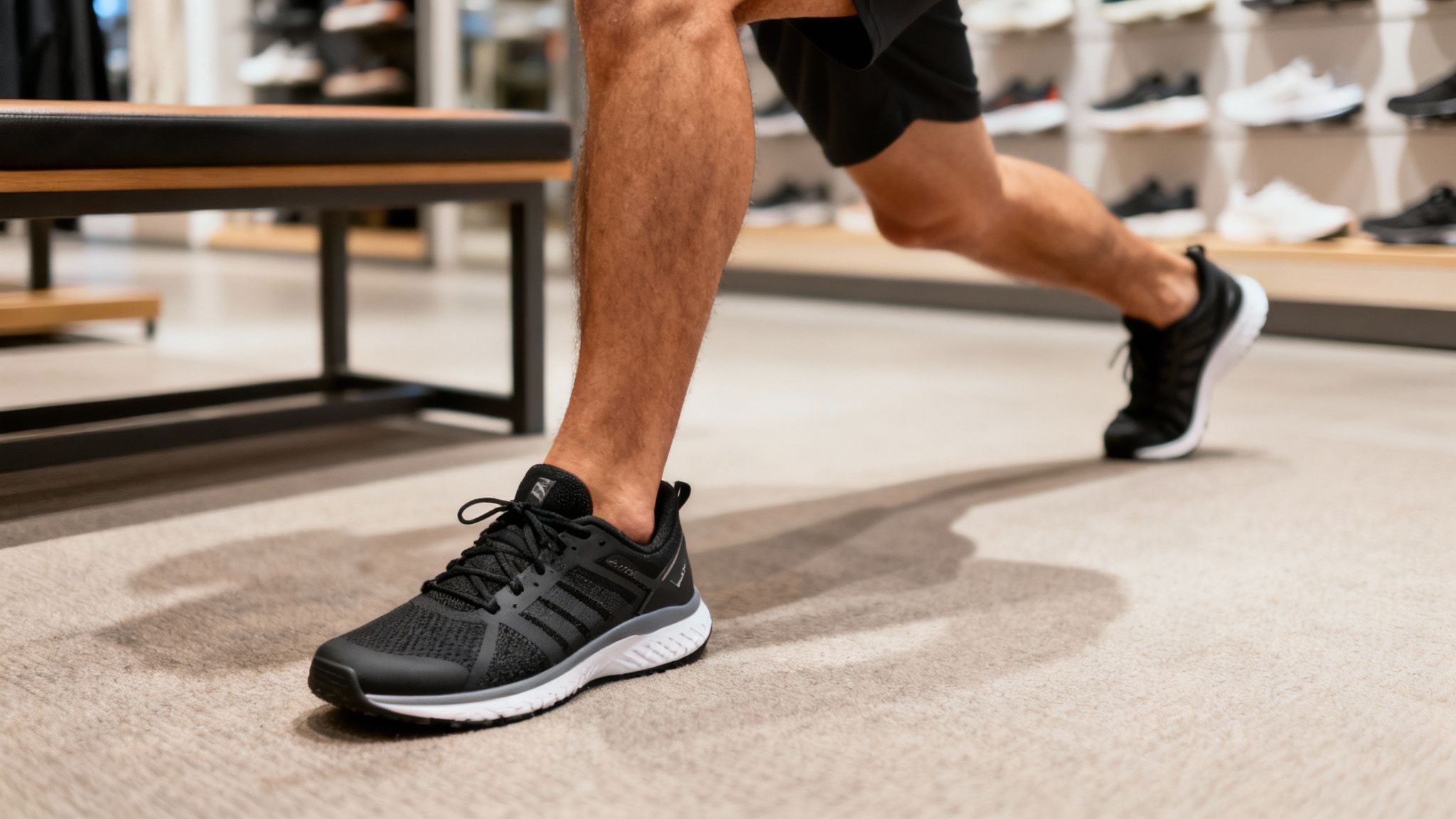
Now it’s time to find the perfect pair for your feet. Finding the right cross-training shoes for men is more about fit than the logo. A shoe that doesn't fit right can ruin your workout and cause injury. Tools like virtual dressing room technology can also help judge fit from home.
The In Store, Try On Ritual
Shop in the Afternoon: Your feet swell during the day. Trying on shoes in the late afternoon ensures a fit that won't feel too tight mid workout.
Bring Your Workout Socks: The thickness of your gym socks impacts fit. Test shoes with what you’ll actually be wearing.
Check for Proper Spacing: Ensure there’s about a half inch of space (your thumb's width) between your longest toe and the tip of the shoe.
A common mistake is buying shoes that are too tight, thinking they’ll "break in." The length and width won't change. A good fit should feel secure, not restrictive.
Perform These Simple Fit Tests
Heel Lock Test: Do a few calf raises. Your heel should stay put with minimal slippage.
Lunge and Squat Check: Drop into a lunge or squat. Check for pinching in the toe box or pressure across the top of your foot.
Lateral Shuffle Test: Do a few quick side to side shuffles to test lateral stability and see if your foot slides inside the shoe.
6. Maximizing Your Investment and Performance
Picking the right cross-training shoes for men is the first step. Proper care extends their life. Air them out after workouts and avoid the washing machine; clean them with a soft brush and mild soap.
Knowing When to Say Goodbye
Even the toughest shoe has a shelf life. Training in worn-out footwear increases injury risk. Watch for these signs:
Visible Midsole Creasing: Deep, compressed lines in the foam mean the cushioning is shot.
Worn Out Treads: If the outsole grip is smooth and bald, you've lost critical traction.
Reduced Support: If the shoe feels loose and your foot slides around, its structural integrity is gone.
Choosing the right shoe is a personal decision. While great footwear is key, you can also explore other strategies like learning how to improve your VO2 max for peak endurance.

7. Answering Your Top Questions
Can I Just Use My Running Shoes for Lifting Weights?
Please don't. Running shoes are like pillows, full of soft cushioning. When you squat or deadlift on that plush base, it’s like standing on a mattress, wobbly and unstable. For lifting, you need a firm, flat sole for a solid connection to the floor.
How Often Do I Really Need to Replace My Cross-Trainers?
A solid guideline is every 6 to 12 months or after 100-150 hours of active use. However, watch for signs of wear like flattened midsoles or worn-out treads. If the shoe feels less supportive, it's time to retire it.
Are These Shoes Actually Good for Running?
For short distances, like a 400-meter dash in a WOD or a warmup jog, they are fine. But they are not built for long distance running. Their stiff soles and minimal cushioning will become uncomfortable on runs longer than a 5K.
8. Men's vs. Women's Top Athletic Shoe Reviews
While this guide focuses on men's cross-training shoes, it's important to understand the key differences in athletic footwear design for men and women. These distinctions go beyond color schemes.
Foot Shape: Men's shoes are typically built on a wider last, especially in the heel and midfoot. Women's shoes are narrower overall, with a wider forefoot relative to the heel to accommodate anatomical differences.
Q-Angle: Women generally have a wider pelvis, which creates a larger "Q-angle", the angle of the thigh bone relative to the lower leg. This can affect biomechanics and gait. Footwear for women often incorporates features to enhance stability and control pronation to account for this.
Weight and Cushioning: Men, on average, are heavier than women. Therefore, the midsole foam in men's shoes is often denser to provide adequate support and durability under a greater load. A lighter individual wearing a shoe designed for a heavier person may find it too stiff.
Top Athletic Shoe Categories for Men:
Cross-Training (e.g., Nike Metcon, Reebok Nano): Best for versatility, stability in lifting, and durability for varied gym workouts.
Running (e.g., Brooks Ghost, Hoka Clifton): Best for forward motion, offering superior cushioning and shock absorption for road or trail running.
Basketball (e.g., Nike LeBron, Adidas Harden): Best for court sports, providing high-top ankle support and exceptional traction for quick directional changes.
Top Athletic Shoe Categories for Women:
Cross-Training (e.g., Reebok Nano X4, Nike Free Metcon): Often features a slightly more flexible design and a fit tailored to a woman's foot shape.
Running (e.g., Asics Gel-Kayano, On Cloud): Designed with Q-angle biomechanics in mind, often offering enhanced stability features.
Studio/HIIT (e.g., Puma Fierce, Nike SuperRep): Lightweight and flexible, with pivot points on the outsole for dance based fitness and agility drills.
9. Informative Health Information: Biomechanics and Injury Prevention
The right cross-training shoe is a critical tool for injury prevention. Poor footwear choices can lead to a range of issues, from acute sprains to chronic conditions.
Plantar Fasciitis: Wearing shoes with inadequate arch support, especially during high impact activities like box jumps, can strain the plantar fascia. A good cross-trainer provides a supportive, stable base to mitigate this stress.
Ankle Sprains: Running shoes with high, soft heels create an unstable platform for lateral movements common in HIIT and agility training. The low profile, wider base of a cross-trainer significantly reduces the risk of rolling an ankle.
Knee Pain: A shoe with an inappropriate heel to toe drop can alter your squat and lunge mechanics, placing undue stress on the knee joints. The low drop design of cross-trainers promotes a more natural posture, aligning the ankles, knees, and hips correctly during lifts.
Proper footwear supports natural biomechanics, ensuring that force is distributed correctly through the feet and up the kinetic chain. This not only enhances performance by allowing for more efficient power transfer but also acts as a primary defense against common workout-related injuries.
10. Wellbeing Trends: Barefoot vs. Cushioned Training
A significant debate in the fitness world is the trend of "barefoot" or minimalist training versus traditional cushioned footwear. Both have vocal proponents, and the best choice often depends on individual biomechanics, experience, and workout type.
Barefoot/Minimalist Training:
Philosophy: This approach advocates for training with minimal material between the foot and the ground. The idea is to strengthen the intrinsic muscles of the feet and improve proprioception (your sense of body position).
Pros: Can improve balance, strengthen foot arches, and promote a more natural gait and lifting posture. Shoes in this category (e.g., Vibram FiveFingers, Vivobarefoot) feature a zero-drop platform and a highly flexible, thin sole.
Cons: Requires a long adaptation period. Transitioning too quickly can lead to injuries like stress fractures and Achilles tendonitis, as the feet and lower legs are not accustomed to the increased load. It offers little protection from impact.
Cushioned Training:
Philosophy: Traditional training shoes are designed to provide cushioning, support, and stability to protect the body from impact forces and control motion.
Pros: Excellent for shock absorption during high impact activities like running and jumping, reducing stress on joints. They provide a stable and supportive platform that is suitable for beginners and those lifting very heavy weights.
Cons: Thick cushioning can reduce ground feel and proprioception, potentially creating an unstable surface for heavy lifting if too soft. Over reliance on supportive features may prevent the foot's natural muscles from becoming stronger.
The Middle Ground: Modern cross-training shoes for men often represent a compromise. They offer a stable, low profile base with minimal cushioning (closer to the barefoot philosophy for lifting) but include enough protection and lateral support for dynamic movements, blending the benefits of both approaches.

11. References
[1] MarketReportAnalytics.com. (2024). Cross Training Shoes Market Size, Share & Trends Analysis Report. market trends on MarketReportAnalytics.com [2] IntelMarketResearch.com. (2024). Global Strength Training Shoes Market Insights. IntelMarketResearch.com [3] Fortune Business Insights. (2024). Training Shoes Market Size, Share & COVID-19 Impact Analysis. Fortune Business Insights report
Ready to find the perfect footwear to match your workout style? At Flourish-Everyday, we review and recommend the top cross-training shoes on the market to help you perform your best. Explore our expert guides and top picks to find your next pair today at https://www.flourish-everyday.com.
