What to Eat Before Running for Peak Performance

Updated: Dec 24, 2025
Hi Runners. I have posted a couple of articles about what you should consider eating pre and post workouts. In "What to Eat Before Running for Peak Performance", I want to focus on more essential foods and when to eat them, which will make a difference in your run or during any workout.
Before you even think about your pace or playlist, let's tackle the most critical question: what should I eat before running?
The simple answer? Focus on easily digestible carbohydrates 1-3 hours before you start. Think of it like this: your body is a high performance engine, and carbs are the premium fuel that keeps it from sputtering out mid journey.

Your Essential Pre-Run Fueling Blueprint
Properly fueling your body before a run is the single most effective way to improve your performance, prevent that wall of fatigue, and just make your miles feel smoother. This isn't about complicated diets or strict rules; it's about giving your muscles the accessible energy they need to do their job.
The primary goal is to top off your glycogen stores, your body's ready-to-use carbohydrate reserves tucked away in your muscles and liver. For marathoners, getting this right can be essential. Guidelines often suggest consuming 1–4 grams of carbohydrates per kilogram of body weight about 1–4 hours before exercise. This is crucial because high intensity exercise, like running for just one hour, can wipe out up to 70% of your muscle glycogen stores. If you don't top them off beforehand, you'll feel that dreaded bonk.
Navigating This Guide
To help you get the most out of this article, here’s a quick look at what we'll cover.
This guide provides a comprehensive look at both pre and post run nutrition, but you can also explore our dedicated guide to pre and post-workout nutrition for maximum results.
The golden rule of pre-run eating is simple: prioritize carbohydrates, moderate protein, and limit fat and fiber. This combination provides sustained energy without causing digestive distress.
To simplify things even more, the table below gives you a quick snapshot of what to eat based on how much time you have before lacing up.
Quick Guide to Pre-Run Fuel Timing
This little cheat sheet is perfect for figuring out your fuel on the fly.
Time Before Run | What to Eat (Focus On) | Example |
|---|---|---|
2-3 Hours | Balanced meal with complex carbs and lean protein | Oatmeal with berries and a side of eggs |
60 Minutes | Small, easily digestible carb rich snack | A medium banana or a slice of toast with jam |
30 Minutes | Quick acting simple carbohydrates for an energy boost | A handful of pretzels or an energy gel |
Use this as a starting point and don't be afraid to experiment to find what works best for your body. Happy running
Understanding How Your Body Uses Fuel
To really nail down what to eat before a run, it helps to know a little about how your body turns that food into actual forward motion. Think of your body like a hybrid car, it's got different energy systems ready for different situations. The food you eat is the fuel, and the "macronutrients" (carbs, protein, and fat) are simply the different types of fuel you can put in the tank.
Your body’s absolute favorite fuel for running is carbohydrates. When you eat carbs, your body breaks them down into glucose (a type of sugar) for immediate energy. Anything extra gets stored away in your muscles and liver as glycogen, which is basically a fully charged battery pack, ready to go the moment you start your run.
Carbohydrates: Your Primary Energy Source
Glycogen is the most easily accessible fuel for your muscles when you're exercising. This is exactly why a pre-run meal is so important, it’s all about topping off those glycogen stores so you have enough juice to feel strong from the first mile to the last.
But not all carbs are created equal. They generally fall into two camps:
Simple Carbohydrates: Think fruit, honey, and sports gels. Your body digests these super quickly, giving you a fast burst of energy. This makes them perfect for a quick top up 30-60 minutes before you head out the door.
Complex Carbohydrates: These are found in foods like oatmeal, brown rice, and whole wheat bread. They take a bit longer to break down, providing a slower, more sustained release of energy.
For longer, steadier performance, choosing low glycemic index (GI) carbs before a run can be the right move. Foods like rolled oats or whole grains cause a much slower rise in blood sugar, which is fantastic for preventing those dreaded energy crashes on a long run. To keep their tanks full, many runners follow guidelines from organizations like Team USA and aim for 5–7 grams of carbs per kilogram of body weight each day. If you want to nerd out a bit more, you can explore the research behind low-GI foods and endurance performance for a deeper dive.

The Supporting Roles of Protein and Fat
While carbs definitely steal the spotlight, protein and fat have important, though different, roles to play.
Protein is crucial for repairing and building muscle, but it’s not really a primary fuel source for running itself. Having a little bit of lean protein in a meal a few hours before you run can help get your muscles ready and give the recovery process a head start. Just don't overdo it, too much protein right before you run can slow down digestion.
Fueling Analogy: Imagine you're packing for a trip. Carbs are the clothes and essentials you stuff in your carry on, for easy access. Protein is like the first aid kit; you're glad it's there for repairs, but you don't need it the second you get on the plane.
Fat, on the other hand, is an incredibly dense energy source, which is great for low intensity, long haul activities. The catch? It takes a long time for your body to break it down into usable energy. Because of this, high fat foods are generally a bad call for a pre-run meal.
Eating fatty or greasy foods like anything fried, covered in heavy sauces, or even just too much nut butter shortly before a run is a recipe for feeling heavy and sluggish. Even worse, it can lead to digestive nightmares like cramping or side stitches. It’s best to save those higher fat meals for well after your workout is done. By sticking with easily digestible carbs, you're setting yourself up for a comfortable, powerful, and all around better run.
Mastering Your Pre-Run Meal Timing
Figuring out what to eat before a run is only half the battle. The real secret sauce is knowing when to eat it. Your body needs time to process everything and turn that food into fuel you can actually use, all while avoiding those dreaded mid run stomach cramps.
The golden rule here is pretty simple: the more time you have before you lace up, the bigger and more complex your meal can be. The less time you've got, the smaller and simpler your fuel needs to be. This strategy makes sure your muscles get the energy they need without asking your digestive system to do heavy lifting while you’re trying to run.
The 2-3 Hour Window: A Balanced Meal
If you've got two to three hours before your run, you’ve hit the jackpot. This is the prime time to sit down for a complete, balanced meal. It's a perfect setup for afternoon or evening runners, or for anyone who has the luxury of planning a morning run well in advance. Your main goal here is a meal loaded with complex carbohydrates and a decent serving of lean protein.
This generous timeframe gives your body plenty of time to digest everything properly, converting those carbs into glycogen and stocking it up in your muscles. The protein helps get your muscles ready for action and even gives your recovery a head start. Eating this far out means you’ll have sustained energy for the long haul, feeling satisfied but not stuffed when it’s time to go.
Goal: Top off your glycogen stores for long-lasting energy.
What to Eat: A meal made up of 60-75% complex carbohydrates, 15-20% lean protein, and just a little bit of healthy fat.
Example: Think a bowl of oatmeal with berries and a scoop of protein powder, or some grilled chicken with a side of sweet potato and steamed green beans.

The 60-Minute Window: A Smart Snack
Down to an hour before your run? A full meal is definitely off the table. Now you're looking for a smart, carb focused snack that’s super easy to digest. This is a classic scenario for runners squeezing in a workout on their lunch break or right after clocking out for the day.
The idea here is to get a quick but steady stream of energy that won’t weigh you down. This snack should be mostly simple, easy to digest carbs with very little protein, fat, or fiber to prevent any stomach issues.
This handy chart breaks down how to pick your carbs based on how soon you're running.
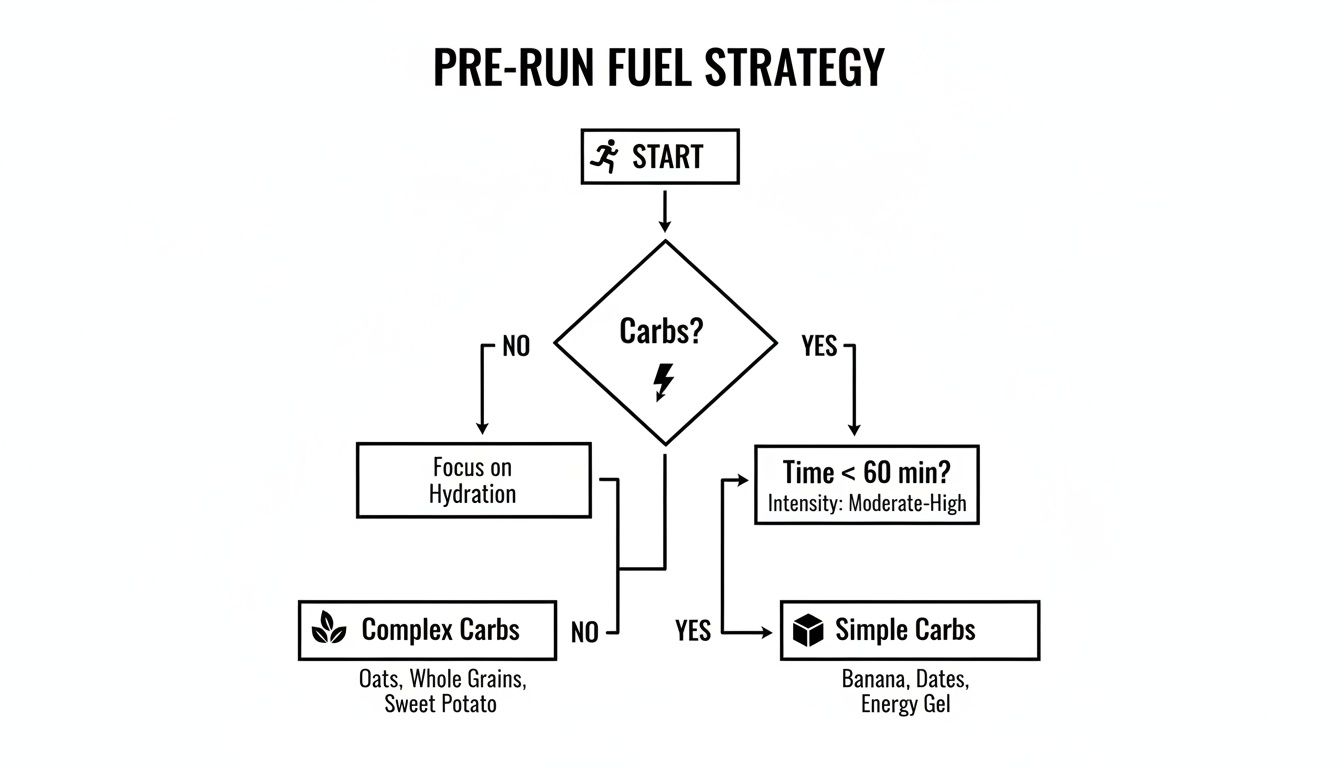
The key takeaway is that as your run gets closer, your fuel source needs to get simpler so your body can absorb that energy faster.
The 30-Minute Window: A Quick Energy Boost
With 30 minutes or less on the clock, your options get very specific. This is the moment for quick acting, simple carbohydrates. Think of it as a last minute energy top up, especially for those early morning runners who roll out of bed and head straight for the door.
At this point, your body has zero time for digestion. You need fuel that hits your bloodstream almost instantly. This is where you reach for sports gels, chews, or a very small, simple snack. Stay away from anything with fiber, fat, or a lot of protein, they’ll just sit in your stomach and cause you grief.
The closer you get to your run, the more liquid and simple your fuel should become. This minimizes digestive work and maximizes energy availability when you need it most.
By matching your food choices to these time windows, you can make sure your body is perfectly primed for any run.
Pre-Run Meal Examples by Timing
To make things even clearer, here’s a table with some specific ideas to help you build your own pre-run fueling plan.
Time Before Run | Meal/Snack Idea | Primary Nutrients | Best For |
|---|---|---|---|
2–3 Hours | Scrambled eggs with whole wheat toast and avocado. | Complex Carbs, Protein, Healthy Fats | Long runs or high intensity workouts where sustained energy is critical. |
60 Minutes | A medium sized banana with a tablespoon of peanut butter. | Simple & Complex Carbs, a little Protein | Runs of 45-75 minutes, providing a steady energy release. |
30 Minutes | A handful of pretzels or a sports energy gel. | Simple Carbohydrates | Short, intense runs or as a last minute boost before any run. |
Using this as a guide, you can start experimenting to find the exact combination that works best for your body and your runs.
Fueling Plans for Different Distances and Times
Not all runs are created equal, and your fueling shouldn't be either. A quick jog around the block just doesn't demand the same kind of energy as a grueling 20-mile training run. The real secret to unlocking your best performance is learning to match your nutrition to the specific distance and intensity of your workout.
What fuels a casual 5k will leave you hitting the wall on a half marathon course. So, let’s build a playbook that covers every scenario. Your body's energy needs scale right alongside the challenge you're throwing at it. A short, easy run might only need a light snack to top off the tank, but those long distance efforts require a much more calculated approach.
Fueling for Short Runs (Under 60 Minutes)
When you're heading out for less than an hour, like for a 5k or a quick training session, your main goal is simple: keep hunger at bay and your blood sugar stable. Your muscles already have plenty of stored glycogen to get you through, so there’s no need to load up with a big, heavy meal.
A small, easy to digest snack that's high in carbohydrates about 30-60 minutes before you head out is the perfect move. This gives you that quick burst of energy without weighing you down or upsetting your stomach.
Good Options: A small banana, a handful of pretzels, or a slice of toast with a little bit of jam.
What to Avoid: Anything heavy, high in fiber, or packed with fat. Those things just take too long to digest.
This strategy will have you feeling light and energized, ready to tackle your run without any discomfort.
Powering Through Medium Distances (60-90 Minutes)
Once your run stretches beyond the hour mark, think a 10k or a longer training day, your pre-run fuel becomes much more important. Your body will start to burn through its readily available glycogen, so you'll need a more substantial snack or a light meal to provide that sustained energy.
Try to eat about 90 minutes to 2 hours before your run. This gives your body enough time to process a slightly larger portion of carbs. The focus is still on carbohydrates, but you can add a small amount of lean protein to help with muscle function and get a head start on recovery. For a race like the 10k, getting your intake just right is crucial. You can find more specific fueling strategies for a 10k race to dial it in.
Fueling for a 10k is a real balancing act. You need enough gas in the tank to push the pace, but not so much that you feel sluggish or heavy. A smart mix of simple and complex carbs is usually the winning ticket.
Conquering Long Distances (90+ Minutes)
For the big ones, half marathons, full marathons, and any run lasting over 90 minutes, your pre-run meal isn't just a suggestion, it's a critical part of your success. The goal here is to completely max out your glycogen stores, pushing them to their absolute limit to hold off fatigue for as long as possible.
You'll want to eat your main pre-run meal 2-3 hours before you start. This meal has to be packed with complex carbohydrates to ensure a slow, steady release of energy throughout your run. This is a nonnegotiable part of any solid race day plan, and for those taking on the full 26.2, you can dive deeper with your marathon training nutrition plan.

Navigating Different Times of Day
When you run can totally change your fueling game. An early riser faces different challenges than someone who logs their miles after work.
Early Morning Runs: If you're up and out the door before the sun, a big breakfast just isn't practical. A small, fast acting carb source like a sports gel, half a banana, or a few crackers 15-30 minutes before you start is usually plenty.
Evening Runs: For evening runners, your lunch is essentially your main pre-run meal. Plan a balanced lunch about 3-4 hours beforehand, then grab a small, carb focused snack about 60 minutes before your run to top off your energy levels.
The way athletes approach pre-workout fueling has gotten seriously scientific. The global market for pre-workout supplements was valued at a whopping $13.98 billion in 2020 and is expected to climb to $23.77 billion by 2027, driven by products loaded with carbs and caffeine. Many elite athletes follow guidelines of 3–6mg of caffeine per kg of body weight about an hour before an event to boost performance, but at the end of the day, carbs are still king.

The Critical Role of Pre-Run Hydration
We talk a lot about carbs for fuel, but knowing what to eat before running is only half the battle. The other, equally important piece of the puzzle is hydration. Showing up to the start line even a little bit dehydrated can completely derail your performance.
Think of your muscles like sponges; they need to be full of water to fire on all cylinders. When you're dehydrated, your heart has to work overtime, blood flow to your muscles decreases, and every step just feels harder than it should.
It doesn’t take much. A fluid loss of just 2% of your body weight can cause a serious dip in performance. This isn't just for marathoners, it’s a nonnegotiable for every single run.
Pre-Run Hydration Guidelines
The goal here is simple: start your run perfectly hydrated, but not waterlogged. There's nothing worse than that sloshing feeling in your gut. A smart approach means sipping fluids consistently in the hours before your run, not chugging right before you head out.
Here’s a simple timeline to follow:
2-3 Hours Before: Aim to drink about 16-20 ounces (500-600 ml) of water. This gives your body plenty of time to absorb what it needs and get rid of the rest.
30 Minutes Before: Top off the tank with another 8-10 ounces (240-300 ml). This final sip makes sure you're good to go right from the first stride.
An easy, old school way to check your hydration is the urine test. You're looking for a pale, light yellow color. If it's dark, you need to drink up. If it’s totally clear, you might be overdoing it, which can also cause problems.
Hydration isn't a last minute chore. It’s a process that starts hours before you even tie your shoes. Slow and steady sipping always beats chugging a bottle at the door.
Understanding Electrolytes
When your run is going to last longer than an hour, or if it's a super hot day, water alone might not cut it. As you sweat, you don't just lose water; you lose critical minerals called electrolytes, and sodium is the big one.
Electrolytes are the spark plugs for your body, they help maintain fluid balance, keep muscles from cramping, and support proper nerve function. Lose too many and you'll feel it: dizziness, weakness, and that heavy legged feeling of fatigue. This is where finding the best electrolytes for runners becomes key to keeping your fluid balance in check during those tough efforts.
Here are a few easy ways to get them in:
Sports Drinks: These are specifically designed with a mix of electrolytes and some carbs.
Electrolyte Tablets: Just drop one of these dissolvable tabs into your water bottle.
Natural Sources: A small handful of salted pretzels or a banana can give you a quick, natural hit of sodium and potassium before you start.
By dialing in both your fluids and your electrolytes, you’re giving your body everything it needs to perform at its best. It's how you turn a good run into a great one.
Solving Common Pre-Run Fueling Problems
Every runner knows the feeling. That dreaded side stitch, a sudden energy crash, or an upset stomach that completely torpedoes what should have been a great run. More often than not, these problems point straight back to pre-run fueling mistakes.
Getting to the root of the problem is the only way to find a real solution. Once you do, you can finally focus on your stride instead of your stomach.
Most stomach issues, what we call gastrointestinal (GI) distress, happen when you eat the wrong things at the wrong time. Foods loaded with fat, fiber, and even too much protein can cause chaos because your body needs more time and blood flow to break them down.
The moment you start running, your body shifts priorities. It pulls blood away from your digestive system and sends it to your hard working muscles, leaving that pre-run meal sitting like a rock in your stomach.
Dodging Digestive Discomfort
To sidestep cramping, bloating, and those frantic searches for a bathroom, the fix is to keep your pre-run snack simple.
Limit High Fiber Foods: While fantastic for your overall health, things like raw veggies, beans, and certain cereals can be a disaster before a run. Instead, reach for lower fiber carbs like white toast or a banana.
Cut Back on Fat: Fatty foods are a big no! We're talking anything fried, creamy, or even large scoops of nut butter. They slow digestion to a crawl. Save them for your recovery meal. For some great post workout ideas, check out our guide to the best post workout recovery foods for faster results.
Mind the Clock: The closer you get to your run, the smaller and simpler your snack needs to be. If you're eating within an hour of heading out, stick to carbs that your body can digest in a flash.
Preventing the Dreaded Bonk
"Hitting the wall," or bonking, is a feeling you never forget. It's like someone flips a switch and your energy just vanishes. This occurs when your muscles fully deplete their primary energy source, glycogen. It isn't just about feeling tired; it's a full-body shutdown.
Bonking is a direct result of not having enough carbohydrates before and during a long run. Your body literally runs out of gas, forcing you to slow to a crawl.
The way to prevent this is all about smart carb loading. For any run that’s going to last over 90 minutes, you have to start with your glycogen tanks completely full. This means eating a meal rich in carbohydrates 2-3 hours before you even start.
A small snack right before you leave won't cut it for a long distance effort. You have to match your fueling strategy to the demands of your run to make sure you have the energy to cross that finish line feeling strong.
Answering Your Pre-Run Fueling Questions
Even when you think you have your nutrition dialed in, questions always seem to pop up. Let's tackle some of the most common ones I hear from runners to help you fine tune your strategy.
Is It Okay to Run on an Empty Stomach?
For those short, easy runs that last less than an hour, running fasted might work just fine for you. Your body usually has enough gas in the tank (stored glycogen) to handle that kind of low intensity effort without needing a top up right beforehand.
However, once you start talking about high intensity workouts or any kind of long run, your performance will almost certainly take a hit without some fuel. Your body is screaming for accessible carbohydrates to burn for energy. If you often feel sluggish or weak running on empty, try having a small, easy to digest carb snack like half a banana about 30 minutes before you head out the door.
What Are the Worst Foods to Eat Before a Run?
The big three to avoid are foods loaded with fat, fiber, and a ton of refined sugar. Anything greasy, heavy meats, and high fiber veggies like raw broccoli or beans can really slow down digestion, leaving you feeling bloated or with cramps mid run.
Think of your stomach like a small engine during a run, it can only process simple fuel efficiently. Complex, heavy foods are like putting the wrong type of gas in the tank, leading to stalls and sputters.
Those super sugary snacks can be a trap, too. They might give you a quick jolt of energy, but it's often followed by a dramatic crash. It's always best to stick with simple, familiar foods you know your body can handle well.
Should I Drink Coffee Before Running?
For a lot of us runners, the answer is a big yes. Caffeine is a well researched performance enhancer. It can make the miles feel just a little bit easier by reducing how hard the effort feels and boosting your endurance.
The standard recommendation is to have 3-6 mg of caffeine per kilogram of body weight about 60 minutes before your run. A word of caution, though: it can cause stomach trouble for some. Always, always test it out on a regular training run—never try it for the first time on race day.
How Long Should I Wait to Run After Eating?
This really comes down to one thing: how much did you eat? The bigger and more complex the meal, the longer you absolutely need to wait.
Large Meal: Give yourself at least 2-4 hours to digest.
Smaller, Balanced Meal: A wait time of 1.5-2 hours is a good rule of thumb.
Small, Carb-Focused Snack: You can usually get going within 30-60 minutes after something like a gel, a piece of toast, or a banana.
The goal is to feel energized, not stuffed. Listen to your body, it will tell you what works. Adjust your timing until you find that sweet spot.
References
Burke, L. M., Hawley, J. A., Wong, S. H., & Jeukendrup, A. E. (2011). Carbohydrates for training and competition. Journal of Sports Sciences, 29(sup1), S17-S27.
Allied Market Research. (2021). Pre-workout Supplements Market by Form (Powder, Capsule/Tablet, and Ready to Drink) and End User (Bodybuilder, Athlete, and Lifestyle User): Global Opportunity Analysis and Industry Forecast, 2021–2027.
Guest, N. S., VanDusseldorp, T. A., Nelson, M. T., Grgic, J., Schoenfeld, B. J., Jenkins, N. D., ... & Campbell, B. I. (2021). International society of sports nutrition position stand: caffeine and exercise performance. Journal of the International Society of Sports Nutrition, 18(1), 1-37.
Here at Flourish-Everyday, we believe the right information is the key to unlocking your fitness goals. Whether it’s finding the perfect running shoes or dialing in your nutrition, we’re here to provide the resources you need to perform at your best. Check out our other guides and reviews to support your journey to a healthier, happier you at https://www.flourish-everyday.com.

