Finding Running Shoes for Bunions
- Flourish Everyday Health And Fitness

- Dec 3, 2025
- 10 min read
Updated: Dec 3, 2025
You can run comfortably with bunions, it all starts with finding the right pair of shoes. The best running shoes for bunions aren't a secret formula; they simply have a wide toe box, flexible upper materials, and supportive cushioning to take pressure and pain out of the equation. These features work together to create a protective, pain free space for your foot on every single run.
In This Guide

Why Your Running Shoes Matter for Bunion Pain
Running should be your escape, not a source of pain. For anyone with bunions, though, every stride can feel like a fight against your footwear. A bunion, or hallux valgus, is a structural shift where your big toe joint angles outward, creating a sensitive bony area.
When you run, your feet absorb significant force, and a standard, tapered running shoe can worsen the situation. Its narrow front end squeezes your toes, pressing on the bunion and causing painful friction, inflammation, and blisters.
The Bunion Problem Is Common
Finding running shoes for bunions is a widespread foot issue. Data shows that about 23% of adults aged 18-65 have bunions, and that number climbs to 36% for people over 65 (1). In the United States, over 3 million new cases are reported annually, making it a common roadblock for active people. This trend is driving growth in the medical footwear market, as detailed on OpenPR.com.
Finding the right running shoes for bunions is essential for staying healthy and active.
The goal isn't just to find a shoe that fits, but one that allows your foot to function naturally. A proper shoe works with your foot's anatomy, not against it.
Core Principles of a Bunion Friendly Shoe
Bunion friendly shoes are engineered to solve the core problems that cause discomfort.
Ample Space: The shoe gives your toes room to splay naturally, preventing the big toe from being pushed further inward.
Flexible Uppers: The material stretches and adapts to your bunion's shape, eliminating rubbing.
Supportive Cushioning: A good midsole absorbs impact, reducing stress on the sensitive big toe joint.
By prioritizing these elements, you build a foundation for pain-free running.
Quick Guide to Bunion Friendly Shoe Features
Essential Feature | Why It's a Game-Changer |
|---|---|
Wide, Anatomical Toe Box | Gives toes room to spread, preventing pressure on the bunion. |
Soft, Stretchy Upper | Conforms to your foot's shape, reducing friction and irritation. |
Moderate, Stable Cushioning | Absorbs shock, easing stress on the sensitive big toe joint. |
Flexible Forefoot Sole | Allows your foot to bend naturally without straining the joint. |
No Overlays on the Bunion Area | A seamless design prevents seams or plastic parts from digging in. |
Getting these features right is the first step toward making running a joy again.
Anatomy of a Bunion Friendly Running Shoe
When dealing with bunions, picking a running shoe requires understanding its fundamental design. A truly bunion friendly shoe nails four key things: a wide toe box, flexible upper materials, the right cushioning, and a supportive sole. Each part plays a specific role in taking pressure off the joint.
This simple graphic highlights the core problem and solution.
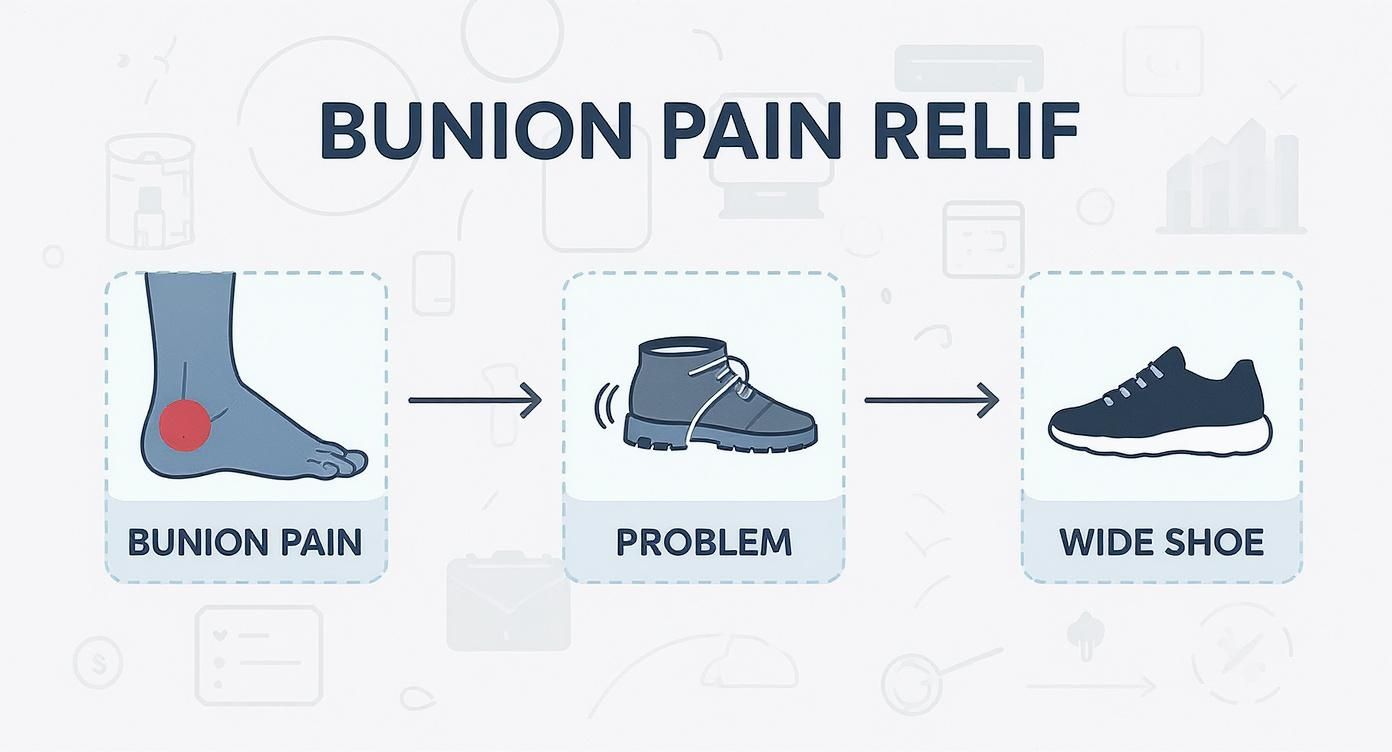
As you can see, a cramped shoe is the enemy. The most straightforward fix is a wider, more accommodating design.
Key Shoe Features for Bunion Relief
Shoe Feature | What to Look For | Why It Helps Bunions |
|---|---|---|
Wide Toe Box | An anatomical, foot shaped design with room for toes to spread. | Prevents direct pressure on the bunion and allows natural toe alignment. |
Flexible Upper | Soft, seamless, and stretchy materials like engineered mesh or knit fabrics. | Conforms to your foot's shape, eliminating friction and hot spots. |
Strategic Cushioning | Responsive midsole foam that absorbs shock without feeling mushy. | Reduces overall stress and impact on the big toe joint with every stride. |
Sole Flexibility | A sole that bends easily at the forefoot. | Allows for a smooth push-off without straining the MTP joint. |
Support & Stability | A firm heel counter and features like guide rails if you overpronate. | Helps control excess foot motion that can strain the big toe joint. |
Each component works to create a shoe that feels like a natural extension of your foot.
The All Important Wide Toe Box
The single most crucial feature is a wide toe box. It gives your toes the space they need to splay naturally upon landing, which is vital for proper foot mechanics. This extra space stops the shoe from squeezing your forefoot and putting painful pressure on the bunion. It also allows your big toe to stay in a more neutral position.
Flexible Upper Materials That Adapt
For anyone with a bunion, a stiff, rigid upper is a recipe for pain. Look for shoes with soft, flexible, and preferably seamless knit uppers. Materials like engineered mesh act like a comfy sock, molding to your foot's unique shape without creating friction. A seamless design over the forefoot is a huge win, as it prevents seams from rubbing against the sensitive joint.

Strategic Cushioning and a Supportive Sole
The right cushioning and sole structure are essential for absorbing shock and keeping your foot stable.
Cushioning: The midsole foam should be thick enough to absorb impact, lessening stress on your big toe joint.
Sole Flexibility: A flexible outsole in the forefoot allows your foot to bend naturally when you push off.
Stability Features: Many runners with bunions overpronate. Stability features like medial posts or guide rails can help keep your foot aligned, preventing extra stress on the big toe.
The orthopedic footwear market is expected to grow from USD 10.2 billion in 2023 to USD 16.4 billion by 2032, largely because more people are dealing with conditions like bunions (2).
A great running shoe for bunions is spacious, supportive, and flexible enough to allow natural foot movement.
Understanding these features helps you look past marketing hype and choose a shoe that supports your runs safely and comfortably.
Finding Your Perfect Fit In-Store and Online
Knowing what to look for is the first step; getting the fit just right is the next. Whether you're at a specialty running store or shopping online, these practical steps will help you find a pair that feels custom-made.
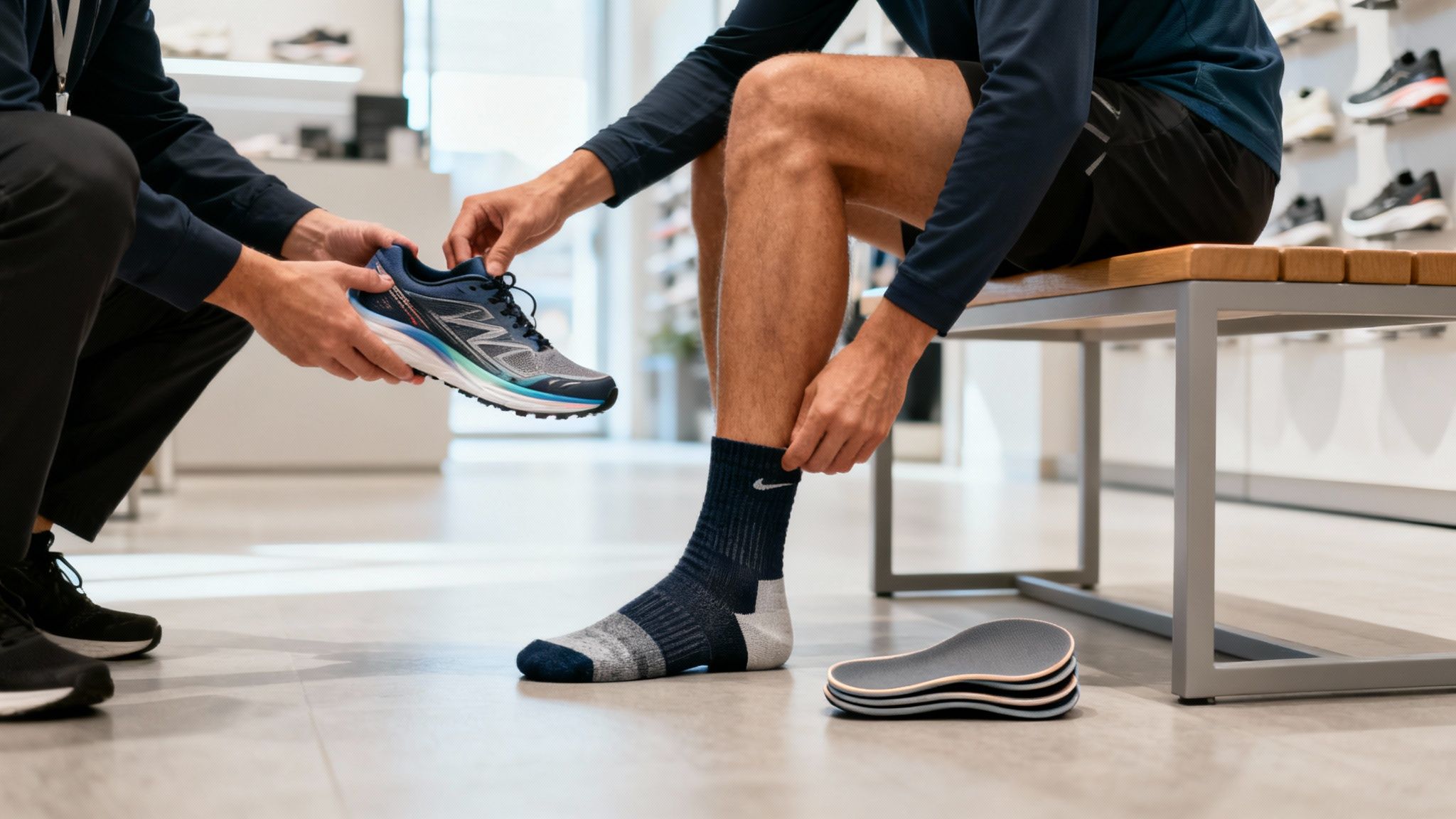
Pro tip: Shop for shoes in the afternoon or evening. Your feet naturally swell during the day, so trying on shoes later ensures a fit that won’t feel too tight mid-run.
Your In-Store Fitting Checklist
Visiting a specialty running store offers expert advice and the ability to test shoes. Be prepared.
What to Bring
Your Current Running Socks: Sock thickness impacts fit, so wear the socks you run in.
Any Orthotics or Inserts: Ensure they fit inside the new shoes without cramping your foot.
Your Old Running Shoes: An associate can analyze wear patterns to understand your gait and recommend better options.
Lace up the shoes snugly and walk or jog around the store. This is the best way to feel how the shoe performs.
The Rules of a Perfect Fit
Use these checks to see if the size and shape are right for you and your bunion.
The Thumb's Width Rule: You should have about a thumb's width of space (about half an inch) between your longest toe and the shoe's tip.
Check the Width: The shoe should be secure at the midfoot and heel but roomy in the forefoot. You should not feel pinching on your bunion.
Heel Lock Test: Your heel shouldn’t slip when you walk or jog. A locked-in heel is key for stability.
Shoe size is just a number. Sizing varies between brands, so always trust how the shoe feels, not the number on the box.
Navigating Online Shopping
Buying online offers more options but requires caution. Measure your feet at home and compare them to the brand's size chart. Read customer reviews, especially from other runners with bunions, to gauge the toe box width and overall comfort.
Most importantly, only buy from retailers with a generous return policy. You need to test the shoes indoors and be able to send them back if they aren't right. For more tips, our expert guide on how to choose running shoes offers a fantastic overview.

Top Running Shoe Models for Men and Women
To cut through the noise, we've reviewed top rated models from trusted brands that understand how to build a comfortable, accommodating running shoe. We'll break down models for both men and women, explaining who they're best suited for.
Standout Models for Bunion Comfort
Brands like HOKA, Brooks, and New Balance consistently receive rave reviews from runners with bunions. Their designs inherently include the space and flexibility needed for pain free miles. They excel at creating a roomy forefoot while locking down the midfoot and heel for a secure ride.
The right running shoe should feel custom-made, with enough room for your toes to splay while keeping your heel and arch stable.
Comparison of Top Rated Running Shoes
Here is a comparison of popular models celebrated for their bunion-friendly construction. Each offers a different feel, catering to various cushioning and support preferences.
Shoe Model | Best For | Key Bunion-Friendly Feature |
|---|---|---|
Neutral runners who love maximum cushioning for daily training. | Plush cushioning absorbs impact, while a wide, seamless mesh upper provides generous space and prevents irritation. | |
Runners needing soft cushioning with subtle stability to guide their stride. | The GuideRails® support system checks excess movement, and the engineered mesh upper stretches to accommodate the forefoot. | |
Overpronators looking for reliable stability and responsive cushioning. | A firm medial post provides stability, while the breathable upper and roomy toe box reduce pressure on the bunion. | |
Runners needing moderate stability with a balanced feel. | GuideRails® technology supports the foot, and the engineered air mesh upper provides a roomy yet secure fit. |
The "best" shoe is a personal choice based on your foot mechanics and comfort.
A Closer Look at What Makes Them Work
The HOKA Clifton is popular for its incredible cushioning, featuring a soft EVA foam midsole that reduces joint strain. Its seamless jacquard upper is breathable and stretches gently over the foot, which is ideal for avoiding friction.
Similarly, the Brooks Adrenaline GTS uses its GuideRail® technology to offer natural feeling support. It gently guides your foot's motion, the answer for runners whose bunions may be related to overpronation.
The New Balance Fresh Foam X 860 combines soft Fresh Foam X cushioning with a supportive medial post. This design cradles your foot while preventing it from rolling too far inward—a common issue that can aggravate bunion pain.
Your choice depends on your needs. Consider whether you prefer a neutral ride or need stability and how much cushioning feels best. By focusing on models known for accommodating designs, you can find a shoe that makes running a joy again.
Beyond the Shoe: Strategies for Total Foot Comfort
The right running shoes for bunions is a huge step, but a complete game plan brings lasting comfort. Think of your shoes as the star player; now it's time to bring in the supporting cast. These tactics work together to provide comprehensive support and reduce strain.
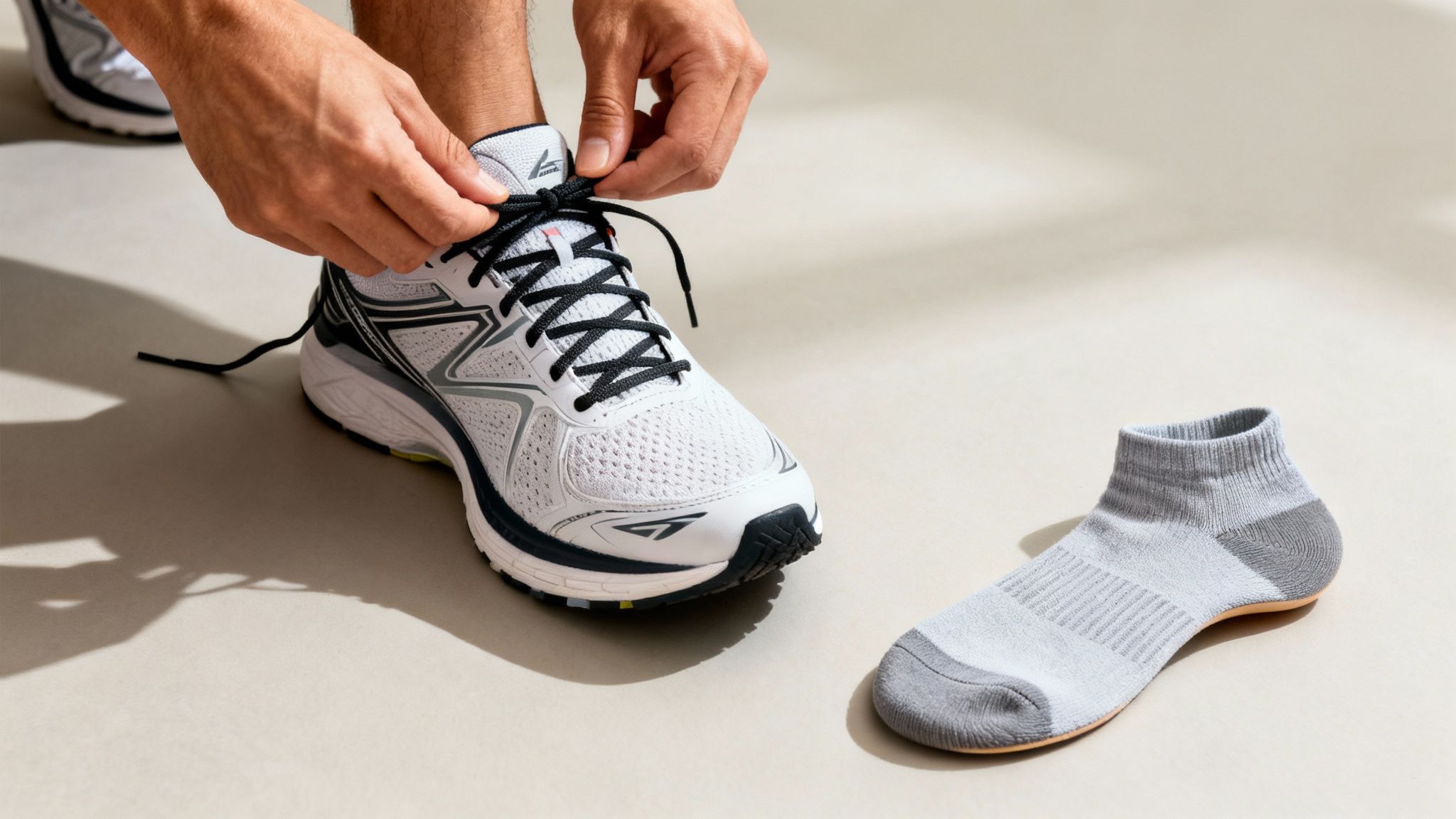
Small changes, from specialized inserts to simple lacing tricks, can bring significant relief.
The Power of Orthotics and Inserts
Your foot mechanics play a major role in the pressure on your bunion. Orthotics, whether over-the-counter or custom molded, can be very important. They provide targeted arch support and guide your foot into a more natural alignment, spreading pressure evenly across your foot with each step. This eases irritation and strain on the bunion.
An orthotic acts like a personalized foundation, correcting subtle gait imbalances that contribute to bunion pain.
Instant Relief with Smart Lacing Techniques
Changing how you lace your shoes is a simple yet effective tweak. Traditional lacing can create a tight band right over your bunion. Different lacing patterns can create more space and relieve pressure.
Window Lacing: Skip the eyelets over your bunion area, running the laces up the sides instead. This creates an open "window" that eliminates direct pressure.
Parallel Lacing: Creating horizontal "bars" with your laces instead of a crisscross pattern can also reduce tightness across the top of your foot.
Don't Underestimate Your Running Socks
Your socks are the final piece of the comfort puzzle. Standard cotton socks can bunch up, trap sweat, and have thick seams that rub against your bunion. Quality running socks are a small change with a big payoff. A holistic approach may also include therapies like sports remedial massage for peak performance.
Look for socks made from moisture wicking synthetic materials with a seamless toe construction. This combination keeps your feet dry and eliminates friction points. For more information, you can find the best running socks to prevent blisters today in our detailed guide.
Proactive Foot Care for Bunion Management
Long term comfort with bunions comes down to smart habits. A proactive approach to foot care can reduce flare ups, manage discomfort, and keep you moving for years.
Your routine should begin before you run. Start with dynamic warm-ups focusing on foot and ankle mobility. Simple exercises like ankle circles and toe scrunches improve flexibility and circulation. Also, consider running on softer surfaces like grass or a track instead of concrete to reduce impact on the big toe joint.
Post-Run Recovery and Strengthening
What you do after your run is critical for managing bunion pain. Your recovery should be an active process aimed at reducing inflammation and building a stronger foot structure.
A consistent post-run routine is your best defense against chronic bunion pain, investing in the long-term health of your feet.
Incorporate these techniques into your cool-down:
Targeted Stretching: Gently stretch your toes and the arches of your feet to release tension.
Ice Application: Apply ice to the bunion for 15-20 minutes to reduce swelling and inflammation.
Strengthening Exercises: Exercises like towel curls build up intrinsic foot muscles, providing better internal support.
Proper post-run care is key. You can also look into effective post-run recovery foods to help your body bounce back.
Common Questions Answered
Finding the right running shoe can feel like a maze. Here are answers to some common questions.
Will the Right Running Shoes Actually Cure My Bunion?
No, the right shoes cannot cure or reverse a bunion, which is a structural change in your foot. However, they can manage symptoms and prevent the condition from worsening. A bunion-friendly shoe creates a pain-free environment by taking pressure off the joint, reducing pain and inflammation, and preventing the shoe from pushing your toe further out of alignment.
Do I Have to Find Shoes Specifically Labeled "For Bunions"?
Not at all. You don't need to limit your search to a "bunion" label. The best options are often standard running models with the right features. Focus on the shoe's design, not its marketing.
The secret is often finding a great neutral or stability shoe that fits your foot type and buying it in a wider size. Your checklist should be: an anatomical toe box, a soft upper, and a supportive sole.
Choosing the 'wide' (2E for men, D for women) or 'extra-wide' (4E for men, 2E for women) version of a well-designed shoe often provides all the space you need.
How Often Should I Be Replacing My Running Shoes?
Replace your running shoes every 300 to 500 miles. As the midsole foam compresses, it loses its ability to absorb shock, which increases stress on your bunion. Also, monitor the shoe's upper. If the material around your bunion has stretched and feels loose, it's time for a new pair.
References
Nix S, Smith M, Vicenzino B. Prevalence of hallux valgus in the general population: a systematic review and meta-analysis. J Foot Ankle Res. 2010;3:21. Published 2010 Sep 27. doi:10.1186/1757-1146-3-21
Dataintelo. Orthopedic Shoes Market Report. Accessed November 2023. Available from: https://dataintelo.com/report/orthopedic-shoes-market
Here at Flourish-Everyday, we're committed to being your partner on your wellness journey. For more expert guides and advice, check out everything we have to offer to help you find the perfect gear and support for a healthier, more active life. Head over to https://www.flourish-everyday.com to learn more.
