Running in Cold Weather Tips: Stay Warm & Safe This Winter

Updated: Nov 30, 2025
Don't let dropping temperatures freeze your running routine. Embracing the chill can be an invigorating and rewarding part of your training cycle, but it requires a smart, strategic approach. From the gear you wear to how you manage your effort, small adjustments make a massive difference. This article offers practical, expert supported tips for running in cold weather to ensure you stay safe, warm, and perform at your best throughout the season. We move beyond generic advice to deliver detailed, practical insights you can implement on your next run.
This comprehensive roundup covers everything from advanced layering techniques to shoe reviews for icy conditions. We will dive into dynamic warm-ups, essential skincare, and strategic hydration tailored for the cold. Furthermore, we will compare wellness trends like heart rate training versus perceived exertion and provide crucial safety protocols to ensure every run is a success. This article is your definitive resource for conquering the cold and making this your best winter running season yet.

Article Index:
1. Mastering the Art of Layering
Running in cold weather has to start with layering. Layering is the most effective strategy for comfortable and safe cold weather running. This three part system works to manage moisture, trap heat, and protect you from the elements. As your body warms up, you can easily remove a layer to prevent overheating and the subsequent chill from trapped sweat. This tip is a cornerstone of any guide to running in cold weather tips. Its effectiveness is proven by everyone from marathoners to trail runners who rely on layering to manage fluctuating temperatures and exertion levels (Haskell, 2021).

The Three Essential Layers
Base Layer: This layer against your skin must be moisture wicking. It pulls sweat away from your body to keep you dry. Avoid cotton, as it absorbs moisture and will make you cold. Materials: Choose synthetic fabrics like polyester or natural fibers like merino wool, which is also odor resistant.
Middle Layer: This is your insulation layer. Its purpose is to trap your body heat. The thickness should vary depending on the temperature.
Materials: Fleece, down, or synthetic fill vests and pullovers are excellent options.
Outer Layer (Shell): This is your protection from wind, rain, and snow. It should be windproof and water resistant while allowing sweat vapor to escape. Materials: Look for jackets with technical fabrics like GORE-TEX or similar proprietary membranes.

2. Protect Extremities with Appropriate Gear
Your body prioritizes your core temperature by reducing blood flow to extremities like fingers, toes, ears, and nose. This makes them highly susceptible to discomfort and frostbite. Focusing on specialized protective gear for these areas is nonnegotiable for safe and effective winter running.

Key Gear for Your Extremities
Hands: Start with thin, moisture wicking liner gloves under a thicker, windproof mitten. You can easily shed the outer mitten if you get too warm. Convertible mittens are also excellent for dexterity.
Feet: Cold, numb feet can ruin a run and affect your form. Choose thermal running socks made from merino wool or synthetic blends. Ensure your shoes have enough room for slightly thicker socks without constricting circulation.
Head and Face: A significant amount of body heat is lost through your head. A moisture wicking beanie or a thermal headband is essential. In very cold or windy conditions, a buff, neck gaiter, or balaclava can protect your nose, cheeks, and chin.
3. Dynamic Warm-Ups and Smart Cool-Downs
Jumping from a warm house into frigid air is a shock to the system. Cold temperatures make muscles and tendons less pliable, increasing the risk of strains or tears. A proper warm-up is nonnegotiable in winter; it increases your core body temperature, boosts blood flow, and prepares your joints and muscles for impact. Studies have shown that implementing structured warm-ups can reduce cold weather injuries (McGowan et al., 2015).
The Dynamic Warm-Up Strategy
A dynamic warm-up, which involves active movements that mimic running, is far more effective than static stretching before a cold run.
Start Indoors: Begin your routine inside where it's warm. Perform a few minutes of light cardio like jogging in place, followed by dynamic movements like arm circles, torso twists, leg swings, and walking lunges.
Transition Outside: Once warm, head outside. Your first 5 to 10 minutes of running should be at a significantly reduced effort. This gradual transition allows your body to acclimate. Try breathing in through your nose and out through your mouth to help warm the air.
Post-Run Mobility: Light static stretching is best immediately after your run while your muscles are still warm. This can help improve flexibility and aid in recovery.
4. Health Focus: Skincare, Hydration, and Nutrition
Skincare and Chafing Prevention
Cold, dry air can lead to chapped skin and windburn. A physical barrier is your best defense. Use a thick moisturizer or petroleum jelly on exposed skin and an SPF lip balm, as sun reflection off snow can be intense. Apply anti-chafing products like Body Glide to friction points such as inner thighs, underarms, and bra lines to prevent painful abrasions.
Strategic Hydration and Nutrition
Cold air suppresses the body's thirst response, meaning you may not feel thirsty even when dehydrated (Kenefick et al., 2010). This can sabotage your performance. Your body also burns more calories to stay warm.
Combat Freezing: Use an insulated bottle or start with lukewarm water. For longer runs, consider a hydration pack worn under your jacket.
Proactive Drinking: Set a schedule to drink small amounts every 15-20 minutes, regardless of thirst.
Increased Caloric Needs: Plan to increase your caloric intake. For guidance, explore this ultimate guide to high protein snacks for athletes or a guide to pre and post-workout nutrition.
5. Shoe Reviews: Top Picks for Men and Women
The right footwear is critical for winter running. Look for shoes with aggressive lugs for grip in snow and water-resistant uppers to keep feet dry. Some models offer built-in traction devices or waterproof membranes like GORE-TEX.
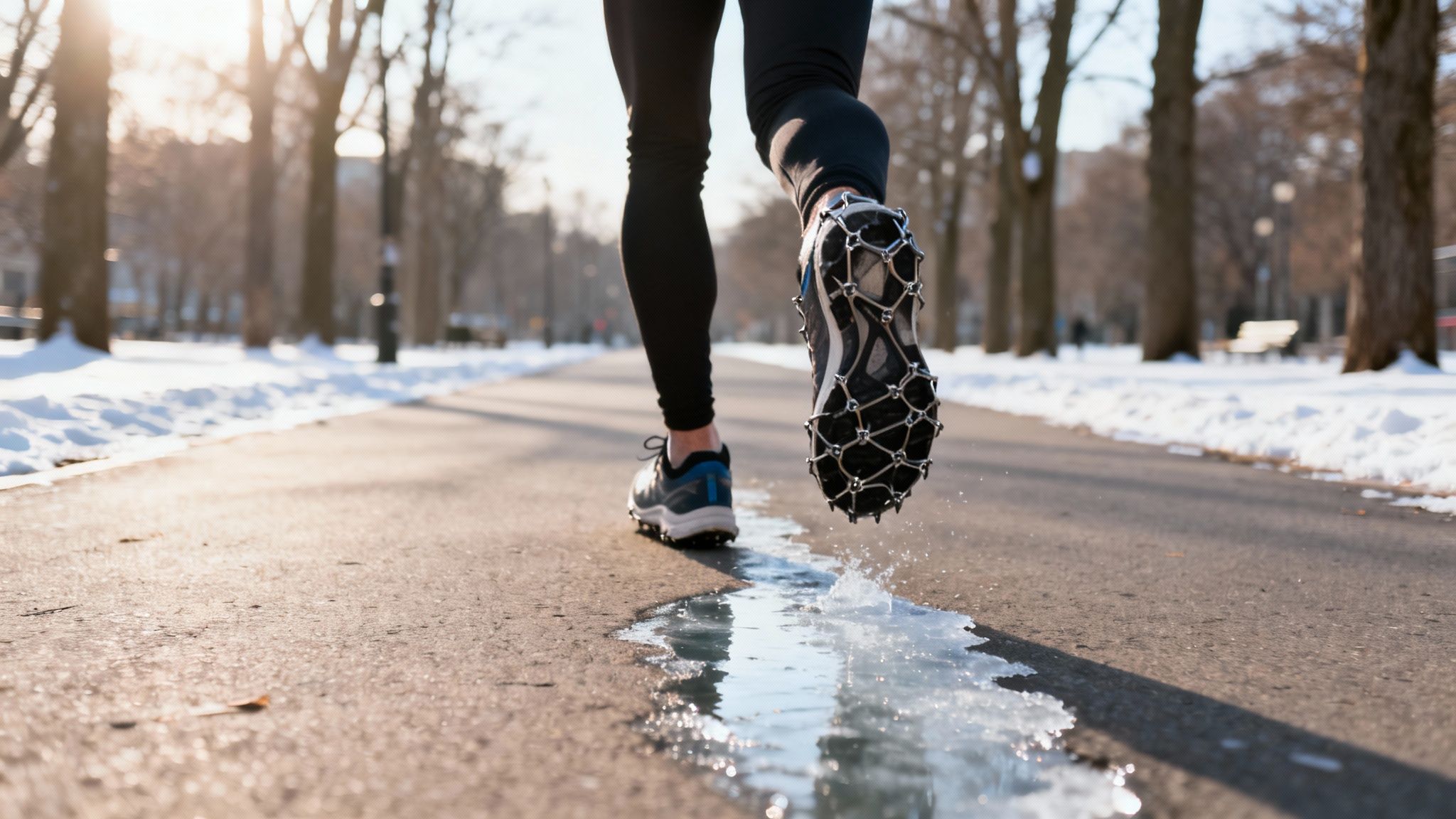
Top Athletic Shoe Reviews for Winter Running
Men's Top Pick: Saucony Peregrine ICE+ 3: This shoe is renowned for its Vibram ARCTIC GRIP outsole, which provides exceptional traction on wet ice. The water-resistant upper and cushioned midsole make it a comfortable and secure choice for slick conditions.
Women's Top Pick: Hoka Speedgoat 6 GTX: Known for its maximalist cushioning, the Speedgoat's GORE-TEX version adds a waterproof layer, making it ideal for slush and snow. The Vibram Megagrip outsole with deep lugs offers reliable traction on technical and slippery terrain.
Individual Brand Shoe Review: Brooks Cascadia 17 GTX
The Brooks Cascadia line (Men's Cascadia / Women's Cascadia) has long been a favorite for trail runners, and the GORE-TEX version is an excellent all around winter option. Its TrailTack Green Rubber outsole provides solid grip on wet surfaces, while the Ballistic Rock Shield protects from sharp objects hidden under snow. The waterproof membrane keeps feet dry without sacrificing too much breathability, making it a versatile workhorse for varied winter conditions.
6. Comparing Wellness Trends: Heart Rate vs. Perceived Exertion
Heart Rate Training
In cold weather, your heart works harder to pump warm blood to your extremities. This means your heart rate will be higher at a given pace compared to running in mild temperatures (Castellani, 2003). Monitoring your heart rate with a chest strap or watch allows you to train by effort rather than pace, preventing overexertion and ensuring a safe, effective workout.
Rate of Perceived Exertion (RPE)
RPE is a subjective scale (typically 1-10) of how hard a workout feels. It is a simple, effective way to manage intensity without technology. In winter, your pace may be slower, but if the effort feels the same as a faster run in warmer weather, you are likely getting a similar physiological benefit.
Comparison Review
Method | Pros | Cons |
|---|---|---|
Heart Rate | Objective, data driven, prevents overexertion. | Requires a monitor, can be affected by caffeine/stress. |
RPE | Free, intuitive, teaches you to listen to your body. | Subjective, can be influenced by mood or external factors. |
For most runners, a combination of both is ideal. Use heart rate for objective data on key workouts and RPE to develop a better internal sense of effort.
7. Route Planning and Safety Protocols
Choosing your route wisely is a fundamental aspect of safe cold weather running. Cold weather introduces ice, slush, and snow, increasing the risk of falls.
Prioritize Maintained Surfaces: Stick to roads and paths that are priorities for snow and ice removal.
Seek Shelter from Wind: Plan routes through wooded areas or neighborhoods where buildings act as windbreaks.
Know Emergency Signs: Be aware of the signs of frostbite (numbness, waxy skin) and hypothermia (uncontrollable shivering, confusion). If you notice symptoms, stop, seek shelter, and get warm.
Communicate Your Plan: Always tell someone your route and expected return time. Carry a fully charged phone in an inside pocket to preserve its battery. For more on safety, review a guide on essential communication and survival gear for your emergency kit.
8. The Ultimate Post-Run Recovery Checklist
Change Clothes Immediately: Get out of damp running clothes as quickly as possible to prevent a rapid drop in body temperature.
Rehydrate with Warm Fluids: A warm drink like tea or hot chocolate can help raise your core temperature and replenish fluids.
Refuel Within 30-60 Minutes: Consume a mix of carbohydrates and protein to replenish energy stores and repair muscles.
Take a Warm Shower or Bath: This helps restore circulation and relax cold, tight muscles. Avoid excessively hot water if you suspect frostnip.
Gentle Stretching or Foam Rolling: Once warm, perform light static stretches to improve flexibility and reduce muscle soreness.

9. References
Castellani, J. W. (2003). Exertional heat illness in cold, wet conditions. Current Sports Medicine Reports, 2(4), 187-192.
Haskell, J. (2021). The Complete Guide to Winter Running. VeloPress.
Kenefick, R. W., Hazzard, M. P., Mahood, N. V., & Castellani, J. W. (2010). Thirst sensations and AVP responses at rest and during exercise-cold exposure. Medicine & Science in Sports & Exercise, 42(1), 89-95.
McGowan, C. J., Pyne, D. B., Thompson, K. G., & Rattray, B. (2015). Warm-up strategies for sport and exercise: a systematic review. Temperature, 2(4), 489-514.
Ready to gear up for your best winter running season yet? At Flourish-Everyday, we provide in depth reviews on the latest athletic shoes, including men's and women's top picks with enhanced traction for cold weather conditions. Visit Flourish-Everyday to find the perfect gear and expert insights to empower every step of your fitness journey.

