The Best Shoes For Jump Rope Performance

Updated: Dec 5, 2025
When it comes to the best shoes for jumping rope, think minimalist. You're looking for something like a cross-trainer or even a boxing shoe because they give you a stable, low shoe platform, with just enough cushioning to take the edge off. Ideally, you want a shoe with a minimal heel-to-toe drop (0-4mm), a firm midsole that gives you energy back, and a flexible sole that lets your foot bend and move naturally. This is the complete opposite of a bulky running shoe, and this design encourages proper form and helps prevent joint strain.

Index of Sections
Why Your Running Shoes Are Holding You Back
If you’ve ever grabbed your running shoes for a jump rope session, you’re not alone. But using running shoes for jumping rope is a common mistake that can compromise your form and even lead to injuries like shin splints.
Running shoes are designed for forward motion, rolling from heel to toe. The Best Shoes For Jumping Rope, encompasses a completely different vertical motion performed on the balls of your feet.
Designed for the Wrong Movement
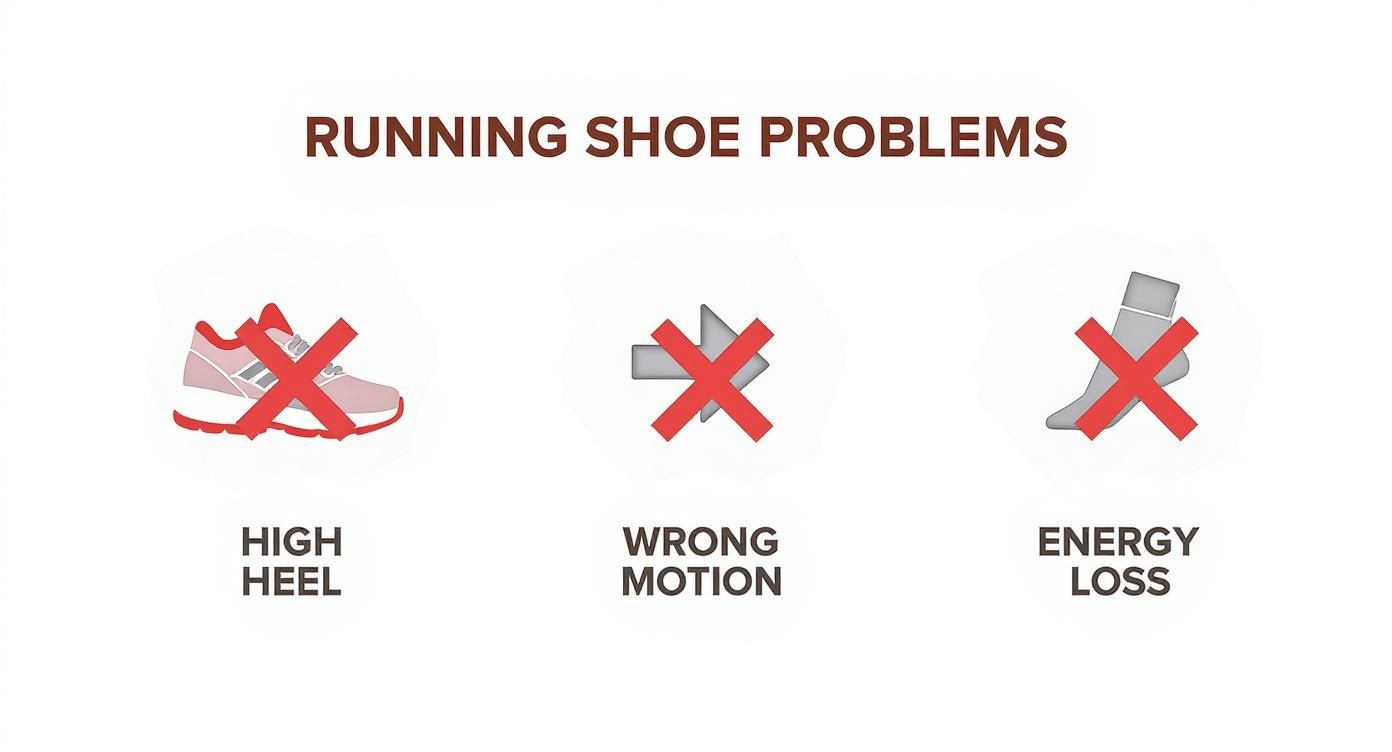
A running shoe often has a thick, cushioned heel and a high drop to absorb impact and roll your foot forward. This works against you when you jump. For jumping rope, you need a flat, solid base. The elevated heel of a running shoe tilts your weight forward, throwing you off balance and forcing your ankles and knees to work overtime to maintain stability. This can lead to strain and makes it harder to find a rhythm.
To dig deeper into this, check out our guide on the differences between cross-training vs running shoes [1].

The Problem with Plush Cushioning
Another hallmark of running shoes is soft, plush cushioning. While great for long runs, it creates a problem for jumpers.
Excessive cushioning is like jumping on a mattress. It absorbs the energy you need to rebound quickly off the ground. Instead of a sharp bounce, you get a mushy one that drains your energy and forces your muscles to work much harder.
This energy leak doesn't just make you tired faster; it also reduces your "feel" for the ground. That connection is critical for agile footwork like double-under rope skipping. The best shoes for jumping rope provide a responsive platform, not a soft pillow.
Anatomy Of The Perfect Jump Rope Shoe
Understanding what makes a great jump rope shoe allows you to evaluate any pair based on a few key traits. The right shoes work with you, leading to better jumps and fewer injuries. A perfect jump rope shoe recipe includes responsiveness over cushioning, a low profile design, flexibility, stability, and a lightweight feel.
Cushioning Versus Responsiveness
When jumping rope, you need shoes that return energy, not just absorb it. Think of bouncing a basketball on concrete versus sand. Concrete provides an immediate, explosive rebound; sand eats the impact. Plush cushioning acts like sand, deadening your bounce. The best shoes for jump rope have a firm, responsive midsole, providing enough shock absorption for your joints without killing the snappy pop needed for rhythmic jumps.
Heel To Toe Drop
Heel-to-toe drop is the height difference between a shoe's heel and forefoot. For jumping rope, a minimal or zero drop (0-4mm) is essential. Most running shoes have a high drop, which pitches your weight forward and encourages a heel striking pattern, the opposite of proper jump rope form. A low profile shoe promotes a natural mid foot strike on a stable base, helping you stay light on the balls of your feet and align your posture.
This quick table breaks down the key differences at a glance.
Key Differences: Jump Rope Shoes vs Running Shoes
Feature | Ideal for Jump Rope | Common in Running Shoes |
|---|---|---|
Cushioning | Firm & Responsive (for energy return) | Soft & Absorbent (for impact) |
Heel-to-Toe Drop | Low or Zero (0-4mm) | High (8-12mm+) |
Flexibility | High (especially in the forefoot) | Stiff (often with a rocker shape) |
Stability | Lateral containment (side-to-side) | Motion control (for pronation) |
Weight | As light as possible | Can be heavier due to cushioning |
This comparison clarifies why marathon trainers aren't ideal for your jump rope sessions.
Sole Flexibility And Grip
Your feet need to bend naturally as you jump. A stiff sole restricts movement, leading to clunky landings. Look for a shoe with excellent forefoot flexibility, allowing your toes to splay and grip the floor. A reliable outsole grip is also crucial for safety on any surface, preventing slips during fast-paced movements.
Stability And Lightweight Design
Stability for jump rope means lateral containment. The shoe's upper must lock your foot onto the sole, preventing side-to-side sliding during dynamic moves. Many cross-training shoes excel at this, which you can learn more about in our essential guide on what cross-training shoes are [2]. Finally, weight matters. A heavy shoe causes fatigue faster. A lightweight design reduces strain, helping you jump longer and faster with better precision.
Top Athletic Shoe Reviews
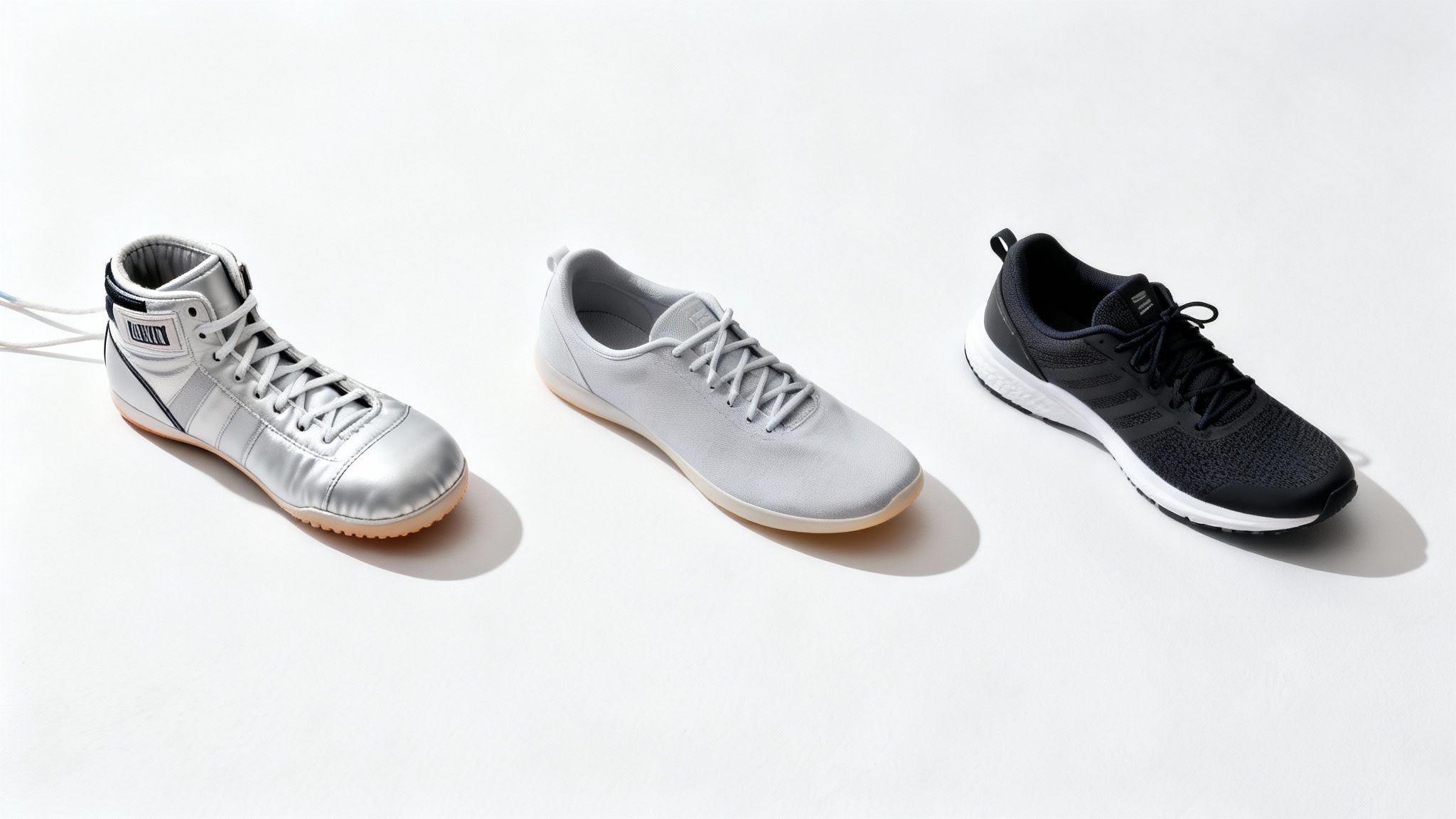
This section highlights real world examples that the jump rope community consistently approves. This isn't about crowning one "best" shoe but showing popular choices that nail the key principles we've discussed.
Top Rated Shoes For Men
Men's athletic shoes are often built with a wider base. The options below are celebrated for creating a stable platform for various jumping styles.
Reebok Nano Series: A CrossFit staple, the Nano's low heel-to-toe drop offers incredible stability for explosive movements, while the firm midsole provides responsive feedback for double-under. Its wide toe box lets your feet spread naturally for balance and power.
NOBULL Trainer: This minimalist workhorse features a flat, stable base for an excellent ground feel, which is crucial for precise footwork. The cushioning is firm, so you don't lose energy on each bounce, making it ideal for long, technical sessions.
Nike Metcon Series: A versatile cross-trainer, the Metcon has a stable heel for solid landings and a flexible forefoot for agility. Its firm cushioning creates a responsive platform perfect for repetitive jumping, making it a great choice for mixed-activity workouts. You can see how these concepts apply to other workouts in our guide on finding the best shoes for cardio [3].
Top Rated Shoes For Women
Women's shoes are typically built on a different last, often with a narrower heel. These recommendations are popular for their fit and performance.
Reebok Nano Series: The women's Nano offers the same benefits as the men's version, a stable, low profile design and responsive cushioning, but is specifically shaped for a woman's foot, ensuring a secure lockdown.
The right shoe should feel like an extension of your body. For women, a proper fit in the heel and midfoot is key to preventing slippage and ensuring stability.
Vivobarefoot Primus Lite: For those who love a "barefoot" feel, the Vivobarefoot Primus Lite is a top contender. With a true zero drop platform and an incredibly flexible sole, it encourages natural foot mechanics and helps strengthen foot muscles.
Inov-8 F-Lite Series: Inov-8's F-Lite series strikes a fantastic balance with a low drop, great flexibility, and just enough cushioning for high-rep sessions. The women’s models are known for a snug fit and amazing grip.
How The Right Shoes Impact Your Joint Health
Choosing the right shoes for jump rope is critical for your long term joint health. Each jump creates forces equal to several times your body weight. Without the right gear, that impact goes straight to your joints. Wrong shoes, especially those with a high heel or excessive cushioning, can throw your body's natural shock absorption system out of alignment, leading to overuse injuries.
Preventing Common Jump Rope Injuries
Poor footwear is clearly linked to nagging injuries. When your shoes don't provide a stable, responsive platform, the repetitive stress of jumping can cause specific problems.
Shin Splints: Caused by overworked muscles and stress on the tibia. A high heel drop can pitch you forward, putting extra strain on your shins.
Plantar Fasciitis: Sharp heel pain often caused by unsupportive midsoles that fail to distribute impact forces evenly.
Knee Strain: Unstable shoes force your knees to work overtime to maintain balance, which can lead to tendonitis and general joint pain.
A good jump rope shoe helps you manage impact forces so your joints don't take the full brunt of every jump.
The goal of the right shoe isn't to eliminate impact, it's to help your body manage it efficiently. By promoting proper form and providing a stable base, the best shoes for jump rope allow your muscles and tendons to absorb shock naturally.
A low heel-to-toe drop is crucial. It keeps your foot in a natural position, encouraging you to land on the balls of your feet. This lets your calf muscles and Achilles tendon act as a natural suspension system. A responsive midsole provides just enough cushioning to soften landings without being too plush, creating a stable platform that prevents ankle rolling and distributes force evenly. For those serious about joint health, exploring resources like a guide to the best supplements for joint pain can offer additional support [4].

The Growing Demand For Specialized Fitness Footwear
The search for the perfect jump rope shoe is part of a larger trend. Athletes and fitness enthusiasts now seek purpose, built gear instead of generic "gym shoes." This shift was accelerated by the rise of at home and functional fitness, where dynamic, multidirectional movements demand specific support and responsiveness.
The global market for jump rope footwear has seen significant growth, expanding by 25% since 2024, fueled by the at home fitness wave [5]. This trend has pushed shoe manufacturers to innovate in high performance gear. This is great news for consumers, as companies invest in R&D to create footwear specifically for high-impact activities. Advancements include:
Advanced Midsole Foams: New compounds are both lightweight and springy, offering excellent energy return.
Durable Upper Materials: Reinforced textiles lock your foot in place for lateral support.
Data-Driven Outsole Design: Sophisticated grip patterns provide optimal traction for vertical and twisting forces.
This focus on specialized design aligns with broader industry trends, such as how technology is transforming fitness, making high performance shoes more accessible than ever [6].
Your Final Checklist Before You Buy
To make a confident purchase, follow these practical steps. Shop for shoes in the afternoon or evening when your feet are slightly swollen for the most accurate fit.
Nail The Perfect Fit
When trying on shoes, get up and walk around.
Bring Your Gear: Wear the same type of socks you use for jumping.
Check the Length: Aim for about a half inch of space between your longest toe and the end of the shoe.
Assess the Width: The shoe should be snug in the midfoot and heel, but your toes should have room to splay naturally.
A common mistake is buying tight shoes and hoping they'll stretch. While some materials have a break-in period, the core structure won't change. Ensure comfort right out of the box.
Perform a Final Performance Test
Before buying, mimic jumping motions. Stand on the balls of your feet and do a few small jumps. The forefoot should bend easily, and the midsole should feel firm and responsive, giving you a snappy rebound. If the shoe feels clunky or too soft, it’s not the one.

Common Questions About Jump Rope Shoes
Are Boxing Shoes a Good Choice for Jumping Rope?
Yes, boxing shoes are often an excellent choice. They are lightweight, have a minimal heel-to-toe drop, fantastic grip, and provide ankle support without being bulky. This design prioritizes the agility and ground feel essential for both boxing and jump rope.
How Often Should I Replace My Jump Rope Shoes?
A general guideline is every 300-500 hours of use. However, it's more important to watch for warning signs: a flat midsole that has lost its bounce, worn out treads reducing grip, or a breakdown in the upper that allows your foot to slide. Using worn out shoes increases your risk of injury.
Can I Jump Rope Barefoot?
While some advanced jumpers do it to strengthen their feet, it is generally not recommended for beginners or for long sessions, especially on hard surfaces. Jumping barefoot offers no impact absorption, which can lead to overuse injuries like stress fractures. If you want to try it, start with just a minute or two on a forgiving surface, like a jump rope mat, to allow your feet to adapt.
References
[1] Flourish-Everyday. (n.d.). Cross-Training vs Running Shoes Explained. Retrieved from https://www.flourish-everyday.com/post/cross-training-vs-running-shoes-explained
[2] Flourish-Everyday. (n.d.). What Are Cross Training Shoes? An Essential Guide. Retrieved from https://www.flourish-everyday.com/post/what-are-cross-training-shoes-an-essential-guide
[3] Flourish-Everyday. (n.d.). Finding the Best Shoes for Cardio. Retrieved from https://www.flourish-everyday.com/post/finding-the-best-shoes-for-cardio
[4] Supplement Source. (n.d.). Best Supplements for Joint Pain. Retrieved from https://supplementsource.ca/blogs/posts/best-supplements-for-joint-pain
[5] Alibaba.com. (n.d.). Best Shoes for Jumping Rope: The 2025 Fitness Trend Taking Workouts to New Heights. Retrieved from https://www.alibaba.com/blog/best-shoes-for-jumping-rope-the-2025-fitness-trend-taking-workouts-to-new-heights.html
[6] GymMembershipTips. (2025, October 25). How Technology is Transforming Fitness. Retrieved from https://gymmembershiptips.com/2025/10/25/technology-in-gyms/
At Flourish-Everyday, we are committed to providing the information you need to make smart fitness choices. Find reviews, guides, and inspiration for your entire wellness journey at https://www.flourish-everyday.com.


