How to Choose the Right Athletic Shoe for Your Foot and Activity

I understand the confusion about how to pick an athletic shoe. There is so much information and all you want is the right shoe for your activity. The right athletic shoe should feel almost boring at first. No pinching. No slipping. No “maybe it will break in.” Just a secure, comfortable fit that supports the way you move.
That sounds simple, but sport store shoe walls can be overwhelming. Running shoes, walking shoes, cross-trainers, trail shoes, court shoes, neutral shoes, stability shoes, wide sizes, rocker soles, high stack foam, minimalist styles. The best choice is not always the most expensive pair or the one with the boldest color. It is the shoe that matches your feet, your gait, and the activity you actually do.
Index
This guide walks through the main types of athletic shoes, how to assess your foot type, what gait means, and how to try on shoes with confidence.

Start with the activity you do most
A shoe is a tool. A hammer and a screwdriver can both fit in your hand, but they do different jobs. Athletic shoes work the same way. Start by choosing the category that fits your main activity, then fine tune the fit.
If you split your time across several activities, buy for the movement pattern you do most often. A shoe that works well for 80% of your workouts is usually a better choice than one that tries to do everything.

Running shoes are built for repeated forward motion
Running shoes are designed to handle repetitive impact as your foot lands and pushes off. They usually have more cushioning than other athletic shoes, especially under the heel and forefoot. Running shoe recommendations
Common running shoe features include:
Cushioned midsoles to absorb impact
Curved or rockered shapes to help the foot roll forward
Lightweight uppers for comfort over longer distances
Heel-to-toe drop options that change how the shoe feels underfoot
Running shoes are best for road running, treadmill running, and some fitness walking. They are not ideal for heavy lifting or lateral drills because many models have soft, tall midsoles that can feel unstable during lateral movement.
If you run several times per week, it is worth spending extra time on fit. Small issues, like rubbing near the arch or a cramped toe box, can become much more noticeable after a few miles.
Cross-training shoes handle mixed workouts
Cross-training shoes are made for variety. They work well for gym sessions that include weights, bodyweight exercises, short cardio intervals, and lateral movement. Cross-training shoe recommendations
Compared with running shoes, cross-trainers often have:
A flatter, wider base
Firmer cushioning
More lateral support
Stronger upper materials
Better grip for gym floors
They are a good choice for circuit training, boot camp classes, strength workouts, and general gym use. The tradeoff is that most cross-training shoes are not as comfortable for longer runs. They can handle a warm up jog or short intervals, but they usually do not offer the same smooth ride as a dedicated running shoe.
If your workouts include squats, lunges, kettlebells, rowing, and short bursts of cardio, a cross-trainer may be your best everyday athletic shoe.
Walking shoes support a steady heel-to-toe roll
Walking may look simple, but your foot still moves through a clear pattern. Most walkers land on the heel, roll through the mid foot, and push off through the toes.
Walking shoes often have:
Moderate cushioning
A flexible forefoot
A stable heel
A comfortable upper for longer wear
A shape that supports a smooth stride
A running shoe can also work well for walking, especially if it is comfortable and flexible enough. Still, some running shoes have extra foam or aggressive geometry that feels awkward at a walking pace.
Choose walking shoes if your main goal is daily walks, errands, travel, fitness walking, or long shifts on your feet.

Sport specific shoes matter when movement gets specialized
Some activities need their own footwear. Tennis, pickleball, basketball, soccer, golf, hiking, and trail running all place different demands on the foot.
For example, court sports involve quick stops and side-to-side cuts, so court shoes need lateral support. Trail running shoes need traction and foot protection on uneven ground. Hiking shoes often add structure, grip, and durability.
If you play a sport regularly, choose a shoe made for that sport. General athletic shoes can work for casual use, but repeated sport specific movement calls for more specific support.

Learn your foot shape before you shop
Foot type is not about having “good” or “bad” feet. It is about understanding shape, pressure, and fit needs. Two people can wear the same size but need very different shoes.
Look at your arch height
A simple way to get a rough idea of your arch is the wet footprint test. Wet the bottom of your foot, step onto a paper bag or piece of cardboard, then look at the shape.
A fuller footprint, where much of the midfoot touches the surface, may suggest a lower arch. A footprint with a narrow connection between the heel and forefoot may suggest a higher arch. A moderate curve usually suggests a medium arch.
This test is not a diagnosis, but it can help you notice patterns.
Lower arches may feel better in shoes with a stable platform and gentle support. Some people with low arches prefer stability running shoes or walking shoes with a supportive midsole.
Higher arches may prefer more cushioning and flexibility, since the foot may not absorb impact as evenly. A very rigid shoe can feel harsh for some high arched feet.
Medium arches often do well in neutral shoes, but fit and comfort still matter more than a label.
Pay attention to foot width and toe shape
Shoe size is more than length. Width matters, and so does toe box shape.
Signs a shoe may be too narrow include:
Tingling or numbness in the toes
Pressure on the big toe or little toe
Bulging at the sides of the upper
Blisters along the edges of the forefoot
Needing to loosen the laces until the shoe feels sloppy
Some people need wide or extra wide sizes. Others need a shoe with a more rounded or foot shaped toe box. That does not mean the shoe should feel loose. It means the toes should have room to spread without the heel sliding.
When standing, leave about a thumb’s width of space between your longest toe and the front of the shoe. For some people, the longest toe is not the big toe, so check carefully.

Check old shoes for clues
Your current shoes can tell a story. Look at the outsole, midsole, and upper.
Heavy wear on the outer heel can be normal, especially for walkers and runners. Wear that continues strongly along the outer edge may suggest you load the outside of the foot. Heavy inward collapse or worn down inner edges may suggest more inward rolling.
Also check the upper. If your little toe has stretched the fabric or your big toe rubs a hole at the top, the shoe shape may not match your foot.
These clues are helpful, but they are not perfect. Shoe wear can reflect your gait, the shoe’s construction, the surface you use, and how long you have worn the pair.
Understand gait without overcomplicating it
Gait is simply the way you move when you walk or run. In shoe shopping, people often talk about pronation, supination, and neutral movement.
Pronation is the natural inward roll of the foot after it lands. Everyone pronates to some degree. It helps absorb shock. Problems can arise when the movement is more than your body comfortably handles, or when a shoe does not support your movement well.
Here is a simple overview:
Gait pattern | What it often means | Shoe features that may help |
Neutral | Foot rolls inward a moderate amount | Neutral cushioning, comfortable fit, even support |
Overpronation | Foot rolls inward more noticeably | Stability features, wider base, structured midsole |
Supination | Foot stays more on the outer edge | Cushioning, flexibility, less rigid support |
A specialty running or walking store may offer a basic gait check. This often involves watching you walk or jog, sometimes on a treadmill. It can be useful, especially if you are unsure where to start.
Still, do not let a gait label override comfort. A shoe that looks right on paper but feels wrong on your foot is not the right shoe.

Match support and cushioning to your activity level
The more often you train, the more your shoe choice matters. A weekly walk around the neighborhood and a half marathon training plan place very different demands on footwear.
Light activity calls for comfort and versatility
If you walk a few times per week, use the gym occasionally, or want a comfortable shoe for errands, focus on all day comfort. You may not need a highly technical shoe.
Look for:
A secure heel
A flexible forefoot
Cushioning that feels pleasant, not mushy
Enough width for your toes
An outsole that grips the surfaces you use
A walking shoe, neutral running shoe, or comfortable cross-trainer may all work, depending on your routine.
Regular training calls for a better match
If you run, walk, or train most days, small fit problems can add up. Choose a shoe made for your primary activity. Consider rotating between two pairs if you train frequently, especially if your shoes get damp or compressed between sessions.
Runners should pay close attention to cushioning, stability, and how the shoe feels at their normal pace. Gym goers should check whether the shoe stays stable during lunges, squats, and lateral steps. Walkers should make sure the forefoot bends smoothly as the stride rolls forward.
Higher impact or longer sessions need more care
Long runs, high mileage walking, court sports, and intense classes all increase the need for proper fit. Your feet may swell during longer sessions, so a shoe that feels snug at the start can feel tight later.
If you have recurring pain, past injuries, diabetes, nerve issues, or significant foot changes, talk with a qualified health professional or podiatrist. This guide is for general information and cannot replace personal medical advice.
Try shoes in the store if possible
Buying online can be convenient once you know what works. For a new shoe type, brand, or size, trying shoes in person can save time and frustration.
Shop later in the day
Feet often swell slightly as the day goes on, and they can also swell during activity. Trying shoes in the afternoon or evening can give a more realistic fit than trying them first thing in the morning.
Wear the socks you plan to use. Thin cotton socks, thick walking socks, and padded running socks can all change the feel of a shoe.

Bring your current shoes
A good salesperson can look at your current pair for wear patterns and fit clues. Bring the shoes you use most often, even if they are worn out.
If you use orthotics or over-the-counter inserts, bring them too. Try the new shoes with the insert inside, not with the stock insole if you do not plan to use it.
Test movement, not just standing comfort
A shoe can feel fine while standing and still fail during movement. Walk around the store. Jog briefly if you are buying running shoes and the store allows it. Do a few calf raises, lunges, or side steps if you are buying cross-trainers.
Notice these fit points:
The heel stays secure without rubbing
The midfoot feels held, not squeezed
The toes can wiggle naturally
The arch support feels comfortable, not like a hard lump
The shoe bends where your foot bends
There is no sharp seam or pressure point
Trust immediate discomfort. Shoes can soften slightly, but they should not need pain to “break in.”
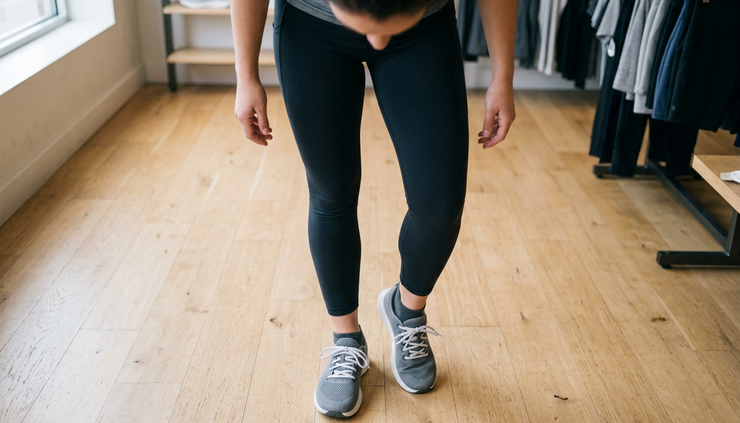
Check both feet
Many people have one foot that is slightly larger. Fit the larger foot, then adjust the smaller side with lacing if needed.
Try both shoes and walk in both. Do not judge the pair by one foot only.
Use lacing to fine tune fit
Laces can solve minor fit issues. If your heel slips, a runner’s loop can help lock the heel in place. If the top of your foot feels pressured, different lacing patterns can reduce tightness.
Lacing cannot fix a shoe that is the wrong size or shape. If your toes are cramped or the heel cup rubs badly, choose another model.
Let comfort be the final test
Shoe technology can be helpful, but comfort is still one of the best guides. Research in running and sports medicine often supports the idea that comfort plays a meaningful role in how well a shoe works for an individual. That does not mean any comfortable shoe is perfect for every sport. It means your body’s feedback deserves attention.
A good athletic shoe should feel balanced. It should support your movement without forcing your foot into an awkward position. It should feel stable without feeling stiff. It should cushion impact without making you feel disconnected from the ground.
Before buying, ask yourself:
Can I wear this for the full length of my usual activity?
Do I notice any rubbing, pressure, or slipping?
Does this shoe match my main activity?
Do my toes have enough room?
Does the shoe feel stable when I move?
Would I still choose this pair if it were not my favorite color?
That last question helps. Style matters, and it is fine to like the way your shoes look. Just do not let appearance win over fit.

Know when to replace athletic shoes
Even the right shoe wears out. Midsoles compress, outsoles lose grip, and uppers stretch. A shoe may look acceptable but feel flat or unstable.
Common signs it is time to replace a pair include:
New aches after normal workouts
Uneven outsole wear
Compressed or wrinkled midsole foam
A loose heel that used to fit well
Less traction than before
Holes or stretched areas in the upper
Runners often track mileage, while walkers and gym users may rely more on feel and visible wear. If a shoe no longer supports you the way it once did, it is probably past its prime.

The best shoe is the one that fits your real life
How to choose the right athletic shoe starts with honest answers. What activity do you do most? How does your foot shape affect fit? Do you need more cushioning, more stability, or more room in the toe box? How does the shoe feel when you actually move?
A runner, a walker, and someone doing strength circuits may all need different shoes, even if they wear the same size. That is why the best approach is practical: match the shoe to the activity, check your foot type, pay attention to gait, try shoes carefully, and let comfort have the final say.
If a pair feels good in the store, supports your movement, and suits the way you train, you are on the right track. The right athletic shoe should help you move with less distraction, so you can focus on the walk, workout, run, or game ahead.