8 Effective Shoe Odor Home Remedies for Athletes

For dedicated athletes, persistent shoe odor is a recurring battle. The combination of intense workouts, sweat, and enclosed footwear creates the perfect breeding ground for odor causing bacteria. While the impulse might be to discard a foul smelling pair of shoes, there are powerful, affordable solutions available in your home. This guide delivers a curated list of effective shoe odor home remedies, each one explained for the active individual.
We will move beyond generic advice and provide specific, actionable steps for each method. You'll learn not just what to do, but why it works from a scientific perspective, helping you choose the best approach. From natural deodorizers to moisture-wicking techniques, these solutions are designed to restore freshness, protect your footwear, and support your overall foot health.
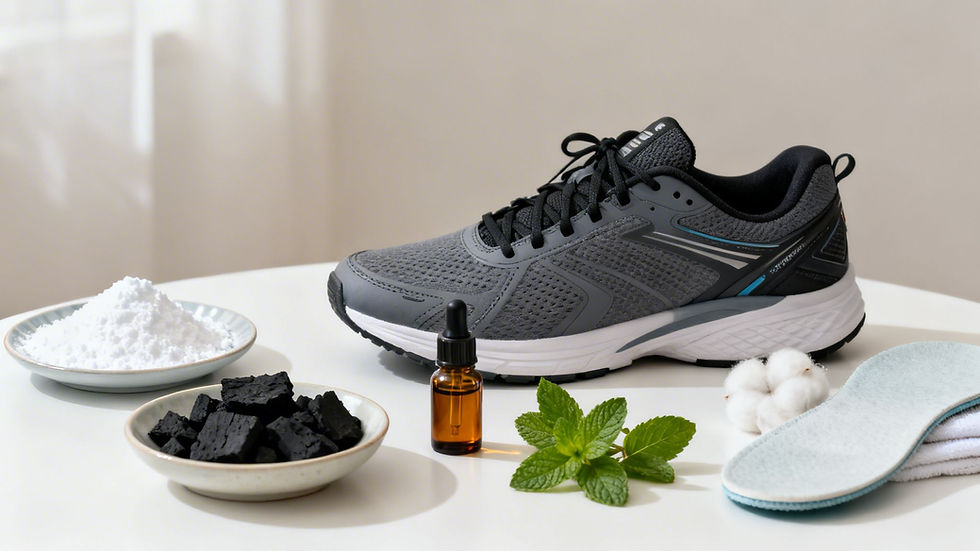
Article Index
Baking Soda: The Alkaline Neutralizer
Activated Charcoal: The Odor Absorber
White Vinegar: The Antimicrobial Spray
Cedarwood: The Natural Dehumidifier
Freezer Method: The Bacterial Killer
Tea Tree Oil: The Anti fungal Agent
Newspaper: The Moisture Absorber
Shoe Rotation: The Preventative Protocol
Informative Health Insights: Understanding the Root Cause
Comparative Review: Top Athletic Shoes for Men and Women with Breathability Features

1. Baking Soda: The Alkaline Neutralizer
Baking soda (sodium bicarbonate) is a classic, effective home remedy for shoe odor. It works by absorbing excess moisture and neutralizing acidic smells. Odor causing bacteria thrive in damp, acidic environments created by sweat. Baking soda, being alkaline, raises the pH inside the shoe, making the environment inhospitable for these microbes.

How to Use
Dry Shoes: Ensure shoes are completely dry. Applying baking soda to wet shoes can create a difficult to remove paste.
Apply: Sprinkle 1-2 tablespoons of baking soda directly into each shoe, focusing on the toe box.
Wait: Let it sit for several hours, preferably overnight, to absorb odors and moisture.
Remove: Tap the shoes upside down over a trash can to remove the powder.
Pro Tip: For a mess free option, fill an old sock with baking soda, tie it off, and place the sachet into your shoes.
2. Activated Charcoal: The Odor Absorber
Activated charcoal is a porous material that excels at absorbing odors and moisture. It has been treated to increase its surface area, creating a network of pores that trap odor causing molecules through a process called adsorption. This makes it an incredibly effective tool for reliable shoe odor control.

How to Use
Dry Shoes: Start with dry footwear for maximum effectiveness.
Insert: Place activated charcoal bags or inserts deep inside each shoe.
Leave In: Keep the charcoal in your shoes whenever you are not wearing them.
Recharge: To extend their life, place the inserts in direct sunlight for 1-2 hours monthly. The UV rays help release trapped molecules, "recharging" the charcoal.
Pro Tip: Consider specialized products like the Superfeet Carbon Insole, which integrates carbon for effective odor absorption.
3. White Vinegar: The Antimicrobial Spray
White vinegar is a natural antimicrobial agent. Its active ingredient, acetic acid, creates an environment where odor causing bacteria and fungi cannot survive. Unlike treatments that mask smells, a diluted vinegar spray eliminates the microbes responsible for foul odors.

How to Use
Prepare Solution: Mix one part white vinegar with three parts cool water in a spray bottle.
Add Essential Oils (Optional): Add 10-15 drops of tea tree or eucalyptus oil to counteract the vinegar smell.
Spray: Lightly mist the interior of each shoe, focusing on insoles and the toe box. Do not oversaturate.
Air-Dry: Allow the shoes to air-dry completely. The vinegar smell will dissipate as it dries.
Pro Tip: Apply the spray immediately after a workout to neutralize bacteria before they multiply.

4. Cedarwood: The Natural Dehumidifier
Cedarwood possesses natural antimicrobial and antifungal properties. Cedar blocks or shoe trees release aromatic oils that neutralize odors and absorb moisture, tackling both the symptom and the cause of smelly shoes.
How to Use
Choose Cedar: Select cedar shoe trees (best for maintaining shape) or simple blocks for deodorizing.
Dry Shoes First: Let shoes air dry completely before inserting cedar to avoid trapping moisture.
Insert and Store: Place cedar items firmly inside each shoe. Leave them in whenever the shoes are not in use.
Refresh Cedar: To restore the aromatic oils, lightly sand the wood's surface with fine grit sandpaper every few months.
Pro Tip: For stubborn odors, use baking soda overnight first, then insert cedar shoe trees to maintain freshness and shape.
5. Freezer Method: The Bacterial Killer
This surprising home remedy works by killing the bacteria responsible for bad smells. Odor causing microbes cannot survive in extreme cold. When the water inside bacterial cells freezes, it expands and ruptures the cell walls, destroying them.
How to Use
Bag Shoes: Place completely dry shoes in a large, sealable plastic bag to prevent frost and keep germs contained.
Freeze: Leave the bagged shoes in the freezer for at least 8 hours, or overnight.
Thaw: Remove the shoes from the freezer and bag. Let them thaw at room temperature for several hours.
Air Out: Once thawed, let the shoes air out to ensure any residual moisture evaporates.
Pro Tip: After thawing, sprinkle baking soda inside to absorb any lingering moisture, then empty it out before wearing.

6. Tea Tree Oil: The Antifungal Agent
Tea tree oil, derived from the Melaleuca alternifolia plant, is a powerful natural antimicrobial. It contains compounds like terpinen-4-ol, which actively kill the bacteria and fungi that cause foul smells.
How to Use
Dilute: Mix 5-10 drops of tea tree oil with one cup of water in a spray bottle. It is too potent for direct application.
Apply: Lightly mist the inside of your shoes, focusing on the insoles and toe box.
Air Dry: Allow the shoes to air dry completely for at least one hour before wearing.
Store: Keep the solution in a dark glass bottle, as sunlight can degrade the oil.
Pro Tip: A Tea Tree Body Wash can also be part of a comprehensive foot hygiene routine to combat odor at its source.
7. Newspaper: The Moisture Absorber
Crumpled newspaper is a simple, no cost method that relies on the absorbent properties of paper to draw out moisture and sweat. By wicking away dampness, it helps dry out the shoe's interior, making it harder for microbes to thrive.
How to Use
Crumple Paper: Ball up several sheets of newspaper.
Stuff Shoes: Loosen the laces and fill each shoe with crumpled paper, reaching the toe box.
Wait: Let the paper sit for several hours or overnight in a well ventilated area.
Replace (If Needed): For very wet shoes, replace damp paper with a fresh batch to continue the drying process.
Pro Tip: To avoid ink transfer on light colored shoes, use unprinted newsprint or plain brown kraft paper.

8. Shoe Rotation: The Preventative Protocol
This preventative strategy stops odors from forming. Rotating between multiple pairs of shoes allows each pair at least 24-48 hours to dry out completely, eliminating the damp environment bacteria need to flourish. This is a non-negotiable for serious athletes.
How to Use
Build a Rotation: Own at least two pairs of your primary training shoes.
Prep for Drying: After use, loosen laces and remove insoles to dry separately.
Ventilate: Place shoes and insoles in an open area, not a closed gym bag or locker.
Accelerate (Optional): Stuff shoes with newspaper or use cedar shoe trees to speed up moisture absorption.
Pro Tip: Keep track of your rotation with a simple system, like alternating shoes every other day, to ensure consistency.
Informative Health Insights: Understanding the Root Cause
Shoe odor, medically known as bromodosis, is primarily caused by sweat and bacteria. Your feet have over 250,000 sweat glands, more per square inch than any other part of your body. When you sweat, bacteria naturally present on your skin consume the sweat and dead skin cells, producing isovaleric acid, the compound responsible for the cheesy, unpleasant smell.
This process is amplified inside a shoe, which creates a dark, warm, and moist environment ideal for bacterial proliferation. Factors that increase sweating, such as intense exercise, stress, or hyperhidrosis (excessive sweating), can worsen the problem. Fungal infections like athlete's foot can also contribute to foot and shoe odor. Therefore, effective remedies must address both moisture and microbial growth.
Comparative Review: Top Athletic Shoes for Men and Women with Breathability Features
Choosing footwear with excellent ventilation is a key preventative measure against shoe odor. Here are top rated athletic shoes for men and women known for their breathability.
Men's Top Athletic Shoe Reviews
Brooks Ghost 15: A favorite among runners, the Ghost 15 features an engineered air mesh upper that provides excellent airflow without sacrificing structure. Its 3D Fit Print technology ensures a secure fit, making it ideal for daily training and long distance runs where heat buildup is a concern.
Nike Metcon 9: Designed for high intensity training, the Metcon 9 incorporates a lightweight, breathable mesh with textured overlays in high wear areas. This design keeps feet cool during intense CrossFit WODs while providing the durability needed for rope climbs and lifting.
Women's Top Athletic Shoe Reviews
HOKA Clifton 9: Renowned for its maximalist cushioning, the Clifton 9 also excels in breathability. Its stripped back upper uses an engineered knit that allows for superior ventilation, making it a top choice for runners who want both comfort and a fresh feeling foot environment on long runs.
On Cloud X 3: A versatile cross-trainer, the Cloud X 3 is built with a re-engineered 3-layer mesh made from 90-95% recycled content. This mesh is not only sustainable but also highly breathable and flexible, making it perfect for mixed sport workouts, from short runs to gym classes.

Building a System for Lasting Freshness
Winning the battle against shoe odor requires a consistent system of care. The most effective strategy integrates both reactive treatments and proactive prevention.
Daily Prevention: After every workout, loosen laces, remove insoles, and let your shoes air dry in a well ventilated area. This is your most critical line of defense.
Weekly Treatment: Once a week, use a deeper treatment like a white vinegar spray to neutralize lingering bacteria.
Monthly Refresh: Use an intensive method like the baking soda treatment overnight to fully absorb moisture and odors.
Constant Protection: Store shoes with cedar blocks or activated charcoal inserts for continuous, low effort deodorizing.
This systematic approach transforms shoe care from a chore into a proactive habit. Fresh, well maintained shoes contribute to a more pleasant athletic experience, reduce the risk of fungal infections, and prolong the life of your footwear.
References
Carson, C. F., Hammer, K. A., & Riley, T. V. (2006). Melaleuca alternifolia (Tea Tree) Oil: a Review of Antimicrobial and Other Medicinal Properties. Clinical Microbiology Reviews, 19(1), 50–62. https://doi.org/10.1128/CMR.19.1.50-62.2006
American Chemical Society. (2015). Baking Soda. https://www.acs.org/molecule-of-the-week/archive/b/baking-soda.html
Johns Hopkins Medicine. (n.d.). Bromodosis (Smelly Feet). https://www.hopkinsmedicine.org/health/conditions-and-diseases/bromodosis-smelly-feet
Dillon, H. K., Heinsohn, P. A., & Miller, J. D. (1996). Fungal colonization on a simulated flat roof system. Aerobiologia, 12, 277-284. (Demonstrates fungal inhibition at freezing temperatures relevant to the freezer method).
At Flourish-Everyday, we believe that a healthy lifestyle is built on smart, sustainable habits. If you’re looking to complement these home remedies with expertly designed wellness products, explore our collection at Flourish-Everyday.
